
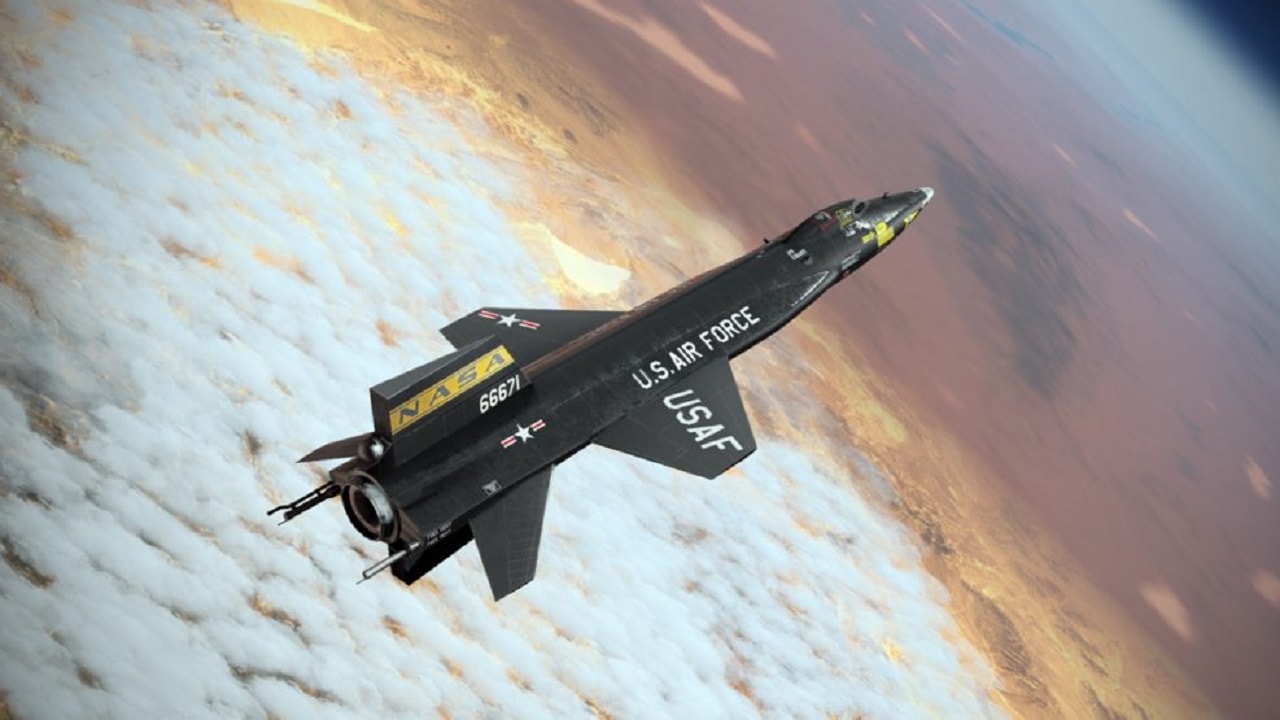
The X-15 Hit Mach 6.7 in 1967 and Nearly Melted Doing It. 59 Years Later, No Pilot Has Flown Faster – On the morning of October 3, 1967, a black dart dropped from beneath the wing of a B-52 over Mud Lake, Nevada, lit a rocket engine, and burned it for 140 seconds. When Major William “Pete” Knight shut it down, he was traveling at Mach 6.72, about 4,520 miles per hour, at an altitude of 102,100 feet. When he coasted down onto Rogers Dry Lake eight minutes after launch, firefighters had to hose down the airplane’s tail.
No human being has ever flown an airplane faster. Fifty-nine years later, nobody has come close.
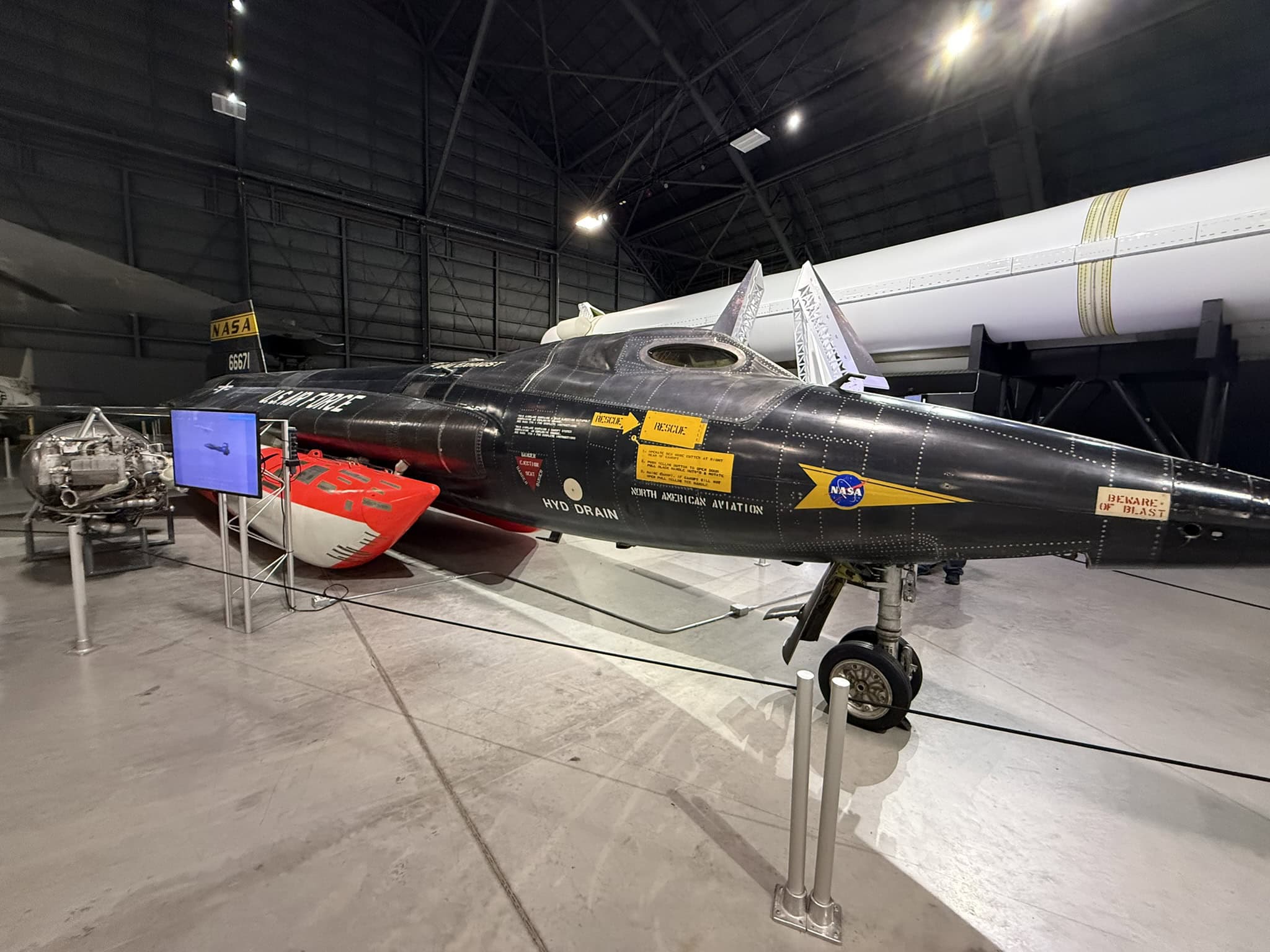
X-15 NASA Program. 19FortyFive.com Photo.
This is an image of the X-15 taken by Editor-In-Chief of 19FortyFive.com Harry J. Kazianis back in 2025 and the National Museum of the U.S. Air Force.
What the X-15 Was For
The North American X-15 was the boldest research program in aviation history, a joint venture of the Air Force, Navy, and NACA, NASA’s predecessor, with two objectives: to achieve hypersonic flight and to penetrate space.
Three were built, and between 1959 and 1968, they flew 199 times. The aircraft was skinned in Inconel X nickel alloy because aluminum would have melted, carried under the wing of the NB-52 mothership because it was too fuel-hungry to take off itself, and thrown forward by an XLR99 engine that turned ammonia and liquid oxygen into 57,000 pounds of thrust for about two minutes, after which the pilot became a hypersonic glider pilot with one chance at a dry lakebed.
The design goals were Mach 6 and 250,000 feet; the program beat both. Twelve men flew it, among them a young civilian named Neil Armstrong, and eight earned astronaut wings by passing the Air Force’s 50-mile line, because the X-15 did not stop at the top of the atmosphere. In August 1963, NASA’s Joe Walker took it to 354,200 feet, an airplane above the boundary of space.
The data on hypersonic heating, reaction controls, and unpowered landings flowed straight into Mercury, Gemini, Apollo, and, decades later, the Space Shuttle.
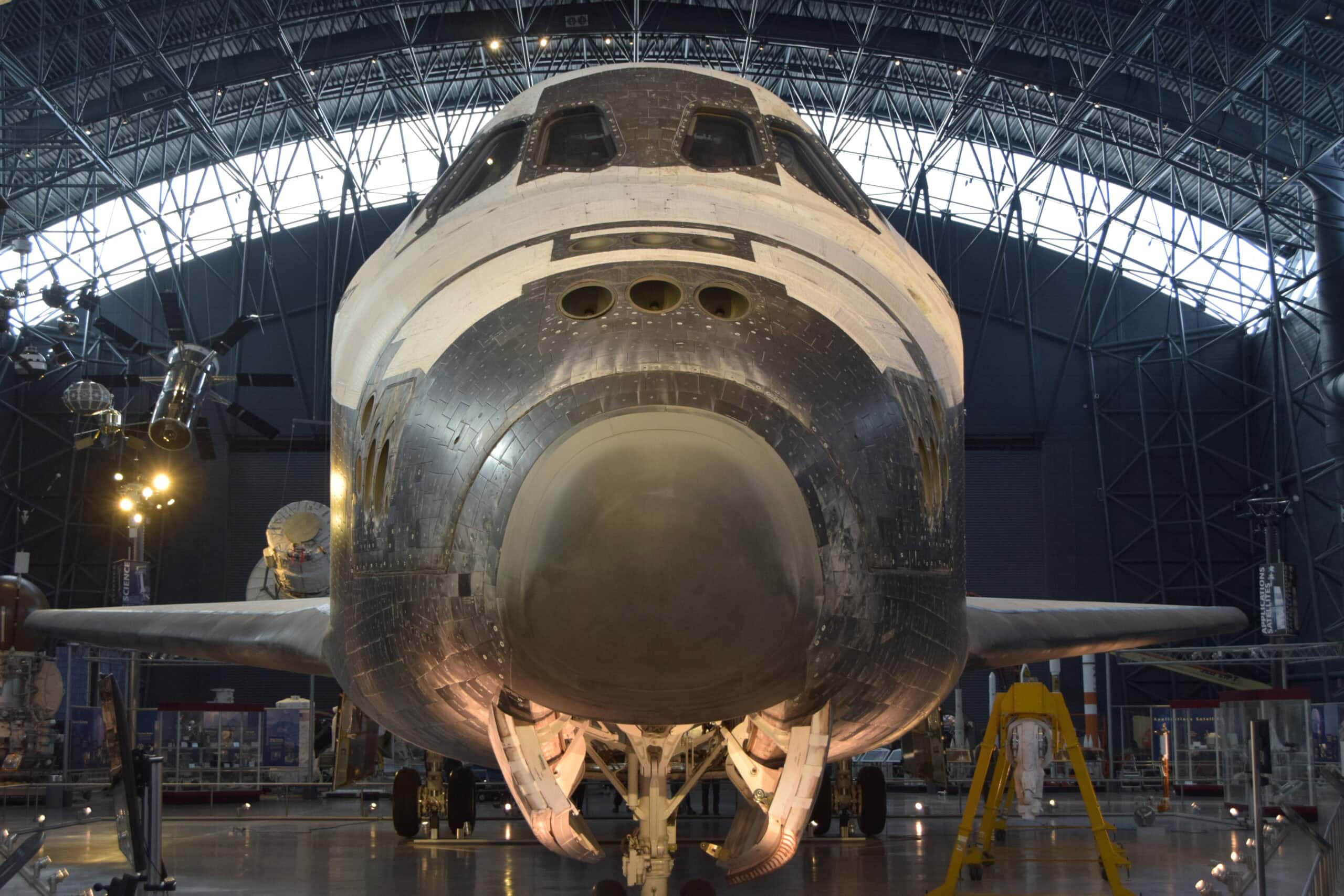
NASA Discover Space Shuttle. This photo was taken back in 2025 and is original to 19FortyFive.com
The Price
The program killed one of its own. On November 15, 1967, six weeks after the speed record, Major Michael J. Adams flew the third X-15 to 266,000 feet, where an electrical disturbance degraded his control and displays.
During reentry, the aircraft drifted sideways and entered a hypersonic spin around Mach 5; Adams wrestled it into a dive, but violent oscillations overstressed the airframe, which broke apart around Mach 4 and 65,000 feet over the Mojave.
Because his final flight had crossed the 50-mile line, Adams was posthumously awarded astronaut wings, and a desert roadside marker near the crash site remembers him as the first in-flight fatality of the American space program.
He was the only pilot lost in 199 flights, and the third X-15 died with him. The second aircraft had already had its own brush with destruction, crash-landing in 1962; rebuilt longer and stronger, it became the X-15A-2, the machine built for the ultimate speed run.
The Record, and What It Cost
For the maximum-speed attempt, the A-2 carried external propellant tanks and a pink-white ablative coating designed to char away and carry the heat with it, plus a dummy scramjet under the tail, a mockup of the air-breathing engine the program hoped to test.
Knight flew the profile perfectly, and the record was his. The airplane did the job.
Shockwaves from the dummy engine’s nose intersected the shock off its pylon and focused superheated air onto the structure like a torch: the coating scoured away, the skin burned through and holed, and the scramjet itself tore off in flight, coming to earth 100 miles away. The X-15A-2 never flew again.
And the number it bought has never been beaten: Mach 6.7 remains the fastest flight by a crewed, powered airplane ever recorded.
Spacecraft go faster, and the Space Shuttle reentered at Mach 25, but those are rockets and gliders, not aircraft flying on wings under their own power; the record for that, 59 years on, still belongs to a man born in 1929.

Shuttle Discovery at National Air and Space Museum on October 1, 2022. Image Credit: 19FortyFive.com
Where the Fastest Airplane Sits: I Almost Could Touch the X-15
Both survivors hang in the nation’s two great aviation shrines. X-15-1 is displayed at the Smithsonian’s National Air and Space Museum in Washington, among the milestone aircraft of flight.
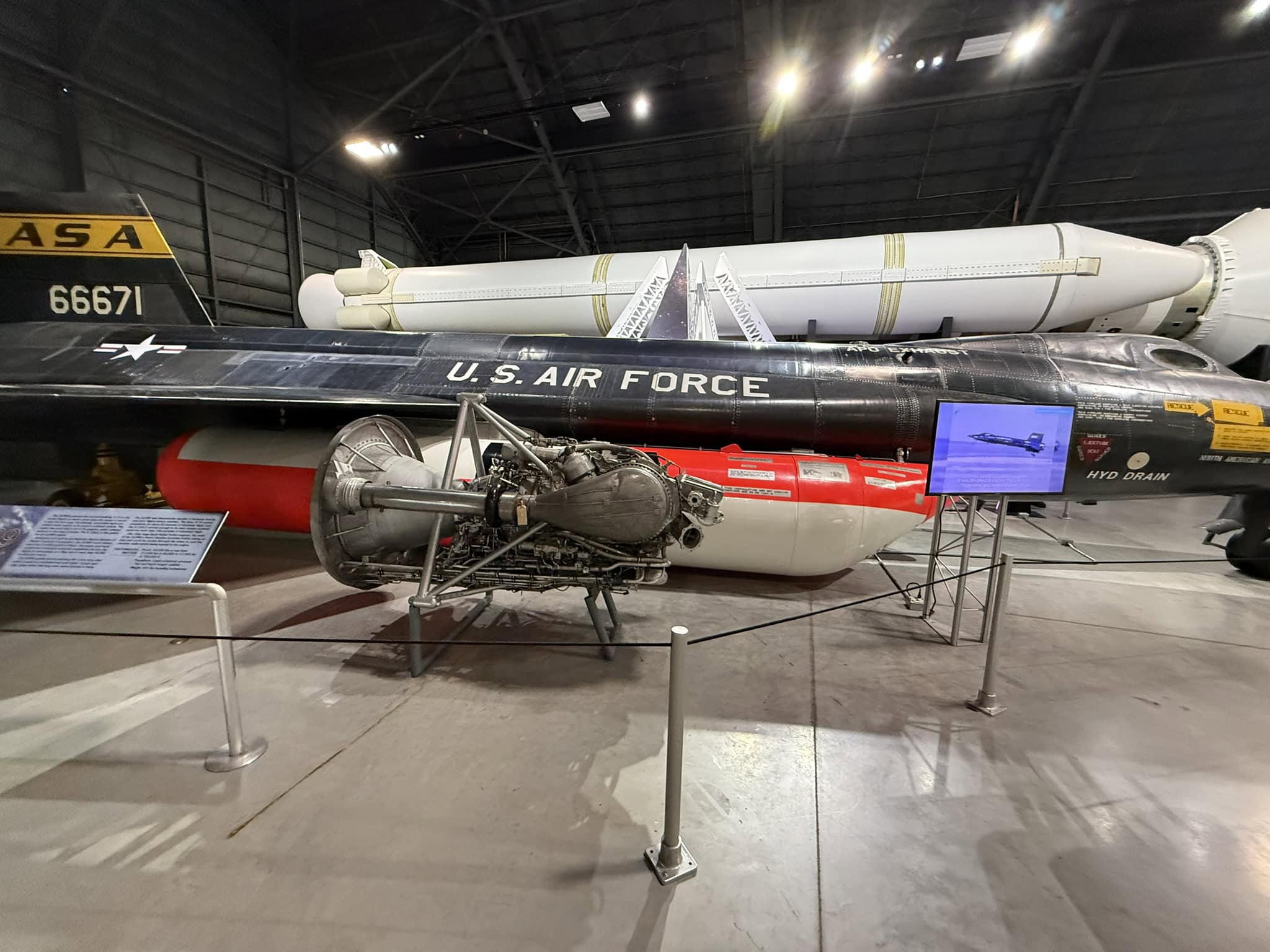
The record-setter itself, the X-15A-2, stands at the National Museum of the U.S. Air Force in Dayton, Ohio, stripped back to bare black Inconel, its ablative armor long gone, photographed by visitors who mostly have no idea what they are standing beside. And, as you might have guessed, many of the photos in this article are from a visit I made to that X-15 just last year.
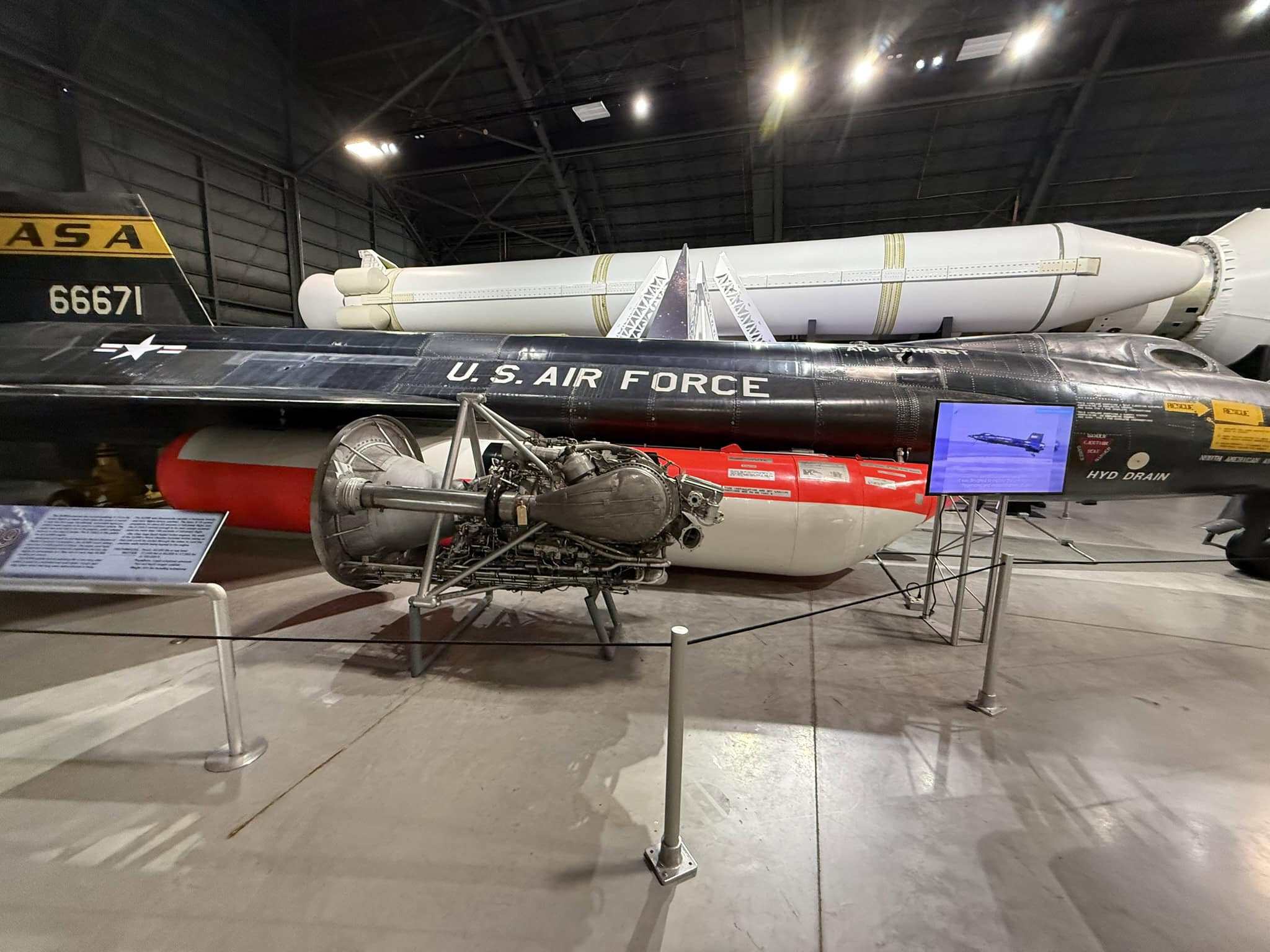
X-15. Photo by Harry J. Kazianis for 19FortryFive.com.
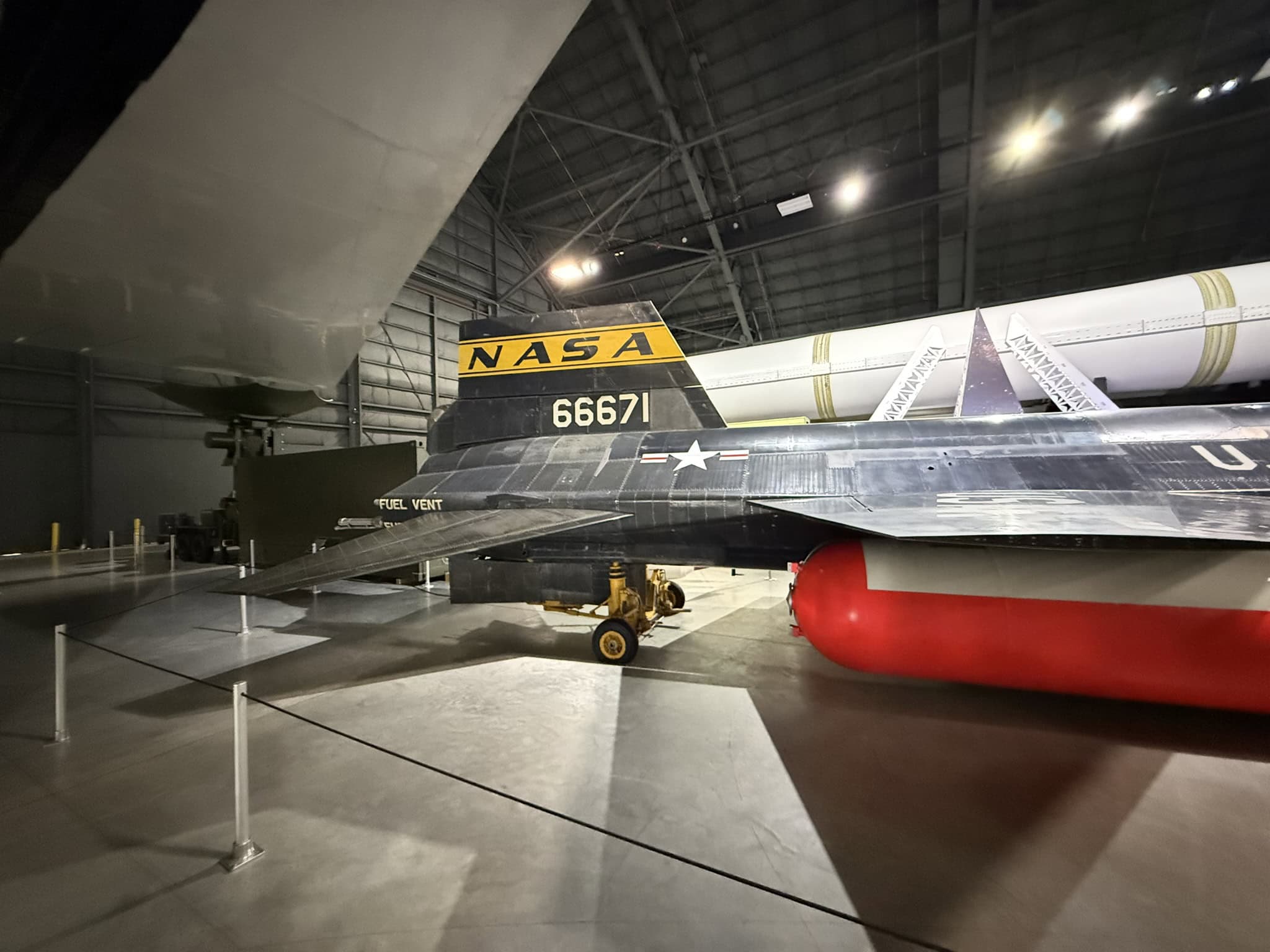
X-15. Photo by Harry J. Kazianis for 19FortryFive.com.
A museum guide in Dayton put it plainly to one of them: this is one of the fastest pieces of aviation in human history.
It is the exact airframe that came back scorched and holed from Mud Lake on October 3, 1967, traveling at 4,520 miles per hour, a number every hypersonic program since has chased and none with a pilot aboard has ever matched.
About the Author: Harry J. Kazianis
Harry J. Kazianis (@Grecianformula) was the former Senior Director of National Security Affairs at the Center for the National Interest (CFTNI), a foreign policy think tank founded by Richard Nixon based in Washington, DC. Harry has over a decade of experience in think tanks and national security publishing. His ideas have been published in the NY Times, The Washington Post, The Wall Street Journal, CNN, and many other outlets. He has held positions at CSIS, the Heritage Foundation, the University of Nottingham, and several other institutions related to national security research and studies. He is the former Executive Editor of the National Interest and the Diplomat. He holds a Master’s degree focusing on international affairs from Harvard University.

