
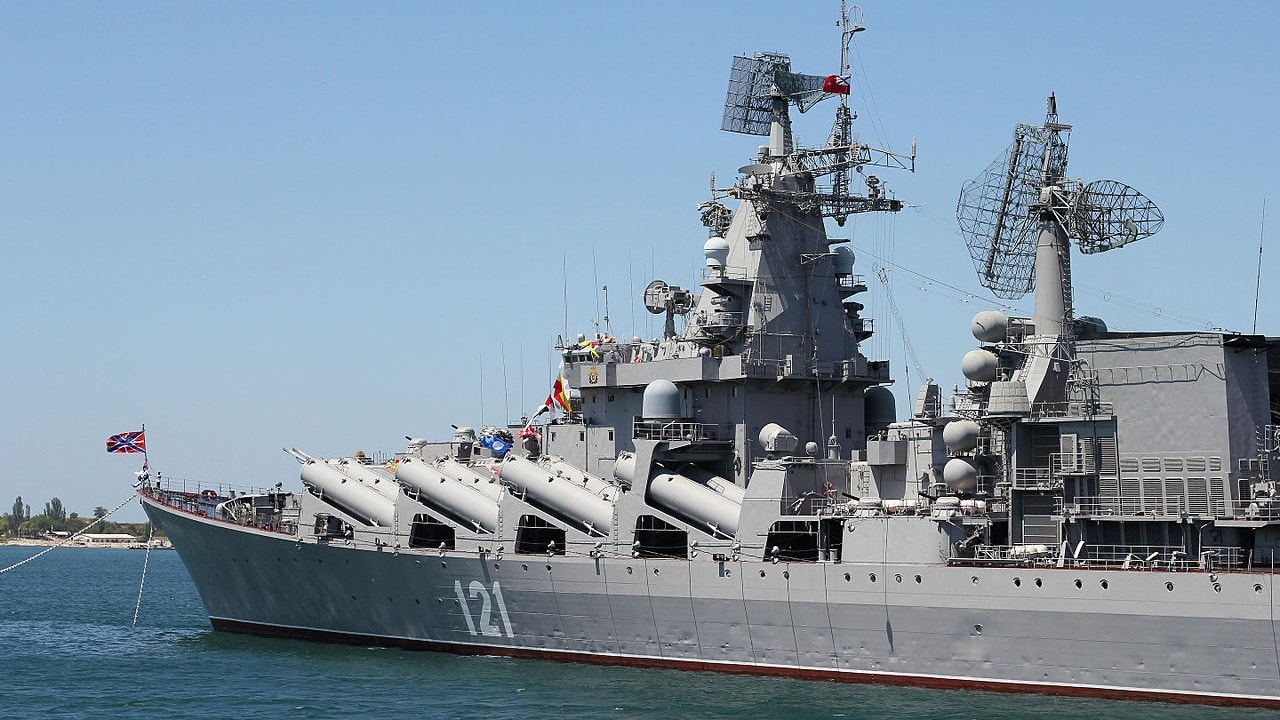
A few years back, in April of 2022, the Russian Navy’s Black Sea flagship, the guided-missile cruiser Moskva (RTS-121), suffered major damage and later sank after it was hit by relatively inexpensive Neptune cruise missiles.
Russian state media TASS and RIA claimed that a fire on board the cruiser had set off ammunition.
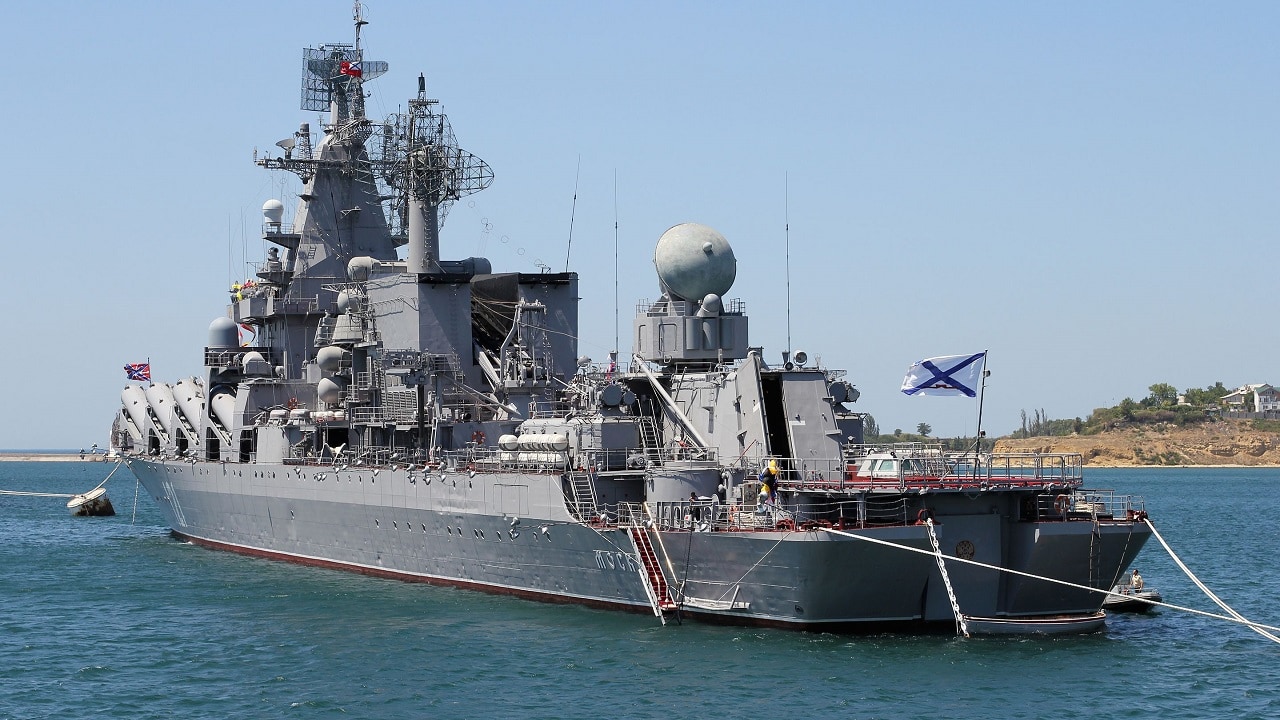
“Moskva” (“Moscow”) (ex-“Slava”, which means “Glory”) is the lead ship of the Project 1164 Atlant class of guided missile cruisers in the Russian Navy. This warship was used in the 2008 Russia-Georgia War. The Black Sea. Sevastopol bay. This photo was taken from a boat.
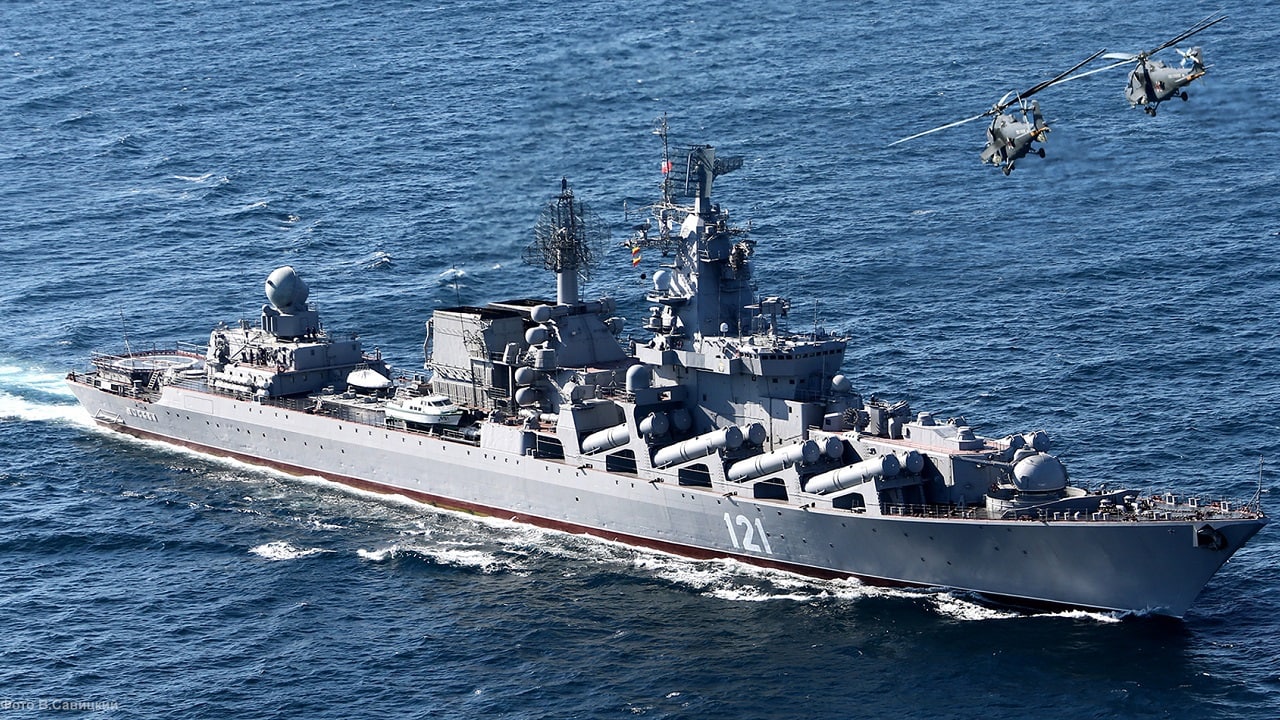
Moskva Cruiser. Image Credit: Creative Commons.
“As a result of a fire, ammunition detonated on the Moskva missile cruiser. The ship was seriously damaged,” Russian media didn’t explain further the cause of the fire.
The nearly billion-dollar Slava-class cruiser was sunk by two Ukrainian Neptune anti-ship cruise missiles that cost about $1.5 million each.
The sinking of the Russian flagship Moskva highlights the potential vulnerability of surface warships to cheaper anti-ship missiles. And it is a lesson for all navies that cheap long-range weapons can have a devastating effect on warships.
The Sinking Of The Moskva Was A Black Eye For Russia’s Navy
The abandoned, burning ship was another blow to the Russian military’s prestige as they have struggled badly in their invasion of Ukraine and have taken far more casualties and lost more aircraft and armored vehicles than was ever envisioned.
The Moskva, the flagship and the pride of the Russian Black Sea fleet, was the largest Russian warship sunk since World War II, and the first flagship sunk since the war with Japan in 1905.
Ukrainian officials reported that the cruiser was hit by Neptune cruise missiles.
Odesa governor Maksym Marchenko posted on his Telegram page, “It has been confirmed that the missile cruiser Moskva today went exactly where it was sent by our border guards on Snake Island!”
“Neptune missiles guarding the Black Sea caused very serious damage to the Russian ship. Glory to Ukraine!”
The Moskva was featured in one of the earliest actions during Russia’s invasion of Ukraine when it demanded the surrender of the small Ukrainian force on Snake Island.
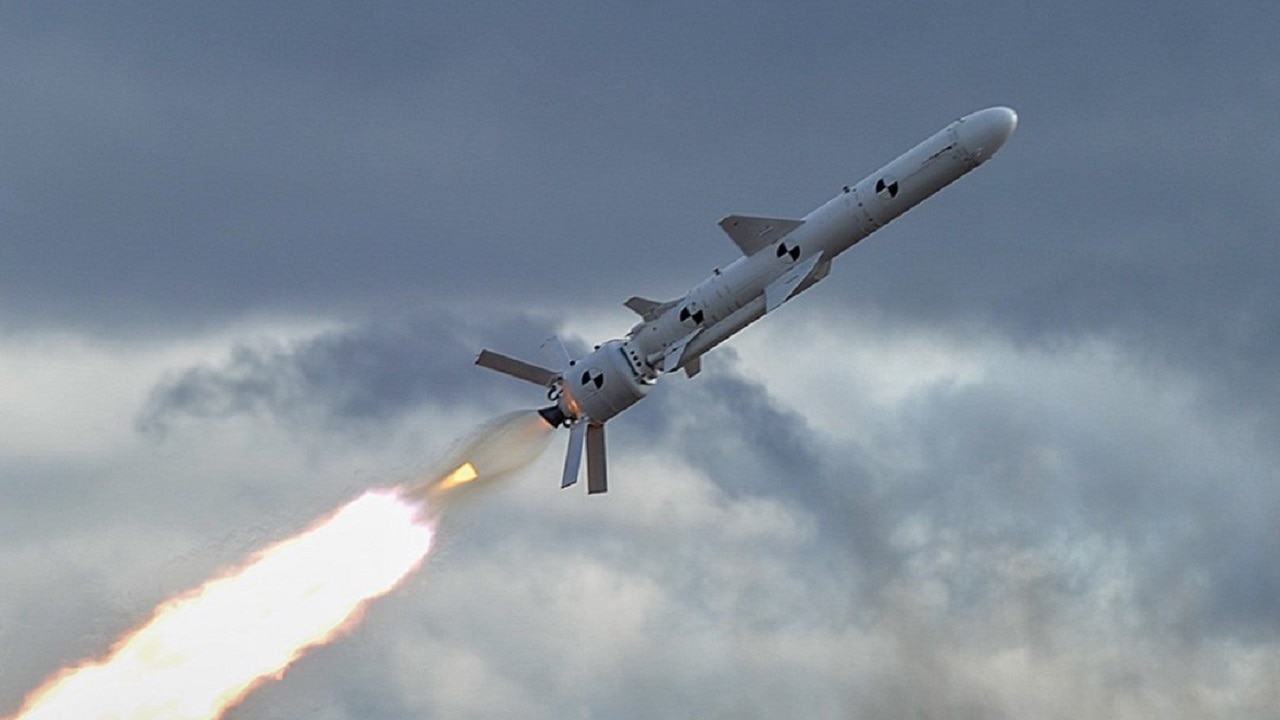
Neptune Anti-Ship Missile. Image Credit: Creative Commons.
The Ukrainians responded with “Russian warship, Go….yourself”.
Russia Claimed That a Fire Was The Cause
The Russian Defense Ministry said that the fire had been contained but that the ship had suffered major damage as a result. As before, the ministry didn’t elaborate on what caused the fire but did say that they were launching an investigation.
“The fire on the cruiser Moskva is under control. There are no flames visible. Ammunition supplies are no longer exploding.
“The causes of the fire are currently being established,” the ministry said in its statement.
The Moskva Was One Of Three Slava-Class Cruisers
The Moskva was commissioned into the then-Soviet Union Navy in 1982 and was one of three Slava-class guided-missile cruisers.
The three 11,500-ton Slavas each carry16 SS-N-12 Sandbox anti-ship cruise missiles, as well as several different types of anti-submarine and mine-torpedo weapons. The Sandbox missiles have a maximum effective range of about 350 miles.
Developed during the height of the Cold War in the 1970s, the Slavas and the Sandboxes were designed to take on U.S. and NATO aircraft carriers by launching a plethora of anti-ship missiles that the crews couldn’t defend against.
Moskva featured a heavily upgraded, triple-tiered air defense system following a major modernization completed in July 2020.
However, its core architecture remained rooted in Soviet-era Cold War design, creating critical blind spots against modern, sea-skimming anti-ship cruise missiles.
And the extent to which they had been maintained and were operational was probably substandard, as well as Russian damage control procedures.
The Moskva, with its crew of 510, operated in the seas off of Syria, where it served as naval protection for the Russian forces’ Hmeimim airbase.
The two other Slavas, RTS Marshal Ustinov (055) and RFS Varyag (011), have been operating in the Mediterranean and are homeported at Vladivostok.
Did the Russians learn their lesson with the Moskva? The recently relaunched enormous battle cruiser Admiral Nakhimov reportedly features the largest and most heavily integrated air-defense missile magazine of any surface combat ship in the world, built around roughly 96 vertical launch cells for long-range area defense and six Pantsir-M close-in weapon systems.
The Neptune Cruise Missile Is An Economical Weapon
The R-360 Neptune cruise missile was developed by the domestic Ukrainian Luch Design Bureau and was based on the Soviet KH-35 cruise missile. The cruise missile is fitted with an active radar seeker for terminal guidance.
The Ukrainians have adapted the Neptune into a long-range weapon, not just for striking ships but also other targets, having hit more than 50 targets inside Russia just in the past year.
Ukrainian Navy spokesperson Dmytro Pletenchuk said the Ukrainian-made missiles had proven effective and remain in exclusive use by the country’s Naval Forces.
“Our Neptune is truly feared on the other side – and not without reason,” Pletenchuk said in an interview with Den.LIVE. “We don’t usually disclose its use, but sometimes, when a particular strike becomes widely discussed in the media, we can confirm – yes, that was us.”
It became operational in the Ukrainian forces in 2021, according to Ukrainian defense officials, and has an effective range of 170 miles. The cost is only about one-third of the US-made Tomahawk cruise missile, which costs about $4.5 million per unit.
The initial development of the Neptune program cost approximately $40 million.
As of late 2025, an upgraded, longer-range variant of the Neptune exists, featuring increased range (up to 1,000 km) and a heavier warhead, which may alter the production cost per unit.
But the Ukrainians would gladly trade a couple of million dollars’ worth of missiles for a billion-dollar warship.
About the Author: Steve Balestrieri
Steve Balestrieri is a National Security Columnist. He served as a US Army Special Forces NCO and Warrant Officer. In addition to writing on defense, he covers the NFL for PatsFans.com and is a member of the Pro Football Writers of America (PFWA). His work was regularly featured in many military publications