
Last week, the Trump administration anticipated a deal with Iran that would allow traffic to flow freely through the Strait of Hormuz.
Instead, the U.S. has been given a list of demands that, if accepted, would constitute major concessions and could be interpreted as a defeat for Trump.

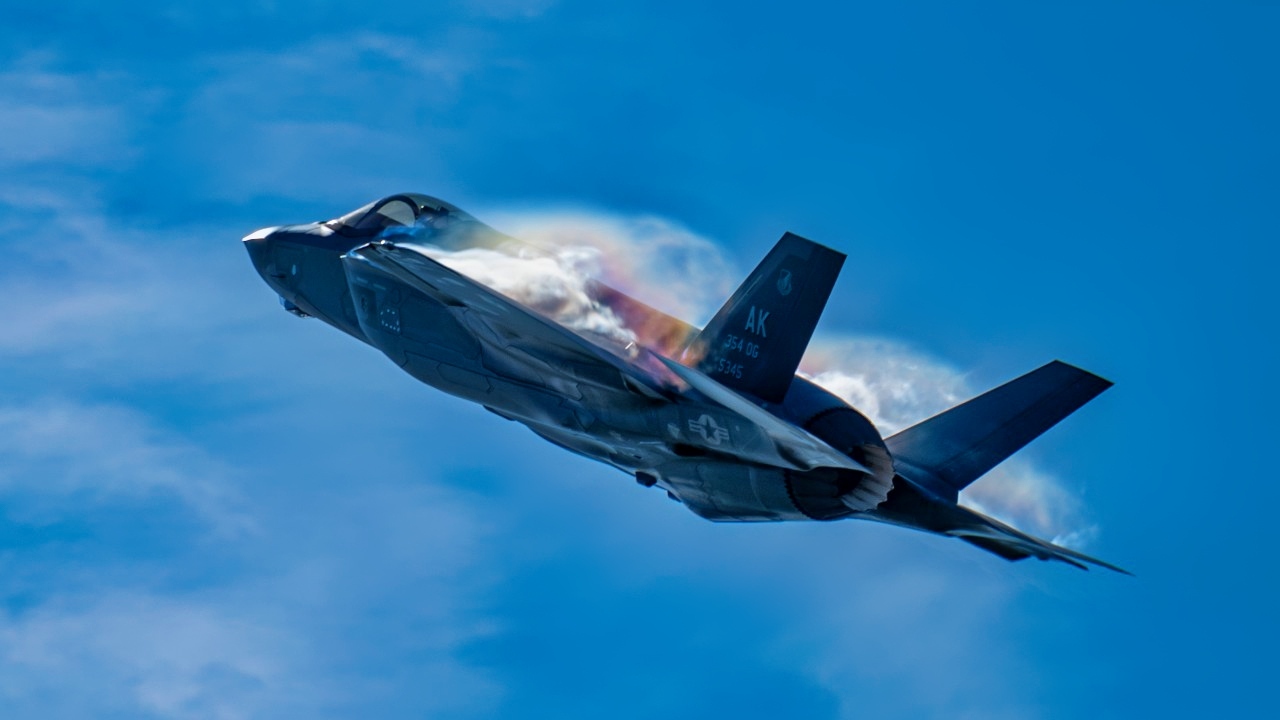
A U.S. Air Force F-35A Lightning II flies over the 56th Fighter Wing during Luke Days 2026, March 22, 2026, at Luke Air Force Base, Arizona. Luke Days 2026 highlights the precision and professionalism required to generate combat airpower and sustain the nation’s defense. Currently in operational service, the F-35A integrates stealth technology and advanced sensors to detect and defeat threats while maintaining air dominance. Opportunities for the public to see military aviation up close helps build appreciation for the readiness of the joint force. (U.S. Air Force photo by Senior Airman Belinda Guachun-Chichay)
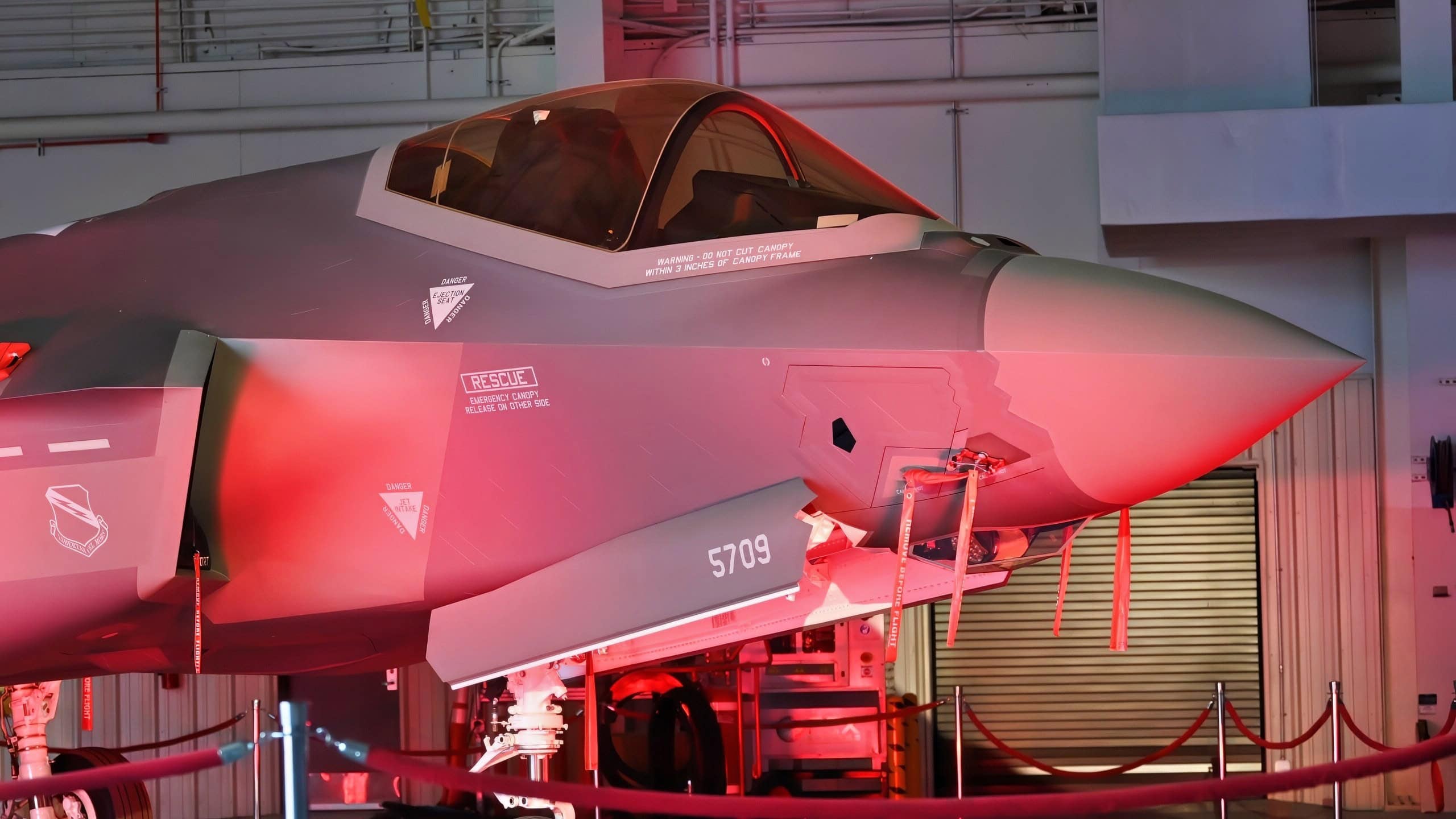
The new F-35 Lightning II stands on display at the First Aircraft Arrival ceremony on Nov. 2, 2024, at Naval Air Station Joint Reserve Base Fort Worth, Texas. The delivery of the F-35 ushered in a new era of modern-day warfighting for the U.S. Air Force. (U.S. Air Force photo by Staff Sgt. Richard Moser)
For the last several months, the U.S. has been looking for an off-ramp from the war that can still be presented to the public as a clear victory, with the idea of simply walking away, even though a nuclear deal is still being thrown around privately.
As public dissatisfaction with the war increases, Trump’s options to end the war are narrowing, and the idea of the U.S. accepting a strategic defeat is slowly becoming more of a possibility.
Iran Demands Complete Capitulation From Trump
Over the weekend, the regime in Tehran published a list of demands that the U.S. must meet before traffic through the Strait of Hormuz can continue.
The U.S. must withdraw its naval blockade, pay Iran damages for the war, unfreeze Iranian assets, lift sanctions on Tehran, and permanently end the conflict against Iran and its regional allies, the secretary of Iran’s Supreme National Security Council said on Iranian state media. “We are still at war, and as long as the American naval blockade continues and America’s other violations of the memorandum of understanding are not addressed, the strait will not be reopened,” Iranian spokesperson Esmail Baghaei said during a press briefing.
These demands are quite steep, to put it mildly.
If Washington were to grant even half of these requests, the end result would still be a major win for the regime and a humiliating blow to Trump. “Iran’s recent hardline demands for reopening the strait make it increasingly difficult for the President to manufacture a face-saving off-ramp from the conflict,” said Mona Yacoubian, director of the Middle East program at the Center for Strategic and International Studies, a Washington-based think tank.
The demands were likely made under the assumption that the U.S. wants to end the conflict as soon as possible. “The Iranians fully believe Trump wants out and is focused on opening the strait, which is why they are playing hardball,” said Gregory Brew, an Iran expert at the Eurasia Group.
Will the U.S. Accept Iran’s Terms?
It is possible that these requests were made with full knowledge that the U.S. would not accept them.
With the clock ticking until November’s midterms, Tehran is likely aware of the political pressure Trump is facing.
Consequently, continuing the war, as damaging to Iran as it may be, could still work out in the regime’s favor as the war inflicts a high political cost for the Trump administration.
Rising gas prices have been at the forefront of many Americans’ minds, and the longer that those prices stay up, the more costly it will be for the President.
In other words, Iran’s demands may be political theater, designed to stall out negotiations and increase the political damage in Washington.
Regardless of whether or not Iran intended its demands to be a stalling tactic, there are signs that the U.S. may be looking for an off-ramp as soon as possible.
One White House official stated that the U.S. had completed all of its military goals in Iran, with its focus now on securing control of the Strait of Hormuz.
On the topic of Iran’s nuclear program, the President has told private aides that the Iranians are unlikely to rebuild their nuclear program for the remainder of his presidency, indicating that the issue is no longer as pressing for the U.S. as it was in the past months. “We’ve already got the nuclear material, because it’s so far underground,” Trump said during July’s summit of the North Atlantic Treaty Organization. “Nobody’s going to be able to get it except us.” This indicates the U.S. is looking to declare victory in the Middle East as a means of withdrawing from the region.
Both Sides Need the War to End
The U.S. therefore has a couple of options.
It can accept Iran’s demands, thereby accepting defeat.
It can escalate the war in Iran, in the hope that Iran will fold under the intense military pressure, or it can maintain its current presence and hope that the economic pressures will force Iran to capitulate.
This seems to be the option that Trump has decided upon for the time being.
The President said as much in an interview with Axios on Sunday. “We are only semi-negotiating with them.
We are just watching Iran with its huge inflation and the fact they have no money.”
While the U.S. is currently facing political pressure to end the war, Iran is currently facing its own difficulties as the war carries on past its fifth consecutive month.
Iran’s economy was struggling to shoulder the weight of Western sanctions even before the conflict.
Now, after months of U.S. airstrikes on civilian and military infrastructure, the country is facing some bleak long-term prospects.
In many ways, Iran needs the war to end as much, if not more than the U.S. does, to rebuild its society.
Despite the tough image that the regime often props up, Iran faces multiple challenges at home, which are exacerbated by the war.
Ending the war, even without massive concessions from the United States, would go a long way towards helping Iran in the long-term.
About the Author: Isaac Seitz
Isaac Seitz, a Defense Columnist, graduated from Patrick Henry College’s Strategic Intelligence and National Security program. He has also studied Russian at Middlebury Language Schools and has worked as an intelligence Analyst in the private sector.