
Thousands of civilian seafarers are still trapped aboard hundreds of commercial vessels in the Persian Gulf after almost six months of conflict, following Iran’s closure of the Strait of Hormuz and repeated attacks on ships attempting to bypass its blockade.
The situation has left crews who entered the region before the war unable to leave and exposed to missile and drone attacks if they attempt to transit through the waterway.
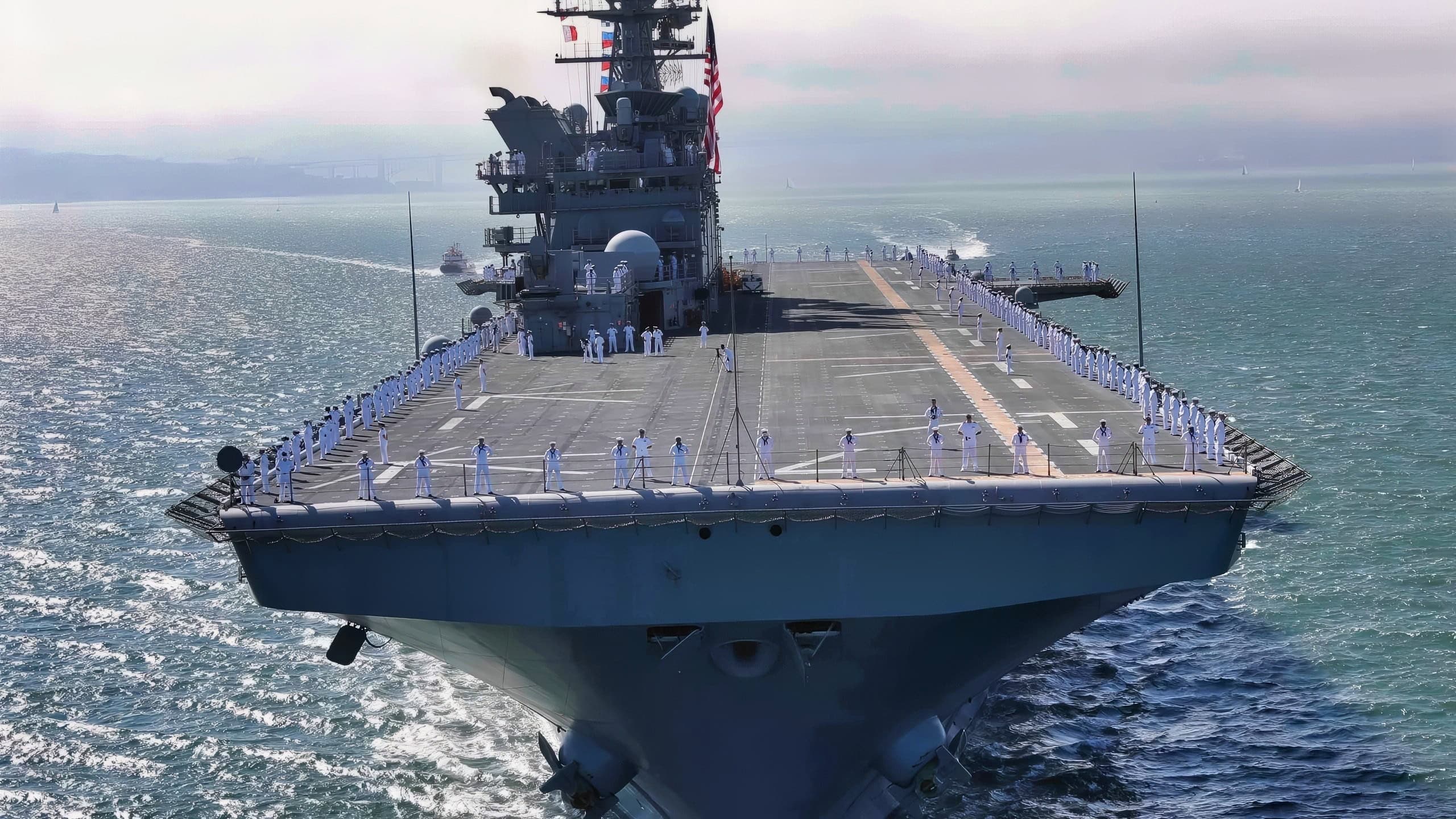
210911-N-OP825-1213 PACIFIC OCEAN (Sept. 11, 2021) Sailors aboard amphibious assault ship USS Tripoli (LHA 7) man the rails on the ship’s flight deck as the ship prepares to pull into San Francisco in support of San Francisco Fleet Week (SFFW), Sept. 11, 2021. SFFW is an opportunity for the American public to meet their Navy, Marine Corps and Coast Guard teams and experience America’s sea services. During fleet week, service members participate in various community service events, showcase capabilities and equipment to the community, and enjoy the hospitality of San Francisco and its surrounding areas. (U.S. Navy photo by Mass Communication Specialist 3rd Class Erica Higa /Released)
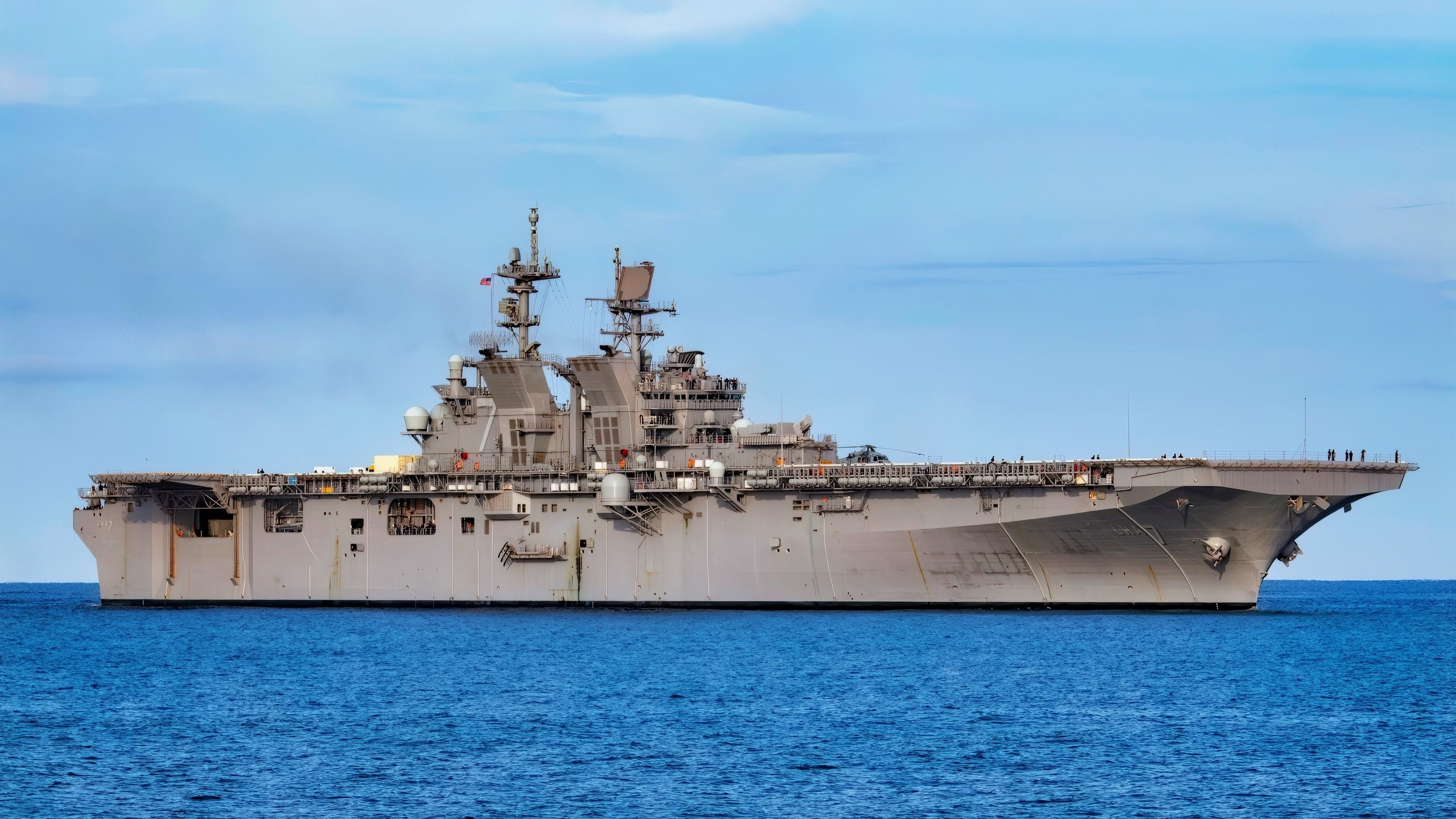
GUANTANAMO BAY, Cuba (Aug. 3, 2020) The amphibious assault ship USS Tripoli (LHA 7), the second America-class amphibious assault ship, transits toward Naval Station Guantanamo Bay, Aug. 3, 2020. Tripoli commissioned July 15 and is en route to homeport in San Diego. Naval Station Guantanamo Bay is the forward, ready, irreplaceable U.S. sea power platform in the Caribbean. (U.S. Navy photo by Mass Communication Specialist 2nd Class Samantha Oblander)
Some have escaped, with brief ceasefires, negotiated passages, and even a short-lived United Nations evacuation effort allowing hundreds of ships to move through the strait since the conflict began.
But the situation is still not fully resolved, with the latest estimates indicating that around 6,000 seafarers aboard roughly 500 vessels remain stranded in the Gulf.
And it’s still unclear how much longer it will take before civilians are allowed to leave.
Some Crews Have Been Trapped Since February
When the U.S.-Israeli war against Iran began on February 28, Tehran responded by effectively shutting the Strait of Hormuz to normal commercial shipping.
By late May, Reuters had reported that more than 20,000 sailors aboard around 2,000 vessels were stuck in the Gulf.
There were stories of some vessels suffering shortages of food and fresh water, workers left with delayed wages, and overwhelming trouble for most seafarers with regard to arranging repatriation.
The International Transport Workers’ Federation said that it had been contacted by more than 2,000 sailors seeking assistance.
Since then, the numbers have fallen substantially – but it’s still an ongoing problem.
On Friday, August 7, Lloyd’s List Intelligence Research Director Bridget Diakun told USNI News that around 70 vessels caught inside the Persian Gulf during the original closure are still trapped, including 29 tankers.
The numbers aren’t great, but it’s down from roughly 160 tankers that were stranded earlier in the conflict.
Diakun said another 65 vessels entered the Gulf during the temporary June ceasefire, only to become trapped themselves when the agreement collapsed and shipping restrictions were reimposed.
The Guardian Tells Trapped Seafarers’ Stories
A Guardian newspaper investigation published on Sunday, August 9, described the psychological pressure on sailors who are still stranded in the Gulf, and uncertain when, or whether, their ships will be able to safely leave.
Many of those trapped, after all, cannot leave without their ships.
Savio Ramos, the general secretary of the Maritime Union of India, spoke to The Guardian and compared the experience to imprisonment. He told the British newspaper that the uncertainty of the situation eventually “gets to you.”
The report said that many ships are still receiving food and fresh water from supply boats, with some crew members having been repatriated once replacement officers are found.
Similar conditions were documented by a Reuters report from May.
Indian sailor Salman Siddiqui said life aboard his stranded vessel had effectively been reduced to planning how to survive each night without being struck. Seafarers described isolation, fear of missiles and drones, salary problems and dwindling supplies.
Per The Guardian’s recent report, 17 seafarers have died since hostilities began, most of whom died in the wake of Iranian attacks.
The Rescue Attempt That Failed
There have been repeated attempts to rescue those stranded in the Gulf, and many have only partially succeeded.
Among the most ambitious attempts came in late June, following the memorandum of understanding (MOU) ceasefire agreement.
The International Maritime Organization developed an evacuation scheme intended to move more than 11,000 seafarers aboard hundreds of vessels out of the Gulf.
Ships were offered two temporary routes: a northern corridor through Iranian waters and a southern route through Omani waters with U.S. oversight.
On June 24, reports said that at least three ships had already passed through the Strait under the IMO initiative, while another three crude tankers were leaving the Gulf.
But the operation had barely gotten started before Iranian strikes brought it to an end. The Singapore-flagged Ever Lovely was struck near Oman while traveling on a route recommended by UKMTO.
Washington blamed Iran, and Tehran warned that ships must pass through Iranian-approved routes or face the risk of being struck by drones or other munitions.
The IMO promptly suspended that evacuation operation on June 25.
More Ships Escaped During the Ceasefire
That aborted IMO operation was only part of the exodus of trapped ships.
During the rest of the time in which the MOU was in effect, between June 18 and July 8, there was a window in which large numbers of vessels were able to leave.
Several dozen oil and gas tankers escaped during this temporary opening.
According to Lloyd’s List Intelligence data, roughly 160 tankers were stranded initially, with just 29 from that original group still trapped by early August.
However, ships also began re-entering the Gulf during the ceasefire, and 65 of those vessels were subsequently caught inside when hostilities resumed, meaning more are, once again, trapped.
MORE – Iran Can’t Stop the US Air Force
About the Author: Jack Buckby
Jack Buckby is a British researcher and analyst specializing in defense and national security, based in New York. His work focuses on military capability, procurement, and strategic competition, producing and editing analysis for policy and defense audiences. He brings extensive editorial experience, with a career output spanning over 1,000 articles at 19FortyFive and National Security Journal, and has previously authored books and papers on extremism and deradicalization.