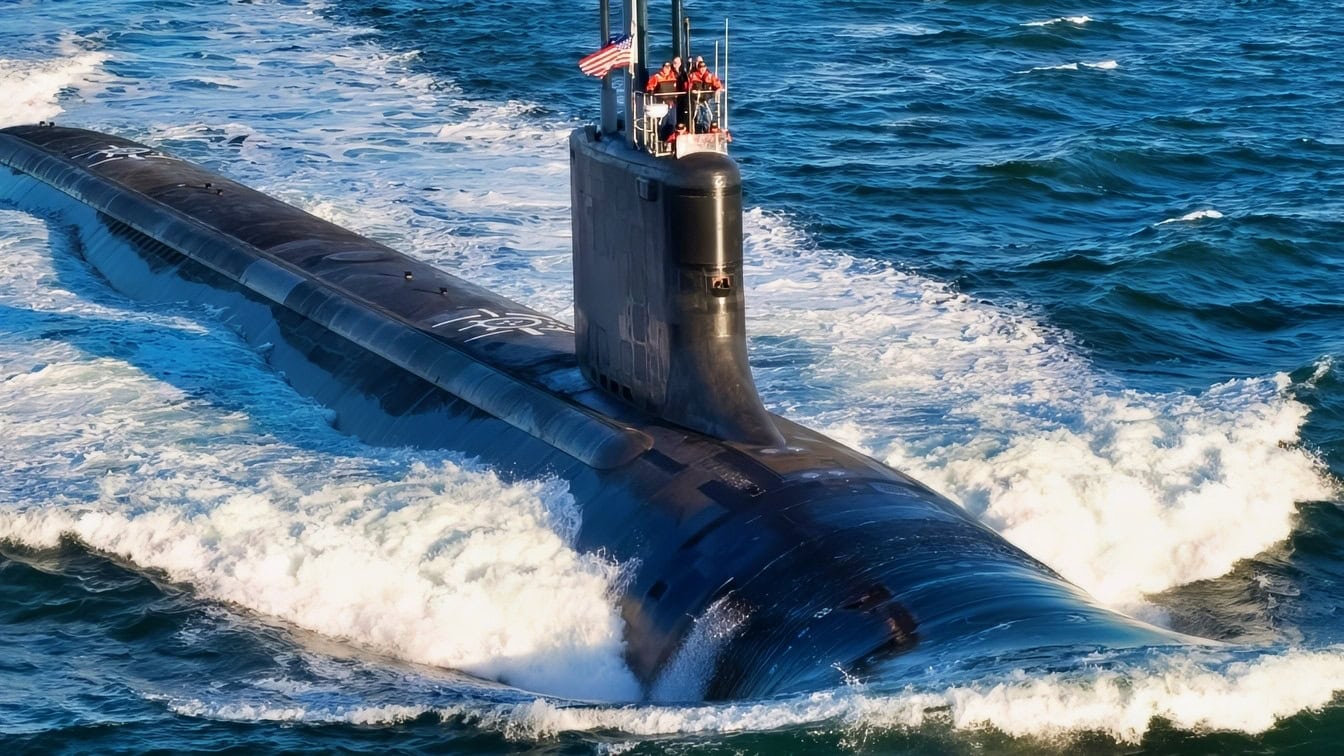
Despite moments of friction experienced between Washington and Canberra, the AUKUS nuclear-powered submarine deal will sail ahead. The tripartite defense agreement, somewhat awkwardly named after its three members — Australia, the United Kingdom, and the United States — would see cutting-edge submarines delivered to the Royal Australian Navy in what amounts to a sweeping bolster to Canberra’s underwater capabilities.
Speaking to reporters in Canberra, Prime Minister Albanese explained that “we reviewed the significant progress that has been made under AUKUS, which remains full steam ahead.” Though all sides have affirmed that smooth sailing and clear skies are ahead, there may be troubled waters on the horizon.
AUKUS
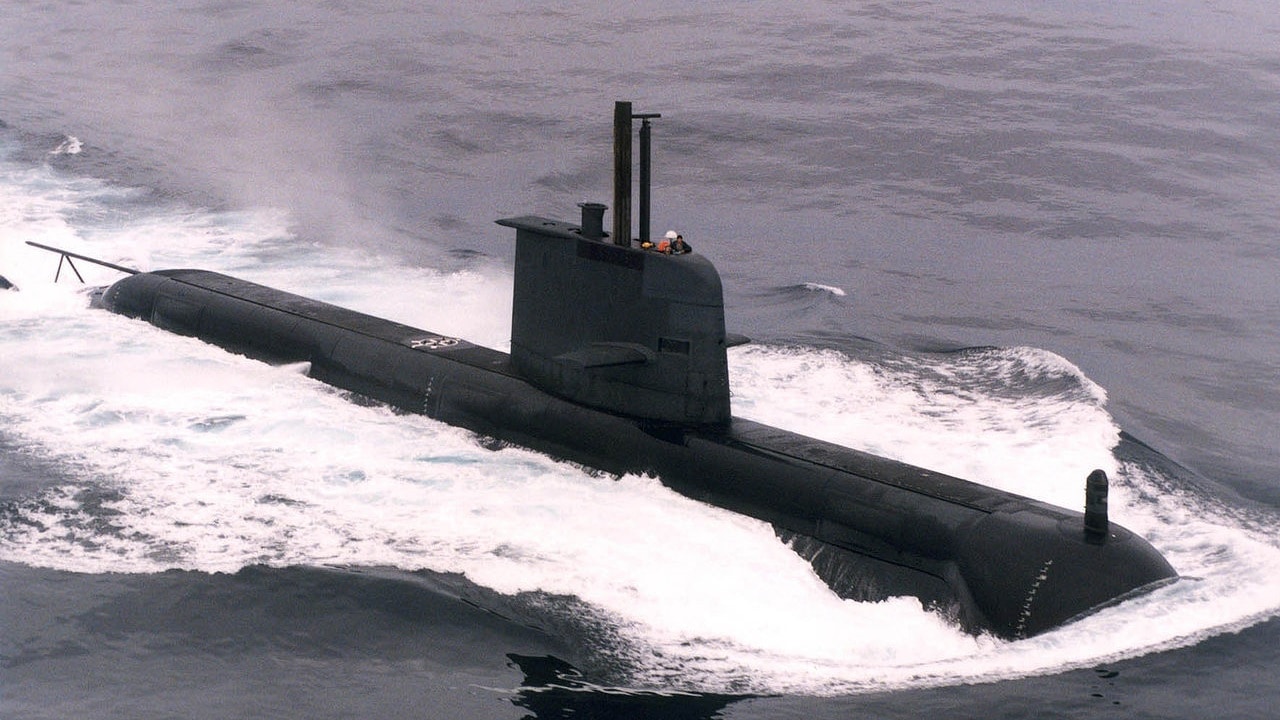
Collins-Class Submarine from Australia.
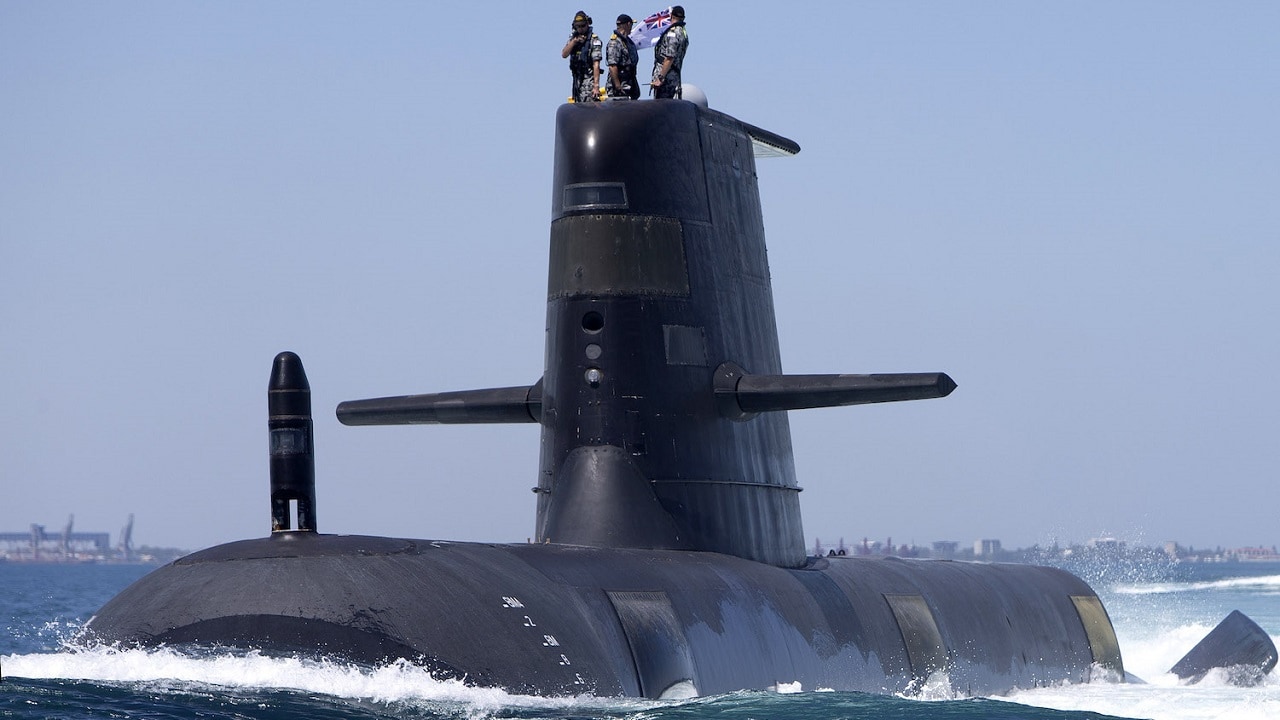
Collins-Class Submarine from Australia’s Navy.
The AUKUS agreement was announced quite unexpectedly during the Biden administration. At the time, Australia had been on the hunt for a replacement for the Royal Australian Navy’s six Collins-class submarines. Though Australian-built — the first submarines the country had made at home — they were riddled with problems almost from the outset. Leaky gaskets, seawater contamination in the fuel, propulsion issues, combat system problems, excessive noise while underway, sustainment complications, and myriad other issues arose.
While AUKUS was certainly a boon for the Australians, it came at a cost: the last-minute and wholly unexpected kibosh to the deal that was seemingly close to finalization with Naval Group, the French shipbuilder that Paris hoped would supply the RAN with modern but conventionally powered submarines, modified from the nuclear-powered submarines already in service with the French Navy. Though the French were naturally furious, the AUKUS deal moved forward.
Under AUKUS, America’s shipbuilders will manufacture the future, provisionally-named AUKUS-class submarines. Initially, those nuclear-powered submarines are to enter service with the U.K.’s Royal Navy in the 2030s, then with Australia’s Royal Australian Navy sometime in the 2040s.
But in the interim, Australia will both extend the service lives of its current fleet of Collins-class submarines — despite the subs’ moribund state — and purchase Virginia-class submarines from the United States. That purchase of three submarines, all ex-U.S. Navy hulls, will serve as an interim platform, affording Australian sailors the technical know-how needed for nuclear submarine operations.
Flagging Production Rates
Though Canberra had originally planned to purchase one new-build Virginia-class submarine alongside two submarines formerly in service with the U.S. Navy, America’s shipbuilders are struggling to complete hulls on schedule. The current rate of submarine production in America’s shipyards is around 1.1 to 1.2 submarines per year, about half the 2.33 submarines needed per year to meet demand by the United States, Royal, and Royal Australian navies.
Pentagon planning tsar Elbridge Colby has raised alarm bells since assuming the office of Under Secretary of War for Policy, most recently leading a strategic review of the AUKUS agreement.
Colby raised doubts about the ability of America’s submarine builders to meet both domestic demand by the United States Navy as well as meet its commitments to Australia and the United Kingdom, and stated that if push came to shove, he would prioritize America’s sailors over its partner navies.
But since that review ended, Colby has sounded a more positive note, explaining that the Pentagon sees “a deep alignment of thinking, and we see an energy and a focus more and more on the Australian side,” according to Reuters reporting.
“And we’ll just keep knocking down the targets on our side, and we have every expectation the Australian side will do the same. They know what is required.”
Australian Investment in Submarines
Australia has invested billions of dollars to expand the production capacity of America’s submarine builders, a facet of the AUKUS deal aimed at ensuring production schedules are met. Over the next three decades, Canberra is expected to pay up to $260 billion to American and British submarine manufacturing sites, money intended for the facilities that will build the future AUKUS-class submarines.
“We have a sense of confidence about the production rates getting to where they need to get to,” Australian Minister for Defence and Deputy Prime Minister Richard Marles said earlier this spring. “There’s about 200 Australian tradespeople at Pearl Harbor, working on getting Virginia-class submarines out to sea for the US Navy,” Marles added. “That’s a part of increasing the number of sea days for the US Navy with their Virginia-class submarines.”
MORE – Iran Wanted 1,000 Russian T-72 Tanks
About the Author: Caleb Larson
Caleb Larson is an American multiformat journalist based in Berlin, Germany. His work covers the intersection of conflict and society, focusing on American foreign policy and European security. He has reported from Germany, Russia, and the United States. Most recently, he covered the war in Ukraine, reporting extensively on the war’s shifting battle lines from Donbas and writing on the war’s civilian and humanitarian toll. Previously, he worked as a Defense Reporter for POLITICO Europe. You can follow his latest work on X.