
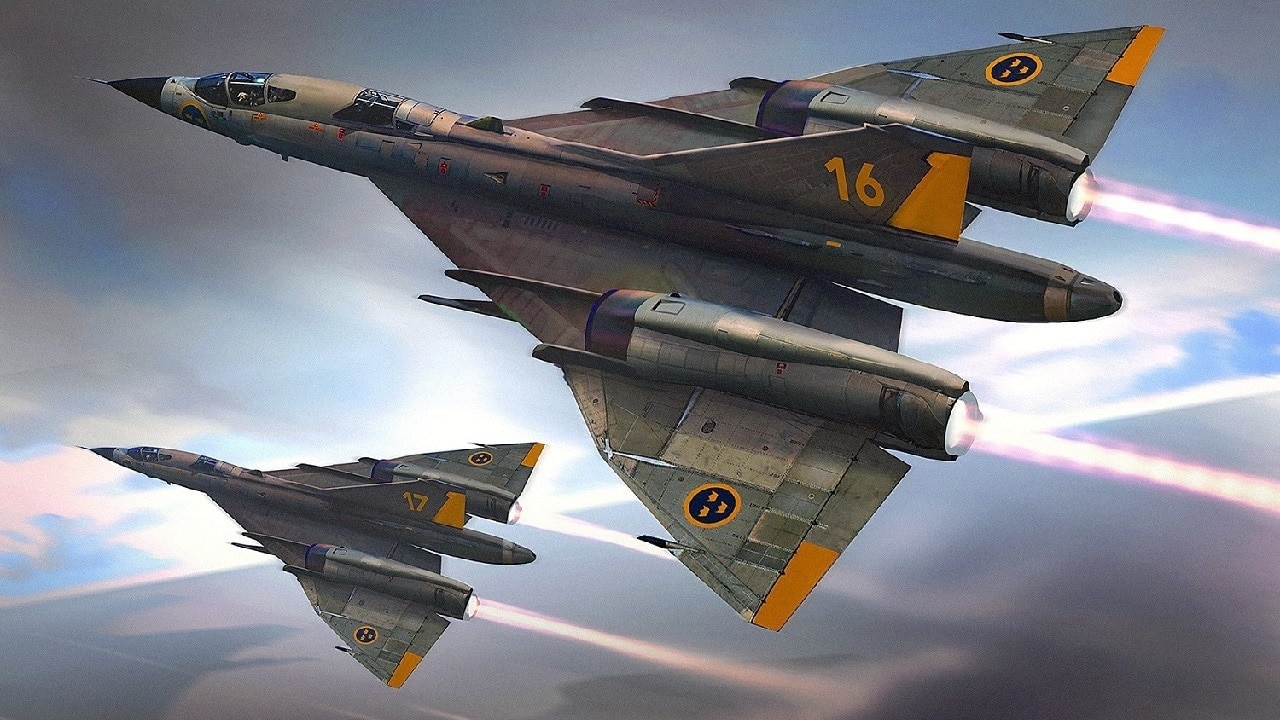
Events in Europe nearly drove Sweden to become a nuclear power in the 1950s.
As the Cold War grew hotter by the minute, Sweden, whose neutrality stretched seemingly forever, was building a nuclear bomber in the event that World War III began.
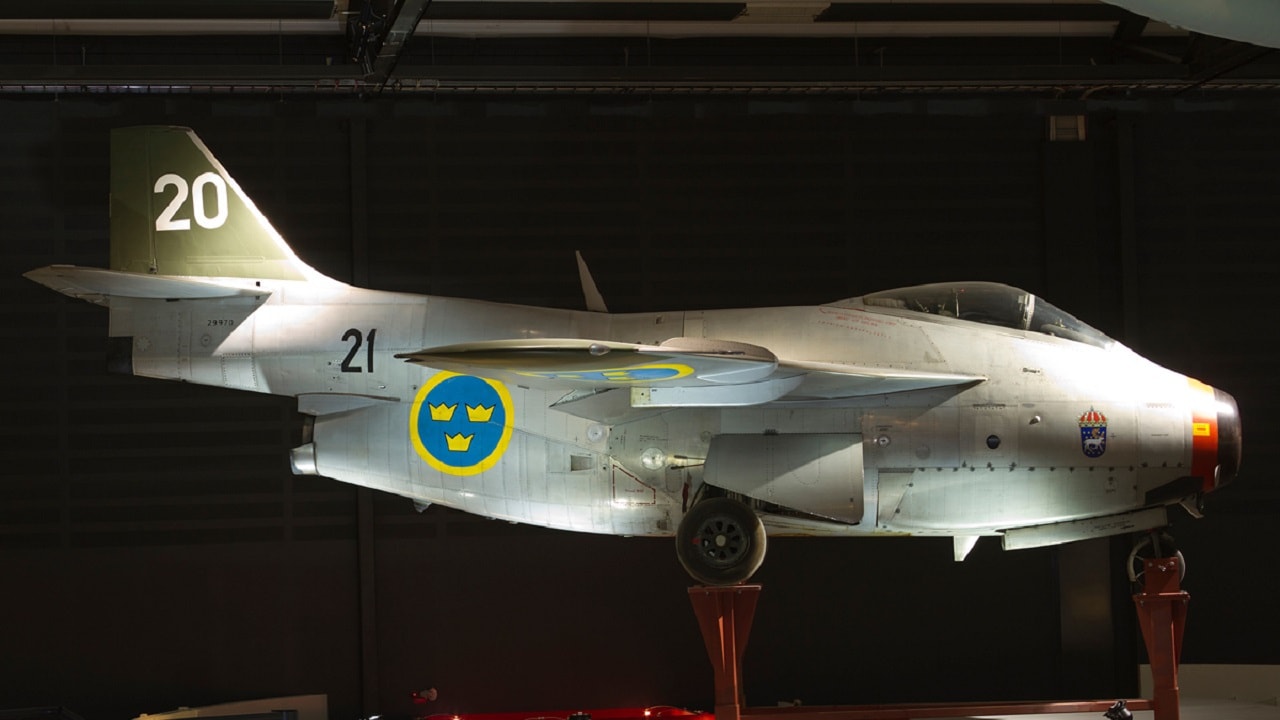
Saab J-29 Tunnan on permanent display at the Swedish Air Force Museum in Linköping, Sweden.
Before signing the Nuclear Non-Proliferation Treaty in 1972, Sweden did proceed with a nuclear weapons research program. Now, more than 212 years after their last war, the Swedes have joined NATO because they knew that Russia, under Putin, would not respect their neutrality any longer.
Many people are unaware of this particular development, but it shows how close the world was to exploding. Even the Swedes recognized the madness inside the Soviet Union, where its leaders believed they could conduct and “win” a limited nuclear holocaust.
True to its form, Sweden was officially neutral during the Cold War, but it shared intelligence with the Americans, something that wasn’t widely known at the time. Shortly after World War II ended, the Swedish government began working on a nuclear weapon, producing plutonium, not for an offensive, strike-first weapon. They chose a serious, agile, defensive strategy.
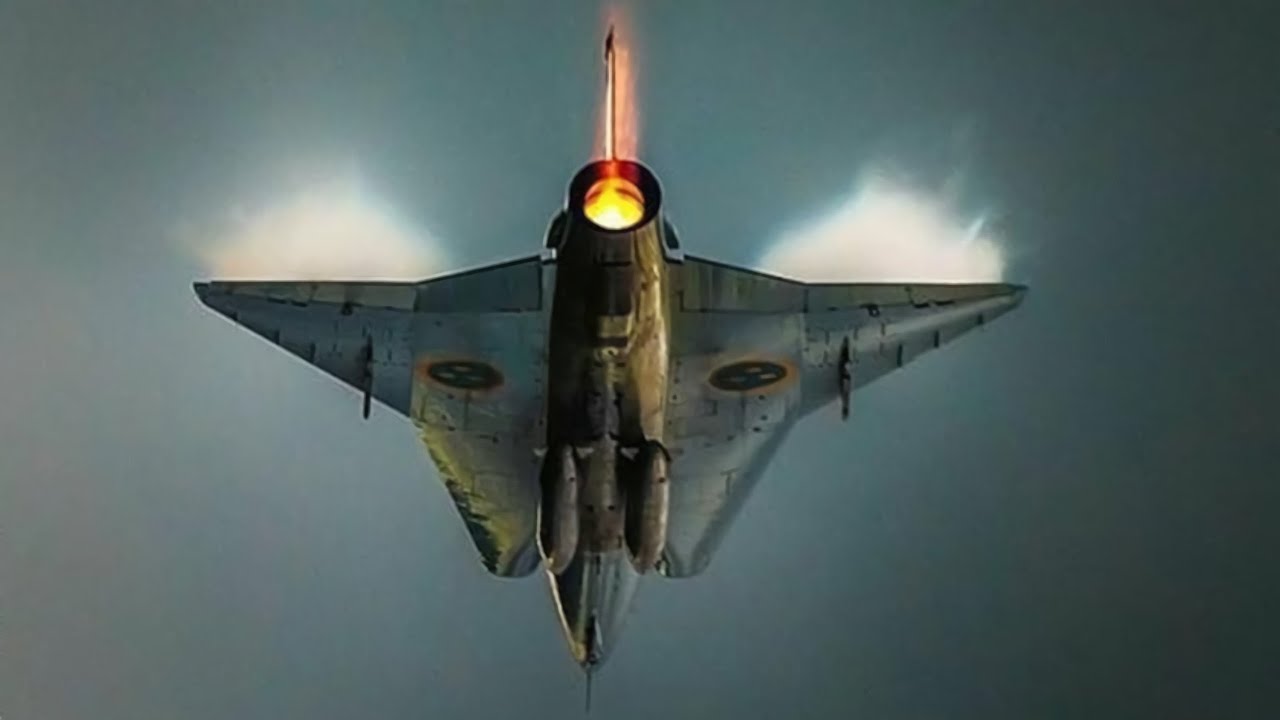
Saab 35 fighter, also from Sweden. Image Credit: Creative Commons.
The plan was not to have a strategic nuclear weapon but a tactical one if the Soviets invaded them. They could have the weapon soon enough, but lacked a delivery vehicle.
The United States seemed like a logical partner during this time period with President Eisenhower’s “Atoms For Peace” program.
But this was for nuclear power and not for weapons research. Sweden declined the transfer of nuclear know-how from the US.
Meet the Saab A-36 Delta-Winged Mach 2+ Bomber
When one thinks of Sweden or Saab, a nuclear bomber may be the furthest thing from one’s mind. Maybe the Viking Museum in Stockholm, perhaps.
But they did design a nuclear bomber, and because of their proximity to the Soviet Union and the Soviet-controlled Baltic States, the bomber wouldn’t need to be long-range.
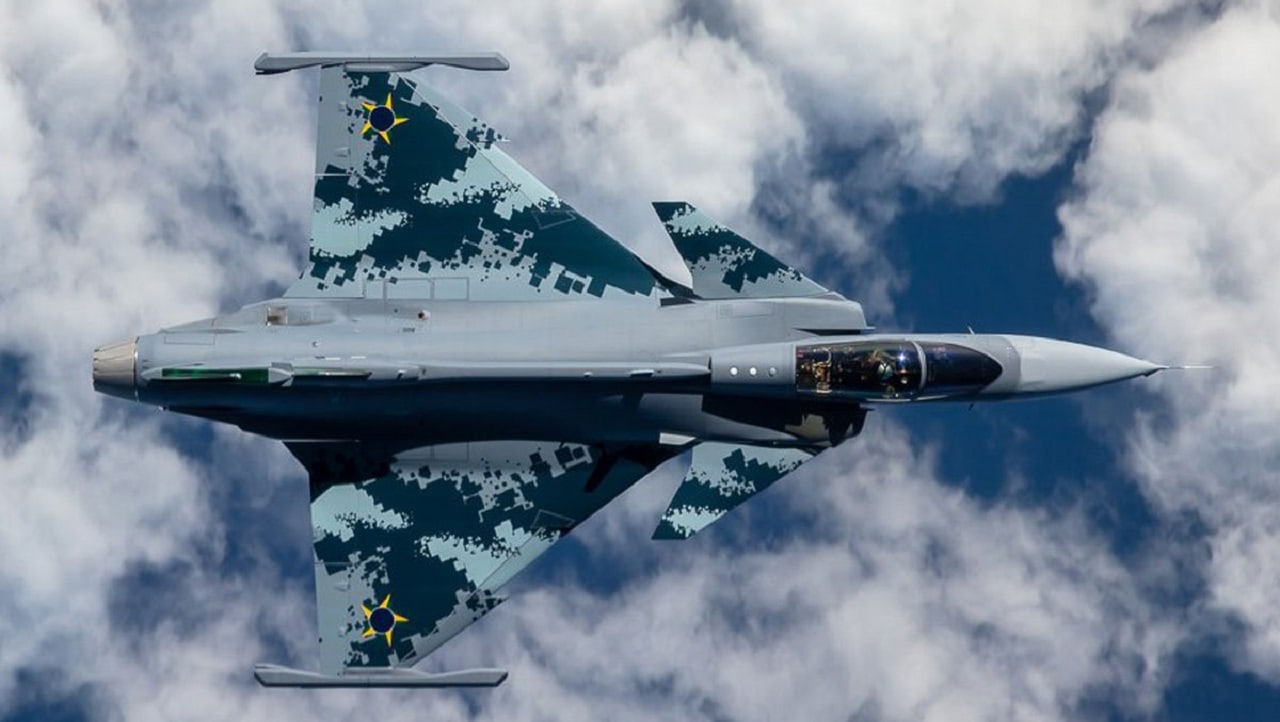
Sweden JAS 39 Fighter. Image Credit: Creative Commons.
In the late 1940s, the country began work on getting nuclear weapons, which studies showed would be technically and economically feasible.
In 1952, Saab started designing an aircraft with a long range, a large weapon load, and high speed as ‘Projekt 1300’.
The 13 in the name is the overall designation, while the later numbers (76) indicate which airframe was used.
The Saab 36, also Project 1300 and later the military designation A36 Vargen (Wolf), was a supersonic bomber designed to carry a 600 to 800 kg free-falling nuclear weapon.
A Swedish nuclear bomber would have to be capable of operating from dispersed airfields in accordance with Swedish doctrine.
It would, therefore, look quite different from its American or Soviet counterparts.
The A-36 was a single-seat, straight delta wing with a 62-degree sweepback, chin intake, and internal weapon bay.
The internal weapons bay was designed to prevent accidental detonation from the high-temperature air friction generated during supersonic flight.
This would reduce drag and improve performance, but it would limit the payload while decreasing the internal volume available for fuel, avionics, and other systems.
The primary weapon would be a 600-800 kg free-fall nuclear weapon.
The limited fuel load limited the A-36’s range to just 410 kilometers, but as close as they were to Soviet territory, the Baltics, and occupied Poland, that was enough range for their deterrent.
It had excellent speed, Mach 2.1 (1,611 mph), powered by a British Bristol Olympus turbojet, the same engine as the British Avro Vulcan bomber and the civilian Concorde SST. The ceiling was 59,000 feet.
The Swedish Government’s Cancellation of the Projekt 1300
Work on the A36 was progressing well.
However, by 1957, Sweden realized it could not afford to develop the A36, nuclear weapons, and other vital defense programs.
They decided to shift their defensive aircraft to what would later become the Saab 37 Viggen, a strike fighter that used the same delta-wing concept and could land on austere landing strips and roads.
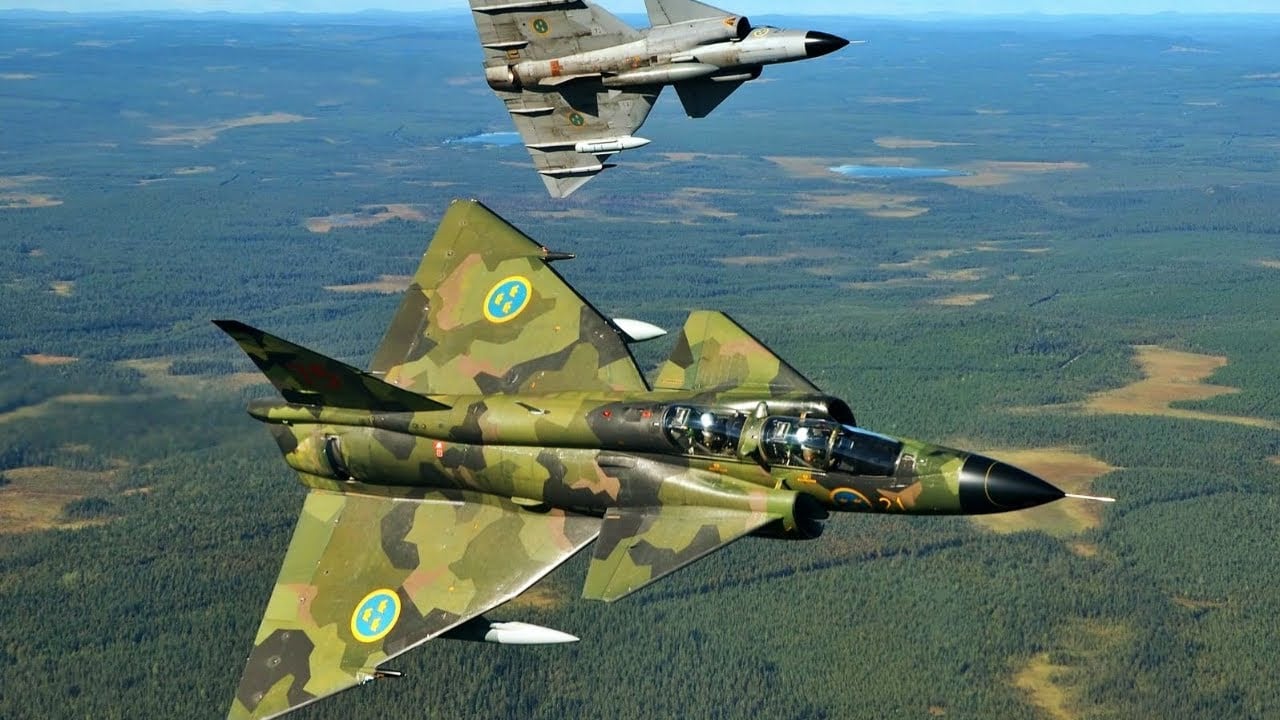
Saab 37 Viggen. Image Credit: Creative Commons.
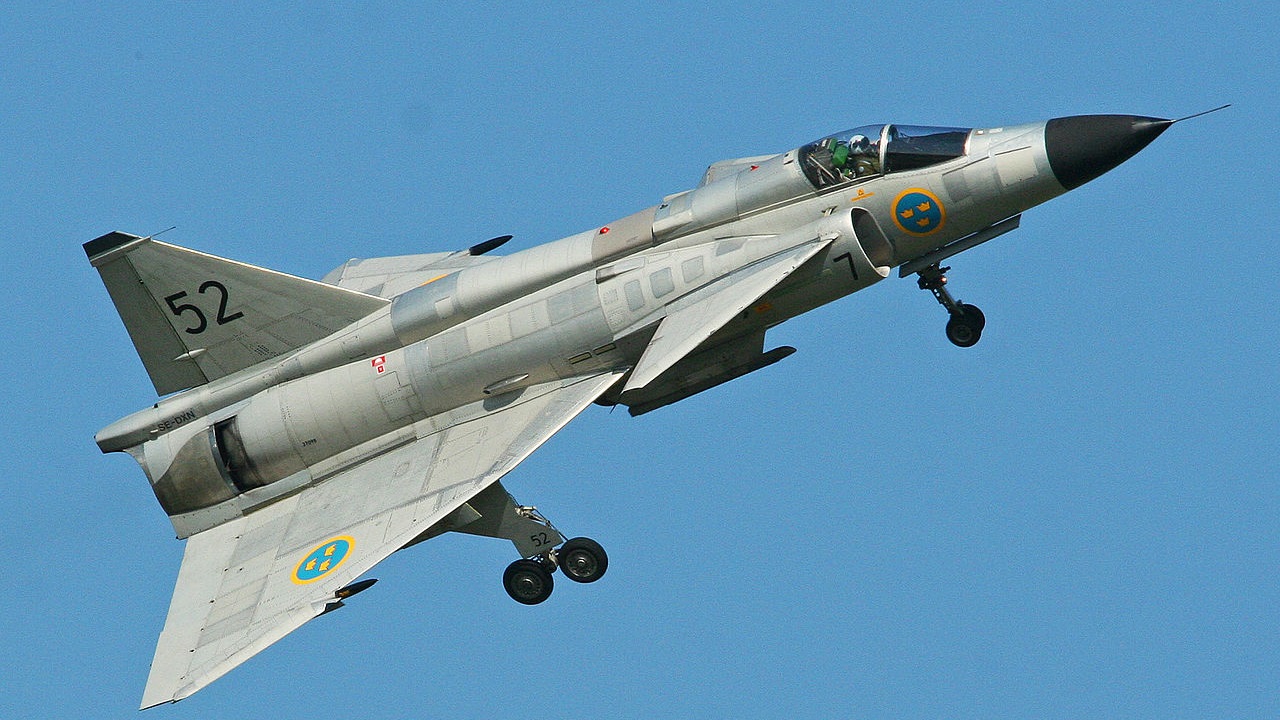
Making its first UK Airshow appearance, this amazing Saab 37 Viggen is operated by the Swedish AF Heritage Flight in genuine F7 markings. Seen during its solo routine. c/n 37-098. 2013 Waddington Airshow. 6-7-2013
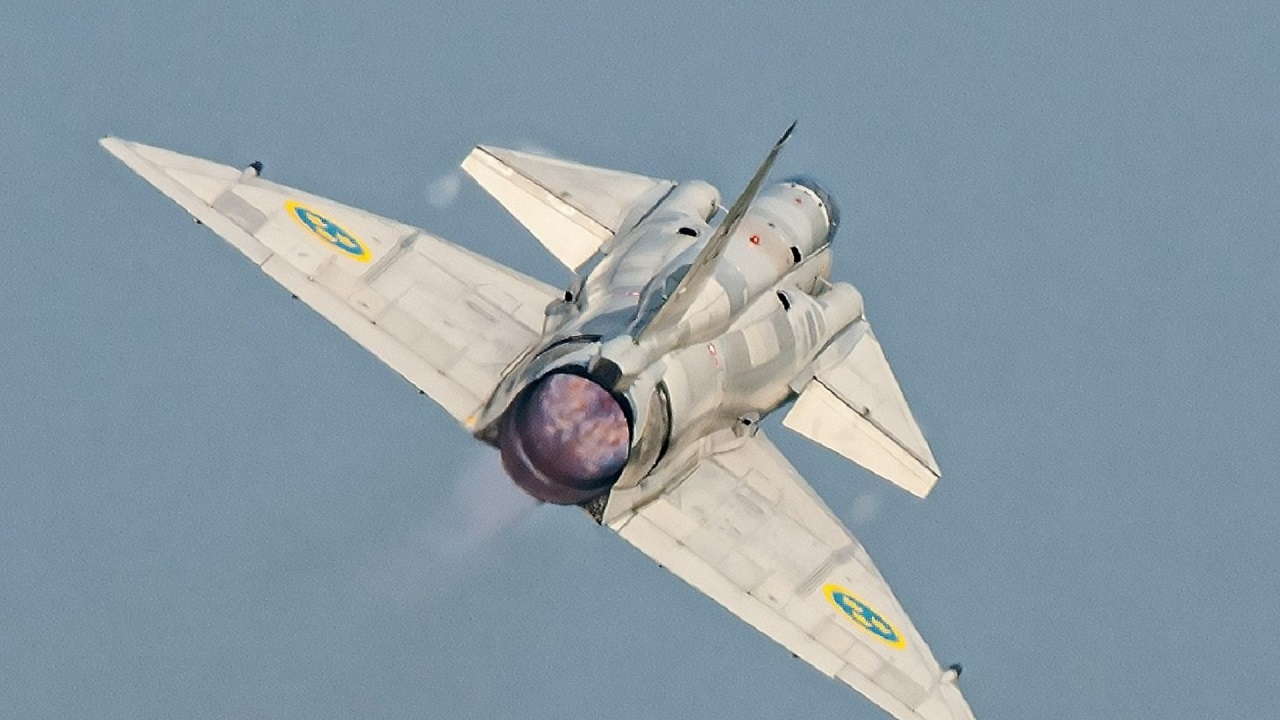
Saab 37 Viggen. Image Credit: Creative Commons.
It was first known as BAS 60, and later the BAS 90 system. And much later, the Gripen, the excellent fighter that has become an alternative to the US-made F-35.
The A36 program was canceled because it lacked a conventional capability.
Later, during the 1960s, the nuclear weapons program was also shut down by the Swedish Parliament, the Riksdag.
The Soviet Union found out about Sweden’s development of a nuclear bomber, and Sweden was warned by the Soviets that there was no such thing as a “neutral” nuclear deterrent.
The very nature of the Swedes gradually led them to decide not to support the production or use of a nuclear weapon.
While the idea of having a nuclear weapon resonated with the Swedes in the early 1950s, that attitude quickly changed. Now, in joining NATO, their survival is tied to the West. And it’s nuclear weapons.
But it won’t build or use any.
About the Author: Steve Balestrieri
Steve Balestrieri is a National Security Columnist. He served as a US Army Special Forces NCO and Warrant Officer. In addition to writing on defense, he covers the NFL for PatsFans.com and is a member of the Pro Football Writers of America (PFWA). His work was regularly featured in many military publications