
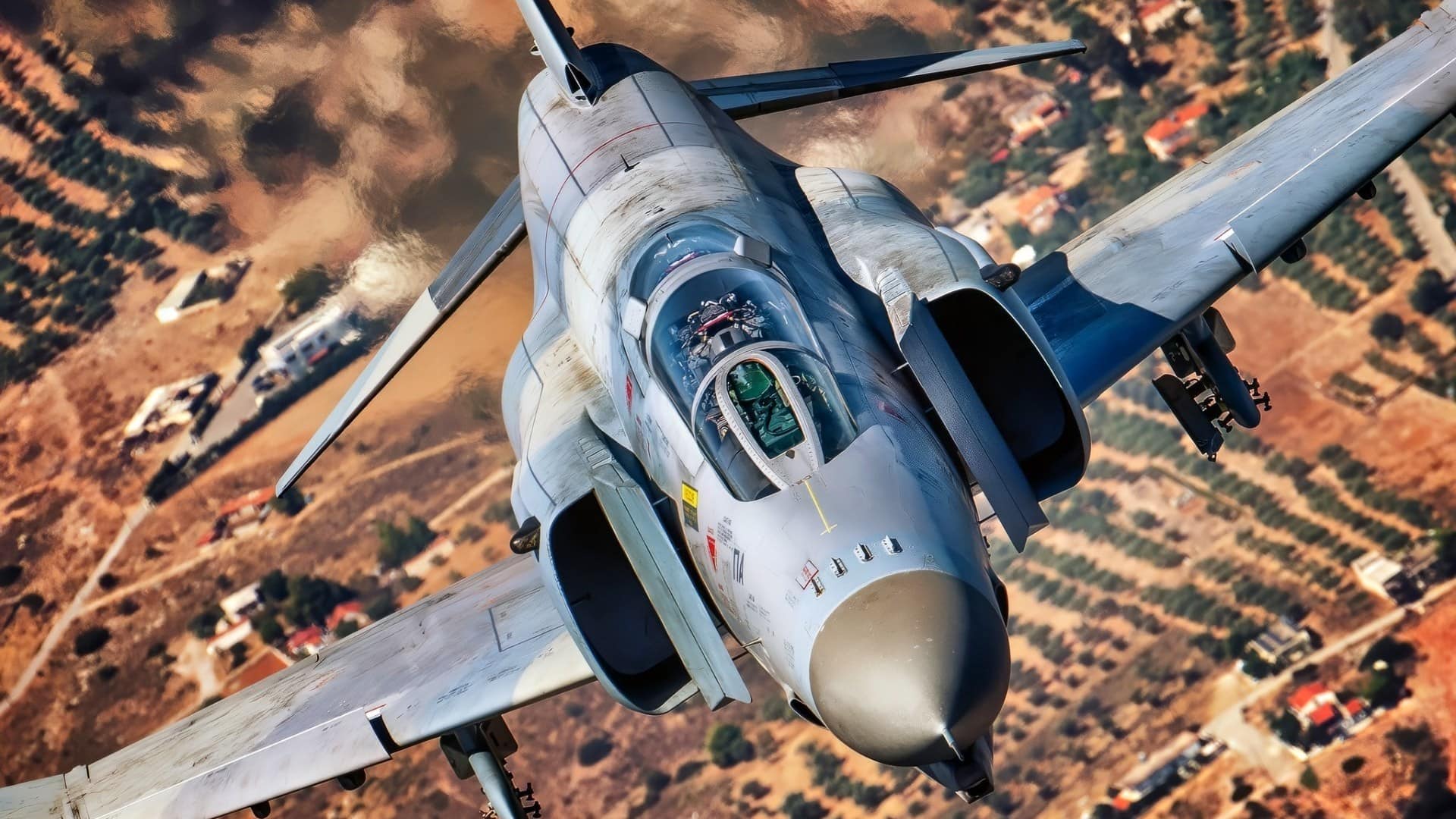
The Shah Bought Iran 225 F-4 Phantoms. Tehran Kept Them Flying Into 2026: Iran entered 2026 with one of the world’s last operational F-4 Phantom fleets. FlightGlobal’s prewar directory listed 65 F-4D, F-4E and RF-4E aircraft, although that inventory figure did not mean all 65 were flyable. The current number cannot be derived from that prewar inventory after months of U.S. and Israeli strikes on Iranian air bases.
The fleet began under Shah Mohammad Reza Pahlavi. Published aircraft histories generally put Iranian deliveries at 225 Phantoms: 32 F-4Ds, 177 F-4Es and 16 RF-4E reconnaissance aircraft. Deliveries began in 1968, giving Iran a large, American-trained strike force more than a decade before the Islamic Revolution ended military cooperation with Washington.
The F-4E explains the attraction. Two J79-GE-17 engines produced 17,900 pounds of thrust each, while the aircraft carried an internal 20 mm cannon and as much as 16,000 pounds of external stores. Its two-person crew could employ air-to-air missiles, conventional bombs, and guided weapons from a jet capable of exceeding Mach 2.
Iran never turned those aircraft into the equivalent of a modern F-15 or F-35.
Its achievement was different. Sanctions, war losses, and the disappearance of American factory support should have ended the fleet decades ago. Iranian depots instead kept a shrinking number in service through repairs, locally produced components, and repeated integration of new weapons.
The Shah Wanted a Fighter More Powerful Than the F-5
The original purchase grew from Iran’s position beside the Soviet Union and an increasingly well-armed Iraq. A 1966 U.S. policy memorandum recorded the Shah’s argument that Soviet-built MiG-21s entering the service of neighboring Arab forces made a higher-performance aircraft essential. The Joint Chiefs supported the sale of two F-4 squadrons between 1967 and 1973.
The order expanded rapidly. By October 1970, Iran had 31 F-4Ds, another 32 F-4Es on order, and plans for 73 additional F-4Es and four RF-4Es. American officials warned that the Shah’s proposed force exceeded Iran’s ability to absorb it and risked encouraging a Gulf arms race. They also recognized that denying the sale might damage a strategically important relationship.
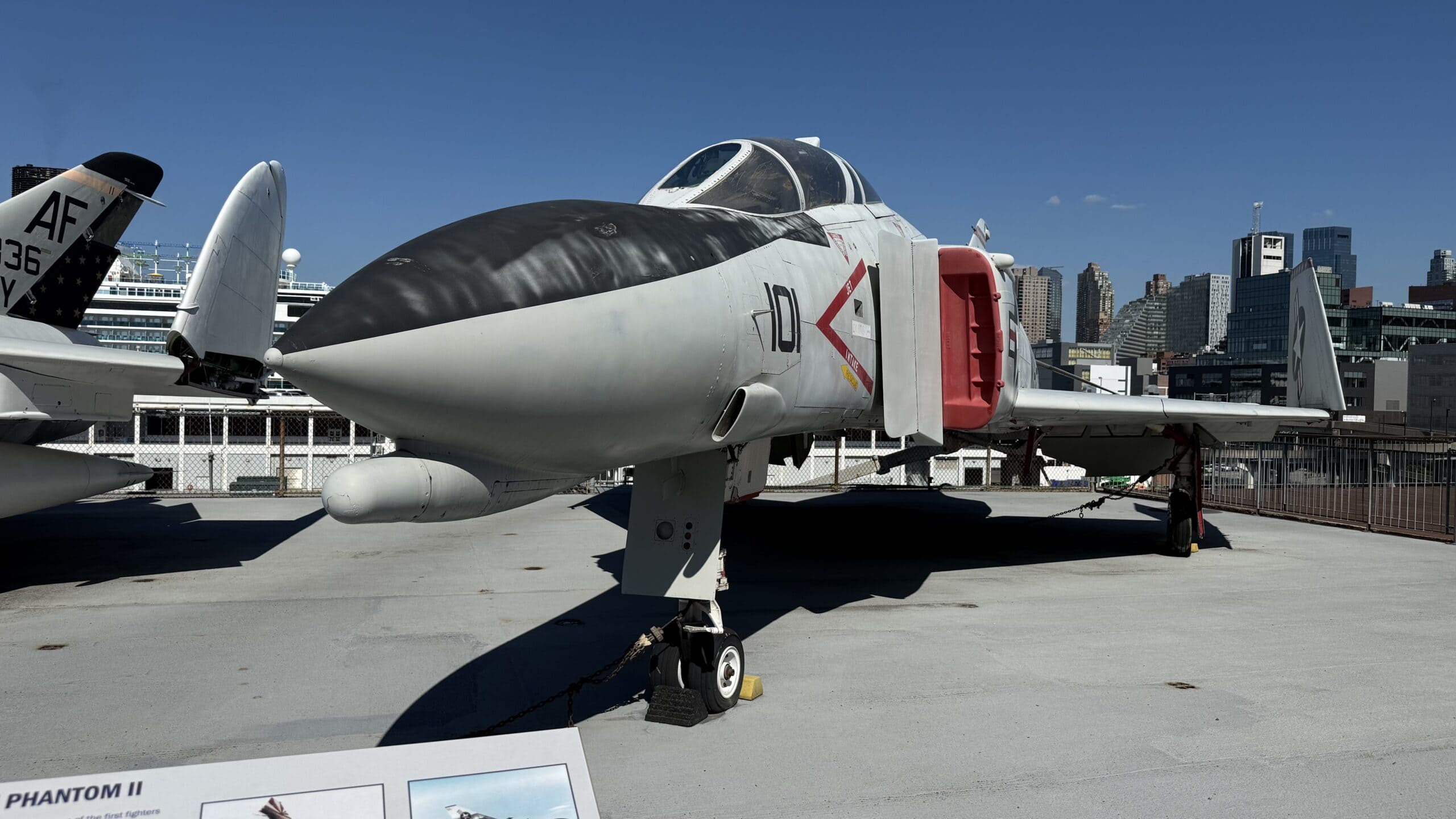
F-4 Phantom. 19FortyFive.com Photo.
The aircraft came with an American weapons and training system. Iran pursued Sparrow air-to-air missiles, Maverick air-to-ground missiles, and laser-guided bombs. U.S. records show the Shah wanted F-4Ds modified to designate targets for precision weapons. The Phantom’s room for new equipment and broad weapons compatibility later became central to the aircraft’s unusually long international career.
The 1979 Revolution Removed the Support System
The revolution broke the relationship that had sustained the fleet. American contractors left, deliveries stopped, and the new government treated many officers trained under the Shah as political threats. An Air University history records arrests, imprisonment, executions, purges, and forced exile across the senior air force command. A failed coup in 1980 brought another round of arrests shortly before Iraq invaded.
The aircraft remained. Iran still had 166 F-4Ds and F-4Es when the war began, according to the same study. Some F-4Es could fire Maverick missiles, while RF-4Es had already photographed Iraqi targets and helped build contingency folders. The revolutionary government released imprisoned pilots because it needed experienced crews to defend the country.
Keeping the Phantoms flying required a maintenance structure built around cannibalization, depot-level repair, and the local manufacture of parts no longer legally available from the United States. That process preserved a useful strike force, but it also produced aircraft with uneven equipment standards and uncertain readiness.
The Iran-Iraq War Used the F-4 for Range and Payload
Iranian F-4s struck Iraqi airfields, oil facilities, troop positions, ammunition sites, and transportation networks. Air University concluded that the Phantom carried a heavier weapons load farther than any Iraqi aircraft and that U.S.-trained Iranian crews generally showed greater aggression and willingness to accept risk.
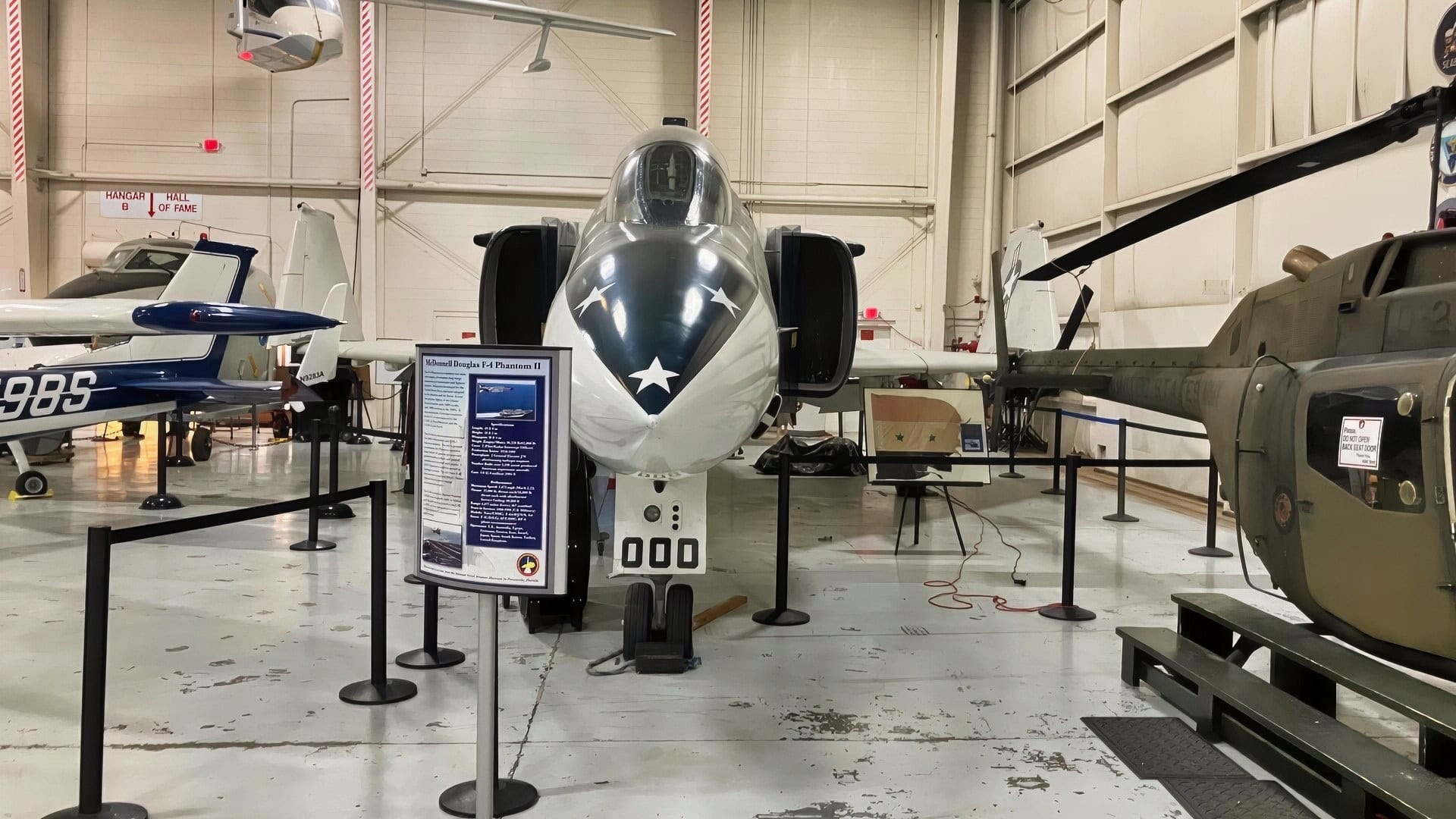
F-4 Phantom Fighter Aviation Museum of Kentucky. Taken by 19FortyFive on March 1, 2026.
The advantage did not prevent serious losses. Iran’s prewar plans called for F-14s to provide cover, F-4s to suppress defenses, and mixed F-4 and F-5 formations to attack air bases. In the opening days, shortages of current intelligence and dedicated defense-suppression support made those packages costly. Iran abandoned the large offensive counterair effort after four days and shifted toward strategic strikes, interdiction, and deterrence.
The April 1981 raid on the H-3 airfield complex in far western Iraq showed what the Phantom still offered. Refueled F-4s reached a target near Iraq’s western border, far from Iran’s normal operating areas. Public accounts disagree about the exact damage, but the mission demonstrated that Iraqi facilities deep in the rear remained within reach.
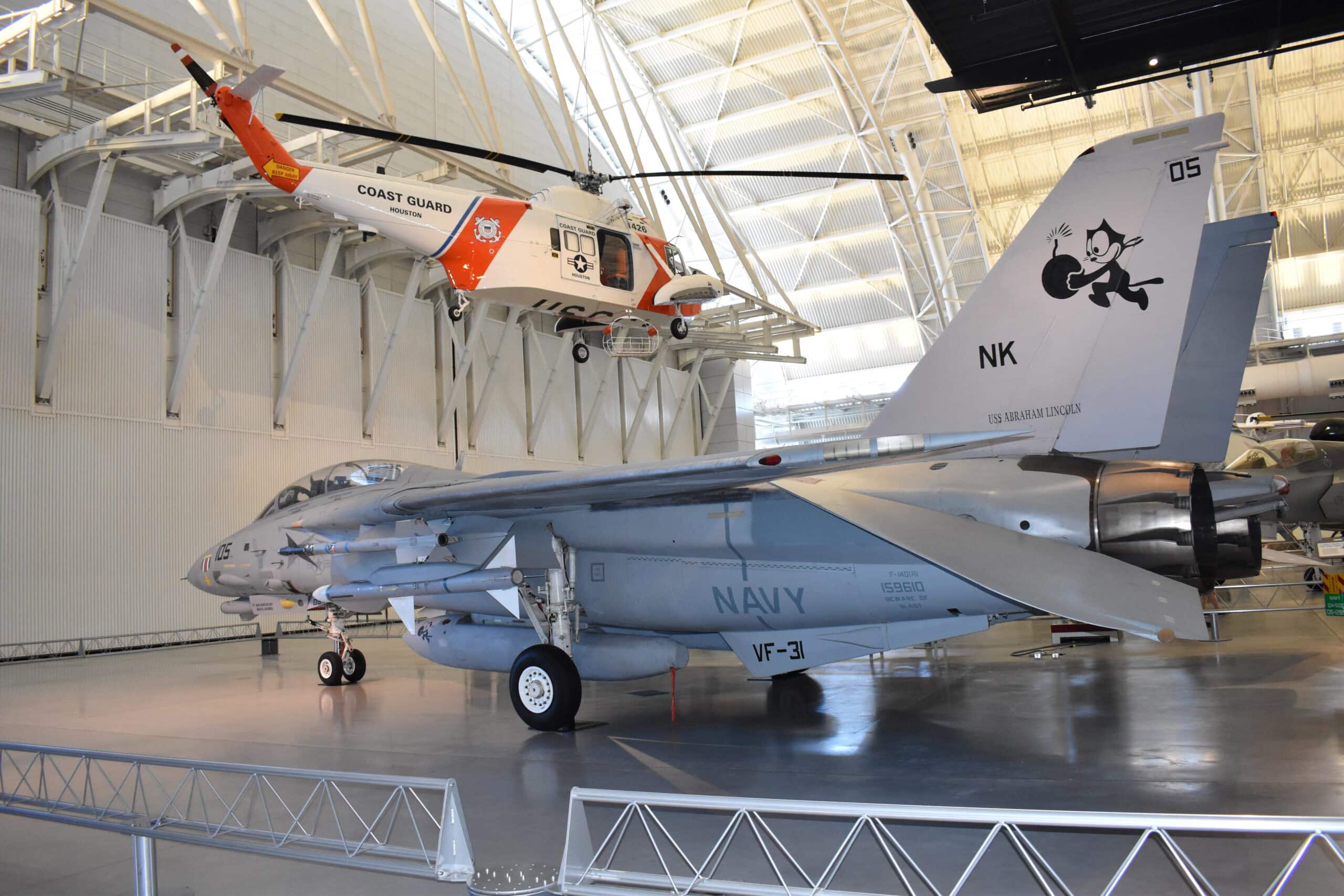
F-14 Tomcat at the Smithsonian. Image Credit: 19FortyFive.com
RF-4E reconnaissance also mattered. Prewar photography gave Iran better target information than Iraq possessed, and the surviving reconnaissance unit continued supplying imagery during the war. The Phantom served as a bomber, interceptor, reconnaissance aircraft, and maritime-strike platform through an eight-year conflict that steadily reduced available airframes and crews.
Iran Added Missiles and Guided Bombs Instead of Rebuilding the Aircraft
Iran’s later “upgrades” are best understood as a rolling sustainment and weapons-integration program, not one uniform modernization comparable to Turkey’s F-4E 2020 or Greece’s Peace Icarus package. Public evidence does not confirm a fleetwide replacement radar, standardized digital cockpit or modern electronic-warfare suite across every Iranian Phantom.
The weapons work is better documented. Iran reportedly tested air-launched C-801K anti-ship missiles from an F-4 in 1997. In 2013, an Iranian F-4 test-fired the domestically presented Qader air-to-surface missile. Later images showed Phantoms with locally developed glide weapons alongside surviving American Mavericks, Paveway laser-guided bombs, and ordinary Mk 82 bombs.
Iran also invested in protecting the aircraft it could not easily replace. The Eagle 44 underground base unveiled in 2023 displayed F-4s, while Iranian media said the site included repair areas and facilities for aircraft carrying standoff weapons. The hardened facility reflected the same logic behind decades of overhaul work: preserve old aircraft long enough to keep a strike option available.
The F-4 Still Has Missions, but Modern Air Combat Exposed Its Limits
An F-4 can still carry anti-ship weapons, attack lightly defended targets, train aircrews, and patrol the Persian Gulf. It is far less useful against stealth aircraft, modern electronic warfare, and long-range missiles. The contrast became famous in the 2013 encounter in which an F-22 approached Iranian F-4s without being detected.
That gap drove Iranian interest in Russia’s Su-35 as a possible replacement. The Phantom remains powerful by the standards of the 1960s, with speed, payload and two engines. It also embodies Iran’s wider force-age problem. Its radar, signature, cockpit workload, and survivability belong to another era, despite the durability described in the F-4’s wider service history.
The 2026 war made the problem physical. Israeli forces destroyed one F-4 at Tabriz on March 1 as it prepared to take off, according to strike footage and open-source analysis. Other Iranian combat aircraft were hit on ramps and inside bases as U.S. and Israeli aircraft operated over Tehran and western Iran.
FlightGlobal’s prewar directory carried 65 Iranian F-4D, F-4E, and RF-4E aircraft. Iran has not released how many survived the 2026 strikes or how many remain capable of generating combat sorties.
About the Author: Harry J. Kazianis
Harry J. Kazianis (@Grecianformula) was the former Senior Director of National Security Affairs at the Center for the National Interest (CFTNI), a foreign policy think tank founded by Richard Nixon based in Washington, DC. Harry has over a decade of experience in think tanks and national security publishing. His ideas have been published in the NY Times, The Washington Post, The Wall Street Journal, CNN, and many other outlets worldwide. He has held positions at CSIS, the Heritage Foundation, the University of Nottingham, and several other institutions related to national security research and studies. He is the former Executive Editor of the National Interest and the Diplomat. He holds a Master’s degree focusing on international affairs from Harvard University.

