
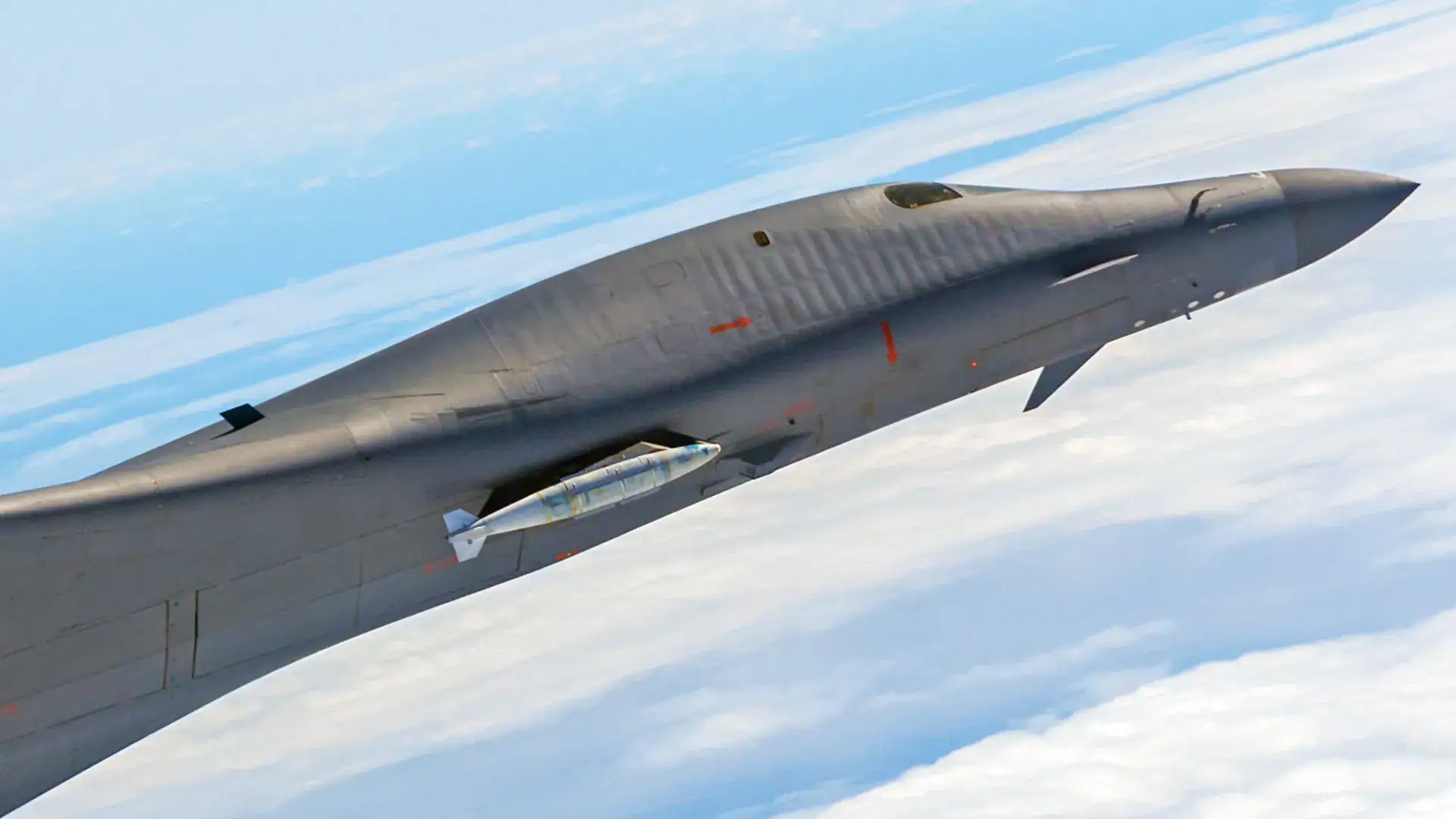
The U.S. Air Force has deployed B-1B Lancer heavy supersonic bombers to conduct long-range precision and deep-penetration strikes against Iranian military infrastructure as part of Operation Epic Fury.
Operating heavily from forward staging locations like RAF Fairford in the United Kingdom, the aircraft have delivered massive conventional payloads to degrade regional capabilities.
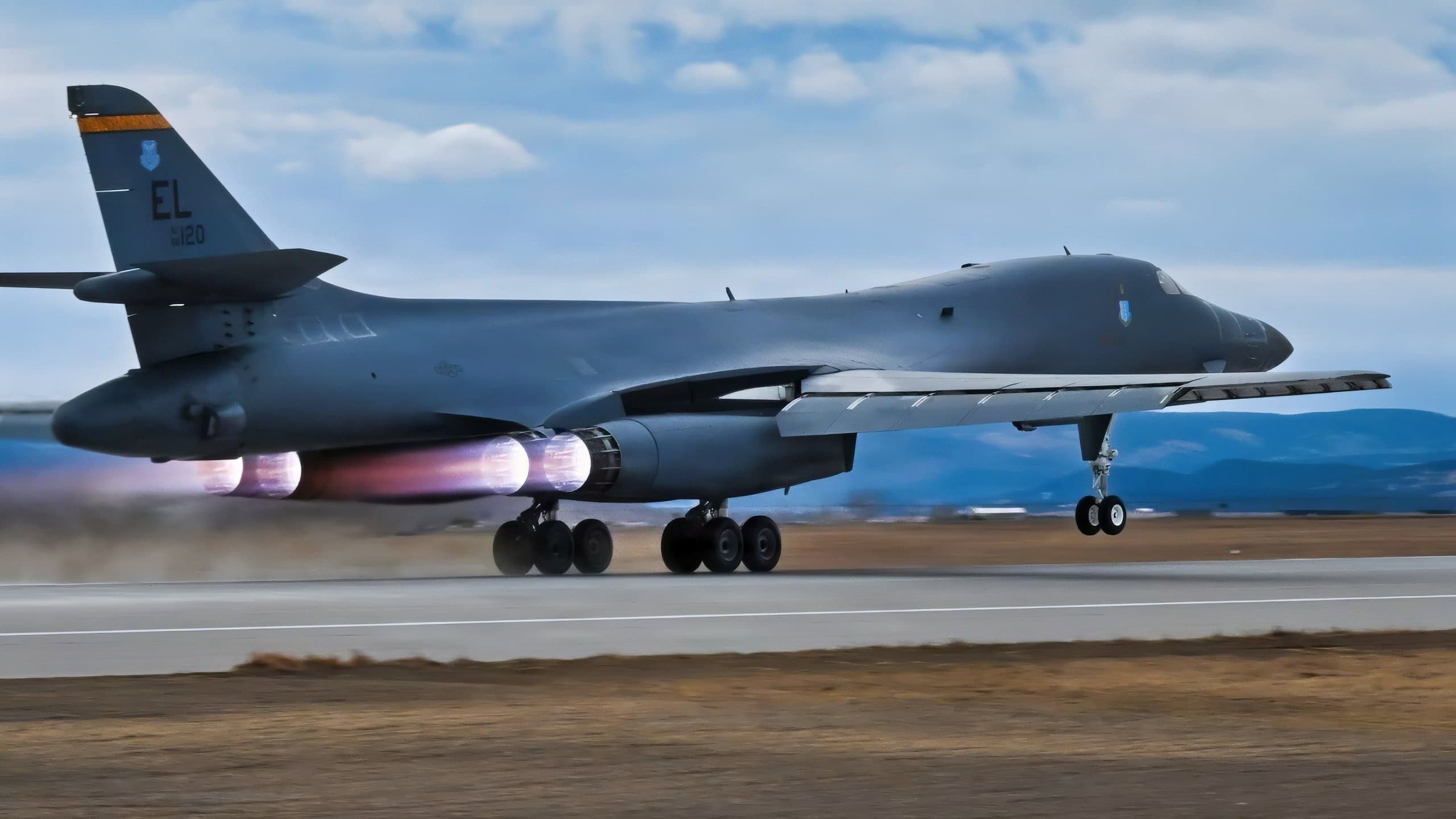
A U.S. Air Force B-1B Lancer assigned to the 34th Bomb Squadron takes off as part of a routine training exercise at Ellsworth Air Force Base, S.D., Feb. 24, 2026. Repeated training ensures mission and combat readiness, helping maintain peaceful world affairs. (U.S. Air Force photo by Airman 1st Class Austin Mooneyham)
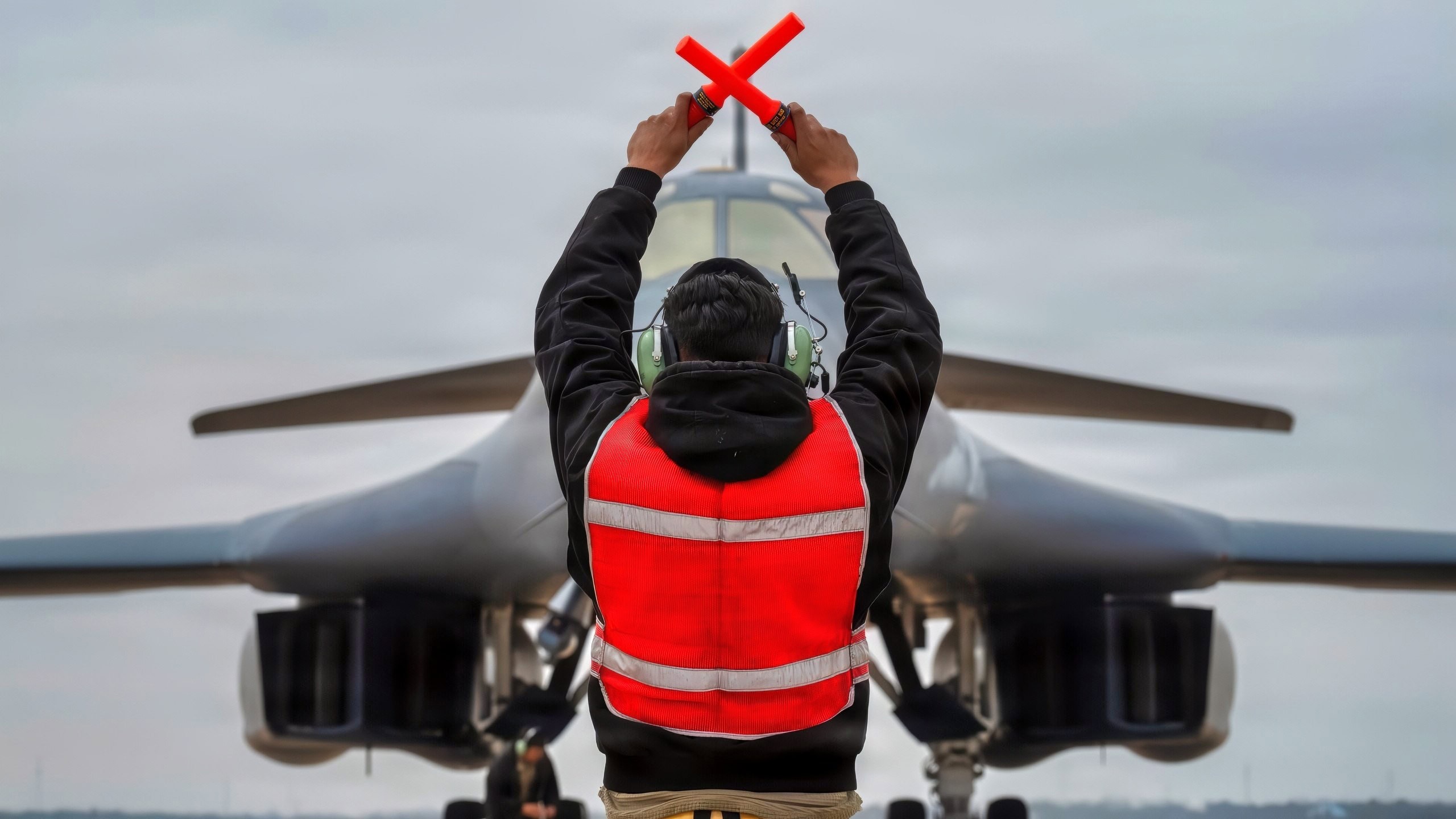
A U.S. Air Force B-1B Lancer crew chief marshals a B-1 after returning from a CONUS-to-CONUS mission in support of Operation Epic Fury, March 4, 2026. The B-1B is a long-range, multi-role bomber that carries the largest payload of precision guided and unguided munitions in the Air Force inventory. (U.S. Air Force photo)
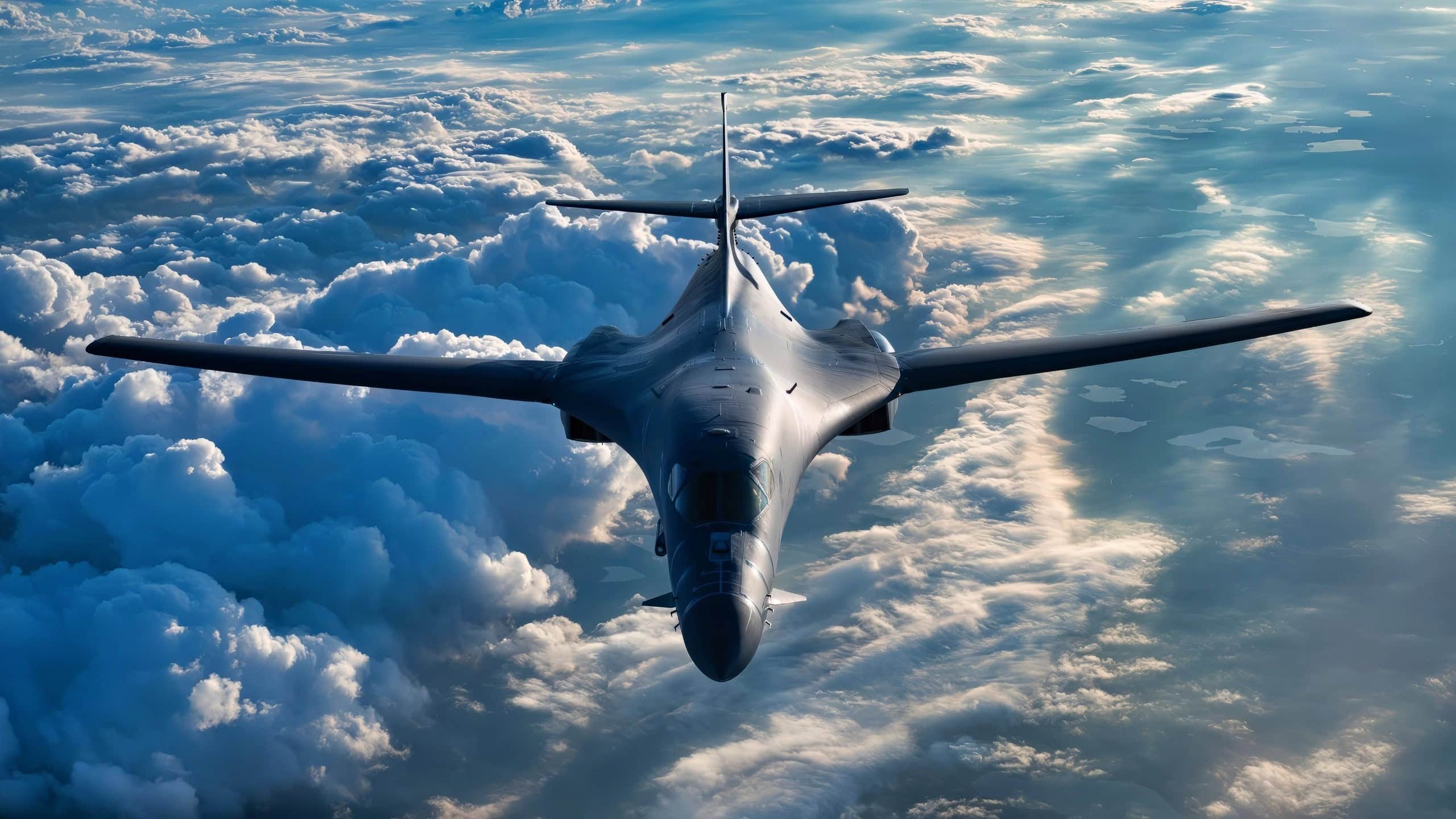
A U.S. Air Force B-1B Lancer assigned to the 34th Expeditionary Bomb Squadron, Ellsworth Air Force Base, South Dakota, flies over the United States, July 2, 2025. The B-1B is a heavy bomber with up to a 75,000 pound payload. (U.S. Air National Guard photo by Airman Spencer Strubbe)
B-1B bombers carrying GBU-31 JDAMs with BLU-109 penetrator warheads have struck Iranian ballistic missile production facilities, underground command centers, and mobile launchers across Iranian territory.
The Air Force Amassed 15 B-1Bs In England For Bombing Iran
The US Air Force initially used three B-1B Lancer strategic bombers for long-range strike operations against Iranian targets, often flying non-stop from the U.S. mainland.
But they then amassed 15 B-1Bs at RAF Fairford with eight B-52s, according to the Military Air Tracking Alliance.
The B-1B, carrying the largest conventional payload, is used to strike command centers, ammunition depots, and proxy forces.
A US official confirmed to the Axios news site that the bombers struck “above-ground ballistic missile and command and control sites in Iran.”
While the US has also used the B-2 Spirit stealth bombers, the use of the B-1B Lancer is significant, as it confirms that, despite the mission’s very early timeframe, air superiority over Iran is now established.
The “BONE,” as its pilots call it, is not stealthy and can be easily tracked by radar over the target area. BONE is an acronym for the B-1B (B-ONE).
The big bombers (B-1Bs, B-52s, and B-2s) were all used in air missions and hit 200 targets over the first 72 hours of the operation, U.S. Central Command (CENTCOM) commander Adm. Brad Cooper said back in March.
US Air Strikes Decapitated Iran’s Senior Leadership
During the opening weekend of the air campaign, the combined US and Israeli strikes on Iran’s critical government centers and military facilities eliminated a large portion of the Islamic Republic of Iran’s top leadership.
Among those killed in what was described as an “all hands on deck” meeting of the nation’s most senior officials were Iran’s clerical Supreme Leader Ayatollah Ali Khamenei, Iran’s Defense Council secretary Ali Shamkhani, Defense Minister Brigadier General Aziz Nasirzadeh, and Islamic Revolutionary Guard Corps (IRGC) commander General Mohammad Pakpour.
The Israelis announced that 40 senior figures died in the initial strike on the Iranian government’s leadership compound. The US had initially put that number much lower.
The B-1B Lancer Carries An Enormous Payload
The B-1B Lancer has evolved from a 1980s supersonic nuclear-penetration bomber into a premier conventional, long-range precision-strike platform.
Today, the “BONE,” as it is affectionately called, is being used in ways it was never designed for.
It transitioned from high-altitude, high-speed design (B-1A) to low-level, stealth-optimized flight (B-1B), ultimately dropping nuclear roles for conventional, high-payload, and hypersonic weapon testing capabilities.
Together with the B-52 and the B-2 Spirit stealth bomber, they still pack a mighty punch against America’s enemies.
While the B-1B and the B-2 are slated for retirement, they both can still deliver an incredible amount of ordnance on targets.
The B-1B is the fastest bomber in the U.S. fleet; the earliest version could reach speeds of Mach 2.2, but the current versions fly at Mach 1.25 or about 900+ mph, and they have the largest payload, capable of carrying 75,000 pounds internally.
The B-1B can also carry up to an additional 50,000-pound payload externally, giving it a massive 125,000-pound payload.
The internal payload alone is 15 times the amount carried by the World War II B-17 Flying Fortress, which was the backbone of the US effort in Europe.
With a four-person crew, it can carry up to 84 500-pound Mk-82 or 24 2,000-pound Mk-84 general-purpose bombs, according to Air Force data. Alternatively, it can also carry up to 24 2,000-pound GBU-31 missiles.
The B-21 Raider Will Replace The B-1B and the B-2 Spirit
The B-21 Raider was officially unveiled in December 2022 and is currently in low-rate initial production (LRIP) after making its maiden flight last November.
U.S. Air Force officials say the B-21 Raider is a “dual nuclear and conventionally capable, stealth, penetrating, long-range strike platform.” The B-21 will replace the B-1B Lancer and B-2 Spirit in the coming decade.
The B-21 Raider is named after the Doolittle Raiders of World War II, an Army land bomber squadron that took off from an aircraft carrier and bombed Japan during the darkest days of WWII.
However, until the B-21 Raiders are ready, the Air Force’s triad will continue, and although the Lancer isn’t a stealth bomber, it still packs an incredible punch. The US recently sent a small fleet of B-1Bs to Guam as a deterrent.
The B-1B External Heavy Stores Pylon Upgrade
The Air Force extended the projected retirement of the B-1B fleet from the early 2030s to at least 2037, backed by a $342 million modernization and structural repair plan through 2031.
Recent operational updates include returning recalled airframes from the boneyard to active status and integrating new external weapon pylons for hypersonic and long-range cruise missiles.
The Air Force has launched the External Heavy-Stores Pylon (LAM) program, with over $50 million requested in FY 2026 to equip B-1B Lancers with Load Adaptable Modular (LAM) pylons.
These external pylons restore and upgrade dormant external hardpoints to carry larger, modern standoff missiles (like LRASM and JASSM) and hypersonic weapons, boosting payload capacity and “volume of fires” to bridge capability gaps before the B-21 Raider is fully operational.
By expanding the number of existing standoff weapons the B-1B can carry—such as the AGM-158 Joint Air-to-Surface Standoff Missile and its stablemate, the Long-Range Anti-Ship Missile (LRASM)—the Air Force says it can “mitigate transition risk of the Air Force bomber fleet prior to the emergence of the B-21 as a combat bomber.”
This program increases the B-1B’s total missile capacity by roughly 45,000 lbs, allowing it to carry 24 or more internal weapons while adding significant external carriage.
Hypersonic Integration Program Included In The Budget
The War Zone reported that the FY 2026 budget also referenced the “Hypersonic Integration Program,” which apparently showcased the Lancer’s ability to “execute a captive carry of a 5,000-pound class store and the release of a proven weapon shape from a Load Adaptable Modular (LAM) pylon.”
The AGM-183A Air-Launched Rapid Response Weapon is a hypersonic weapon that uses a boost-glide system, meaning that when it returns to Earth after achieving near-space altitudes, it reaches speeds greater than Mach 5.
While China and Russia have hypersonics that are fired from ground launchers, this air-deployed missile would make it inherently more dangerous.
The “BONE” Still Packs An Incredible Punch
“The BONE” remains a critical asset in the U.S. Air Force’s bomber force, along with the B-52 Stratofortress and the B-2 Spirit, and can carry massive conventional payloads and conduct long-range strike missions.
With an internal weapons payload of 75,000 pounds, it has the largest payload of any US plane ever.
Although it lacks the stealth quality to make it an ideal penetrator of enemy (Russian, Chinese, North Korean, and Iranian) airspace, it may have lost its mission as a nuclear bomber. Still, it can carry 24 Joint Direct Attack Munitions (JDAMs). It has been a versatile airframe that has evolved.
With the capability to launch long-range stand-off weapons, it can target naval ships while patrolling large swaths of the Pacific Ocean.
Due to its long range, it is fully capable of this, along with the B-52. For now, the stealthy missions will fall to the B-2.
The US will start seeing the B-21s by the end of 2026, but until then, our triad of tried-and-true bombers will have to suffice. The B-1B will remain a huge part of that.
The B-1B can loiter over the target area for much longer periods than our fighters and fighter-bombers and strike enemy targets as they become available.
The use of the B-1B, alongside the B-52s and B-2s and our smaller fighters, is an example of coordinating all of the US air assets to accomplish its mission.
The big bombers have been very successful at targeting Islamic Revolutionary Guard Corps (IRGC) command-and-control centers, air defense networks, and ballistic missile production and storage facilities.
When the Memorandum of Understanding (MoU) broke down, the B-1Bs were once again called on to strike IRGC targets.
About the Author: Steve Balestrieri
Steve Balestrieri is a National Security Columnist. He served as a US Army Special Forces NCO and Warrant Officer. In addition to writing on defense, he covers the NFL for PatsFans.com and is a member of the Pro Football Writers of America (PFWA). His work was regularly featured in many military publications.
Editor’s Note: We have corrected the headline with the top speed of the B-1B Lancer.