
Iran swapped out the head of its Supreme National Security Council on Sunday night. President Masoud Pezeshkian’s office named Mohsen Rezaei the council’s new secretary, and Khamenei separately named him his own representative to the same body, a familiar pairing in Iran’s security system. That pairing is routine, not two offices competing for the job. What matters is who Khamenei chose and when. Rezaei has been his military adviser since March, the month Khamenei took over, and Sunday’s move simply promoted an insider to head the security file at the exact moment the dispute over Hormuz is intensifying
Rezaei is 71. He ran the Revolutionary Guards from 1981 to 1997, through most of the Iran-Iraq War, and holds a doctorate in economics, having served as Iran’s vice president for economic affairs under Ebrahim Raisi. Reuters calls him a hardliner with a long record of skepticism toward negotiating with Washington, and that record tells you more than the degree does. He replaces Mohammad Bagher Zolghadr, who had the job for less than five months and was shuffled sideways into a political advisory post under Khamenei.
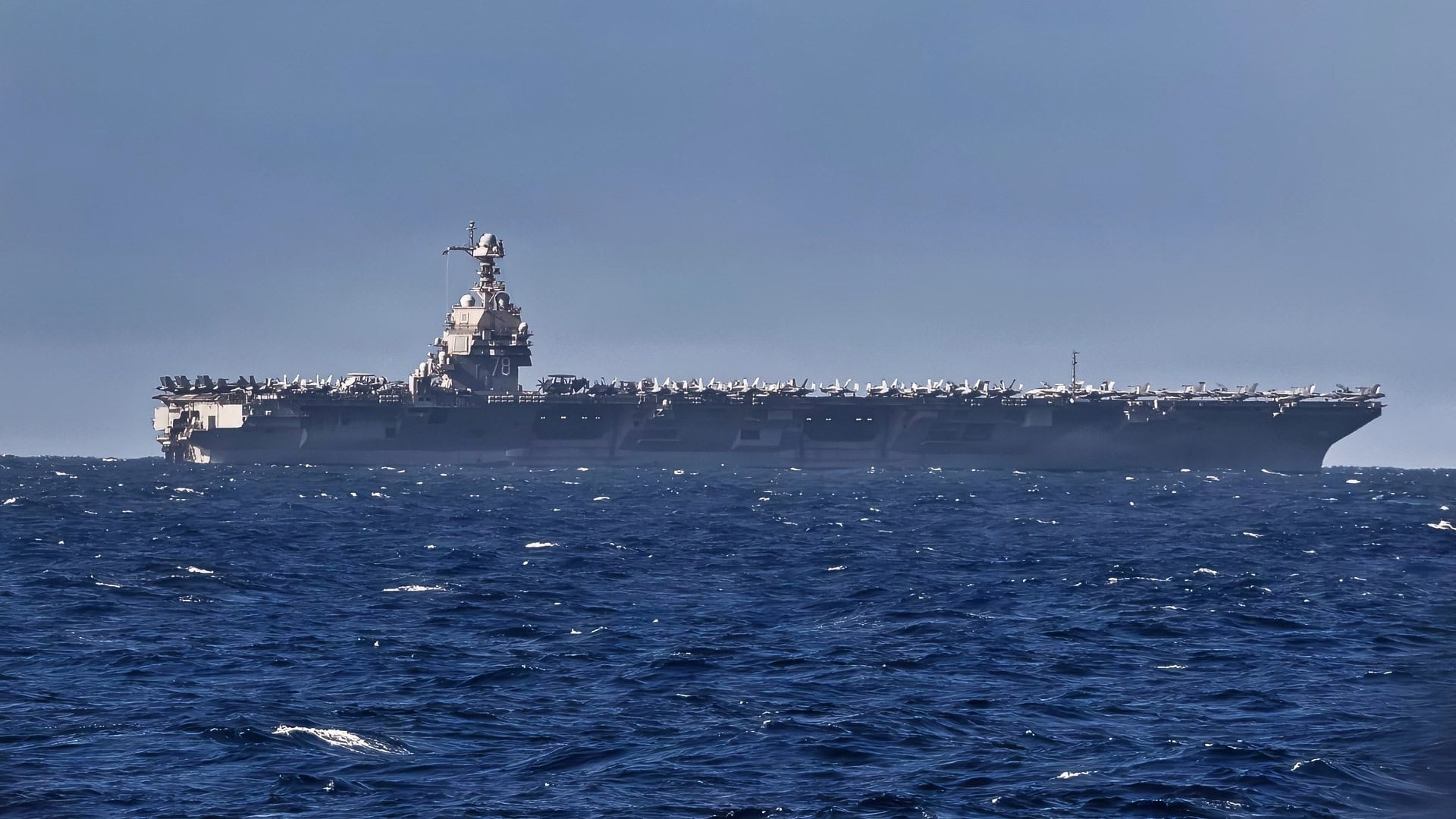
The world’s largest aircraft carrier, USS Gerald R. Ford, as seen from Arleigh Burke-class guided missile destroyer USS Bainbridge (DDG 96) before a replenishment-at-sea with Henry J. Kaiser-class fleet replenishment oiler USNS Kanawha (T-AO 196) while underway during Operation Epic Fury, Mar. 8, 2026. (U.S. Navy Photo)
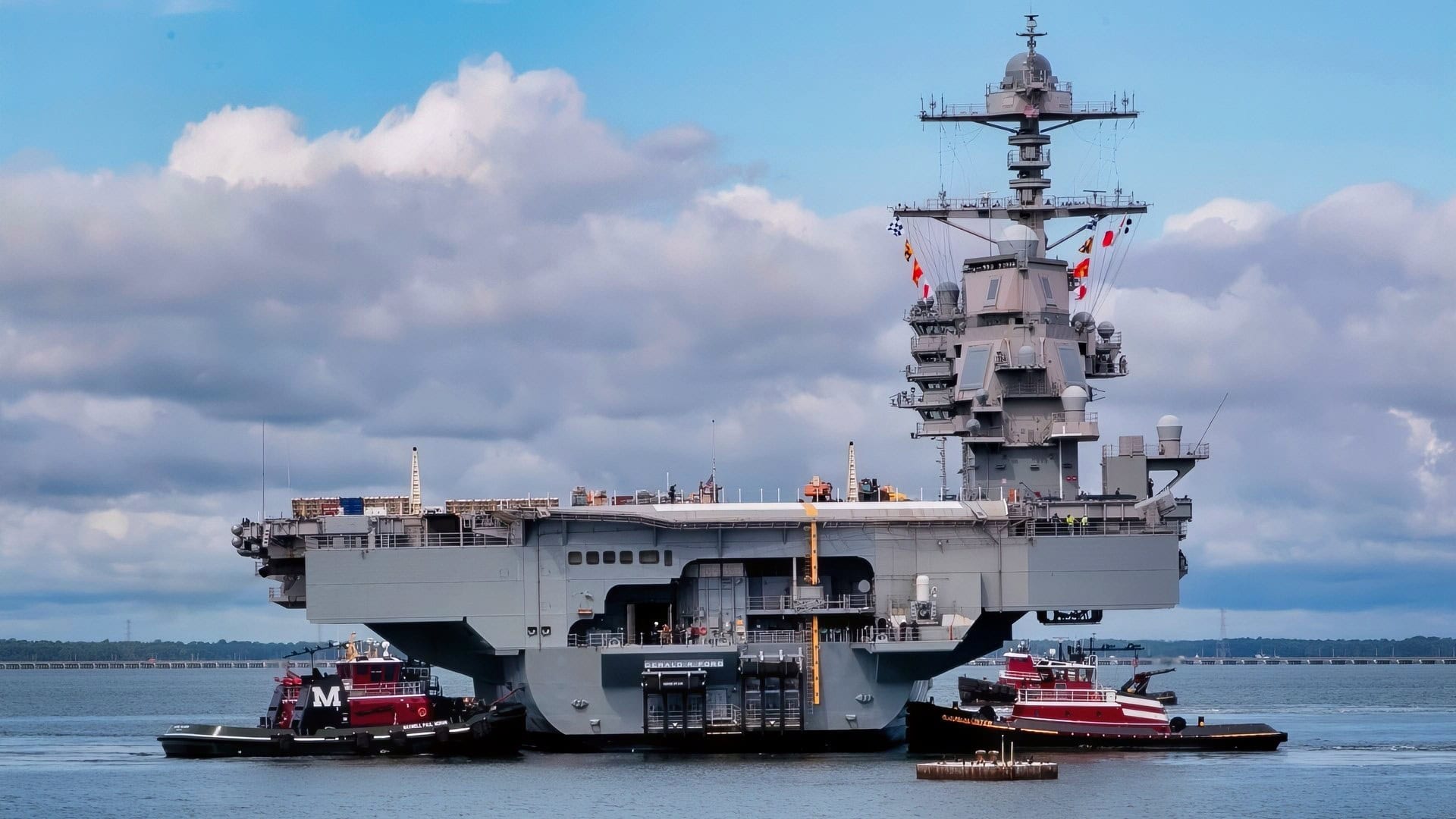
The aircraft carrier USS Gerald R. Ford (CVN 78) departed Naval Station Norfolk to make the transit to Newport News Shipyard in support of her Planned Incremental Availability (PIA), a six-month period of modernization, maintenance, and repairs, Aug. 20, 2021. (U.S. Navy photo by Mass Communication Specialist 1st Class Ryan Seelbach)
The job hasn’t been lucky lately: Zolghadr’s predecessor, Ali Larijani, was killed in an airstrike after only a few months in the chair. Zolghadr’s exit came less than 48 hours after he laid out a list of demands for reopening the Strait of Hormuz so sweeping that regional diplomats read it as infighting rather than a real position: an end to the war against Iran’s regional allies, full compensation, the release of every frozen Iranian asset. Nobody outside Khamenei’s own circle seems to know whether Zolghadr overreached or simply failed to deliver.
Two Camps, and a Third That Doesn’t Want a Table at All
Washington’s Iran strategy right now treats Tehran as a single negotiating partner that inflation and an empty treasury will eventually break. That isn’t how decisions are actually getting made there at the moment. The Critical Threats Project describes an Iranian security establishment split specifically over how to handle Hormuz, not over whether the war itself was worth it. Ahmad Vahidi, the Revolutionary Guards commander who took over after his predecessor was killed in the February airstrikes, is willing to talk to Washington but won’t accept any arrangement that limits Iranian control of the strait.
Pezeshkian, Foreign Minister Abbas Araghchi, and Parliament Speaker Mohammad Bagher Ghalibaf want the Oman-brokered framework locked in because the economic damage from the renewed blockade continues to compound. Both camps, according to CTP’s read, actually want the same underlying outcome: continued Iranian control over the strait in some form. What separates them is how much pain is worth absorbing to get a better version of it, and whether sitting down with Washington now concedes something that can’t be taken back later.
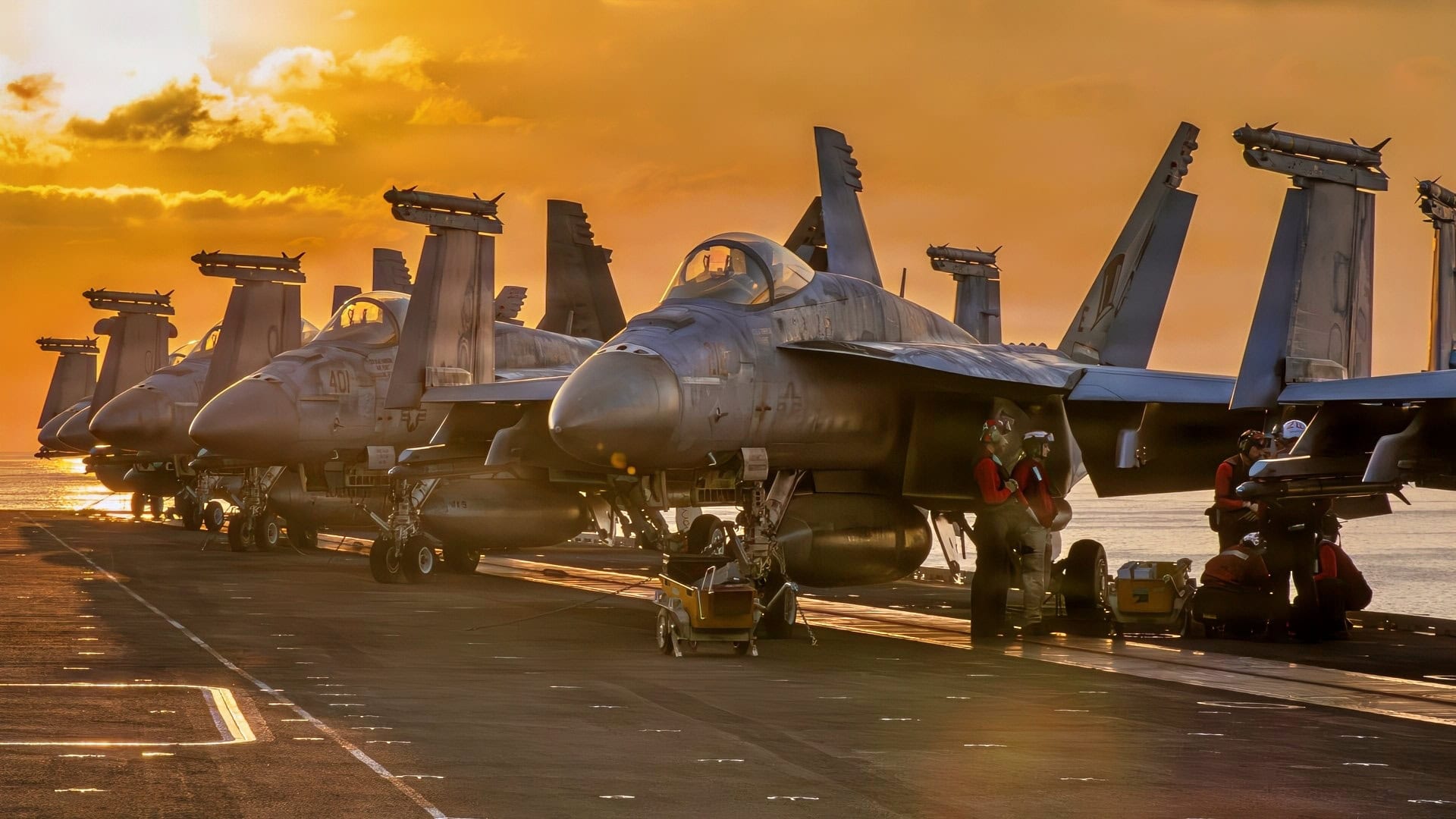
Aircraft is staged for flight operations on the flight deck of Nimitz-class aircraft carrier USS Abraham Lincoln (CVN 72) in support of Operation Epic Fury, Mar. 3, 2026. (U.S. Navy photo)
There is a third position, and it belongs to people who don’t think any of this should be on the table in the first place. The Paydari Front, aligned with former nuclear negotiator Saeed Jalili, opposes negotiating with the United States on principle. Its reach runs through lawmakers like Hosseinali Hajideligani, who told Iranian media on August 4 that parliament is preparing to move toward impeaching Araghchi for failing to force Washington into accepting Iran’s maximalist demands. He added, almost as an afterthought, that Pezeshkian himself could face the same treatment.
That detail matters more than the Rezaei appointment itself. It means the one senior Iranian figure who has spent months arguing for a negotiated exit is facing a political cost for it, while the blockade’s economic pain lands on an Iranian public that has little way of knowing which faction is actually prolonging their situation. Nobody designed that outcome on purpose. It is simply what happens when pressure is broad and undifferentiated: the people willing to negotiate get blamed for negotiating, and the people refusing to negotiate pay far less for refusing.
A Chess Game With More Than One Board
Trump described the situation to Axios over the weekend as a chess game: patient, calculated, one side eventually running out of moves. The metaphor assumes one opponent sitting across the board. Right now, Tehran doesn’t have a single one to offer him.
The Oman-brokered framework for reopening Hormuz has been called “close to finished” for a week now, yet it remains unfinished. It would reportedly give Iran control over inbound traffic through the strait, which Reuters calls one of the war’s largest concessions to Tehran. The remaining fight isn’t really about a percentage. Iran wants a transit fee of 5 to 7 percent of cargo value, against an Omani offer near 3 percent and an American preference for none, but any version of it runs into more than a spread.
The U.S. has already sanctioned the Persian Gulf Strait Authority that would collect it, and the Treasury separately bars U.S. persons from receiving a guarantee of safe passage from Iran’s government. Lloyd’s Market Association added language in July canceling war-risk coverage for any vessel that pays a transit fee or similar charge. Closing the gap between 5 percent and nothing doesn’t touch any of that. What isn’t resolved is whether Iran collecting anything at all reads as proof that Pezeshkian’s approach worked, or as the capitulation Vahidi and Jalili’s allies have been warning against.
What Semi-Negotiating Actually Costs
None of this argues for lifting the blockade. Washington has good reason to keep leaning on an economy that Trump himself says can no longer afford to pay its own troops, and easing off now, while Tehran can’t agree internally on how to respond, would hand the argument to whoever is most comfortable simply waiting. But there is a difference between broad pressure and pressure that has an address on it. Right now, nobody in Tehran, including the people who most want a deal, can point to a specific reward for taking the political risk of signing one.
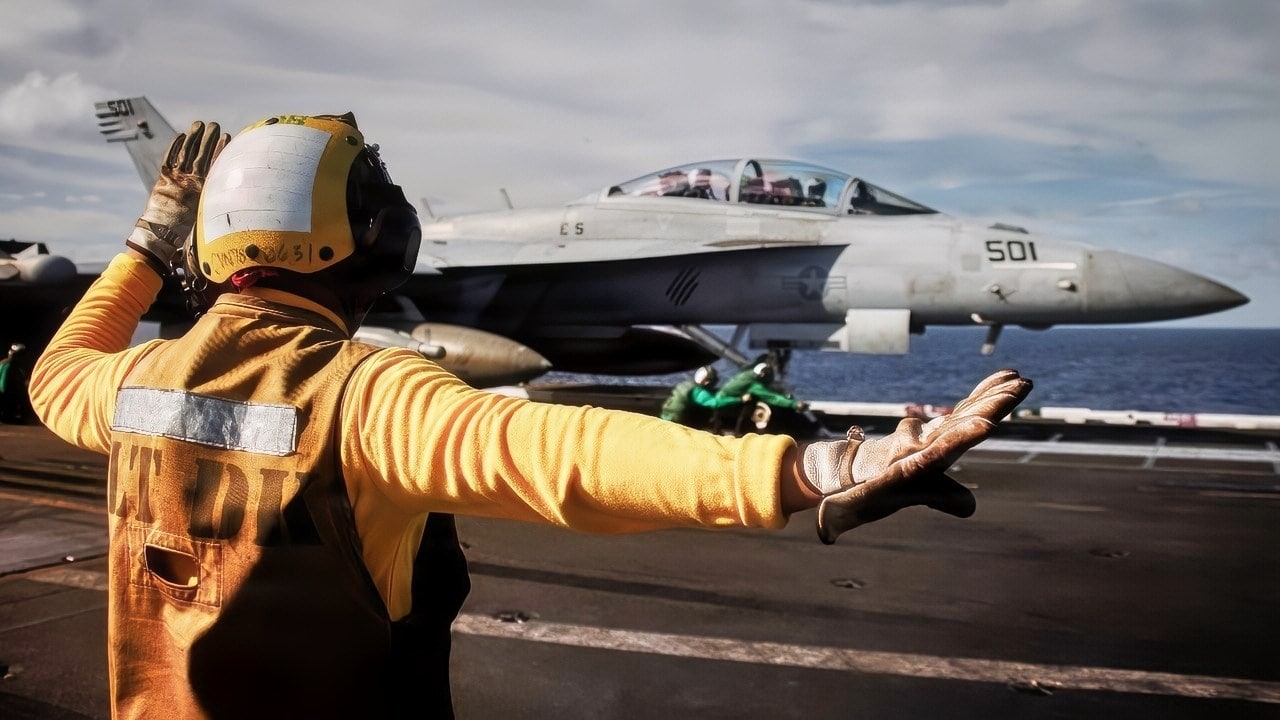
A U.S. Sailor signals to send the aircraft catapult shuttle forward on the flight deck of the world’s largest aircraft carrier, Ford-class aircraft carrier USS Gerald R. Ford (CVN 78), while underway in the Caribbean Sea, Jan. 11, 2026. U.S. military forces are deployed to the Caribbean in support of the U.S. Southern Command mission, Department of War-directed operations, and the president’s priorities to disrupt illicit drug trafficking and protect the homeland. (U.S. Navy photo)
The pressure can stay exactly as broad as it is. What needs to get specific is the off-ramp. Washington could commit now to a defined, reversible piece of sanctions or blockade relief, available once Iran implements an agreed-upon Oman framework for the strait, not once the toll question is resolved, since that question runs into legal problems no signature will fix. Staying vague about what compliance buys costs Pezeshkian’s camp more than it costs anyone telling him to hold out, and the impeachment talk aimed at Araghchi is what that cost looks like in practice while the deal remains unsigned.
“It will work out. It always works out. It’s like a chess game,” Trump told Axios. He is probably underestimating how many players are sitting at that board, and how little his own patience is doing to sort out who walks away with the win. Iran’s economy won’t get healthier while the blockade holds, and at some point that pressure will move someone.
Five months into Khamenei’s leadership, and one day into a reshuffle that put one of his own men in charge of the security file, the harder question isn’t whether Iran eventually bends. It’s who inside Tehran gets to say why it bent, and whether Washington has done anything yet to measure that’s the answer it actually wants.
MORE – Iran Can’t Stop the US Air Force
About the Author: Dr. Andrew Latham
Andrew Latham is a professor of international relations and political theory at Macalester College in Saint Paul, MN. You can follow him on X: @aakatham.