
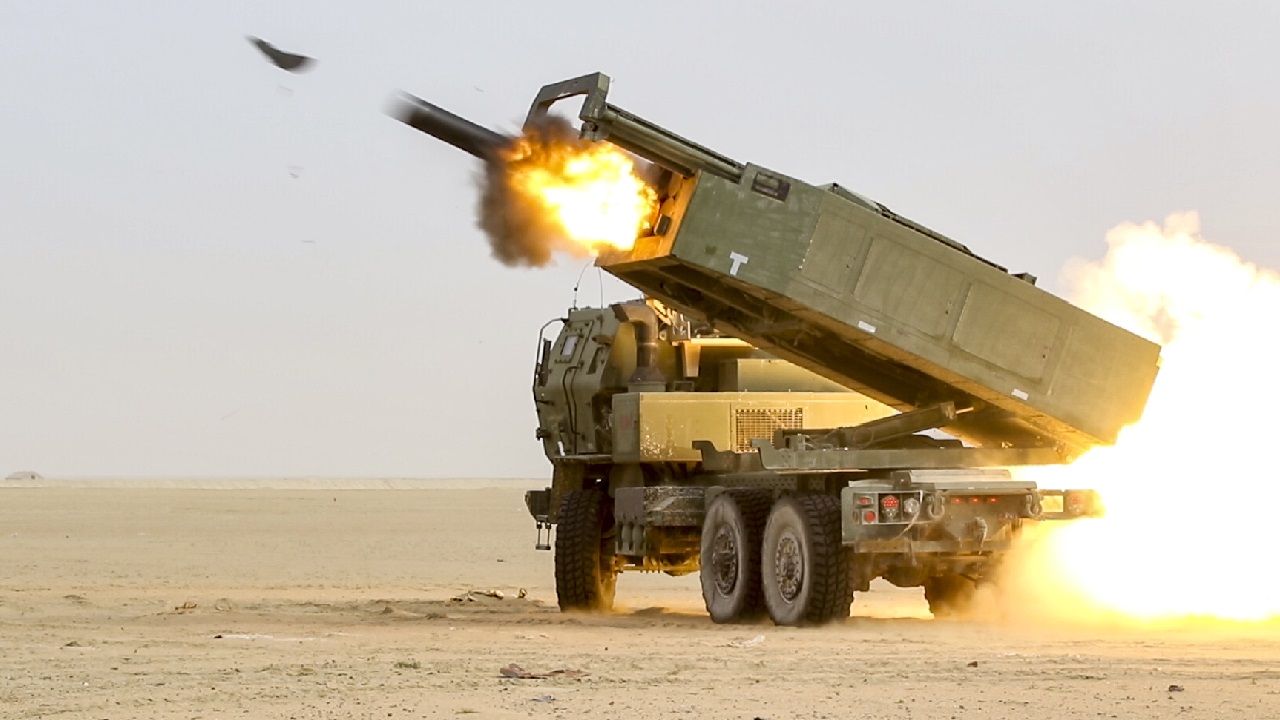
US President Donald J. Trump is still pursuing a negotiated reopening of the Strait of Hormuz and a wider settlement with Iran. That makes a U.S. landing on Kharg Island look less imminent on August 11, 2026, than it did during the latest round of threats.
The option has not disappeared. Trump canceled a planned attack on August 2 to leave room for a rapid agreement, but the talks now face a deadlock over sanctions, military threats, and competing demands for reparations.
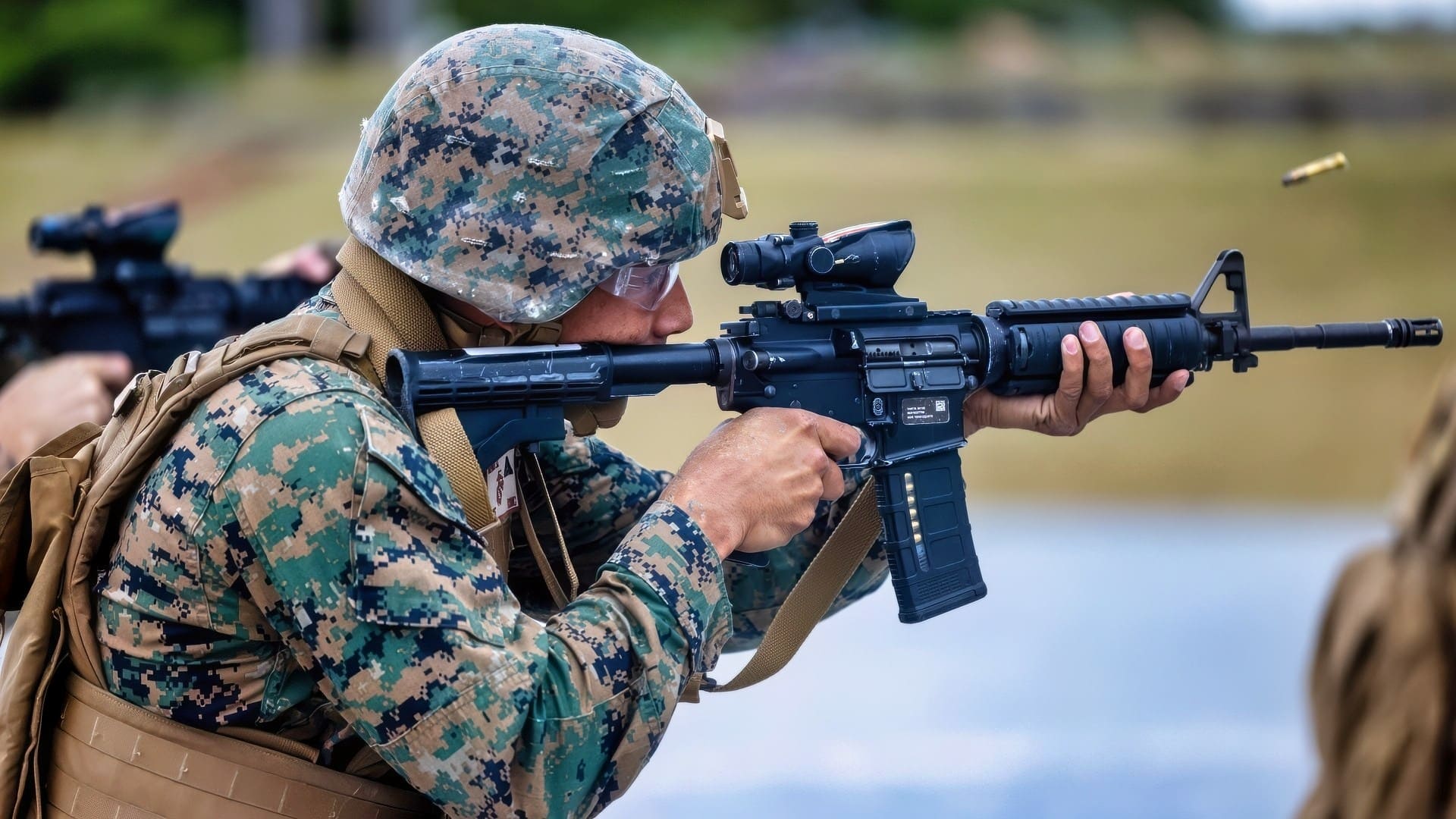
U.S. Marine Corps Lance Cpl. Elijah Geiwitz fires an M4 carbine in the short bay during a live-fire rifle range for the combat marksmanship course on Camp Hansen, Okinawa, Japan, March 13, 2025. CMC refines Marines marksmanship fundamentals and enhances their lethality through advanced marksmanship training. Geiwitz, a native of Wisconsin, is an automotive maintenance technician with 3rd Landing Support Battalion, 3rd Marine Logistics Group. (U.S. Marine Corps photo by Cpl. Michael Taggart)
The Kharg Island Iran Invasion
Kharg is not a hypothetical target invented by television commentators.
On June 11, Trump said his preference was to “take Kharg Island,” while admitting he was unsure the country had the appetite for a larger ground operation.
The United States had already completed part of the preparation.
On March 13, Central Command said it struck more than 90 military targets on the island, destroying naval-mine storage sites, missile bunkers, and other facilities while preserving the oil infrastructure.
Kharg’s dimensions make capture look deceptively simple.
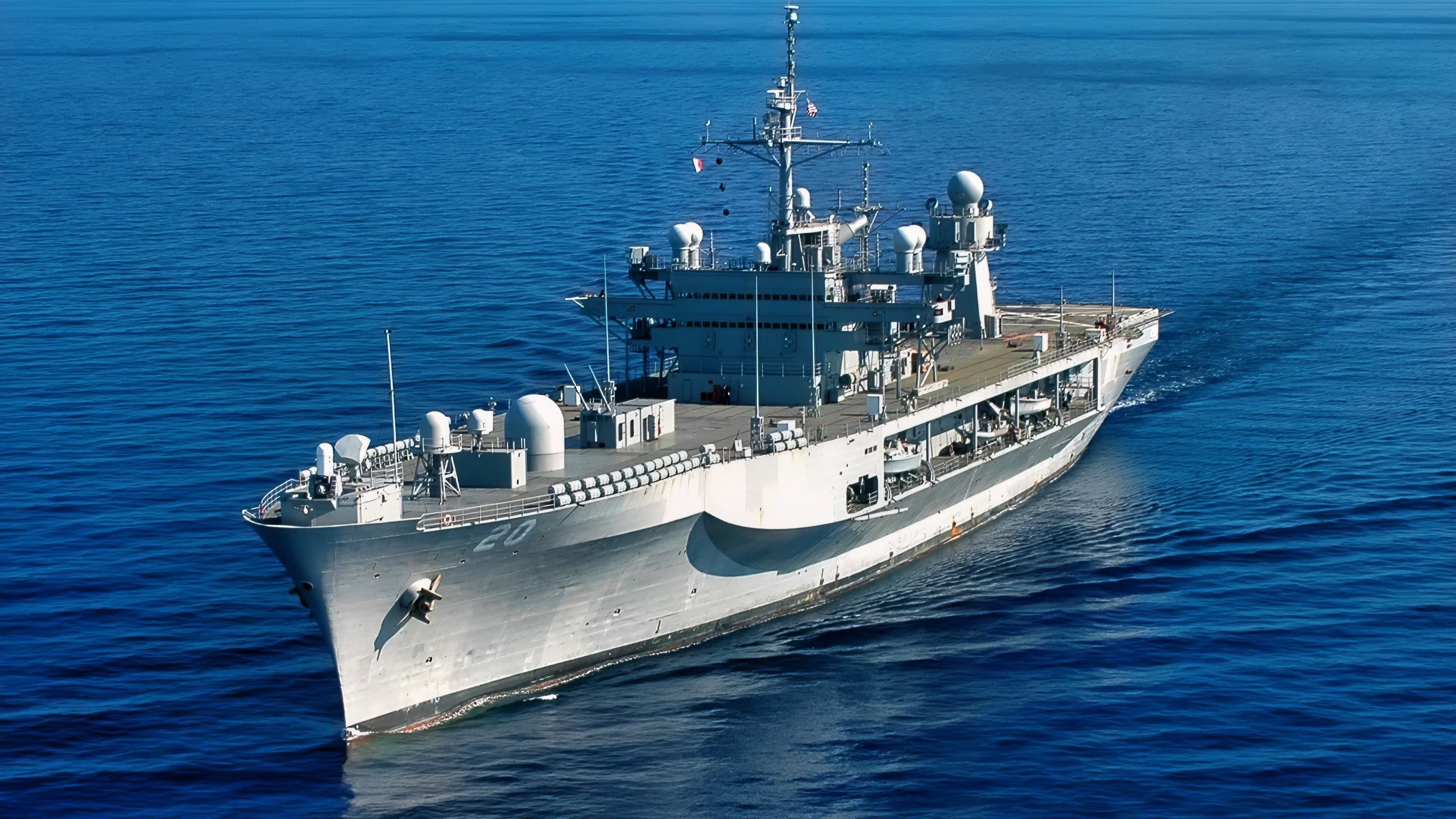
USS MOUNT WHITNEY (LCC/JCC 20), Mediterranean Sea — USS Mount Whitney, the 6th Fleet flagship is underway this week with Sailors and Marines from the newly combined staff for Commander Naval Forces Europe and Commander 6th Fleet (CNE-C6f) in support of the Joint Forces Maritime Component Commander Europe (JFMCC EUR) staff. JFMCC EUR is the maritime arm of the United States European Command,(EUCOM), and is underway this week conducting an exercise involving real world scenarios.
U.S. Navy photo by PH2(AW) Sarah Bir, CNE-C6f Public Affairs.
The island covers only 7.7 square miles, measures roughly five miles from north to south, and sits about 16 miles from the nearest Iranian coast. It is mostly flat, apart from low hills at the southern end.
About 8,000 civilians live there. Kharg City, the oil installations, and the island’s only airfield occupy much of the limited ground.
A properly resourced American assault force would likely overpower the garrison, especially after the March and April strikes. Former Central Command chief Gen. Joseph Votel estimated that 800 to 1,000 troops would be needed to hold the island.
That figure describes a garrison, not the full operation. Air defenses, engineers, intelligence teams, medical units, aviation support, naval cover, and a protected supply chain would substantially enlarge the force.
The first day would be easier than the first month.
Kharg Island Is a Functioning Oil System, Not Merely Eight Square Miles
Kharg matters because Iran built most of its seaborne oil trade around one deep-water location.
Before the war, roughly 90 percent of Iranian crude exports passed through the island. Kpler measured Iranian seaborne crude flows at about 1.68 million barrels per day in 2025 and placed Kharg’s storage capacity near 31 million barrels.
Supertankers berth there because much of Iran’s mainland coast is too shallow for them.
Taking the ground is not the same as taking a working oil business. Pipelines carry crude from mainland fields to Kharg. Iranian authorities would retain control of the upstream wells, pumping stations, electricity network, and inland valves.
Iranian forces would have opportunities to damage loading arms, pumps, storage tanks, or control systems before losing the terminal.
An occupation would deny the facility to Tehran, but it would not automatically let Washington redirect Iranian oil or operate the island at will.
U.S. Troops Would Sit Inside Iran’s Short-Range Weapons Envelope
Iran reportedly reinforced Kharg with additional personnel, shoulder-fired air-defense weapons, antipersonnel mines, and anti-armor mines before the earlier U.S. strikes.
Those defenses complicate the landing. They are still less dangerous than the mainland arsenal facing the occupation force after the island falls.
Sixteen miles leaves no operational depth. Iranian artillery, rockets, one-way attack drones, cruise missiles, and short-range ballistic missiles would all reach Kharg. Mobile launchers positioned along the coast would fire, relocate, and complicate the hunt. The island’s flat terrain offers little concealment. The difference between capturing Kharg and surviving there is the central military problem.
A permanent garrison would need layered air and missile defense, hardened shelters, counter-drone systems, fuel, food, water, spare parts, and a steady flow of interceptors.
Every resupply flight or ship would create another target. Medical evacuation would run through the same threatened airspace. Iran would not need to retake the island in a conventional assault. It would only need to make the American position costly enough for Washington to leave.
Kharg Island Would Hurt Iran Without Reopening Hormuz
The island is an economic lever, not a key to the Strait of Hormuz.
Kharg sits about 400 miles northwest of the strait. Occupying it would not clear naval mines, suppress mobile missile batteries along Iran’s southern coast, or protect commercial ships moving through the narrow passage. The argument that capturing Kharg would not reopen Hormuz is rooted in geography, not caution for its own sake.
Seizure would still inflict enormous long-term damage. Kharg is Iran’s principal hard-currency gateway, while alternative terminals at Jask, Lavan, Sirri, and Qeshm lack its combined capacity, storage, and deep-water access.
Yet the immediate payoff in August is smaller than the headline numbers suggest. The U.S. blockade has already throttled Iranian exports, and shipping data showed no tanker activity at Kharg after July 31. Taking an idle terminal would add leverage without instantly removing the prewar flow of more than 1.5 million barrels per day, because most of that flow has already stopped.
Tehran also has a wider retaliation strategy. Iranian officials warned Gulf governments this month that renewed U.S. attacks would bring strikes on regional oil fields, refineries, power grids, water plants, and transport systems. Saudi Arabia urged Trump to delay military action partly for that reason. A battle for Kharg would risk destroying Iran’s export hub while prompting attacks on the infrastructure needed to replace lost Iranian supply.
Diplomacy Has Delayed the Kharg Option, Not Removed It
Trump’s present preference is a deal. Iran and Oman have negotiated new shipping lanes through Hormuz, while Washington has tied lifting its naval blockade to restored commercial passage.
The larger settlement is stalled. Iran wants sanctions relief, compensation, and an end to U.S. military pressure. Trump now demands compensation from Iran. The same president who paused an attack on August 2 had threatened Kharg in June and declined to rule out ground forces in July.
The debate over American troops on Iranian-held islands therefore has not ended.
Kharg offers Trump a visible objective, a serious economic threat, and territory the U.S. military can take. It also offers Iran a fixed American target close to shore, far from the strategic problem at Hormuz.
About the Author: Harry J. Kazianis
Harry J. Kazianis (@Grecianformula) was the former Senior Director of National Security Affairs at the Center for the National Interest (CFTNI), a foreign policy think tank founded by Richard Nixon based in Washington, DC. Harry has over a decade of experience in think tanks and national security publishing. His ideas have been published in the NY Times, The Washington Post, The Wall Street Journal, CNN, and many other outlets worldwide. He has held positions at CSIS, the Heritage Foundation, the University of Nottingham, and several other institutions related to national security research and studies. He is the former Executive Editor of the National Interest and the Diplomat. He holds a Master’s degree focusing on international affairs from Harvard University.