
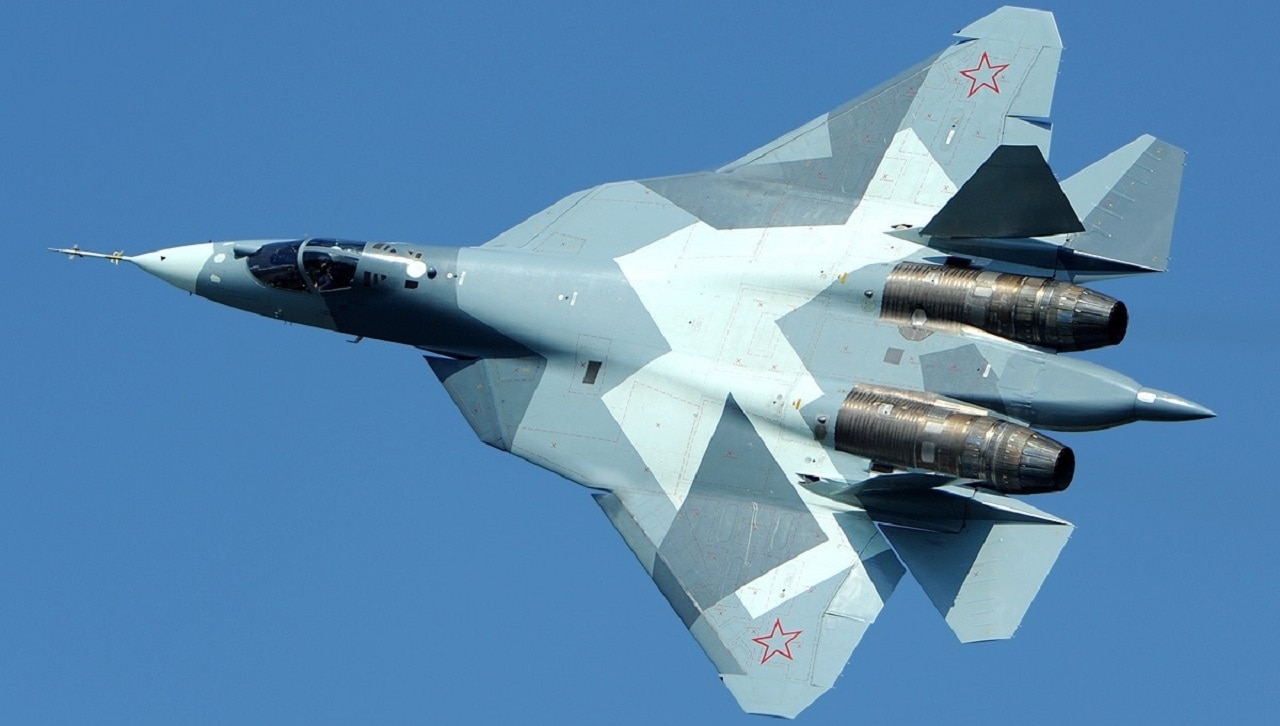
Russia’s Su-57 Felon first flew on Jan. 29, 2010, carrying expectations far larger than the aircraft itself. Early planning envisioned at least 150 to 200 fighters for the Russian Air Force and roughly another 200 for India. Moscow presented the PAK FA program as the foundation of a new stealth fleet able to replace older Su-27s and challenge the best American fighters.
The target changed repeatedly. Russia planned to acquire 52 aircraft by 2020, cut the near-term purchase to 12 in 2015 and then revived the program with a 2019 contract for 76 Su-57s. President Vladimir Putin said those aircraft would equip three regiments by 2028.
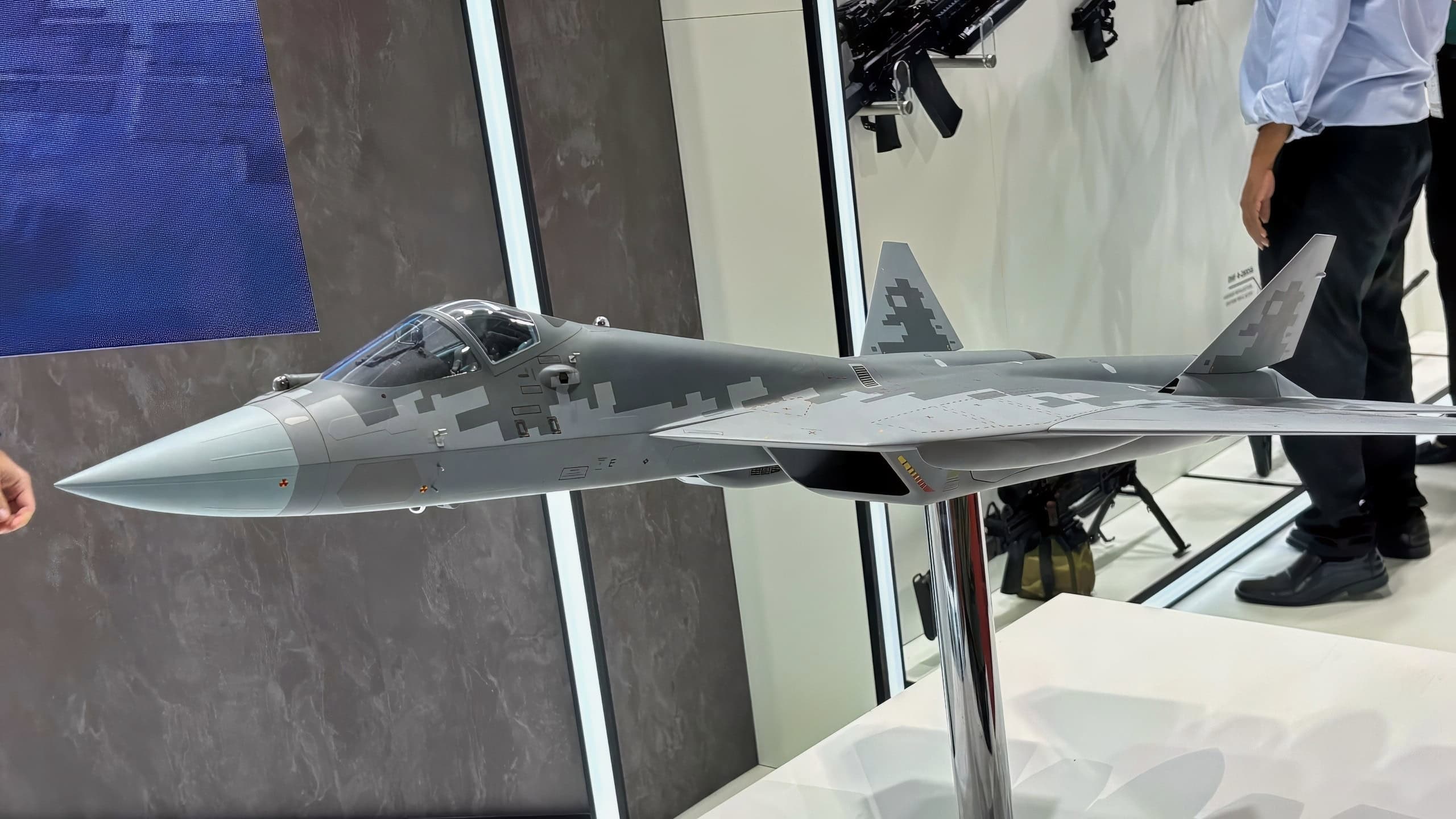
Su-57 Model 19FortyFive Original Photo
Russia does not publish a reliable serial-by-serial total. United Aircraft Corporation announces deliveries as batches without disclosing how many jets each contains. Open-source estimates place the production fleet at roughly 30 aircraft by mid-2026, with a smaller number available for combat, testing, and conversion training.
The Su-57 is real and carries internal weapons, modern sensors, thrust-vectoring engines, and long-range missiles. Russia has used it in the Ukraine war, mainly from Russian airspace.
The failure is not the absence of a working fighter
. Russia never turned the design into the large operational fleet promised for more than a decade.
Russia Once Planned 150 to 200 Su-57 Fighters
The original vision depended on scale. Russia expected at least 150 aircraft, while the joint Russian-Indian Fifth Generation Fighter Aircraft program promised hundreds of additional orders.
That volume would have supported several combat regiments, a broad training system, and steady orders for engines, radars, and electronics.
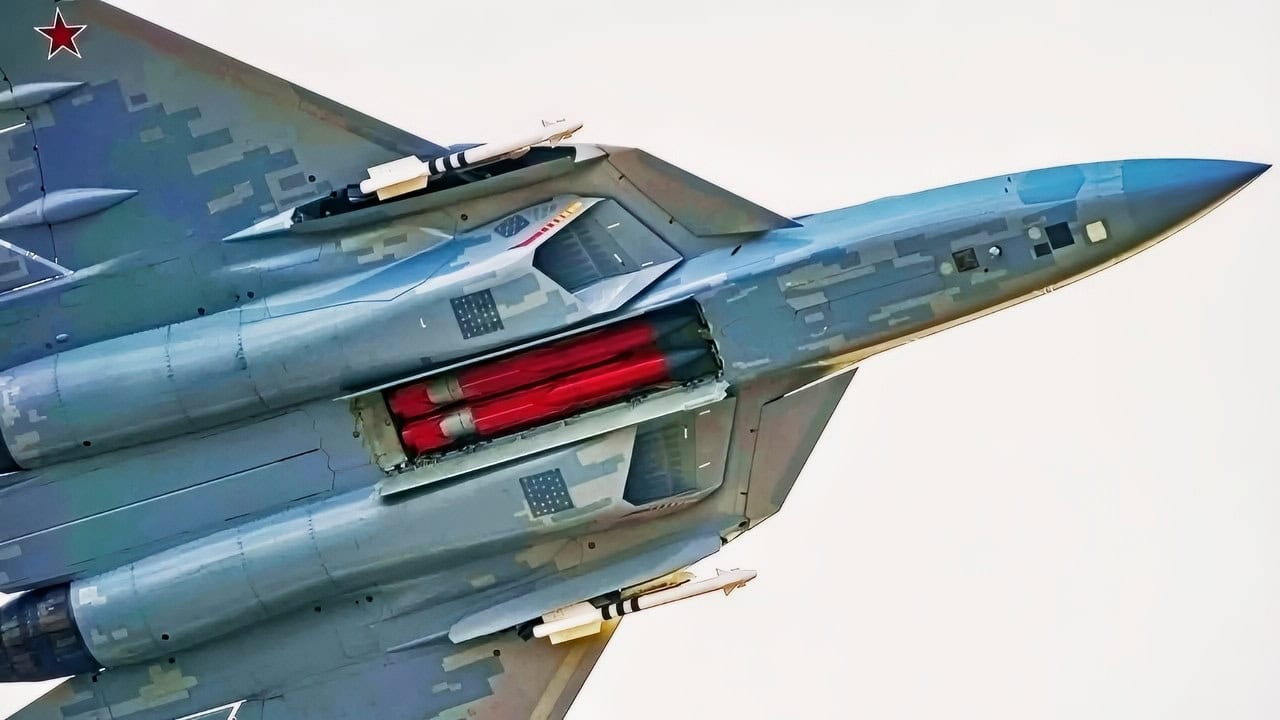
Su-57 Felon Fighter UAC Stock Photo.
Instead, the entire Russian Su-57 fleet remains smaller than one American carrier air wing. A few aircraft can test weapons and perform selected missions. They cannot replace hundreds of Su-27, MiG-29, and later Flanker variants spread across Russia.
Russia Cut the Order Before Production Began
The first major collapse came in 2015. Russia’s state armament program had called for 52 PAK FA fighters by 2020. Deputy Defense Minister Yuri Borisov said the initial purchase would fall to 12 due to economic pressure from lower oil prices, the seizure of Crimea, and Western sanctions.
Moscow kept buying Su-30SM and Su-35S fighters, already in production at established factories.
That delivered useful aircraft sooner, but left the Su-57 trapped at low production volume, where every radar, engine, and avionics package remained expensive and difficult to manufacture.
The Su-57 Lost Years to Development Problems
Russia expected serial production in the mid-2010s. Testing instead continued through fires, structural changes, avionics work, and engine delays. The first production aircraft crashed in December 2019 during a factory flight before Air Force acceptance. Russia received its first operational production Su-57 in December 2020, almost 11 years after the prototype flew.
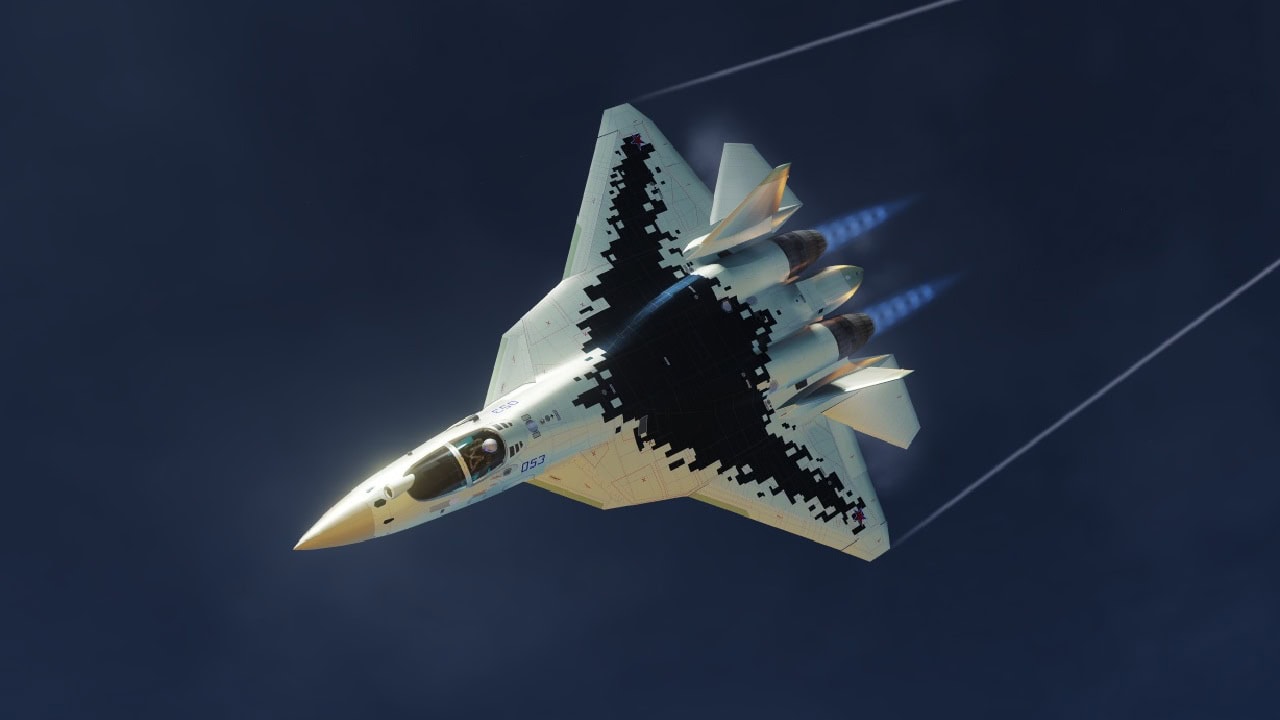
Su-57. Image Credit: Artist Created Image.
The aircraft entered service without the powerplant intended for the finished design. Early production jets used the AL-41F1, related to the engine family powering the Su-35. The promised second-stage engine remained in development, becoming one of the program’s most persistent problems.
India’s Withdrawal Removed Money and Scale
India joined the project expecting to help develop and buy a customized fighter. The partnership offered Russia development money and enough volume to reduce unit costs. Work stalled over delays, technology transfer, industrial participation, the engine and mission systems.
India withdrew from the joint program in 2018. Russia lost a customer once expected to order roughly as many aircraft as its own air force. Moscow returned in 2025 with another offer involving Indian production and extensive technology transfer, but the original chance to build a combined fleet of several hundred fighters had disappeared.
The Factory Was Not Ready for 76 Aircraft
Putin revived the program in 2019 after officials said the price had fallen enough to support a 76-aircraft order. The Komsomolsk-on-Amur plant then struggled to increase output. New facilities were required for fuel-system work, avionics testing and production.
Defense News reported in 2024 that the original plant had been judged too small and that avionics and engines remained critical bottlenecks.
Sanctions restricted access to electronics, machinery, and materials. Russian producers turned to Asian suppliers and indirect import channels, but the qualification of substitutes slowed production.
Even before the invasion of Ukraine, the Su-57’s numbers were far below Moscow’s ambitions.
The war then forced industry to sustain Su-30SM, Su-34 and Su-35 output while repairing losses and supporting daily combat operations.
The Ukraine War Exposed the Cost of a Small Fleet
Russia has used the Su-57 to launch long-range missiles and support selected missions against Ukraine. Its employment has remained cautious, with aircraft usually staying outside the densest Ukrainian air-defense zones.
Every Su-57 represents a meaningful share of the fleet. Ukraine showed the vulnerability in June 2024 when a drone strike damaged at least one Su-57 at Akhtubinsk, according to satellite imagery and Ukrainian intelligence.
A force in the low dozens cannot maintain continuous patrols, cover several regions, and absorb losses. The fighter’s cautious wartime use reflects the value Moscow places on each airframe.
Russia Is Still Developing the Fighter It Promised to Mass-Produce
A prototype flew with the new Product 177 engine in December 2025, beginning another test phase rather than an immediate fleetwide re-engining program. The new engine addressed one of the oldest gaps in the program. United Aircraft Corporation delivered a batch with updated weapons in February 2026 but withheld the number of aircraft.
On May 19, 2026, the twin-seat Su-57D completed its first 40-minute flight at Zhukovsky. Russia wants the version for training, command duties, and possible control of unmanned aircraft. The prototype landed safely and entered flight testing, while the Komsomolsk line continued work on the 76-aircraft order due by 2028.
Although a recent crash just days back has landed the Felon program in hot water again.
MORE – The US Navy Almost Built a Nuclear Bomber Aircraft Carrier
About the Author: Harry J. Kazianis
Harry J. Kazianis (@Grecianformula) was the former Senior Director of National Security Affairs at the Center for the National Interest, a foreign policy think tank founded by Richard Nixon in Washington, D.C. Harry has more than a decade of experience in think tanks and national security publishing. His ideas have been published in The New York Times, The Washington Post, The Wall Street Journal, CNN and many other outlets worldwide. He has held positions at CSIS, the Heritage Foundation, the University of Nottingham and several other institutions related to national security research and studies. He is the former Executive Editor of The National Interest and The Diplomat. He holds a master’s degree focusing on international affairs from Harvard University.

