One of the things many have credited the United States Armed Forces with is the ability of non-commissioned and lower-tier officers to give input on innovation, tactics, and strategy.
While many have criticized the US military for recent failures and problems, it looks as though the Pentagon is still encouraging a bottom-up/middle-out approach to innovation in drones.
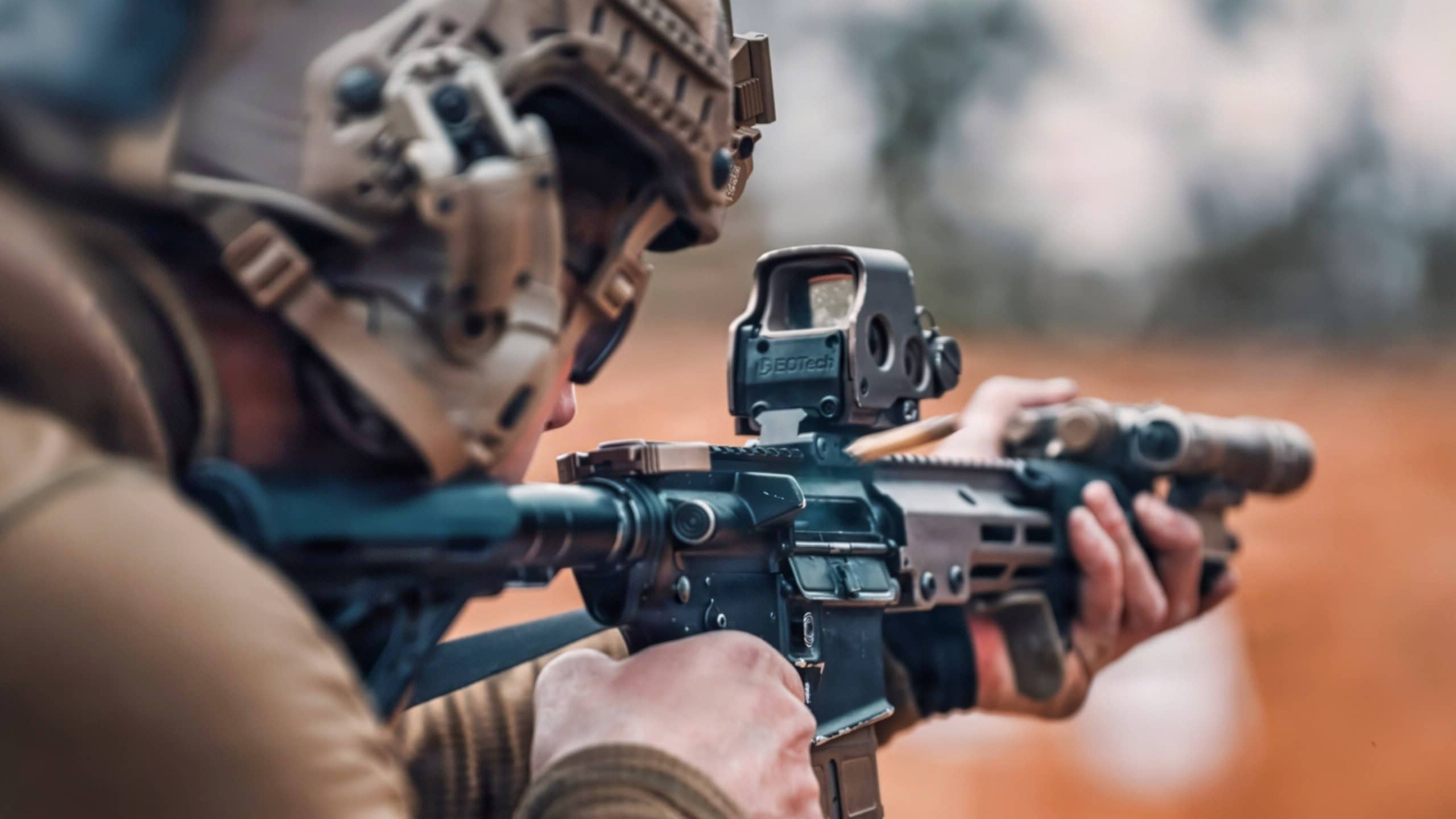
A U.S. Army Green Berets assigned to 3rd Special Forces Group (Airborne), fires his M4 carbine while conducting enhanced rifle and pistol marksmanship during the Special Forces Advance Urban Combat (SFAUC) course at Fort Bragg, North Carolina, Jan. 30, 2026. SFAUC is a three-week training exercise that covers major battle tasks and drills for Green Berets, including small-unit tactics, breaching techniques, team coordination, close quarter battle drills, enhanced marksmanship shooting drills and full mission profiles, to prepare them for a variety of real-world complex environments. (U.S. Army photo by Sgt. Edward Randolph)

A live fire demonstration of the Army’s newest and most modernized combat vehicle, the M10 Booker, marks the conclusion of the M10 Booker Dedication Ceremony at Aberdeen Proving Ground, in Aberdeen, Md., April 18, 2024. (U.S. Army photo by Christopher Kaufmann)
Re-Learning to Fly
That’s because the United States finds itself lagging its key rivals in the critical domain of drone capabilities.
Russia and China are both outproducing (and out-innovating) Uncle Sam in the drone arena. In fact, even some allies, like Ukraine, are outpacing the Americans in the development and production of drones.
These trends do not bode well for the Americans, who are increasingly finding themselves in conflict zones where drones are the decisive factor.
Soldiers from the United States Army 101st Airborne Division and the 1st Cavalry Division recently spent a week at Clarke Range near Anniston, Ala., testing several reconnaissance drones.
Rather than simply evaluating the equipment selected for them by the Army’s Byzantine acquisition bureaucracy, the troops were allowed to choose which systems their units would receive.
Each division selected up to two systems, and those unmanned systems will now be fielded by those units, with training (and integration) occurring over the next several months.
The Army’s Product Office Small Uncrewed Aircraft Systems (UAS) organized the event and is part of a larger push by the Army to shorten the time between identifying battlefield requirements and putting the necessary equipment into soldiers’ hands.
Soldiers were asked to examine the drones’ basic flight characteristics.
That process reflected an increasingly important consideration for Big Green: a drone that performs well on paper may ultimately prove less appealing when soldiers must physically transport and launch (and recover) that system in combat conditions.
Hands-on testing allows soldiers to determine the practical factors that may not be apparent from technical specifications alone.
An Online Marketplace for Military Drones? That’s the UAS Marketplace
The UAS Marketplace is an online marketplace that acts like an Amazon for military drones.
Army units examine and approve unmanned systems they believe are best suited to their mission sets.
They can choose those from the marketplace and acquire them before deploying on whatever mission they might have.
The UAS Marketplace was a necessary response to a cumbersome acquisition process at the Pentagon that often took years to meet needs, conduct competitions, and deploy new systems.
That timeline was especially problematic for the Army because drones are a rapidly evolving technology that are not bound by the onerous acquisition processes established by the Pentagon in the twentieth century.
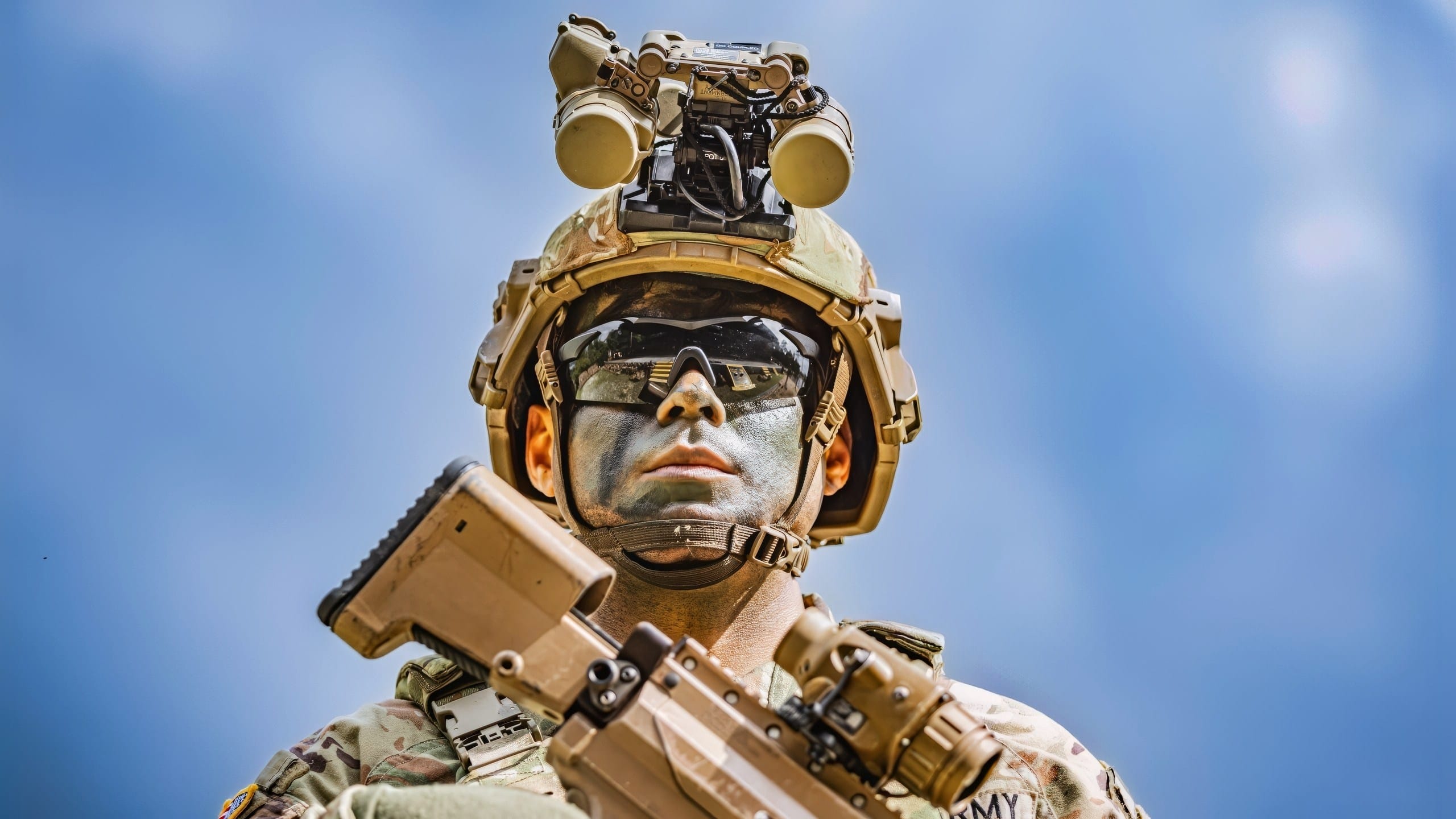
Soldiers, family and friends attend the Rangers in Action demonstration and graduation for class 08-25 Aug. 08, 2025, at Victory Pond on Fort Benning, Georgia. (U.S. Army photo by Capt. Stephanie Snyder)
The Army’s fiscal 2027 procurement documents similarly state that battalion-and-below unmanned aircraft will be purchased based on soldier demand, with a base procurement quantity of 590 systems. The documents also describe efforts to expand domestic drone manufacturing capacity.
The change is part of the Army’s broader “Transformation in Contact” effort, under which operational formations can test emerging technologies and organizational concepts and feed their experiences back into Army modernization programs.
Much to Big Green’s credit, the service is trying to create an acquisitions system capable of adapting to the breakneck development timelines of new technologies, such as drones.
Army officials believe that by involving soldiers directly in this process, those men and women can identify problems earlier and allow different formations to select equipment specifically tailored to the missions they undertake.
A Smart Development
Up next, the 101st Airborne and 1st Cavalry Divisions will determine whether their selections perform as expected outside the controlled evaluation.
Those drones will not move from comparative testing into unit training, where soldiers will determine how well they operate alongside existing reconnaissance, communications, and targeting systems.
Those results will then feed into the marketplace — and influence what the Army buys next.
This is a smart and necessary shift away from the way the military has historically acquired systems.
Whether it will have the desired impact, program managers seem to think it will, remains to be seen.
But, involving the men and women who are likely to use these systems in combat at the earliest stages of acquisition is a smart–even bold–step toward righting the sinking acquisitions ship at the Pentagon.
About the Author: Brandon J. Weichert
Brandon J. Weichert is the Senior National Security Editor at 19FortyFive.com. He also manages The Weichert Brief on Substack. Weichert also hosts “National Security Talk” on Rumble. He is the author of four bestselling national security books, the most recent of which is A Disaster of Our Own Making: How the West Lost Ukraine (Encounter Books). Follow him via Twitter/X @WeTheBrandon.