
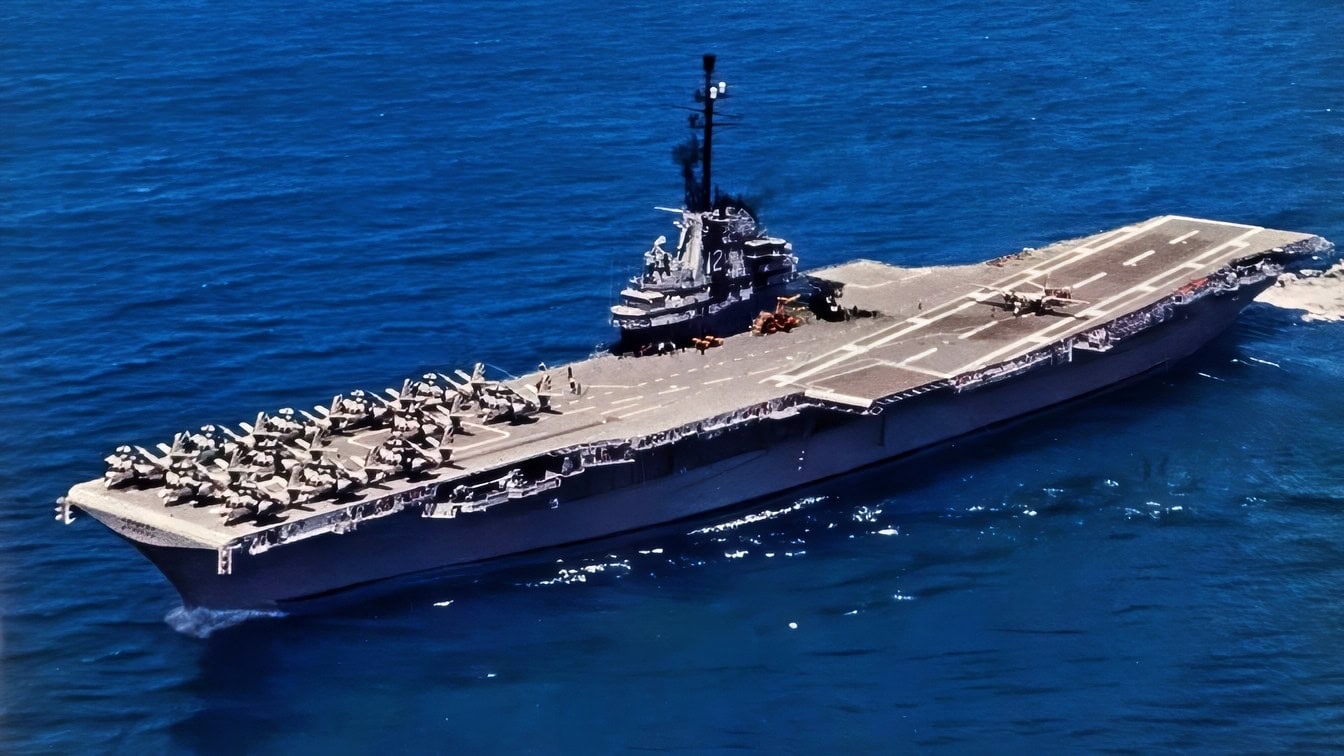
USS Hornet Spent 495 Days Between U.S. West Coast Port Calls During World War II – USS Abraham Lincoln and USS Gerald R. Ford have placed carrier endurance back in the headlines. Lincoln, a Nimitz-class carrier, had been deployed for more than 260 days by mid-August 2026 and had gone more than 200 days without a port call, according to Reuters.
Ford, the first Ford-class carrier, returned to Norfolk on May 16, 2026, after a 326-day deployment. The ship covered more than 57,713 nautical miles, completed 23 replenishments at sea, and supported 12,200 flight launches, according to the U.S. Navy.
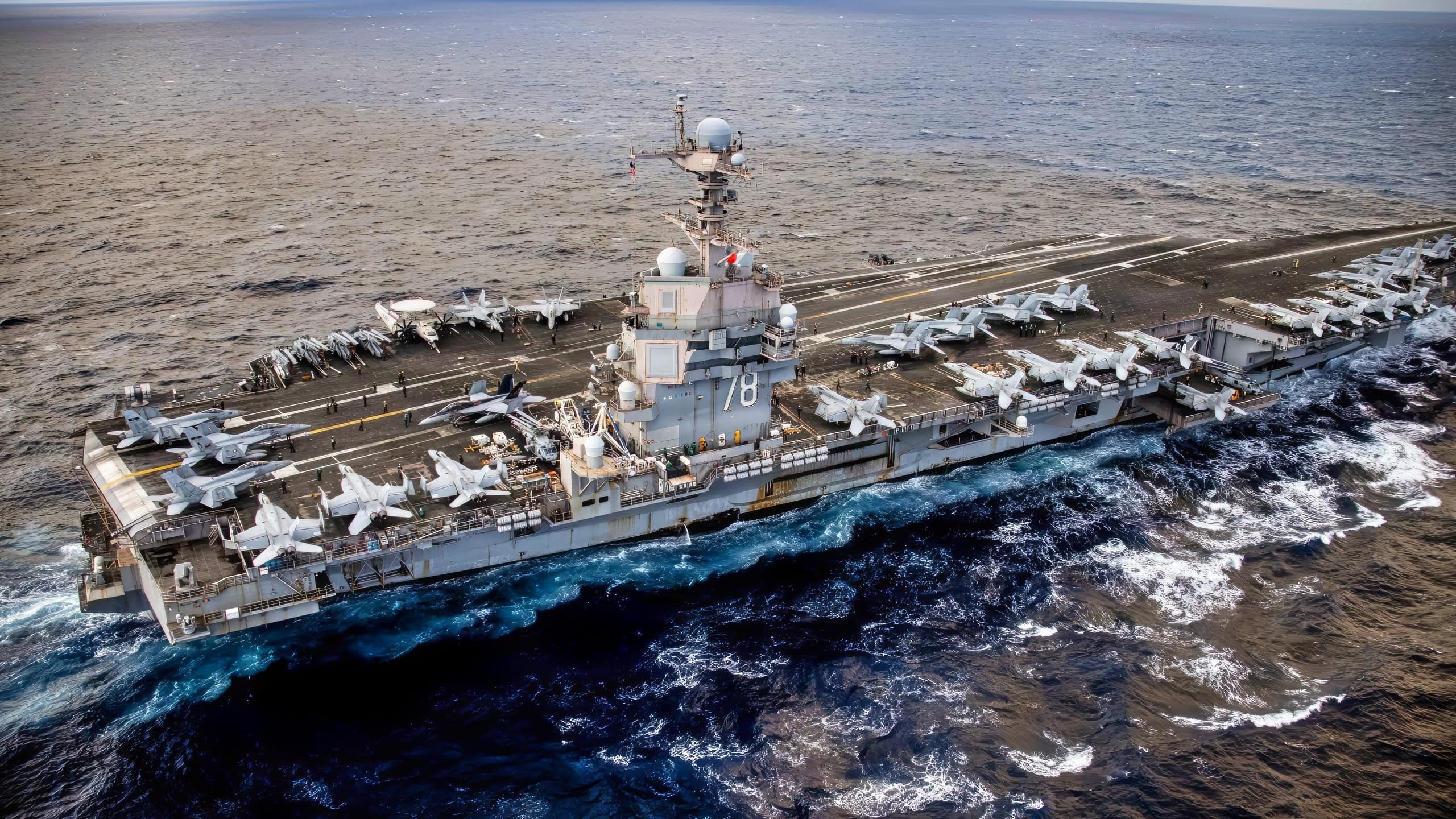
The world’s largest aircraft carrier, USS Gerald R. Ford (CVN 78), transits the Eastern Mediterranean Sea, March 22, 2026. Gerald R. Ford is on a scheduled deployment in the U.S. 6th Fleet area of operations to support the warfighting effectiveness, lethality and readiness of U.S. Naval Forces Europe Africa, and defend U.S., Allied and partner interests in the region. (U.S. Navy photo by Mass Communication Specialist 2nd Class Tajh Payne)
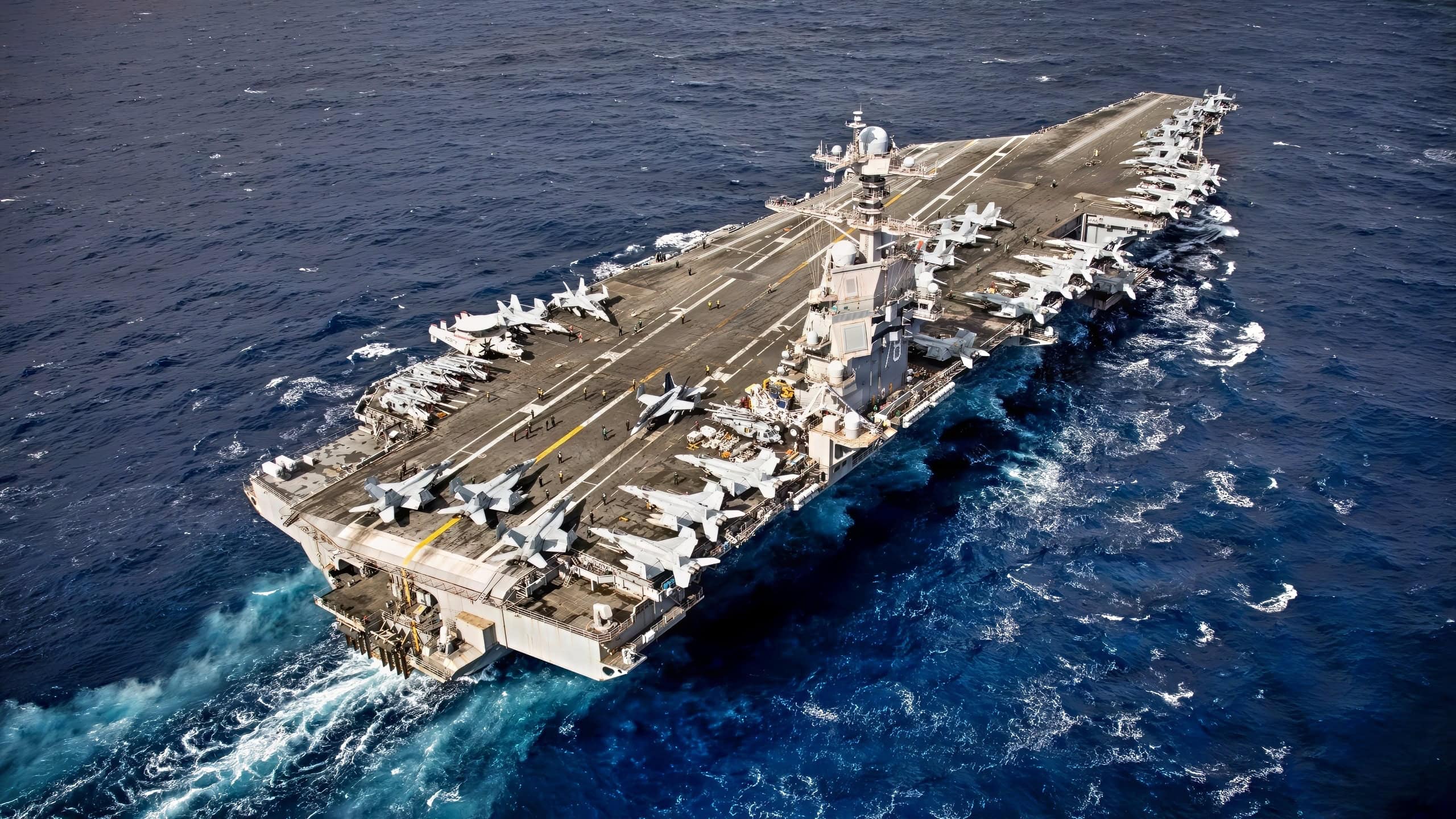
U.S. Sailors conduct routine flight deck operations on the flight deck of the world’s largest aircraft carrier, USS Gerald R. Ford (CVN 78), while underway in the Eastern Mediterranean Sea, March 22, 2026. Gerald R. Ford is on a scheduled deployment in the U.S. 6th Fleet area of operations to support the warfighting effectiveness, lethality and readiness of U.S. Naval Forces Europe Africa, and defend U.S., Allied and partner interests in the region. (U.S. Navy photo by Mass Communication Specialist 2nd Class Tajh Payne)
Both deployments deserve attention, but the US Navy’s aircraft carrier operations involve even larger numbers. A chronology quoting Hornet’s war diary places her departure from San Diego on February 29, 1944. The USS Hornet Museum records her arrival beneath the Golden Gate Bridge on July 7, 1945. Counting both dates, the span covered 495 calendar days.
The wording matters on this one for sure. Hornet did not spend 495 unbroken days underway. She stopped at Pearl Harbor and used forward anchorages including Majuro, Eniwetok, Ulithi, Manus, and Leyte. World War II also lacked today’s fixed deployment model. The defensible measure is 495 days between continental U.S. port calls while fighting across the Pacific.
Hornet Entered Combat Four Months After Commissioning
The Essex-class Hornet was commissioned on November 29, 1943. The hull had originally been named Kearsarge, but the Navy renamed it in honor of USS Hornet (CV-8), lost at the Battle of the Santa Cruz Islands in October 1942.
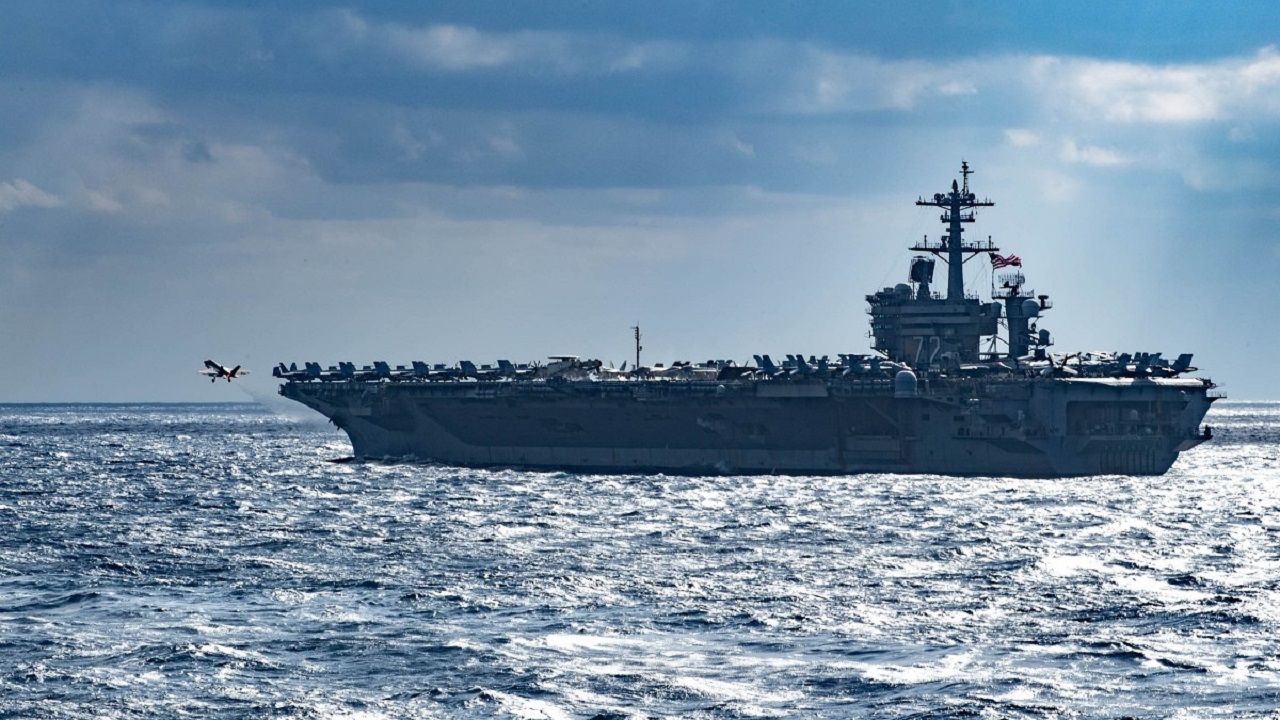
USS Abraham Lincoln. Image Credit: Creative Commons.
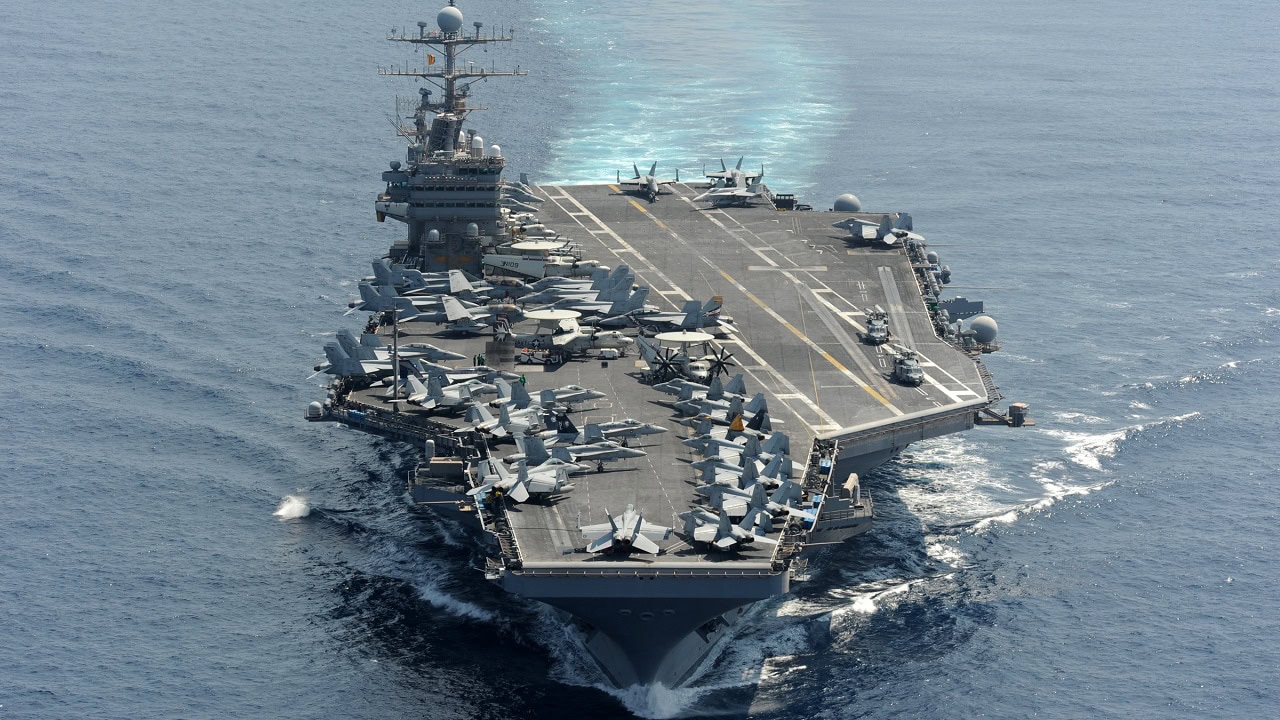
INDIAN OCEAN, (Jan 18, 2012) The Nimitz-class aircraft carrier USS Abraham Lincoln (CVN 72) transits the Indian Ocean. Abraham Lincoln is in the U.S. 7th Fleet area of responsibility as part of a deployment to the western Pacific and Indian Oceans to support coalition efforts. (U.S. Navy photo by Chief Mass Communication Specialist Eric S. Powell/ Released)
The official Navy history lists CV-12 at 27,000 tons, 872 feet long, and capable of reaching 33 knots. Her crew numbered more than 3,400. Hornet left Norfolk on February 14, 1944, passed through the Panama Canal, loaded Marine aircraft and personnel in San Diego, and reached Pearl Harbor on March 4.
The carrier departed Hawaii for the forward war zone in mid-March and joined Task Force 58 at Majuro. Her first combat operation came at the end of the month, when her aircraft struck Palau and nearby islands, laid aerial mines, attacked airfields, and destroyed Japanese aircraft.
This schedule rested on the industrial machine behind the 24 ships ultimately completed in the Essex class. Fuel, bombs, spare aircraft, pilots, and food moved through forward bases while mobile logistics ships kept the fast carriers in the fight.
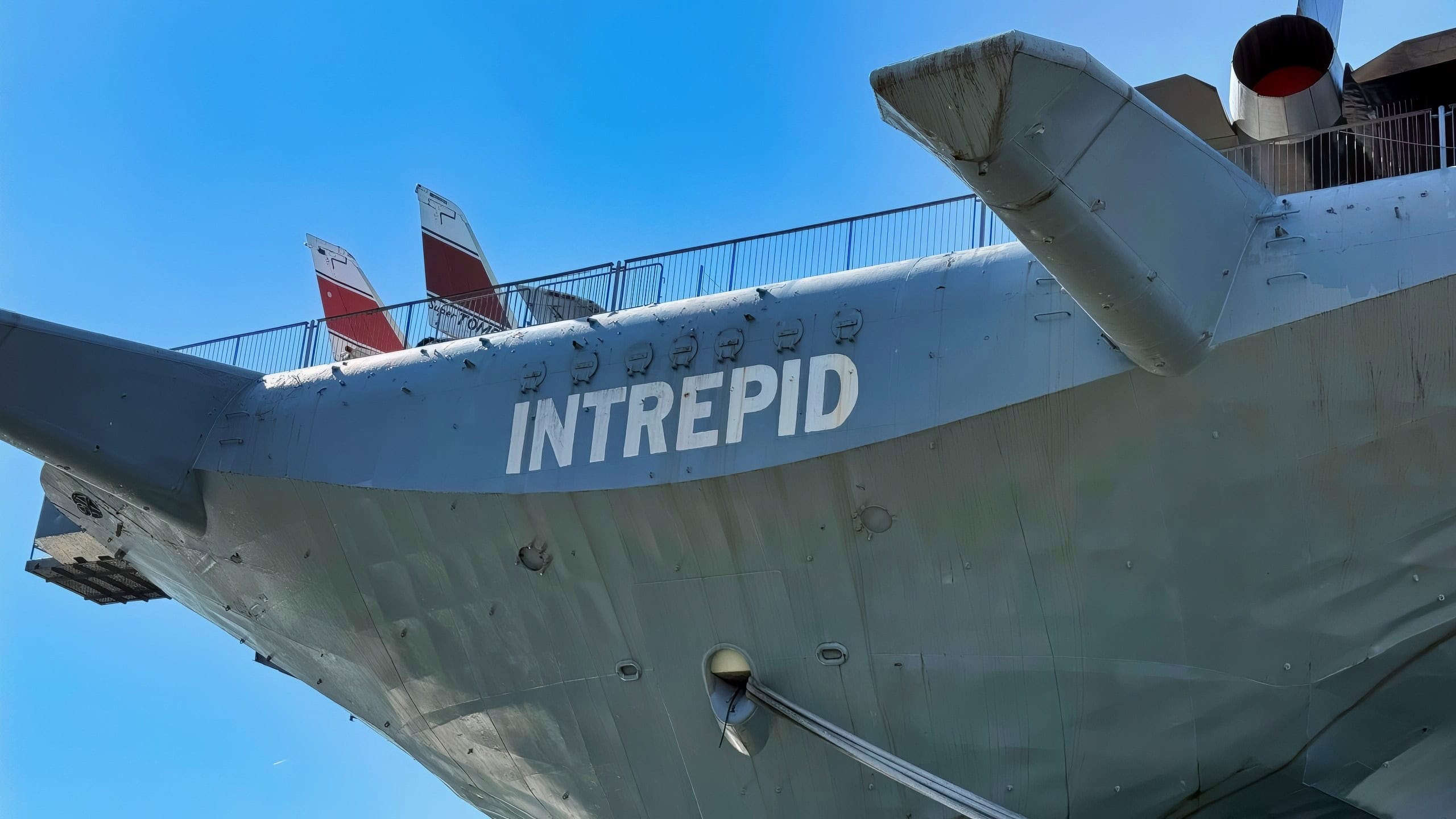
USS Intrepid of the Essex-Class Aircraft Carriers. Image Credit: 19FortyFive.com Original Photo.
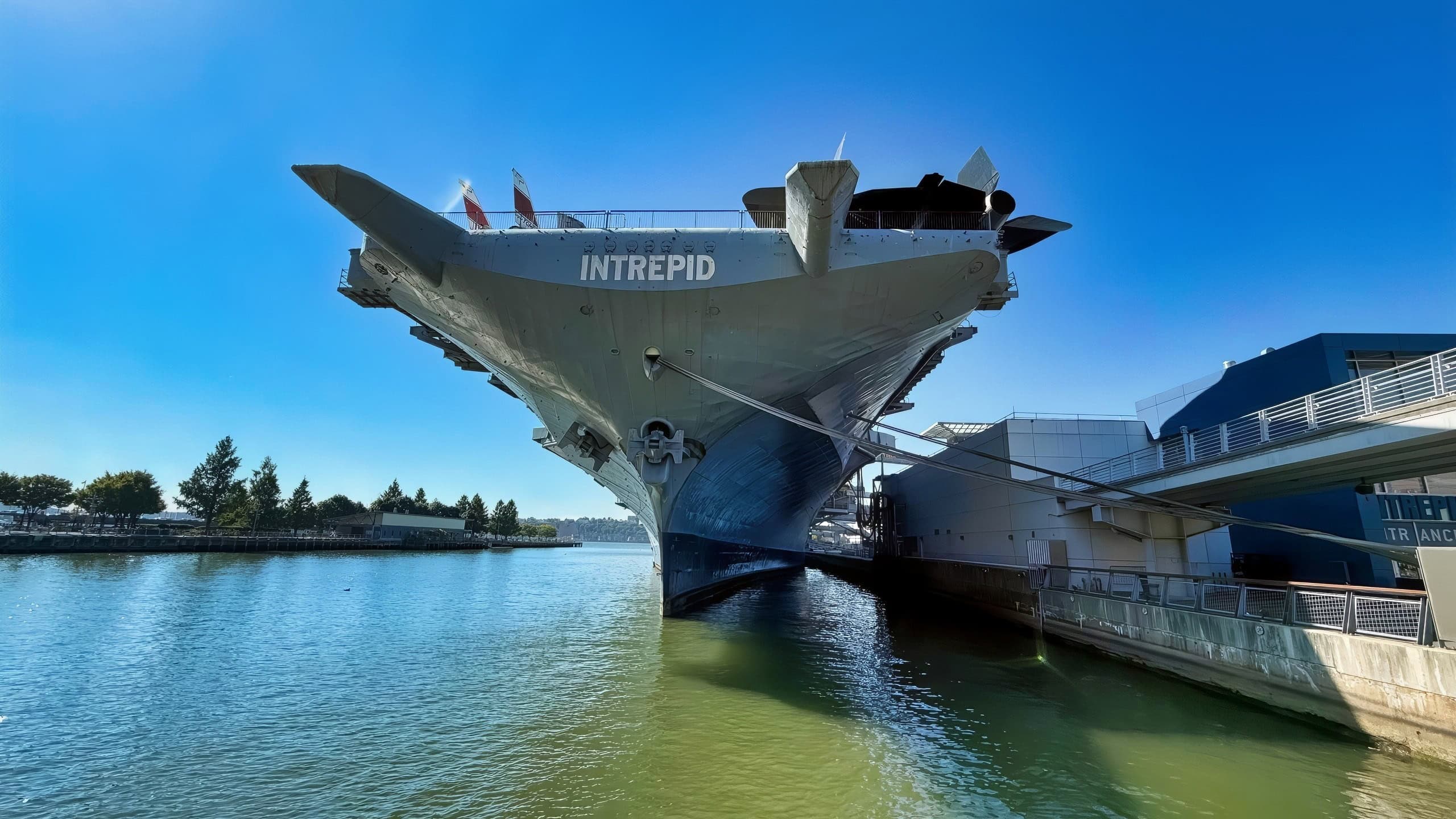
USS Intrepid Essex-Class Aircraft Carrier 19FortyFive.com Photo.
The Marianas Put Hornet Against Japanese Carrier Aviation
Hornet supported the Hollandia landings in New Guinea and joined raids against Truk before moving north. She struck Tinian and Saipan on June 11, Guam and Rota the next day, and airfields on Iwo Jima and Chichi Jima on June 15 and 16. Those attacks shielded the invasion of Saipan from Japanese aircraft operating nearby.
The Battle of the Philippine Sea took place on June 19 and 20. Hornet fighters joined the defense against four major Japanese air attacks. Experienced American pilots, radar-directed interception, and disciplined fighter control tore apart the incoming formations in the battle remembered as the “Great Marianas Turkey Shoot.”
Hornet’s air group continued attacking Guam, the Bonin Islands, Palau, Okinawa, and Formosa. She shifted among task groups, refueled at sea, rearmed at advanced anchorages, and returned to strike range.
Leyte Gulf Filled the Middle of the 495-Day Run
Hornet aircraft supported the Leyte landings beginning on October 20, 1944. During the Battle of Leyte Gulf, the carrier launched long-range attacks against Japan’s Center Force and helped drive surviving warships away from the Philippines.
The campaign did not end with the fleet battle. Hornet attacked shipping and airfields across the Philippines, struck a Japanese convoy in Ormoc Bay, and later hit Formosa, Luzon, the Pescadores, French Indochina, Hong Kong, Saigon, and Cam Ranh Bay.
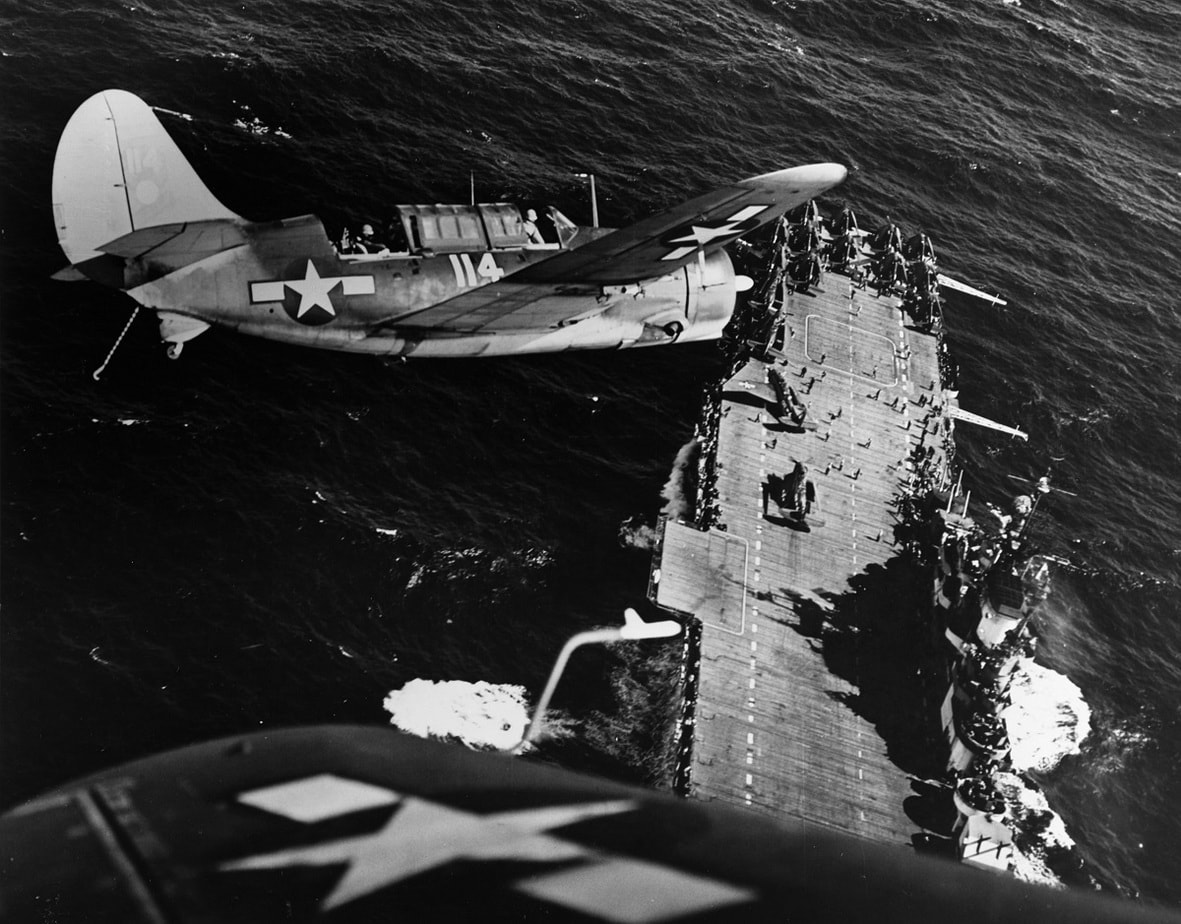
USS Hornet. Image: Creative Commons.
By February 1945, Hornet was operating near Japan. Her aircraft struck the Tokyo area on February 16 before the carrier turned south to support the Iwo Jima landings. In April, her air group covered the invasion of Okinawa and joined the mass carrier attack against the Japanese battleship Yamato.
Hornet’s VT-17 Avengers were among the opening torpedo attackers and scored hits on Yamato, according to the USS Hornet Museum. The sinking of the 72,000-ton Yamato stopped Japan’s desperate Operation Ten-Go before the battleship reached Okinawa.
A Typhoon Finally Sent Hornet Home
The Japanese Navy never forced Hornet out of the war. A Pacific typhoon did.
On June 5, 1945, Hornet met sustained winds of 110 knots, gusts reaching 120 knots, and seas estimated at 50 to 60 feet. Roughly 24 feet of the forward flight deck collapsed, while the section behind it was left too weak for normal flight operations.
The next morning, turbulence created by the wrecked bow caused a Corsair to crash during takeoff. Hornet then backed down at 18 knots and launched 24 fighters over the stern to search for ships scattered by the storm, according to the Naval History and Heritage Command.
The carrier retired to Leyte, reached Pearl Harbor on June 29, and passed beneath the Golden Gate Bridge on July 7. On the 495th calendar day after leaving San Diego, Hornet entered Hunters Point Naval Shipyard with roughly 24 feet of her forward flight deck collapsed.
About the Author: Harry J. Kazianis
Harry J. Kazianis (@Grecianformula) was the former Senior Director of National Security Affairs at the Center for the National Interest (CFTNI), a foreign policy think tank founded by Richard Nixon based in Washington, DC. Harry has over a decade of experience in think tanks and national security publishing. His ideas have been published in the NY Times, The Washington Post, The Wall Street Journal, CNN, and many other outlets worldwide. He has held positions at CSIS, the Heritage Foundation, the University of Nottingham, and several other institutions related to national security research and studies. He is the former Executive Editor of the National Interest and the Diplomat. He holds a Master’s degree focusing on international affairs from Harvard University.

