
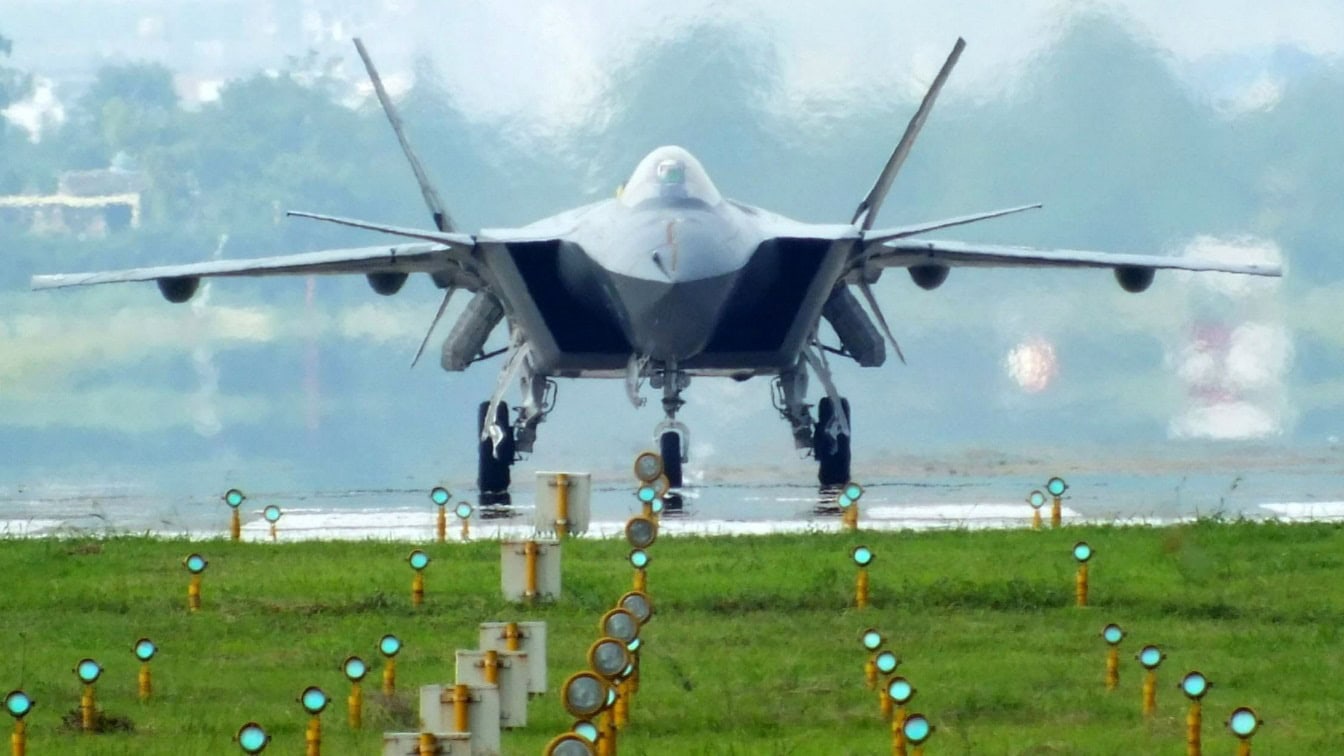
Summary and Key Points: A Chinese Chengdu J-20 was filmed flying with 8 PL-15 air-to-air missiles hanging off its external hardpoints. Inside its bays, the aircraft carries up to 4 more PL-15s and 2 short-range PL-10s, which puts a fully loaded J-20 at 14 missiles. The configuration has a name — “beast mode,” coined by Lockheed Martin’s marketing for the F-35 and since applied to everything else — and it involves a straightforward trade. Hanging missiles on the outside of a stealth fighter destroys the stealth. Some estimates put the PL-15’s range at 124 miles, and China is developing the PL-17 at roughly 400 kilometers, too large to fit inside the aircraft at all.
J-20 Mighty Dragon Stealth Fighter Has Beast Mode
In 2024, a Chinese Chengdu J-20 fifth-generation stealth fighter was spotted flying in “beast mode” somewhere above the skies of China.
For those who don’t know, “beast mode” is a term used when an aircraft, especially a fifth-generation aircraft, is flying with its maximum weapons loadout on its internal and external hardpoints.
Lockheed Martin originally coined the term in 2017 as an advertisement for the F-35 Lightning II, but it has since been extended to other aircraft. Currently, the J-20 is China’s most advanced fighter jet in service.
Unlike the F-35, the J-20 is designed primarily as an air-superiority aircraft, although it also possesses air-to-ground strike capabilities.
The J-20 in Beast Mode
The J-35 in question was spotted in 2023, but the footage did not reach Western internet spaces until February 2025. The aircraft was apparently fitted with eight PL-15 medium- to long-range air-to-air missiles on its external hardpoints.
Based on previous footage of its internal bays, the J-20 is capable of carrying up to four PL-15s in its main ventral bays along with two short-range PL-10 missiles in its smaller side bays.
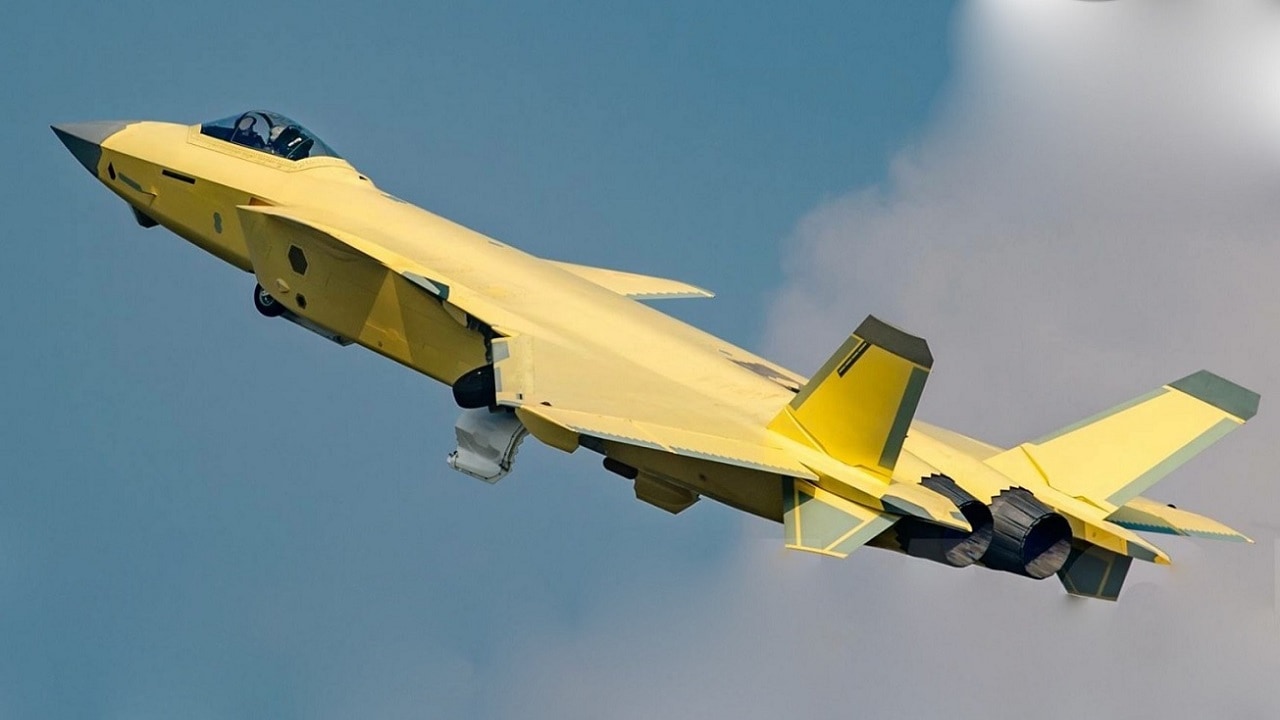
J-20 Mighty Dragon Stealth Fighter. Image Credit: Chinese Internet.
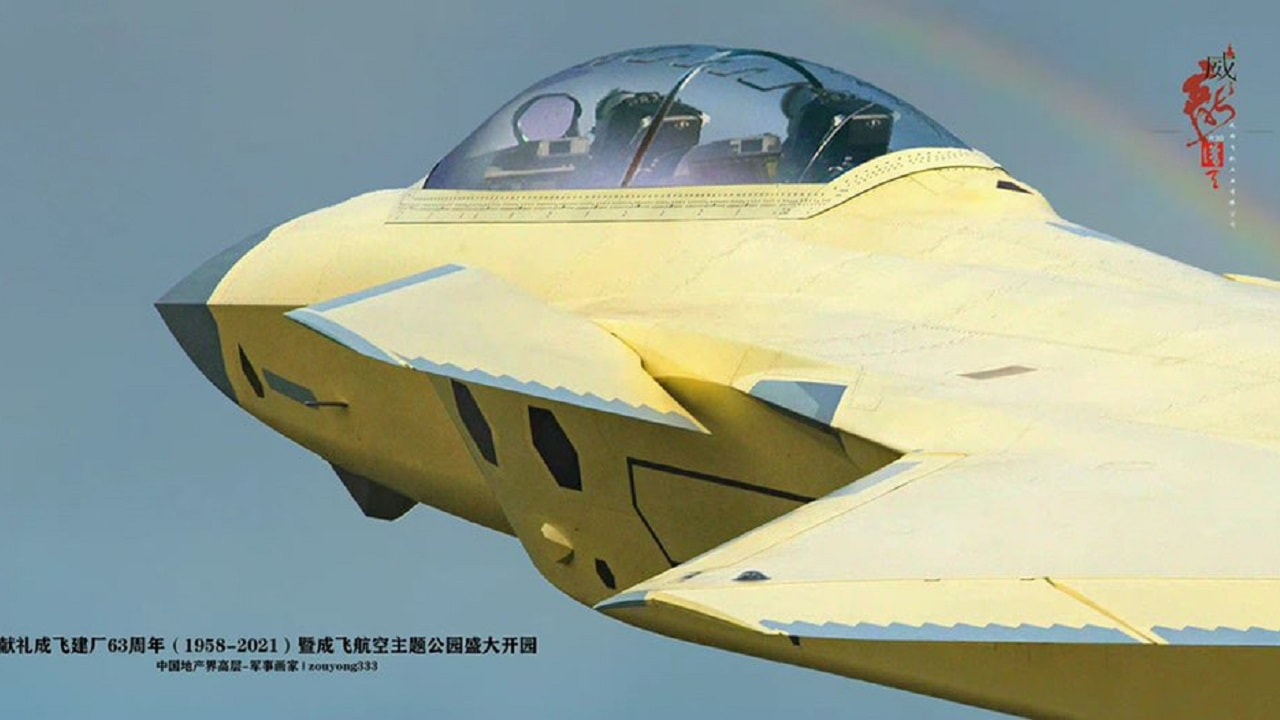
Chinese J-20 stealth fighter. Image Credit: Chinese Internet.
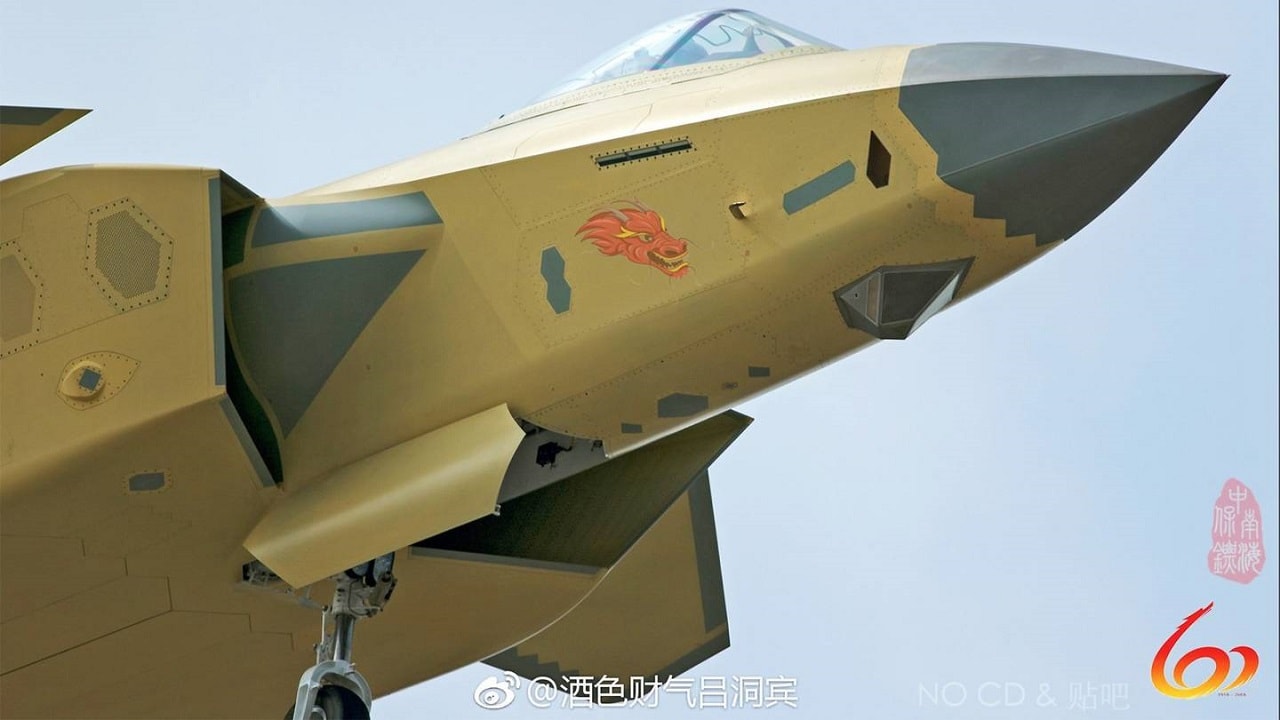
Chinese J-20 Stealth Fighter. Image Credit: Chinese Internet.
Altogether, the fighter can carry 14 missiles in its internal and external bays. Some estimates put the PL-15’s range at 124 miles.
Some claims suggest China intends to integrate the PL-17 into the J-20, which has an extended range of around 400 kilometers (248 miles).
But what is the point of flying in beast mode when the configuration is almost certain to compromise the J-20’s stealth profile?
The ability to carry up to 12 PL-15 missiles offers significant potential for the PLAAF. While carrying external loads would compromise its stealth profile, the right tactics can offset this trade-off.
As speculated on TWZ, a J-20 in beast mode could complement other J-20s in full stealth configurations.
With the stealthy aircraft flying ahead, the aircraft with external weapons would act as a force multiplier, compensating for the otherwise limited air-to-air missile carriage.
A J-20 in beast mode could also cover other tactical aircraft, like the newly accepted J-35 or the J-15.
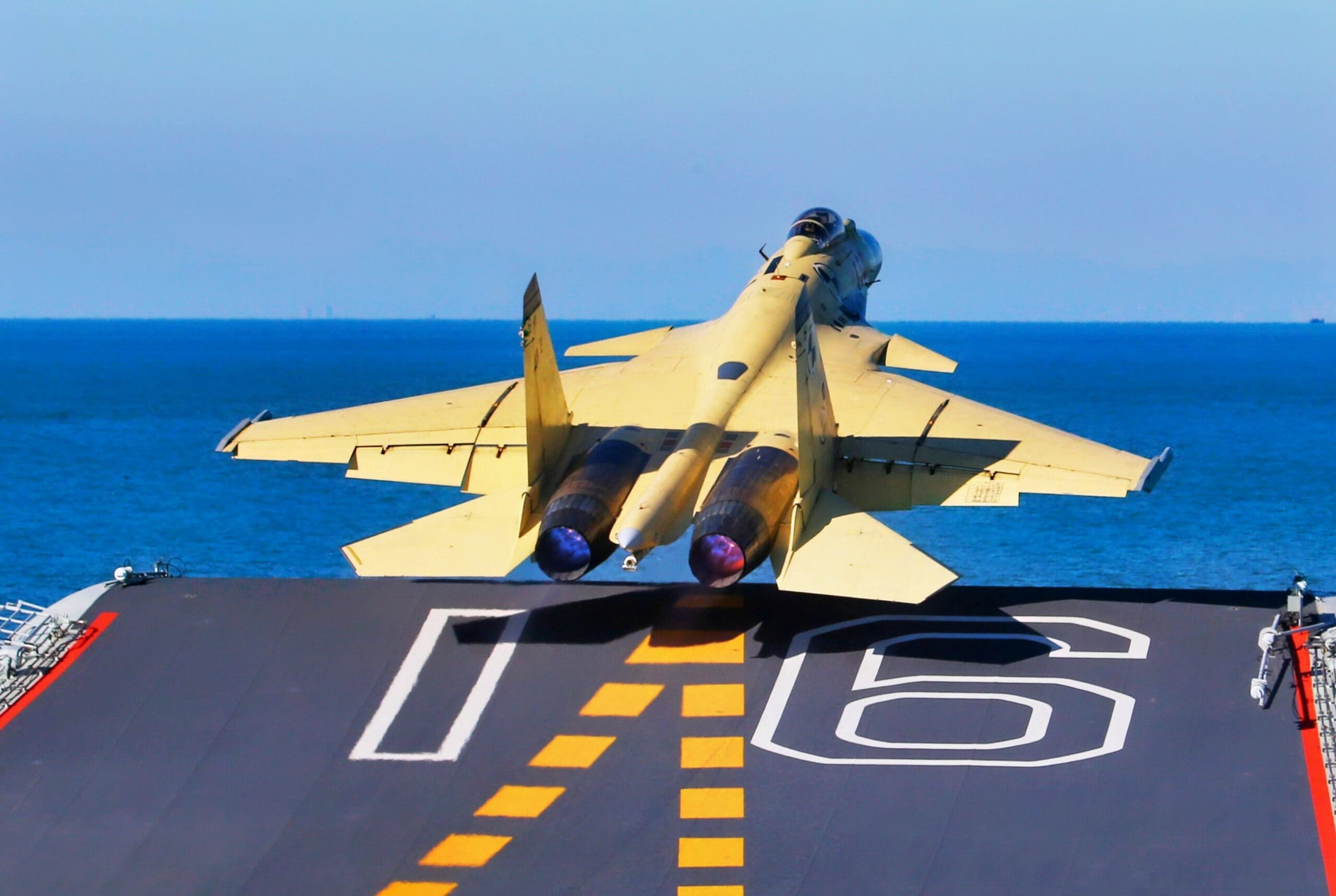
J-15 Fighter from China. Image Credit: Creative Commons.
The Long-Range Missile Arms Race
These capabilities would be further enhanced if China integrates the PL-17 onto the J-20’s external hardpoints.
The PL-17, which is too large to fit into the aircraft’s internal weapons bays, would significantly enhance the J-20’s effective range, enabling it to engage with high-value assets like aerial refuelers or AWACS aircraft far outside of contested airspaces.
Likewise, the PL-16 program seeks to offer the same range as the PL-15 while occupying less internal space in the J-20’s weapons bay.
According to the International Institute for Strategic Studies, the PLAAF plans to arm the J-20 with six PL-16 missiles in its internal bays.
Information about the PL-16 is limited, as the system is still under development in China, but it would enable the aircraft to carry a larger magazine of medium- to long-range missiles.
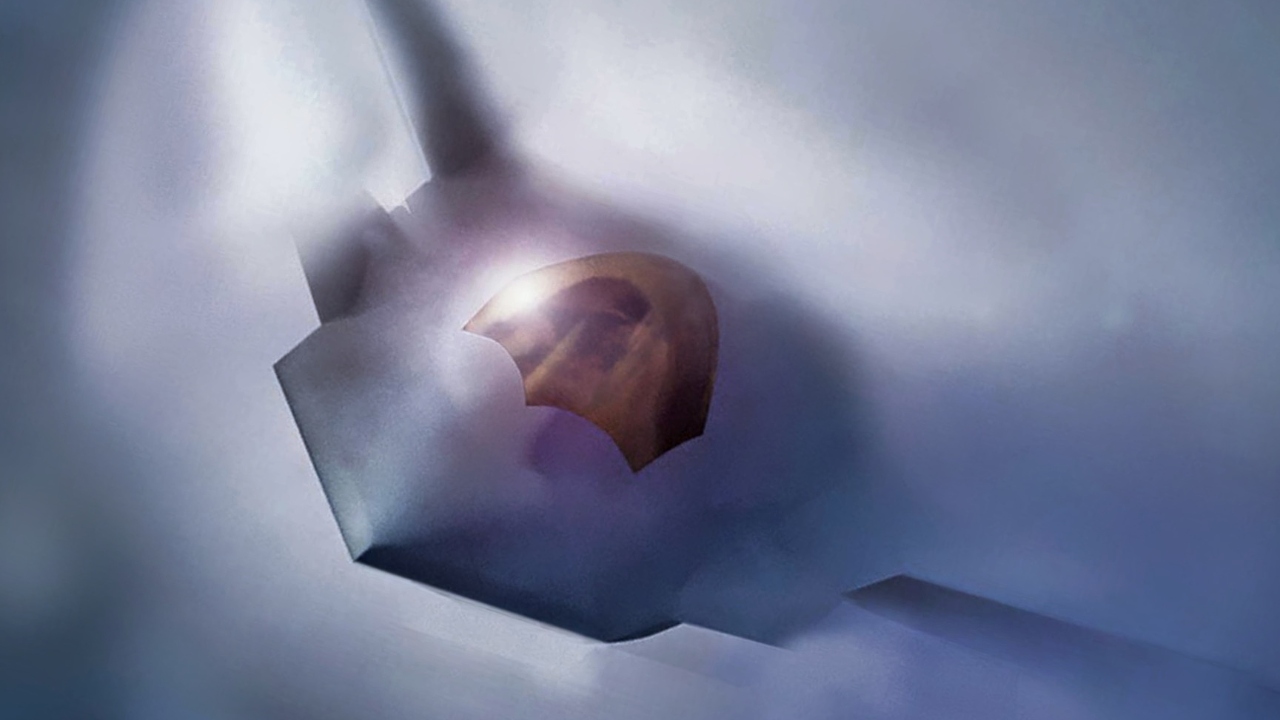
Shown is a graphical artist rendering of the Next Generation Air Dominance (NGAD) Platform. The rendering highlights the Air Force’s sixth generation fighter, the F-47. The NGAD Platform will bring lethal, next-generation technologies to ensure air superiority for the Joint Force in any conflict. (U.S. Air Force graphic)
Recently, China has accelerated the development of capable beyond-visual-range (AVR) AA missiles.
Recent additions such as the PL-15 and PL-17 have prompted the development of the U.S. AIM-260 Joint Advanced Tactical Missile (JATM).
The AIM-260 program seeks to provide a new air-to-air missile with significantly longer range than the current AIM-120 AMRAAM.
According to initial estimates, the missile will have a range far beyond 120 miles and is planned for integration into the F-22, the F-35, current fourth-generation aircraft, and the upcoming F-47.
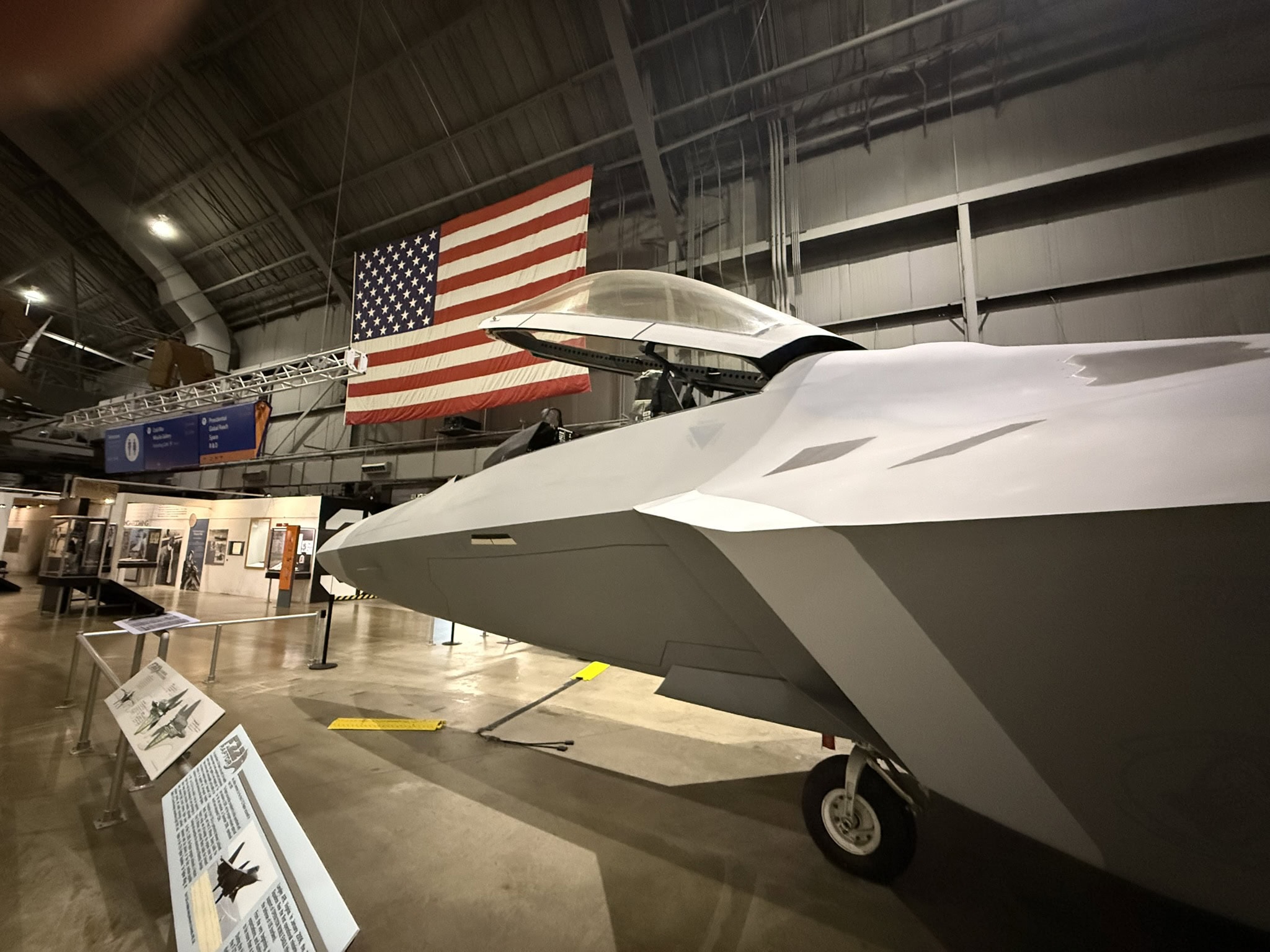
F-22 Raptor Photo Take At the National Museum of the U.S. Air Force. 19FortyFive.com Photo. Taken on July 20, 2025.
According to most sources, the AIM-260 was devised specifically to counter the threat posed by Chinese long-range AAMs. The program has been in development since 2017, with tests conducted as recently as May of this year.
What’s the Point of Beast Mode?
Circling back to the J-20, the beast-mode configuration obviously comes at the expense of stealth performance.
By most estimates, the J-20 has a decent stealth profile, despite initial concerns regarding its canards. While it is less stealthy overall than the F-35, the aircraft has an otherwise clean stealth profile from the front.
Obviously, adding any external weaponry will compromise its stealth. It is impossible to say how high the PL-15’s radar cross-section is, but it is likely large enough that the aircraft will appear on enemy radar systems.
To that end, the J-20 is only likely to use a beast mode configuration in certain scenarios that don’t require entering contested airspace.
Another point of note is that, unlike the F-35, the J-20 is not a dedicated multi-role fighter.
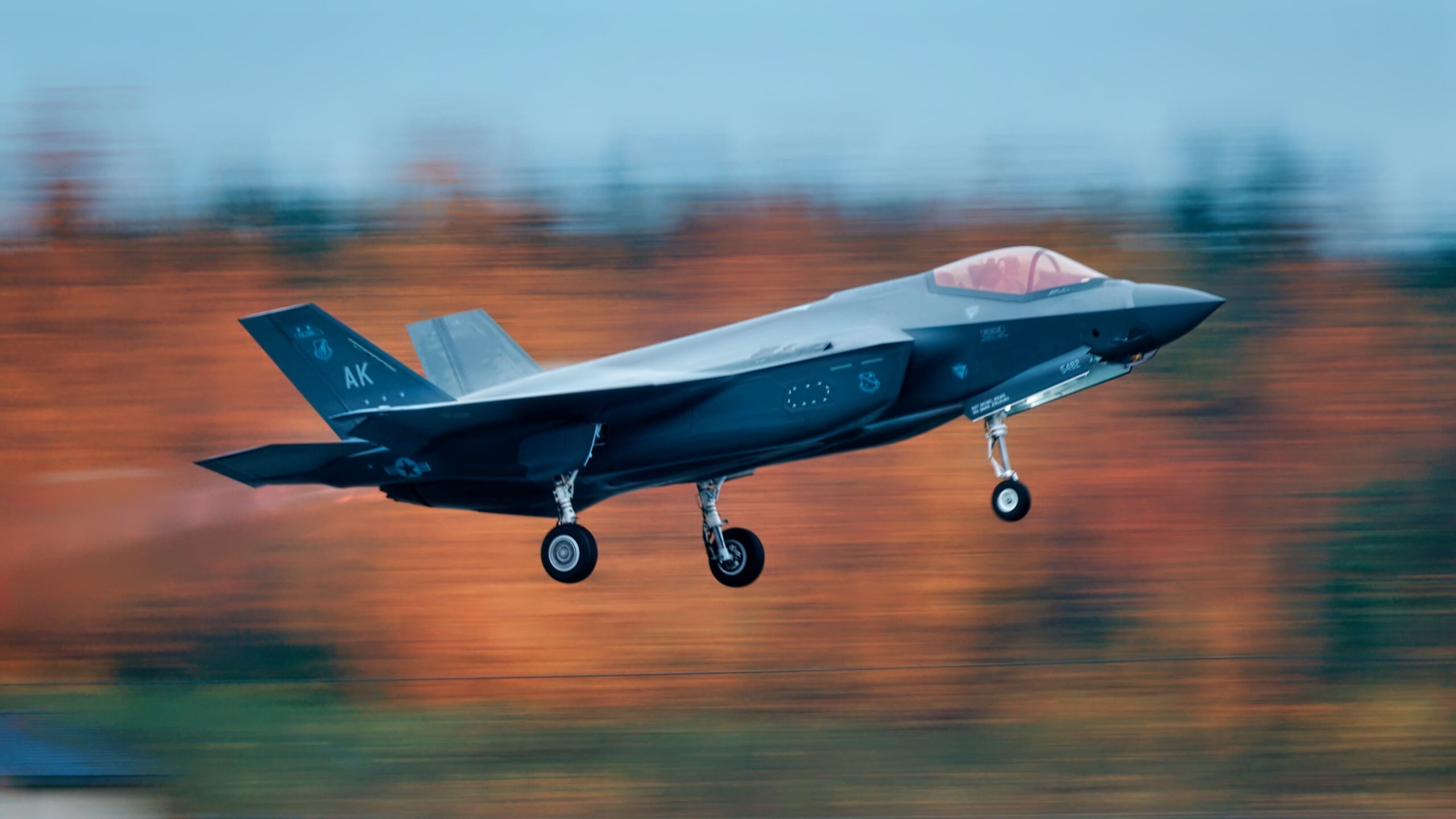
A F-35 Lightning lll assigned to the 354th Fighter Wing takes off from Eielson Air Force Base, Alaska September 19, 2024. The F-35 was participating in a multiple aircraft exercise for the 354th FW. (U.S. Air Force Photo by Senior Sean Lamb)
Although it can carry guided air-to-ground munitions, most reports indicate the aircraft is intended mainly for air superiority missions.
To that end, the J-20 will likely never have to carry any external bombs or other air-to-ground munitions.
Whereas the F-35 is designed to perform close air support, the J-20 will likely conduct most of its missions from BVR, rarely, if ever, penetrating enemy airspace. With this in mind, it makes more sense for the aircraft to fly using external hardpoints, as it is less likely to put itself in harm’s way than the F-35 is.
About the Author: Isaac Seitz
Isaac Seitz, a Defense Columnist, graduated from Patrick Henry College’s Strategic Intelligence and National Security program. He has also studied Russian at Middlebury Language Schools and has worked as an intelligence Analyst in the private sector.