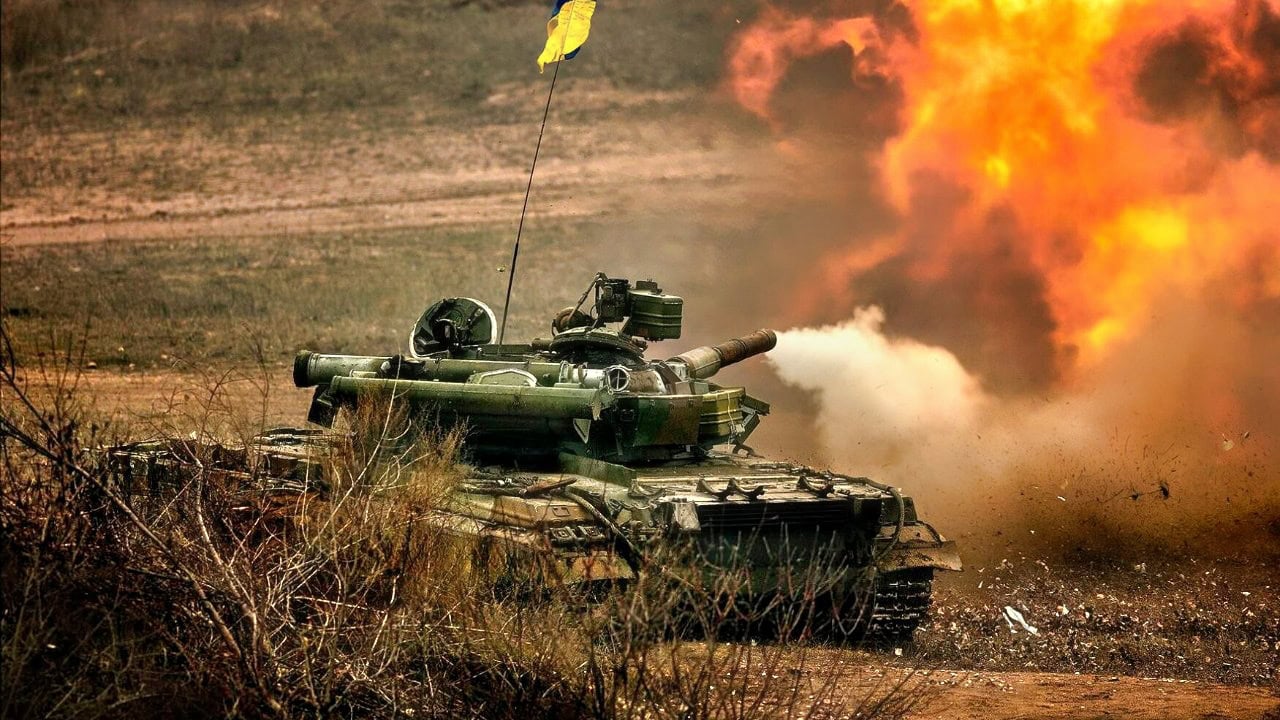
On 14 September, a Russian suicide attack drone with an explosive warhead hit a train crossing out of Ukraine near the Polish border.
The drone impacted shortly after another train carrying former UK Prime Minister Boris Johnson and top European security officials had passed through the border crossing.
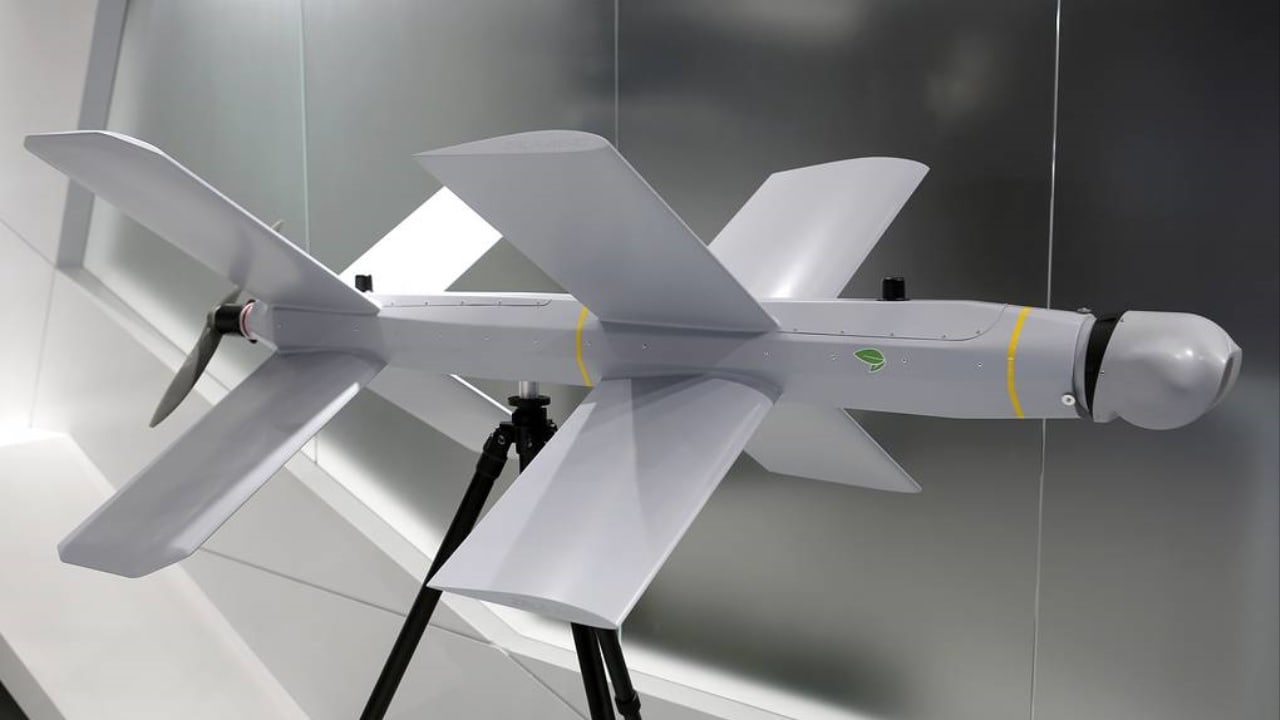
Lancet Drone. Image Credit: Russian State Media.
No casualties were reported after the strike at Yahodyn, which hit the train’s locomotive.
Officials from Ukraine’s state-run railway authority, Ukrzaliznytsia, told 19FortyFive that locomotives have been favorite targets of Russian attacks.
Some 492 locomotives have been destroyed or damaged along with 249 rail carriages since the full-scale war with Russia began.
According to Ukrzaliznytsia, a diplomatic train carrying Boris Johnson, Carl Bildt and security advisers from several European Union states had purposely left the station at Yahodyn ahead of schedule.
The visitors were returning from the annual Yalta European Strategy (YES) conference in Kyiv.
“This wasn’t our train, but the one just minutes after us by the Polish border crossing,” Bildt said. “It was evacuated as the Russian drone approached and no one was hurt. Very good safety system. Our train just had an evacuation warning.”
“It is highly probable that the Russian drone’s intended target was in fact the diplomatic train, which had departed the station earlier than scheduled,” the company said in a Telegram post.
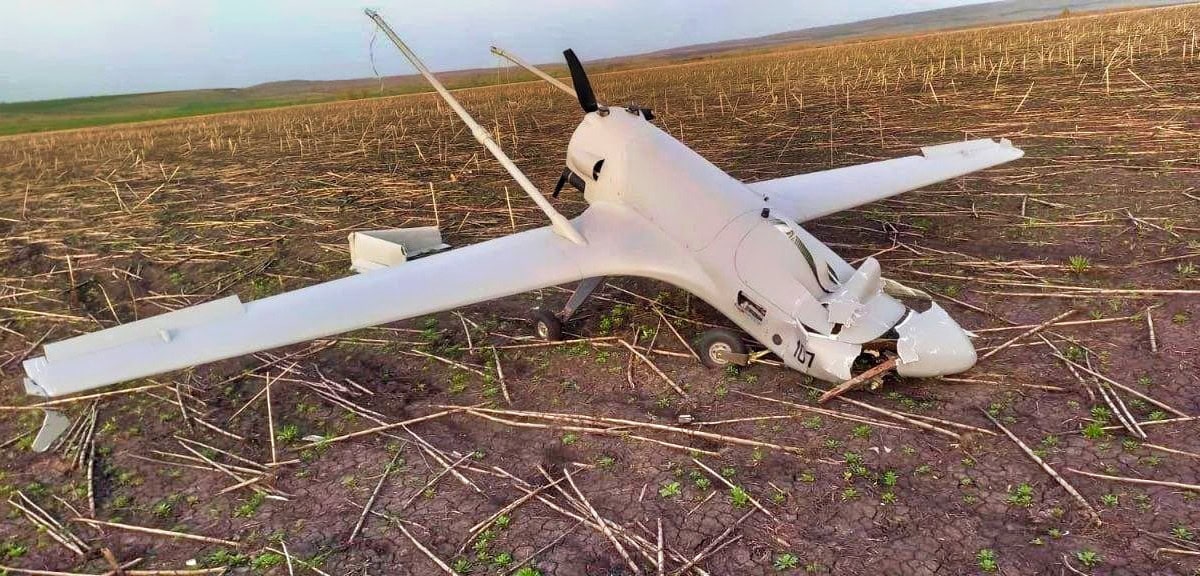
Lyutyi Drone from Ukraine Social Media.
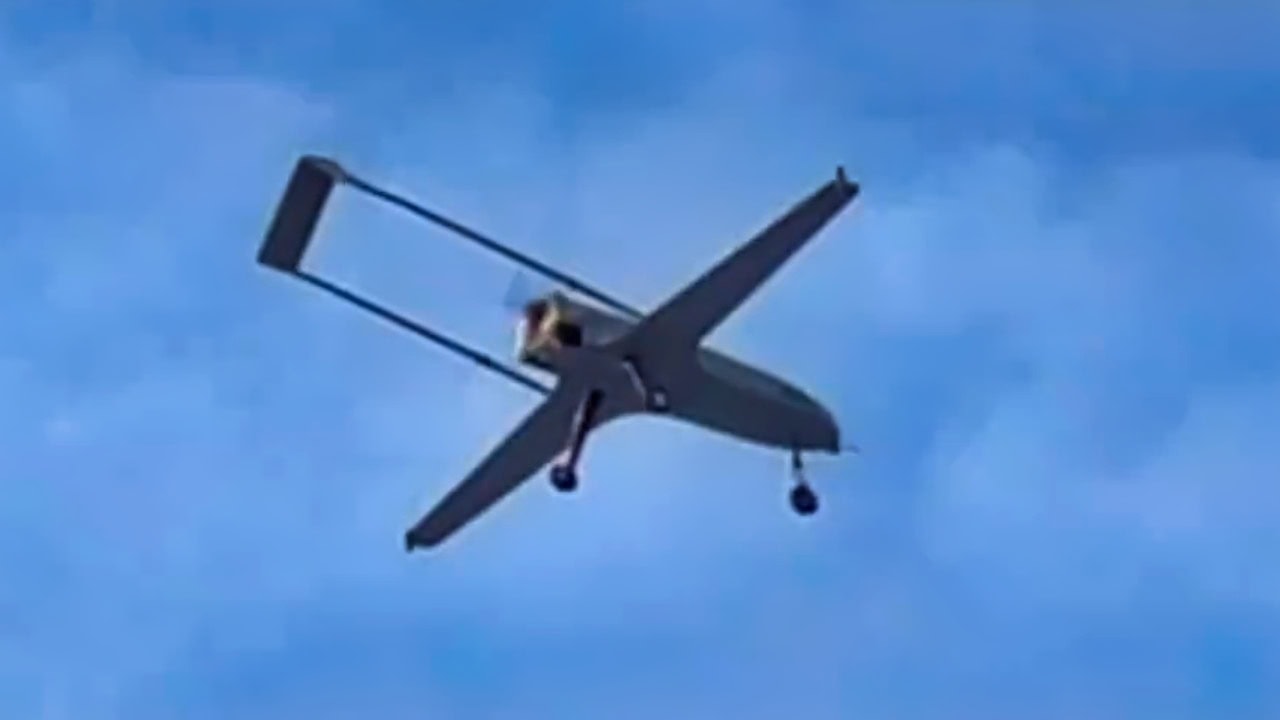
Lyutyi Drone from Ukraine.
Ukrainian authorities said all passengers had been evacuated. Johnson and other European national security advisers, including the UK’s Jonathan Powell, had passed along the same line on a different train on their way back from Kyiv.
Russian Winter Campaign Strategy: Destroying Ukraine Infrastructure
Russia’s defense ministry said in a statement that it had struck “railway infrastructure” in western Ukraine, but Ukrzaliznytsia repeated its assessment that the drone’s target “could have been the diplomatic train”.
Dr. Katarzyna Pisarska, chairperson of the Warsaw Security Forum, told the BBC she was in the same carriage as Johnson and Powell, and that the attack occurred about 30 minutes after their train had crossed the Polish border.
In an official statement, Ukrzaliznytsia said the diplomatic train “had left the station earlier than expected because of the timetable change… due to constant threats of Russian strikes”.
The rail company also said an evacuation order for passengers on the train that was hit had been sounded “just 15 minutes” before being hit by a Russian jet-propelled drone.
Former CIA chief David Petraeus, who had been on board another train at Yahodyn station at the time of the strike, described the incident as “terrifying”.
In an interview with the New York Times, Petraeus said: “This is the act of a truly barbaric leader trying to terrorize Ukrainian civilians.” Both the Ukrainian and Polish authorities said the Russian drone had impacted just a scant 1.2 miles from the Polish border.
Former UK PM Johnson wrote on X: “I don’t know what warped logic drove Putin to blow up a stationary Ukrainian locomotive on the Polish border this morning.” He said this was “the kind of random and senseless attack Ukrainians are enduring every day – even on civilian railways.”
It’s Still All About Air Defense
Johnson urged Kyiv’s allies to expeditiously supply Ukraine with “the air defenses they need”.
Ukraine has made repeated pleas to its allies – particularly the US – to provide more interceptors to defend against daily Russian attacks that increasingly use fast-moving ballistic missiles and harder-to-intercept jet-propelled drones.
Ukrainian Foreign Minister Andrii Sybiha stated the “barbaric strikes” at the Ukraine-Poland border in Yahodyn amounted to “[Russian President Vladimir] Putin’s terror ‘knockin’ directly on the doors of the EU and NATO” and made renewed calls for the allies to impose more sanctions on Moscow.
In Poland, Prime Minister Donald Tusk held an emergency meeting to discuss these latest developments and stated that Russia’s provocations were “getting closer and closer to our border.” The EU’s foreign policy chief, Kaja Kallas, accused Russia of trying to intimidate Western countries with these attacks.
Russian officials remain unrepentant when asked about the incident. Kremlin spokesman Dmitry Peskov told reporters on Monday that “our military has been conducting operations across the entire territory of Ukraine and will continue to do so.”
Ukraine said strikes had continued overnight, with its air force reporting that 85 of 108 Russian drones that were launched had been shot down. Police in Chernihiv said on Monday morning that three people had died after a warehouse belonging to an agricultural business was struck in Pryluky.
About the Author: Reuben F. Johnson
Reuben F. Johnson has thirty-six years of experience analyzing and reporting on foreign weapons systems, defense technologies, and international arms export policy. Johnson is the Korea Fellow at the Casimir Pulaski Foundation. He is also a survivor of the Russian invasion of Ukraine in February 2022. He worked for years in the American defense industry as a foreign technology analyst and later as a consultant for the U.S. Department of Defense, the Departments of the Navy and Air Force, and the governments of the United Kingdom and Australia. In 2022-2023, he won two awards in a row for his defense reporting. He holds a bachelor’s degree from DePauw University and a master’s degree from Miami University in Ohio, with a specialization in Soviet and Russian studies. He lives in Warsaw.