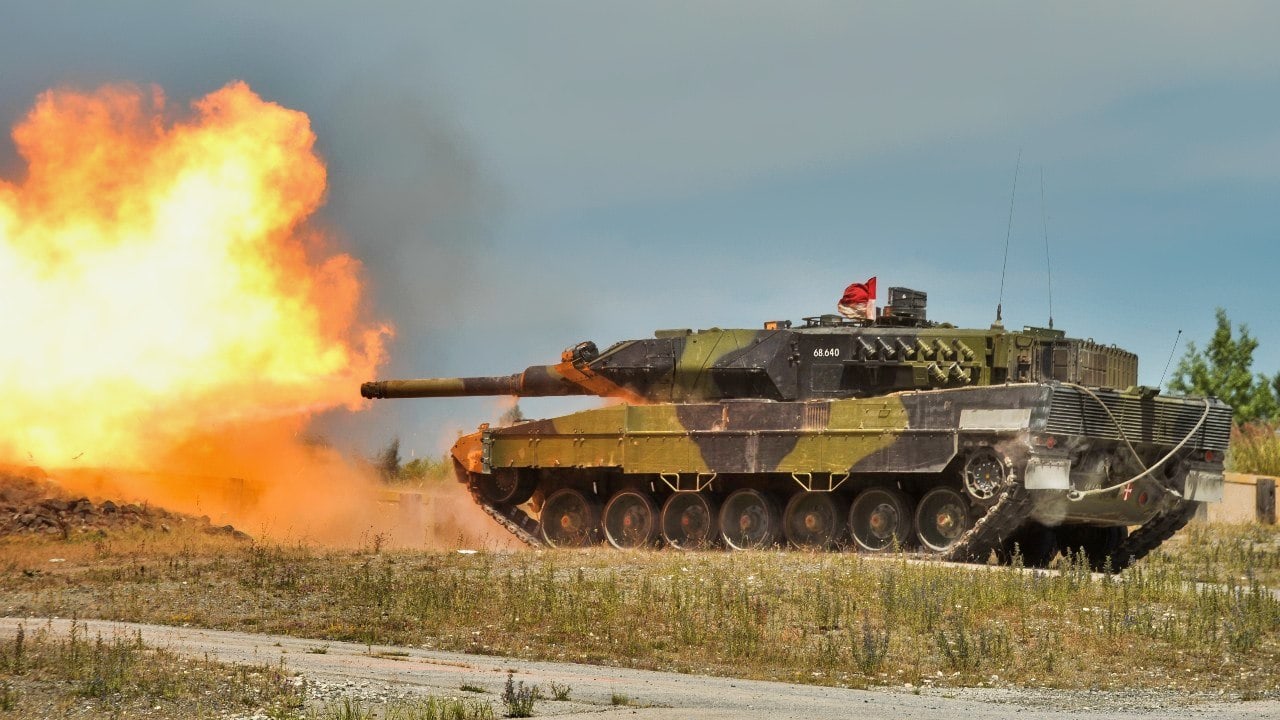
If you remember back in 2023, there was much caterwauling in various Western capitals about the need for NATO to hand over advanced main battle tanks to the Ukrainians, whom the Russian Armed Forces were squeezing.
According to the pro-Ukraine crowd, Ukrainians needed those tanks to better counter Russian advances.
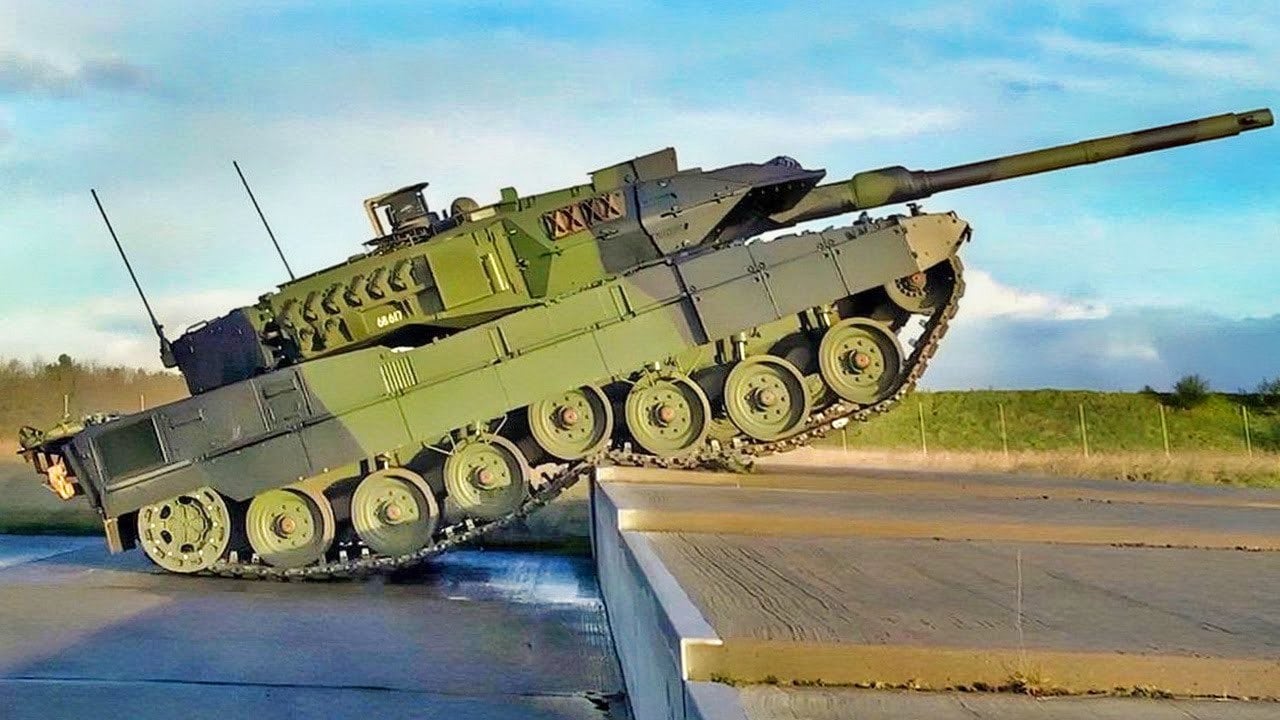
NATO Leopard 2 Tank. Image Credit: Creative Commons.
If the Ukrainians had even a handful of advanced Western tanks, the tide of the war could be turned. So, the Germans handed over a tranche of Leopard-2 Main Battle Tanks (MBTs) to great fanfare.
Not Ready for the Big Battle
Three years later, as some experts predicted, the blessed tanks have failed to achieve any substantial objective for the Ukrainian Armed Forces.
In fact, there is some evidence suggesting that all the tanks the West plied their Ukrainian wards with did more to complicate the defense of Ukraine than they helped (though that remains up for debate in some quarters).
Germany’s vaunted Leopard-2 MBTs have suffered significant combat losses, thanks largely to Russian mines, anti-tank missiles, and first-person view (FPV) drones.
In fact, everything that Ukrainian defenders subjected Russian attackers to during their offensives in Ukraine was returned in spades by Russian defenders against Ukrainian attackers employing the Leopard-2s.
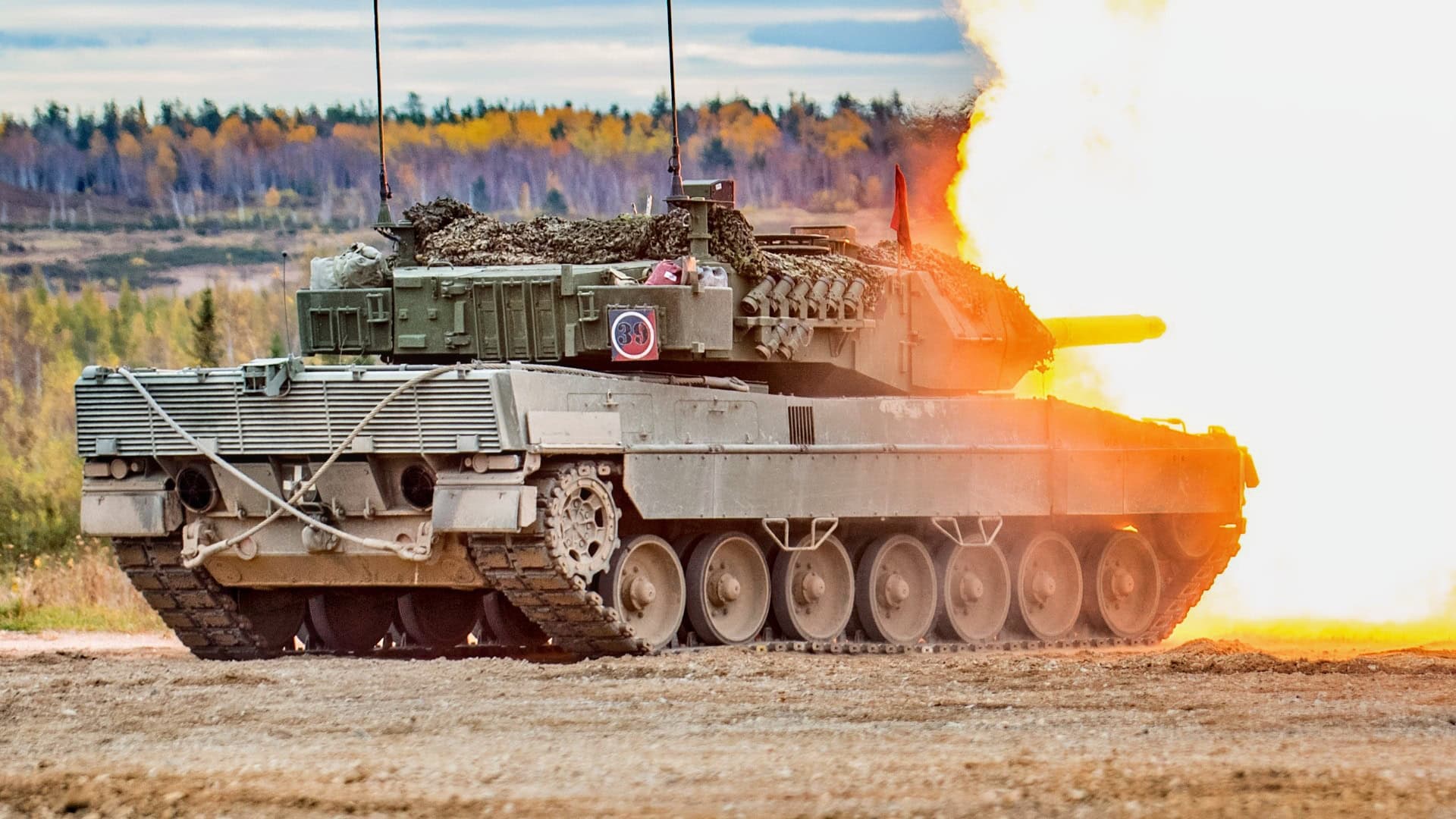
The Royal Canadian Dragoons, C Squadron, conducts a Leopard 2A4 tank shoot during an exercise at 5 Canadian Forces Support Base (5 CDSB) Gagetown, New Brunswick, October 23, 2020.
The painful experience of Ukrainian tank crews manning the Leopard-2 against Russia was not indicative of a failure of the iconic German-made tank.
Instead, it represented a misunderstanding of strategic reality and tactical necessity on the messy Ukrainian battlefield.
The Leopard-2 was developed during the Cold War. It was meant to fight Soviet armored formations in Europe–specifically in the Fulda Gap.
Western armored doctrine also assumes tanks will operate as part of a combined-arms attack element. Ukraine lacks this capability.
So tanks have almost no air cover, infantry is often scattered, artillery is often not forthcoming, electronic warfare (EW) is less comprehensive, and overall defenses against enemy attacks are limited.
In other words, tanks in Ukraine operate beneath skies dominated by Russian drones and aircraft while crossing dense minefields (often in the open).
Still An Impressive Tank…
Germany’s beloved MBT carries Rheinmetall’s impressive 120mm smoothbore cannon, while its 1,500-horsepower MTU diesel engine gives it considerable mobility despite later variants weighing more than 60 tons.
Advanced fiber-optic and fire-control gear gives crews manning the Leopard 2s excellent situational awareness.
Yet, Ukraine’s 2023 counteroffensive against Russia still fizzled.
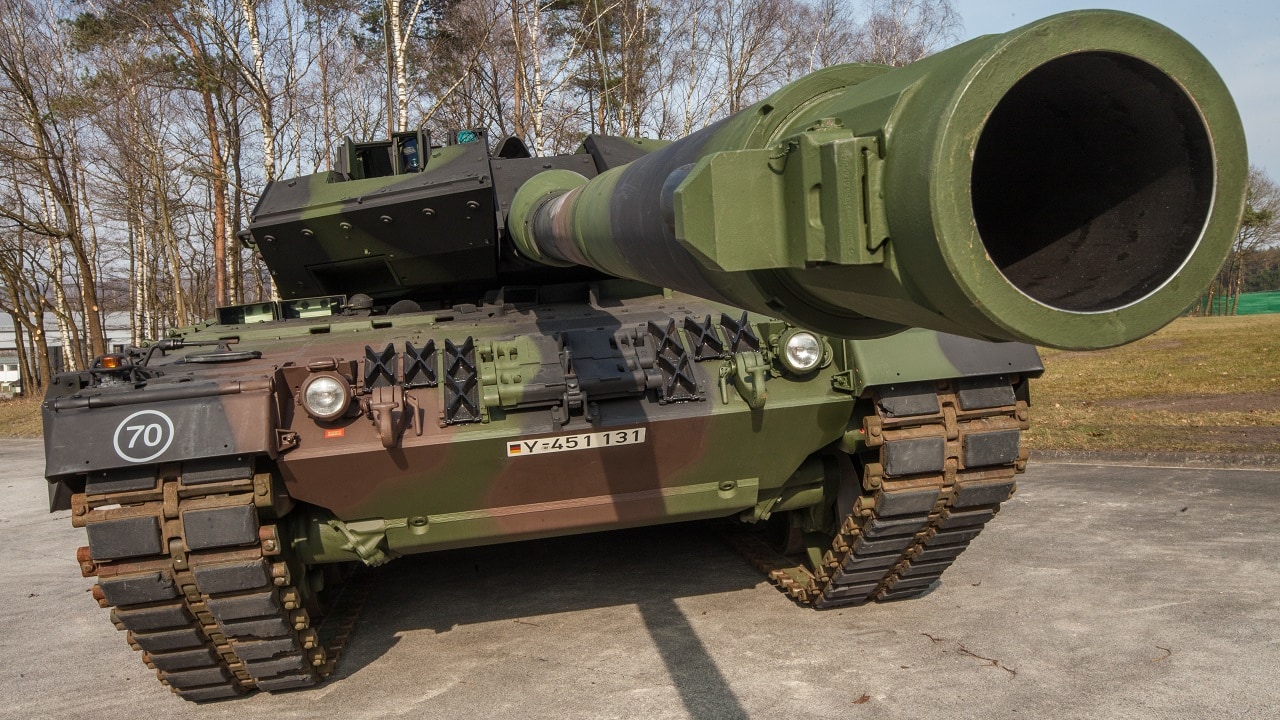
NATO Leopard 2 Tank. Image Credit: Creative Commons.
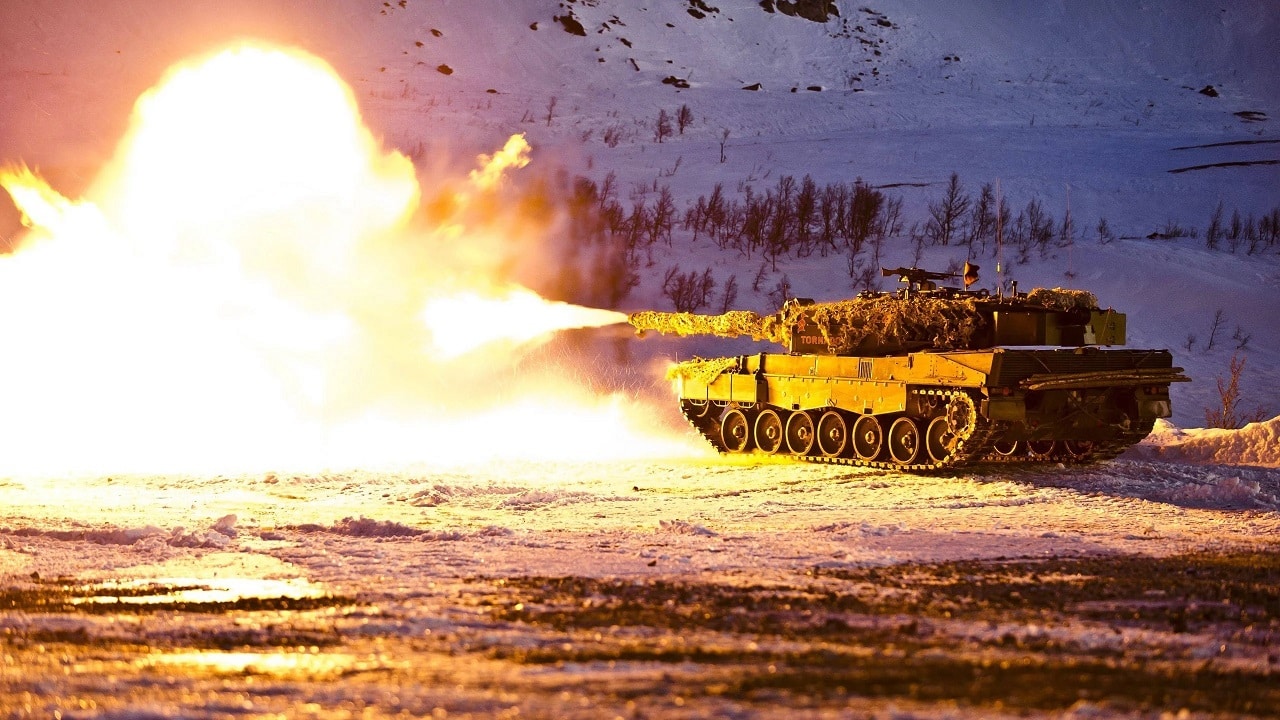
Leopard 2 Tank. Image Credit Creative Commons.
And the failure of the Leopard-2s on the front lines was part of that massive failure. With the Leopard-2s at their disposal, Ukraine’s armored formations tried to break Russian defensive positions.
Those positions, however, were fortified by minefields, artillery, anti-tank weapons, and drones.
Once the counteroffensive began, according to battlefield reports, several Leopard-2s were immediately damaged near the Zaporizhzhia region.
Just as at the beginning of the war, when Ukrainian defenders stopped Russian armor, the image of burning Western armor became a huge propaganda victory for Russia.
At the same time, many of the Ukrainian crews in the Leopard-2s, despite the tanks having been turned off by Russian defenses (like the mines), survived those attacks. That’s because the German tanks have excellent crew protection.
Just because a Leopard-2 was destroyed or damaged did not necessarily mean a death sentence for the Ukrainian forces operating them.
In that way, then, the Ukraine War solidified the Leopard-2’s status as a world-class tank with high marks for crew survivability.
Drones Killed the King of Battle
But the biggest issue facing the Leopard-2 (and all tanks in modern warfare) remains the growing threat of drone swarms.
Russian FPV drones maneuvered toward the more vulnerable areas of the Leopard 2 tanks (such as the topside and engine compartment). The battlefields and skies above Ukraine are swarming with drones.
Once armor formations are on the move, they’re quickly detected, and the drone swarms go into attack mode. The Leopard-2, while excellently built, was not designed to defend itself against topside drone attacks.
Ukraine was allocated a finite number of Leopard 2s and had lost 38 by 2025.
The biggest headache for Ukraine and the Leopard-2s has been the tank’s onerous logistical requirements.
It is a sophisticated machine requiring specialized technicians, spare parts, and tools.
These tanks are considerably more complex than the Soviet-era systems the Ukrainians are used to.
When Leopard 2s were damaged, they often had to be sent back to the manufacturers in countries such as Poland or Lithuania.
Because of these headaches, Rheinmetall and KNDS have established repair facilities in Ukraine.
A Liability?
What’s more, because these systems are so complex, it takes longer and is harder for new Ukrainian recruits to master them.
German crews spend years mastering the Leopard 2. Ukrainian crews had months, and in some cases weeks, under the pressure of total war to figure them out.
Ukraine has tried to adapt the Leopard 2s to the painful realities of the Ukrainian battlefield.
They’ve used the tanks to engage Russian armored vehicles or as mobile artillery along the periphery of battle. These tanks are accurate and highly mobile, making them useful in this arena.
At no point, however, have the Leopard 2s recreated the armored breakthroughs that Western planners envisioned during the Cold War.
Tanks were once the kings of battle. In the age of drones, however, they’ve become liabilities.
About the Author: Brandon J. Weichert
Brandon J. Weichert is the Senior National Security Editor at 19FortyFive.com. He also manages The Weichert Brief on Substack. Weichert also hosts “National Security Talk” on Rumble. He is the author of four bestselling national security books, the most recent of which is A Disaster of Our Own Making: How the West Lost Ukraine (Encounter Books). Follow him via Twitter/X @WeTheBrandon.