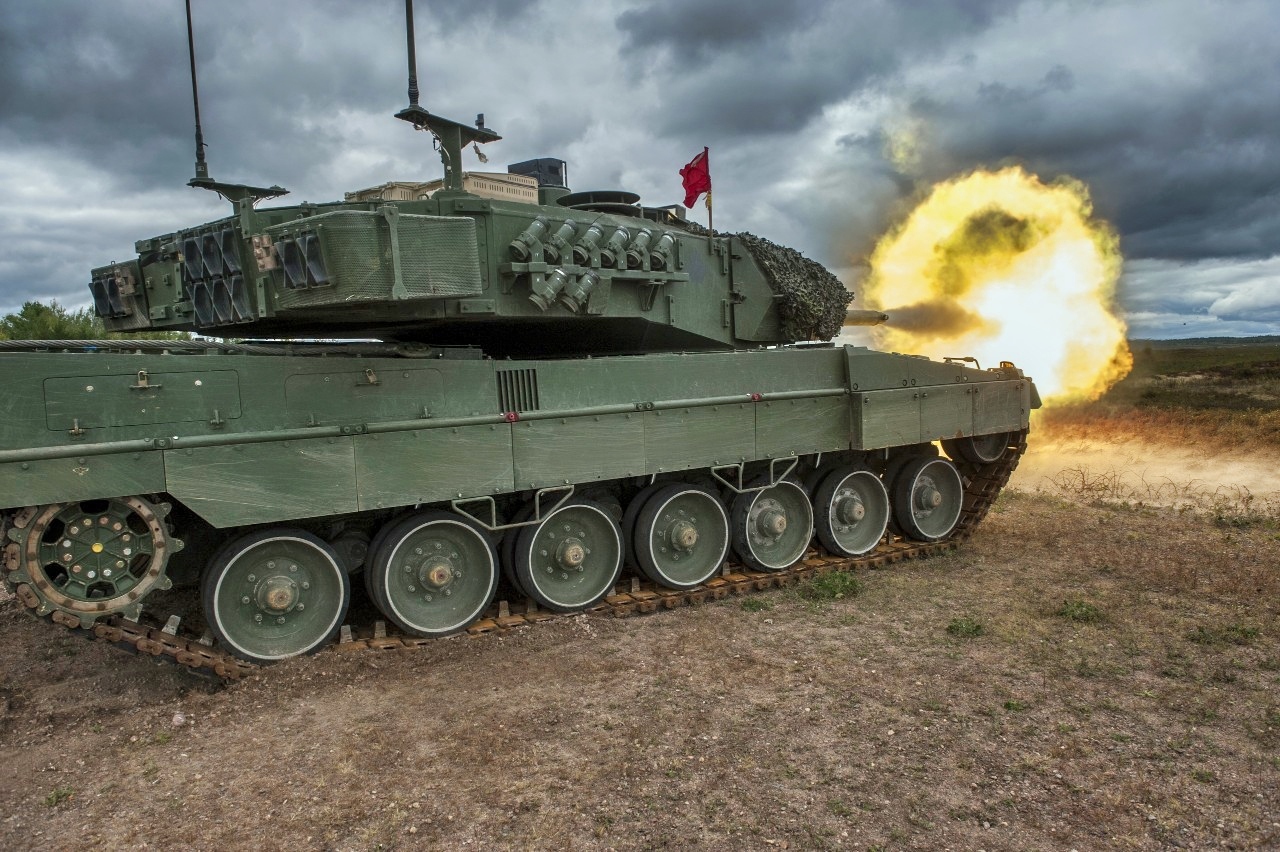
Germany’s Leopard 2A8 is the country’s newest main battle tank and incorporates a number of lessons — some from the war in Ukraine — that aim to keep the Leopard relevant on a battlefield that has changed dramatically since the first Leopard 2 entered service in the 1970s.
While it retains several features shared with its predecessors, including a 120mm main gun and robust armor protection, updated electronics and active protection give the Leopard 2A8 capabilities previous Leopard 2 variants cannot match.
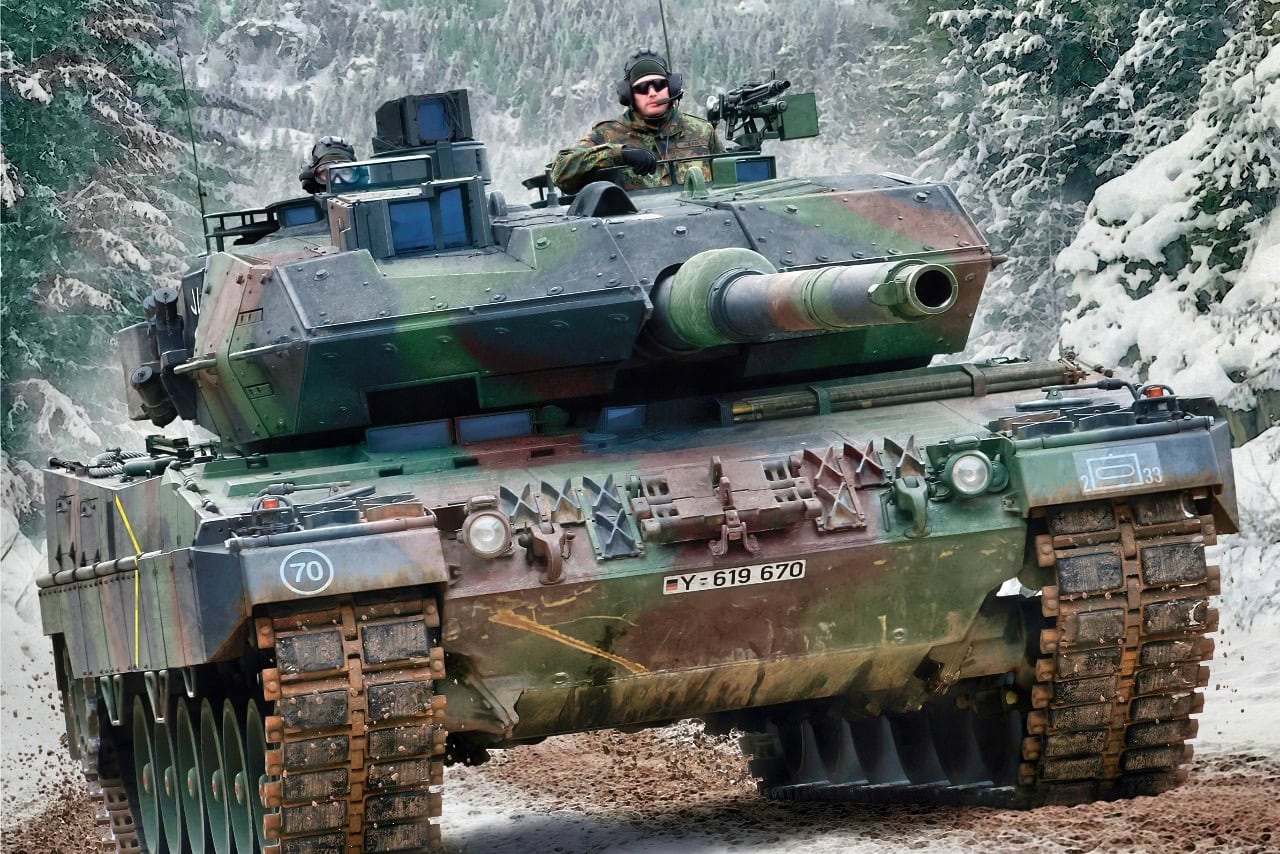
Leopard 2 Tank. Image Credit: Creative Commons.
The Leopard 2A8
The newest iteration of the Leopard main battle tank is the culmination of years of incremental improvements and is being manufactured as a new tank, with a more thoroughly integrated electronic architecture and a starker division between the crew and the tank itself.
One of the most obvious changes is its protection.
The 2A8 incorporates Trophy, an active-protection system made by Rafael, which uses turret-mounted radar to detect incoming projectiles, such as anti-tank missiles and rockets, and uses projectiles to divert their path from the tank or cause a premature detonation.
While Trophy was previously fitted to older Leopard variants, the 2A8 is the first Leopard variant to integrate the active-protection system as standard.
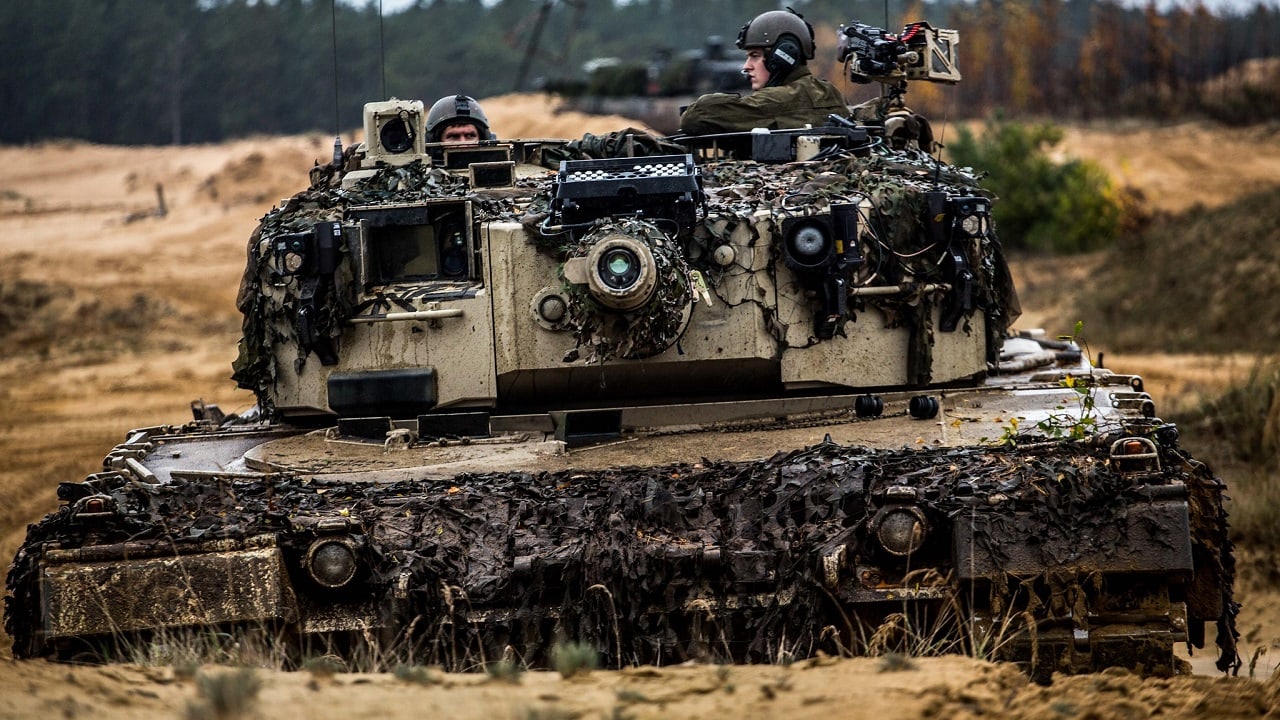
A Norwegian Leopard 2A4 main battle tank during Iron Wolf II in Lithuania. It involves 2,300 troops from 12 NATO Allies. The Lithuanian-led exercise is helping to train the NATO Battlegroup which consists of soldiers from Germany, Belgium, Luxembourg, the Netherlands and Norway. Shot in Rukla, Lithuania.
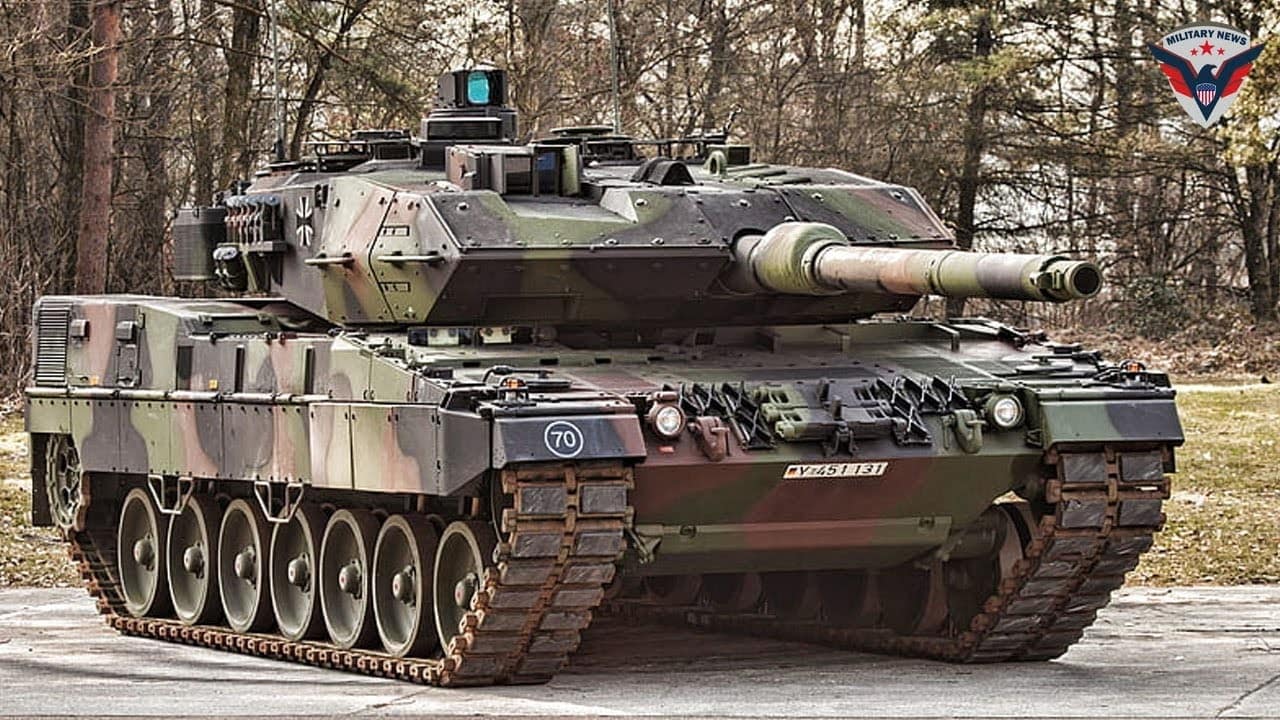
Leopard 2 Tank. Image Credit: Creative Commons.
The newest Leopard retains the 120mm main gun, but will fire newer ammunition optimized for deeper penetration and multi-purpose applications. The 2A8’s sights, commander’s periscope, and fire-control system are improved.
KNDS, the Leopard’s manufacturer, says it redesigned the internal data architecture and communications systems. Germany’s Bundeswehr began accepting newly built Leopard 2A8s in April of this year, according to KNDS.
The End of the Main Battle Tank?
Encouraged by positive results in video footage from the ongoing war in Ukraine, predictions of the tank’s obsolescence have been rampant, with journalists, armchair experts, and Twitterati alike quick to disparage that mainstay of battle.
But one researcher and expert warns, not so fast.
“There are several reasons why it would be a mistake for NATO forces to rely heavily on massed small UAS and long-range OWA drones to replace traditional weapons systems in pursuit of improved lethality and thus deterrence against future Russian aggression,” Justin Bronk, a Senior Research Fellow at the Royal United Services Institute, the United Kingdom’s leading security and defense think tank, writes.
“Russian forces currently field the most formidable counter-UAS (C-UAS) or ‘counter-drone’ capabilities on earth, Bronk writes, capabilities that are honed and refined on an almost-daily basis. Short-range air defenses, vehicle protection, and basic counter-UAS training all bolster Russia’s ability to resist Ukrainian drone strikes. But, “in most cases,” Bronk writes, “only a small fraction of the huge volumes of drones launched by Ukrainian forces reach their targets, and a still smaller proportion achieve decisive damage when they do.”
Crucially, Ukrainian drones have crimped the extent of Russian advances — but they have not halted them entirely.
Effectively destroying or disabling a Russian main battle tank often requires multiple drone strikes, undercutting the argument that the main battle tank has been made obsolete by explosive-laden quadcopter drones.
Bronk is definitive in his analysis. “Fundamentally,” he writes, “it is far technically and tactically easier to counter a force that primarily relies on massed, cheap FPV and OWA drones for its primary lethality than it is to counter well-employed airpower, long-range fires, armor, artillery and mortars within a professional joint force.”
Lessons Learned
The newest Leopard was not designed in response to the war in Ukraine.
Still, that ongoing conflict has reinforced the logic for robust active-protection systems as a standard-issue feature, not a retrofit.
All-around sensors as well as stronger overhead protection, particularly on the turret’s top too, and the Leopard 2A8’s emphasis on 360-degree protection and improved situational awareness are a reflection of that reality.
But the lessons learned from Ukraine reinforce an already known reality: the tank, as a platform, is not an isolated weapon.
Its usefulness on the battlefield depends heavily on digital communications, sensors, and the ability to operate within a wider network of dismounted infantry, artillery, reconnaissance assets, and drones.
The Leopard 2A8 is, therefore, still clearly recognizable as one of Germany’s main battle tanks, but its design emphases have shifted from fighting and winning tank-on-tank engagements toward surviving a battlefield that is saturated with missiles, cheap drones, and a variety of active and passive sensors that make it difficult, if not impossible, to remain hidden.
About the Author: Caleb Larson
Caleb Larson is an American multiformat journalist based in Berlin, Germany. His work covers the intersection of conflict and society, focusing on American foreign policy and European security. He has reported from Germany, Russia, and the United States. Most recently, he covered the war in Ukraine, reporting extensively on the war’s shifting battle lines from Donbas and writing on the war’s civilian and humanitarian toll. Previously, he worked as a Defense Reporter for POLITICO Europe. You can follow his latest work on X.