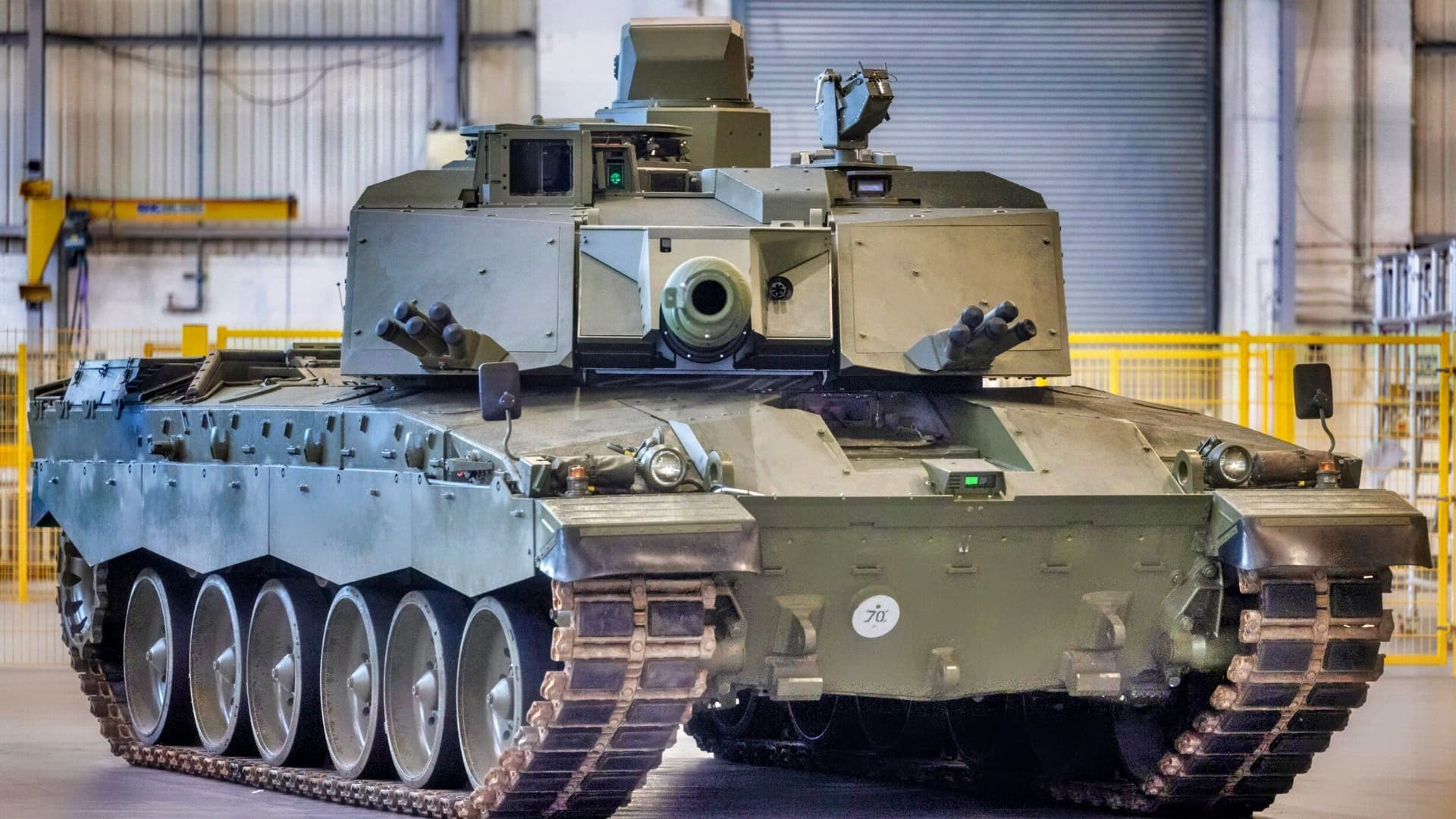
The United Kingdom will operate a total of 148 main battle tanks by 2030 when the British Army’s Challenger 3 modernization program reaches full fleet size. The United States Army currently operates approximately 4,600 M1 Abrams main battle tanks across Active Army, Army National Guard, and Army Reserve components. The German Army currently operates approximately 320 Leopard 2 main battle tanks — more than twice the size of the entire projected British fleet.
Challenger 3: Great Tank, Just Not Many of Them…
The ongoing war in Ukraine has heralded a revolution in military affairs.
Innovations in drone technology have spurred innovations in electronic warfare, armored vehicle protection, and myriad other aspects of modern warfare — including the main battle tank.
Sometimes lauded as a silver bullet that would win the war for Ukraine, and at other times an obsolete piece of military equipment from another age, the main battle tank nonetheless still plays an important role on today’s battlefield for Ukraine, Russia, and NATO.
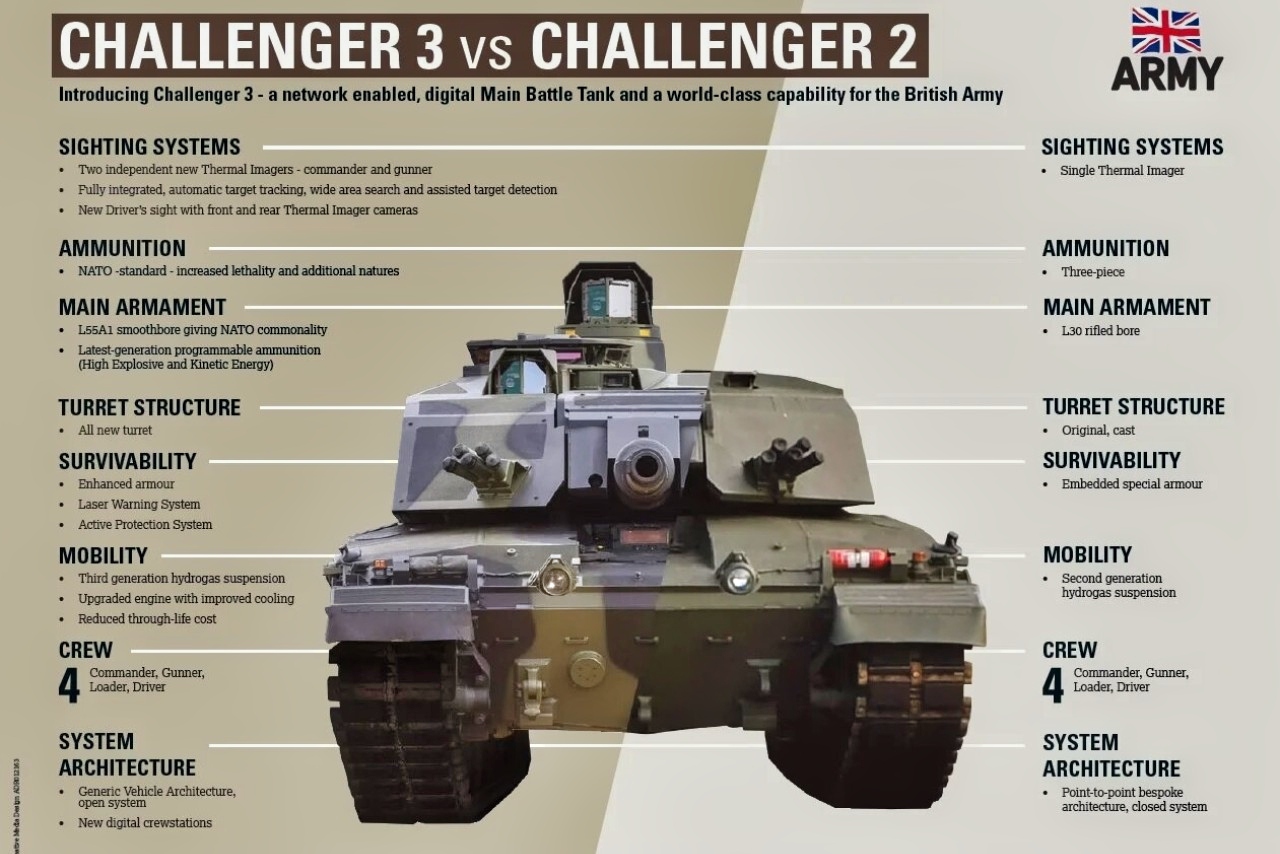
The newest main battle tank poised to enter service for a NATO country is the British Army’s upcoming Challenger 3. A significant step up from the previous Challenger 2, this new tank is better-armed and armored than its predecessor, and promises improved logistics and maneuverability as well.
It is a formidable platform, and will be a boon to the United Kingdom — but also has a significant drawback, one that threatens the Challenger 3 fleet’s ability to project force in the future. Here’s what we know.
NATO-Standard and Challenger 3
The most significant change to the Challenger 3 that differentiates it from the Challenger 2 is the selection of the main gun.
While the Challenger 2, as well as the majority of its predecessors, have favored smooth-bored main guns, which lack the rifling of most other modern main guns, the Challenger 3’s main gun will be rifled. It is a huge departure from decades of British main gun design.
Challenger 3 Tank. Image Credit: Creative Commons.
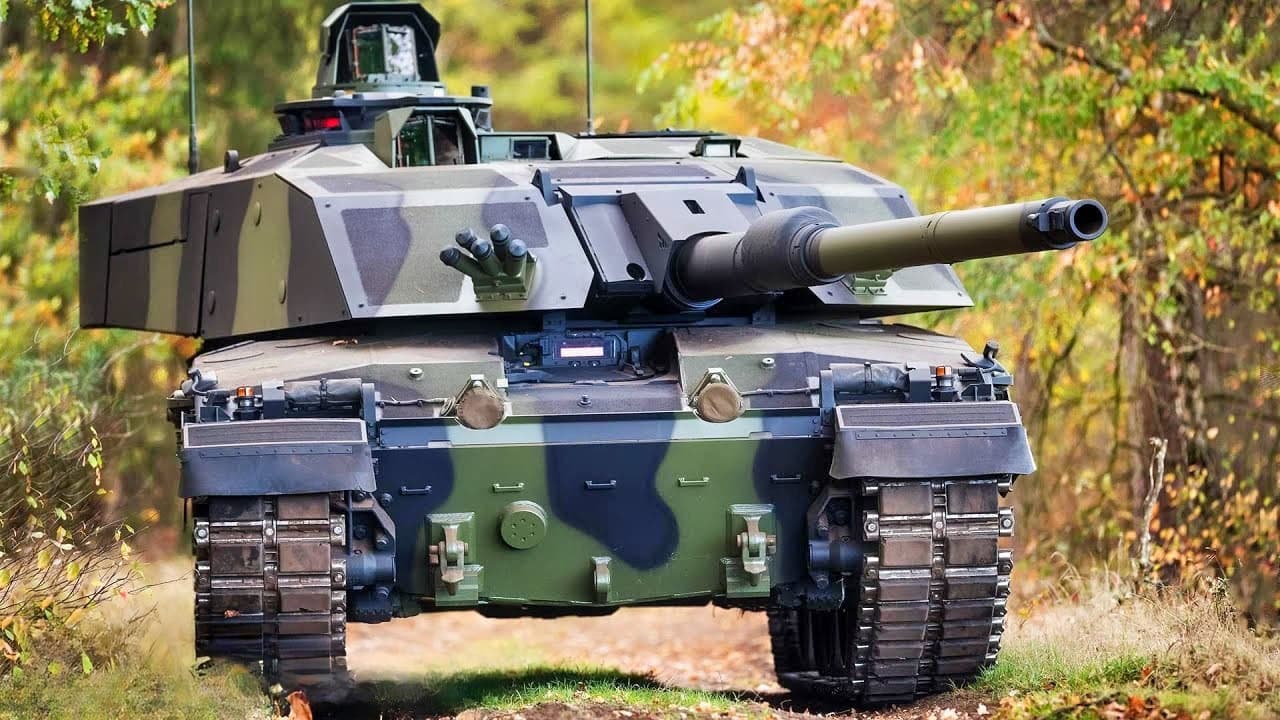
Challenger 3 Tank. Image Credit: Creative Commons.
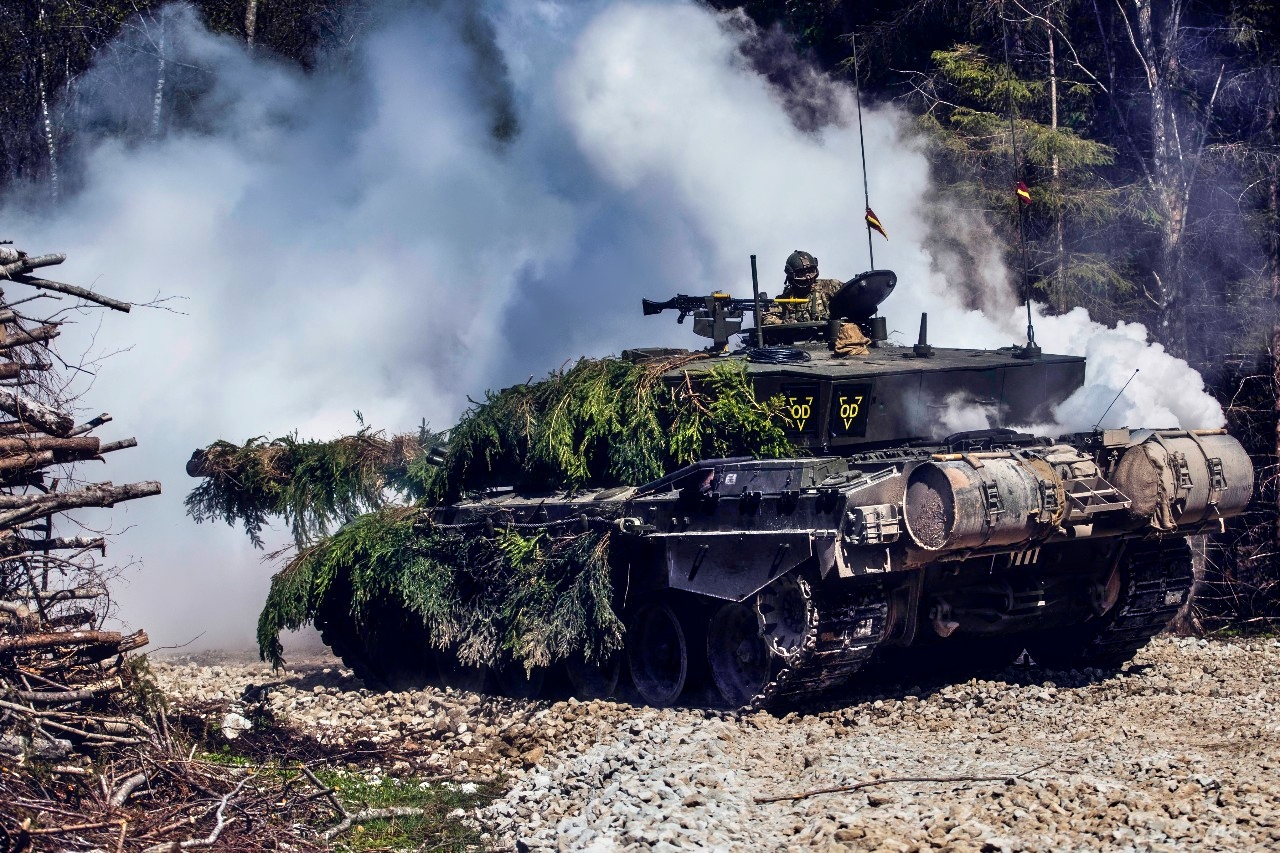
A British Army Challenger 2 Main Battle Tank (MBT) lays down a smoke screen during Spring Storm 19, Estonia’s largest annual military exercise. Roughly 9,000 soldiers from Estonia, other NATO Allies and partner nations have gathered near the town of Jõhvi to engage in a collective defence exercise, strengthening their ability to work together in times of crisis. The exercise runs from 29 April until 10 May.
British tank philosophy has traditionally favored squash-head ammunition.
Operationally flexible and capable of engaging armored vehicles, fortifications, and buildings, it cannot be fired from rifled guns. But as modern tank armor has moved away from purely metallic elements toward layered plates incorporating durable ceramics and other materials, the advantages of squash-head ammunition have dissipated.
The 120mm rifled main gun of the Challenger 3 allows for much greater flexibility.
Not only will the Challenger 3 be able to use the same types of ammunition as its NATO allies, but it will also have access to much more advanced, programmable ammunition, providing a significant boost to the British Army.
Size Matters
One of the United Kingdom’s authorities on all things defense-related, the Royal United Services Institute, took a critical look at the Challenger 3’s acquisition program as well as the Challenger 3 tank itself.
Arguably, the most significant challenge for the Challenger 3 program is not the tank’s design but the number of tanks the British Army will ultimately have in service.
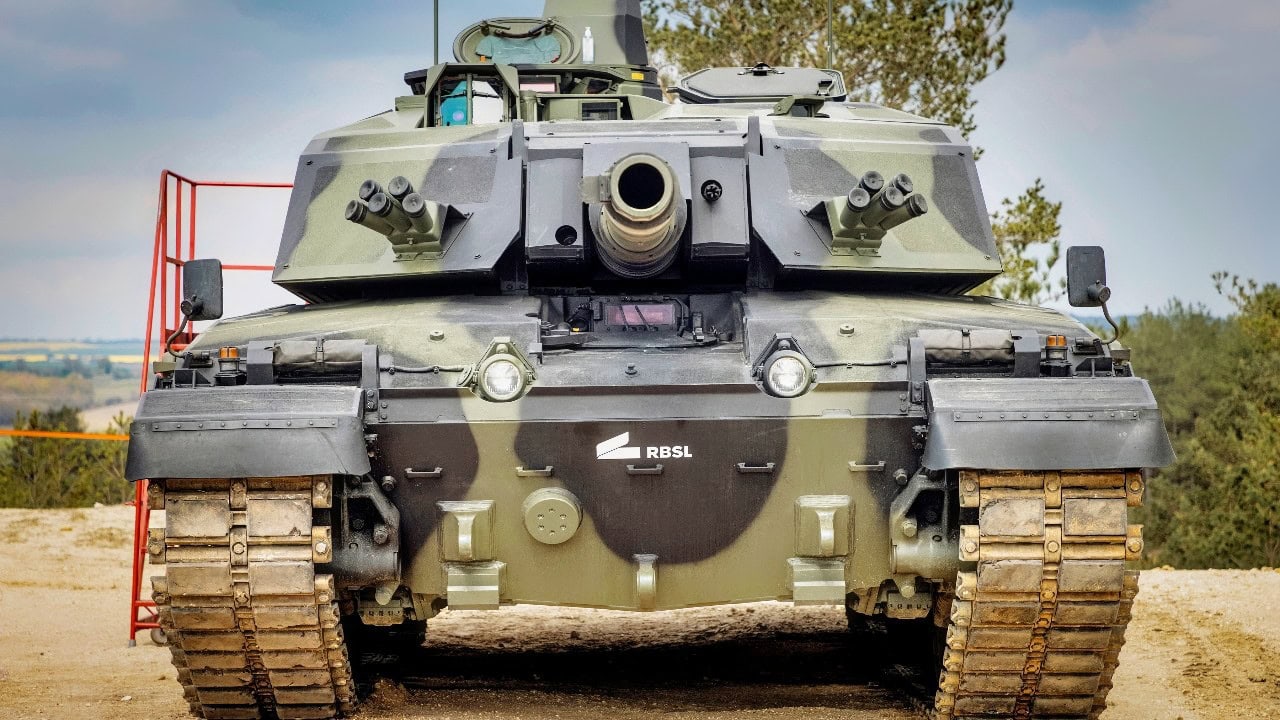
The Challenger 3 Main Battle tank. Image Credit: Creative Commons.
“Similarly, when RUSI analysts last looked at the Army, and the combat division the UK claims to have, it measured the number of main battle tanks and self-propelled artillery in the UK’s inventory and found the numbers wanting when set against a ‘credible’ armoured division of anywhere from 170 to over 300 tanks and around 110 to 220 artillery pieces,” RUSI states. Furthermore, “numbers have not improved in the subsequent four years: under the Challenger 3 programme the UK will have a total of 148 main battle tanks (in 2030).”
“Meanwhile, the UK has essentially removed the AS90 artillery from service by donating 32 to Ukraine, replacing them with 14 Archer guns until such time as the ‘Mobile Fires Platform’ is procured (some time ‘this decade’).” But the most pointed criticism RUSI leveled at the Challenger 3 program came last.
“The Challenger 3 may be the ‘most lethal tank’ ever fielded by the British Army, but it is going to be available in such limited numbers that it will have to perform heroically in the face of a notional foe in the form of Russian ground forces, such as a Combined Arms Army.”
The Look Ahead on Challenger 3
Comparing the projected Challenger 3 numbers to the main battle tank numbers of other NATO countries offers some insights.
Take, for example, the M1 Abrams main battle tank, variants of which are in service in the United States, Poland, and other countries with close relationships to the United States. Counting only tanks in service in the United States, there are around 4,600 units.
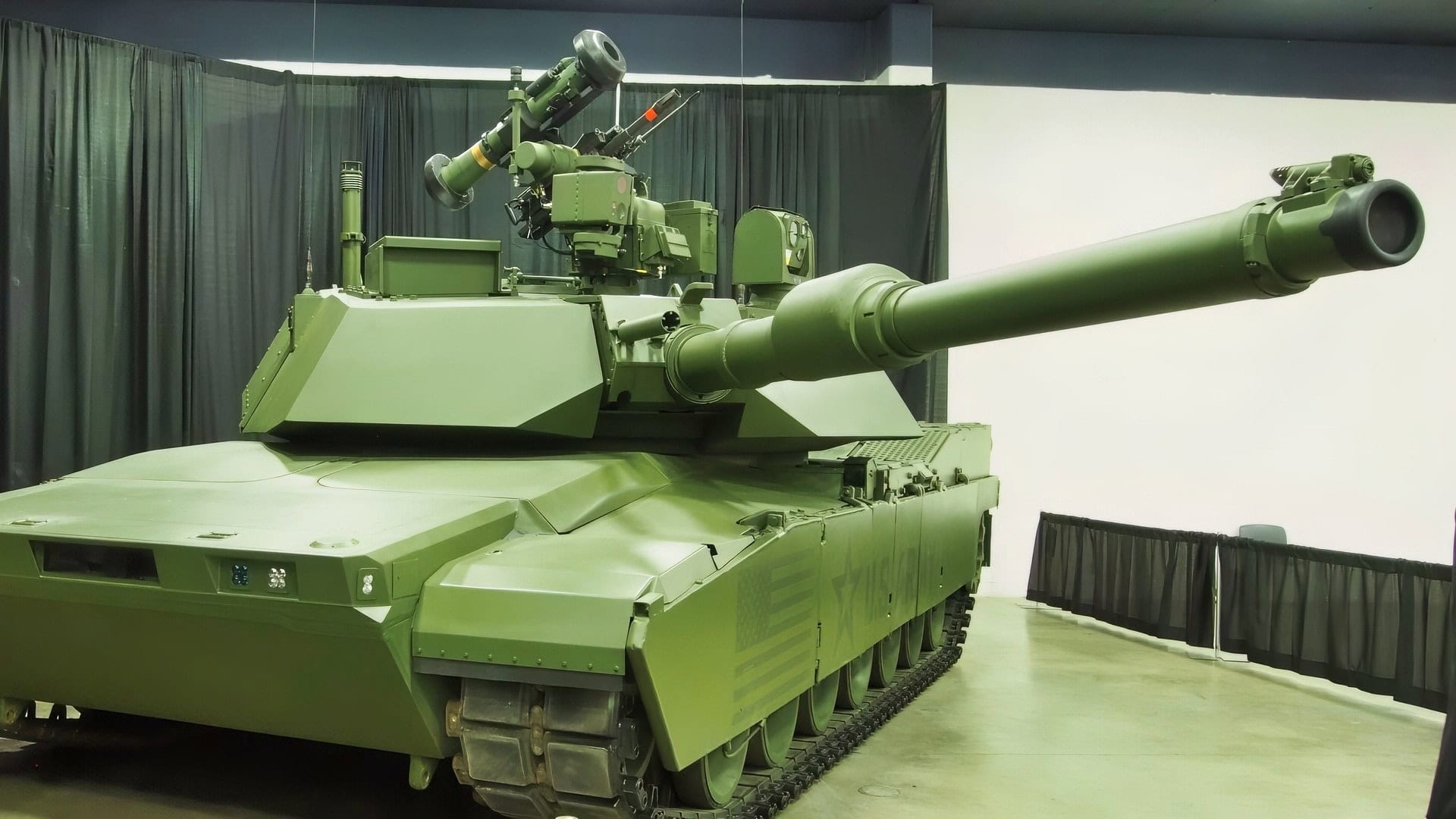
M1E3. 19FortyFive Image from the Detroit Auto Show.
The Leopard 2 main battle tank is another example.
That platform, developed by the former West Germany, is widely in service within the NATO alliance. In Germany alone, about 320 Leopard 2 tanks are in service. This is more than double the size of the projected British fleet.
The Leopard 2 will certainly be a significant boon to the British Army in terms of capabilities, even in a one-to-one comparison.
However, the fleet will be unlikely to sustain itself in high-tempo warfare and unable to absorb losses as Leopard 2 or Abrams fleets could hypothetically.
About the Author: Caleb Larson
Caleb Larson is an American multiformat journalist based in Berlin, Germany. His work covers the intersection of conflict and society, focusing on American foreign policy and European security. He has reported from Germany, Russia, and the United States. Most recently, he covered the war in Ukraine, reporting extensively on the war’s shifting battle lines in Donbas and writing about its civilian and humanitarian toll. Previously, he worked as a Defense Reporter for POLITICO Europe. You can follow his latest work on X.