
In October 2002, Boeing revealed an aircraft that had already been flown for three years. Known as the YF-118G Bird of Prey, it was built and tested in secret to determine whether engineers could develop a stealth aircraft quickly, without spending the kind of money usually required to build an operational fighter. The company revealed that it had spent $67 million of its own money on the project, building a jet that made 38 test flights starting in 1996.
The aircraft never actually entered military service — and it was never meant to. Its sole purpose was to test ideas Boeing could use on future aircraft.
The Origins of the Secret Project: Meet the YF-118G by Boeing
Work began on the Bird of Prey at Phantom Works, the advanced aircraft division of McDonnell Douglas, in 1992.
Boeing acquired McDonnell Douglas in 1997, halfway through the project, and completed it under the Boeing name.
The aircraft was a single-seat jet with a pointed nose.
It had short wings and an unusual shape, and its name nodded to the Klingon spacecraft in the TV show Star Trek.
The resemblance made it memorable when the public finally saw it, too — but its shape had a more practical purpose.
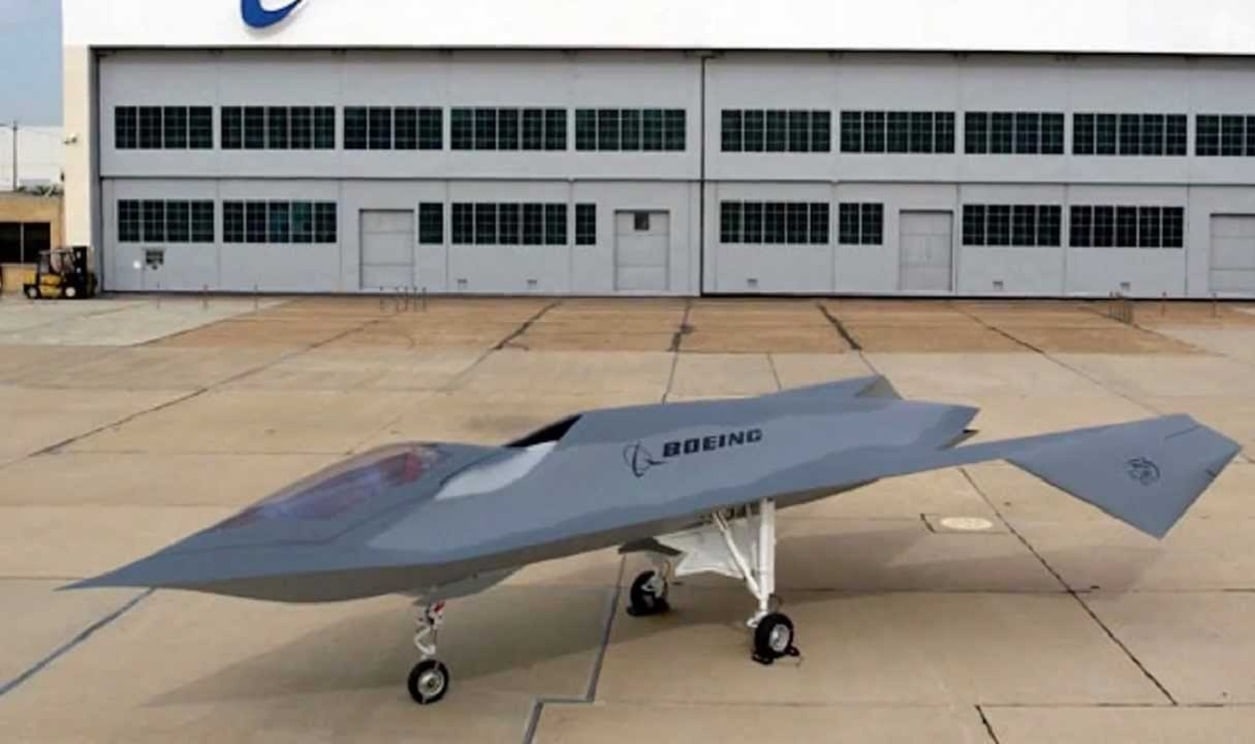
Image: Creative Commons.
The team was exploring ways to make aircraft harder to detect, and shape plays a role in that.
Importantly, stealth does not make an aircraft invisible — but it does make it harder to detect.
Radar sends out radio waves and detects some of the energy reflected back.
An aircraft’s shape can affect how much of that energy is reflected back to the radar. The Bird of Prey let engineers test a new shape in flight and explore ways to build it.
A Small, Slow Aircraft in the YF-118G
The jet measured about 47 feet long and had a wingspan of just 23 feet. It weighed around 7,400 pounds and was powered by a Pratt & Whitney JT15D-5C turbofan engine.
Boeing said the aircraft had an eventual operating speed of 260 knots, or around 300 miles per hour, and a maximum operating altitude of 20,000 feet.
Those are modest figures for a combat aircraft — but the Bird of Prey was never intended to compete in real combat.

YF-118G. Image taken by Harry J. Kazianis for 19FortyFive.
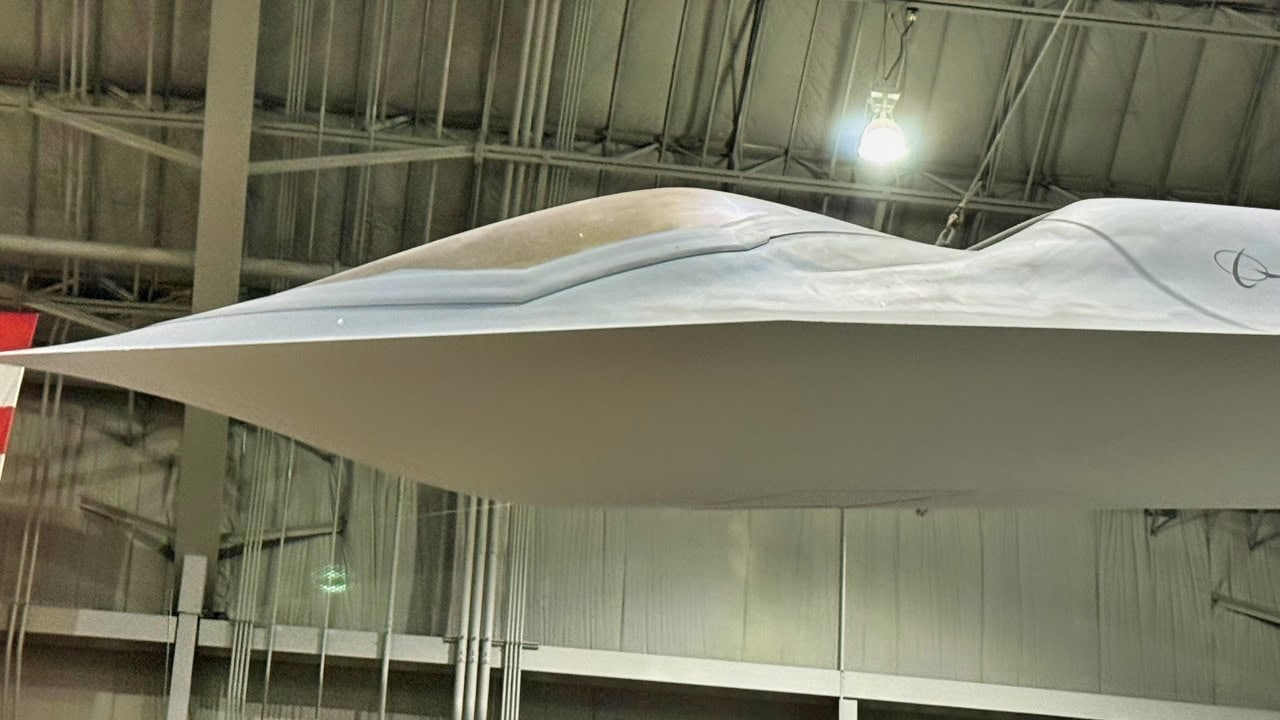
YF-118G. Image taken by Harry J. Kazianis for 19FortyFive.
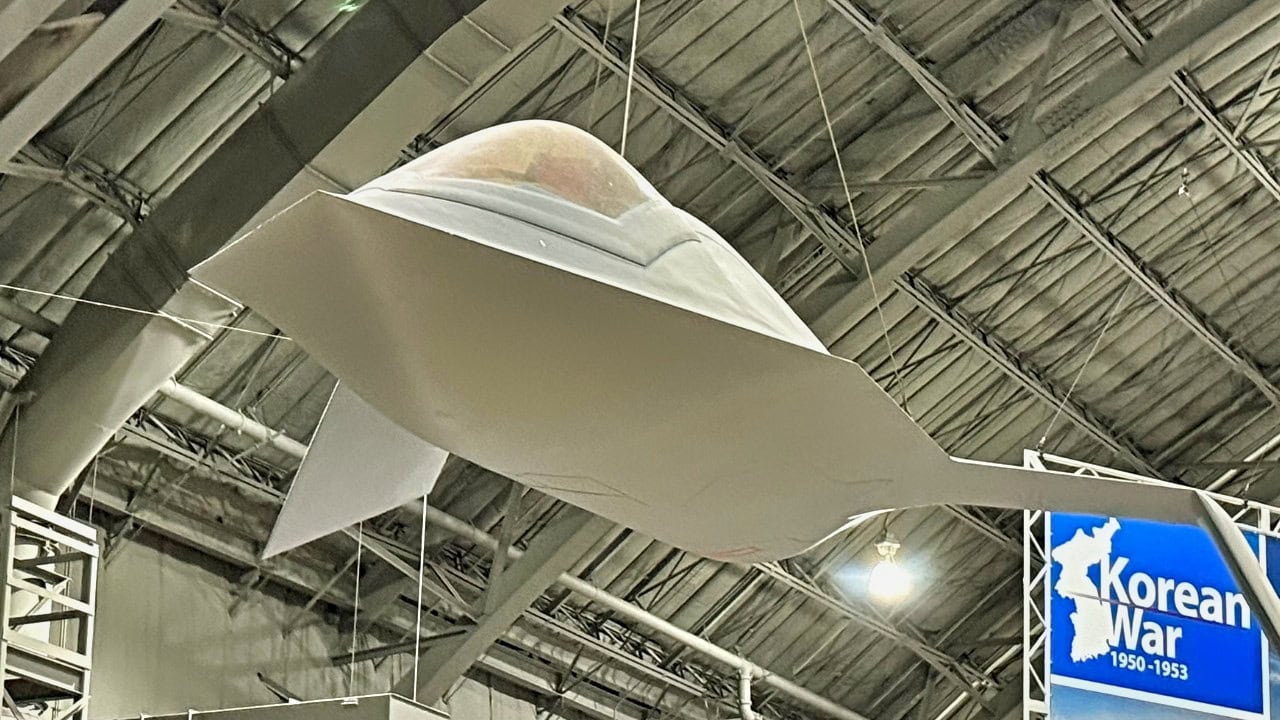
YF-118G. Image taken by Harry J. Kazianis for 19FortyFive.
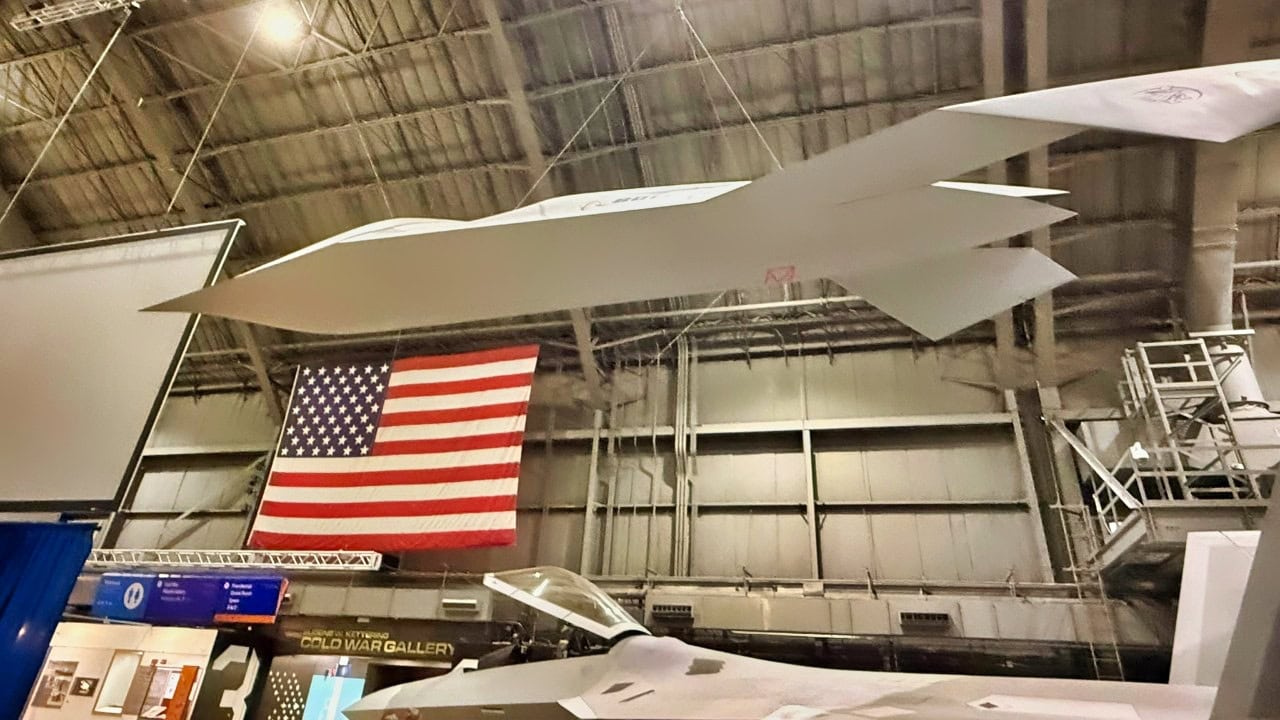
YF-118G. Image taken by Harry J. Kazianis for 19FortyFive.
It did not, therefore, need the speed or range of a real fighter — and building those capabilities into a jet used solely for testing would have added unnecessary expense without helping the engineers answer the questions the program was always intended to address.
That’s why it cost just $67 million.
Boeing funded a single experimental aircraft and its development program, which was far less expensive than building a combat-ready stealth jet that the Air Force would eventually purchase in significant quantities.
Boeing Kept the Cost Down
Boeing’s ability to keep costs down extended well beyond the aircraft, too, with the company saying it used large structures made from composite materials and inexpensive tooling that could be discarded after use.
It also used 3D computer design and cheaper assembly methods to keep the program inexpensive.
Each of these methods addressed a manufacturing problem: larger pieces and components meant fewer separate parts to manufacture and join together.
The disposable tools reduced the need for expensive equipment built specifically for a long production run.
And the computer design helped engineers check how parts would fit together before actually assembling the aircraft — a method that is now widely used across all manner of similar programs.
Stealth Lessons: What Boeing Learned
The Bird of Prey program ended in 1999, but Boeing kept the aircraft secret for years, until 2002, when it officially unveiled the jet at its St. Louis plant.
Secretary of the Air Force James Roche attended the ceremony, and by then, Boeing said the technologies tested on the aircraft no longer needed to be kept secret.
Boeing has already put some of the research from the Bird of Prey program to use, too.
The company said that the shape and engine inlet of the X-45A, an experimental aircraft, were informed by the work done on the Bird of Prey.

X-45A. Image: Creative Commons.
The X-45A was an unmanned aircraft that first flew at Edwards Air Force Base in California on May 22, 2002 – five months before Boeing revealed the Bird of Prey to the public.
The Bird of Prey never flew again after it completed 28 test flights by 1999.
On July 16, 2003, the aircraft was moved to the National Museum of the United States Air Force located near Dayton, Ohio — meaning Boeing had spent $67 million to build and test an aircraft that would be flown only a few dozen times. The good news is for us, as we have been out to see the YF-118G at this museum, and it is displayed right above an F-22 Raptor. In fact, many tourists surely walk right past it and never know the history above them.
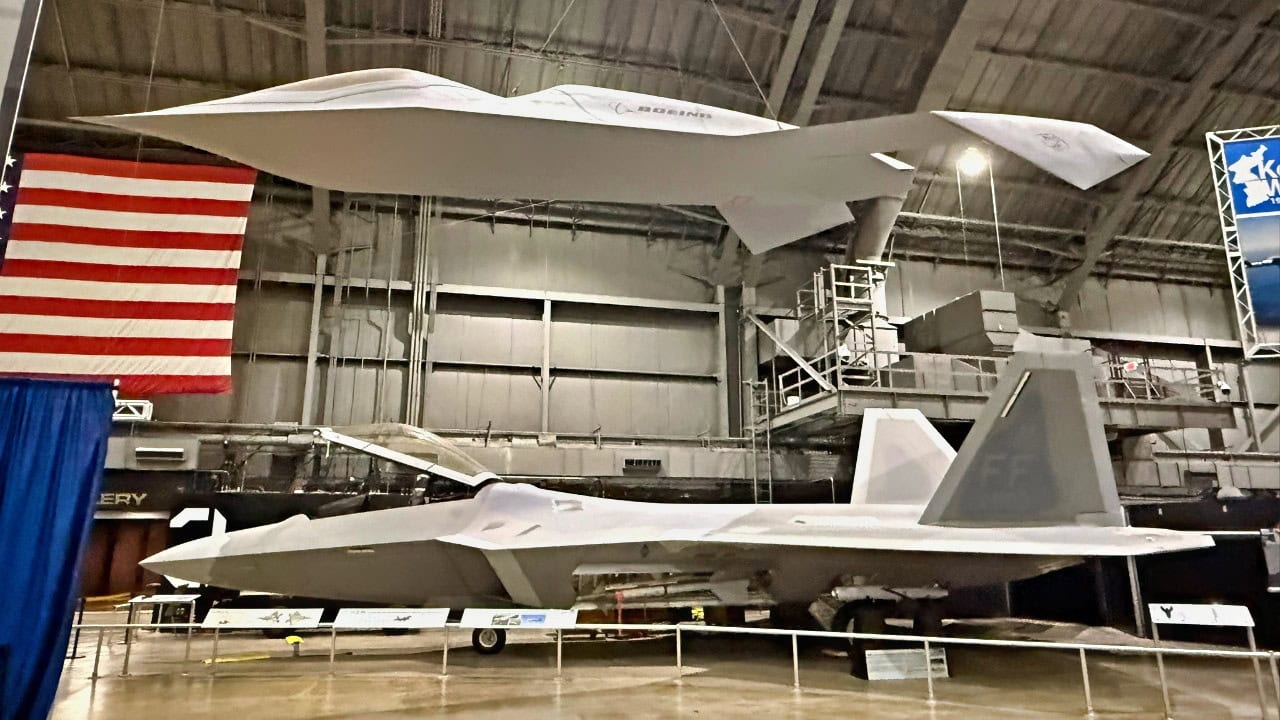
YF-118G. Image taken by Harry J. Kazianis for 19FortyFive.
But that doesn’t mean it wasn’t worthwhile, since the investment ultimately informed the development of other advanced technologies Boeing has produced since.
About the Author: Jack Buckby
Jack Buckby is a British researcher and analyst specializing in defense and national security, based in New York. His work focuses on military capability, procurement, and strategic competition, and he produces and edits analysis for policy and defense audiences. He brings extensive editorial experience, with a career output spanning over 1,000 articles at 19FortyFive, and has previously authored books and papers on extremism and deradicalization.