
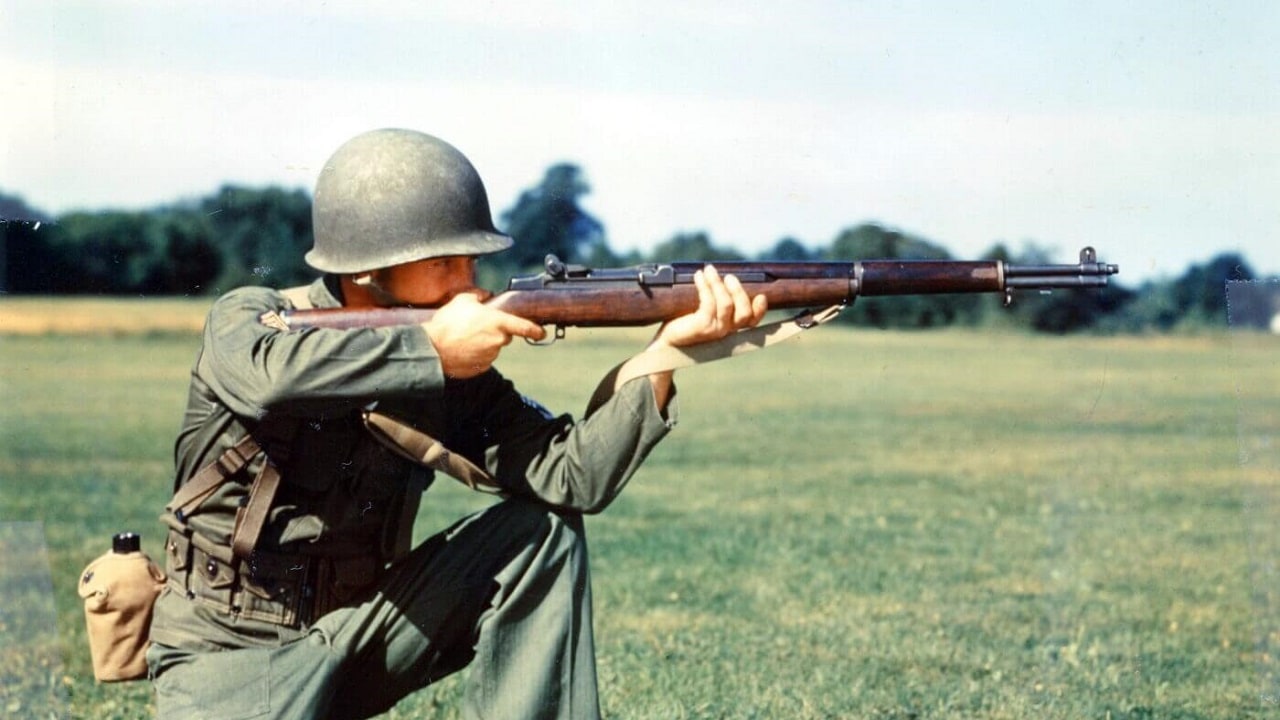
The M1 Garand, “The Greatest Battle Implement Ever Devised” – The M1 Garand rifle was one of the most iconic weapons of World War II. The United States military was the only combatant to enter World War II that armed its standard infantrymen with a semi-automatic rifle.
When General George S. Patton called the M1 Garand “the greatest battle implement ever devised,” he wasn’t just praising a piece of hardware; he was recognizing a turning point in the history of infantry combat.

M1 Garand. Image Credit: Creative Commons.
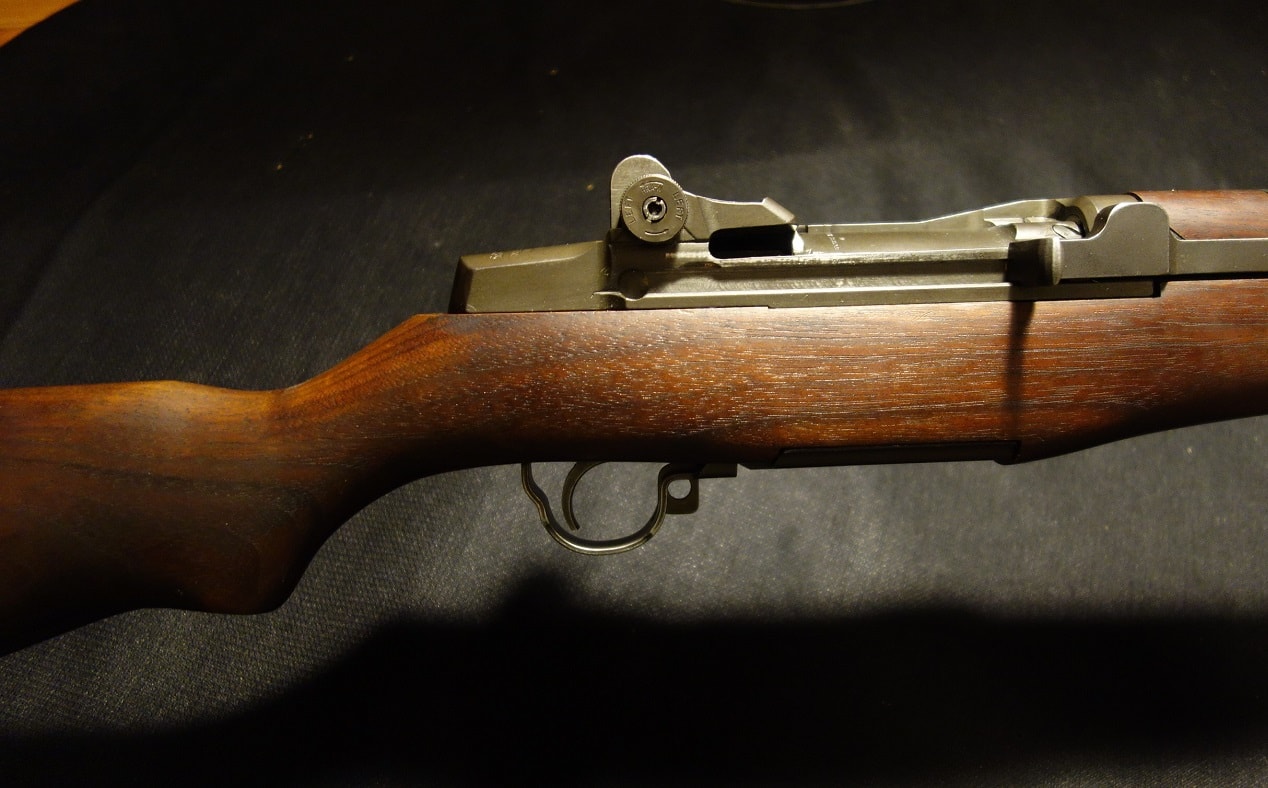
M1 Garand. Image Credit: Creative Commons.
Any images of American GIs of our Greatest Generation during the war often showed men carrying the M1. And the Garand served from the steaming jungles of the Pacific to the sands of North Africa and across the countries of Europe.
The M1 Garand was adopted by the U.S. Army as its main battle rifle on January 9, 1936, and served until 1958, when it was replaced by the M-14 rifle, which used basically the same operating system. Over 5,500,000 M1s were produced, and the rifle served as the primary infantry weapon of the U.S. in both WWII and the Korean War.
“The Greatest Battle Implement Ever Devised”
Near the end of World War II, General George S. Patton called the M1 Garand “the greatest battle implement ever devised”.
In a January 1945 letter to the War Department’s Chief of Ordnance, MG Levin H. Campbell Jr., Patton wrote that famous line along with several other compliments.
“My admiration for Ordnance products does not stop with the M1 Rifle. Our machine guns, mortars, artillery, and tanks are without equal.”
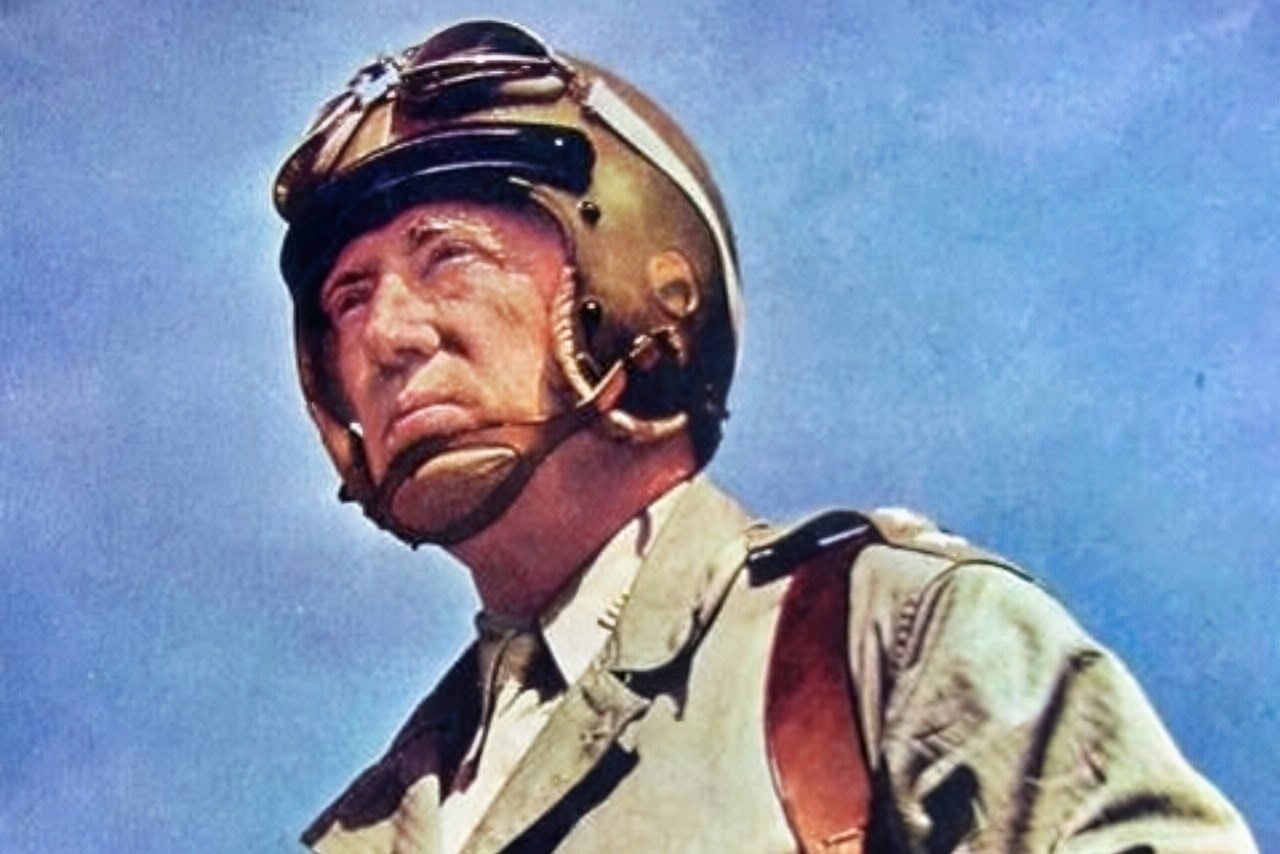
General George Patton of the U.S. Army. Image Credit: Creative Commons.
The M1 was simple and inexpensive to produce (the average cost in 1945 was $26 per rifle), easy to operate and maintain, and most importantly rugged and reliable.
My M1 Garand Shooting Expertise
While it was on the heavy side, the M1 is an absolute joy to shoot. In fact, the heavier weight of the rifle, along with the gas-operated system, softened the recoil of the 30.06 cartridge to a surprisingly very manageable level.
The rifle’s ergonomics were outstanding. The wooden stock is well-balanced and feels like an extension of the shooter’s arm. I especially like the rear sight aperture, which was clear.
I shot extensively with an M1 purchased through the CMP program, and it was a blast. And even with military-surplus 150-grain ammo from the Korean War, it was really accurate. Being a sucker for World War II weapons, I loved it. General Patton was spot-on with his assessment.
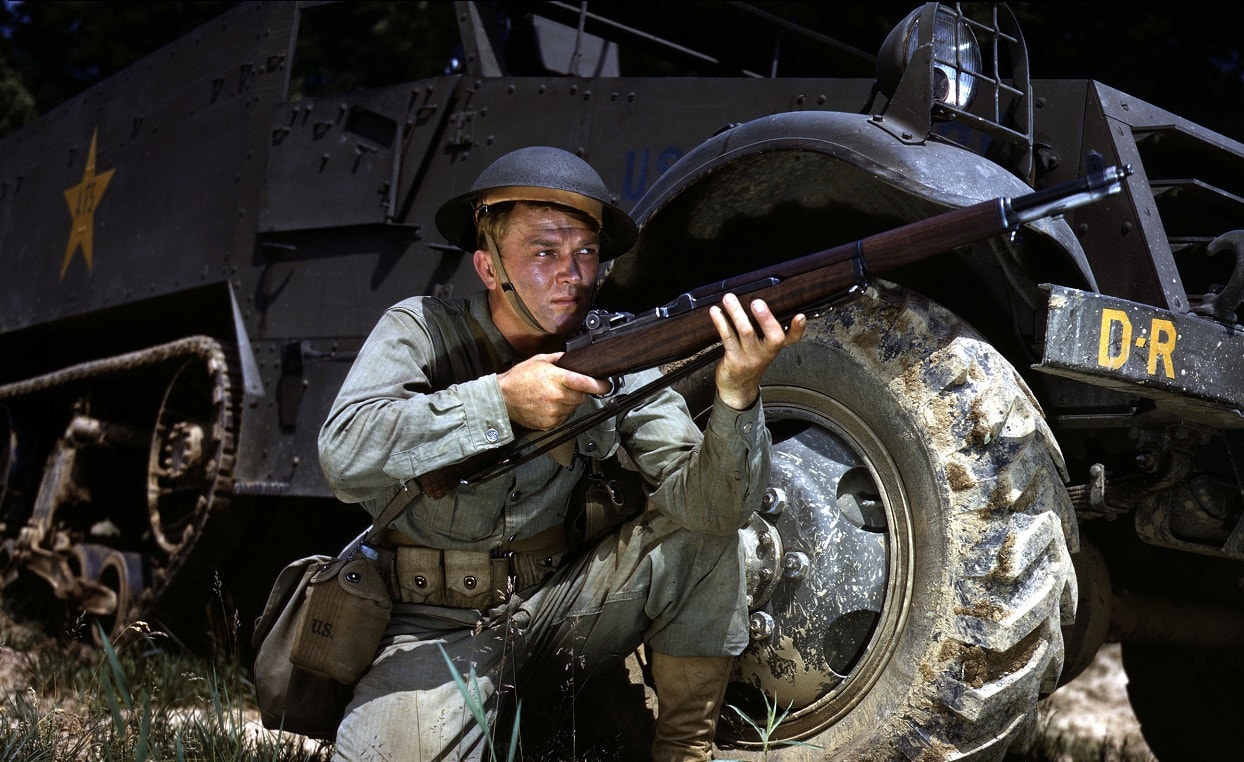
Image: Creative Commons.
American M1 Garand. Image: Creative Commons.
The History
The U.S. Army had been tinkering with the idea of upgrading its infantrymen with a semi-automatic rifle since 1909. Those plans were delayed by the onset of World War I. They stuck with the standard 1903 Springfield rifle, which was a bolt-action, five-shot weapon in .30 caliber (30-06).
The Ordnance Department announced in 1921 that it had eight principal requirements for the next generation of semi-automatic weapons. This new design was to replace the M1903 Springfield, which had been in service since 1903.
The Army was looking for the infantry to have more firepower than the standard bolt-action rifle. The Ordnance Department required that any new design would have to:
-Weigh nine pounds or less
-Be well-balanced and adapted to shoulder firing
-Be fed by a magazine for quick reloading
-Be simple, strong, compact, and easy to manufacture.
-Be entirely semi-automatic
-Use the .30 caliber service cartridge (30-06)
-Function properly without any need for special oil, grease, or other material applied to the cartridge
Enter John C. Garand. Garand had moved to the United States from Canada as a young child and was working in the Springfield Armory in Massachusetts when he submitted a design entry for the Army’s Light Machine Gun competition. Although his design wasn’t adopted, he was put in charge of developing a semi-automatic rifle.
Garand’s design utilized a revolutionary long-stroke gas-piston system that trapped propellant gases to operate the weapon. Initial testing included a new 7mm (.276 caliber) cartridge because the Army believed that if it were lighter, the average soldier could carry a lot more ammo. (Something that is being revisited in every generation).
But that was eventually nixed when then-Army Chief of Staff Douglas MacArthur wanted to retain the .30-caliber ammo since the U.S. had stockpiled so much of it.
Garand’s first design had a gas trap system, a small device fixed near the rifle’s muzzle that captured expanding gases and used their pressure to cycle the rifle’s gas piston, which ran below the barrel.
This long-stroke system’s piston was attached to an operating rod which rotated the M1’s bolt to unlock it and open the action. This allowed spent cases to be ejected and a fresh cartridge loaded.
This, however, was found to be unsuitable when carbon would build up and cause malfunctions. Garand soon replaced the gas trap with a gas port that directed firing gas directly from the barrel to the gas piston, a much more reliable design.
The Famous “Pinging Sound” Of The M1’s Clip
The Garand used .30-06 caliber cartridges in 8-round “en bloc” clips loaded into an internal magazine. When the last round fired, the empty clip ejected with a distinctive metallic “ping,” a sound that would become both a practical signal to fellow soldiers and, according to some accounts, an occasional tactical liability, as enemy troops reportedly learned to listen for it as a cue that a rifle was momentarily empty.
Historians have debated how significant this vulnerability actually was in practice, but the sound became part of Garand lore regardless.
The ping has been the subject of many legends, some claiming that enemy soldiers would wait until they heard the pinging sound to take advantage of American troops out of ammo. While some veterans say that during a pitched firefight it was impossible to distinguish the sound from the din of battle, others claim it was possible.
Several years ago, I happened to be at an event where several members of the “Band of Brothers”, paratroopers from Easy Company, 506th Parachute Infantry, 101st Airborne Division, were present.
While they were being peppered with questions, many of their answers were geared toward humor or tongue-in-cheek. When they were asked about the pinging of the en-bloc clips, it elicited an interesting response.
One paratrooper smiled and said he’d always carry an empty en-bloc clip. And if the shooting was sporadic, he’d bounce a clip off his own helmet when one of his buddies fired, trying to catch a German peering up for a shot. He claimed that he nailed a German soldier that way… myth or truth?
It was tough to tell; he had a mischievous smile when he told the story. We’ll err on the side of the myth here…
The Garand Goes to War:
The Garand M1 rifle first saw major action during the latter stages of the American invasions of Guadalcanal in the Pacific and of North Africa in 1942 during Operation Torch.
The improved rear sight, a big upgrade over the ‘03 Springfield, coupled with the semi-automatic rate of fire, increased the firepower to nearly double the 15-20 rounds per minute WWI troops could expect.
The only drawback of the weapon was that it tended to be a bit bulky and heavy. But the troops loved its reliability and rate of fire. American infantry squads could easily put down far more fire than their counterparts from Germany and Japan, who were still using the bolt-action Mauser KAR-98 and Arisaka rifles in their militaries.
The Soviets experimented with a semi-automatic rifle as did the Germans, with the Gewehr-43, but never in large numbers.
The Marine Corps was initially resistant to the M1, wanting to stick with the ’03 Springfield. The Marines valued precision fire over volume of fire, believing that semi-automatic fire lent itself to poor marksmanship.
But that attitude changed with the Battle of Guadalcanal. Marines saw Army troops on the “Canal” using the M1 and were clamoring for them.
The Marines did get issued M1s, and their well-known marksmanship didn’t suffer one iota. Marine riflemen took a toll on the Japanese until the end of the war.
Production ceased after World War II, but it resumed when the Korean War began. Soon after the Korean War, the Pentagon sought a replacement for its workhorse rifle and settled on the M14.
The M14 is a modernized version of the M1, using the same basic operating system and a detachable 20-round box magazine.
The Army produced a Sniper variant with a scope mounted on the side, because the brass and en-bloc magazine ejected straight up, as well as a Tanker variant, a shorter-barreled rifle more suitable for use in and around armored vehicles and for airborne troops.
Having a chance to fire all three types, the M1 in any form is a joy to shoot, and many marksmanship clubs still use it today.
While it was a touch less accurate than the German KAR-98, which my dad brought home from WWII and I still have, the difference in accuracy is quite small, and the M1’s firepower gave it a clear advantage.
About the Author: Steve Balestrieri
Steve Balestrieri is a National Security Columnist. He served as a US Army Special Forces NCO and Warrant Officer. In addition to writing on defense, he covers the NFL for PatsFans.com and is a member of the Pro Football Writers of America (PFWA). His work was regularly featured in many military publications.