

Confidence that Russia’s military position in Ukraine is deteriorating and that Moscow’s overall geostrategic status in Europe is eroding has become an article of faith among hawks in the United States and its NATO allies.
Accounts of CIA director John Ratcliffe’s surprise secret visit to Moscow in late August 2026 stressed that he bluntly informed Russian officials that their long-term prospects in Ukraine were dismal and that the Kremlin, therefore, needed to commence serious negotiations for peace on NATO terms, i.e., a disguised surrender.
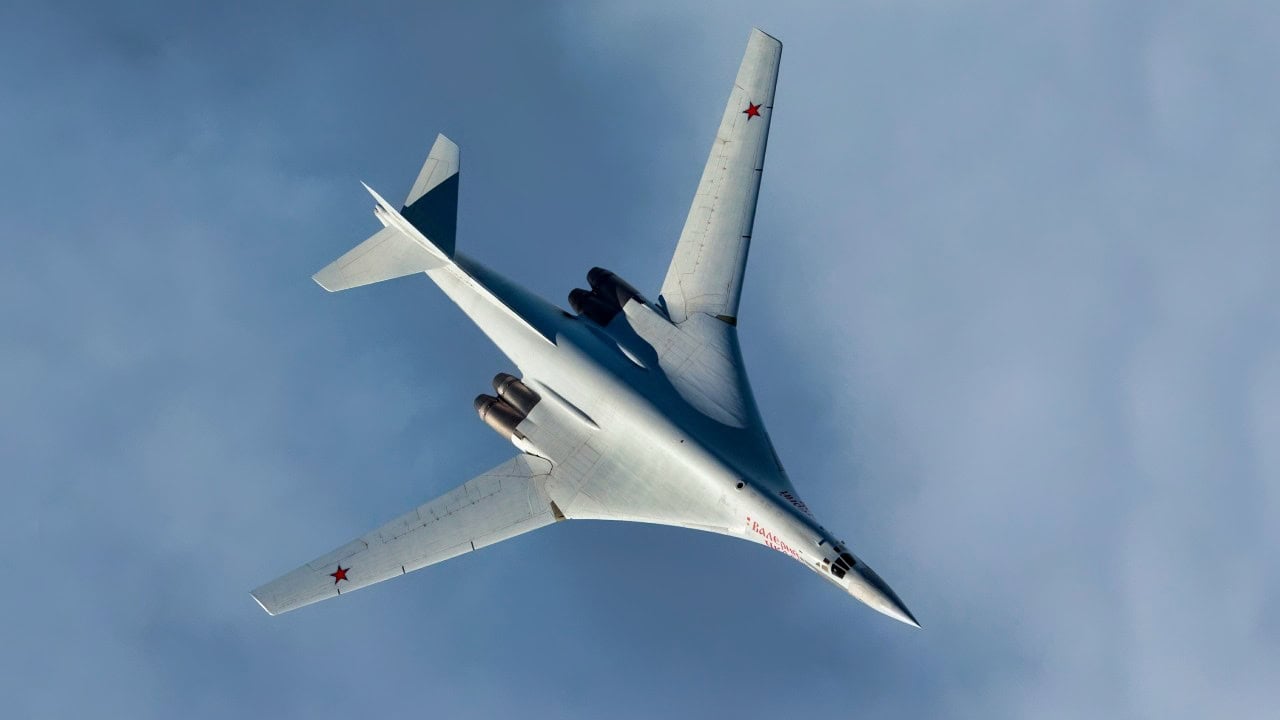
Tu-160. Image Credit: Creative Commons.
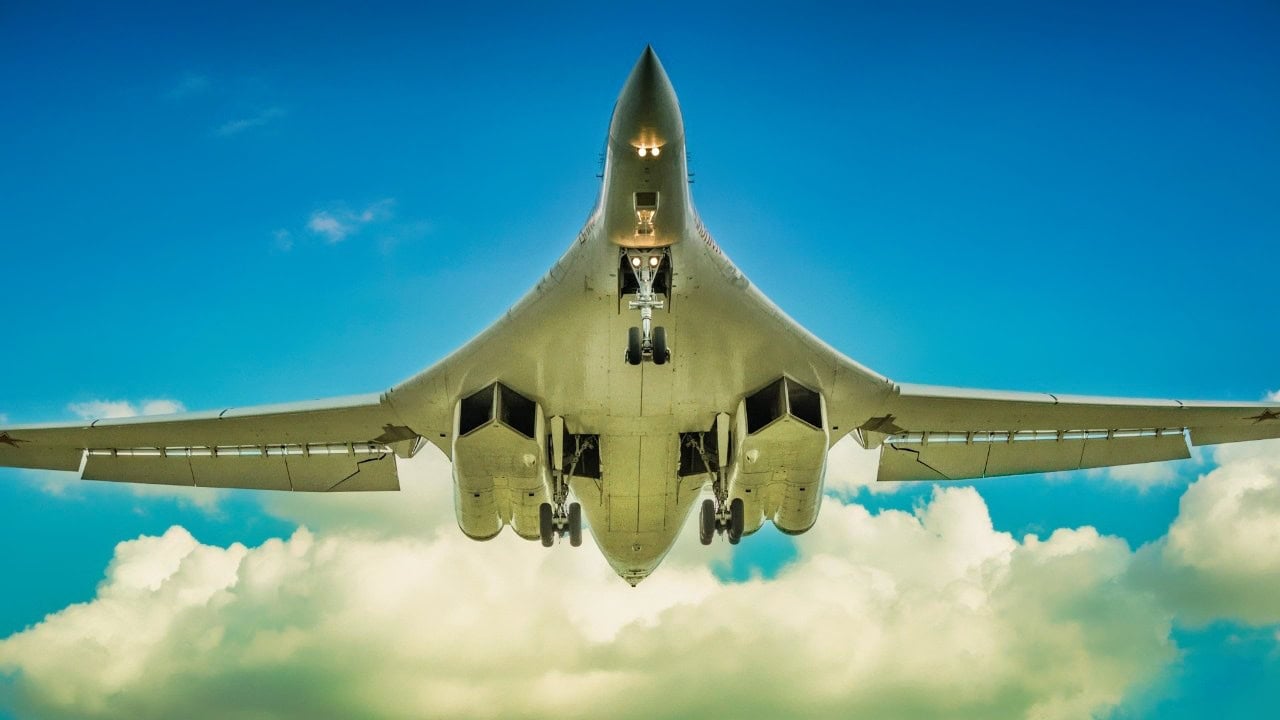
Tu-160 Bomber from Russia. Image Credit: Creative Commons.
The bulk of the evidence, though, indicates that anti-Russia hawks in Europe and the United States are engaging in wishful thinking again.
As I have discussed previously, Western predictions about an eventual victory by Ukraine are nothing new.
Yet such rosy scenarios have always failed to materialize.
What NATO IS Worried About
The one significant worry on the part of NATO-phile analysts is that in a fit of growing desperation, the Kremlin might foolishly decide to escalate the war in Ukraine by attacking a NATO member.
Indeed, hawks at the Wall Street Journal speculated that a key reason for Ratcliffe’s visit was to warn Russian leaders not even to toy with the idea of attacking NATO.
The scenario in which Russia will acknowledge its alleged pervasive weakness and cower at the sight of surging U.S./NATO power seems especially misplaced.
True, Western critics find no shortage of woes facing the Putin regime.
According to New York Times reporter Pal Somme, difficulties are mounting for Putin in his fifth year of war. “His troops have slowed on the battlefield. His spending on the war has ballooned beyond expectations. His population is increasingly fearful of what’s next. And his ability to project control has been undercut by Ukrainian strikes across Russia, with e-commerce warehouses, oil refineries and other facilities going up in flames on a near daily basis.”
Somme further contends that Moscow’s deteriorating position was a key reason for Ratcliffe’s trip, where he laid out a bleak military and economic reality for Mr. Putin’s intelligence officials and urged the Russian government to cut a peace deal.”
The Ukraine War: Russia Has Reason For Hope
However, there is significant evidence pointing to a more favorable situation for Moscow.
According to an account by Washington Post reporter Warren P. Strobel, Putin has reached a very different conclusion about both global and European developments.
Strobel contends that Ratcliffe’s trip “was preceded by fresh U.S. intelligence indicating that the Kremlin sees the United States as weakened by the Iran war, offering Russia an opportunity to escalate action against American interests and allies in Europe.”
Such a conclusion on Moscow’s part would hardly be irrational. Strobel notes that “Russia has taken advantage of Ukraine’s dwindling stockpile of air defense interceptors, which have been supplied by the United States. European countries have pledged to supply Kyiv with missile interceptors, but many will not arrive until next year.”
Russia Reeling?
The pervasive assumption among establishment advocates in the United States and Europe that the Kremlin is reeling both militarily and economically is highly questionable.
There is credible evidence that the adverse economic impact on Russia remains modest. Russian officials and business leaders—along with their foreign supporters—have been surprisingly effective at evading the web of Western sanctions.
Militarily, the situation is not much better for the prognosticators of Putin’s impending doom. Russia has indeed suffered tens of thousands of fatalities in its war against Ukraine, and Western officials love to emphasize that point.
Yet those same officials go to great lengths to avoid giving specific estimates of Ukrainian fatalities, and any reasonably neutral observer would suspect that there is a tangible reason for such reticence.
That meat-grinder war has claimed a vast number of lives on both sides.
The bottom line, though, is that Russian forces still occupy approximately 20 percent of Ukraine’s territory—a figure that has changed little in the past 4 years.
Russia may not be on the brink of a decisive triumph, but contrary to the West’s popular propaganda narrative, its ground forces are not on the brink of defeat either.
What Ukraine Is Thinking
Pro-Ukraine analysts are quick to counter that despite the virtual stalemate on the ground, Kiev has had noticeably greater success with its strikes into Russia itself using drones or missiles.
That point is valid, although Moscow’s counterstrikes have been equally deadly. Such developments are more likely to perpetuate an extended bloody stalemate in the ongoing war than to herald a triumphant Ukraine/NATO victory.
Moreover, Russian leaders appear to be gaining rather than losing confidence that their country can ultimately defeat Kiev’s drone and missile offensives. Among other reasons, the depletion of missile interceptors in NATO arsenals means that shipments of those weapons to Kiev will diminish and Moscow’s own attacks on Ukraine will become more effective.
U.S. and European leaders should hope that Kiev does not gain a clear edge in its conflict with Russia and validate NATO’s imprudent proxy war strategy. Ratcliffe’s warning to Moscow not to attack NATO members should be entirely unnecessary.
And it would be unnecessary if NATO leaders did not believe that the Alliance can actively assist Ukraine’s war effort in multiple ways while pretending to be a nonbelligerent in the conflict.
Moscow has tolerated the West’s hypocrisy thus far because the damage from Ukrainian attacks on the Russian homeland has remained manageable. But if Putin and his colleagues ever conclude that the damage is no longer tolerable and that NATO’s proxy war poses an existential threat to Russia, Moscow may indeed escalate matters.
What Happens Next?
The American people must hope that such a perception does not take root in the Kremlin. Washington has had the luxury of waging numerous wars against weak opponents that could not strike the U.S. homeland.
The 9-11 terrorist attacks, however, gave the American public a taste of the potential effects of even a very limited attack. A major foreign military power launching multiple assaults would inflict far greater damage with far more severe consequences.
Even without considering the nuclear weapons aspect, Russia clearly is such a power.
U.S. and NATO leaders must reconsider their reckless policy of provoking Moscow regarding Ukraine.
Vapid warnings from Ratcliffe or other officials will not be sufficient to help avert disaster if such provocations continue.
About the Author: Ted Galen Carpenter
Ted Galen Carpenter is a senior fellow at the Randolph Bourne Institute and a contributing editor at The National Security Journal and The American Conservative. He is the author of 13 books and more than 1,500 articles on national security, international affairs, and civil liberties. His latest book is Unreliable Watchdog: The News Media and U.S. Foreign Policy (2022).