
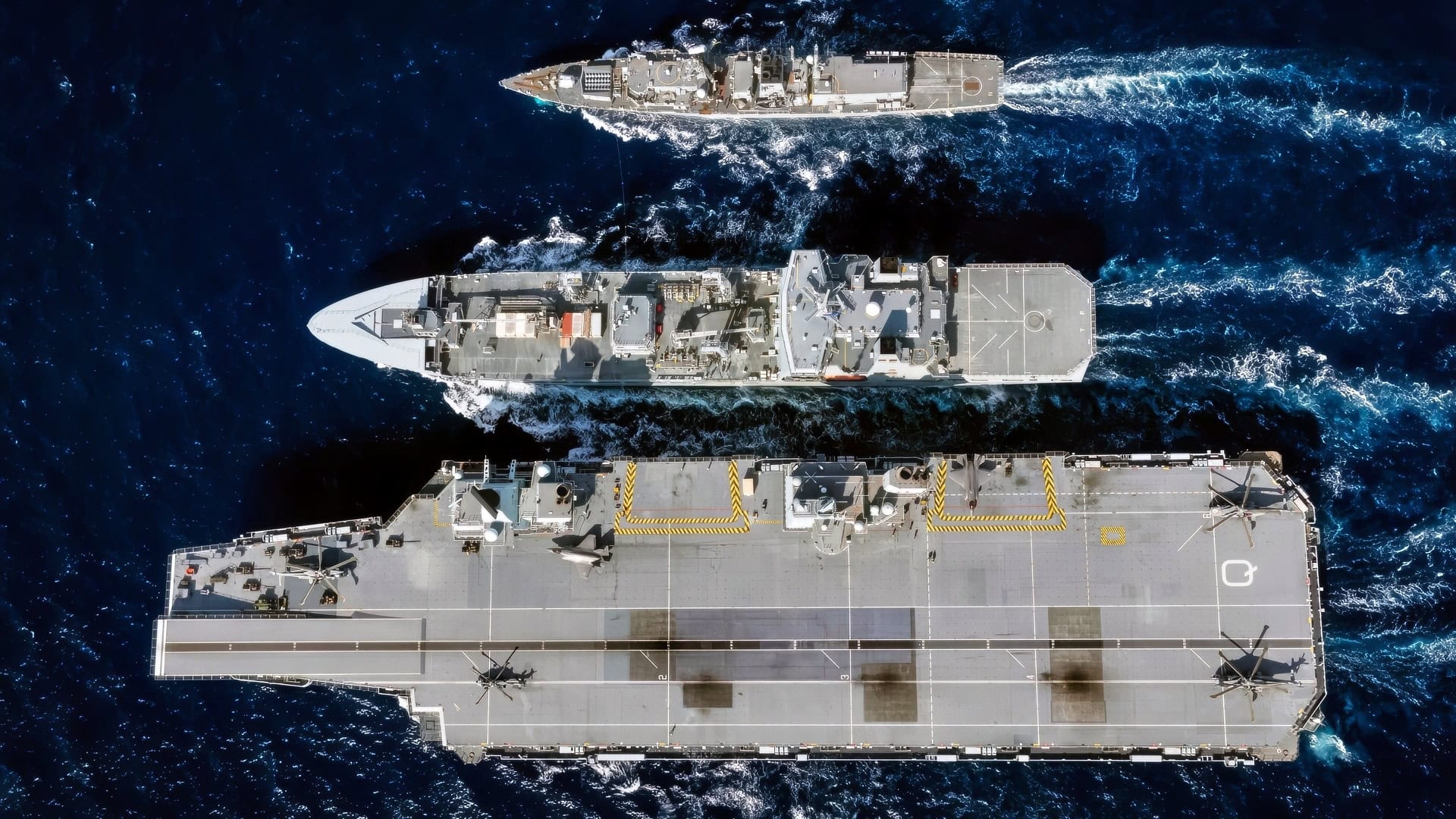
The decline of the UK’s Royal Navy is, at this point, a well-observed phenomenon.
The service has seen a sharp decline in recruits over the past few years; its surface fleet is falling into disrepair, its submarine fleet is crippled by maintenance delays, and even its newer vessels suffer from various technical problems.
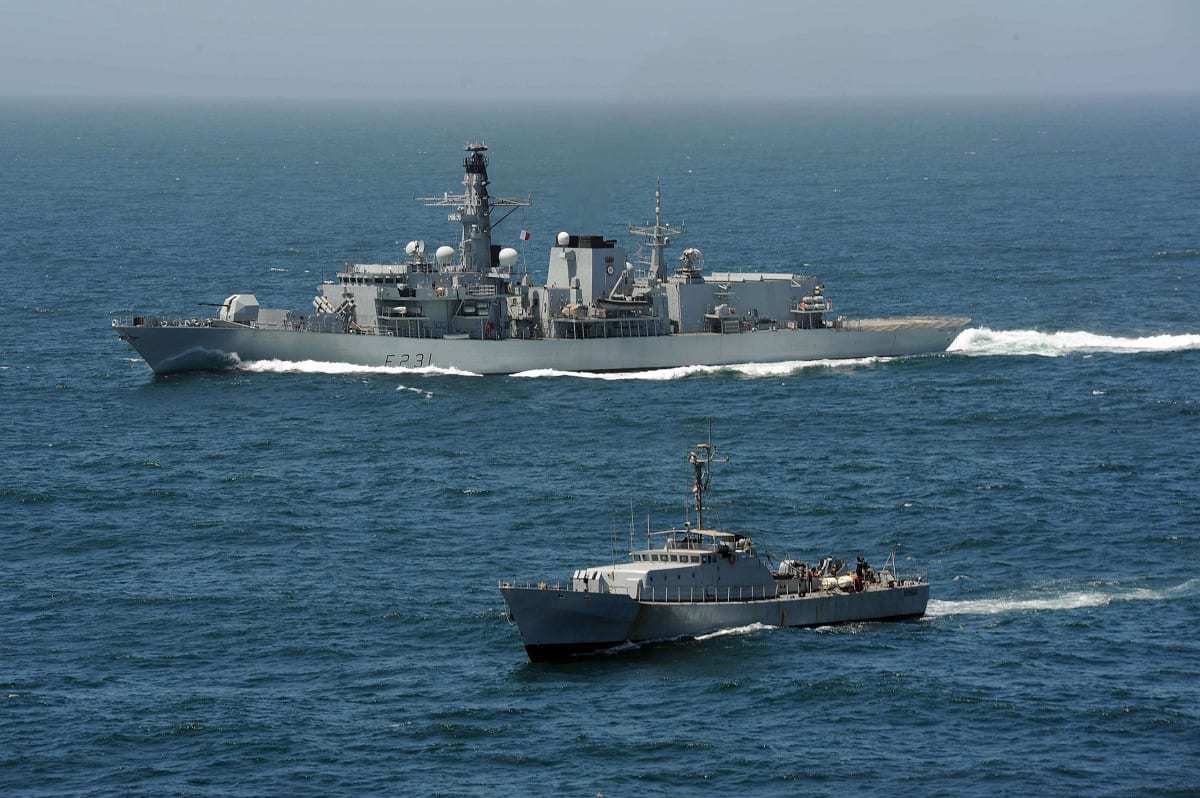
The Royal Navy frigate HMS Argyll (F231), top, comes alongside the Senegalese navy vessel Podor to conduct a boarding drill during exercise “Saharan Express 2013” in the Atlantic Ocean. “Saharan Express” was an international maritime security cooperation exercise designed to improve maritime safety and security in West Africa.
Manpower issues are among the most crippling of the RN’s multiple problems.
The Navy has been unable to attract enough recruits recently to keep its surface fleet sufficiently manned.
Consequently, the UK has been forced to retire some of its smaller frigates prematurely to keep its more strategically vital ships afloat.
Retiring Ships With No Replacement
The immediate victims of the RN’s recruitment crisis are the HMS Westminster (F237) and the HMS Argyll (F231). Both ships share a similar story.
Commissioned in the late 80s/early 90s, the ships are Type 23 frigates, built to escort larger vessels such as aircraft carriers, transport ships, or submarines.
In 2022, both ships went to port for extensive refits, but, like so many other vessels in the Royal Navy, their maintenance was delayed.
With rising manpower shortages, the UK could not adequately staff the two ships and its larger aircraft carriers.
Rather than wasting money to refit the two vessels and spread the RN’s limited manpower too thin, the government decided to retire the two ships.
Westminster was scrapped in 2026, while Argyll was supposed to be retained as a training ship but was later sold for scrap as well.
The problem with this decision, however, is that the UK currently has no replacement for these frigates.
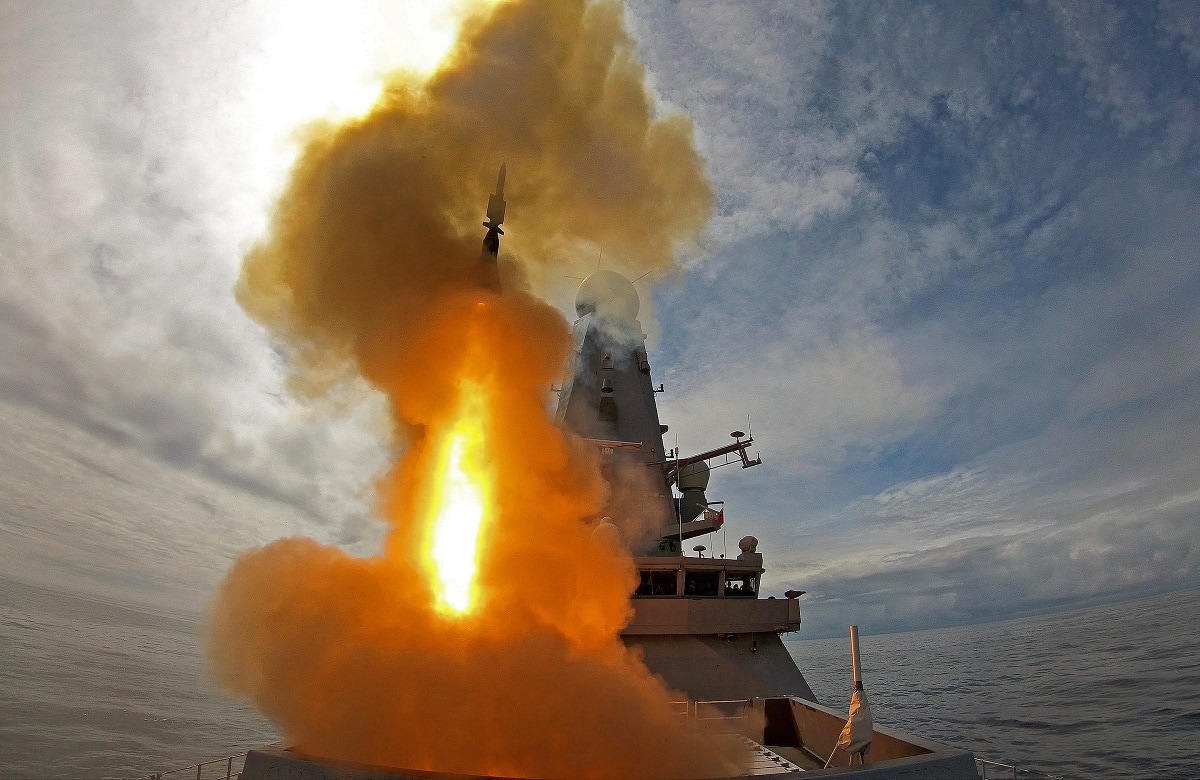
HMS Defender using her Sea Viper air missile defence system during Exercise Formidable Shield, a multinational air defence exercise which took place at the Royal Navy Hebrides training range, in the Western Isles of Scotland.Ships from nine NATO countries took part in live-fire air and missile defence drills off the coast of Scotland in May 2019.The exercise allowed Allied ships to detect, track and defend against an array of anti-ship and ballistic missiles using NATO command and control procedures. Drills included sharing real time tactical information, conducting joint mission planning, and engagement coordination.The Royal Navy Sea Viper air missile defence system comprises the world class Sampson radar the Aster missile system.This missile, travelling at four times the speed of sound (Mach 4) hit an incoming drone target designed to simulate a projectile attack on the warship, the target flew faster and lower than any previously used.The Aster is part of the Principal Anti Air Missile System (PAAMS), a joint programme developed by France, Italy and the United Kingdom for an integrated anti-aircraft warfare system.
The Type 26 Frigate is envisioned as the successor to the Type 23, but isn’t slated to enter service until 2028, assuming there are no delays.
Consequently, the UK currently has a critical gap in its frigate fleet, with only five frigates currently in service.
The deactivation of the two frigates was opposed by then First Sea Lord Admiral Tony Radakin, who said the UK needed to maintain a fleet of six destroyers and 11 frigates for national security.
Since Westminster and Argyll were decommissioned, three more Type 23 Frigates were decommissioned as well.
Northumberland and Lancaster were decommissioned in 2025, and Richmond was decommissioned in July 2026.
The Royal Navy’s Crippling Manpower Shortages
The shrinking frigate fleet stems from the ongoing personnel crisis gripping the Royal Navy.
The recruitment crisis has been caused by several factors, including a shortage of recruitment personnel, lower pay in the armed services than in civilian positions, and generally low morale across the RN.
Shortages across the UK’s recruitment services have been particularly acute lately.
According to some reports in 2023, the recruitment force was missing 35% of its personnel, with no signs that conditions have improved since then. “It’s a mess,” said one anonymous naval official. “An exceptional recruitment service has been driven to the wall. They need to get a grip on it really quickly.”
In the year 2023-24, the UK RN missed its recruitment target by 40%.
Vice Admiral Andrew Burns, the Fleet Commander, warned in 2025 that the ongoing recruitment crisis would have serious strategic effects if not handled soon. “It’s people, right now. It’s the quantity of people. And it’s not just recruitment; it’s retention,” he said. In the backdrop of this recruitment crisis, the UK has been forced to make some tough decisions to maintain its most basic strategic needs.
The short-term solution has been to deactivate smaller surface ships to free up personnel for more pressing needs, like nuclear submarines or the two Queen Elizabeth-class aircraft carriers.
While the UK’s frigates have borne the brunt of the burden, the RN’s Sandown-class minesweeper fleet has also been whittled down over time.
Deeper Institutional Problems
The problem, however, goes deeper. Personnel problems are usually endemic of other, deeper issues that have eroded the morale of the Royal Navy.
According to retired Naval commander Lewis Page, writing for The Telegraph, the problem stems from a number of cuts and budget drawbacks made in the aftermath of the Cold War.
Many officers were dismissed from the Navy for seemingly no reason, which had profound effects on morale throughout the service.
Money is also a pressing issue.
The Royal Navy is short on cash. Consequently, the government does not have enough money to adequately invest in either its sailors or its ships. Sailors are paid less than many entry-level jobs in the UK.
Meanwhile, its ships gradually deteriorate until they undergo a five-year maintenance cycle.
In short, this is a nightmare scenario for the government, especially as Russian warships increase their activity in the English Channel.
Changing course requires not only greater government investment, but also sweeping social and institutional reforms to make the Royal Navy a force worth joining again.
About the Author: Isaac Seitz
Isaac Seitz, a Defense Columnist, graduated from Patrick Henry College’s Strategic Intelligence and National Security program. He has also studied Russian at Middlebury Language Schools and has worked as an intelligence Analyst in the private sector.