
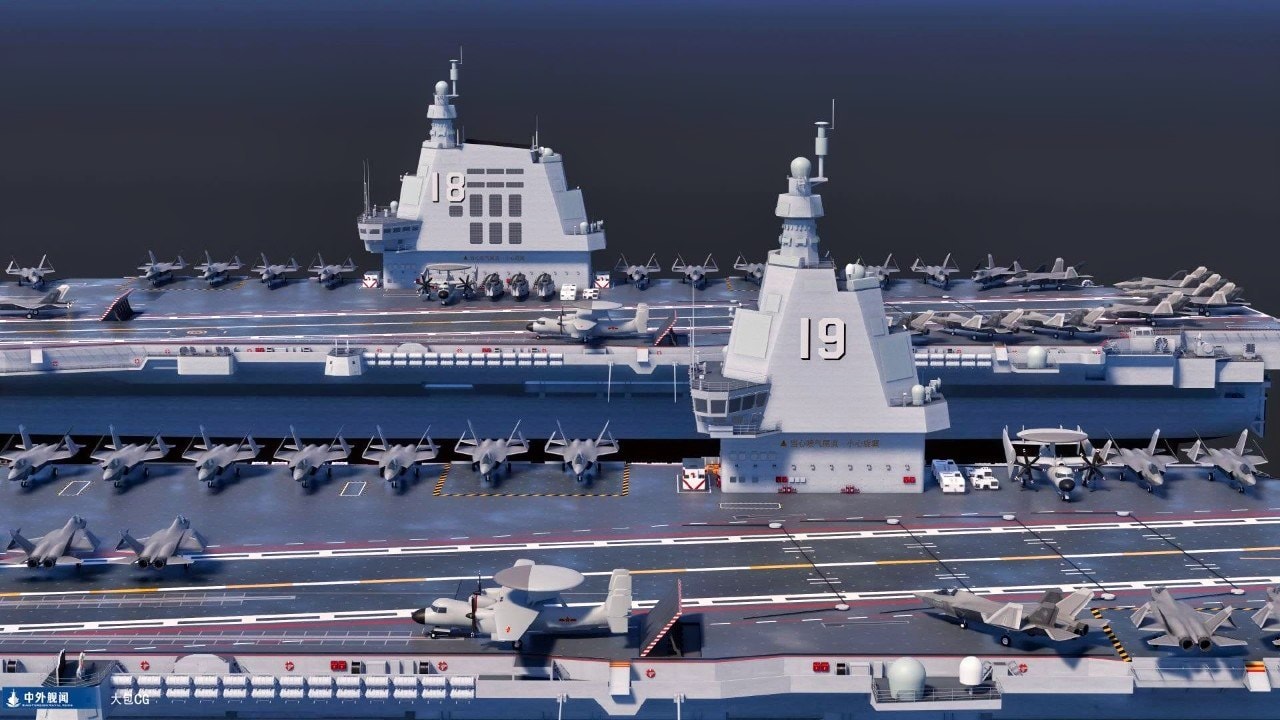
U.S. Should Embrace Logic of One China to Question Chinese Sovereignty Over Other Lands – Chinese leaders repeatedly declare that Taiwan is part of China and demand the rest of the world follow. In 1971, U.S. National Security Advisor Henry Kissinger promised the United States would accept an ill-defined “one-China” policy that Beijing assumed meant China would exercise sovereignty over Taiwan.
That policy and the very notion that there is “one China,” however, was always built on a lie.
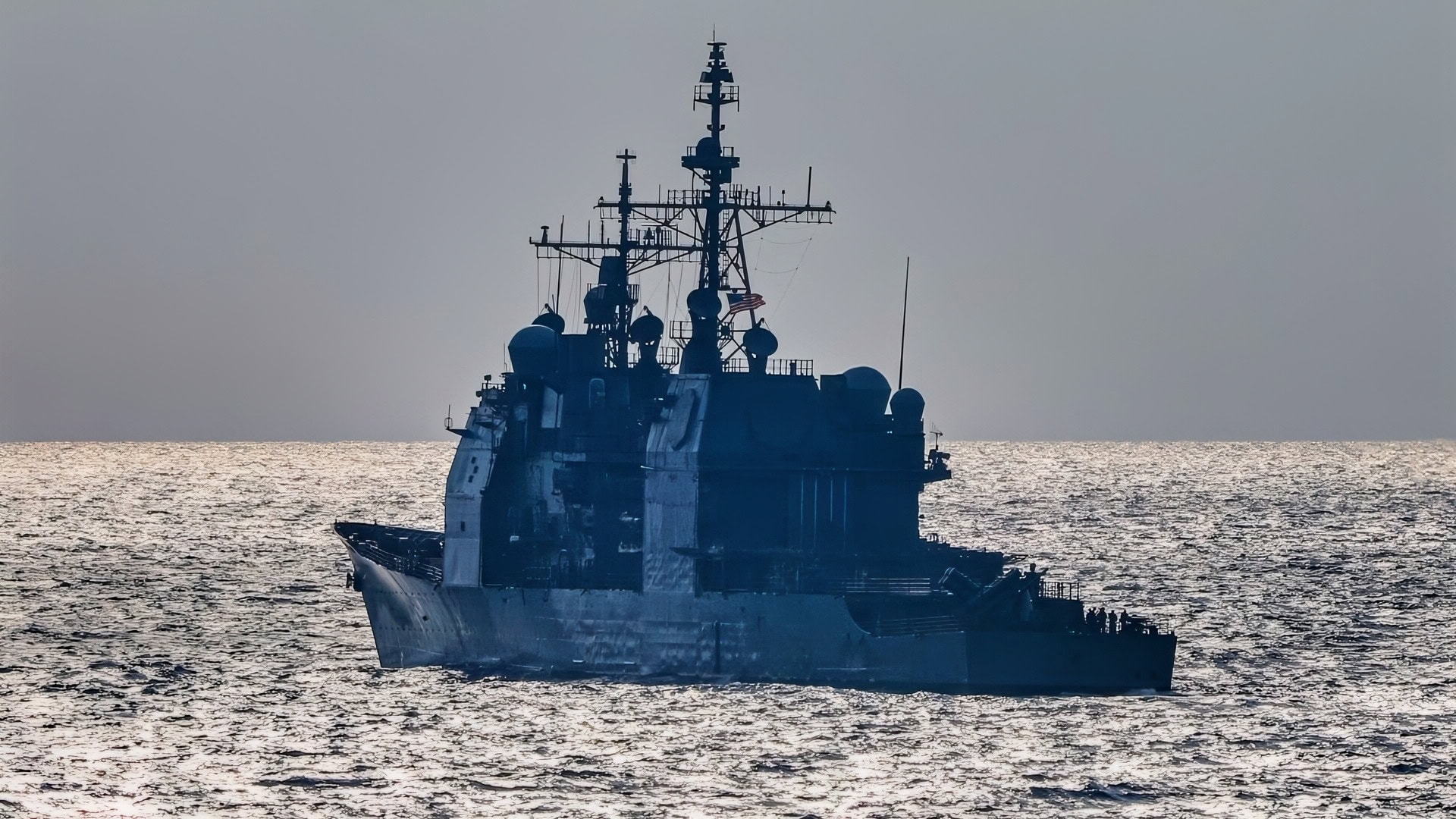
TAIWAN STRAIT (Aug. 28, 2022) Ticonderoga-class guided-missile cruiser USS Antietam (CG 54) transits the East China Sea during routine underway operations. Chancellorsville is forward-deployed to the U.S. 7th Fleet area of operations in support of a free and open Indo-Pacific. (U.S. Navy photo by Mass Communication Specialist 2nd Class Justin Stack)
Even Mao Zedong, the founding chairman of the People’s Republic of China, once acknowledged that China and Taiwan were not synonymous.
The History
In 1936, the American hagiographer Edgar Snow asked Mao if he intended to regain all the territory China lost to Japan. Mao responded, “It is the immediate task of China to regain all our lost territories…. This means that Manchuria must be regained.” He then added, “When we have re-established the independence of the lost territories of China, and if the Koreans wish to break away from the chains of Japanese imperialism, we will extend them our enthusiastic help in their struggle for independence. The same thing applies to Formosa,” as Taiwan was then called.
Put clearly: At least in 1936, Mao believed there was a China of which Manchuria was a crucial part.
Taiwan, though, was like Korea or, for that matter, Japan: A foreign country that was decidedly not China.
As Mao’s communist forces gained momentum, Mao’s attitude took a decidedly imperialist tone.
In On Coalition Government, Mao’s report to the Chinese Communist Party’s 7th Conference in April 1945, Mao declared, “The Cairo conference made another good decision, namely, that the four northeastern provinces, Taiwan and the Penghu Islands should be returned to China.”
That article hardened over time, especially in recent decades. In its preamble, the People’s Republic of China’s constitution declared, “Taiwan is part of the sacred territory of the People’s Republic of China.” Article 2 of China’s 2005 anti-secessionist law states, “Both the mainland and Taiwan belong to one China… Taiwan is part of China.” A 2022 Chinese white paper, The Taiwan Question and China’s Reunification in the New Era, declared, “Taiwan has belonged to China since ancient times. This statement has a sound basis in history and jurisprudence.” This is objectively false.
In reality, China has controlled Taiwan for only four of the last 500 years, and not at all since 1895, when Grover Cleveland was U.S. president. This, of course, discounts the Qing Dynasty, since Chinese nationalists long dismissed the Qing as Manchu rather than “real” Chinese. Chinese revolutionaries in the early 20th century considered the Qing a foreign occupation and cursed the Manchu as “cowardly Tatars” who had destroyed China in 1644.
For Chinese nationalists in the late 19th and early 20th centuries, China was the Han heartland of 18 provinces. Only as the Qing teetered and the Republic of China formed did the Chinese accept the notion of “Five Races Under One Union” so China could also claim Manchuria, Mongolia, Tibet, East Turkestan, and Taiwan.
Legally, China elides difficult facts. The 1952 Treaty of San Francisco listed no recipient to assume sovereignty over Taiwan. A close reading of its text suggests the United States has a greater legal claim to Taiwan than mainland China.
In 2025, the Chinese Foreign Ministry issued a “Position Paper on the United Nations General Assembly Resolution 2758,” in which Beijing declared that the 1971 resolution “resolved once and for all the question of the representation of the whole of China, including Taiwan, in the U.N., as a political, legal and procedural issue.” What Chinese diplomats ignore, however, is that the resolution never actually mentioned Taiwan.
While it is easy to counter and challenge Communist China’s lies and its fabrications like the Nine-Dash Line, which China based on a map historians view as fraudulent, the State Department too seldom goes on the offense. The basis of so many Chinese lies and imperialist claims is the notion that, if China once controlled a territory, then it must be forever Chinese.
By such logic, not only Paris but also Kyiv are German while Berlin—or at least a quarter of the city—is American. The weakness of China’s claims, though, are the fact that, if accepted with the reciprocity of international law, then the United States can rightly question whether Beijing itself is a Chinese city or should return to its Mongol past.
In 1215, Genghis Khan‘s armies took Zhongdu, the Jurchen Jin capital on the site of today’s Beijing, sacking and burning the city. Genghis’ grandson Kublai built a new capital, Dadu, for the Yuan dynasty he proclaimed. In 1368, the last Yuan emperor Tonghon Temür fled before the Ming general Xu Da could enter the city, which he renamed it Beiping. Simply put, the Mongols controlled Beijing for more than 30-times longer than mainland Chinese controlled Taiwan. By that logic, Ulaan Bator’s claim to Beijing is about 30 times stronger than President Xi Jinping’s claim to Taiwan. Perhaps rather than talk about “One China,” President Donald Trump and Secretary of State Marco Rubio should demand “One Mongolia.”
The United States need not stop there. Mainland China has suffered no shortage of occupations over the centuries. Perhaps the most consistently Chinese territories on the mainland have been Sichuan and Shaanxi, but even there the Mongols held out longer than China held Taiwan.
Mongolia would be the chief beneficiary—and as a stalwart ally, the United States should support it—but other countries have had their pound of Chinese flesh. Russia occupied the Ili valley in East Turkestan (renamed Xinjiang by the Han Chinese) in 1871–81. If Trump wishes to indulge Russian President Vladimir Putin, perhaps he should suggest U.S. support for Russia there, instead of Ukraine. The United Kingdom and Portugal should likewise reclaim Hong Kong and Macau; the people in both cities would certainly be better off and enjoy greater freedom and respect for human rights.

Trump might also seize on Beijing’s legal theories to claim at least part of the Chinese capital itself. On May 31, 1900, U.S. Marines arrived in Beijing to secure the Legation Quarter, the besieged neighborhood where diplomats, international civilians, and Chinese Christians lived.
After lifting the siege, the U.S. Marines remained for another month and a half, though more U.S. troops would remain to guard the U.S. Legation until the day after Pearl Harbor, when Japan captured them and placed them in various concentration camps.
The turn-of-the-century Legation Quarter is today’s Dongjiaominxiang, just east of Tiananmen Square. Since U.S. forces once occupied it, Trump should cite modern Chinese logic to claim it as U.S. territory today, perhaps renaming it the Trump Quarter.

While this is a modest proposal, it is no less farcical than blindly accepting Chinese claims to Taiwan, the South China Sea, the Senkaku Islands, Arunachal Pradesh, Aksai Chin, Inner Mongolia, Tibet, or East Turkestan.
The Taiwan Reality Today
For too long, U.S. diplomats, journalists, and professors and students at China-funded U.S. universities have accepted China’s false narratives, upside-down history, and illogical conclusions.
Chinese officials rely on fraudulent documents, cherry-picked history, repetition, and paid-for sycophants to repeat and justify their claims.
Trump, Rubio, and the State Department should turn Chinese logic on its head and drive it to its natural conclusion: The end of China itself as a historically legitimate custodian of mainland sovereignty.
About the Author: Dr. Michael Rubin
Dr. Michael Rubin, a Director of Policy Analysis at the Middle East Forum, specializes in Iran, Turkey, and the Horn of Africa. His career includes time as a Pentagon official, with field experiences in Iran, Yemen, and Iraq, as well as engagements with the Taliban prior to 9/11. Mr. Rubin has also contributed to military education, teaching U.S. Navy and Marine units about regional conflicts and terrorism. His scholarly work includes several key publications, such as “Dancing with the Devil” and “Eternal Iran.” Rubin earned his Ph.D. and M.A. in history and a B.S. in biology from Yale University.