
Will Trump Turn Iran War into Midterm Magic? – No. That said, hoping the five-month conflict drags Republicans to electoral disaster, a passion shared by American Democrats and the last ayatollah in Iran, looks pretty forlorn. It’s not that wars win elections. They don’t. But it takes a humdinger of a disaster to get voters to abandon their president.
Making Mulch of the Mullahs
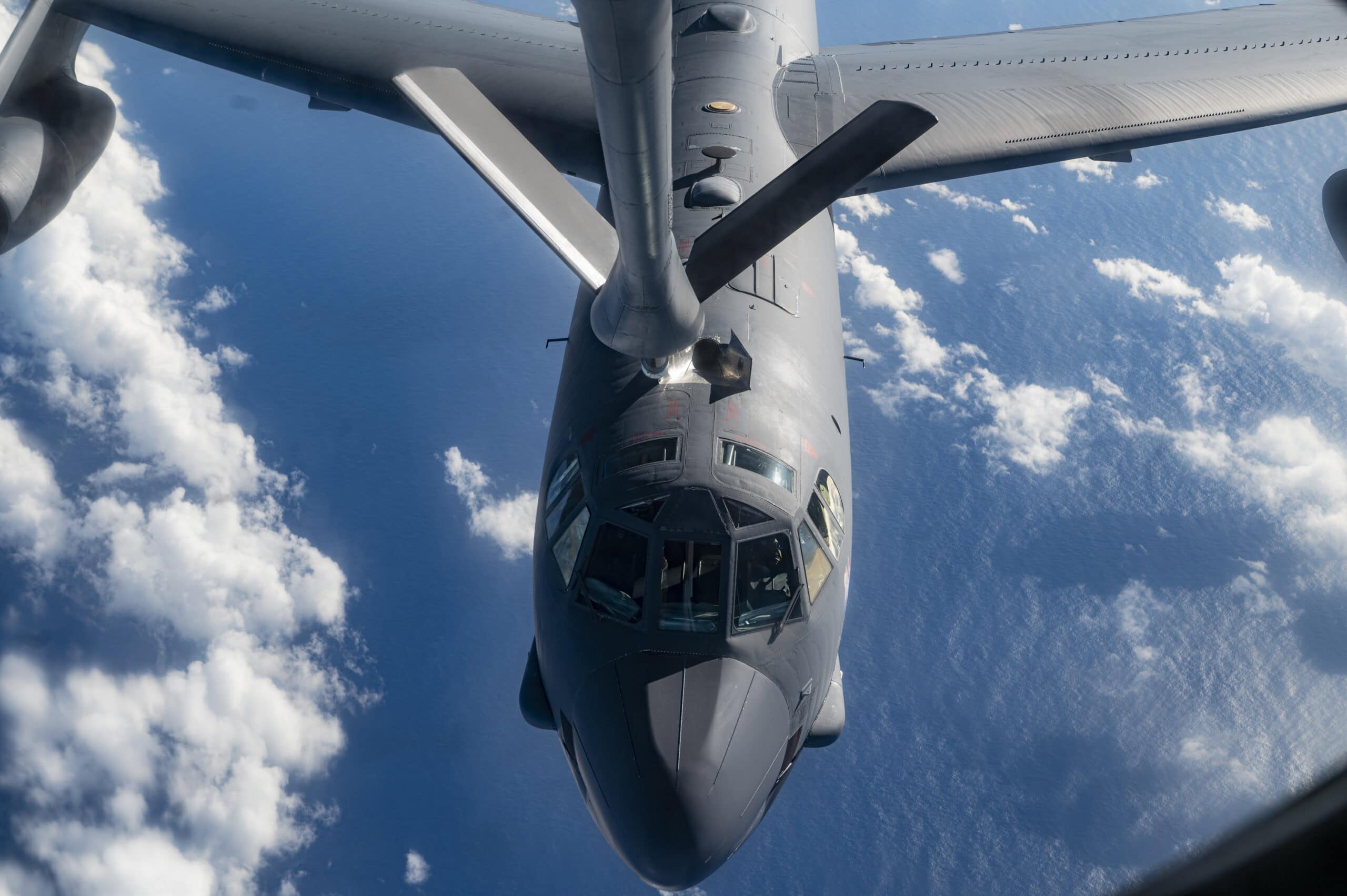
A U.S. Air Force KC-135 Stratotanker from Fairchild Air Force Base, Washington, refuels a B-52 Stratofortess from Barksdale Air Force Base, Louisiana, during a bomber task force mission over the Pacific Ocean, Dec. 17, 2022. BTF missions contribute to joint force lethality by demonstrating the U.S. Air Force’s ability to operate anywhere in the world. (U.S. Air Force photo by 2nd Lt. Ariana Wilkinson)
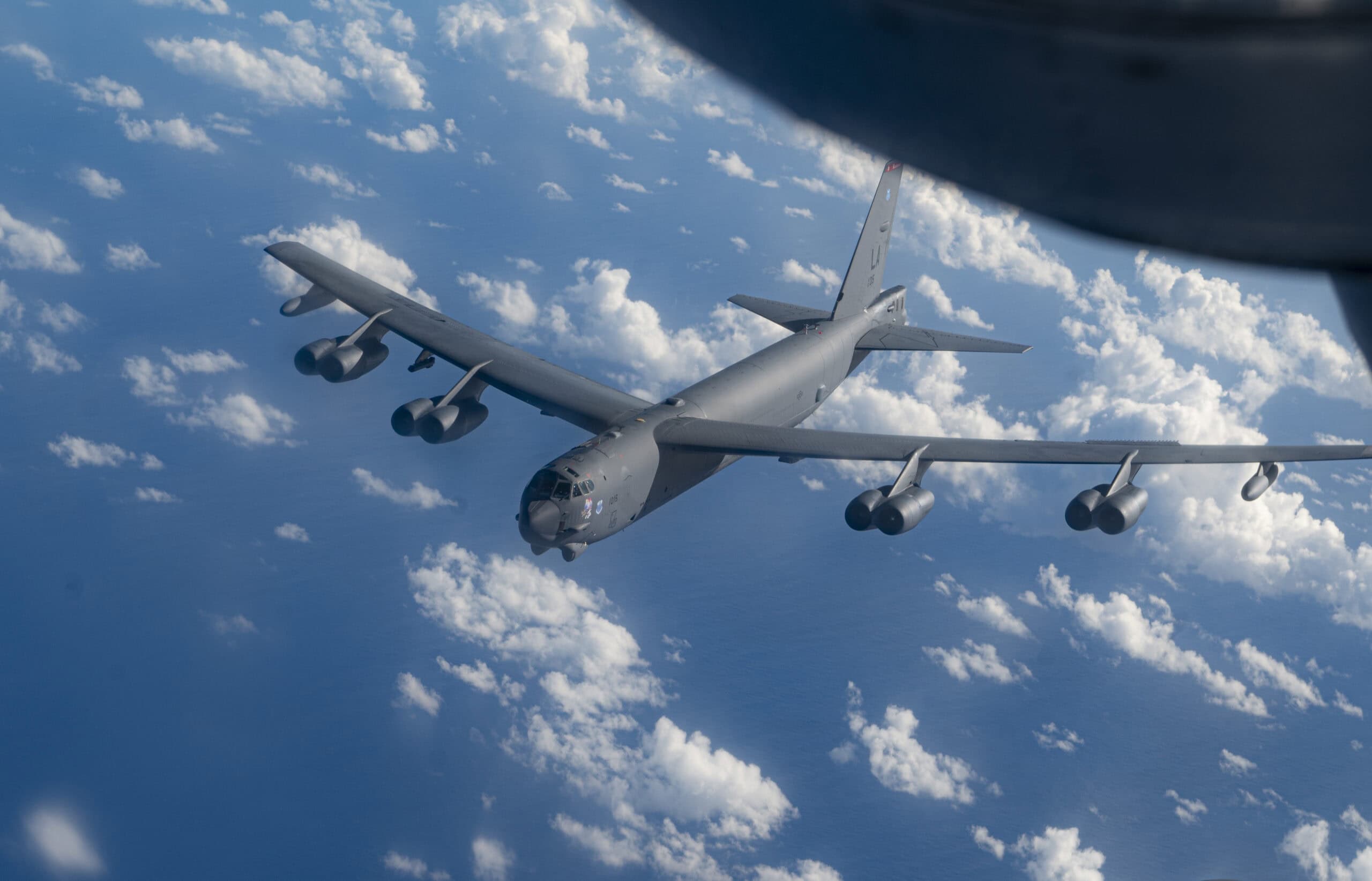
A B-52 Stratofortress assigned to the 2nd Bomber Wing at Barksdale Air Force Base, Louisiana, flies next to a KC-135 during a bomber task force mission over the Pacific Ocean, Dec. 17, 2022. Bomber missions demonstrate our long-range precision strike capabilities, which are integral to enforcing a free and open Indo-Pacific. (U.S. Air Force photo by 2nd Lt. Ariana Wilkinson)
Americans don’t like losing. These last few weeks have seen many former detractors, even CNN, acknowledge that Trump is winning.
We have gone from believing the outrageously specious Iranian claims that they have the “Americans right where they want them,” to wondering if the regime in Tehran can survive.
Even the arguments that the war isn’t over unless Trump gets a deal or Iran is liberated no longer seem to command the attention of voters. The White House wins, deal or no deal.
War and Politics
Of course, winning wars doesn’t always win elections. Ask the first President Bush, who closed out the Cold War and, in the first round in Iraq, led the U.S. military to its most decisive military victory in modern history. Americans literally did not care. They elevated an obscure Democratic governor to the Oval Office, angry that Bush raised taxes with the country heading into recession.
On the other hand, in modern times wars rarely lose elections. The temper on the American main street has to feel pretty catastrophic to get Americans to take out their war angst at the ballot box. Harry Truman didn’t run for another term because he knew he couldn’t win. Voters were not only convinced that the Korean conflict had become a quagmire; they worried they were being sucked into World War III.
The Vietnam War helped sink Lyndon Johnson’s hope for a second term. After the second Bush dragged Americans through protracted, bloody conflicts in Iraq and Afghanistan where the prospects for violence seemed endless, it would have been a stretch to think any Republican could win the presidency in 2008.
Trump does not share their troubles. One recent poll showed his approval rating on the war improving, albeit not by much. No matter. It’s irrelevant. People who would never vote Republican while Trump is president wouldn’t change their vote if Iran surrendered on day one. People who like Trump, but don’t like the war, are still unlikely to switch their vote to some candidate that wants open borders and boys in girls’ bathrooms. Everyone else will vote on something else. And here is why. What polls don’t reflect at all is the intensity of voters on this issue—because it’s pretty low. Look at the streets. There are no mass demonstrations against the war. There are no student sit-ins.
Don’t know where Jane Fonda is, but she is not leading pink hats storming the White House. Michael Moore isn’t pummeling us with documentaries. Even the Dixie Chicks are strangely silent.
Triumph of Trump
Meanwhile, an August Echelon poll showed Republican enthusiasm for the 2026 midterms up 15 points from a year ago, putting them almost dead even with Democrats, even before people get serious about paying attention to campaigns after Labor Day.
Further, a July poll showed that self-identified MAGA Republicans, Trump’s hardcore voting block, are the most enthusiastic of any group, with 75 percent saying they would likely vote. Trump thinks he knows why.
Discarding the midterms as a factor in the conduct of the war had two results. First, he doubled down on showing the Iranians who could outlast whom, crushing their hopes of outlasting Trump in a war of attrition. Second, the continued military and economic pressure brought the regime to a halt, undercutting criticism of his handling of the war. Not failing and looking strong doesn’t hurt, particularly with your base.
A mark of Trump’s confidence is his plan to relentlessly hit the campaign trail, along with his cabinet, as well as dump up to $500 million from his super PAC into state races. Also telling is that virtually all Republican candidates are looking forward to having a Trump rally. No wonder. This is his team. He took some hits in primary endorsements at the gubernatorial level, but in the Senate he was 24 for 24, and in the House his endorsement success rate was 98%.
Since Congress has a lot more to do with foreign policy than a governor’s chair, you can understand why the White House discounts the war as an issue with the president, even calling the conflict “small potatoes.” At the same time, Trump trumpets his successes, delivering on the commitment that Iran can’t have nuclear weapons and taking control of the Strait of Hormuz.
The Democratic Response
Most analysts say that in this election, as James Carville famously declared when he organized the campaign to lift Bill Clinton from obscurity to the presidency, “it’s the economy, stupid.” Trump seems to have taken this counsel more seriously than the democrats. Gas prices aside, he crows over every economic uptick, like the 162,000 jobs added in August, and pushes relentlessly for pro-growth, low-tax policies, such as demanding interest rate cuts.
While democrats claim their top priority is affordability, the news cycle is mostly about leftist candidates who want to abolish ICE (now part of the democratic platform), return to open borders, bankrupt America with universal heath care, ignore massive corruption scandals, defend men in women sports, abandon Israel, and a host of other issues that must have ordinary voters head scratching how these initiatives will reduce gas prices, let alone improve the lot of everyday Americans.
To muddle the midterm contests even further, the party has spent last months of the campaign defending communism, even voting almost to a member against a resolution condemning socialism in the House. The White House had a field day.
Even if the war was a hot-button problem and Trump was failing on the economy, the left has been busy trying to make the midterms about anything but these issues, just assuming Trump hate will carry them to victory. How is that working out? It seems pretty clear they have already lost their shot to take back the Senate, and the fight for the majority in the House is no sure thing. If the war was really dragging Trump down, none of this would be true.
October Surprise
Still out there, however, is the Iranians’ threat to inflict a humiliating blow before the November elections. Even if they had the capacity to do so, which is increasingly doubtful, it would be very unlikely to affect the elections.
Americans don’t like bad surprises. After Pearl Harbor, no one was running around screaming “draft Dewey.”
When faced with adversity, Americans are more likely to rally round the flag. While the Tet Offensive in 1968 shattered trust in Johnson’s handling of the Vietnam War, we didn’t quit the war; in fact, we elected a president who vowed to continue fighting—America did not abandon the South Vietnamese until 1975.
Let’s be clear: the odds of domestic politics limiting Trump’s resolve to finish the Iran war on Trump’s timeline, to Trump’s satisfaction, are about as likely as Milli Vanilli making a comeback.
About the Author: Dr. James Jay Carafano
James Jay Carafano is a national security expert and a 25-year Army veteran. His most recent books are Cold Combat: Mountain Warfare in Italy and the Battle of San Pietro, 1943, and Digital Dominance: Winning in a Socially Networked World. He is a 19FortyFive Contributing Editor. Carafano is also a Senior Counselor to the President and E.W. Richardson Fellow at The Heritage Foundation.