
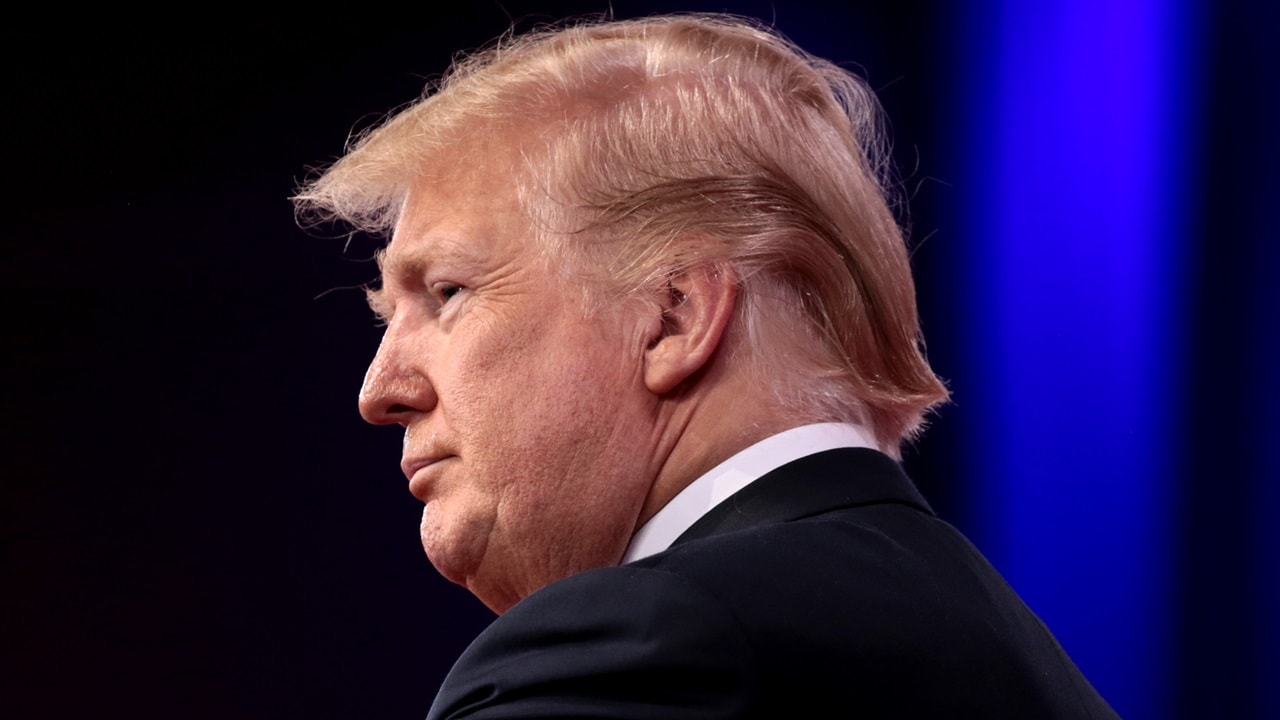
In Iran, Trump Mows the Lawn and Moves On: This week, the U.S. took out Iranian positions preparing to launch mine-carrying missiles into the Strait of Hormuz. The action followed Trump’s challenge that American forces would immediately eliminate any military effort to impede maritime traffic in the strait. In response, the Iranians fired a handful of missiles that reportedly caused no damage.
What does the exchange of fire import after long weeks of a shaky cease-fire? The answer is not much. Trump has set his red “47” cap on a way forward in the war: deal or no deal with Iran. The recent preemptive strike and continued ratcheting up of economic pressure just remind us that not only does Trump always mean what he says—this time he is clearly saying what he truly means.
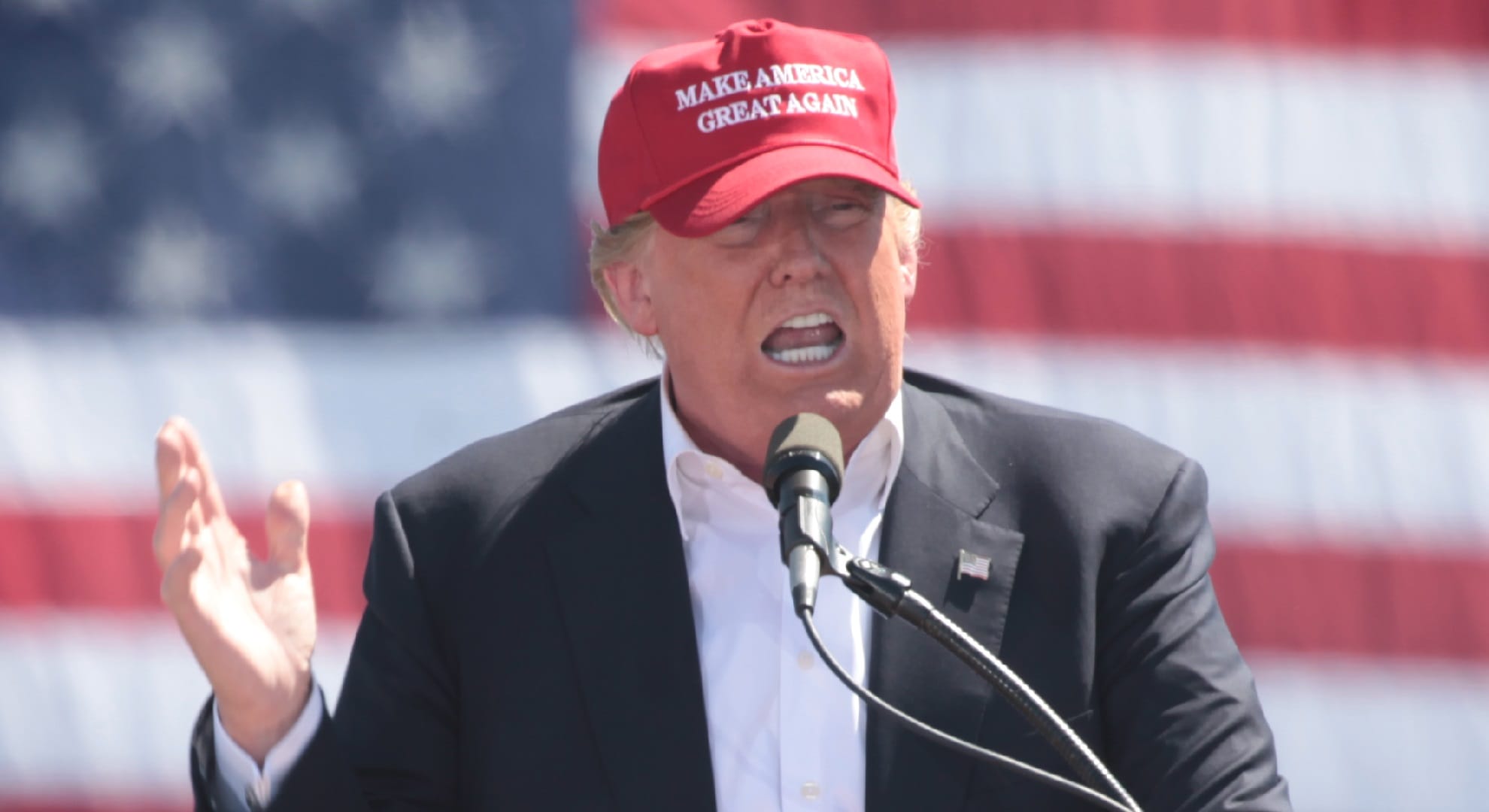
Donald Trump. Image Credit: Creative Commons/Gage Skidmore.
The Week That Was
Only a few days ago, even some of the president’s harshest critics flipped their script, now acknowledging Trump has the Iranians cornered worse than if Custer had been at the Alamo. Al Jazeera, for example, has dramatically shifted assessments, recently reporting, “Six months into the conflict between the United States and Iran, the situation is not the humiliating quagmire that critics of the Trump administration insist upon. Instead, President Trump has charted a new and far more patient strategy that is making steady progress towards his objectives.” What’s worse for Tehran is that it’s now clear Trump’s timeline isn’t limited to the midterm elections. The president is prepared to play this game for the next two and a half years.
Meanwhile, there are many within the land of the lion and sun who are not only questioning the strategy of defeating America through protracted war but also wondering whether the regime can take this fight into overtime and survive. Some on the street fear an “Iran falling into chaos,” the BBC recently reported.
True, the president still has both critics and allies thinking that the political cost will make tussling with Tehran a Pyrrhic victory at best. The war is going to weigh heavily on Republicans in the midterm election and diminish Trump’s hold on power. The Donald, however, appears to be ready to take that bet—which might not be the sucker’s wager many once thought, with Democrats offering plenty of their own distractions for voters, like the Democratic Socialist of America (DSA) platform that wants to sweep aside everything from Israel to the American Constitution. One commenter called the DSA stands “a gift to MAGA.” Likely, Trump agrees.
Thus, having brushed aside near-term politics, as well as hysteria over $200-a-barrel oil or running out of weapons, the White House seems prepared to put military and economic pressure on autopilot until Iran gives Trump the deal he wants; the regime decamps to Moscow; or planning starts for the 2028 inauguration capped off by a dinner-dance in the new White House ballroom.
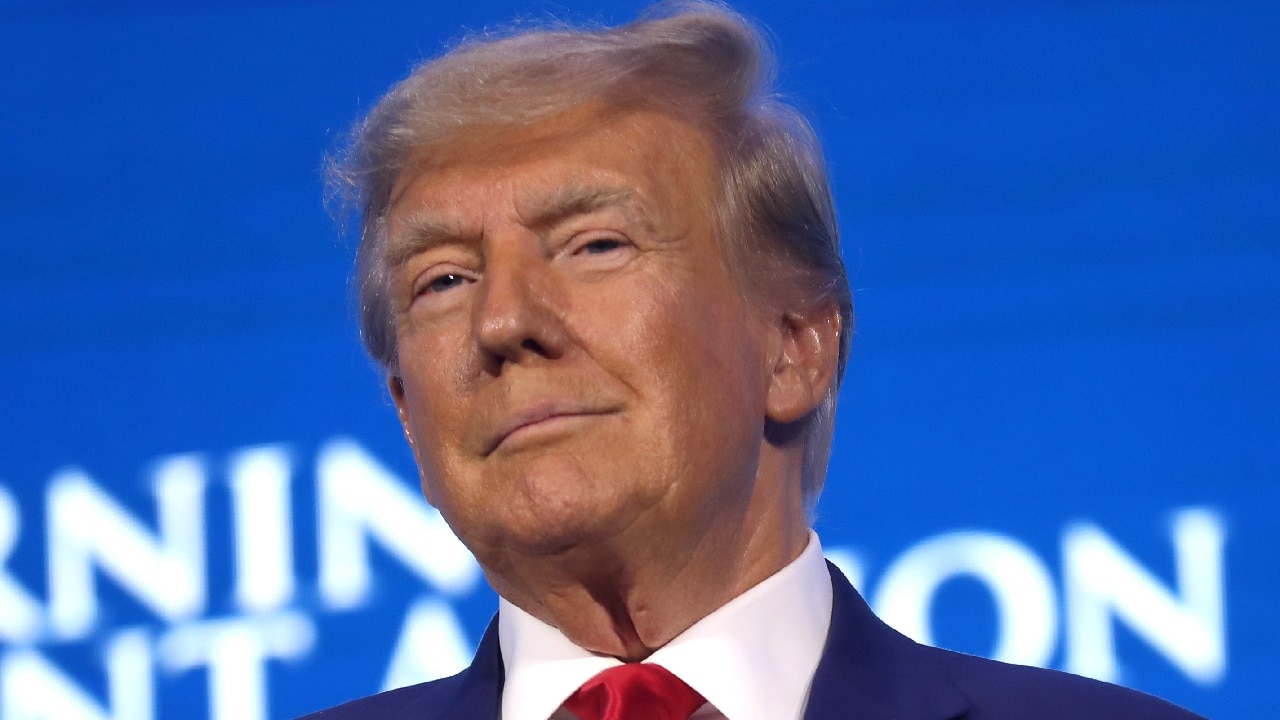
Former President of the United States Donald Trump speaking with attendees at the 2023 Turning Point Action Conference at the Palm Beach County Convention Center in West Palm Beach, Florida. By Gage Skidmore.
Next Up in the Batter Box
Rather than worry about the Iran War, America’s adversaries ought to be uneasy about what to expect next from the Energizer-Bunny President. Trump’s actions against Russia, Venezuela, and Iran all show signs of where he might strike next. There are consistent, common threads in these and the other second-term initiatives we have seen so far.
Reduce Conflict Zones Where Possible. The fewer wars and rumors of war, the easier the lift for the U.S. to secure its worldwide interests. That impulse has been demonstrated in every action from preemptively taking the Iran nuclear threat out of the game to blessing the peace between Armenia and Azerbaijan to persistent efforts to bring Russia’s war against Ukraine to an end.
Proactively Cut-Off Threats. Trump’s engagement on Greenland and the Panama Canal, for instance, are clear examples of preemptively moving to forestall the next Cuban Missile Crisis before an adversary creates a situation that could become a crisis. Trump would rather prevent bigger wars than win them.
Expand the Strategic Resource Base. The president’s goal is to achieve zero strategic dependence on China by building a diverse, alternative global portfolio. From Australia to the Congo, Ukraine, Venezuela, and Central Asia, the U.S. is seeking accessible, reliable sources of strategic raw materials, as well as other assets and partnerships.
Take Play Space From America’s Adversaries. While hostile powers like Russia, China, and Iran have sought to grow their spheres of influence, Trump’s counter has been to leverage every weakness and opportunity to take away places for them to maliciously meddle, replacing space controlled by adversaries not with an American sphere but with “free and open” spaces where the nations themselves become the stakeholders and stewards of their own future. We are seeing these initiatives everywhere from the reconstruction of Gaza, Lebanon, and Syria in the Middle East to the South Caucasus and Central Asia to Africa, South America, and the Pacific Islands. All this is more an American hand-up than just—hand it over to America.
To Do List?
Considering past performance, and with Iran tilting towards the win column, the question is who gets the Trump treatment next? For sure, expect the White House to try to finish other unfinished business, including getting Putin to back off in Ukraine and the Arab states to advance the Abraham Accords.
Here is a short list of some other possibilities.
Cuba. The regime is already on notice.
North Korea. The ever-optimistic and confident art-of-the-deal president has publicly signaled that he is ready to invest more frequent-flyer miles in Pyongyang.
Georgia. The U.S. government sent the message that it’s ready to engage whenever it decides to replace stupid pronouncements with sensible action.
The Western Balkans. Trump would like nothing better than to leave office boasting he fixed the mess left by Bill Clinton.
Africa. Rather than getting out of Africa, the U.S. would like to strengthen partnerships with strategically relevant, like-minded partners in a number of places.
Not on the Menu
Canada. Trump may rename every body of water that touches the St. Lawrence Seaway, but in the end the U.S. and Canada are going to find a joint path forward. That would probably happen a lot faster if Canada had a better government, or at least one that was not constantly playing the “hate Trump” card to bolster its political standing, a risky strategy that could sustain liberal political control in Ottawa at the cost of a weaker and more vulnerable Canada.
Europe. Trump doesn’t want to be William the Conqueror, nor will he desert Europe as Biden ran away from Afghanistan. America is not out to demolish the European Union. What Trump wants in Europe are partners who are interested in working with us, sharing America’s sense of urgency and priorities on key issues like security, energy, immigration, job growth, and meeting the challenge posed by China. That’s why the U.S. continues to build strong bonds with countries like Finland, Poland, Croatia, and Greece—and Macron can’t get his calls returned.
Türkiye. There are more opinions in Washington about Ankara than Matt Damon’s driveling pacifism in The Odyssey. Ignore them. The White House, however, has decided that America will have a productive working relationship with its NATO ally.
Pakistan. Don’t fret too much about any outreach efforts to Islamabad or the Mecca Agreement; strategically, a serious partnership with Pakistan has nothing to offer the U.S. Delhi should take a deep breath. India matters more to Washington.
All that said, take nothing for granted. Nobody can out bob and weave like Trump, America’s geostrategic “float like a butterfly, sting like a bee — the hands can’t hit what the eyes can’t see.” He is always full of surprises—ready to pounce on weakness or an opportunity; dress down a wayward ally, or try to solve a problem others declared unsolvable.
Who knows where he will turn his attention next? But for those who think Iran will weigh him down the rest of his presidency like Sisyphus and his stone—well, think again.
About the Author: Dr. James Jay Carafano
James Jay Carafano is a national security expert and a 25-year Army veteran. His most recent books are Cold Combat: Mountain Warfare in Italy and the Battle of San Pietro, 1943, and Digital Dominance: Winning in a Socially Networked World. He is a 19FortyFive Contributing Editor. Carafano is also a Senior Counselor to the President and E.W. Richardson Fellow at The Heritage Foundation.