
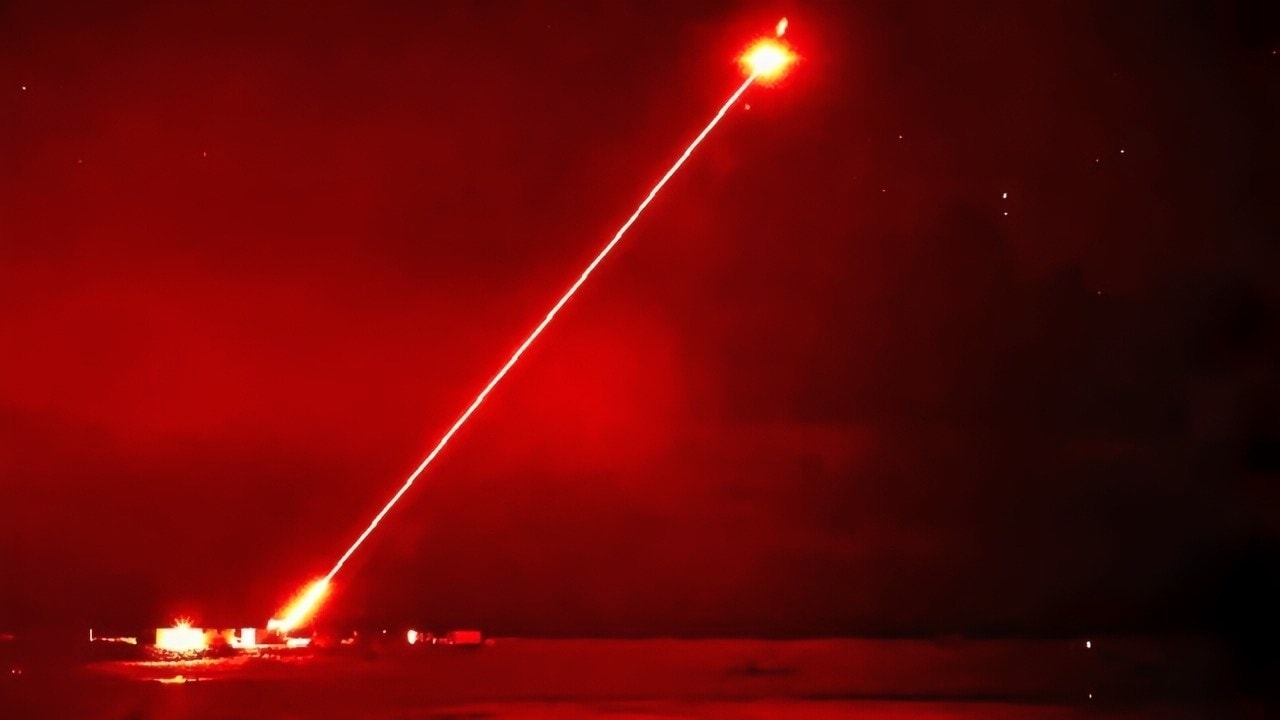
Summary and Key Points: Defense Expert Harrison Kass explains why the US Navy still has no fleet laser despite decades of trying. An Arleigh Burke-class destroyer carries 90 to 96 missiles in its VLS cells and must fire six- or seven-figure interceptors at cheap drones. Chemical lasers proved hazardous at sea; the 30-kilowatt LaWS aboard USS Ponce and HELIOS showed solid-state beams work, but hundred-kilowatt systems demand power and cooling that Burkes and the AN/SPY-6 already strain, and they cost $1 billion.
The Navy Wants Lasers: Getting Them Won’t Be Easy
Battleship USS Iowa Tomahawk Missile Container. Taken by Harry J. Kazianis for 19FortyFive.com aboard USS Iowa.
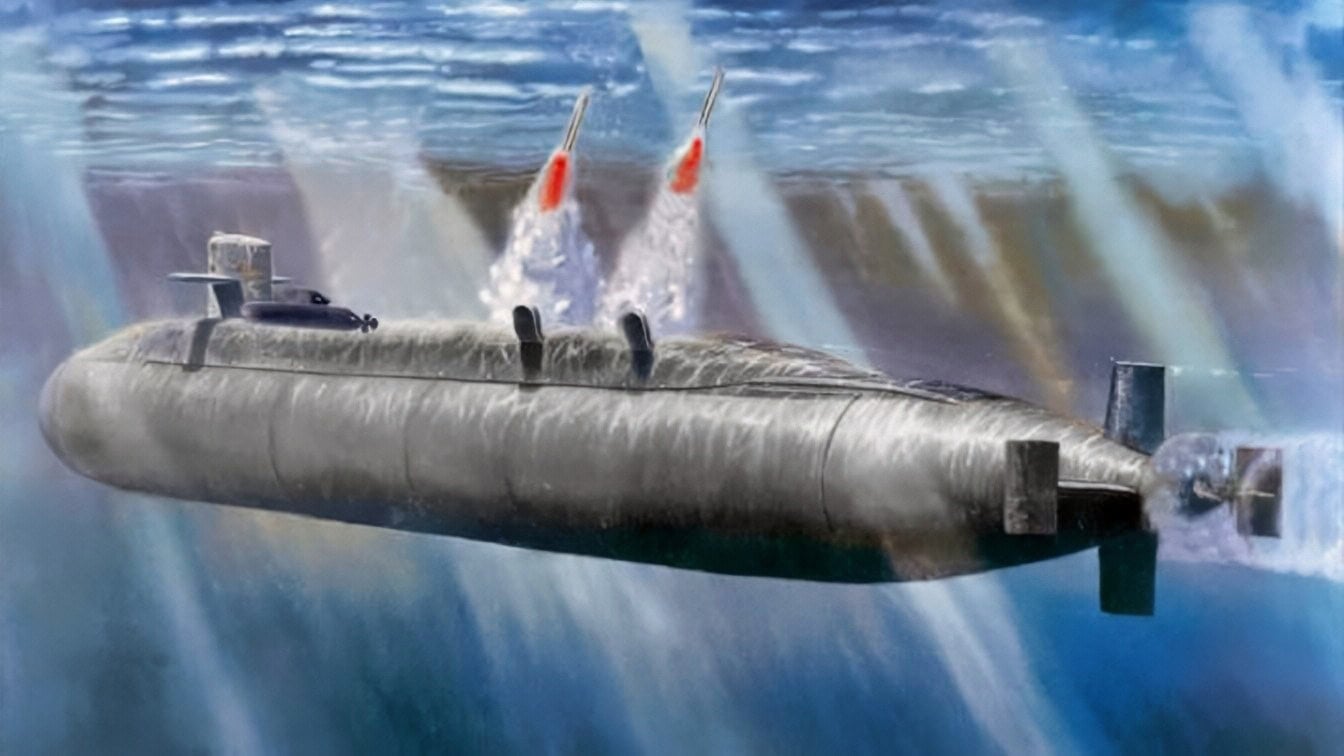
Puget Sound Naval Shipyard, Wash. (Aug. 14, 2003) — Illustration of USS Ohio (SSGN 726) which is undergoing a conversion from a Ballistic Missile Submarine (SSBN) to a Guided Missile Submarine (SSGN) designation. Ohio has been out of service since Oct. 29, 2002 for conversion to SSGN at Puget Sound Naval Shipyard. Four Ohio-class strategic missile submarines, USS Ohio (SSBN 726), USS Michigan (SSBN 727) USS Florida (SSBN 728), and USS Georgia (SSBN 729) have been selected for transformation into a new platform, designated SSGN. The SSGNs will have the capability to support and launch up to 154 Tomahawk missiles, a significant increase in capacity compared to other platforms. The 22 missile tubes also will provide the capability to carry other payloads, such as unmanned underwater vehicles (UUVs), unmanned aerial vehicles (UAVs) and Special Forces equipment. This new platform will also have the capability to carry and support more than 66 Navy SEALs (Sea, Air and Land) and insert them clandestinely into potential conflict areas. U.S. Navy illustration. (RELEASED)
The Navy’s reasons for pursuing laser weaponry are obvious.
Conventional air defense systems rely on expensive physical ammunition. For example, an Arleigh Burke-class destroyer can carry roughly 90–96 missiles in its Vertical Launch System (VLS) cells.
Once those missiles are depleted, the vessel becomes functionally useless; it must replenish before reengaging.
Meanwhile, drones and other inexpensive threats have proven effective—yet cost orders of magnitude less than the interceptors used against them.
A laser could solve the economic problem of using missiles against drones, with speed-of-light engagement, no physical missile magazine, and low cost per shot, ending the Navy’s need to invest millions in each missile it fires.
Yet despite the appeal of lasers and decades of experimentation, the Navy hasn’t been able to outfit its destroyers with them.
While the laser beam itself can be cheap, developing and maturing the technology into an effective, combat-ready system has been difficult.
Cold War Roots
The pursuit of laser weapons is not new.
The Navy has been chasing the idea since the Cold War, with directed-energy experimentation going back decades.
Early high-power concepts often relied on chemical lasers, as chemical reactions could produce extremely powerful beams.
But the chemical approach had obvious downsides: it required chemical fuels and reactants that could be hazardous, corrosive, bulky, and difficult to store and replenish—downsides that didn’t fit life at sea.
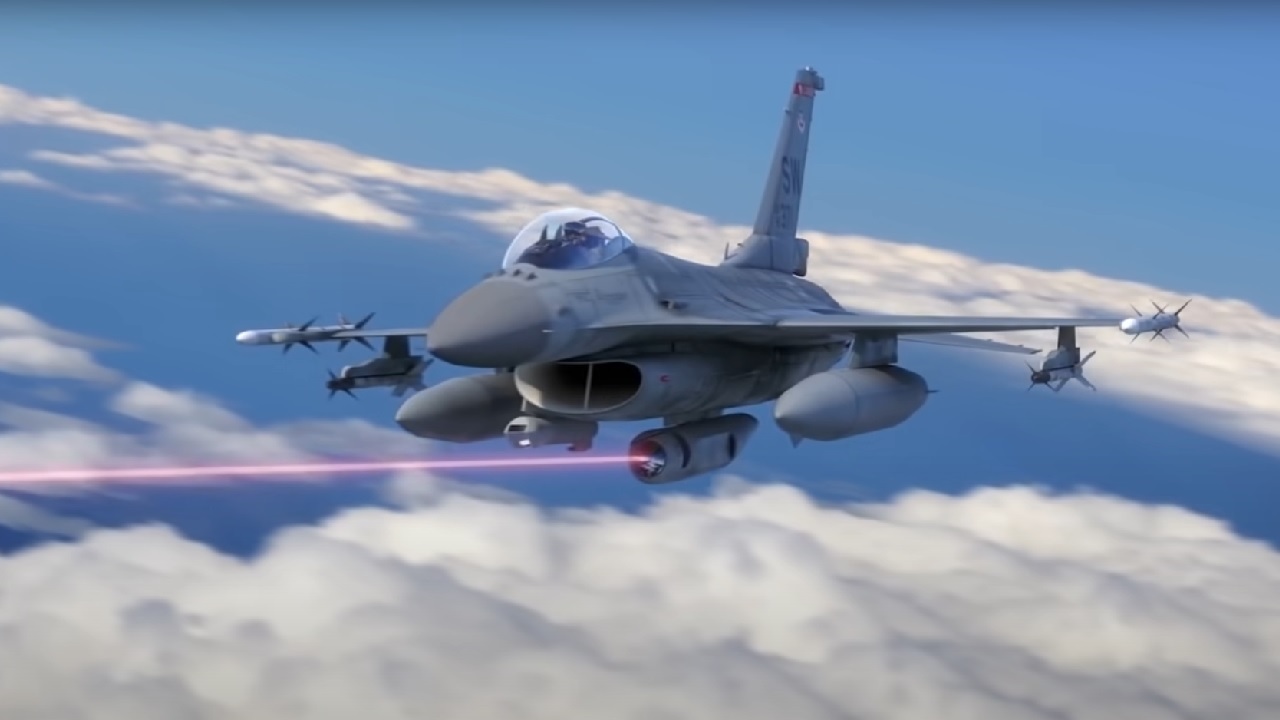
Lockheed Martin demo video of laser system. Image Credit: Lockheed Martin video screenshot.
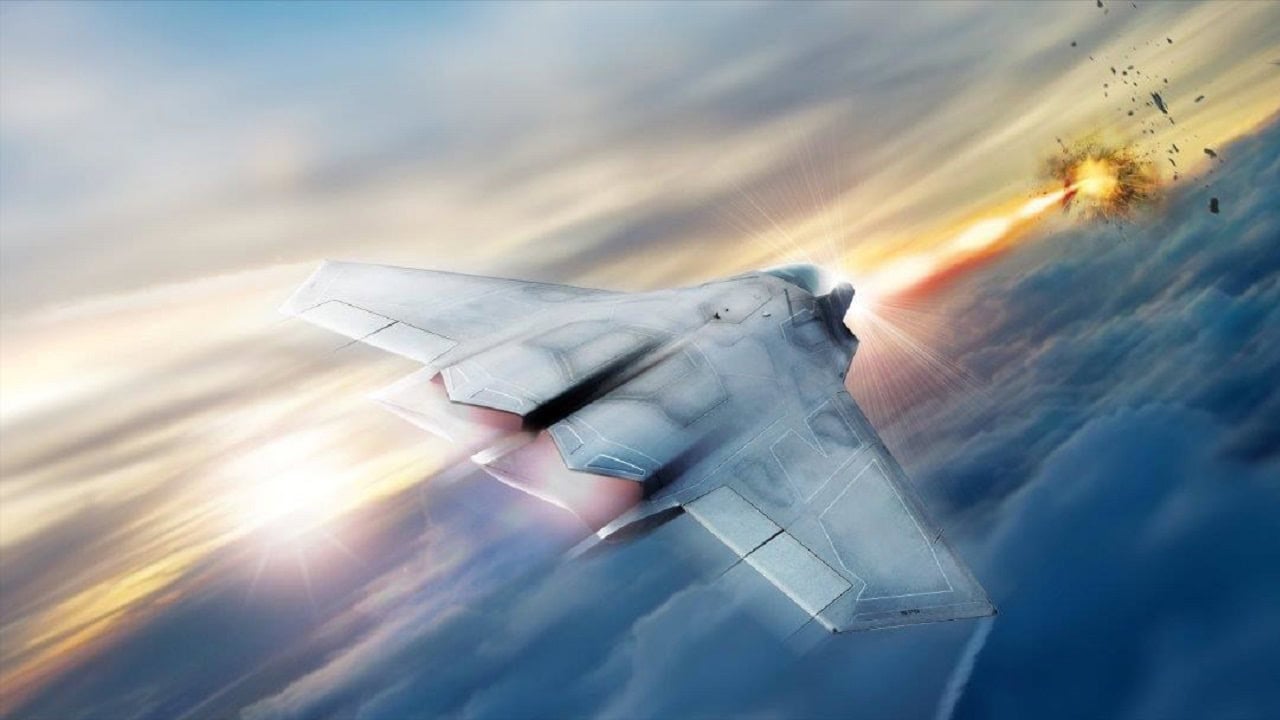
Lockheed Martin is helping the Air Force Research Lab develop and mature high energy laser weapon systems, including the high energy laser pictured in this rendering. Credit: Air Force Research Lab (PRNewsfoto/Lockheed Martin)
The chemicals created safety and logistics headaches that became a problem in their own right, hardly worth replacing traditional ammunition.
So, the Navy shifted towards electrically powered solid-state lasers, eliminating the need for chemical munitions.
Proving the Science
The Navy’s Laser Weapon System, or LaWS, became one of the major demonstrations of practical shipboard directed energy—proving that the idea wasn’t merely a thing of science fiction.
Installed aboard the USS Ponce in the 2010s, LaWS was a 30-kilowatt-class weapon system capable of engaging targets such as small unmanned aircraft and boats.
LaWS was particularly attractive against targets that create terrible cost-exchange ratios for conventional weapons, theoretically negating the Navy’s need to fire a six- or seven-figure missile at a quadcopter and instead using an electrically powered weapon.
But LaWS wasn’t ready for fleet-wide deployment.
While the technology demonstrator worked, a wide gap remained between a successful demonstration and deployment.
The Woes of Scale
Lasers are close, but not quite there.
The HELIOS program, developed after LaWS, further illustrated the broader promise of directed energy. But simply killing UAVs isn’t the ultimate requirement of the technology.
The Navy wants directed energy that can defeat increasingly demanding threats.
Higher-power lasers—potentially hundreds of kilowatts—could provide much greater range and lethality. But increasing beam output isn’t analogous to simply installing a larger gun.
Instead, solid-state/fiber lasers combine energy from multiple laser modules into a usable beam, forcing engineers to confront a variety of problems: thermal distortion, beam-quality issues, higher power requirements, larger cooling requirements, and larger, heavier equipment.
Because a laser isn’t perfectly efficient and uses only a portion of the electrical input it receives, it generates enormous heat that the ship must remove.
So a 100-kW-class beam requires more than 100 kW from the ship’s electrical system.
Power and cooling requirements are especially brutal.
Obviously, the existing Arleigh Burke destroyers were not designed around cutting-edge lasers; rather, their generators were built to support propulsion auxiliaries, SPY-family radar, electronic warfare, communications, and combat systems—not lasers.
Systems like the AN/SPY-6 also demand significant amounts of electrical power and cooling. A large laser adds another major electrical and cooling requirement.
Looking Ahead
Navy officials have previously estimated that establishing the first true laser program could require around $1 billion.
But that cost doesn’t include purchasing and installing lasers across the fleet.
So ultimately, lasers, floated as a way to rebalance the cost asymmetries demanded by drone engagement, are cheap to operate but highly expensive to develop and procure.
Still, the dream survives because the underlying logic is sound: low cost per shot and endless magazine depth. Expect the Navy to keep experimenting with the laser premise.
About the Author: Harrison Kass
Harrison Kass is a writer and attorney focused on national security, technology, and political culture. His work has appeared in Tablet, City Journal, The Hill, The Spectator, and The Cipher Brief. He holds a JD from the University of Oregon and a master’s in Global & Joint Program Studies from NYU. More at harrisonkass.com.