
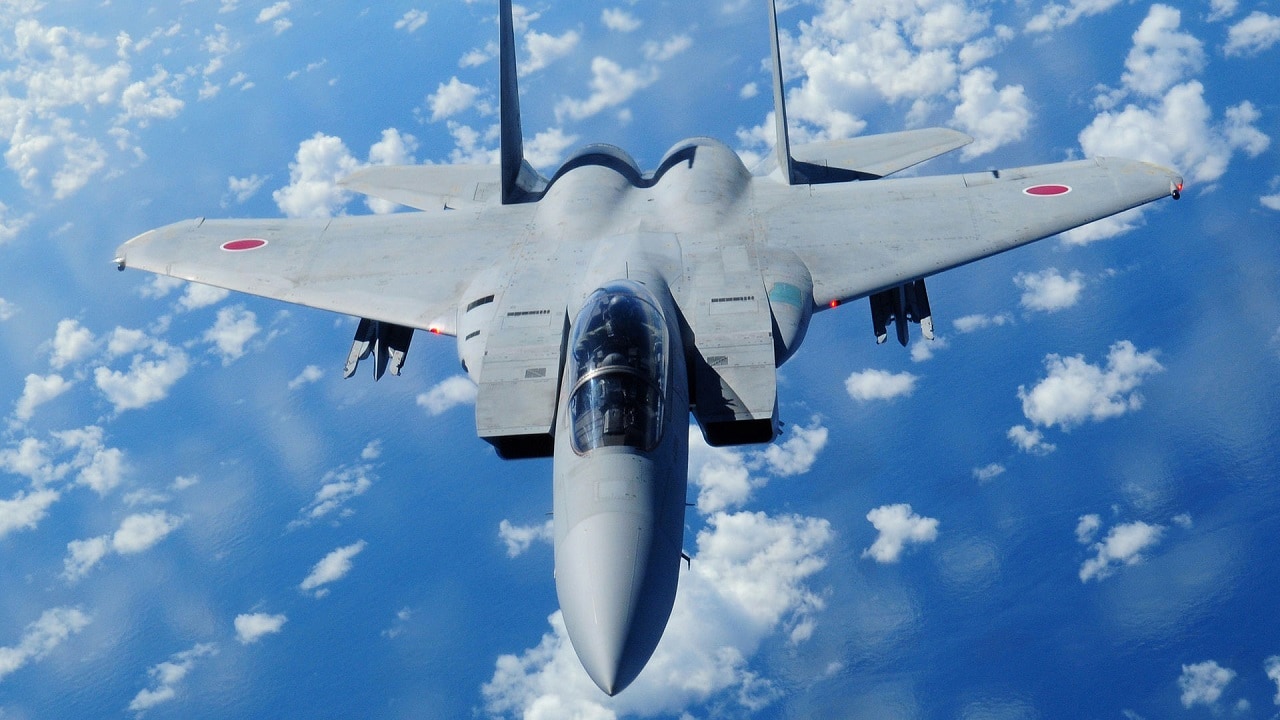
Russia and China are eyeing Japan very closely. Over four straight days last week, the two countries sent military intelligence aircraft toward Japan, and the Japan Air Self-Defense Force (JASDF) launched fighters every single day.
The Defence Blog reported that Japan’s Joint Staff tracked five flights between October 20 and 23: three by Chinese Y-9s and two by Russian IL-20s. None of that is unusual on its own. The timing, however, is.
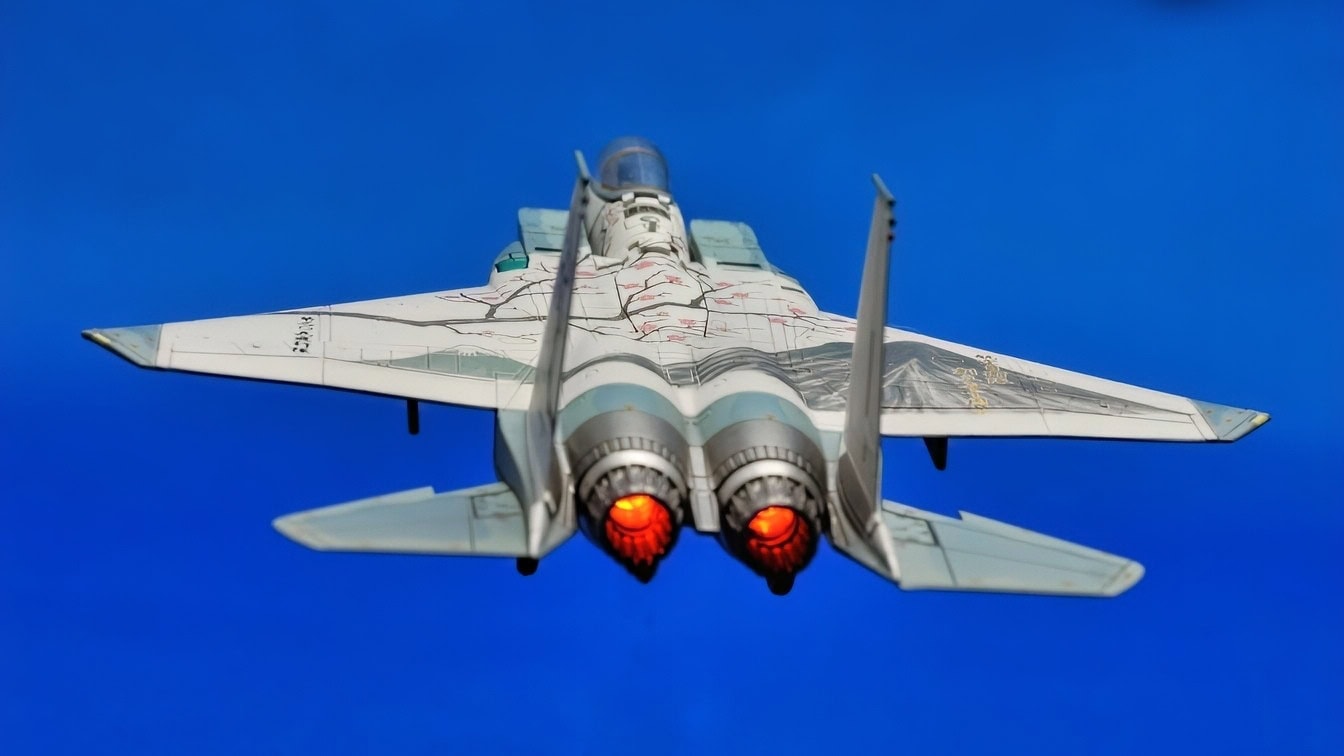
F-15J Fighter from Japan Creative Commons Image
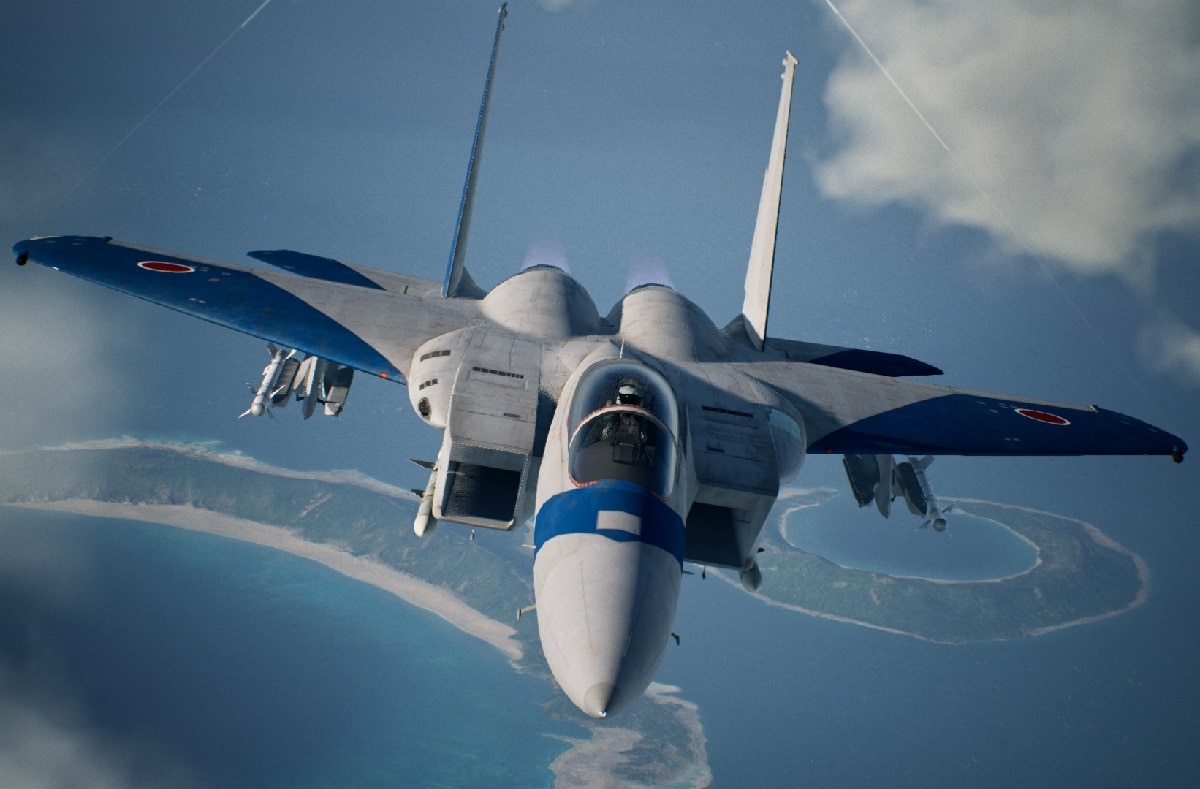
F-15J Image: Creative Commons.
Operation Keen Sword Was The Factor Driving The Surveillance
The flights came while the US and Japan were running Keen Sword, a large-scale joint exercise from October 19 to 29.
Japan planned to commit about 45,000 personnel, 260 aircraft, and 40 vessels.
For an intelligence collector, that’s an enticing target. And Russia and China didn’t pass up the opportunity.
On October 20, a Chinese Y-9 came out of the East China Sea, slipped between Okinawa’s main island and Miyako-jima into the Pacific, and pushed up toward Amami Oshima before turning around and retracing its route home.
Russia followed with IL-20 missions on back-to-back days.
Then on October 22 and 23, Chinese Y-9s crossed that same Okinawa-Miyako gap into the Pacific.
That gap is one of the main routes Chinese ships and aircraft use to move between the East China Sea and the open ocean, and China’s Liaoning aircraft carrier strike group had recently come through the same waters.
Japan’s Joint Staff didn’t say whether the Chinese and Russian flights were coordinated.
They didn’t have to. But it isn’t rocket science to see China launch flights on the 20th and 21st, followed by Russian flights on the 22nd and 23rd, as reconnaissance aircraft flew from the mainland across the Sea of Japan off Shimane Prefecture on Honshu’s western coast before returning home.
The Y-9 is a Chinese military transport adapted for signals and imagery intelligence, and it has become a fixture in reports of Japan’s East China Sea scramble.
The IL-20 is an old Soviet-era airframe, but its electronic intelligence suite matters. Both jets exist to vacuum up radar emissions, radio traffic, and data links. During a major allied exercise, there’s plenty in the air to collect.
The Russian Numbers Are The Real Story
That four-day run is part of a much bigger trend. Defence Blog also reported that Japan’s jet scrambles have hit a four-year high.
Japanese fighters launched 442 times between April 1 and September 30, the first half of Japan’s fiscal year, compared to 265 over the same stretch in 2025.
China still accounts for the lion’s share, with 285 scrambles.
However, the Russian number jumps out. According to Stars and Stripes, Russia-related scrambles rose from 59 to 152, a 158 percent increase.
Japan logged 110 of those in the second quarter alone, the first time Russia has topped 100 in a single quarter since 2018.
The map tells you where.
The Northern Air Defense Force, which covers Hokkaido and northern Honshu across from Sakhalin, more than doubled its scrambles from 53 to 112.
The Southwestern Air Defense Force, facing Taiwan and the East China Sea, remained the busiest, with 201.
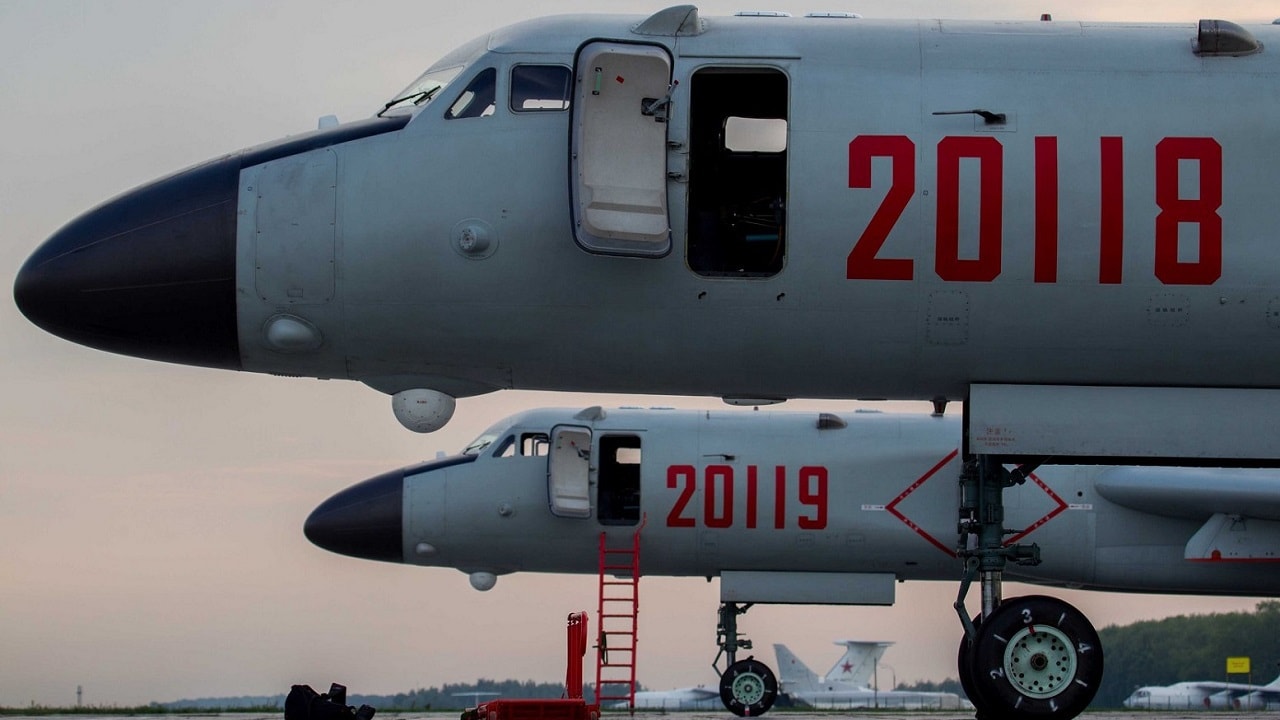
Image of Chinese JH-6 bombers on the ready. Image Credit: Creative Commons.
Of the flights Japan flagged as unusual activity, 13 were Chinese Y-9s (twice with a TB-001 drone tagging along), and 10 were Russian IL-20s.
USNI News read the Joint Staff’s flight-path map and tied much of the jump to Chinese activity over the East China Sea and Russian aircraft flying south to link up with Chinese formations.
Asked to explain the Russian spike, a Joint Staff spokesman told Stars and Stripes they had no clear reason for it.
Spy Planes And Bombers Are Working The Same Problem
The recon flights don’t happen in a vacuum.
On June 27, two Chinese H-6 bombers and two J-16 fighters flew from the East China Sea into the Sea of Japan to join two Russian Tu-95s, two Tu-142 maritime patrol aircraft and a Su-35.
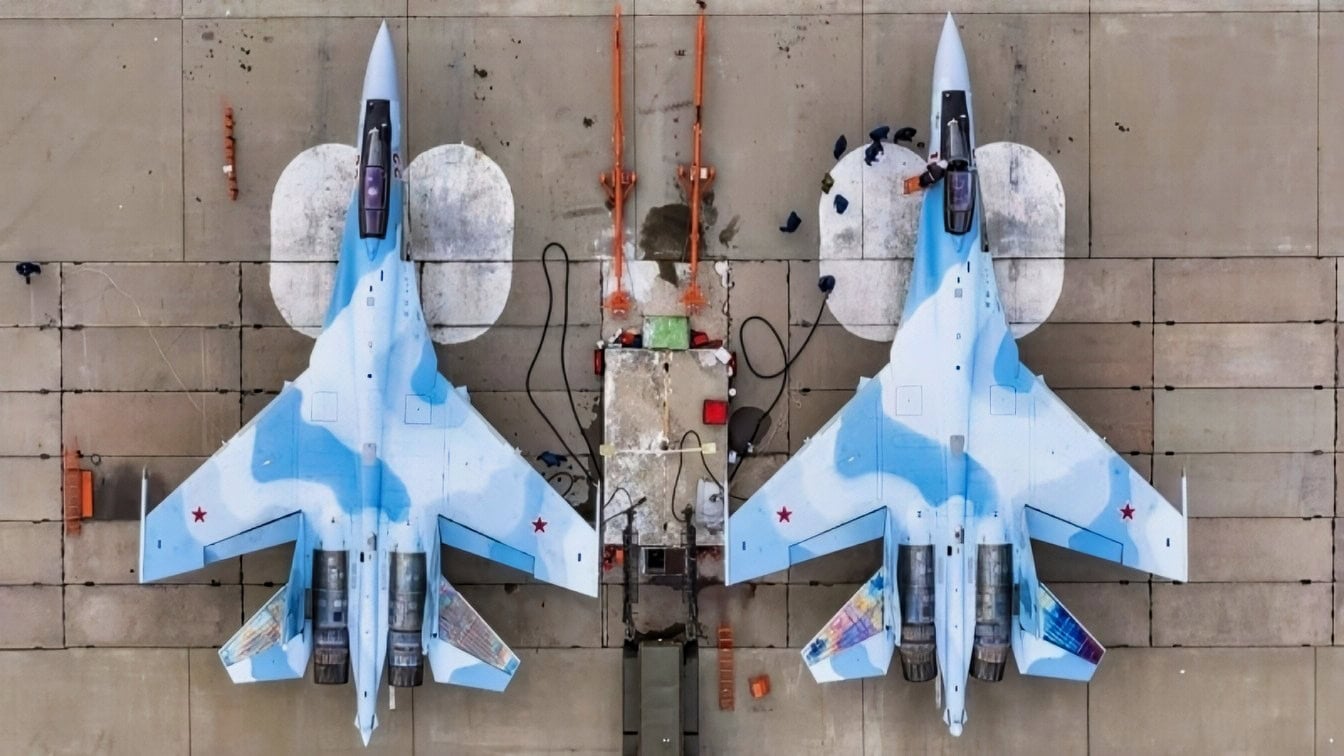
Su-35S Creative Commons Photo
Beijing’s military press billed it as the 11th joint strategic air patrol. Japan’s 2026 defense white paper noted that recent joint bomber patrols turned toward Tokyo for the first time.
Defense Minister Shinjiro Koizumi didn’t mince words, calling the joint operations a show of force directed at Japan.
The white paper called them a grave concern for Japan’s security.
So what are they collecting?
It comes down to two things.
The first is the electronic order of battle: where Japanese and US radars sit, how they’re set, and what frequencies they use.
The second is response behavior. How fast does the JASDF get F-15Js, F-2s and F-35As off the alert pad, from which bases, and what do they do when they get there?
As Defence Security Asia noted, the published data can’t prove either country has mapped Japan’s reaction thresholds.
However, every intercept is a free lesson for whoever is listening.
Intelligence collection and surveillance are rarely a one-time thing.
It’s patient, repetitive, boring work. You fly the route again and again until the other side’s pattern becomes predictable.
Then you know what normal looks like, and you know the moment it changes.
The Strain On Air Intercept Assets Is Part Of The Plan
There’s a cost to Japan in all this. Every scramble burns flight hours, fuel, and airframe life, and keeps pilots and maintainers on a hair trigger.
None of these flights crossed into Japanese sovereign airspace. That’s by design. Stay in international airspace, push into the air defense identification zone, and make Japan respond anyway.
The JASDF can sustain this pace.
However, it’s taxing on the air assets and the crews, and Beijing and Moscow are raising it at the same time.
The Joint Staff spokesman insisted the six-month total is still within the average.
That’s true if you look back over a decade. It’s far less comforting when you look at where the Russian line is headed.
Moscow and Beijing are using aligned diplomatic and military signaling, including recent espionage tensions and maritime patrols, to pressure Tokyo and portray Japan as a regional security concern.
Russia and China are watching Japan closely. Japan is watching back. Right now, everyone is getting a lot more practice.
About the Author: Steve Balestrieri
Steve Balestrieri is a National Security Columnist. He served as a US Army Special Forces NCO and Warrant Officer. In addition to writing on defense, he covers the NFL for PatsFans.com and is a member of the Pro Football Writers of America (PFWA). His work was regularly featured in many military publications.