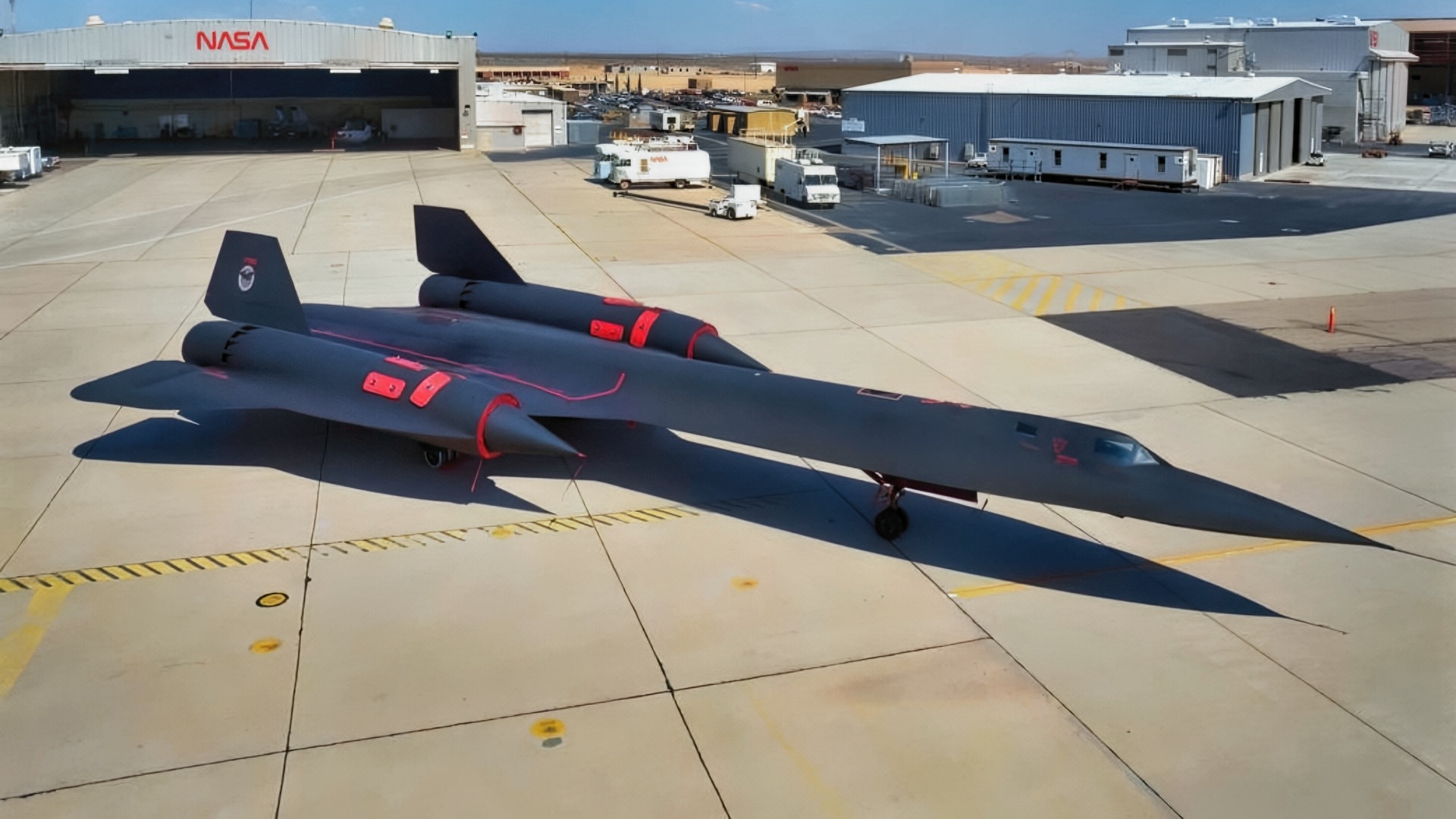
Summary and Key Points: The Lockheed SR-71 Blackbird began flight testing on December 22, 1964, and, in 1966, deployed from Beale Air Force Base, cruising at Mach 3.2 near 90,000 feet on two Pratt & Whitney J58 engines. Skunk Works engineer Ben Rich, Kelly Johnson’s successor, proposed the SR-71(Bx), carrying Boeing AGM-69A SRAM nuclear missiles with 17-to-210-kiloton W69 thermonuclear warheads in enlarged chines. Launched at 80,000 feet, the missiles reached a range of 500 nautical miles, but inertial guidance left a 3,600-foot error.
The SR-71 Blackbird Could Have Been a Nuclear Attack Plane
The original SR-71 Blackbird entered flight testing on December 22, 1964, and was being deployed from Beale Air Force Base by January 1966.
Many don’t realize that the Blackbird had many variants because the underlying technology and capabilities were so advanced that the military believed it could use the plane for a variety of unique mission sets beyond surveillance.
The Specs
Powered by two Pratt & Whitney J58 engines, the Blackbird could sustain speeds around Mach 3.2 at nearly 90,000 feet.
Its primary mission was strategic reconnaissance.
Because of its unique speed, the plane could easily penetrate densely defended Soviet airspace, collect photographic intelligence of sensitive Soviet bases and facilities, and return home without much fear of being shot down either by the Soviet surface-to-air missiles (SAMs) or interception by Soviet warplanes.
But Lockheed’s legendary Skunk Works engineering team wanted to try developing multiple variants of the SR-71. One such proposal was the SR-71(Bx).
This modified Blackbird would carry Boeing AGM-69A Short Range Attack Missiles (SRAMs). These were nuclear weapons designed to destroy heavily defended targets.
Ben Rich, one of Lockheed’s greatest engineers (and the successor to Clarence “Kelly” Johnson), presented a paper describing this aircraft.
The proposed SR-71(Bx) would exploit the same performance characteristics as the SR-71 Blackbird, but for nuclear strike missions.
Lockheed wanted to place the AGM-69A SRAMs inside enlarged weapons compartments along the aircraft’s chines (the extensions running along the sides of the fuselage).
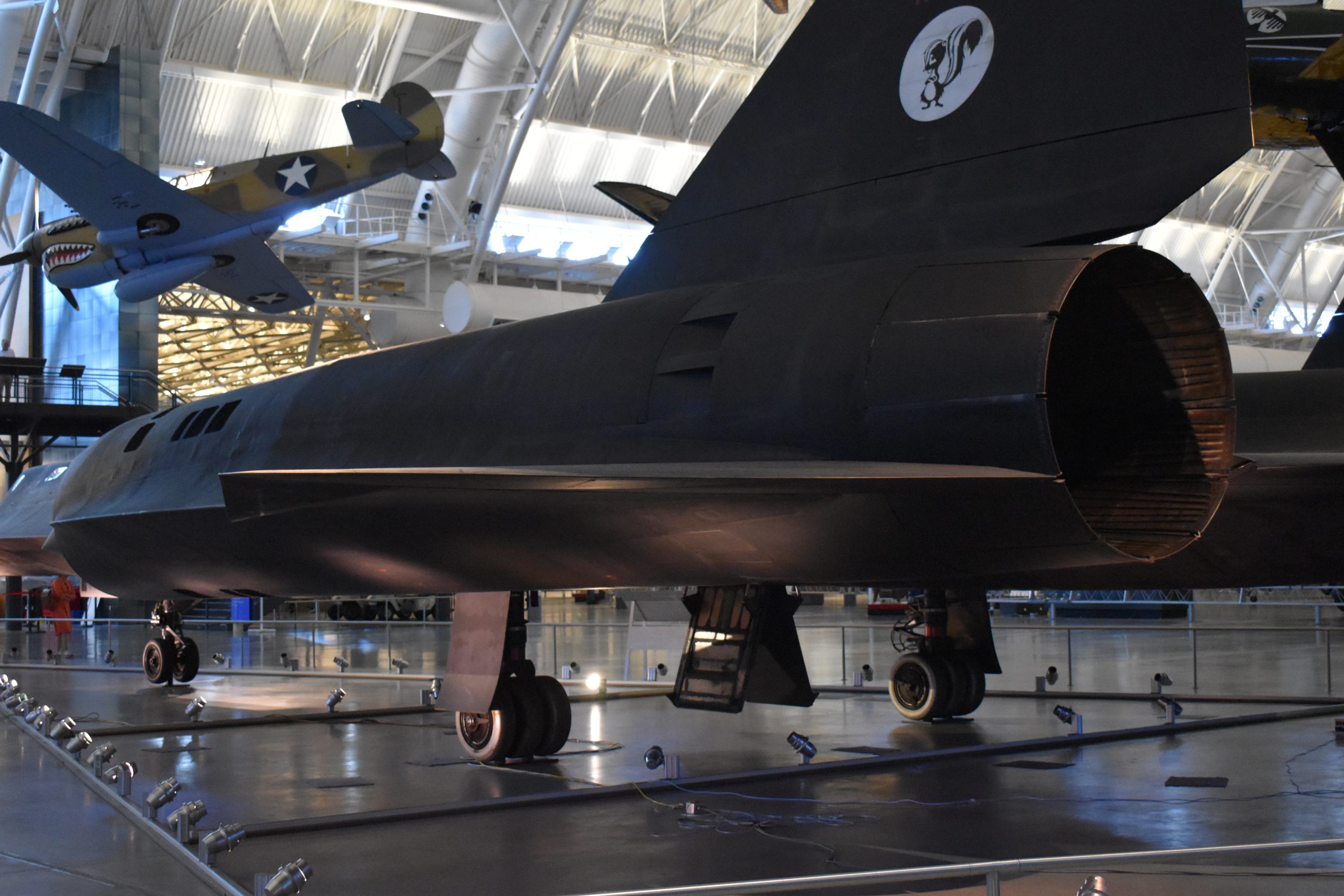
SR-71. 19FortyFive photo from Smithsonian exhibit.
These compartments would house the equipment bays for the Blackbird’s reconnaissance versions.
Some of the drawings, according to the prominent trade publication, Aviation Geek Club, showed that the forward fuselage of the proposed SR-71(Bx) would need to have been reshaped and a raised forward section–with blunter chines–would have been featured on the SR-71(Bx).
It would also have had a more rounded underside to accommodate those SRAMs. Engineers also considered lengthening and recontouring the aircraft’s nose to accommodate an enhanced radar system.
The Weapons Package
The AGM-69A SRAM entered service with the Strategic Air Command (SAC) in 1972.
It was designed to help US strategic bombers penetrate Soviet air defenses by attacking radar installations, SAM sites, and other key military targets.
The SRAM measured about 14 feet long and carried a W69 thermonuclear warhead with selectable yields ranging from 17 to 210 kilotons.
The B-52 Stratofortress and FB-111A deployed these weapons. They were later placed aboard the B-1B Lancer long-range bomber.
AGM-69A SRAM ranges depended heavily on the launch altitude.
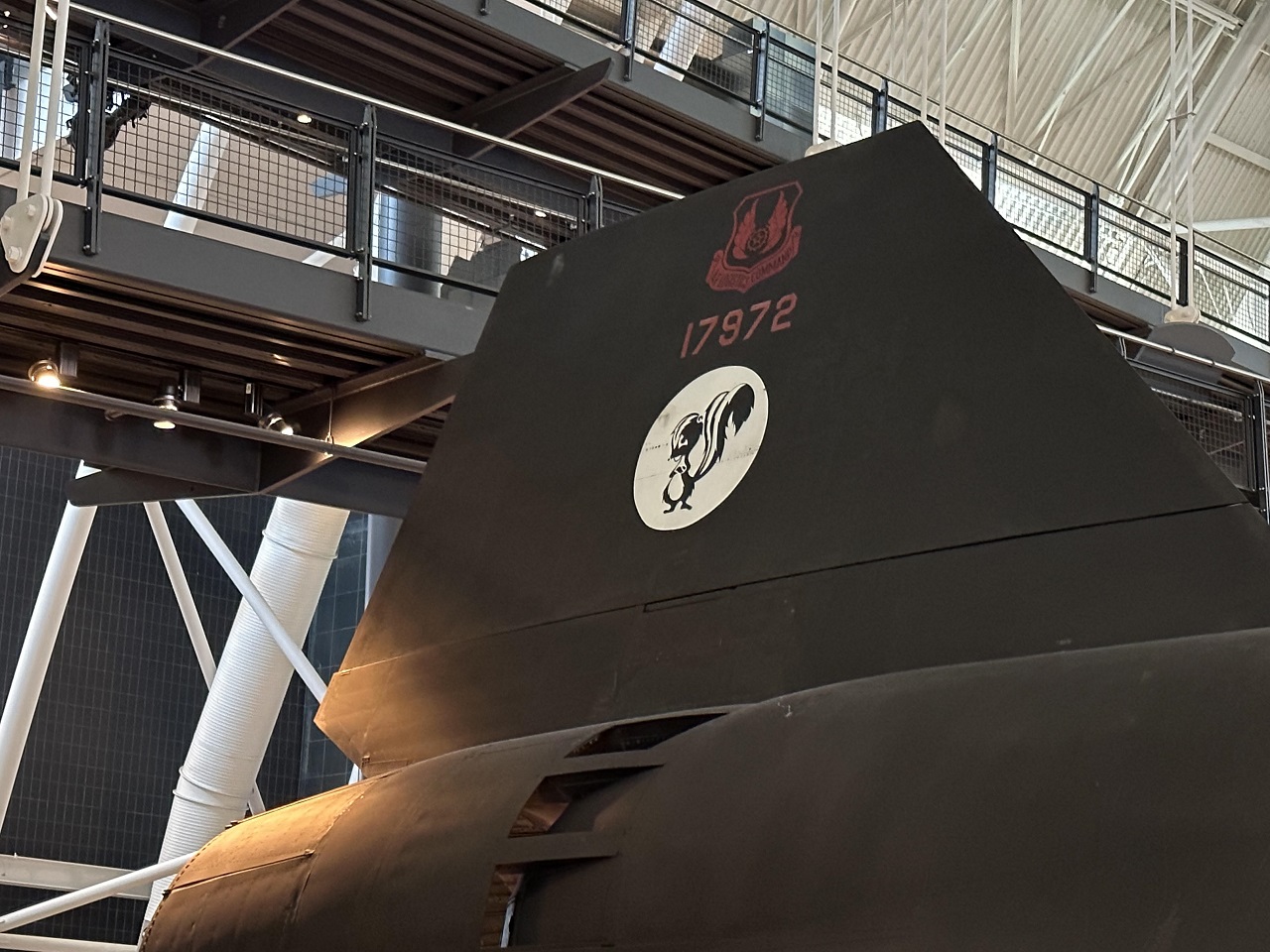
SR-71. SR-71 photo taken at the National Air and Space Museum. Taken by 19FortyFive on 10/1/2022.
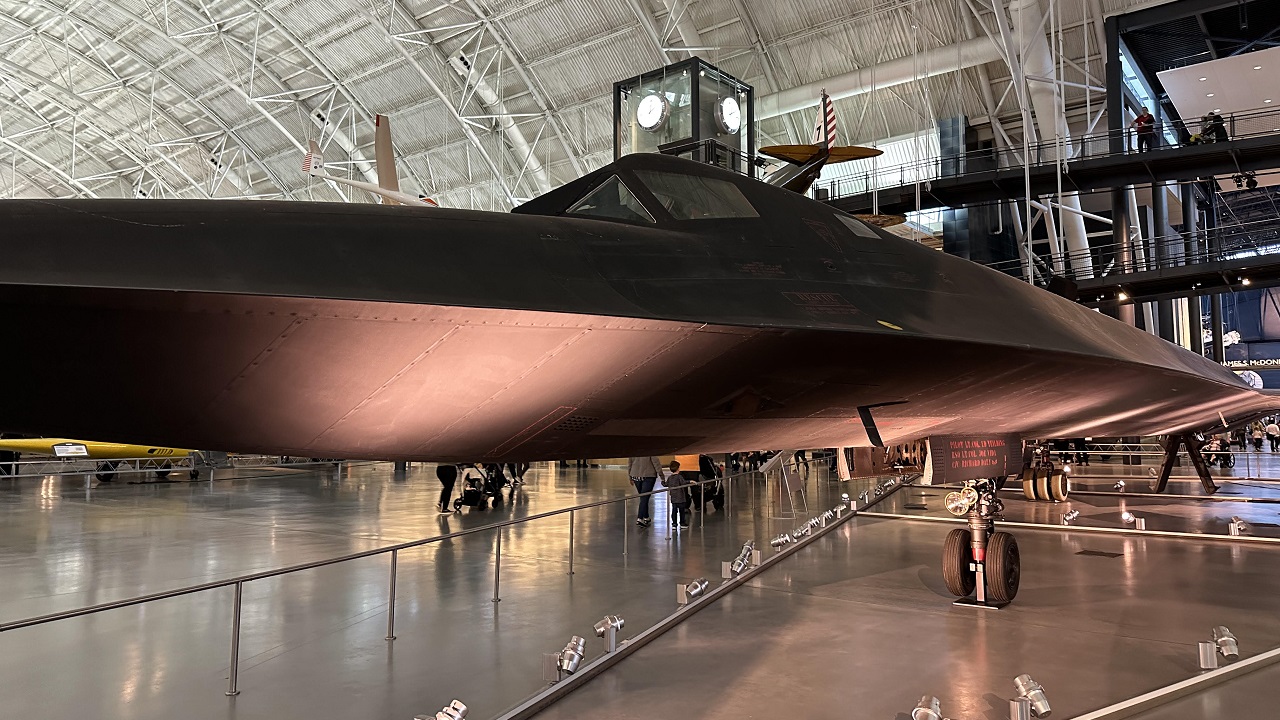
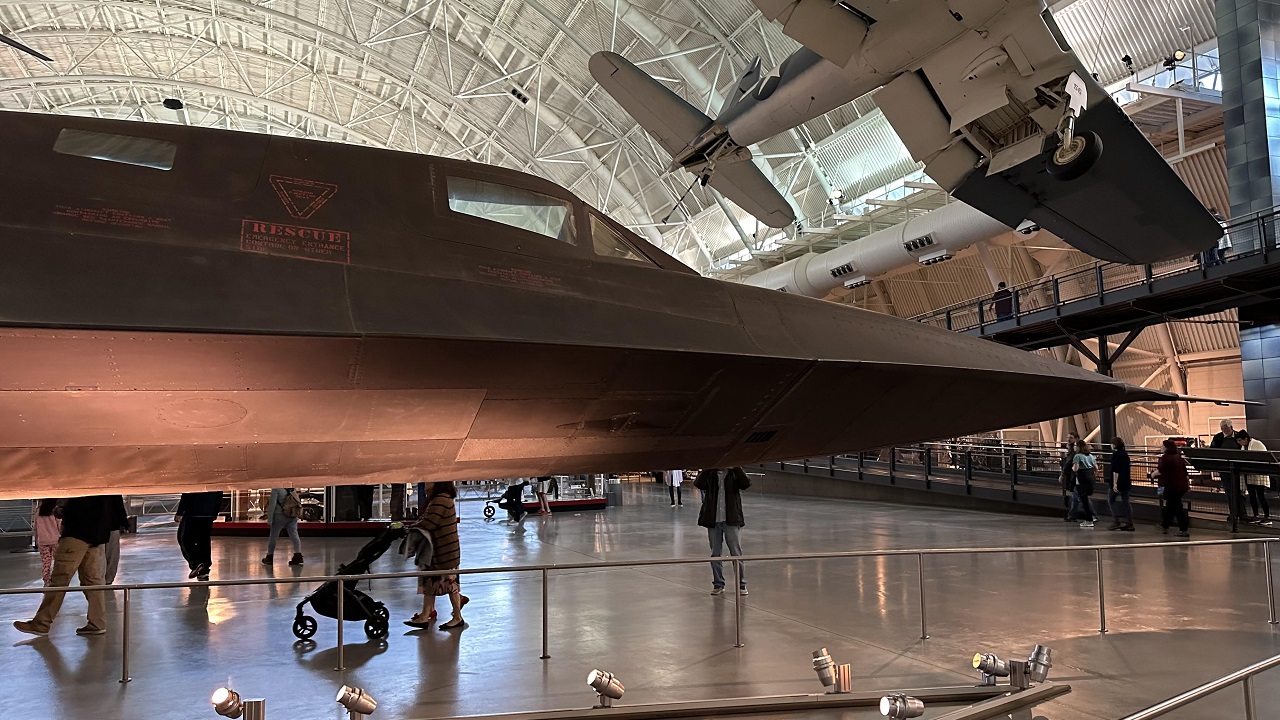
SR-71. SR-71 photo taken at the National Air and Space Museum. Taken by 19FortyFive on 10/1/2022.
The SR-71(Bx) would have naturally extended the AGM-69A SRAM’s range by allowing launch at around 80,000 feet and Mach 3.2, extending the missile’s range to around 500 nautical miles.
But extended range for the SRAM does not necessarily mean it would have been more accurate.
Because the AGM-69A relied upon inertial guidance rather than modern satellite navigation (or terminal target-seeking systems), its accuracy was in doubt when fired from the proposed SR-71(Bx).
Based on the missile’s design, the weapon had an estimated circular error probable (CEP) of 3,600 feet when fired from 300 nautical miles.
In other words, only half the SRAMs would hit their targets at that distance and from the heights we’re talking about.
And against smaller, hardened targets, SRAMs fired from the height and speed the SR-71(Bx) would likely be traveling would have had even lower accuracy.
Ben Rich suggested adding a terminal guidance system to reduce the CEP by half.
That suggestion never made it to paper because the project never left the design stage.
How might reshaping the Blackbird’s iconic fuselage to accommodate the systems needed to turn it into a bomber negatively impact the overall performance of this iconic plane?
A Theory
We’ll never know because the plane never left the theoretical stage.
At the time of its design, the US military was already making significant advances in developing missiles that could operate at greater ranges than the SRAM could.
Standoff munitions fired from conventional bombers were becoming the norm. Under those circumstances, the SR-71(Bx) proposal was both redundant and counterproductive.
Ultimately, the Blackbird served until 1999. Today, rumors suggest NASA is seeking to restore one of the last remaining Blackbirds to operation for experimentation.
A bomber variant never took wing. It’s an interesting “What If,” though.
About the Author: Brandon J. Weichert
Brandon J. Weichert is the Senior National Security Editor at 19FortyFive.com. He also manages The Weichert Brief on Substack. Weichert also hosts “National Security Talk” on Rumble. He has authored four bestselling national security books, most recently A Disaster of Our Own Making: How the West Lost Ukraine (Encounter Books). Follow him via Twitter/X @WeTheBrandon.