
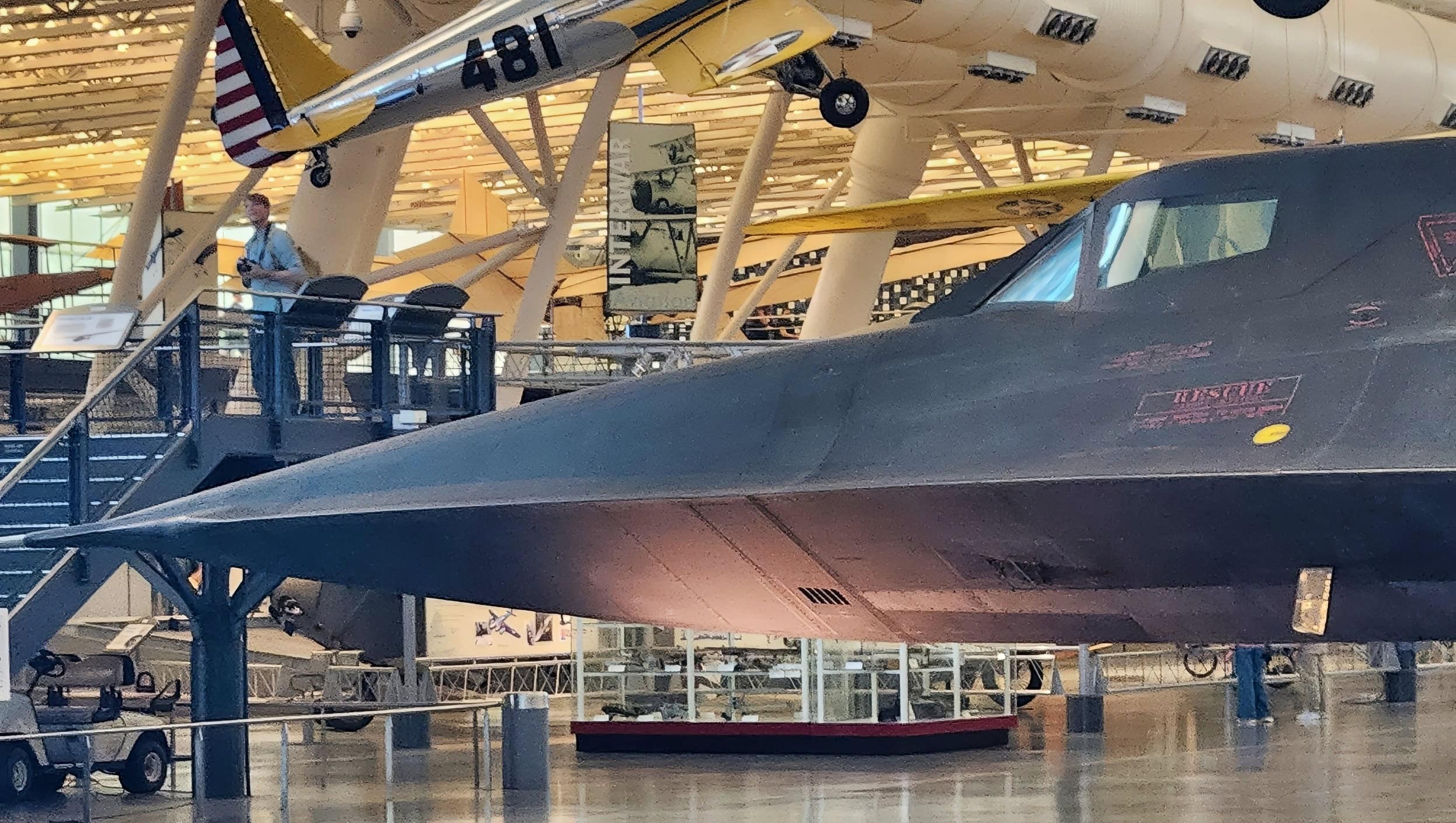
Lofted on Wings of Mach 3 Nostalgia: NASA’s Quest to Resurrect the Spectacular SR-71 Blackbird Spy Plane: It seems the SR-71 Blackbird was just too cool to retire—at least, if you ask NASA and its administrator, Jared Isaacman. Multiple recent appearances by Isaacman, who’s announced plans to rebuild the organization’s experimental X-plane fleet, suggest a tentative project to restore one of the iconic Mach 3 spy planes to flyable condition—nearly 27 years after it was retired for the second time in October 1999.
While Isaacman and NASA have coyly declined to fully confirm their Blackbird plans, at least two retired Blackbird engineers told Aviation Week that NASA invited them to restore a Blackbird to flyable condition. NASA’s SR-71A with tail number 844, mounted on a stand at Edwards Air Force Base, has gone ‘missing’ from its post. It was the last Blackbird built and flown, the most upgraded with a digital control system, and the best-preserved.
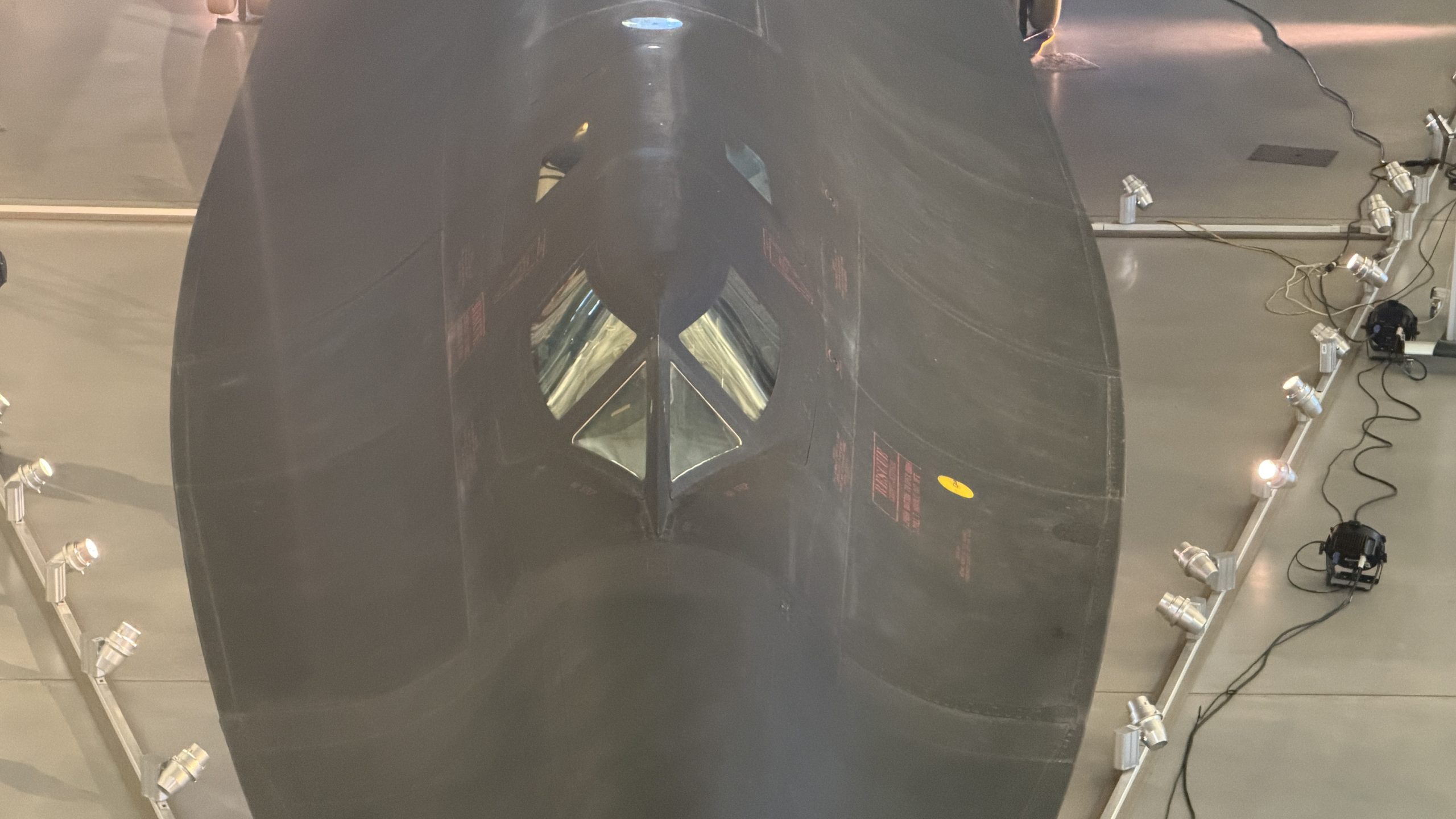
SR-71 Blackbird. Smithsonian Display Photo Taken by 19FortyFive on 9/30/2026.
The SR-71 Blackbird, and its similar single-seat predecessor, the CIA-operated A-12, were designed in the Cold War to perform reconnaissance missions cruising at extreme Mach 3 speeds and altitudes exceeding 80,000 feet such that it could literally outrun surface-to-air missiles and interceptor aircraft introduced by the Soviet Union in the 1950s—and did so in missions over Egypt, Libya, North Korea, and Vietnam.
Legendary Lockheed designer Kelly Johnson achieved that by perfecting an 85% titanium airframe capable of withstanding the massive heat produced from the friction ‘rug burn’ of ramming a metal object against air molecules at Mach 3.
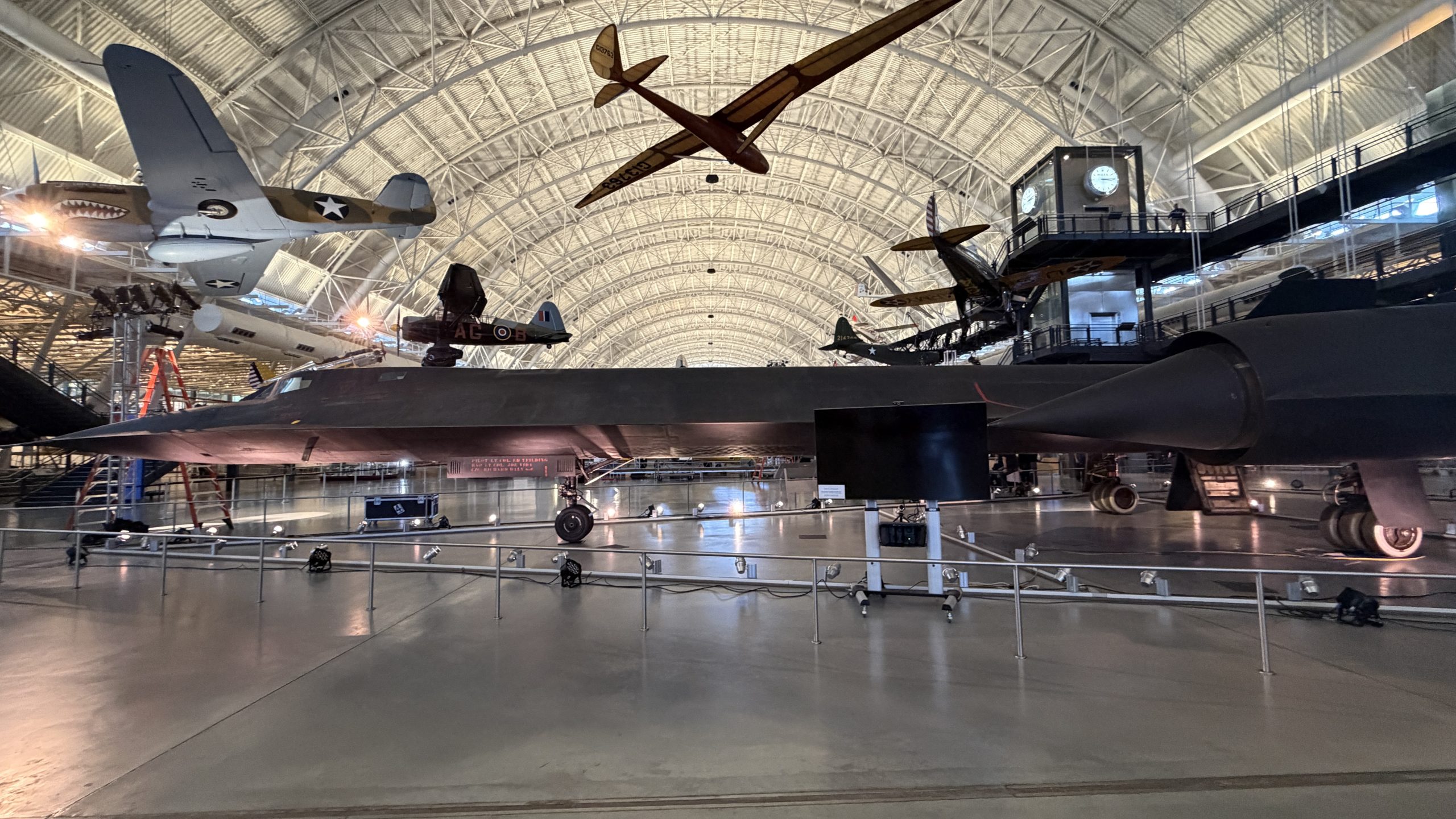
SR-71 Blackbird. Smithsonian Display Photo Taken by 19FortyFive on 9/30/2026.
The design’s otherworldly geometry and still-unbeaten kinematic performance have long captivated the popular imagination, and the aircraft has starred in films such as D.A.R.Y.L. (1989), Transformers 2, and this year’s Ryan Reynolds film May Day.
But despite its speed, the Blackbird still wasn’t reliably survivable against later-generation Soviet air defenses—and contrary to May Day’s fictional plot, it wasn’t used to penetrate Soviet airspace; instead, it flew parallel to it while using side-looking cameras.
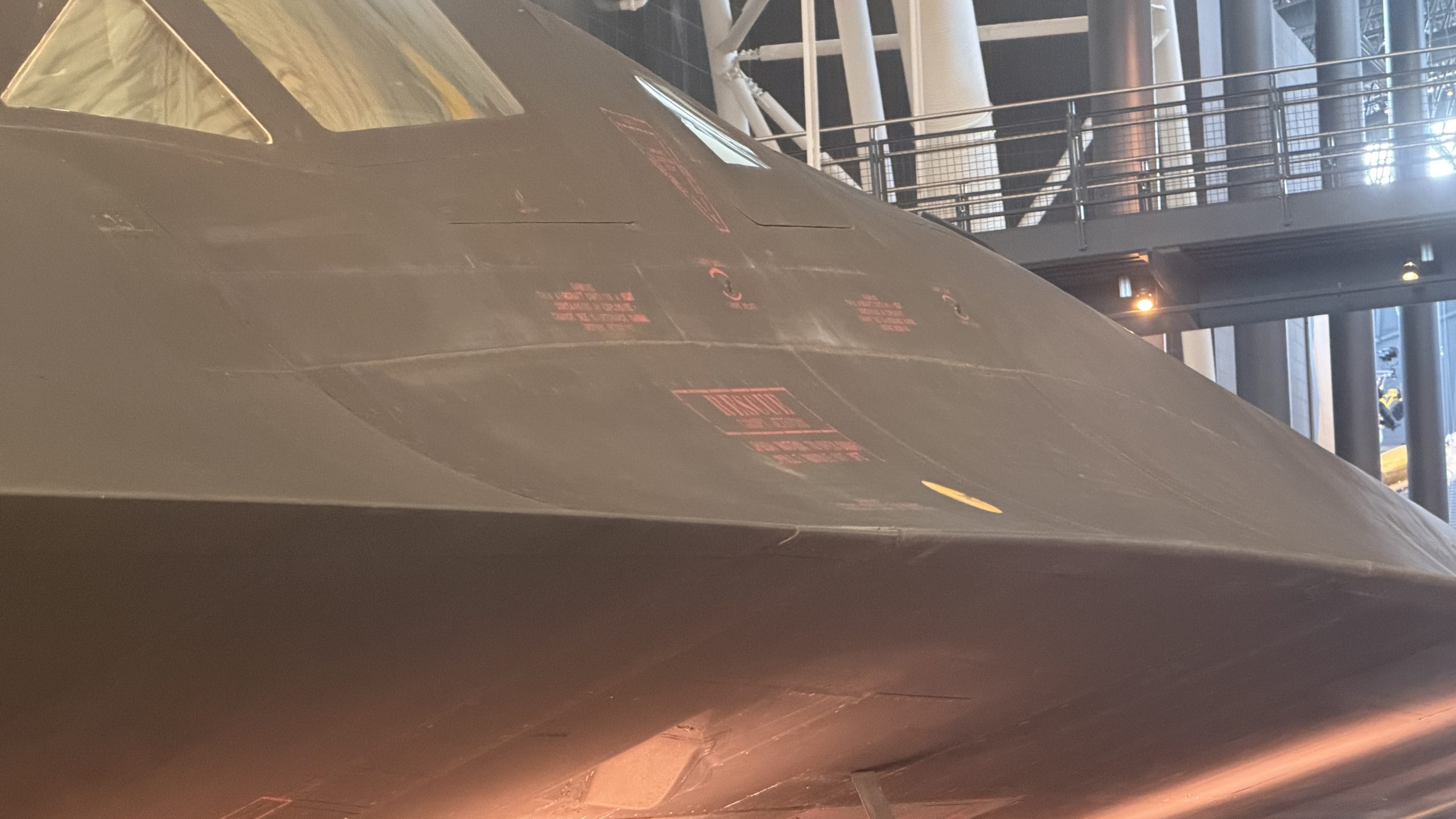
SR-71 Blackbird. Smithsonian Display Photo Taken by 19FortyFive on 9/30/2026.
Over time, the Blackbird’s specialized capabilities became niche as satellites and drones proliferated. That, combined with high operating costs, led to its retirement from Air Force service in 1990 and, later, from NASA as a test aircraft in 1999.
Restoring a Blackbird to operational condition would be extraordinarily difficult.
The Pentagon has fruitfully restored retired aircraft over the years, including B-52 bombers from its ‘Boneyard’ facility in Arizona and F-117s and Blackhawks quietly employed post-retirement to test counter-stealth tactics.
However, restoring a Blackbird will prove orders of magnitude more costly and technically challenging. It used many customized design elements and technologies developed in the 1960s that would need to be recreated after most of the experts deeply familiar with them are retired, if still alive.
Indeed, the Blackbird engineers Aviation Week interviewed were clearly askance at the proposal to restore the SR-71 to flying condition at this late hour, given the “overwhelming” challenges.
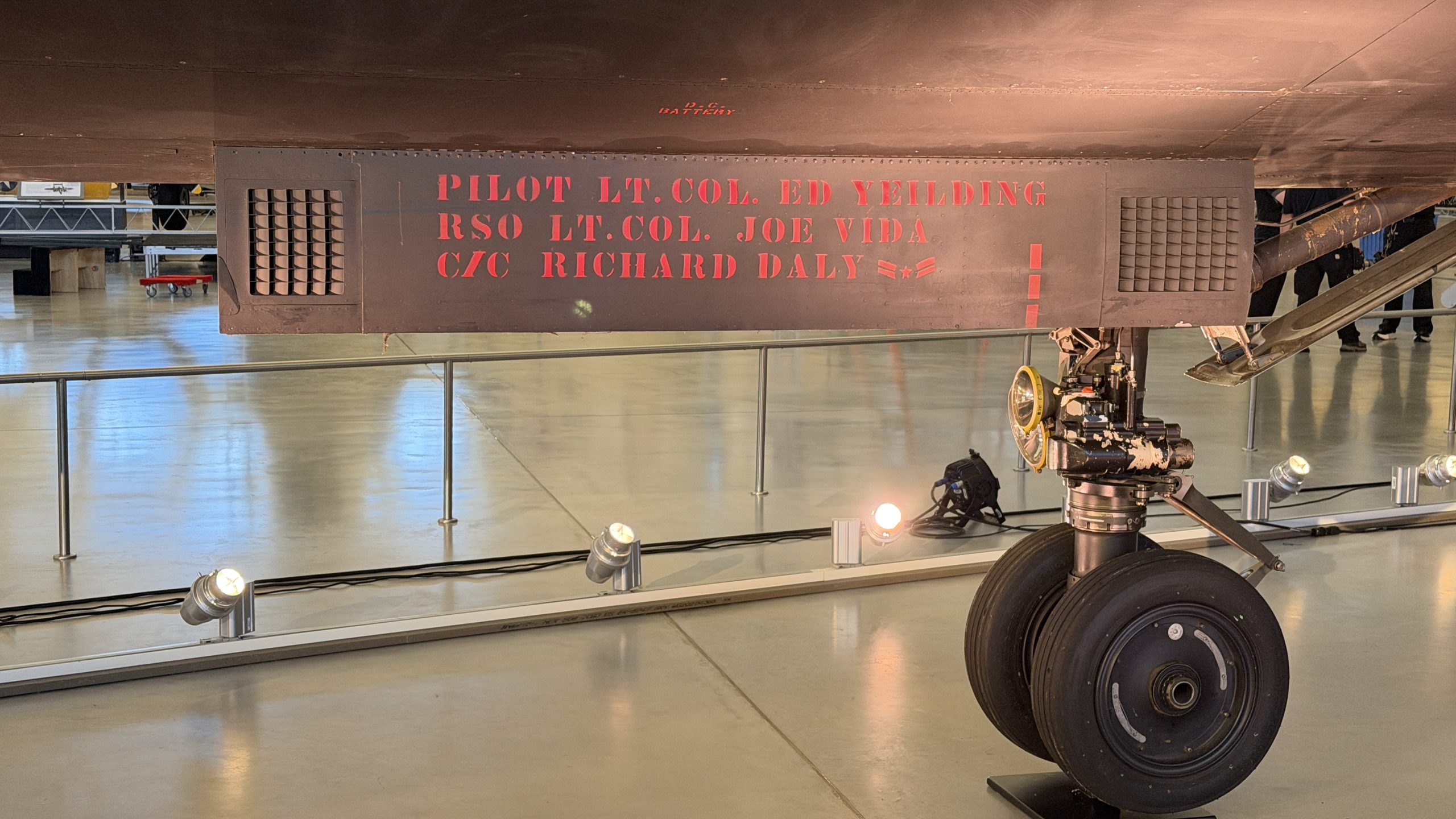
SR-71 Blackbird. Smithsonian Display Photo Taken by 19FortyFive on 9/30/2026.
Consider some of the immediately apparent challenges of ‘restoring’ a flyable Blackbird:
- The Blackbird spare parts inventory, valued at $600 million, was destroyed in 2007
- The Blackbird used a unique, ultra-dense fuel called JP-7 with a very high flashpoint, requiring dangerously super-flammable triethyl borane cartridges to combust. The Air Force no longer uses JP-7 nor owns the specialized assets for storing and transporting it
- Blackbirds required a fleet of specialized KC-135Q tanker aircraft uniquely modified with stabilized booms for high-speed refueling.
- Its J58 engines are only found in museums—and, when operational, required rotation out of service every 90 days.
- Starting J58 engines also required special high-pressure pneumatic systems
- Blackbird crews required space-suit-like equipment due to the aircraft’s extreme altitude and speed profile, which also entailed specialized ground facilities to help prepare pilots to prevent them from experiencing a high-altitude version of the deadly ‘bends’ afflicting divers
- The Blackbird’s 85% titanium skin was so hard it required customized carbide drilling tools, as ordinary drill bits averaged only 17 holes before breaking. Moreover, using ordinary metal bits risked contaminating its titanium-alloy skin!
- Special inert-gas enclosures were necessary to prevent oxidation when welding titanium. The Blackbird’s skin could also be washed only with specially distilled water.
- Because sustained high-Mach flight would cause the fuel tank to expand, the SR-71 Blackbird was intentionally designed to leak, giving it room to seal midflight and resulting in the aircraft’s perpetually ‘wet’ appearance. But constant jet-fuel leaks meant Blackbird facilities required special safety measures.
Realistically, then, a flying SR-71 means rebuilding many customized components, fuels, tools, and support assets, and training new pilots. While NASA can cannibalize components from retired Blackbirds, some will no longer be usable or will rely on exceedingly archaic technology. Those will require outright remanufacturing or replacement with novel substitutes in multiple copies, because aircraft without spare parts stay on the ground. Yes, some may be replaceable with commercial off-the-shelf (COTS) solutions, but COTS tends not TO go the distance for exotic designs operating at the extreme end of the performance envelope.
Is that all doable? Yes, if you don’t mind the gobs of cash and work hours that come with resurrecting just one, admittedly very cool airplane.
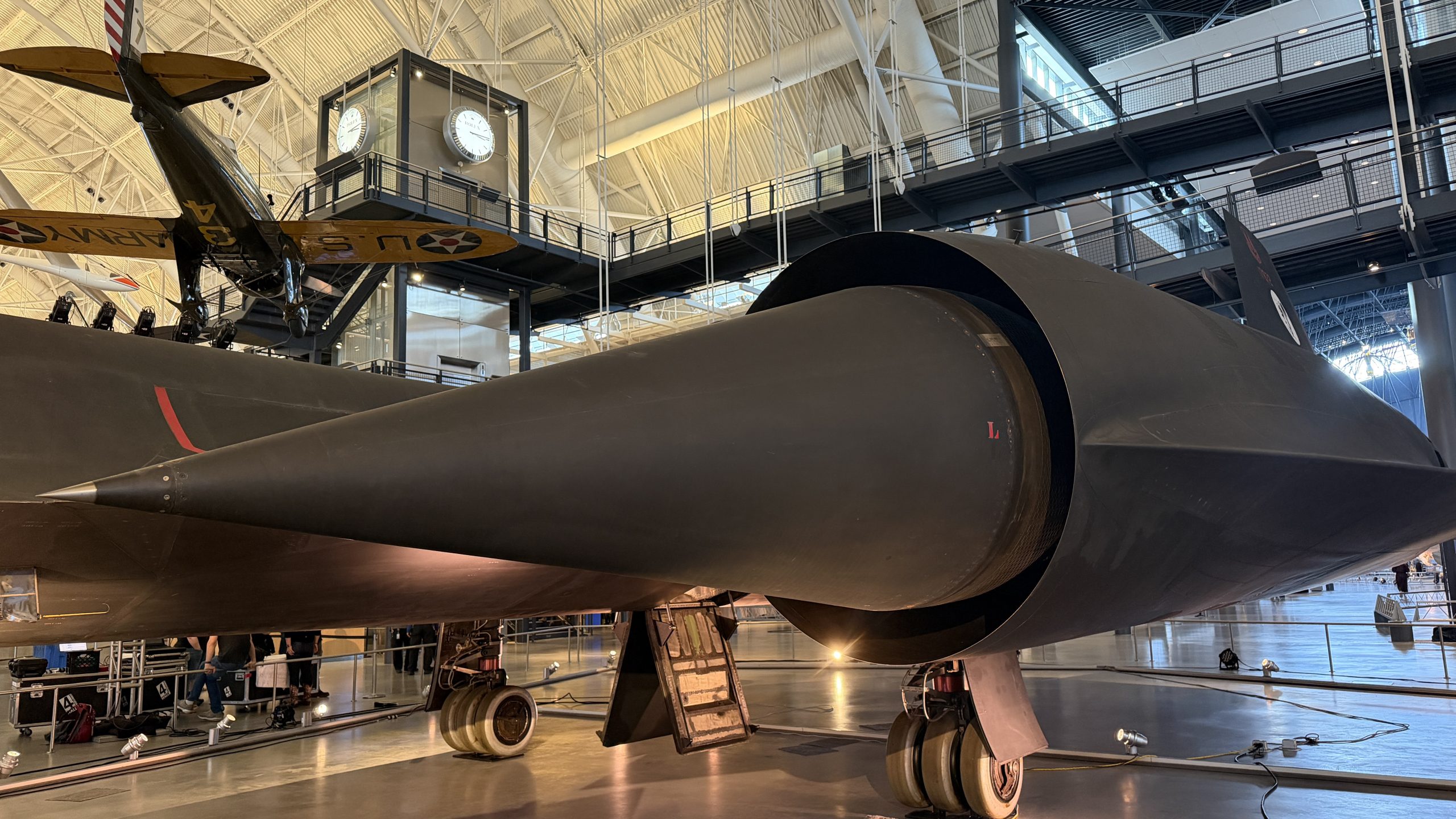
SR-71 Blackbird. Smithsonian Display Photo Taken by 19FortyFive on 9/30/2026.
How useful would a restored Blackbird be?
The Blackbird’s resurrection could ostensibly make it a high-speed testing and evaluation platform as the Pentagon accelerates R&D and initial procurement of various supersonic and hypersonic weapons, and defenses against them. However, Isaacman and NASA haven’t been more specific about uses—and it arguably really should given how non-obvious the effort-to-benefit ratio appears to aerospace observers.
While the Blackbird’s immense speed and altitude could support the Pentagon’s development of various air-breathing super- and hypersonic unmanned aircraft, the need for a large manned Mach 3+ testbed is less convincing. It may be more compelling in the context of reviving sustained long-distance supersonic travel, though its exotic operating requirements are not themselves an efficient solution. Alternatively, the Blackbird’s size and payload capacity might make it a launch platform for larger hypersonic drones or missiles, like the related M-21 aircraft built to launch a large drone called the D-21.
Hypothetically, a revived Blackbird could impart a greater speed/altitude boost than a subsonic B-52 carrier, or carry a heavier payload than MiG-31 interceptors Moscow uses to lob hypersonic Kinzhal missiles.
Some argue the best R&D case for bringing back the Blackbird would be the sheer exercise of radical re-engineering required to make it work. The last few decades have seen major advances in additive manufacturing (i.e., 3D printing), aerospace digital design (including the use of fully realized digital clones to save costs), materials science, and chemistry.
The creative process and application/reinvention of technologies to make an SR-71 restoration happen would undoubtedly be a fascinating and edifying experience—but most would not assume that sheer exertion of effort is always self-justifying compared with other potential uses for such ingenuity and resources.
SR-71 Blackbird: Lofted on Wings of Mach 3 Nostalgia
There’s undeniably a deep appeal to restoring extraordinary aircraft into flyable condition. However, it seems doubtful that a Blackbird can be restored and operated more cheaply than fielding a new super/hypersonic drone—such as NASA’s X-43 in the early 2000s or Boeing’s scramjet-powered X-51A Waverider.
Indeed, Lockheed Martin has hinted since the 2010s that it has already advanced development on an unmanned hypersonic successor to Blackbird dubbed the SR-72. Beyond that aerospace giant, several startups in the U.S. and Europe are explicitly developing supersonic or faster UAVs, notably Hermeus and its Quarthorse family of drones, and Switzerland-based Destinus, which uses hybrid hydrogen propulsion.
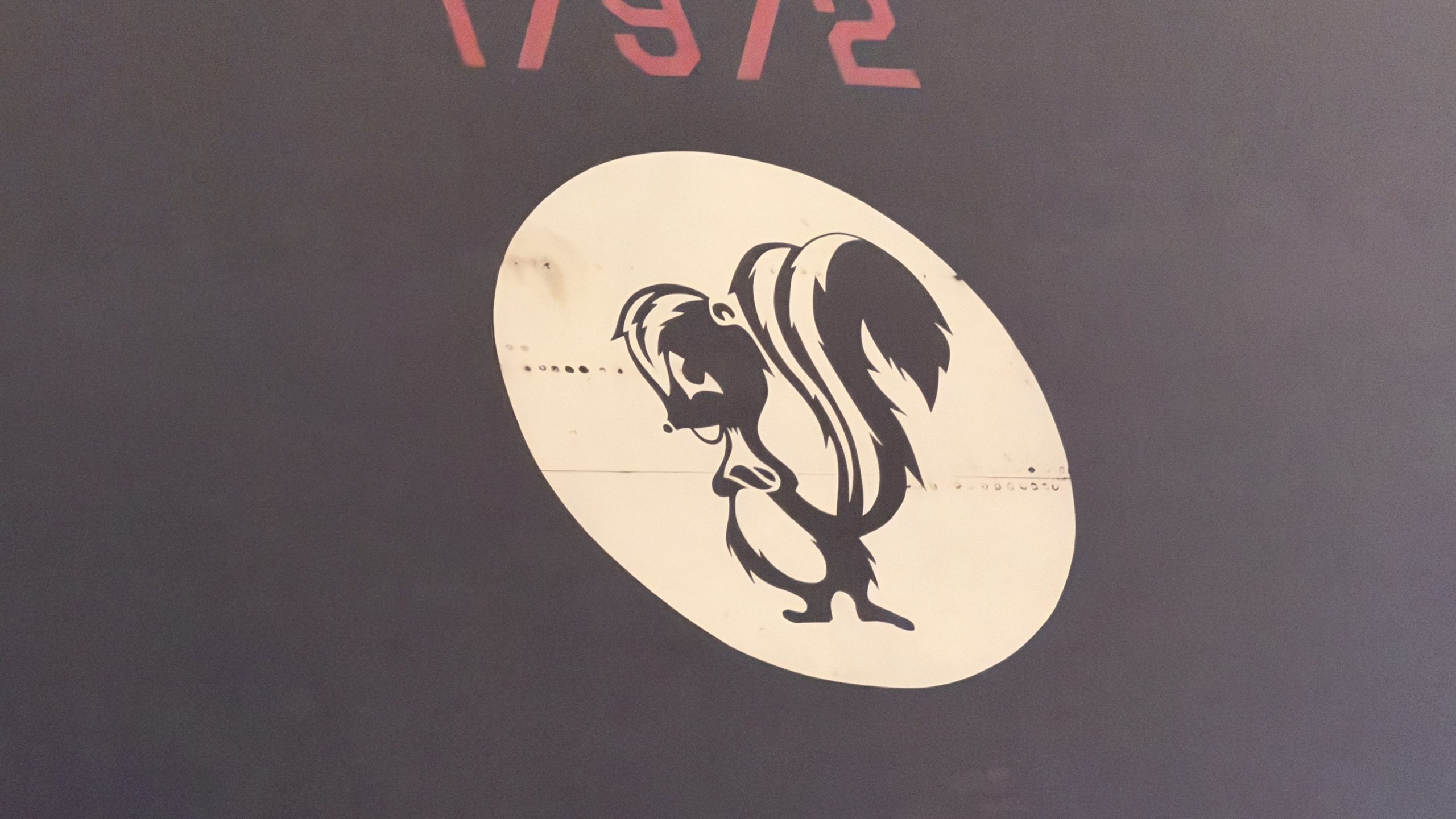
SR-71 Blackbird. Smithsonian Display Photo Taken by 19FortyFive on 9/30/2026.
Drones can be built much smaller, lighter, and cheaper because they don’t need a cockpit, life support, or ejection systems. Moreover, drone prototypes can be developed much faster and more cheaply because accidents don’t risk a human pilot’s life. Furthermore, limitations that constrain unmanned aircraft in combat (distance, jamming, etc.) wouldn’t limit a remotely piloted test aircraft over friendly airspace.
Why then is Isaacman pursuing an SR-71 revival, a concept most aerospace observers would have thought far-fetched until this fall?
Arguably, he’s driven by the Trump administration’s love of spectacle, because the SR-71 is a spectacular aircraft that hearkens back to an exciting and industrious era of U.S. aerospace engineering in the 1950s and 1960s when U.S. companies churned out multiple ground-breaking designs on a yearly basis, including the (questionably) venerated Century Series of aircraft.
In that regard, the Black Bird’s mystique among aerospace techno-oligarchs shows up when Elon Musk (a friend of Iscaaman) names his son ‘A-12’ after the predecessor. The nostalgia angle may also underlie a recent bill to release three F-14 Tomcats for possible restoration—cool aircraft with pop-culture resonance.
The appeal to past grandeur is also observable in the Trump administration’s fixation with building a new generation of battleships, which were also spectacular platforms that were marvels of engineering and prominent symbols of national power—but that even in modernized form, do not gel well with the Navy’s modern distributed firepower doctrine nor U.S. shipbuilding capacity.
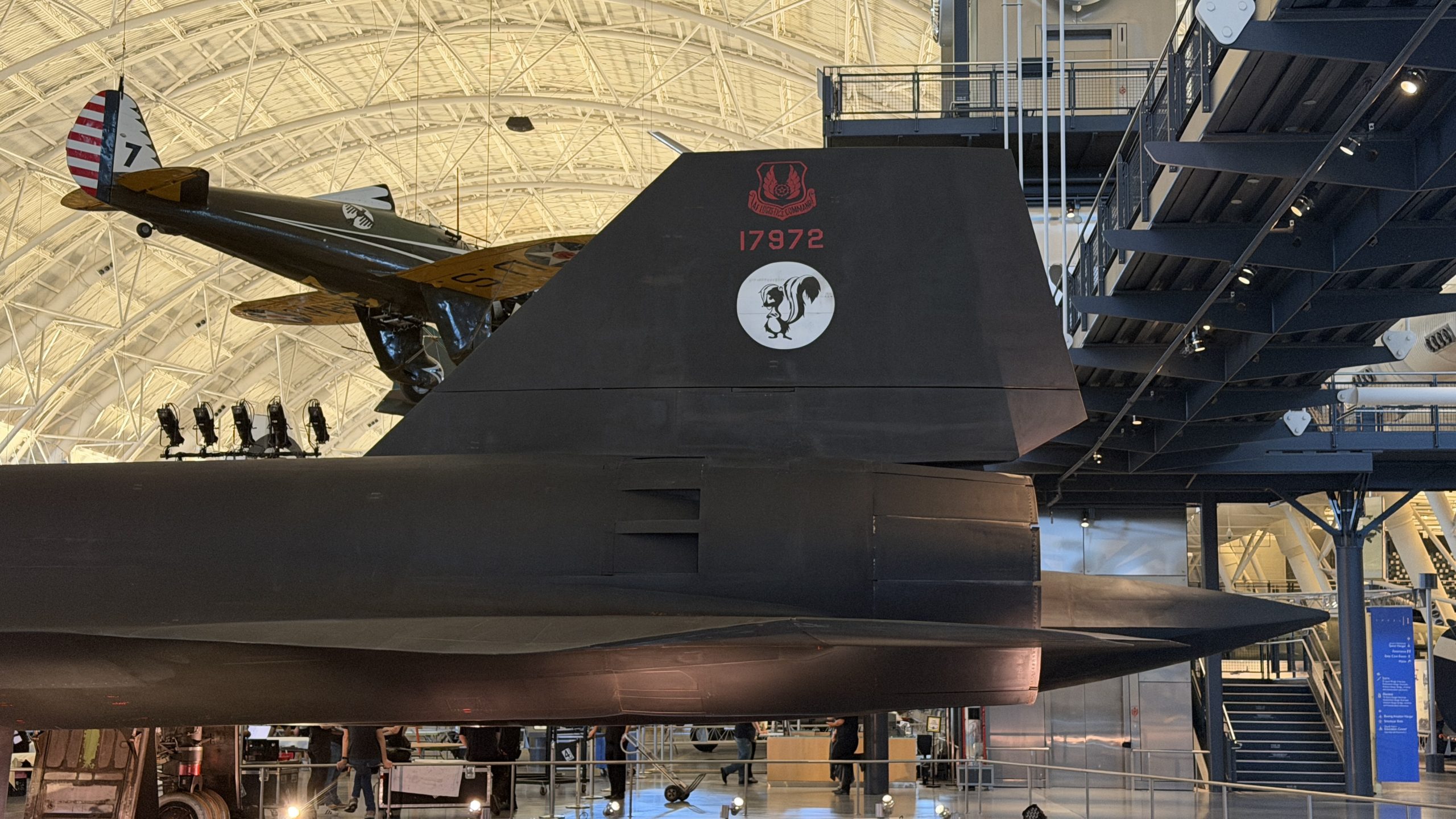
SR-71 Blackbird. Smithsonian Display Photo Taken by 19FortyFive on 9/30/2026.
While one can elaborate that disproportionately expensive battleships are needed to field future rail guns America hasn’t developed in practical form yet, the Pentagon is requesting roughly a billion dollars to study building BBGNs because Trump was impressed by their appearance in the Victory at Sea documentary.
At least the expense of restoring a single exotic aircraft can only mount so high—at minimum tens of millions of dollars, at most hundreds. Yet the Blackbird restoration seems driven by motives beyond cold-blooded cost-efficiency, given the admittedly less sexy, more practical alternatives.
The SR-71 Blackbird was indeed a spectacular product of American aerospace innovation. That spirit of innovation is best reclaimed by pursuing new, more cost-efficient platforms, not by extravagantly playing Dr. Frankenstein with an honorably retired one.
About the Author: Defense Expert Sebastien Roblin
Sebastien Roblin writes on the technical, historical, and political aspects of international security and conflict for publications including The National Interest, NBC News, Forbes.com, and War is Boring. He holds a Master’s degree from Georgetown University and served with the Peace Corps in China. Roblin is also a contributing editor at 19FortyFive.