
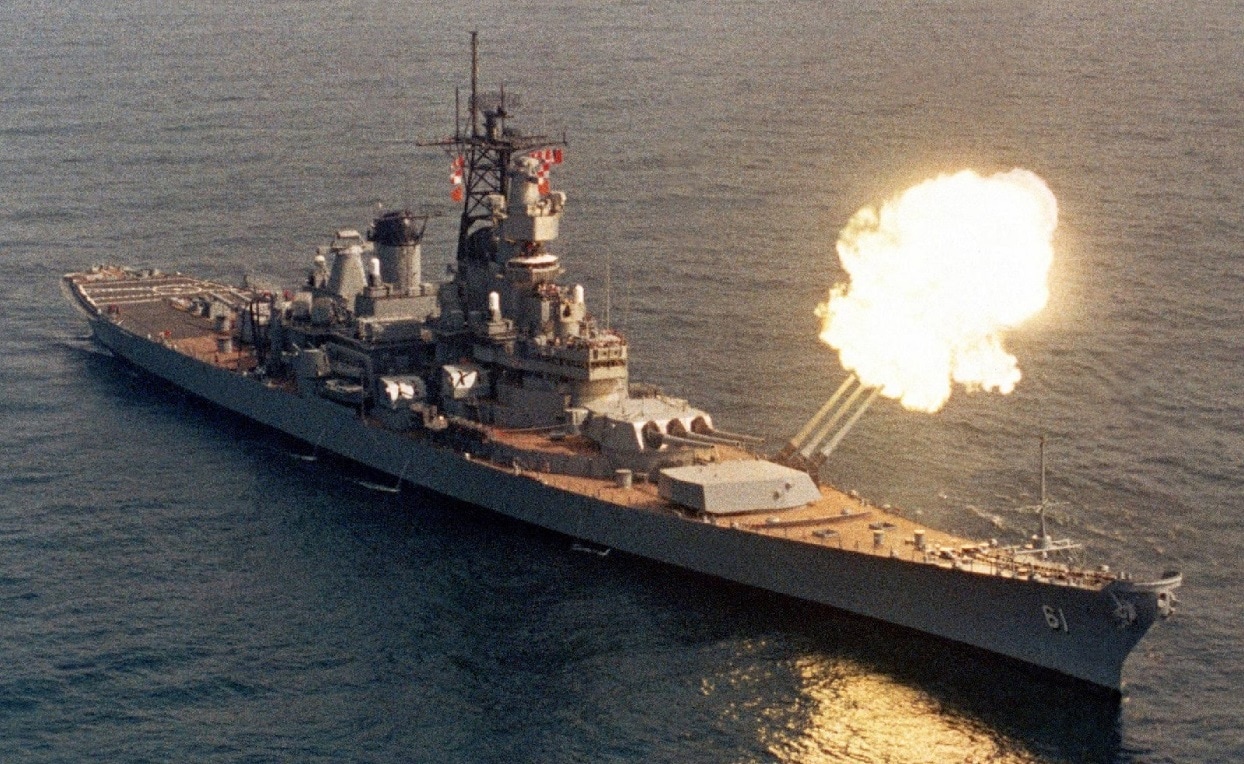
Summary and Key Points: Isaac Seitz asks what the US Navy’s unbuilt Montana-class battleships would have changed. Designed after the Washington and London treaties collapsed to counter Yamato and Musashi, each would have displaced over 71,000 tons fully loaded, stretched 921 feet, and had a 121-foot beam too wide for the Panama Canal; it would have mounted twelve 16-inch/50 guns behind a 16.1-inch belt and made 28 knots on 172,000 shaft horsepower. Coral Sea and Midway killed them; the Essex-class carriers came instead.
The Montana-Class Battleship Mistake?
The Montana-class was envisioned as the pinnacle of U.S. battleship design, surpassing the Iowa-class in size, armor, and firepower.
They were projected to displace about 63,000 tons standard and over 71,000 tons at full load, making them significantly larger than their predecessors.
At 921 feet long and with a beam of 121 feet, they were too wide to pass through the Panama Canal’s original locks, a clear indication of their massive scale.
Their draft was approximately 36 feet, and they were designed for a top speed of 28 knots, slower than the Iowa-class’s 33 knots but still respectable for their size.
Propulsion would have come from steam turbines generating 172,000 shaft horsepower across four screws.
In terms of armaments, the Montana-class was unparalleled. Each ship would have mounted twelve 16-inch/50 caliber guns in four triple turrets, giving them a heavier broadside than any U.S. battleship before or since.
Their secondary battery consisted of twenty 5-inch/54 caliber dual-purpose guns, supplemented by dozens of anti-aircraft weapons, including up to forty 40 mm Bofors and fifty-six 20 mm Oerlikons.
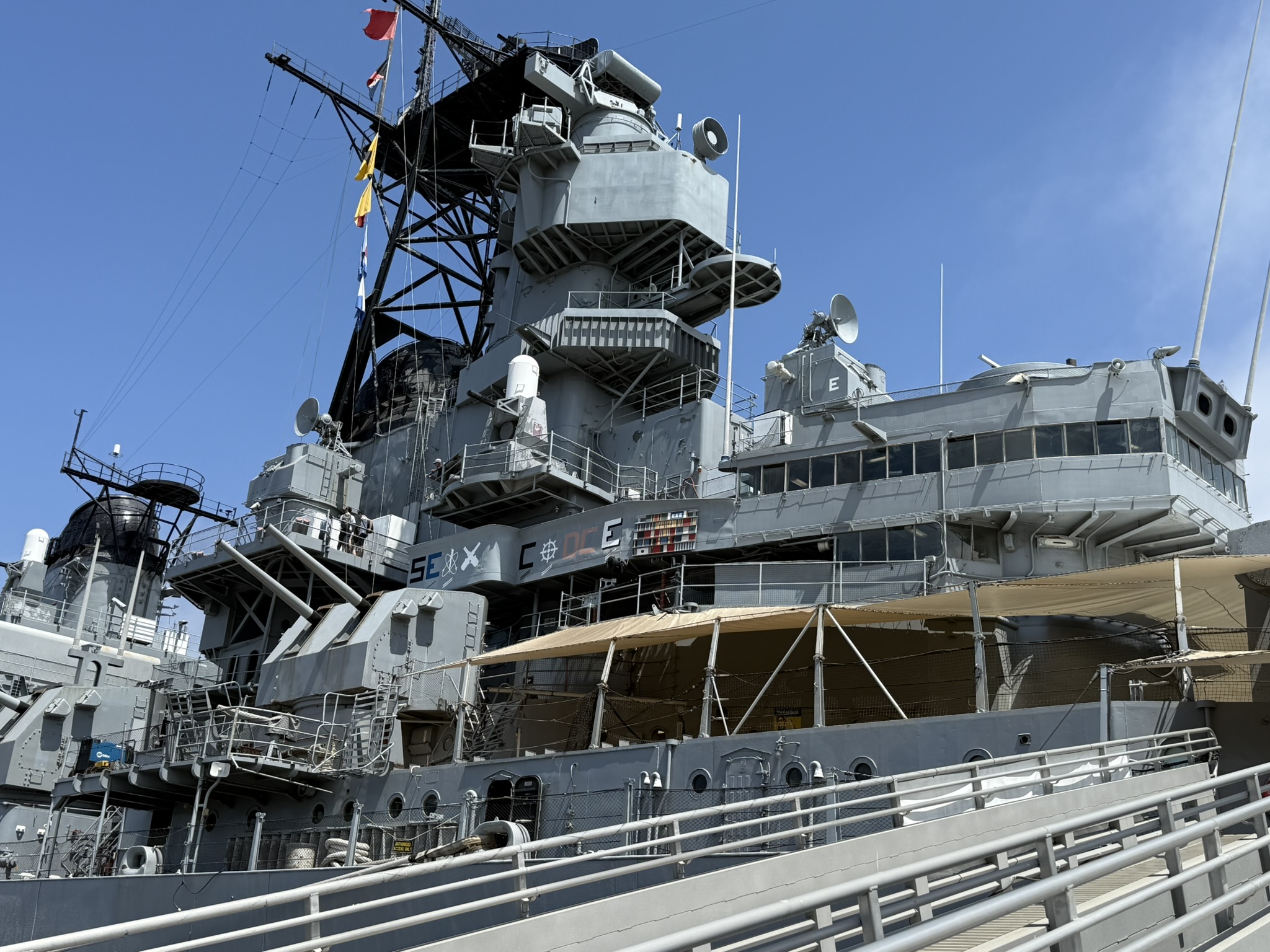
USS Iowa visit by 19FortyFive. August 2025 Visit.
USS Iowa visit by 19FortyFive. August 2025 Visit.
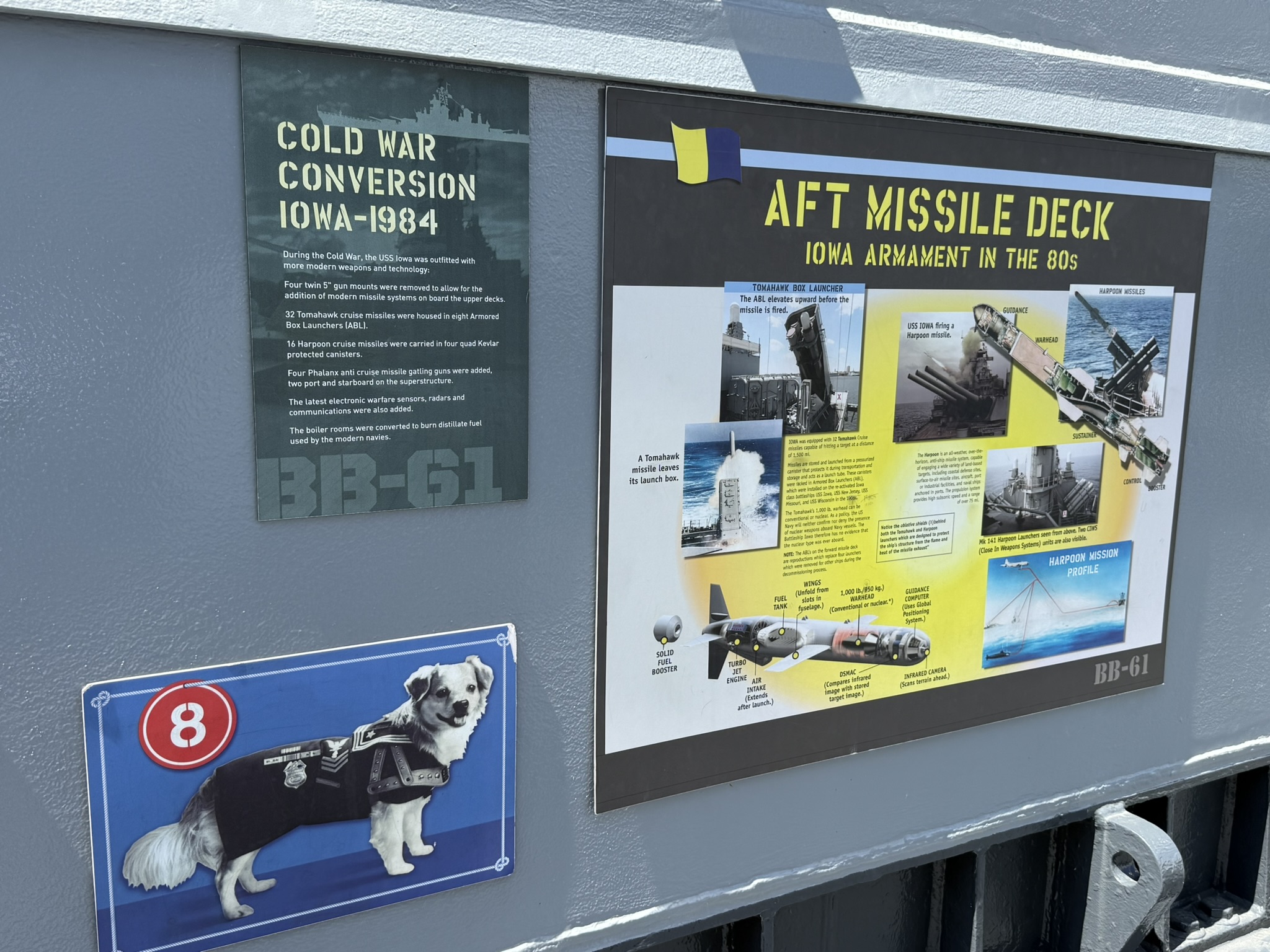
USS Iowa Battleship tour taken by 19FortyFive in August 2025.
Armor protection was equally impressive, with a belt thickness of 16.1 inches, turret faces up to 22.5 inches, and deck armor reaching 7.35 inches. These ships were designed without treaty restrictions, unlike earlier classes, and would have rivaled Japan’s Yamato-class in size and protection, making them the most formidable battleships ever planned by the U.S. Navy.
What if the U.S. Navy Actually Built the Montanas?
What would have happened if the U.S. Navy had built the Montana-class?
Had these ships entered service by 1944 or 1945, they would have been unmatched in gun power and armor.
In a hypothetical surface engagement, they could have destroyed Yamato and Musashi with superior radar-directed fire control and heavier broadsides.
Their twelve 16-inch guns would have delivered devastating long-range salvos, while their thick armor could withstand enemy shells.
However, such engagements were rare by late World War II.
The last major battleship duel occurred at Surigao Strait in October 1944, where older U.S. battleships annihilated Japanese forces.
By then, carriers ruled the seas. Montana-class ships would likely have served as shore bombardment platforms during island-hopping campaigns, similar to the Iowa-class. Their massive firepower could have shortened battles like Iwo Jima and Okinawa.
If completed, the Montanas might have remained in service through Korea and even Vietnam, providing naval gunfire support.
Their imposing presence could have served as a Cold War deterrent, much like the Iowa-class battleships, which were reactivated in the 1980s.
However, the rise of guided missiles, jet aircraft, and nuclear submarines would have relegated them to niche roles.
Maintaining such giants would have been costly, and the Navy likely would have retired them by the 1960s or converted them into missile platforms.
Strategically, building the Montana-class might have delayed carrier production, potentially altering the timeline of U.S. dominance in the Pacific.
If resources had shifted to battleships, fewer carriers might have been available for critical battles like Leyte Gulf. This could have prolonged the war or increased U.S. casualties. In short, their construction might have been a strategic misstep, despite their impressive specifications.
Why America Transitioned to Aircraft Carriers
The Montana class’s historical context stems from the collapse of naval arms-limitation treaties.
The Washington and London Naval Treaties of the 1920s and 1930s capped battleship displacement at 35,000 tons and gun caliber at 16 inches, forcing compromises in earlier designs such as the North Carolina and South Dakota classes.
By the late 1930s, these treaties had effectively collapsed, and intelligence reports suggested Japan was building massive battleships, revealed as Yamato and Musashi.
The U.S. Navy responded by planning a class that could outgun and outlast any adversary.
However, the attack on Pearl Harbor and subsequent battles, especially the Coral Sea in May 1942 and Midway in June 1942, proved the decisive role of aircraft carriers.
Carrier-based airpower could strike hundreds of miles away, rendering traditional battleship duels increasingly obsolete.
By 1943, the Navy prioritized Essex-class carriers, landing craft, and destroyer escorts over new battleships.
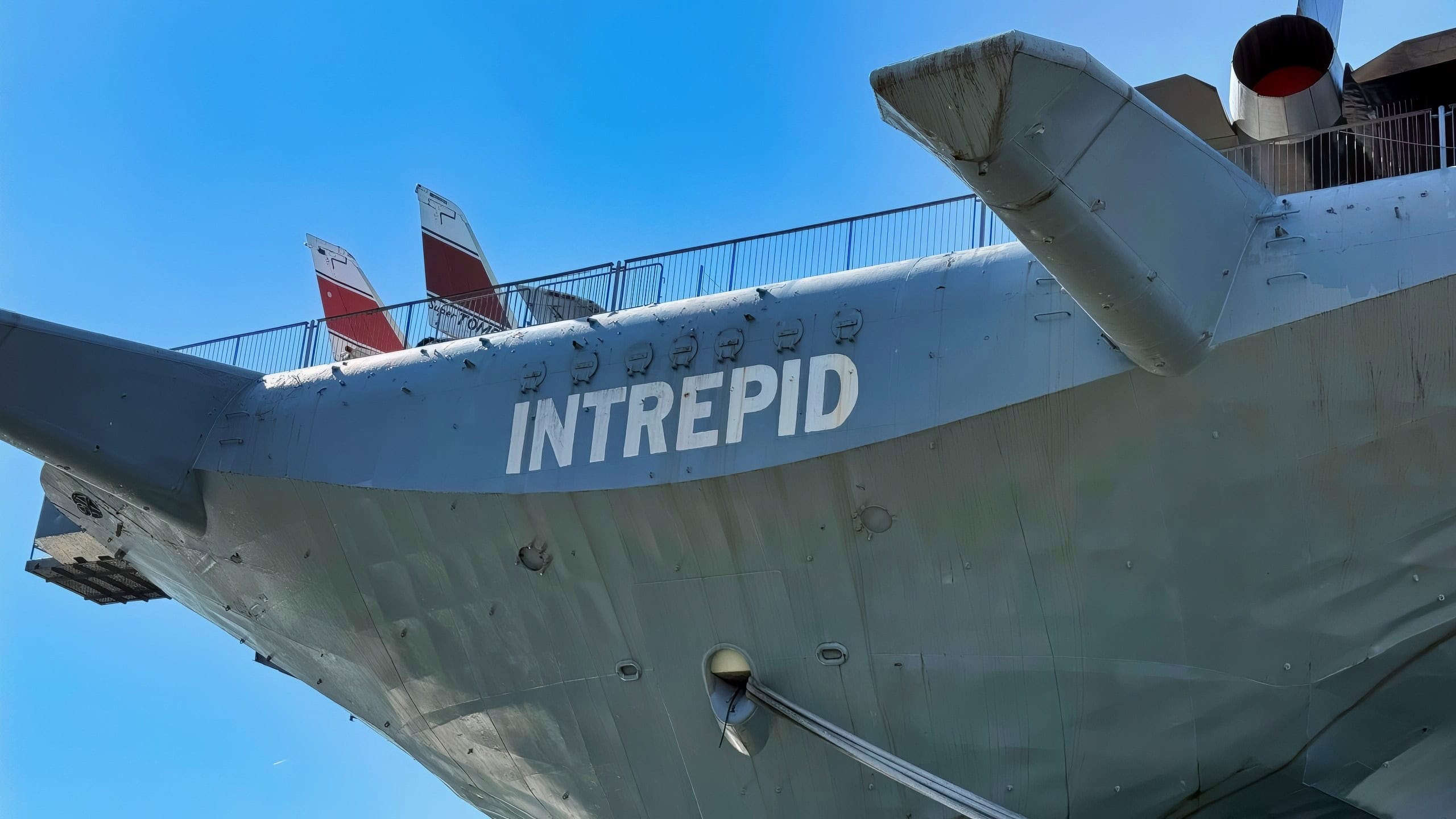
USS Intrepid of the Essex-Class Aircraft Carriers. Image Credit: 19FortyFive.com Original Photo.
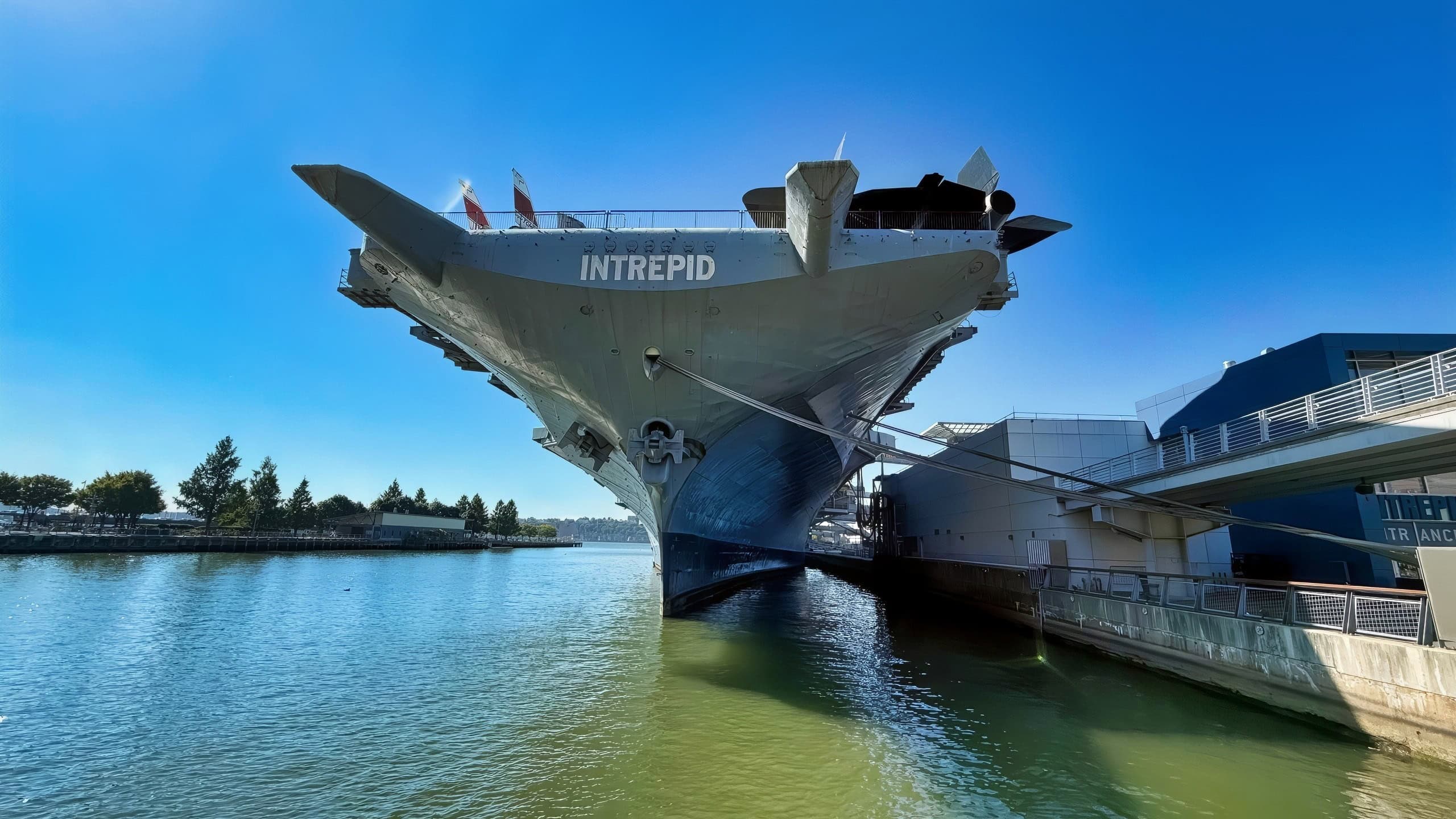
USS Intrepid Essex-Class Aircraft Carrier 19FortyFive.com Photo.
The Navy canceled the Montana-class before laying any keel.
Several factors doomed the Montana-class.
The most significant was the shift in naval strategy toward carrier warfare, which dominated the Pacific theater. Battleships became secondary assets, mainly for shore bombardment and escort duties.
Resource allocation also mattered; steel, manpower, and shipyard capacity were urgently needed, and battleships were less suited to operating with fast carrier task forces.
Finally, building five super battleships during wartime was too costly and complex compared to producing multiple carriers and escorts.
About the Author: Isaac Seitz
Isaac Seitz, a Defense Columnist, graduated from Patrick Henry College’s Strategic Intelligence and National Security program. He has also studied Russian at Middlebury Language Schools and has worked as an intelligence Analyst in the private sector.