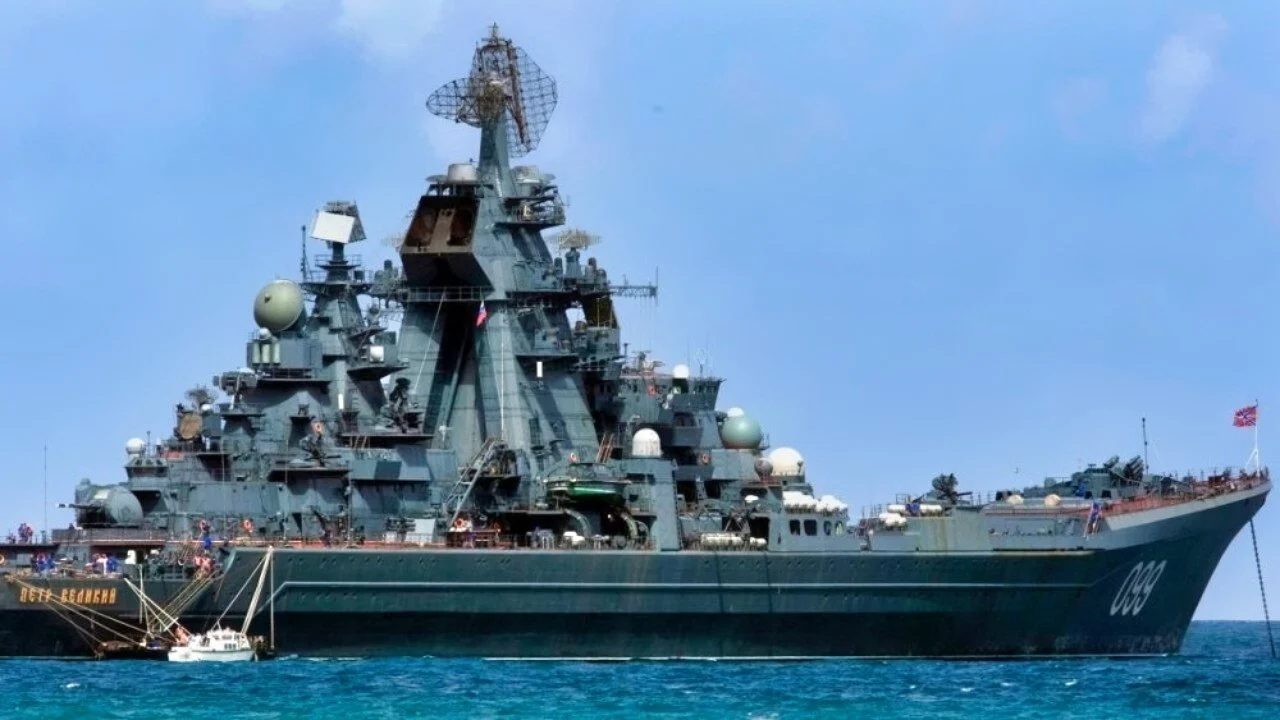
Article Summary and Key Points: Despite having virtually no navy, Ukraine has severely damaged Russia’s Black Sea Fleet using asymmetric warfare tactics.
-Since 2022, Ukraine has sunk or damaged nearly half of the fleet, including the flagship Moskva and the Rostov-on-Don submarine, through a mix of anti-ship missiles, aerial drones, and explosive naval drones.
-By forcing Russia’s fleet away from Ukraine’s coast, Kyiv disrupted Russian missile launches, broke the naval blockade, and reopened grain exports.
-Ukraine’s latest innovation—equipping naval drones with anti-aircraft missiles—now threatens Russian air operations over the Black Sea, further shifting the balance in a conflict defined by Ukraine’s creative military ingenuity.
How Ukraine’s Asymmetric Tactics Crippled Russia’s Black Sea Fleet
Using a combination of unmanned naval drones, anti-ship missiles, and aerial UAVs, Ukrainian forces have managed to push the Russian fleet away from the coast and severely curtail operations in the Black Sea.
Ukraine has devastated Russia’s Black Sea fleet in the three years following Russia’s full-scale invasion of Ukraine. Since February 2022, the Ukrainians have destroyed or damaged up to half of the fleet using a combination of anti-ship missiles, aerial drones, and explosive-laden unmanned naval drones.
Grant Shapps, a former British Defense Secretary, called out Russian losses in the Black Sea last year. Taking to X, Schnapps said, “Putin’s continued illegal occupation of Ukraine is exacting a massive cost on Russia’s Black Sea Flee,t which is now functionally inactive.” He added that “Russia has sailed the Black Sea since 1783 but is now forced to constrain its fleet to port. And even there, Putin’s ships are sinking!”
Perhaps the most high-profile Russian loss was of the Moskva, the Black Sea Fleet flagship, in April of 2022. In that incident, Ukrainians managed to sink the vessel with domestic Neptune anti-ship missiles fired from shore. The loss of the Moskva was the first time a Russian flagship sank since the Russo-Japanese War in 1904-1905.
In September of 2023, the Rostov-on-Don, a Kilo-class submarine, suffered two hits to its hull. The damage was so significant that one independent naval analyst estimated it would be more cost-effective for Russia to strike the submarine from the fleet and build a new replacement submarine than to repair the damage it suffered.
Leveraging the American-supplied Army Tactical Missile System, known as ATACMS, a tactical ballistic missile system, Ukrainian forces also struck targets in Sevastopol at Crimea and elsewhere on the Russian-occupied peninsula, including Black Sea Fleet administrative buildings.
Ukraine has also targeted the Kerch Bridge, one of Russian President Vladimir Putin’s pet projects that links Crimea with the Russian mainland. Drones, truck bombs, and missiles have periodically harried the bridge, though these efforts have not been successful in completely leveling the bridge.
Changing Warfare
Ukraine’s ability to leverage asymmetrical tactics to limit the ability of Russian ships to launch missiles at targets in Ukraine has been a huge success. Furthermore, Ukraine’s targeting of a wide variety of Russian vessels, including a number of amphibious landing ships, meant that Kyiv put the kibosh on any designs Moscow had on coastal Ukrainian cities, like the important port at Odesa.
It also changed the posture of Russian ships in the Black Sea from offense to an active defense. By pushing Russia’s fleet out into the Black Sea and away from shore, Ukraine effectively broke the blockade of their Black Sea coast, paving the way for the resumption of grain shipments from Ukraine abroad.
In one of the most significant advancements since the sinking of the Moskva in 2022, Ukraine is now reportedly mating 1980s-era anti-aircraft missiles to their Magura V5 naval drones. It has reportedly been put to use in combat in the Black Sea.
This advancement in Ukraine’s naval warfare jeopardizes Russian aviation movements over the Black Sea and will serve to restrict Russian aerial movements in and around the Black Sea and Crimea.
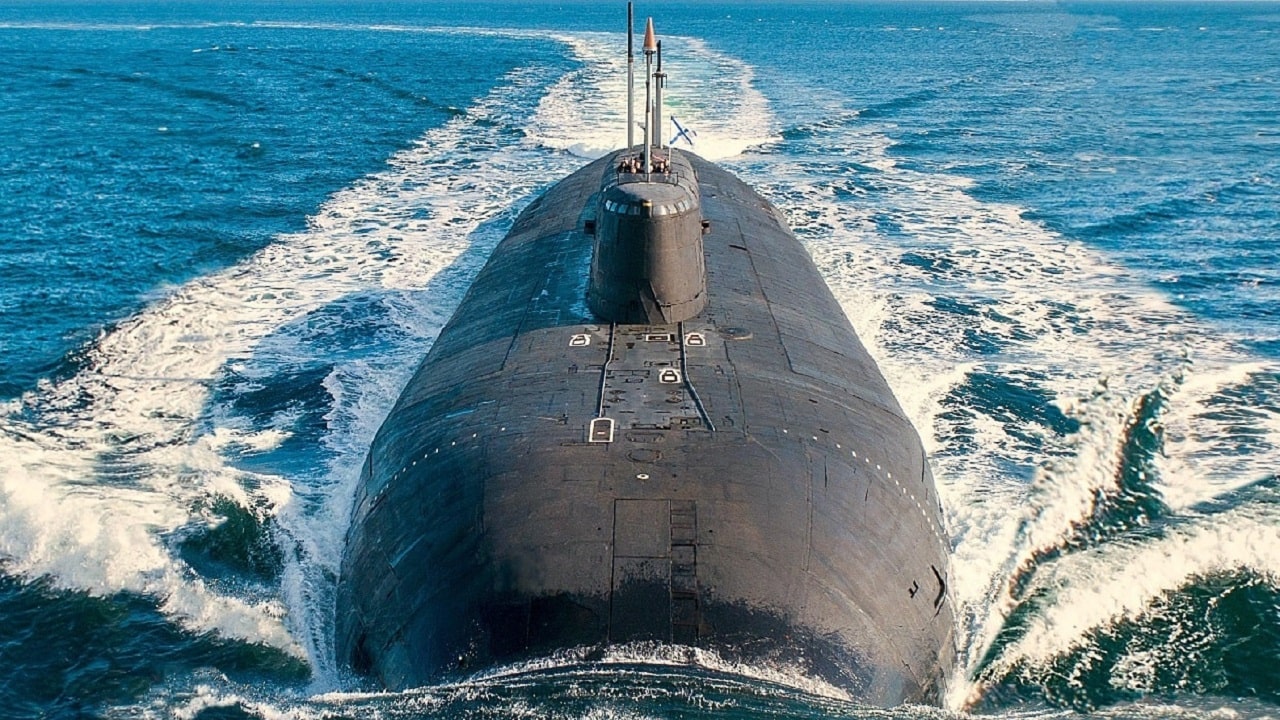
Modern Russian Navy Submarine. Image Credit: Creative Commons.
Given the intense pressure on Ukrainian forces to develop asymmetric tactics to keep a superior navy at bay, their efforts to field increasingly sophisticated platforms are remarkable and mirror the advances Ukrainian forces have had in developing aerial drones, which have served to offset the Ukrainian disparity in artillery partially.
Keep a close eye on Ukraine’s continued development of unmanned naval drones.
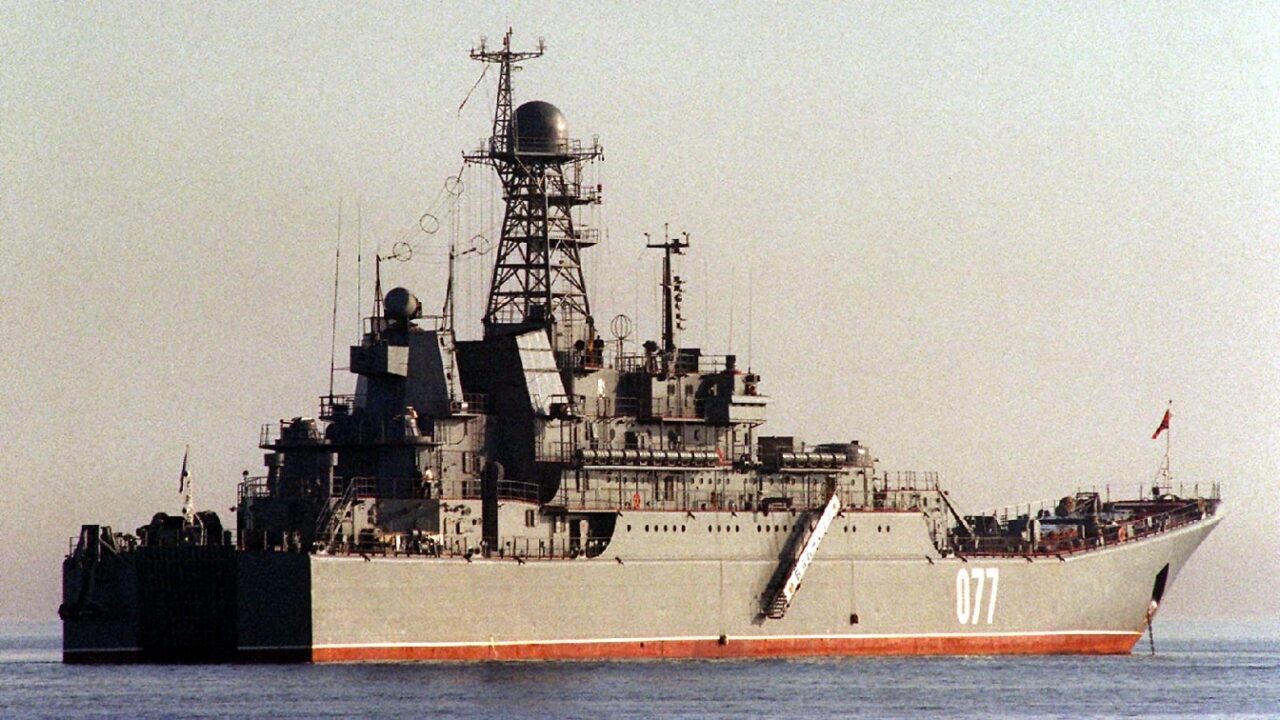
A Russian Federation Navy Ropuchhka II amphibious assault ship lies at anchor near Vladivostok, Russia, on Aug. 16, 1996, as the ship readies for Exercise Cooperation From the Sea ’96. U.S. Navy and Marine Corps units of the 7th Fleet and Russian Federation Navy units are conducting the exercise near the port city of Vladivostok. The purpose of the exercise is to improve interoperability with Russian military forces in conducting disaster relief and humanitarian missions. Personnel exchanges and training will promote cooperation and understanding between the U.S. and Russian Federation Naval Forces. DoD photo by Petty Officer 2nd Class Jeffrey Viano, U.S. Navy.
About the Author: Caleb Larson
Caleb Larson is an American multiformat journalist based in Berlin, Germany. His work covers the intersection of conflict and society, focusing on American foreign policy and European security. He has reported from Germany, Russia, and the United States. Most recently, he covered the war in Ukraine, reporting extensively on the war’s shifting battle lines from Donbas and writing on the war’s civilian and humanitarian toll. Previously, he worked as a Defense Reporter for POLITICO Europe. You can follow his latest work on X.