
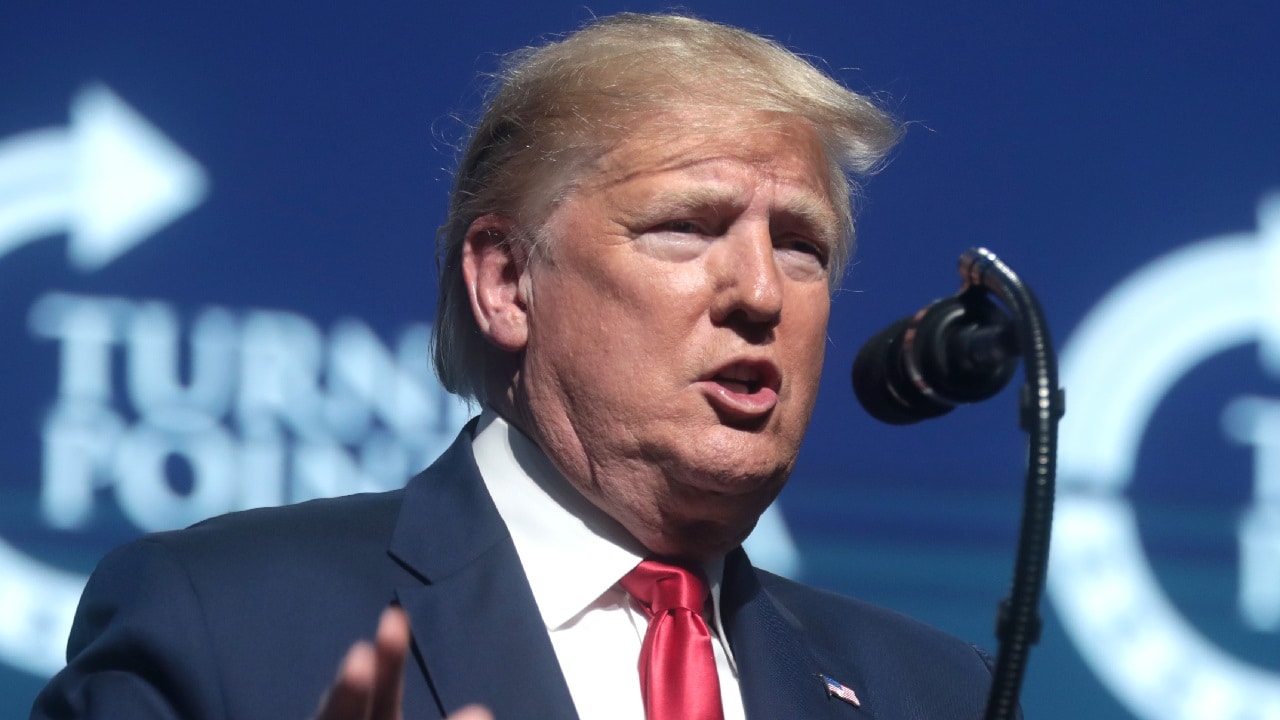
Economists can debate the economic merits of U.S. President Donald Trump’s tariffs. But what might be more important is what his carpet-bombing the globe in an economic blitzkrieg tells us about the president as a strategist.
Donald Trump and the Tariffs: Lifeline of a Guiding Idea
Strategy is the combination of goals, methods, and means to achieve a vital objective. Strategies are required when tough decisions have to be made, when there are not enough resources to go around, when there are multiple pressing demands—and when action is demanded to thrive and survive. Strategy demands making a hard choice and following through.
Most people who claim to follow a strategy are doing everything but. Trump doesn’t claim to do strategy at all, but he really is.
Ends
Trump means what he says, when he says “America First.” But what does he mean? After he introduced the phrase in public, I happened to be chatting the next day with some of his advisors, reminding them of the historical origins of the term from the American World War II-era isolationist movement. They looked at me and laughed, “It’s not what we mean.” They were right. The president’s primary prism for decision-making is, literally, what is in the best interests of the United States, and ranking those interests in terms of importance from vital to peripheral. The consistent imperative of basing policy directly in response to America’s interests was clearly present from the beginning of Trump’s first term in office. That aspect of his leadership hasn’t changed.
Every American president says they are fighting to keep America safe, free, and prosperous. But that is a visionary aspiration, not a concrete goal such as, for instance, defeating Germany first or containing the Soviet Union. Trump has been pretty clear that protecting America from the rising, destabilizing, and corrosive threat of China is a primary goal of U.S. strategy.
Arguably, the objective of dealing with China has evolved. When Trump entered office the first time, he treated Beijing as fundamentally an economic problem. Once he hammered out a trade deal that would erase the trade deficit—problem solved. By the end of his term, however, the administration came to think of China as a much more comprehensive threat, and as clearly the pacing danger that had to be dealt with to secure the freedom, prosperity, and security of all Americans.
Means
The means of strategy include all the elements of national power. In strategy, only what works counts. Trump has made pretty clear that his chosen weapons are military might and raw economic power. Trump trashed foreign aid not just because much of it was a waste of money, and in many cases counterproductive, but because in the end foreign aid is not going to push Beijing off the game board.
Ways
No strategy works if the right means aren’t delivered in the right time and place in the right way. This is where tariffs as an element of strategy comes in.
Both of Trump’s chosen instruments of strategy have big limitations.
First, America’s peace through strength plan isn’t strong enough. Trump entered office with a military lacking in hard power. Even with four years of vigorous investment and reshaping strategy, the U.S. still won’t have the capacity to be decisive in any of the critical theaters (the Indo-Pacific, Middle East, or Europe). He needs friends and allies to step up and contribute more to their self-defense—not by abandoning them, which is self-defeating, but by badgering the hell out of them until they do.
Second, the U.S. economy can’t grow fast enough if it is saddled with over regulations, new green deal nonsense, and an outmoded global trading system. All that has to be swept away.
Tariffs are instrumental to both objectives. What has been less clear, until recently, is how tariff policy fits in the overall strategy. The answer is that it is meant to outpower China.
The global blitzkrieg was to get the world’s attention. The 90-day reprieve was to reset the table. After that, friends and allies will sign up for new trade partnerships—which will likely be to the benefit of both parties—or face reciprocal tariffs, the trade-war equivalent of exchanging nasty notes in class. Those rules go for everyone but China. Indeed, administration officials have publicly stated that this is all about China.
Of course, Trump has also offered China an off-ramp. That is virtually axiomatic with Trump and any adversary (except terrorists)—he always offers the option of a deal. The likelihood of a substantive, grand deal with Beijing, however, is near zero. Trump will not make a deal that compromises vital U.S. interests, and Beijing is unlikely to offer the range of concessions on security and economic issues that the U.S. would accept as a “win-win.” If they did, that would be great—but a smart strategy never depends on your adversary doing what you want.
Measure of Strategy
Having a bold strategy, however, is not enough. History is littered with failed leaders who made the wrong tough choices. A good strategy not only makes the hard choices, but it is also suitable (it will adequately address the challenge); feasible (it could actually work); and acceptable (its enactor has the will and resources to follow through).
So far Trump passes the suitable, feasible, acceptable test.
Suitable: China’s economy is facing major structural difficulties. While Beijing boosts a massive military arm, China’s armed forces are untested and unpracticed in war. On the other hand, the U.S. military is no pushover, and if allies rearm as expected, neither Russia, China, nor Iran can expect an easy win. Finally, the U.S. economy is still the envy of the world.
Feasible: With 75 nations lining up to cut new trade deals with Trump, there is more than a little evidence to suggest his plan just might work. Further, the strength of Trump’s approach to strategy is not linear. He recognizes that in any competition, the enemy gets a vote. He is not moving mindlessly from one step to the next—or reacting, making up steps as he goes along. The president is judging the response of others to his initiatives and acting accordingly, with sights firmly on his final goal.
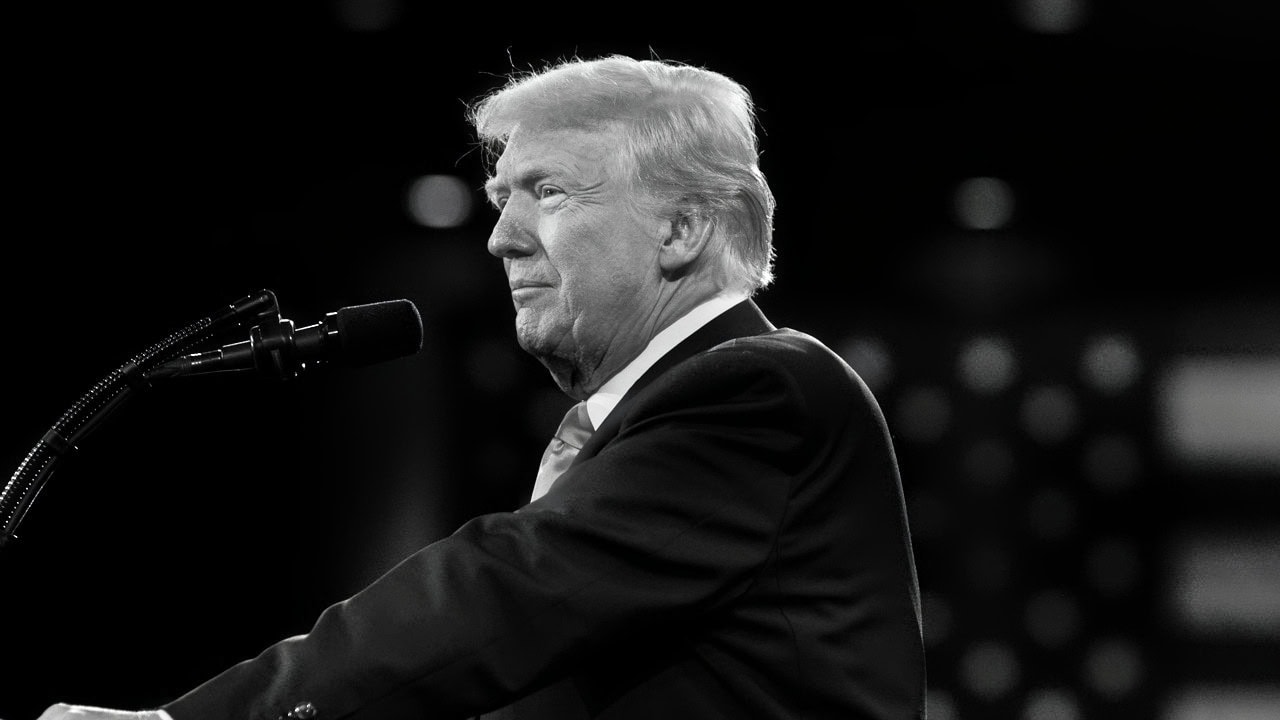
President Donald Trump speaks at the Conservative Political Action Conference at the Gaylord National Resort & Convention Center in Oxon Hill, Maryland, on Saturday, February 22, 2025. (Official White House Photo by Molly Riley
Acceptable: No one wants a trade war with the U.S. Indeed, when the Chinese approached others to join in fighting back against Trump’s tariffs, they were uniformly rebuffed. Meanwhile, Trump remains popular at home. Equally important, he has assembled a strong, coherent team. It is very impressive how the entire cabinet mobilizes to support all the president’s top priorities—including the tariff policy. Further, both the Senate and House leadership have kept their caucuses solidly behind the president’s agenda.
Whether Trump’s critics are right on the economic outcomes of Trump’s tariffs, the economists can debate. On the strategic use of tariffs, it’s fair to pump fists or scream at the TV about whether this is a good or a bad idea. But there is no question that Trump’s tariffs are part of a strategy—one that passes the test as a reasonable and practical, if a bold and audacious, course of action.
About the Author: Dr. James Jay Carafano
Dr. James Jay Carafano is a leading expert in national security and foreign policy affairs. Carafano previously served as the Vice President of Heritage Foundation’s Kathryn and Shelby Cullom Davis Institute for National Security and Foreign Policy and served in the US Army for 25 years. He is an accomplished historian and teacher as well as a prolific writer and researcher. Follow him on X: @JJCarafano.