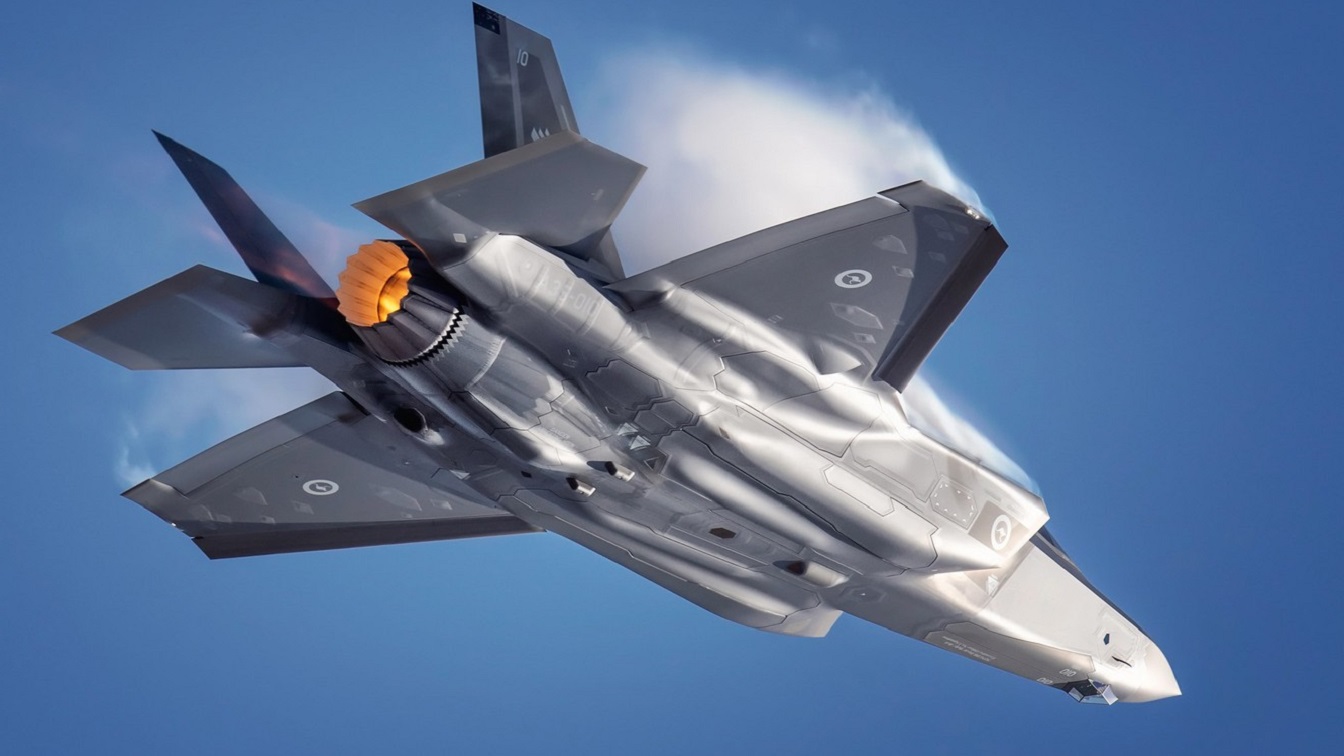
Defense giant Lockheed Martin is proposing a new F-35 Lightning II fighter jet variant. The yet-unnamed fighter would combine some of the capabilities of the upcoming F-47 fighter jet with the already successful F-35 platform.
How this proposed “new” fighter would fit in with existing air forces, including the US Air Force, remains to be seen.
Lockheed Martin Proposes a “Supercharged F-35”: Meet the F-35D
In March 2025, the United States Air Force announced defense contractor Boeing had won the Next Generation Air Dominance fighter contract. Boeing beat Lockheed Martin and Northrop Grumman to develop and manufacture the new fighter, designated F-47. The F-47 will be the first new fighter for Boeing in decades. Competitor Lockheed Martin dropped from the three-way race by the Air Force for not meeting program requirements, has said it will not contest the decision.
Instead, Lockheed Martin announced the company will develop a “fifth-generation plus” version of the F-35, which incorporates technology designed for future versions of the F-35 and NGAD into the existing airframe. According to Breaking Defense, Lockheed CEO Jim Taiclet told the press during a quarterly earnings call, “We’re basically going to take the [F-35] chassis and turn it into a Ferrari,” Taiclet said. “It’s like a NASCAR upgrade, so to speak, where we would take the F-35 [and] apply some of those co-funded technologies both from NGAD and the F-35 program.”
According to Taiclet, the goal is to develop a version of the F-35 that has eighty percent of the capability of the F-47 but at just fifty percent of the price. Lockheed Martin reportedly tested and flew a prototype NGAD aircraft before it was disqualified.
The CEO stated that there were “materials,” “geometries,” “countermeasures for stealth,” and new weapons and tracking systems. Taiclet also said his engineers were sure his vision of an F-35 on steroids was doable.
The F-35 is an evolving program, with decades of upgrades already planned for the worldwide fleet of fighters. The latest upgrade, Block 4, will be paired with a computer hardware and software upgrade, Tech Refresh 3, without which many new capabilities won’t be possible. Block 4, which is finally hitting air forces worldwide, includes “over 75 major upgrades” for all three F-35 versions, including updates to the jet’s electronic warfare system, sensor upgrades, the ability to carry new and more weapons, advanced networking capabilities, and an unknown number of classified capabilities. The features set for Block 4 have been in place for several years now, likely before Lockheed Martin’s NGAD prototype took flight, leaving open the possibility that new technologies that aren’t in Block 4 made it to NGAD.
What Makes the F-35D Special
This “new” aircraft—we’ll call it F-35D for now—would likely feature ninety percent internal changes. The F-35’s stealthiness is in large part due to its shape. Taiclet himself implied there would be little to no changes in the outward design when he stated the company would take the F-35 chassis “and turn it into a Ferrari.” Even minor changes could have major implications for the aircraft’s radar signature, making it detectable by radar at greater distances.
In other words, almost all new technology would have to fit under the aircraft’s skin. The F-35 is already jam-packed so that most new tech would displace existing equipment. In most cases, that would probably be an improvement of existing capabilities. A new laser weapon might replace the 25mm GAU-22/A Gatling gun system built into the -A model’s fuselage and carried in an external pod on the -B and -C versions. It might even mean downgrading or eliminating existing capabilities to make room for new ones, with the Gatling gun swapped entirely for something else.
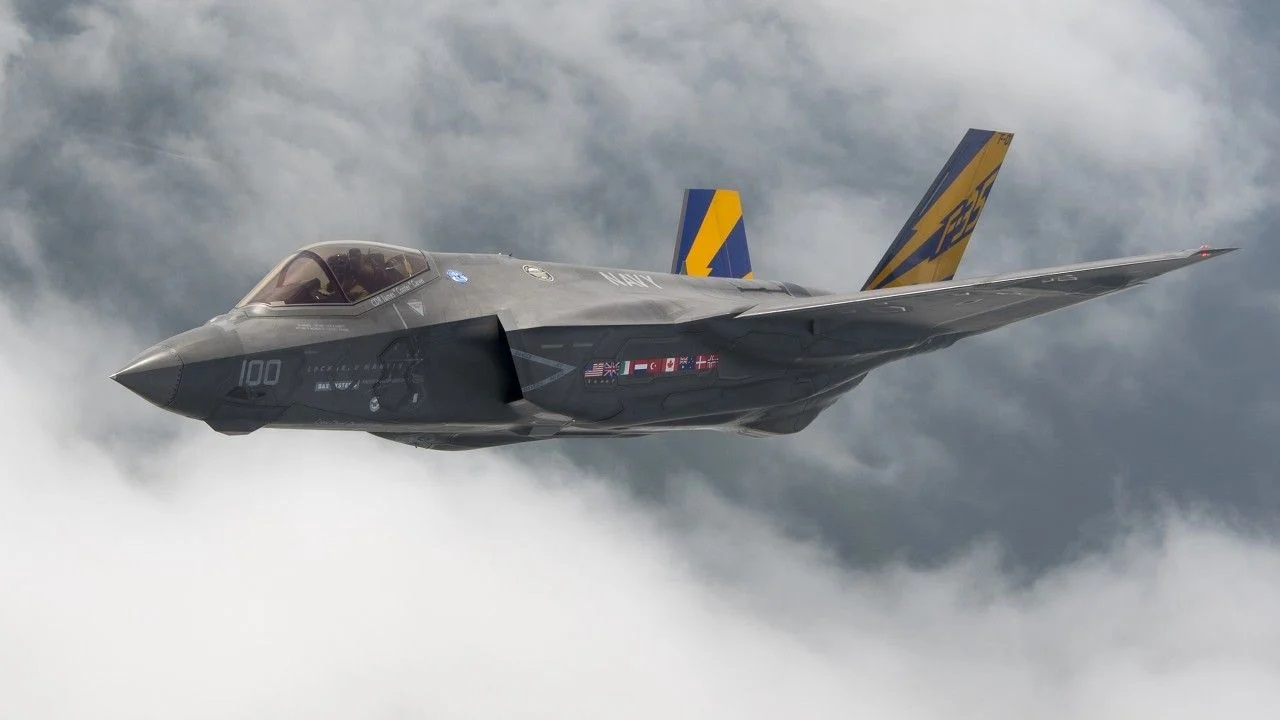
Stealth F-35C. Image Credit: Creative Commons.
All of this leads to the question: how does the F-35D fit into the US Air Force and other allied air forces’ fighter plans? After Block 4, the worldwide F-35 fleet will eventually be fitted out with Block 5, which will further update the fighter, and probably a Block 6.
Part F-35, Part NGAD
This variant will include plenty of opportunities to introduce NGAD tech into the fleet, and the F-35 will mature into a “fifth-generation-plus” fighter on its own. This suggests that the F-35D will chart a different course, one that emphasizes air-to-air over the current criteria to perform both air-to-air and air-to-ground missions. An example of an F-35D might be based on the -C model, with its additional range and increased fuel capacity via a podded fuel tank, replacing the podded gun.
The F-35D appears positioned as a spoiler aircraft that could be offered as an alternative to the F-47 if the new fighter encounters delays and cost overruns. If that were the case, Lockheed Martin could offer to step in and build the F-35D. Boeing took a similar tack with the F-15EX Eagle II, a new version of the half-century-old F-15 with many modern sensors, avionics, and weapons on par with the F-35. The F-15EX was introduced in a period of prolonged turmoil for the F-35 program.
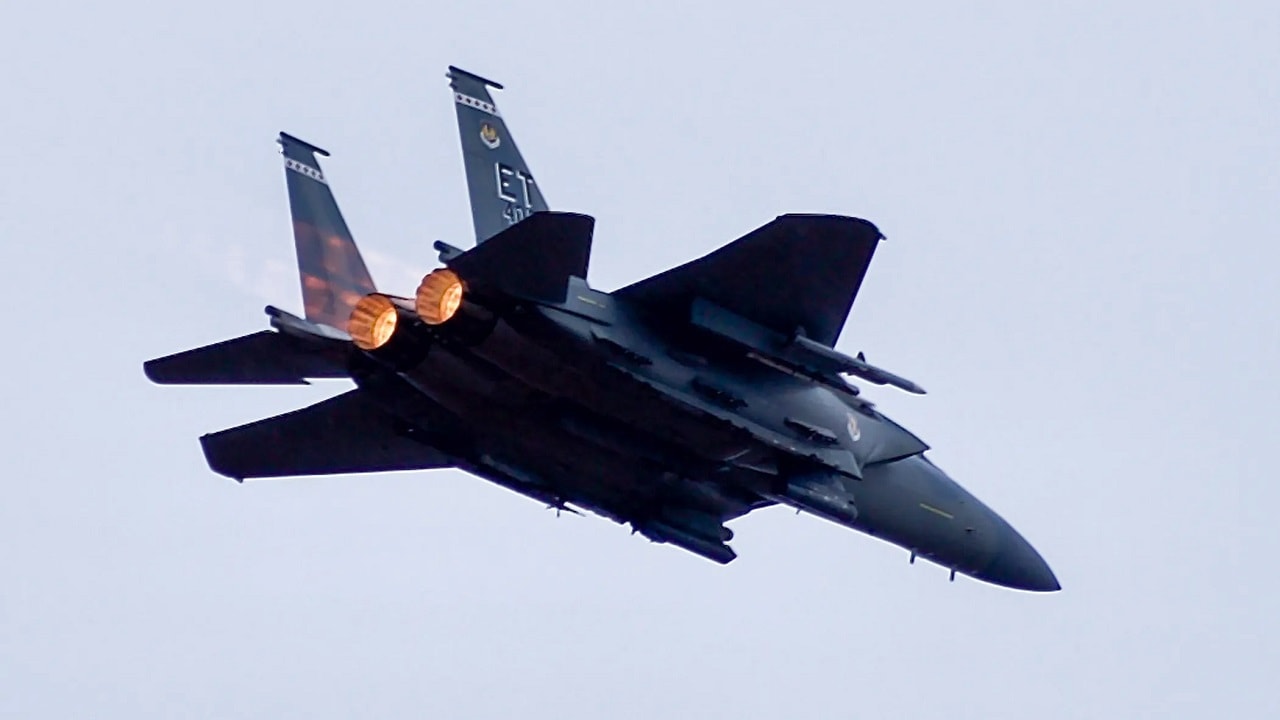
F-15EX Eagle II. Image Credit: Creative Commons.
While it was not a direct replacement as a “new” aircraft with a proven record, it received favorable attention. The Air Force plans to buy between 98 and 144 F-15EXs, a decision that surprised defense watchers and no doubt sapped F-35 procurement. If the UK-Italy-Japan Global Combat Air Programme, or GCAP for short, fails to produce an airplane, the F-35D could be an alternative for all three countries, especially since they all already fly the F-35.
Could This Stealth Fighter Fly?
There’s no guarantee that a F-35D would rack up orders, especially as the Navy and the Air Force concentrate on their own NGAD programs. As for exports, the Made in USA brand is taking a serious hit overseas as the Trump Administration bashes allies and tarnishes America’s reputation as a stable partner.
However, there seems to be little downside for Lockheed Martin to take the risk, especially since between the two NGAD programs and the F-35, there are unlikely to be new American fighters until at least the 2050s.
This is a period of political change unprecedented in the postwar period, and while it might not be a place for the F-35D now, at the rate the world is changing, there might be in five years.
About the Author: Kyle Mizokami
A 19FortyFive Contributing Editor, Kyle Mizokami, is a defense and national-security writer based in San Francisco. His work has appeared in Popular Mechanics, Esquire, The National Interest, Car and Driver, Men’s Health, and many others. He is the founder and editor for the blogs Japan Security Watch, Asia Security Watch and War Is Boring.