
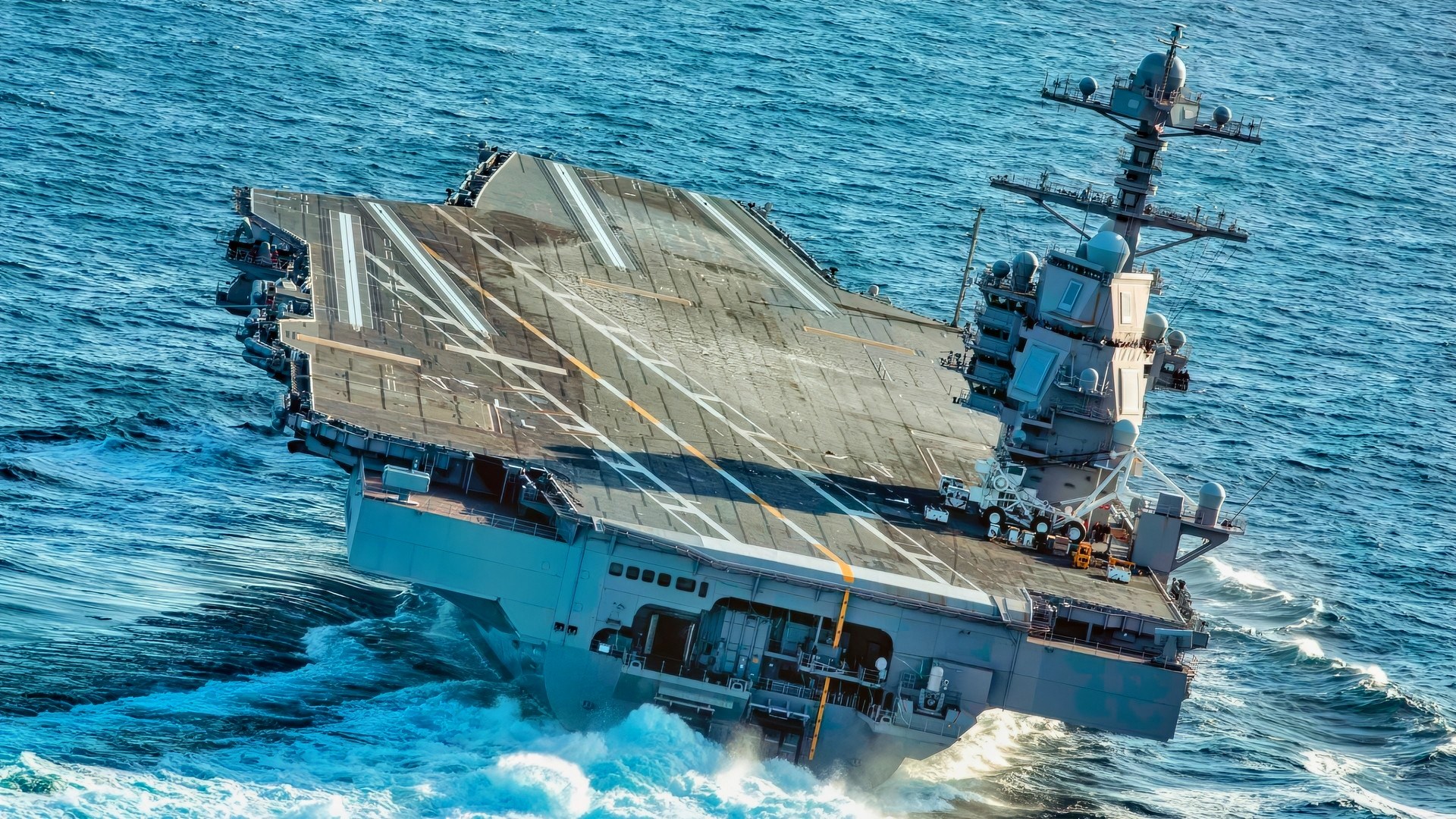
Key Points and Summary: In a stunning 1999 exercise, the Dutch diesel-electric submarine HNLMS Walrus penetrated a U.S. carrier strike group’s defenses and simulated sinking the USS Theodore Roosevelt.
The Incident: Utilizing stealthy “silent running” tactics and a maneuverable X-form rudder, the Walrus evaded the anti-submarine screen, “sinking” the carrier and several escorts before escaping.
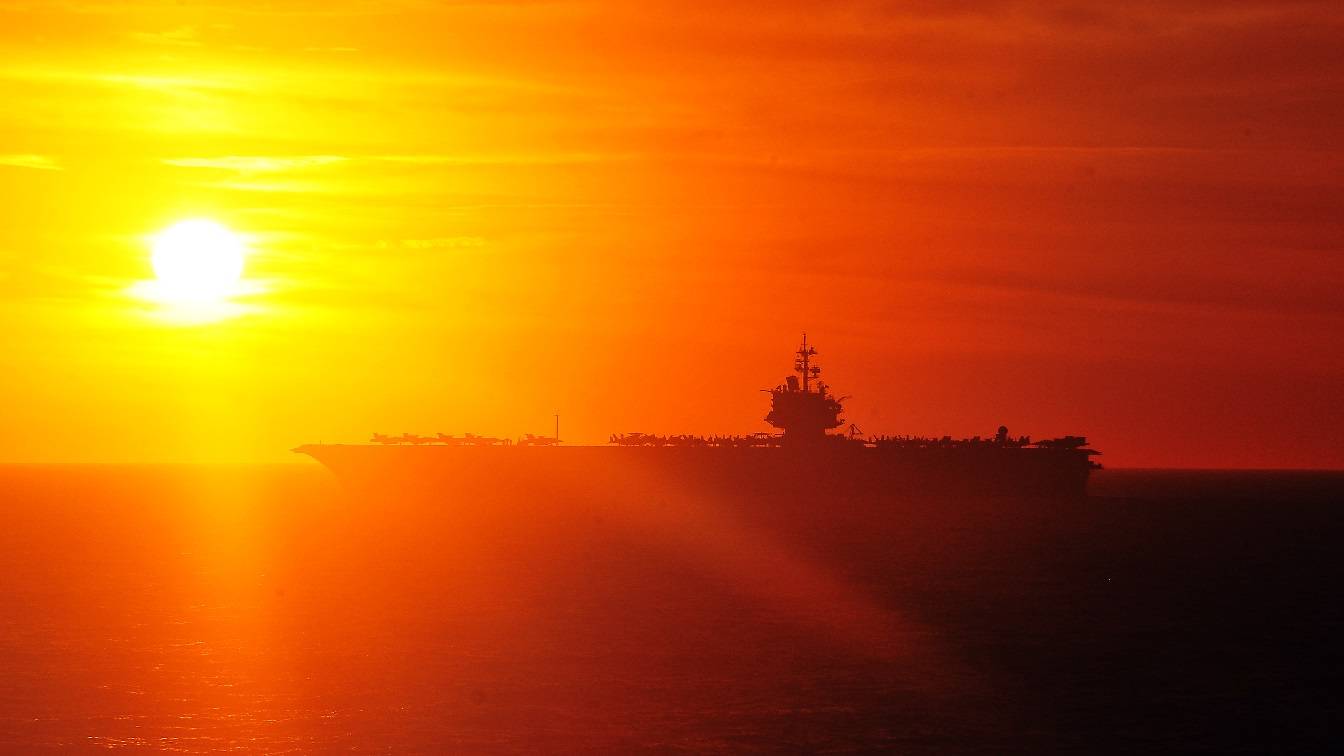
ATLANTIC OCEAN (Jan. 23, 2012) The aircraft carrier USS Enterprise (CVN 65) is underway in the Atlantic Ocean while conducting a composite training unit exercise. (U.S. Navy photo by Mass Communication Specialist 3rd Class Jesse L. Gonzalez/Released)
The Lesson: The event proved that high-value nuclear assets are vulnerable to smaller, cheaper conventional submarines in littoral waters and choke points.
The Future: As rivals like China expand their diesel and autonomous fleets, the U.S. Navy faces urgent pressure to close the gap in unmanned underwater systems.
In 1999, a Dutch Submarine ‘Sank’ the USS Theodore Roosevelt and Got Away
In 1999, during the Joint Task Force Exercise/Theatre Missile Defense Initiative 1999 (JTFEX/TMDI99), the Walrus-class diesel-electric submarine HNLMS Walrus (S802), of the Royal Netherlands Navy, slipped past a U.S. carrier strike group and simulated the sinking of the USS Theodore Roosevelt (CVN-71).
That incident is often cited as evidence that even the world’s most powerful warship formations could be vulnerable to undersea vessels—and the claim is essentially, and technically, accurate.
In the right conditions, simulations like this – and this certainly isn’t the only example – have proven that America’s most valuable warships can be sunk under the right conditions.
But those conditions aren’t always a reality.
And now, as navies around the world contend with new unmanned systems and threats, along with allied submarine warfare operations and emerging autonomous technologies, this incident offers a window into how maritime risk evolves over time.
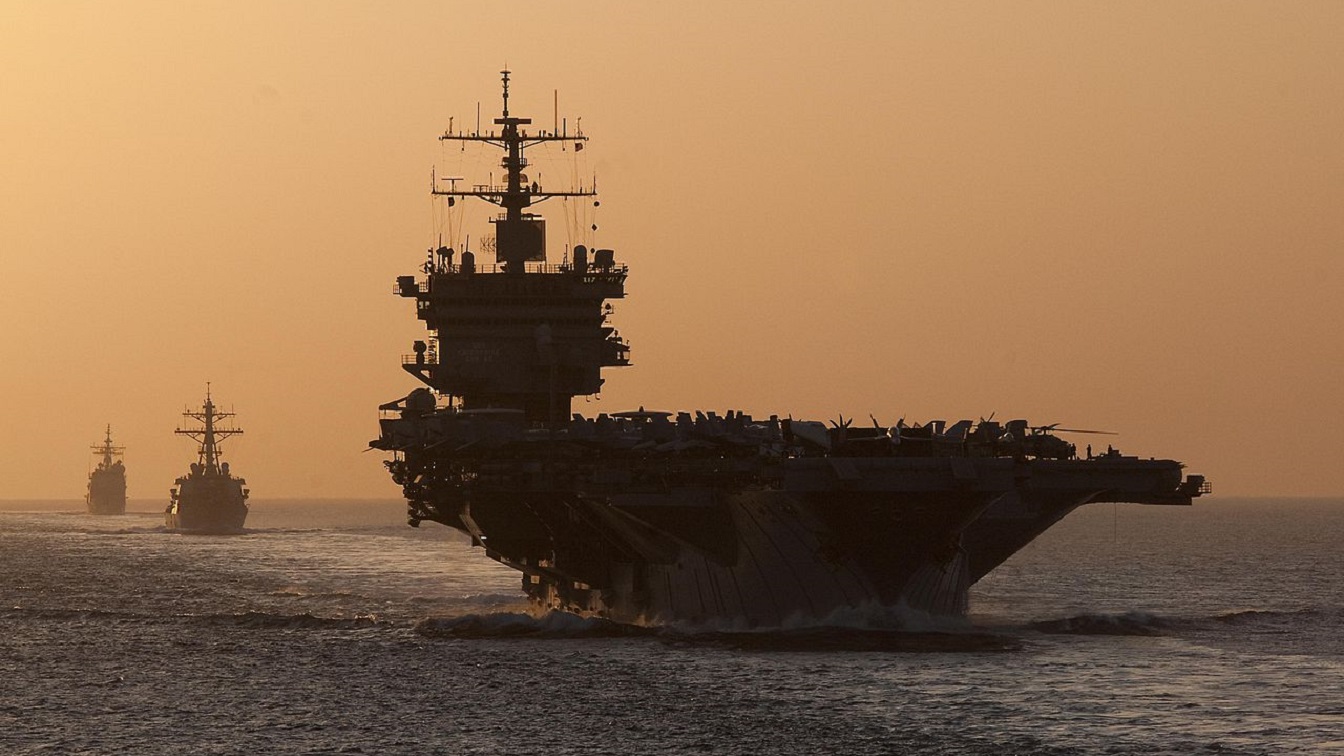
The aircraft carrier USS Enterprise, right, the guided-missile destroyer USS Porter (DDG 78) and the guided-missile cruiser USS Vicksburg (CG 69) transit back to their homeport of Norfolk, Va. Enterprise, Porter and Vicksburg are returning from a deployment to the U.S. 5th Fleet area of responsibility, where the ship conducting maritime security operations, theater security cooperation efforts and support missions for Operation Enduring Freedom. (U.S. Navy photo by Mass Communication Specialist 3rd Class Jeff Atherton/Released).
The Walrus-Class and the Exercise
The Walrus-class was introduced in the 1980s to defend against Soviet submarine threats.
Built with a teardrop hull – designed to reduce hydrodynamic drag and increase underwater speed – as well as an “X-form” rudder configuration for low detectability, the class offered silent running and strong littoral capability. Its success in the 1999 exercise is legendary and was widely praised at the time.
It proved just how powerful conventionally powered submarines could be, even against a high-value target in a major navy’s fleet.
But as much as it was good news for submarine design, proving that smaller navies could punch above their weight when necessary, it also presented some problems: it showed that high-value targets may be more vulnerable than initially believed.
In the JTFEX/TMDI99 scenario, the Walrus penetrated the U.S. strike group’s anti-submarine screen and executed simulated torpedo attacks.
The submarine earned credit for sinking not only the Roosevelt, but also several escort vessels. It proved that only under the right conditions could these stealthy diesel-electric submarines, using clever tactics, defeat one of the most advanced surface combat formations and vessels on the planet.
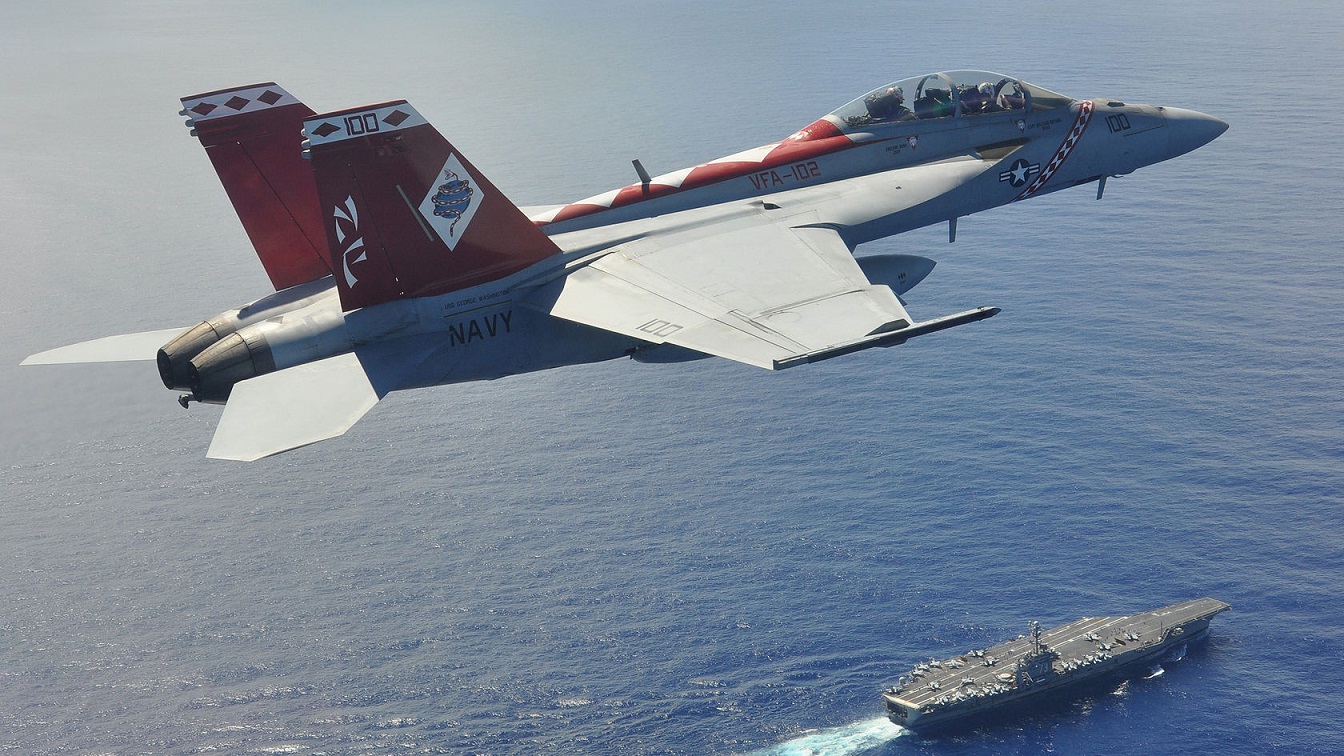
Block III Super Hornet. A U.S. Navy F/A-18F Super Hornet aircraft assigned to Strike Fighter Squadron (VFA) 102 flies past the aircraft carrier USS George Washington (CVN 73) in the Philippine Sea Aug. 21, 2013. The George Washington was underway in the U.S. 7th Fleet area of responsibility supporting maritime security operations and theater security cooperation efforts.
Yes, It Matters Today
The 1999 incident may seem like a Cold War leftover, and in some ways it is.
The exercise reflected the capabilities of the time, after all—but the lesson it revealed is still relevant. Modern navies are rediscovering that the most expensive surface ships in the world—the aircraft carrier and its escorts—are not invincible.
In fact, many analysts are even warning that modern carriers risk becoming “sitting ducks” as automated threats roll off the production lines. As the undersea domain grows bigger, more crowded, and more complex, carriers need increasingly effective defense systems.
But those carriers are still the centerpiece of U.S. power projection, and while next-generation carriers may be on the way, those still at sea need to remain at sea until the U.S. Navy can field something bigger, more advanced, and maybe entirely different.
But as was proven during the 1999 exercise with technology nowhere near as sophisticated as today’s, even high-value assets can be sunk or immobilized by small diesel-electric boats.
With the right conditions and the appropriate tactics, deployed cleverly in chokepoints or in littoral zones, these smaller vessels can track and neutralize strike groups before they get within range of a target. That is what made the Walrus exercise so unsettling.
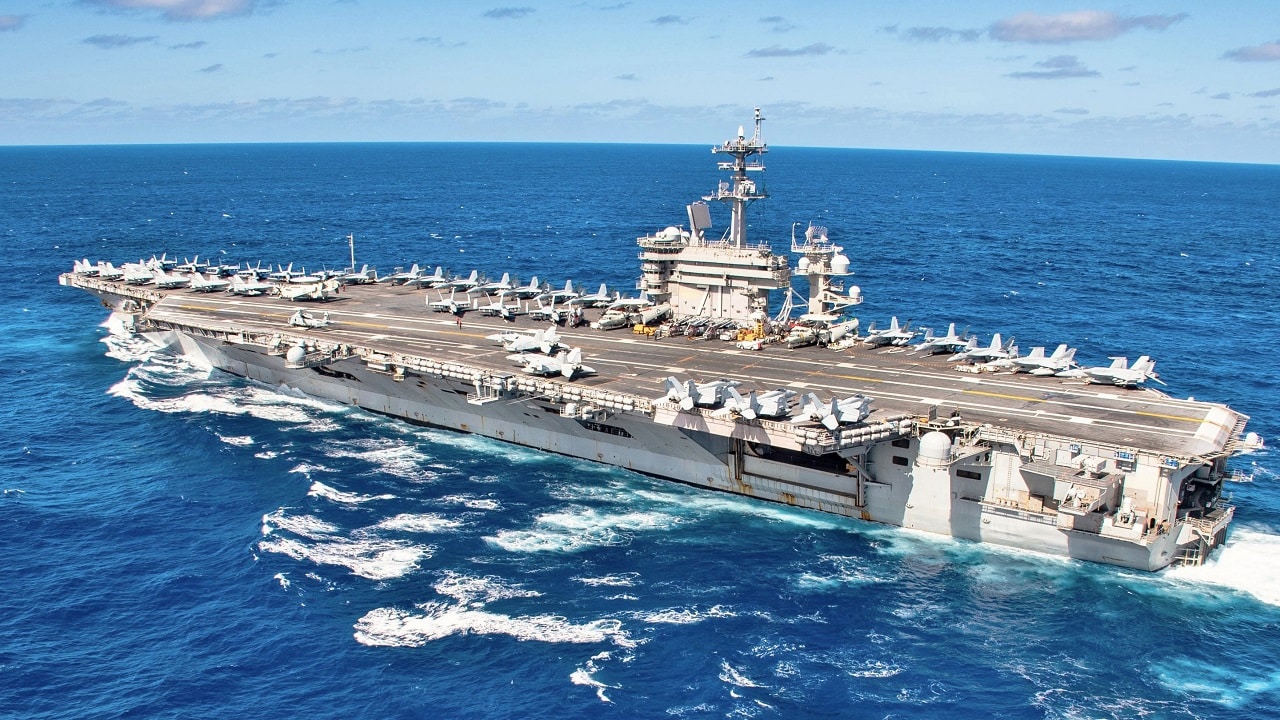
(Jan. 25, 2020) The aircraft carrier USS Theodore Roosevelt (CVN 71) transits the Pacific Ocean Jan. 25, 2020. The Theodore Roosevelt Carrier Strike Group is on a scheduled deployment to the Indo-Pacific. (U.S. Navy photo by Mass Communication Specialist Seaman Alexander Williams)
Yes, technology has moved on since then, but so too has the tempo of undersea warfare. The U.S. Navy, its NATO allies, and other regional partners are now integrating new families of unmanned underwater vehicles (UUVs) and sensor networks designed to improve situational awareness below the surface.
However, not enough is being done. The U.S. Congress has already flagged these unmanned systems, both surface and subsurface, in 2023 as a critical shortfall in future fleet planning.
The Navy has since been urged to close the acquisition gap in large UUVs capable of operating independently, and it must heed this call: maritime warfare is changing, and so too must the U.S. Navy’s strategy.
Whether aircraft carriers become obsolete depends on a multitude of factors, including the ability to field new defensive systems and sensors—but that doesn’t change the fact that the U.S. needs to field its own unmanned systems to keep up with its adversaries.
Procurement, Development, and Innovation
As the U.S. Navy now debates how many Gerald R. Ford-class carriers it can afford, rival nations are pouring huge resources into cheaper, rapidly developed undersea technologies.
China is expanding its autonomous submarine program and underwater drone fleet to challenge U.S. surface dominance, while European allies invest in new diesel-electric designs and unmanned systems.
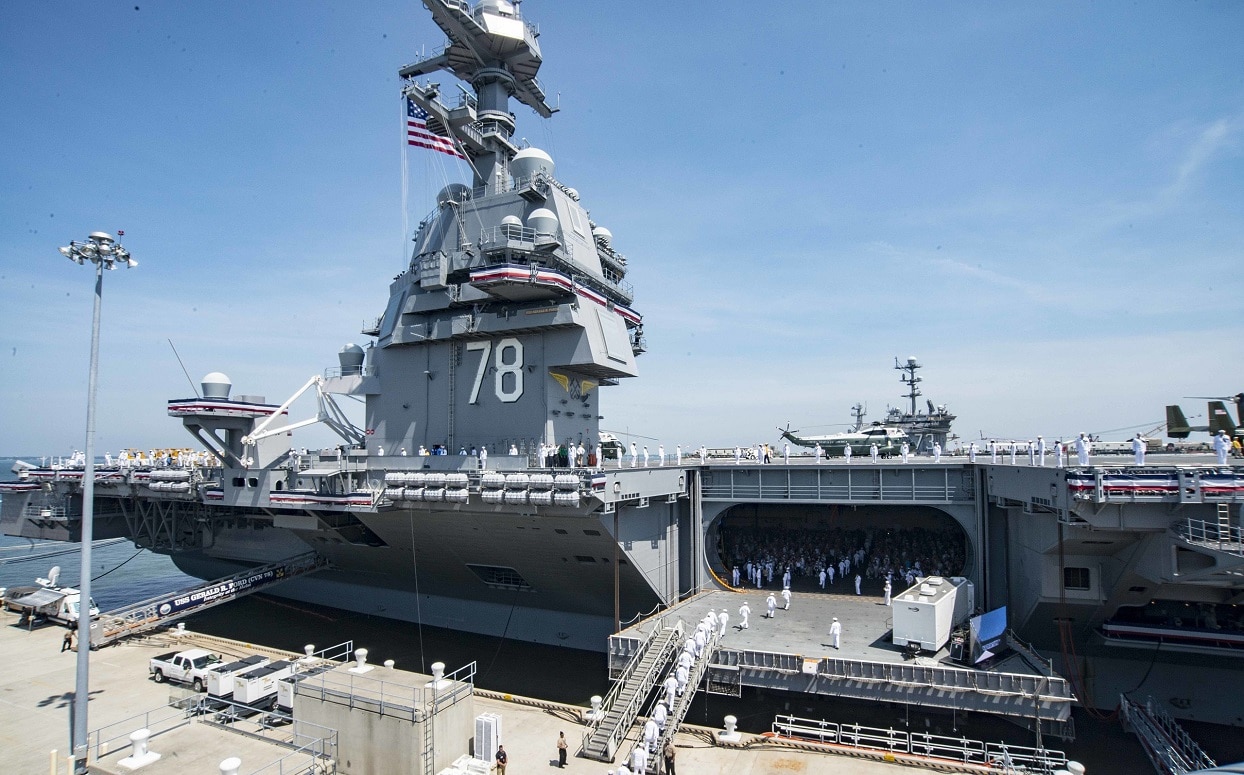
Gerald R. Ford-class. Image: Creative Commons.
The future balance of maritime power could be decided less by size, which the U.S. has counted on for decades, and more by cost-effective, autonomous undersea fleets.
And with that in mind, there are three things the U.S. Navy, the Pentagon, and the White House must now prioritize to remain ahead: procurement, development, and innovation.
About the Author:
Jack Buckby is a British author, counter-extremism researcher, and journalist based in New York. Reporting on the U.K., Europe, and the U.S., he works to analyze and understand left-wing and right-wing radicalization, and reports on Western governments’ approaches to the pressing issues of today. His books and research papers explore these themes and propose pragmatic solutions to our increasingly polarized society. His latest book is The Truth Teller: RFK Jr. and the Case for a Post-Partisan Presidency.