
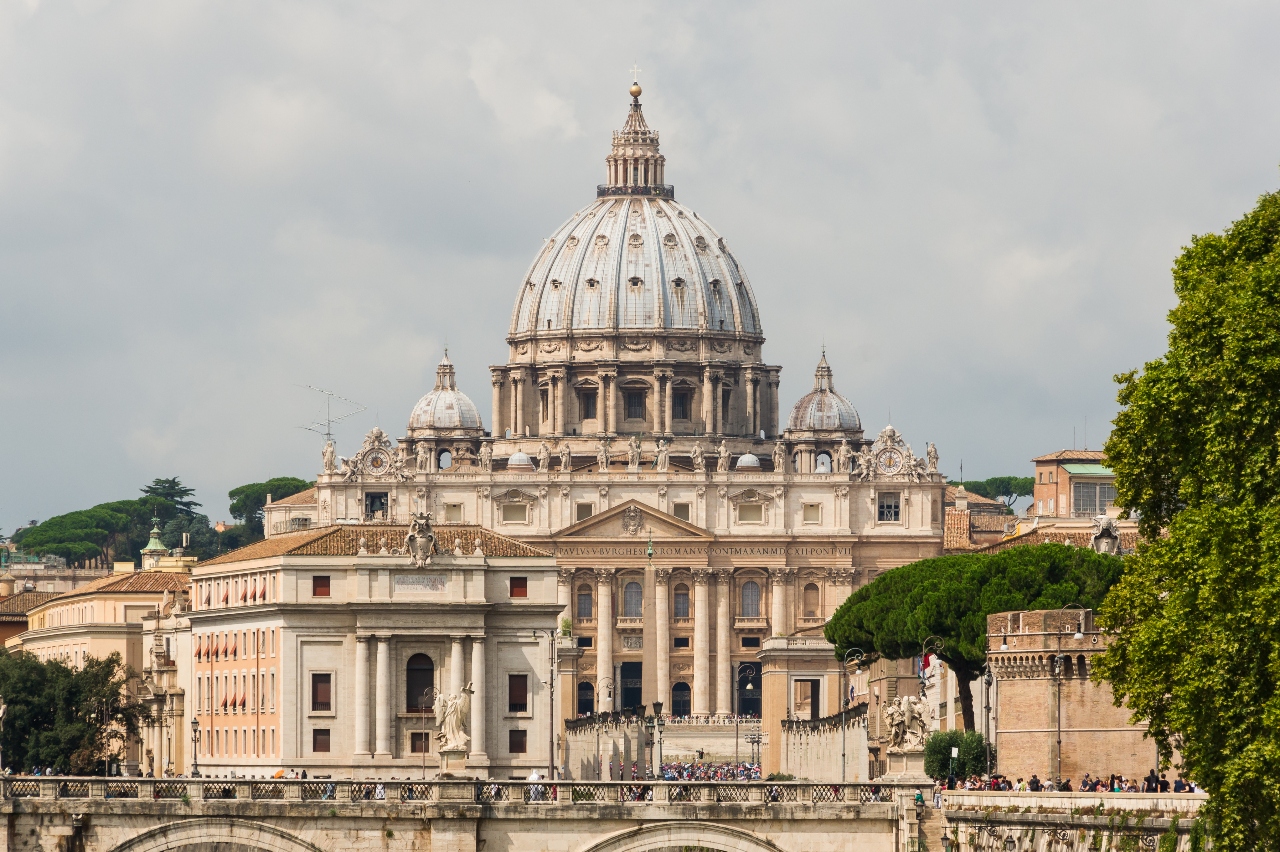
Key Points – The papacy of the fictional first American Pope, Leo XIV, represents a significant recalibration from his immediate predecessors. Unlike John Paul II’s global engagement, Benedict XVI’s doctrinal defense, or Francis’s pastoral outreach, Leo XIV positions the Church as a more independent, countercultural voice in an era of global fragmentation.
Early actions suggest a focus on internal coherence, episcopal governance, and distancing from charged global partnerships, rather than seeking alignment with secular trends or institutions.
This sober approach emphasizes endurance and clarity, reflecting a view that the Church must navigate a challenging modern landscape from a position of distinct identity.
Leo XIV: A New Leader for a New Era
The election of the first American pope, Leo XIV, is rightly seen as historic. But the real story is not his passport. It is how he positions the Church in relation to the world it now faces—and how that posture differs, in subtle but consequential ways, from the approaches of his three predecessors. Where John Paul II evangelized across continents, Benedict XVI defended doctrinal coherence, and Francis prioritized pastoral outreach and institutional reform, this pope signals something quieter but no less important: a recalibration of the Church’s bearing in an age of global fragmentation.
To understand this pope’s emerging stance, we need to locate it within the longer arc of recent papal history. John Paul II was a man of the Cold War. He understood—viscerally and politically—what was at stake in the ideological conflict between liberal democracy and Soviet totalitarianism. His papacy reflected that moment: global, confident, insistent that Catholicism could speak powerfully into the contest over the soul of modernity. Benedict XVI inherited that legacy but shifted the emphasis inward. Confronted with growing secularization and relativism, he focused on defending the integrity of faith, often against the grain of cultural trends. His was a papacy of ideas—brilliant, theologically rich, but often perceived as aloof.
Then came Francis, whose election in 2013 ushered in a new style and tone. Where Benedict sought clarity, Francis emphasized encounter. Where John Paul challenged regimes, Francis preferred dialogue. His papacy was marked by a desire to meet the world on its terms—especially the poor, the marginalized, and the disillusioned. For many Catholics, especially in the West, Francis offered a hopeful vision of a more inclusive Church. But for others, especially in the global South and among those concerned with doctrinal consistency, Francis’s emphasis on process sometimes felt like drift.
The new pope, emerging from the American Church but shaped by global realities, appears to be charting a different course. His early signals suggest neither a return to Benedict’s defensive posture nor a continuation of Francis’s expansive one. Rather, he seems to be positioning the Church not as a participant in the ongoing ideological contests of the West, but as a more independent, even countercultural voice—rooted in tradition, attentive to suffering, and increasingly aware of the limits of modern liberalism as a civilizational framework.
This is not about partisanship, and it would be a mistake to read this pope through the lens of American political categories. He is not an ecclesial conservative in the mold of Benedict, nor a social progressive in the style of Francis. His concern is not with left or right, but with the Church’s ability to stand coherently in a time when moral consensus is collapsing and institutional trust is eroding. That concern explains his early decisions—quiet, but clear. He has moved to re-center episcopal governance, dial back the more open-ended aspects of synodality, and distance the Vatican from ideologically charged global partnerships. It is not rupture, but it is realignment.
What distinguishes him from John Paul II is that he is not operating in a world where the Church can confidently project moral clarity onto a bipolar geopolitical stage. What distinguishes him from Benedict is that he does not presume the West can still be persuaded to return to reason or tradition through intellectual appeal alone. And what distinguishes him from Francis is that he does not assume proximity to the world’s institutions is a reliable path to influence or relevance. His vision is more sober, less optimistic about alignment with any existing order.
This may prove especially disorienting to Catholics in the West. For decades, many assumed the Church could exist comfortably alongside liberal democracy and increasingly secular norms, acting as a kind of conscience or moderating voice. That assumption was at the heart of post–Vatican II engagement with the world: that dialogue and incremental reform could preserve both fidelity and relevance. But this pope seems to be operating from a different premise—that such coexistence is no longer stable or self-sustaining.
And perhaps he is right. The political, social, and technological landscape of 2025 is not the world of 1978 or 2005—or even 2013. Birthrates are collapsing, religious illiteracy is rising, and geopolitical competition is reshaping the global order. At the same time, Catholics in many parts of the world face persecution not from dictators but from indifferent democracies. The Church’s moral voice is no longer ignored merely because it is controversial. Increasingly, it is treated as irrelevant.
The new pope, without fanfare, appears to understand that the time for cautious optimism has passed. The Church must now prepare for endurance—not through institutional retreat, but through a renewal of its inner life and its public clarity. This does not mean abandoning dialogue or forsaking compassion. But it does mean recovering a sense of who the Church is and what it exists to do—not as a stakeholder in global governance, but as a witness to truths that transcend the currents of any age.
In this light, the American dimension of this papacy becomes more intelligible. It is not about American influence, nor is it a reflection of the political polarization that defines so much of American public life. Rather, it is about bringing the experience of a Church that has long tried—and often failed—to balance doctrinal fidelity with cultural relevance into a global frame. In doing so, this pope may be offering the Church a way forward: neither nostalgic nor utopian, but rooted, clear-eyed, and oriented toward something deeper than institutional survival.
This is not the papacy many expected. But it may be the one the Church needs.
About the Author: Dr. Andrew Latham
Andrew Latham is a non-resident fellow at Defense Priorities and a professor of international relations and political theory at Macalester College in Saint Paul, MN. Andrew is now a Contributing Editor to 19FortyFive, where he writes a daily column. You can follow him on X: @aakatham.