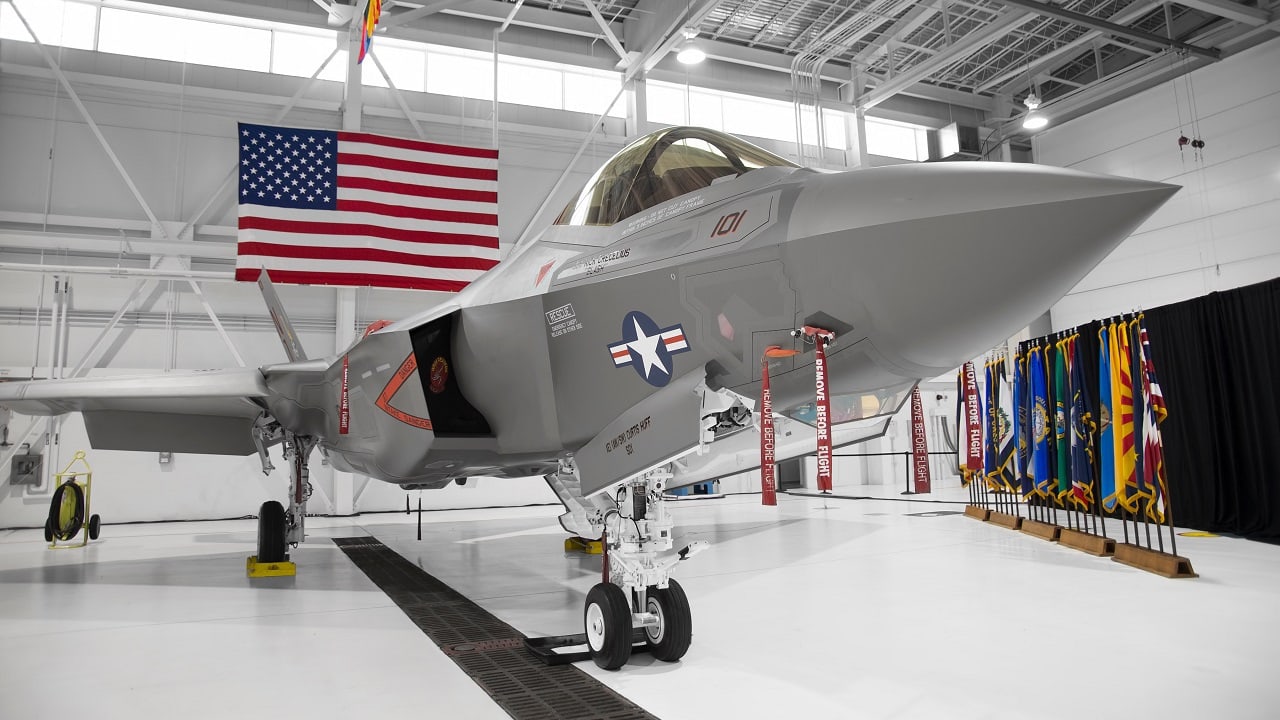
Canada’s Fighter Rethink: 16 F-35s Paid For, But Ottawa Eyes A JAS 39 Gripen-GlobalEye Package
BERLIN, GERMANY – The Swedish firm Saab wants to sweeten the terms of a potential deal to sell fighter jets to Canada. Saab is pitching its GlobalEyes Airborne Early Warning & Control aircraft for the Royal Canadian Air Force as part of a package deal in tandem with the company’s Gripen E fighters.
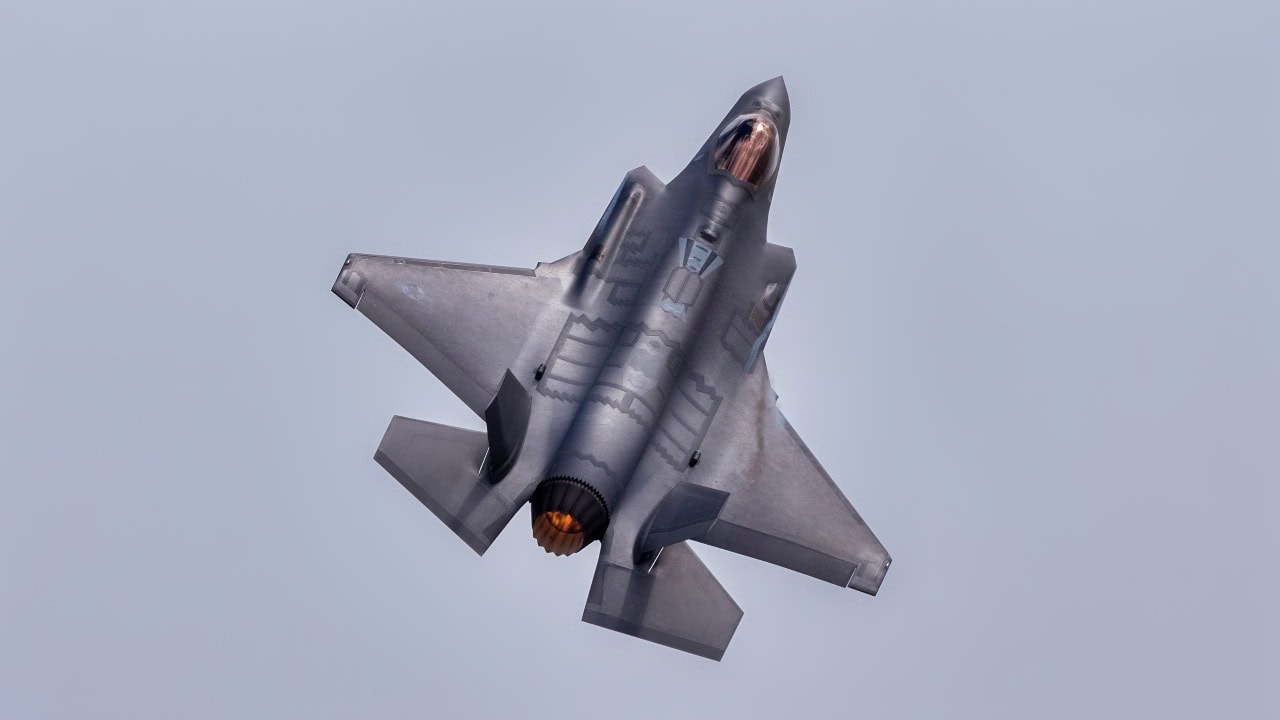
U.S. Air Force Capt. Kristin “BEO” Wolfe, the F-35A Demonstration Team pilot, climbs into the sky during a flight practice June 17, 2020, Hill Air Force Base, Utah. Air Combat Command’s single-ship aerial demonstration teams are required to regularly practice in order to maintain flight currencies and stay performance-ready. (U.S. Air Force photo by Capt. Kip Sumner)
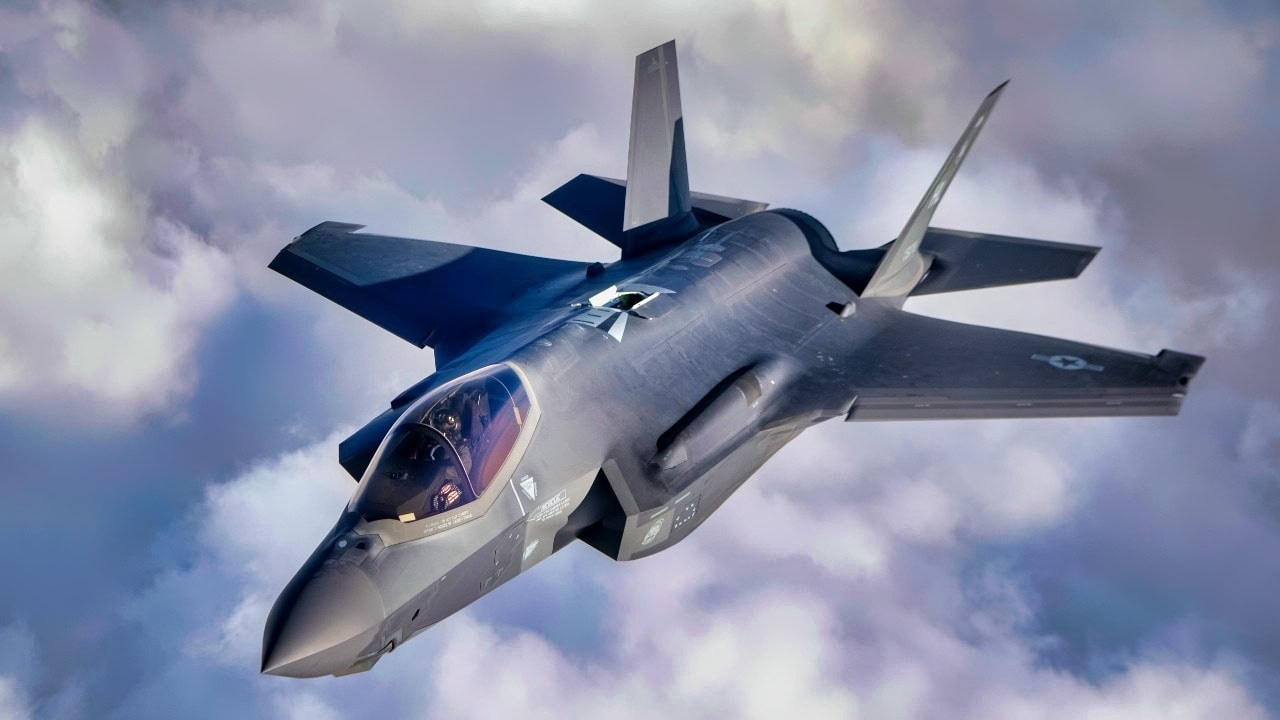
A U.S. Air Force F-35 Lightning II flies over the U.S. Central Command area of responsibility, July 15, 2020. The F-35 Lightning II is an agile, versatile, high-performance, multirole fighter that combines stealth, sensor fusion and unprecedented situational awareness. (U.S. Air Force photo by Airman 1st Class Duncan C. Bevan)
The Royal Canadian Air Force (RCAF) is in the midst of a spending bonanza anticipated to reach $82 billion in the next five years. One of the most important platforms Ottawa hopes to acquire is a replacement fighter for its Cold War-era CF-188 Hornets. Closely related to the U.S. Navy’s F/A-18 Hornets, the Canadian jets have grown long in the tooth and are in need of replacement. And while Canada previously committed to purchasing 88 brand-new F-35 fighters, the country is reconsidering that order amid tensions with the United States.
U.S. President Donald Trump’s combative comments—against some of the United States’ oldest and closest allies in Europe, as well as toward Canada—have not entirely scuppered the F-35’s prospects in Canada. The RCAF has already paid for 16 of the fighter jets. But relations have soured enough to prompt a reevaluation.
Order Pauses, Cancellations
European allies Spain and Portugal canceled their F-35 orders after the United States levied tariffs against their countries, and Switzerland downgraded its original 36-unit F-35 order when it became apparent that the initial $7.6 billion cost estimate would not cover the costs.
Bern has committed to purchasing as many F-35s as possible, but will not promise to dedicate additional funds after the original amount is spent.
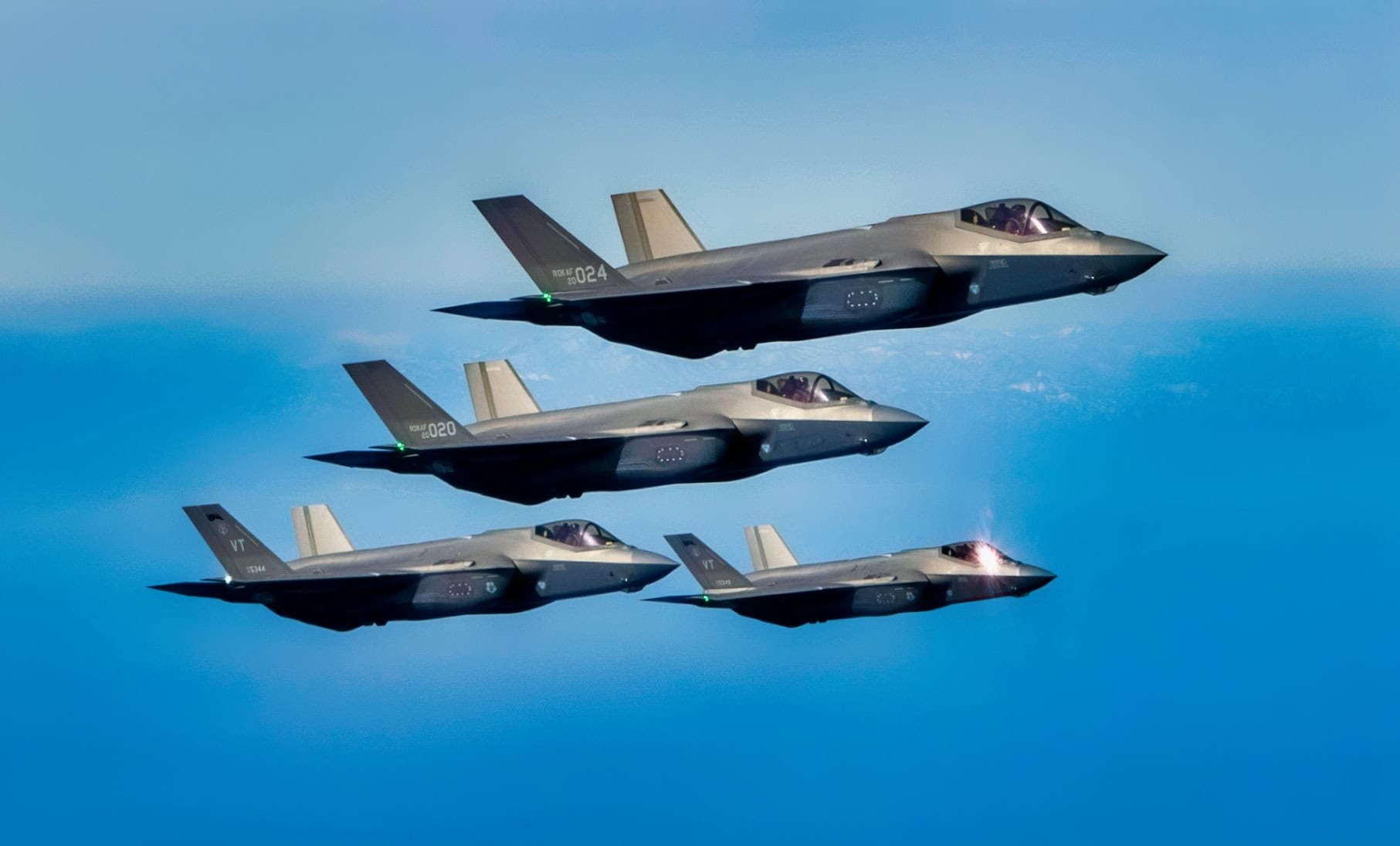
Two U.S. Air Force F-35A Lighting IIs fly in formation with two ROKAF F-35As during Freedom Shield 25, a defense-oriented exercise featuring live, virtual, and field-based training, March 13, 2025. The aircraft participated in dynamic targeting and aerial refueling training, validating the capability of ROK and U.S. Air Forces, to find, fix, and defeat a range of threats. (Photo courtesy of Republic of Korea Air Force)
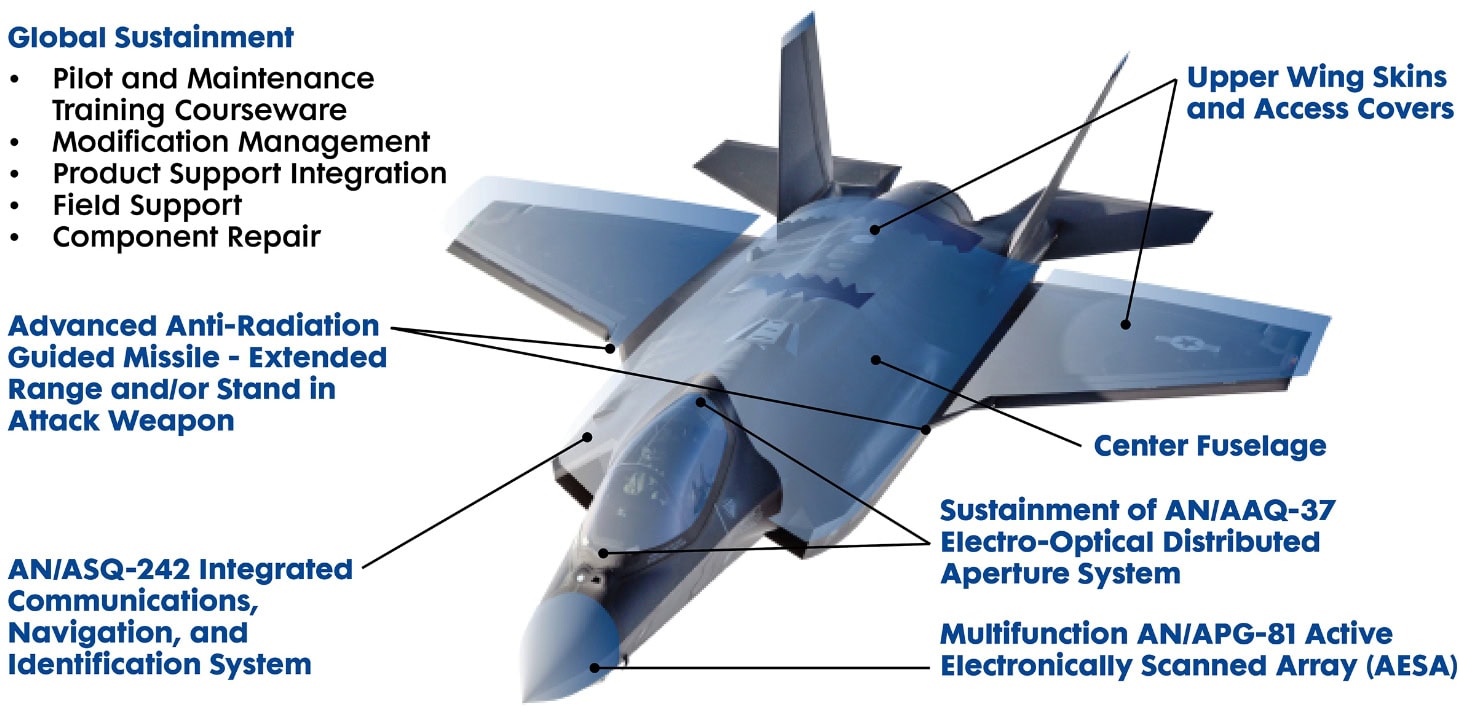
F-35 Fighter. Image Credit: Industry Handout.
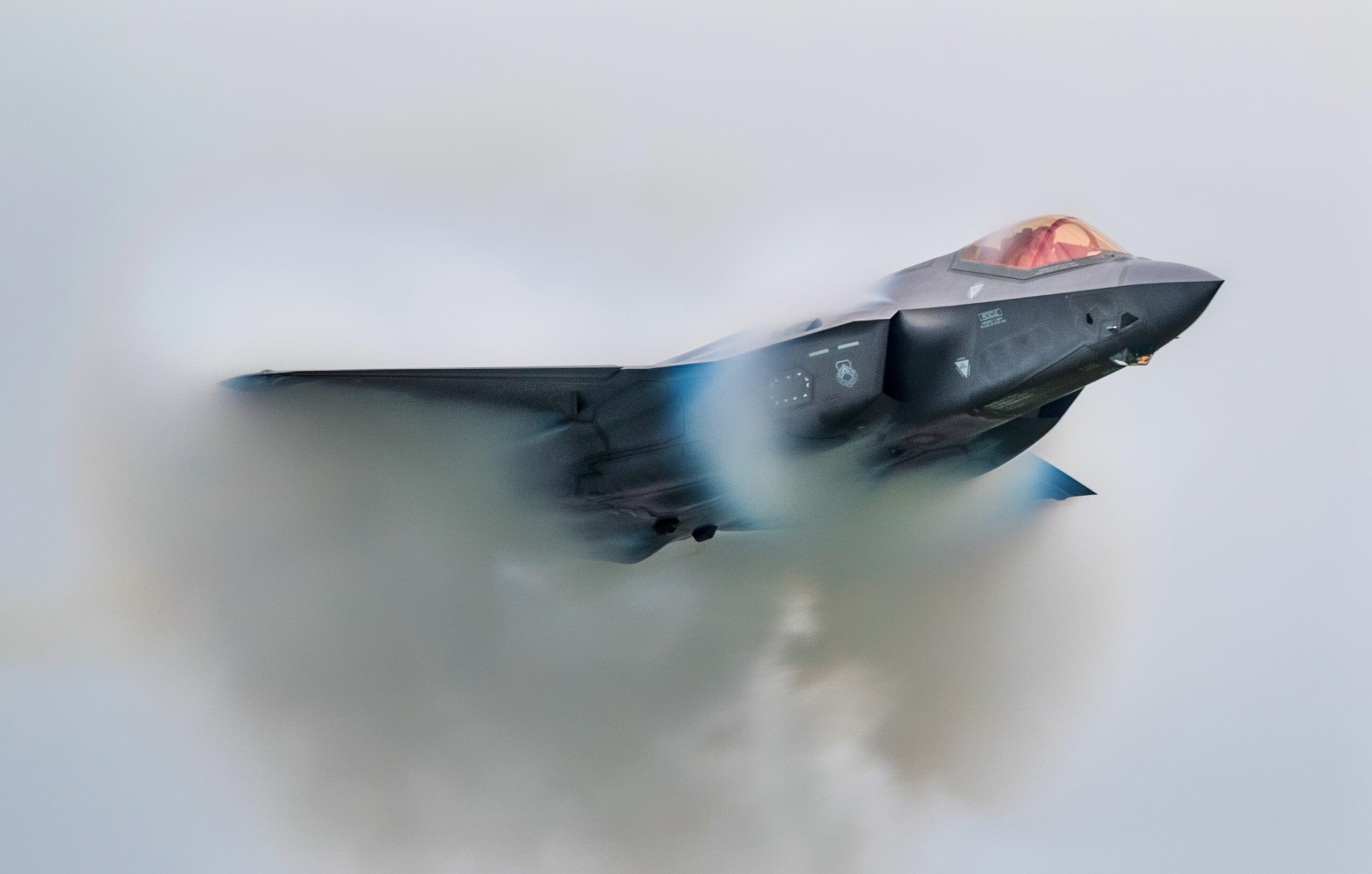
Capt. Andrew “Dojo” Olson, F-35 Demo Team pilot and commander performs aerial maneuvers during the Aero Gatineau-Ottawa Airshow in Quebec, Canada, Sept. 7, 2019. The team consists of 10 Airmen who help showcase the world’s most technologically advanced fifth-generation fighter jet. (U.S. Air Force photo by Senior Airman Alexander Cook)
Similar to the Swiss, Canada decided not to renege on the 16 F-35s that Ottawa had already paid for, but it did affirm that it would explore other fighter options to replace its aged CF-188s on a one-for-one basis. But experts have warned that operating a mixed fleet of fighters would present both logistical complications and sustainment challenges.
Not only would the RCAF have to stand up distinct training pipelines for pilot qualification, but it would have to do the same for the mechanics and maintainers needed to sustain those fighters.
Leaked Documents
Canadian media published the results of an internal RCAF head-to-head evaluation of the F-35 and Gripen E late last year, and the results were decisive. In every single category of evaluation, the F-35 outclassed its Swedish counterpart by significant margins.
Overall, the F-35 scored a 95 percent average score. The Gripen E scored just 33 percent, with the lowest marks in mission performance and upgradability—strong indicators that the fighter jet’s inability to expand its capabilities in the future makes it a technological dead end. Though Saab has attempted to pitch the Gripen E’s electronic warfare capabilities—going so far as to say they “render stealth useless”—that claim is not widely backed.
Political Decision-making
The decision to base a fighter jet purchase on the promise of a jobs package gives it a political dimension, rather than a purely military consideration, Justin Massie, a military analyst and political science professor at the Université du Québec à Montréal, told CBC News.
“We need to have a number that is based on military considerations, and that doesn’t seem to be the case at the moment. It seems that economic and political considerations are guiding this choice,” he said, adding that ultimately Washington would still be in charge of deciding how to integrate Canadian-flown Gripens into NORAD, the joint early warning command—or whether not to at all.
“If all this is just to have a fleet of 16 [F-35 stealth fighters], Massie added, “it’s completely pointless from a military point of view.”
Irritating Developments
Late in 2025, Pete Hoekstra, Washington’s Ambassador to Canada, told local Canadian media that he was “irritated” by Canadian waffling on the F-35 decision. Speaking to the National Post, he appeared willing to waive typical diplomatic language, explaining that “Canada can do what it wants on the F-35, OK?”
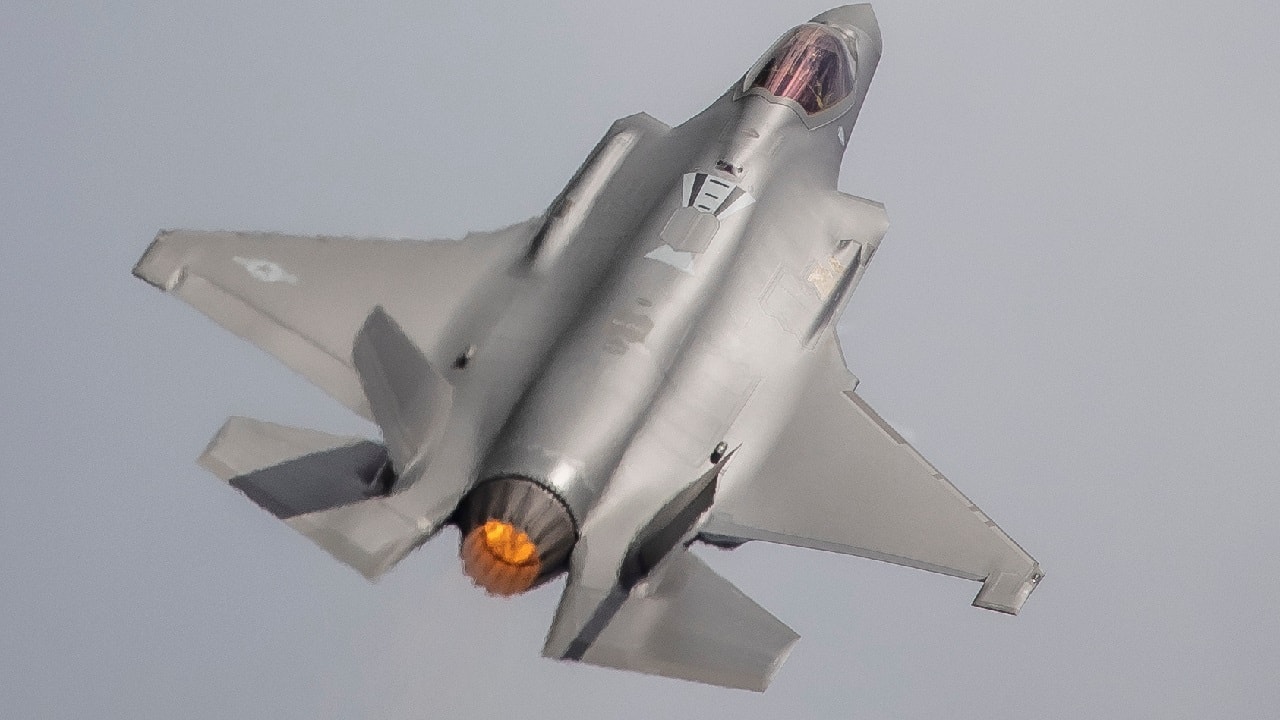
F-35 JSF. Image Credit: Creative Commons.
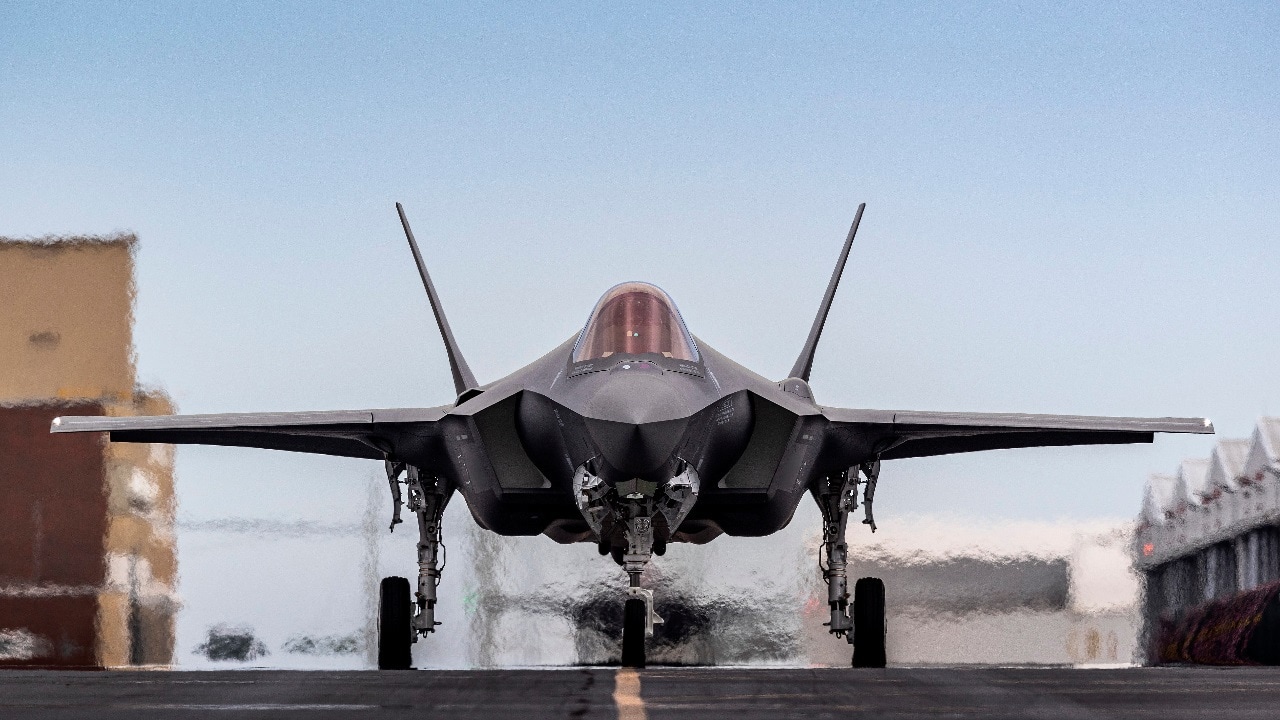
F-35 Stealth Fighter. Image Credit: Creative Commons.
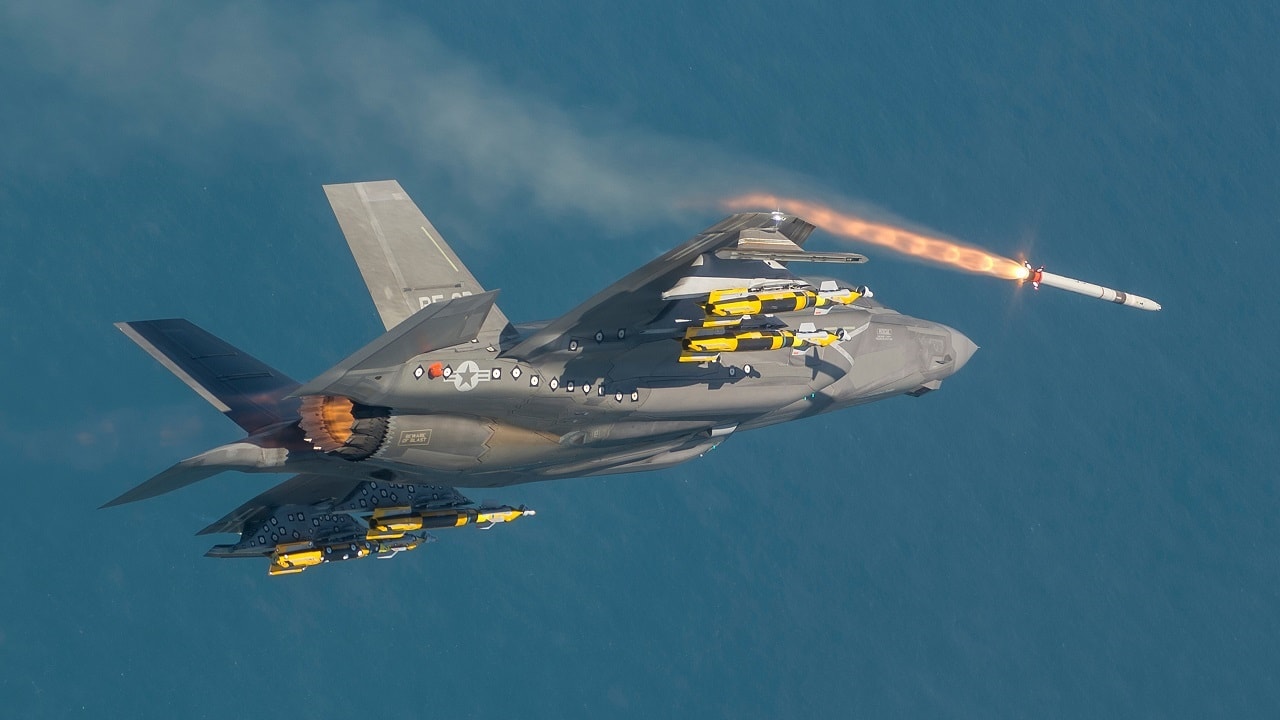
F-35. Image: Creative Commons.
“Does it irritate me, personally, that we’re revisiting this issue again? Yeah, it’d be nice to put this one to bed and just move forward. It would be nice if Canada made a commitment,” Ambassador Hoekstra also said. “But if they want to go through another review, they can go through another review.”
According to Saab, the Gripen E would create 10,000 jobs in Canada by leveraging the country’s robust aerospace industry and building in a tandem arrangement with Bombardier, the Canadian firm. But that number of jobs, CBC News learned, would require building 72 Gripen Es, as well as six GlobalEyes surveillance aircraft.
F-35 for the Win? It Seems Pretty Likely Now
Canada’s Minister of Industry, Mélanie Joly, seems to want to extract concessions from the United States on jobs as well, having traveled to the United States to discuss a prospective F-35 deal and explore a more robust jobs component. But the prospects of securing a better deal remain murky, given the seemingly strong hand the F-35 holds over Sweden’s Gripen E.
About the Author: Caleb Larson, Defense Expert
Caleb Larson is an American multiformat journalist based in Berlin, Germany. His work covers the intersection of conflict and society, focusing on American foreign policy and European security. He has reported from Germany, Russia, and the United States. Most recently, he covered the war in Ukraine, reporting extensively on the war’s shifting battle lines from Donbas and writing on the war’s civilian and humanitarian toll. Previously, he worked as a Defense Reporter for POLITICO Europe. You can follow his latest work on X.