
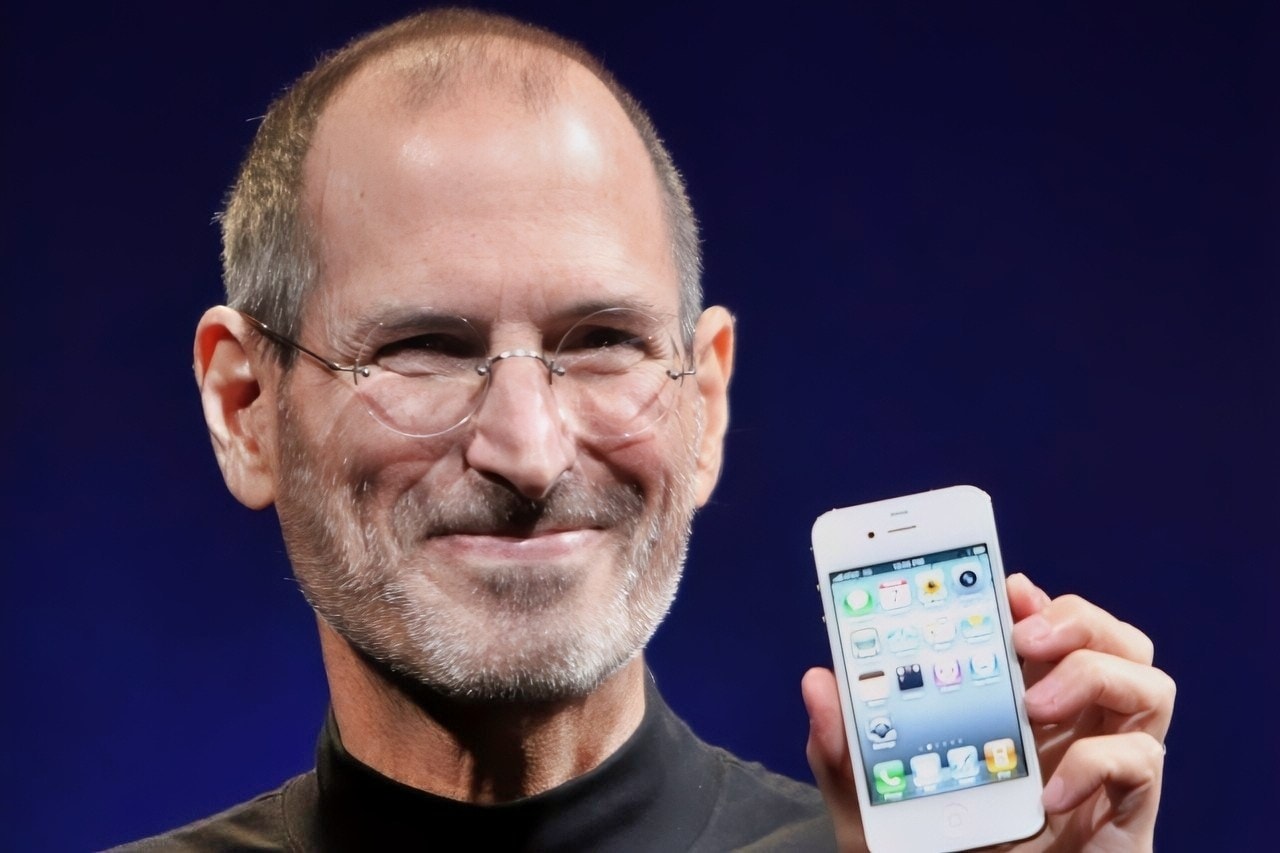
Summary and Key Points: Steve Jobs’ iconic 1993 declaration to the Wall Street Journal—”Being the richest man in the cemetery doesn’t matter to me”—emerged during his “tough time” at NeXT Inc., a period marked by executive departures and failed hardware.
-While the quote’s origins actually date back to 1930s comedian Ed Wynn, it became the mission statement for Jobs’ second act at Apple.
-Despite launching the iMac, iPod, and iPhone, Jobs’ legacy remains complex; recently surfaced emails reveal his role in a $415 million anti-poaching conspiracy, proving that even a “visionary” can be grounded by legal and ethical failures.
Quote of the Day By Steve Jobs: He Never Wanted To Be the Richest Man
“Being the richest man in the cemetery doesn’t matter to me,” he says. “Going to bed at night saying we’ve done something wonderful . . . that’s what matters to me.” – Steve Jobs, 1993
Steve Jobs shared the above quote with the Wall Street Journal in May 1993. It appeared in a profile that was then republished in late 2011, after Jobs’ death. The WSJ piece was published during Jobs’ time with the NeXT computer company in the early 1990s. But while it became attached to Jobs’ legend, he was not the first person to say it.
According to a Quote Investigator story published not long after the WSJ reprint, the “richest man in the cemetery” quotation predated Job’s use of it by at least a half-century.
A comedian named Ed Wynn was known for using the phrase in the 1930s.
“I have no ambition to be the wealthiest man in the cemetery,” Wynn was known to say. “And that, my boy, is the most brilliant thing I ever said. It is worthy of a greater brain than mine… I made and lost four million before I found I needed only one to be happy.”
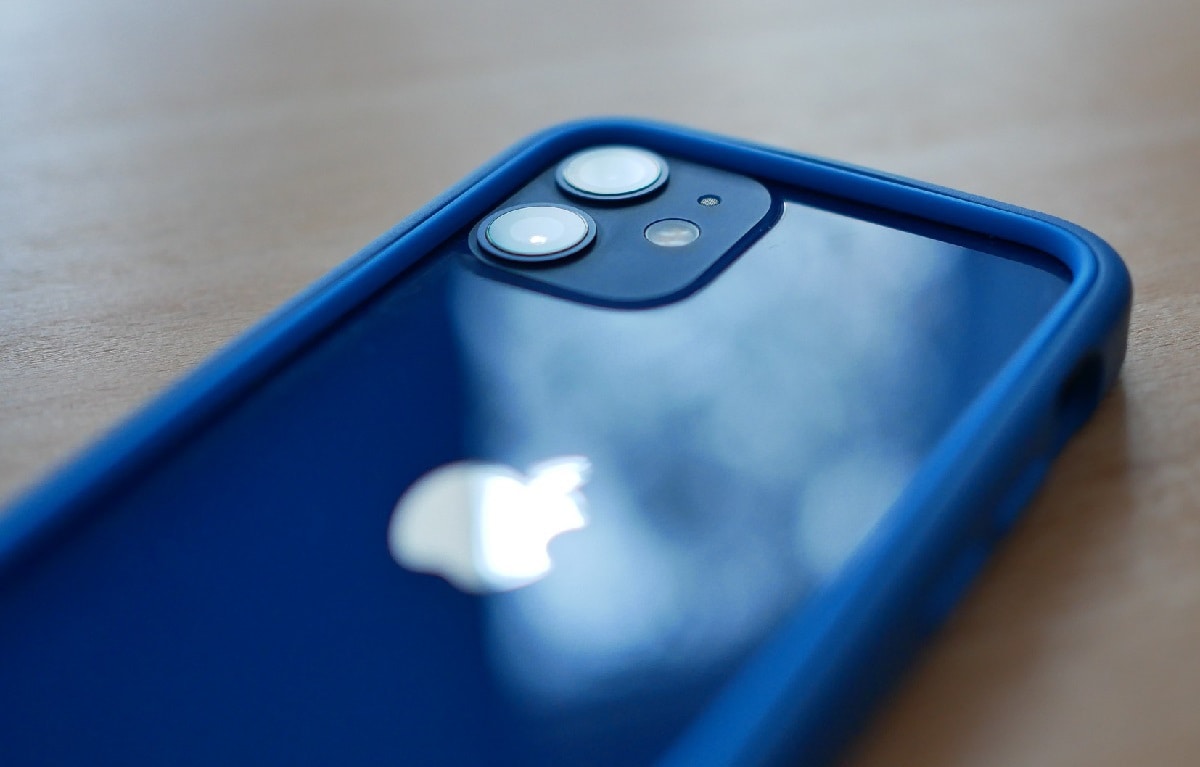
Apple iPhone. Image: Creative Commons.
Many other notable people used versions of the phrase at various times, according to QI, including “ silent film star Douglas MacLean, playwright Clifford Odets, actor Skeets Gallagher, KFC entrepreneur Colonel Harland Sanders, and others in later years.”
Whether Jobs learned that from one of those people and applied the phrase to himself remains unknown.
Tough times for Steve Jobs
The 1993 WSJ profile was published during a difficult period in Jobs’ career. Indeed, the story begins with the phrase, “Steven P. Jobs has been having a tough time.”
“In February, his computer company, Next Inc., stopped making computers. In March, his president and his chief financial officer quit. Then, several big computer makers—some of which he had hoped would use his software—formed a software alliance that excluded Next.”
The Journal went on to write that “a spellbinding spinner of visions, the most famous being his once-unconventional ideas that foresaw the personal-computer revolution.”
Indeed, while Jobs’ vision for NeXT didn’t quite pan out, his claims in the Journal story ultimately came to pass: NeXT was acquired by Apple a couple of years later, bringing Jobs back into the fold. And because NeXT’s software formed the basis for what would become MacOS X, Jobs’ bet proved correct.

iPhone 12 Pro Max. Image: Apple.
Back to Apple
Jobs’ return to Apple was one of the great success stories in the history of American business, leading to the launch of mega-successful products such as the iMac, iPod, iPhone, and iPad.
However, his second act with Apple was not without missteps and embarrassments.
As noted in a Harvard Business Review article about Jobs’ biggest mistakes, it’s wrong to look at even the greatest entrepreneurs as flawless geniuses:
“It’s a great disservice to everyone, especially young people, that the stories that we often hear about the most accomplished entrepreneurs sound so effortless.
“The truth is just the opposite, even for visionary creative success stories like those of Mark Zuckerberg, Jack Dorsey, Howard Schultz, Wendy Kopp, and even the legendary Steve Jobs. Like any creative process, any entrepreneur who wants to invent, innovate, or create must be willing to be imperfect and make mistakes in order to learn what works and what does not.”
Indeed, one of the mistakes Harvard mentions is Jobs’ failure to find “the right market for NeXT computer.”

Apple Laptop. Image Credit: Iliescu Victor.
Other mistakes included bringing John Sculley in as CEO of Apple; initially viewing Pixar as a hardware company; trying to sell that company numerous times before its eventual sale to Disney; and numerous failed products at Apple.
“One of the Hardest Emails of All Time”
One recent social media moment shared how Jobs’ legacy doesn’t always match up with reality.
In January, an X user posted an old email Jobs had sent to then-Adobe CEO Bruce Chizen in May 2005, in which Jobs chided his counterpart.
“Adobe is recruiting from Apple,” Jobs said in the email. “They have hired one person already, and they are calling lots more. I have a standing policy with our recruiters that we don’t recruit from Adobe. It seems you have a different policy. One of us must change our policy. Please let me know who.”
“Reminder: You don’t want to be liked, you want to be respected,” the X post added. Other versions of the email have made the rounds in the past, sometimes praising the Jobs email as “one of the hardest emails of all time.”
However, the reason this email is so well-known has little to do with the difficulty of writing it: Instead, it would be presented as evidence that Apple and three other companies had engaged in an illegal anti-poaching conspiracy, leading to a $415 million settlement in 2015.
“Really funny to see this email become LinkedIn management hustle porn when it was actually a key piece of evidence in a legal case that cost Apple, Google, Adobe, and Intel $415M,” journalist Josh Billinson wrote on X.
In 2010, the Justice Department had ordered the tech companies to stop entering into such anticompetitive agreements.
“The agreements challenged here restrained competition for affected employees without any procompetitive justification and distorted the competitive process,” Deputy Assistant Attorney General Molly S. Boast said at the time. “The proposed settlement resolves the department’s antitrust concerns with regard to these no solicitation agreements.”
About the Author: Stephen Silver
Stephen Silver is an award-winning journalist, essayist, and film critic, and contributor to the Philadelphia Inquirer, the Jewish Telegraphic Agency, Broad Street Review, and Splice Today. The co-founder of the Philadelphia Film Critics Circle, Stephen lives in suburban Philadelphia with his wife and two sons. For over a decade, Stephen has authored thousands of articles that focus on politics, national security, technology, and the economy. Follow him on X (formerly Twitter) at @StephenSilver, and subscribe to his Substack newsletter.