
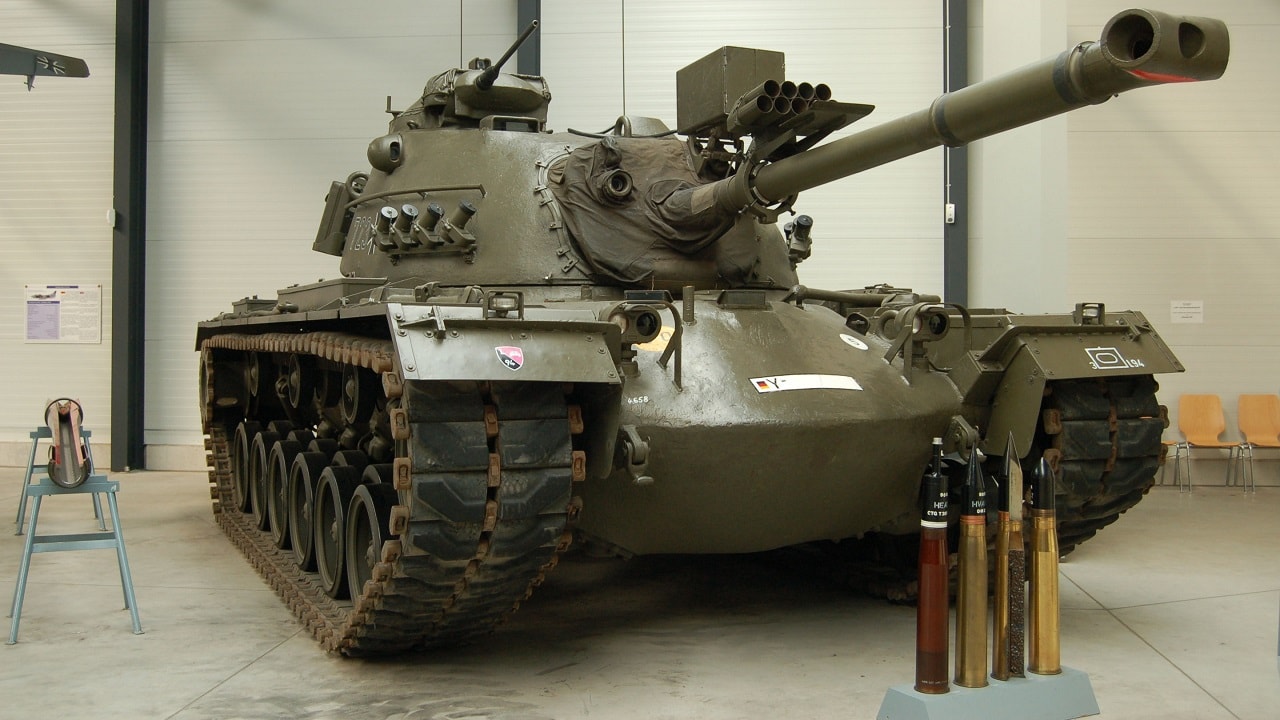
Summary and Key Points: The M48 Patton medium tank stands as one of the most iconic armored vehicles of the Cold War, developed in the early 1950s to counter the Soviet Union’s numerical tank advantage in Europe.
-Introduced in 1952 as a replacement for the troubled M47, the Patton brought a powerful 90mm main gun and innovative armor protection to the battlefield.
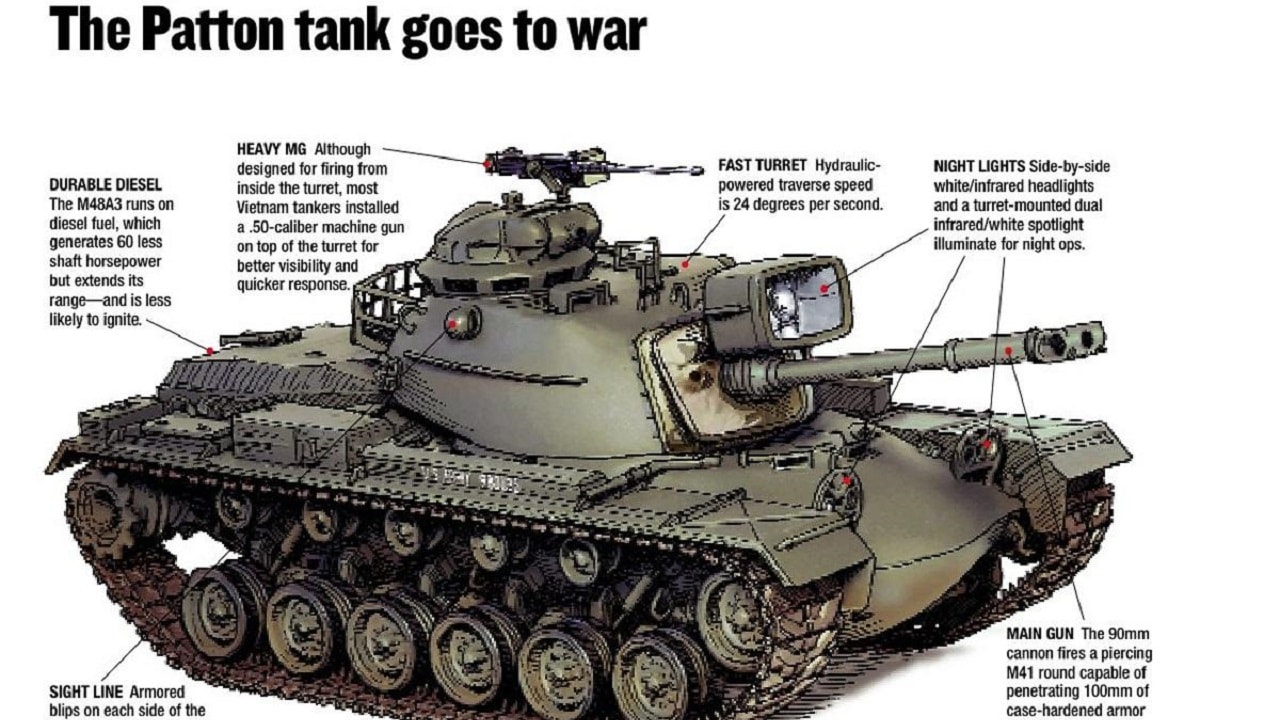
-Despite early struggles with a “gas-guzzling” engine prone to fires, subsequent diesel upgrades transformed it into a versatile, long-range machine.
-From the jungles of Vietnam to the massive tank battles of the Middle East, the M48’s legacy of reliability made it a cornerstone of Western defense for decades.
M48 Patton: The Cold War “Super Tank” That Saved the U.S. Army in Vietnam
The U.S. Army developed the M48 Patton medium tank in the early 1950s, during the Cold War. Its predecessor, the M47, was rushed into production and suffered many issues, particularly with its engine and suspension. The Patton was introduced as its replacement.
The T-48 program began in 1950. The Army brought in Chrysler to develop and build the tank, with the goal of incorporating an improved, more powerful T139 90-mm main gun and installing an improved gasoline engine.
The Patton tank, named after the Army’s famed World War II general, was introduced in February 1952 and was designated the 90-mm Gun M48—an armored, full-tracked combat vehicle in the medium tank class. The tank was christened by Beatrice Ayer Patton, the general’s widow.
The M48 Patton was a much-needed upgrade—it was a powerful machine, especially for its time, and a significant improvement over previous U.S. tanks. It saw extensive service with the U.S. Army and Marine Corps, including during the Vietnam War.
While it had some initial issues with its gasoline engine and some mechanical components, later diesel-powered versions addressed these problems, and the tank underwent numerous upgrades throughout its life.
Meet The M48 Patton Main Battle Tank
After World War II, it was clear that armored warfare would be vital for decades to come, especially in Europe. The Soviets continued to produce tanks and held a substantial numerical advantage over the U.S. and the West.
The M46/M47s were simply upgraded M26 Pershing tanks that were used at the end of World War II. They needed to be replaced with modernized tanks capable of standing up to the Soviet threat to Central Europe.
The powerful Continental AV-1790-5B gasoline engine generated 704 brake horsepower and was coupled with the Allison CD-850-4A cross-drive transmission. Innovations such as composite applique panels made from fused silica glass improved armor protection to the hull and turret.
The tank weighed 49.5 tons and had a crew of four—commander, gunner, loader, and driver. The M48 eliminated the bow gunner in the hull, and the driver’s position was moved from the left side of the hull to the center, which afforded better vision.
The tank was equipped with a 90-mm main gun, as well as .30- and .50-caliber machine guns. The main gun carried Armor-Piercing, High-Explosive Anti-Tank, High-Explosive, Anti-Personnel (APERS), Canister (Pellets), and Canister (Flechettes) ammunition.
The first tanks were equipped with a Y-shaped blast deflector on the 90-mm gun. However, troops reported that the muzzle brake was prone to snagging on brush, so it was replaced with a T-shape.
The armor thickness ranged between .5 inches and 4.5 inches. The 810-horsepower engine carried 200 gallons of fuel and could produce a top speed of 28 miles per hour. However, it was a gas-guzzler with a range of only 70 miles. Later upgrades replaced the gasoline engine, which was prone to catching fire and exploding after a shell hit, with a diesel engine. The range increased to more than 300 miles.
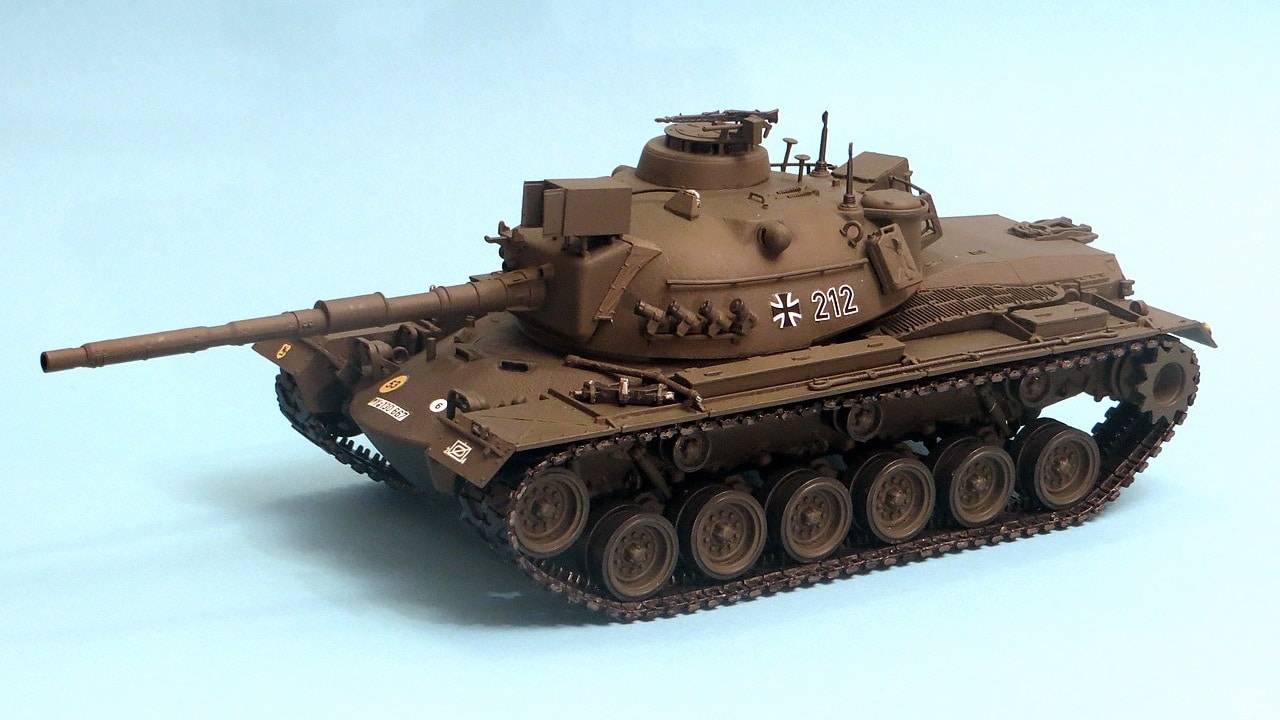
M48A2GA2 Bundeswehr Modell in 1:35
To see photos inside and outside the tank, as well as diagrams of the key components of the M48 Patton, visit AFVDB.
The armies of the United States and several allies equipped their armor units with M48s, including West Germany, Greece, Turkey, Spain, Pakistan, South Vietnam, Taiwan, and Israel.
The M48 At War
The M48 was the most iconic tank of the Vietnam War, used by the Marines and the Army.
Israeli M48s met the Soviet-made tanks of Egypt and Syria on the field of battle during the Six-Day War in 1967. The mobility and technical prowess of the M48A2s and M48A3s overshadowed the superior firepower of the IS-3s used by Egypt.
Israeli M48s later faced Egyptian and Syrian tanks again, in the 1973 Yom Kippur War, and took part in some of the largest armored battles since World War II—especially along the Golan Heights, where vastly outnumbered Israeli armor held against Syrian and Jordanian armor.
The Pakistani Army used M48s during two wars with India, in 1965 and 1971. In an interesting footnote, the Pakistanis used their M48s to rescue American Rangers and Delta Force members during the Battle of Mogadishu (Black Hawk Down) in October 1993.
The M48 Patton was a very capable tank that played a key role during the Cold War. While earlier models had issues, its continual upgrades and versatility made it a valuable asset for the U.S. military and its allies.
It was eventually replaced by the M60 tank, but its legacy as a reliable and effective main battle tank is well-deserved.
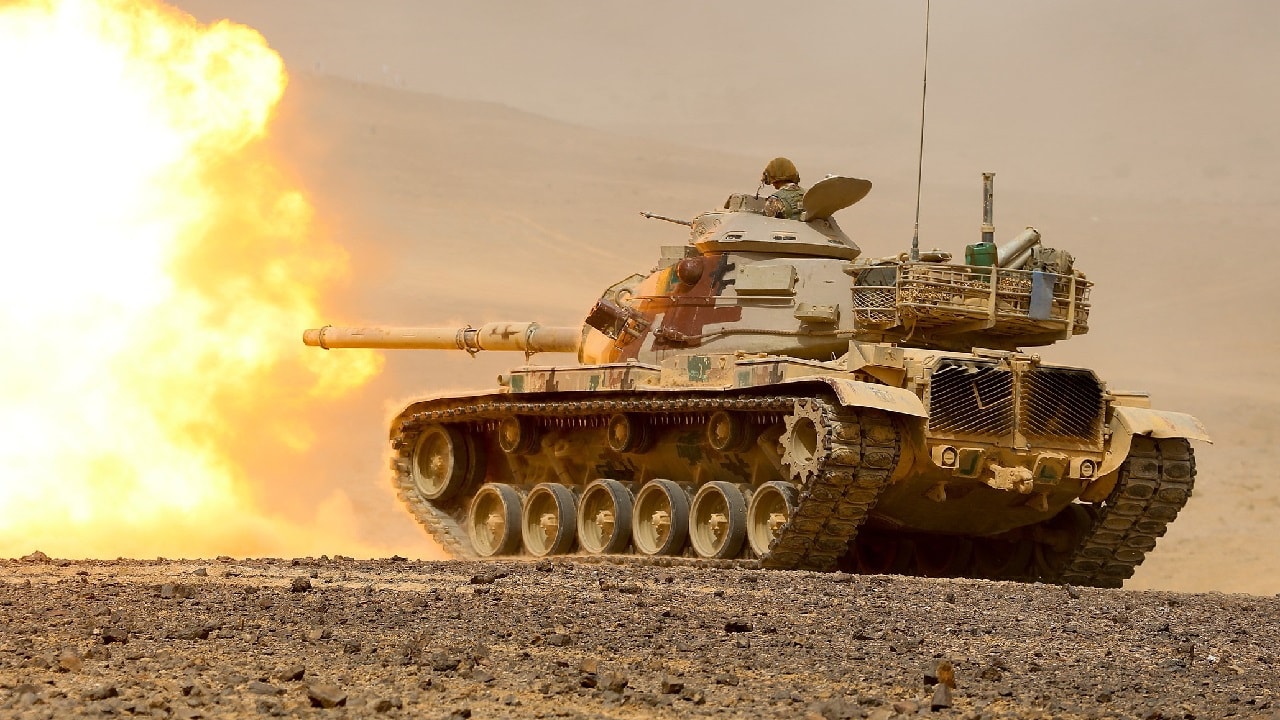
An M60A1 tank from the Royal Jordanian Armed Forces fires a round at a range in Wadi Shadiyah during a massive military demonstration in front of dignitaries and media.
M60 Tank. Image Credit: Creative Commons.
About the Author: Steve Balestrieri
Steve Balestrieri is a National Security Columnist. He served as a US Army Special Forces NCO and Warrant Officer. In addition to writing on defense, he covers the NFL for PatsFans.com and is a member of the Pro Football Writers of America (PFWA). His work was regularly featured in many military publications