
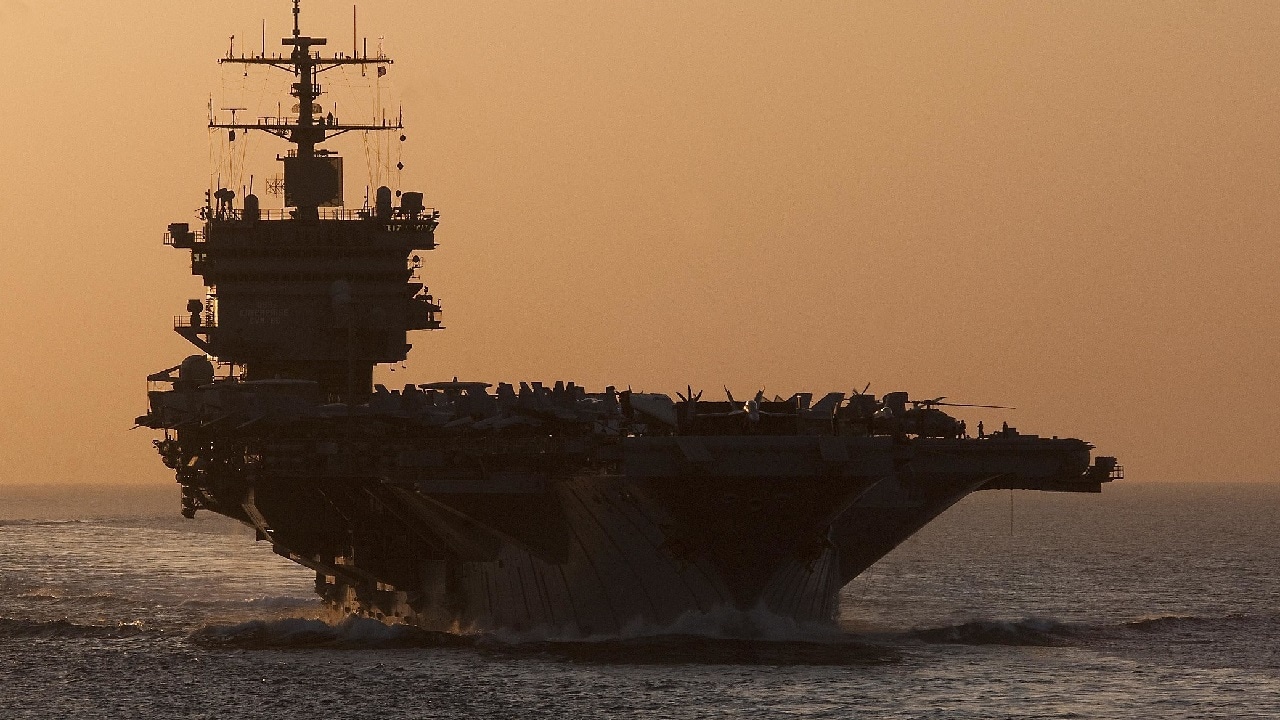
Summary and Key Points: In the 1995–1996 Taiwan Strait Crisis, U.S. carrier groups exposed a painful Chinese reality: Beijing could not reliably find, track, or threaten American flattops operating near Taiwan.
-That lesson hardened into a blueprint. China prioritized persistent surveillance, long-range maritime strike, and an integrated reconnaissance-to-fire architecture built to hold carriers at risk before they can shape events.
-The emphasis shifted from “sink the ship” to “push it back,” using missiles, submarines, aircraft, and networks to impose distance and reduce sortie density. The result is a modern dilemma: proximity brings effect—and danger.
The Real Reason U.S. Aircraft Carriers Scare China Less Than They Used To
During the 1995–1996 Taiwan Strait Crisis, the United States did more than demonstrate political resolve. It demonstrated operational reach in a form Beijing could neither match nor meaningfully contest. Two carrier battle groups moved into waters proximate to Taiwan, establishing an immediate airpower presence and underscoring Washington’s ability to intervene on short notice.
For Chinese planners, the most consequential lesson was not diplomatic. It was military and deeply uncomfortable. The People’s Liberation Army struggled to consistently track those carriers. Targeting data proved unreliable. Strike options were effectively nonexistent.
American flattops operated in what China regarded as its near seas without facing a credible threat. That experience hardened into institutional memory, shaping force-development priorities that remain evident today.
Surveillance Before Aircraft Carrier Strike
The first lesson Beijing drew was stark in its simplicity. A force that cannot locate carriers cannot hold them at risk. During the crisis, China’s maritime awareness picture was fragmentary. Surveillance coverage lacked persistence. Contact reporting was sporadic rather than continuous.
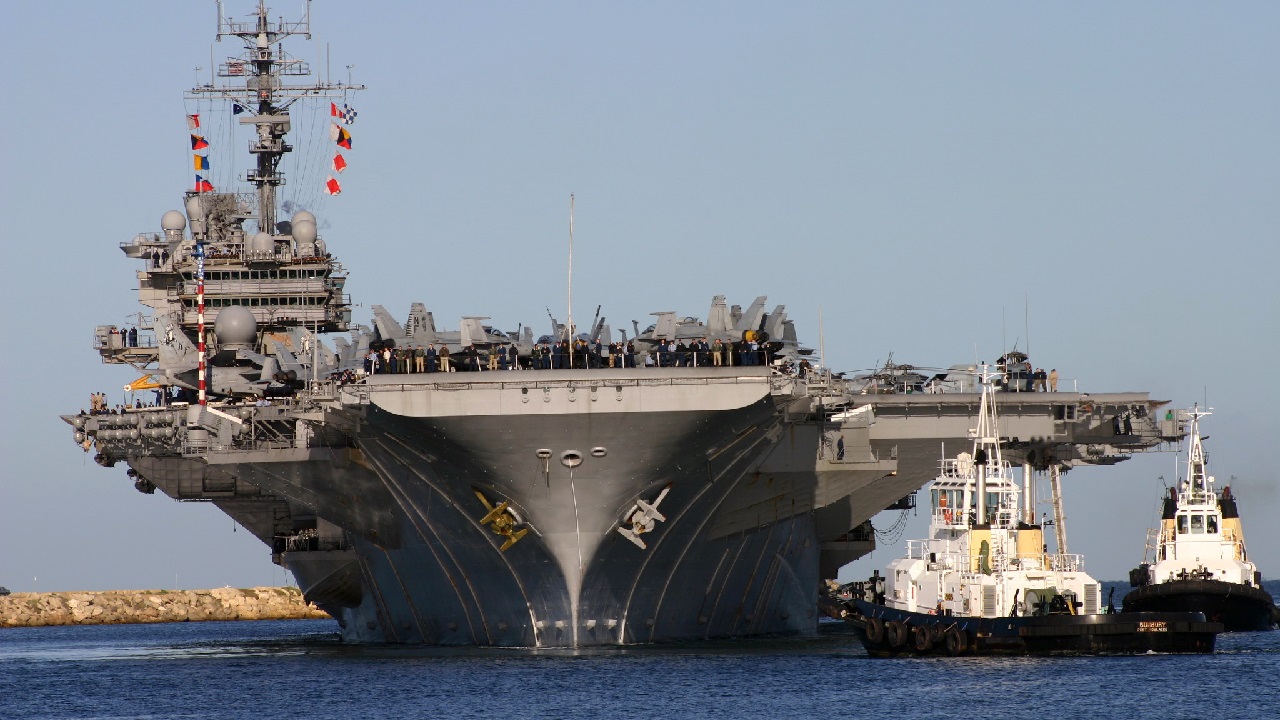
Fremantle Harbour, Australia (Apr. 22, 2004) – Tug boats escort USS Kitty Hawk (CV 63) and embarked Carrier Air Wing Five (CVW-5) into Fremantle Harbour, Australia where the crew will enjoy a five day port call. This was Kitty Hawk’s fifth visit to Fremantle and the ninth for CVW-5. Kitty Hawk is one two remaining conventionally powered aircraft carriers in the U.S. Navy, and is currently homeported in Yokosuka, Japan.
Correcting that deficit became an early focus of modernization. Over time, China expanded its space-based reconnaissance capabilities for ocean surveillance. Satellite constellations increased both in number and in specialization, improving revisit rates over key operating areas.
Ground-based radar systems extended their detection reach farther into the Pacific. Over-the-horizon arrays provided wide-area search capacity that had been absent in the mid-1990s. Airborne surveillance followed a similar trajectory.
Maritime patrol aircraft widened coverage while improving tracking continuity. Unmanned platforms introduced persistent monitoring in areas that had previously gone unmonitored. Civilian maritime reporting channels contributed additional density to the detection picture.
The goal was no longer episodic sighting. It was sustained target custody.
Target the Ship, Not Its Aircraft
Detection solved only part of the operational problem. Chinese planners concluded that carrier aviation could not be neutralized efficiently by attacking aircraft alone. As long as the ship remained combat-effective, sortie generation would continue.
That logic led Beijing to redirect investment toward long-range anti-ship strike capabilities. Systems were designed to engage carriers before their air wings could impose decisive effects over the battlespace. Anti-ship ballistic missile development reflected this shift in emphasis.
The DF-21D became the most visible manifestation of that effort. Its purpose was not symbolic destruction. It was operational denial. By threatening the carrier itself at extended range, Beijing aimed to complicate flight operations long before aircraft approached contested airspace.
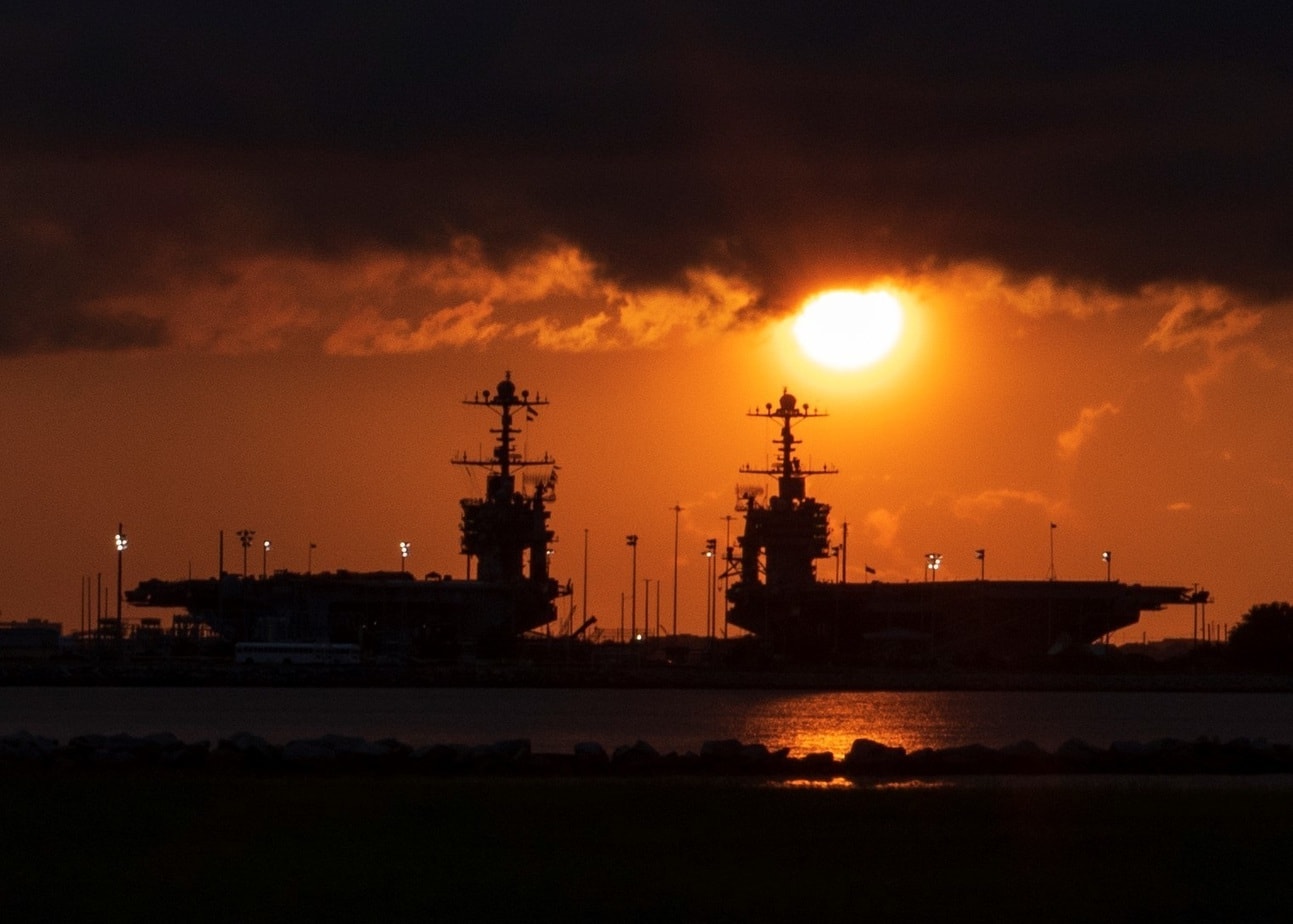
NORFOLK (Aug. 16, 2019) The Nimitz-class aircraft carriers USS Dwight D. Eisenhower (CVN 69), left, and USS John C. Stennis (CVN 74) moored at Naval station Norfolk. Making port at Naval station Norfolk is a routine activity for aircraft carriers.
Ballistic trajectories shortened defensive reaction timelines. They introduced interception problems that had not previously existed. Even the credible existence of such systems forced reconsideration of carrier operating distances.
Building a Functional Kill Chain
Possessing surveillance assets and strike systems did not guarantee effectiveness. Chinese planners recognized that time-sensitive targeting required integration across domains. Without that integration, detection data would decay before weapons could be employed.
Efforts, therefore, focused on developing a reconnaissance-strike architecture capable of maintaining target custody throughout the engagement cycle. Surveillance inputs flowed into data fusion networks designed to refine targeting solutions quickly enough to remain actionable.
The communications infrastructure was hardened to ensure data transmission under contested conditions. Command systems are adapted to manage dynamic targeting information without excessive delay. The objective was continuity between detection and engagement.
This integration shortened the interval between locating a carrier and striking it. Anti-carrier capability thus matured into a system rather than a platform.
Distance as Denial
Another lesson drawn from 1996 concerned battlespace geometry. Chinese planners concluded that carriers need not be sunk outright to be strategically neutralized. Their operational impact could be reduced if they were forced to operate at a greater distance.
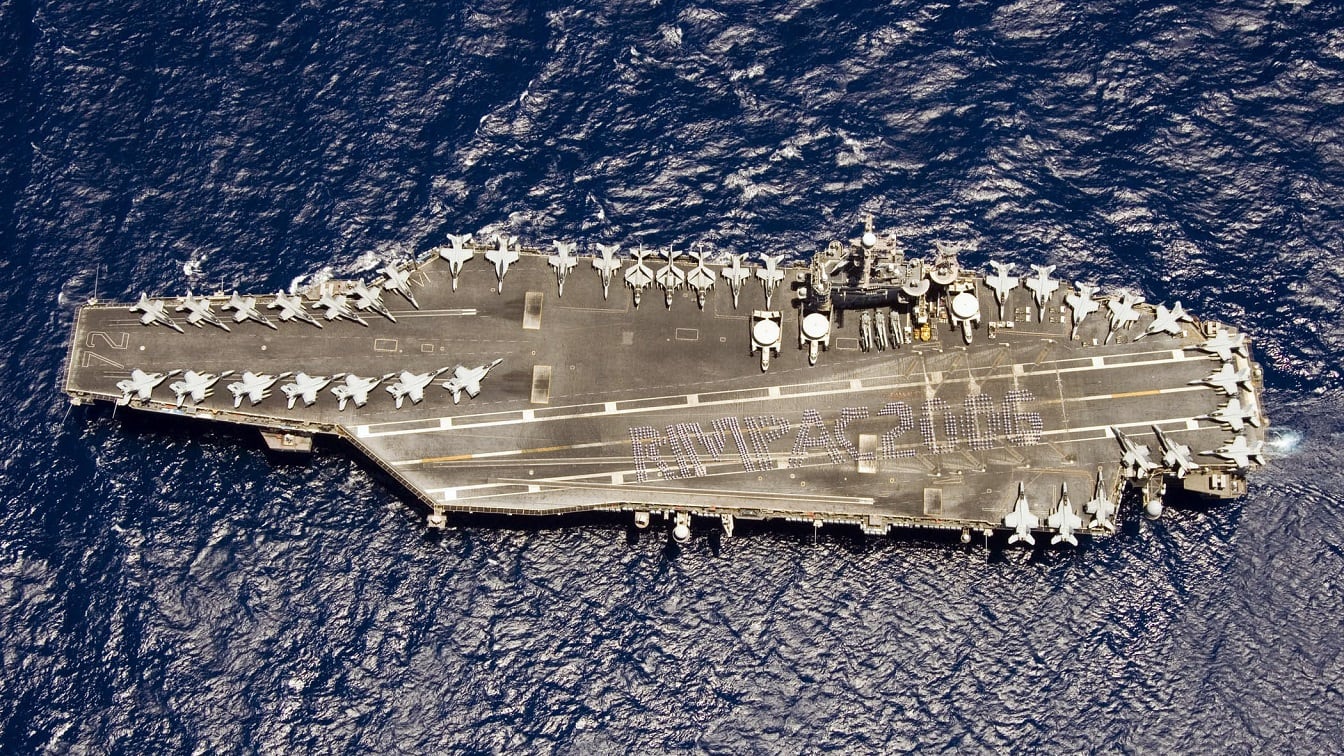
Aerial overhead view of US Navy (USN) Sailors aboard the USN Nimitz Class Aircraft Carrier USS ABRAHAM LINCOLN (CVN 72) spelling out RIMPAC 2006 on the flight deck of the ship during a photo exercise during Exercise Rim of the Pacific (RIMPAC) 2006 in the Pacific Ocean (POC). The exercise is designed to increase the tactical proficiency of participating units in a wide array of combined sea operations. RIMPAC 2006 brings together military forces from Australia (AUS), Canada (CAN), Chile (CHL), Peru (PER), Japan (JPN), the Republic of Korea (KOR), United Kingdom (UK) and the United States (US).
U.S. Navy photo by Mass Communication Specialist Seaman James R. Evans (RELEASED)
Carrier aviation depends on proximity to the fight. Increased stand-off range reduces sortie density. It also shortens time on station. Strike coordination becomes harder to sustain under those conditions.
China’s evolving strike envelope aimed to impose precisely that distance. Anti-ship ballistic missiles extended the threat reach. Submarines complicated maneuver space. Maritime strike aircraft added layered pressure. Cruise missile systems contributed additional risk from multiple vectors.
The objective was cumulative. By pushing carriers eastward, China could dilute early U.S. airpower contribution without necessarily destroying the ships themselves.
Intervention Signaling Effects
Chinese planners also observed the political role carriers played during the crisis. Their presence reassured Taiwan. It signaled American commitment. It constrained China’s escalation calculus.
Undermining that signaling function became an additional objective. If U.S. leaders faced a credible risk of early carrier losses, intervention decisions would grow more complex. Deployment timelines could stretch. Crisis signaling might weaken under visible threat.
Carrier vulnerability, therefore, carries political weight beyond its warfighting implications. Anti-carrier capability functions as a tool of intervention deterrence, shaping calculations before shots are fired.

Ships of the UK Carrier Strike Group, USS Ronald Reagan Carrier Strike Group, and Iwo Jima Amphibious Ready Group operate in formation in the Gulf of Aden, July 12. Photo: US Navy.
Three Decades of Institutionalization
Since the Taiwan Strait Crisis, China has operationalized these lessons with sustained focus. Surveillance networks expanded in scale and persistence. Missile forces fielded systems purpose-built for maritime strike roles. Submarine fleets refined anti-surface warfare proficiency.
Training cycles incorporated coordinated targeting of large naval formations. Exercises rehearsed reconnaissance-strike integration under contested conditions. Command structures adapted to manage time-sensitive targeting flows.
Over time, anti-carrier warfare evolved from reactive modernization into a structural pillar of Chinese operational planning. It now sits at the center of broader anti-access/area denial efforts designed to complicate U.S. power projection across the First Island Chain.
Why It Matters: China Will Not Be Beaten by the U.S. Navy’s Aircraft Carriers
U.S. aircraft carriers remain the fastest means by which Washington can inject high-end combat power into a Taiwan contingency. Their air wings provide early strike capacity before land-based reinforcements arrive in force. That basic operational fact has not changed, even as the associated risks have grown.
What has changed is the geometry of employment. A carrier that must operate farther from the battlespace asks more from its aircraft, and it receives less in return in terms of sustained presence. Sortie generation is shaped by distance, by turnaround time, and by how often a deck cycle can be reconstituted under pressure.
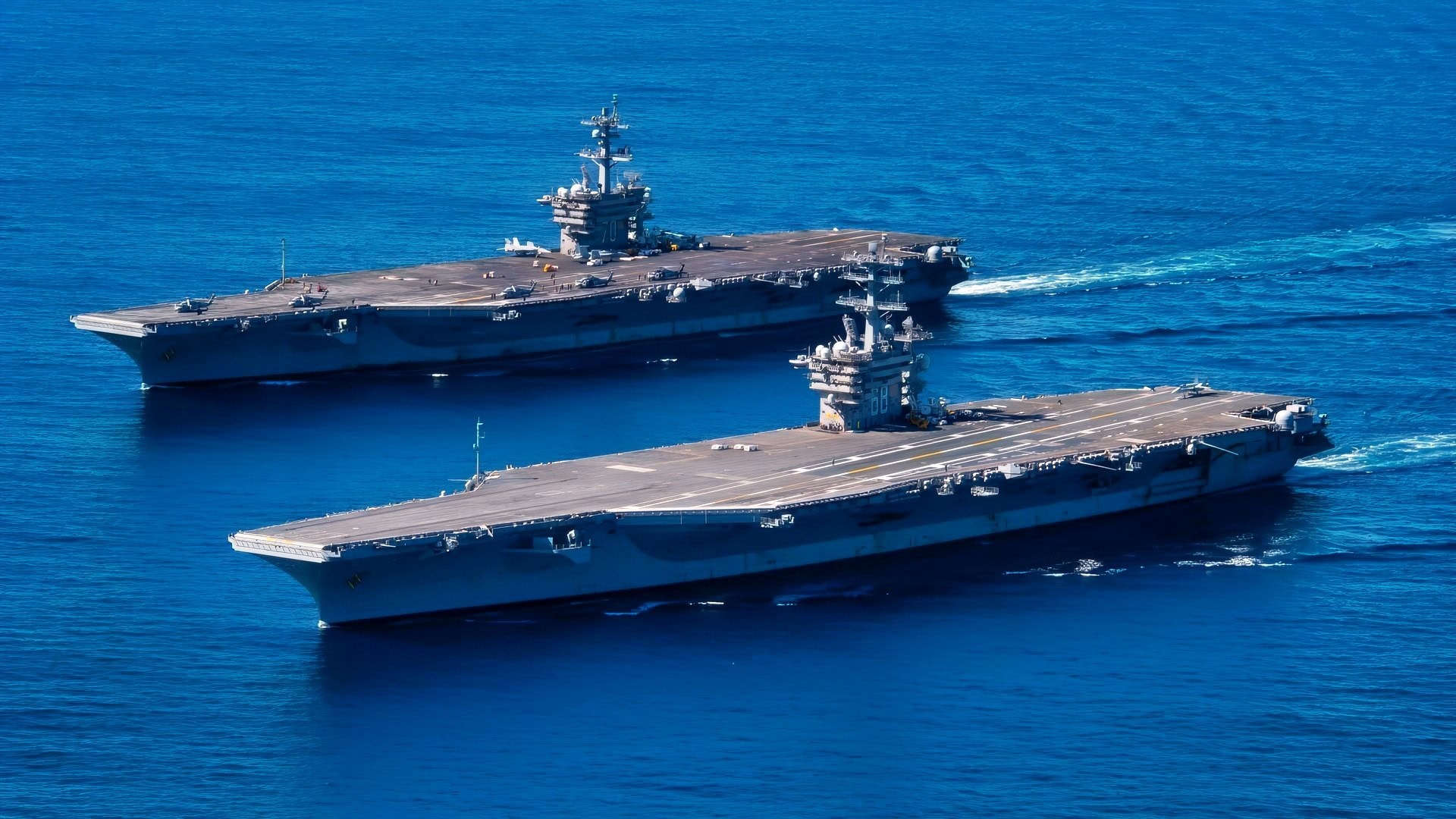
220213-N-TL932-1221 PACIFIC OCEAN (Feb. 13, 2022) Nimitz-class aircraft carriers USS Carl Vinson (CVN 70), back, and USS Nimitz (CVN 68) transit the Pacific Ocean, Feb. 13, 2022. Vinson and Nimitz are currently conducting routine maritime operations in U.S. 3rd Fleet. (U.S. Navy photo by Mass Communication Specialist Seaman Apprentice Joshua Sapien)
Those constraints necessitate more difficult decisions early in a conflict. A commander can accept greater exposure to maintain proximity. That choice preserves airpower density but increases the risk of early loss. A commander can stand off to preserve the ship. That choice protects the platform, but thins combat presence over the contested zone. Beijing’s post-1996 modernization effort is calibrated to force this dilemma precisely.
The Enduring Lesson: No More Supercarrier Surprises for China
The Taiwan Strait Crisis did more than test political resolve. It exposed a structural imbalance in maritime power projection. American carriers operated where China could neither track nor threaten them effectively.
Everything Beijing has built in the anti-carrier domain reflects an institutional determination that such conditions will not recur. Surveillance architectures, long-range strike systems, and integrated targeting networks all trace their lineage to that formative episode.
U.S. carriers remain formidable instruments of power, but they now sail inside a battlespace designed to make early intervention costly and uncertain. That reality does not render the carrier obsolete, nor does it guarantee Chinese success. It does mean that the next Taiwan crisis will test whether carriers can enter the fight soon enough, operate close enough to matter, and generate combat power at a rate sufficient to shape events before outcomes begin to harden.
About the Author: Dr. Andrew Latham
Andrew Latham is a non-resident fellow at Defense Priorities and a professor of international relations and political theory at Macalester College in Saint Paul, MN. You can follow him on X: @aakatham. Dr. Latham writes a daily column for 19FortyFive.com.