
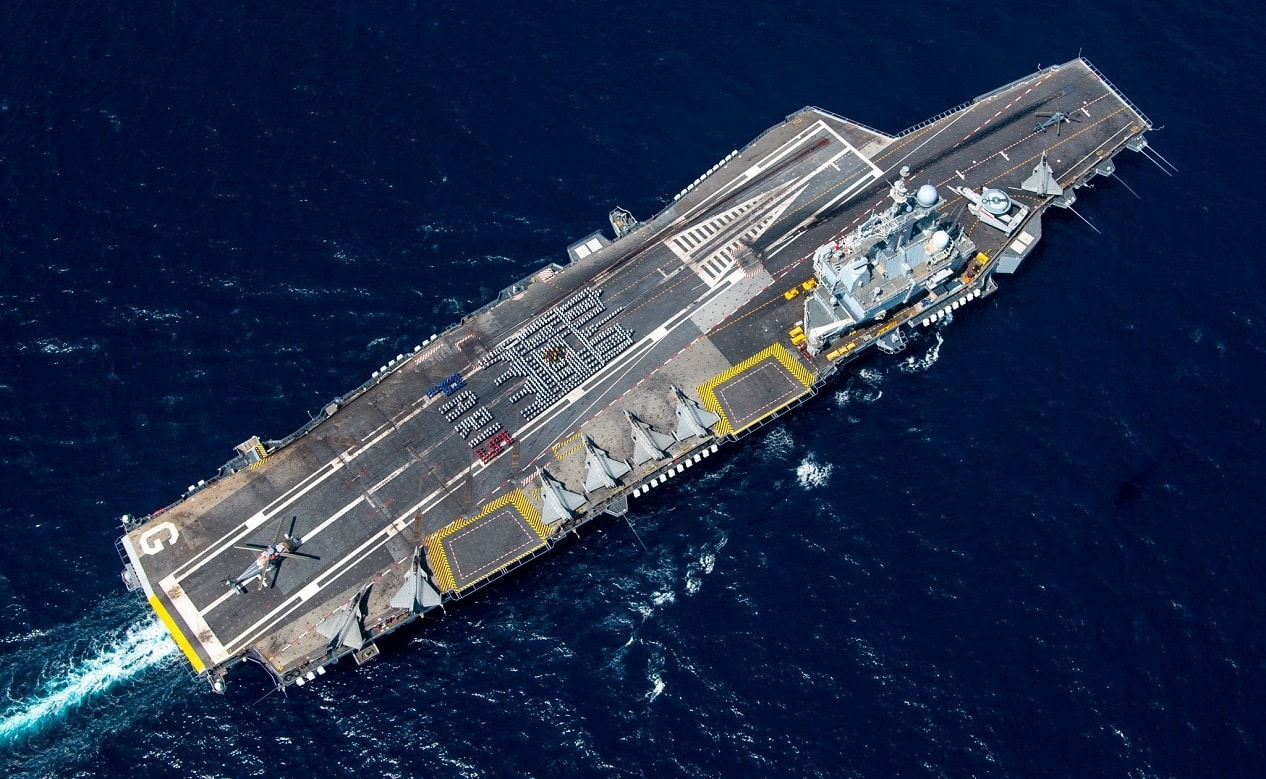
Summary and Key Points: The Charles de Gaulle (R91) is Europe’s most capable naval asset, utilizing a nuclear-powered CATOBAR (Catapult Assisted Take-Off Barrier Arrested Recovery) system to launch fully-loaded Rafale M fighters.
-Unlike its STOVL-limited peers in the UK or Italy, the R91 provides France with “strategic autonomy,” allowing for independent precision strikes and nuclear delivery without reliance on U.S. or NATO infrastructure.
-Displacing 42,000 tons and powered by twin K15 reactors, the flagship serves as a vital bridge to the 75,000-ton PANG successor.
-Despite its modest size compared to U.S. supercarriers, its flexibility in A2/AD environments remains a central tenet of French global influence.
“Strategic Autonomy”: France’s Charles de Gaulle Aircraft Carrier R91 Summed Up in 2 Words
Fun Fact: The Charles de Gaulle (R91) is France’s flagship and the only nuclear-powered aircraft carrier operated by anyone outside the United States.
Commissioned in 2001, R91 embodies France’s ambition for strategic autonomy. Unlike smaller European carriers (UK, Italy, Spain), R91 operates CATOBAR launch systems, which enable heavier aircraft and full strike capability. The ship is less about fleet size and more about sovereignty, allowing France to project power independently of NATO and US structures as wished.
Historical Background on France’s Only Nuclear Aircraft Carrier
Conceived in the Cold War as a replacement for the Clemenceau-class carriers, construction on R91 began in 1989—but was plagued with delays and budget overruns; the finished product wouldn’t be commissioned until 2001.
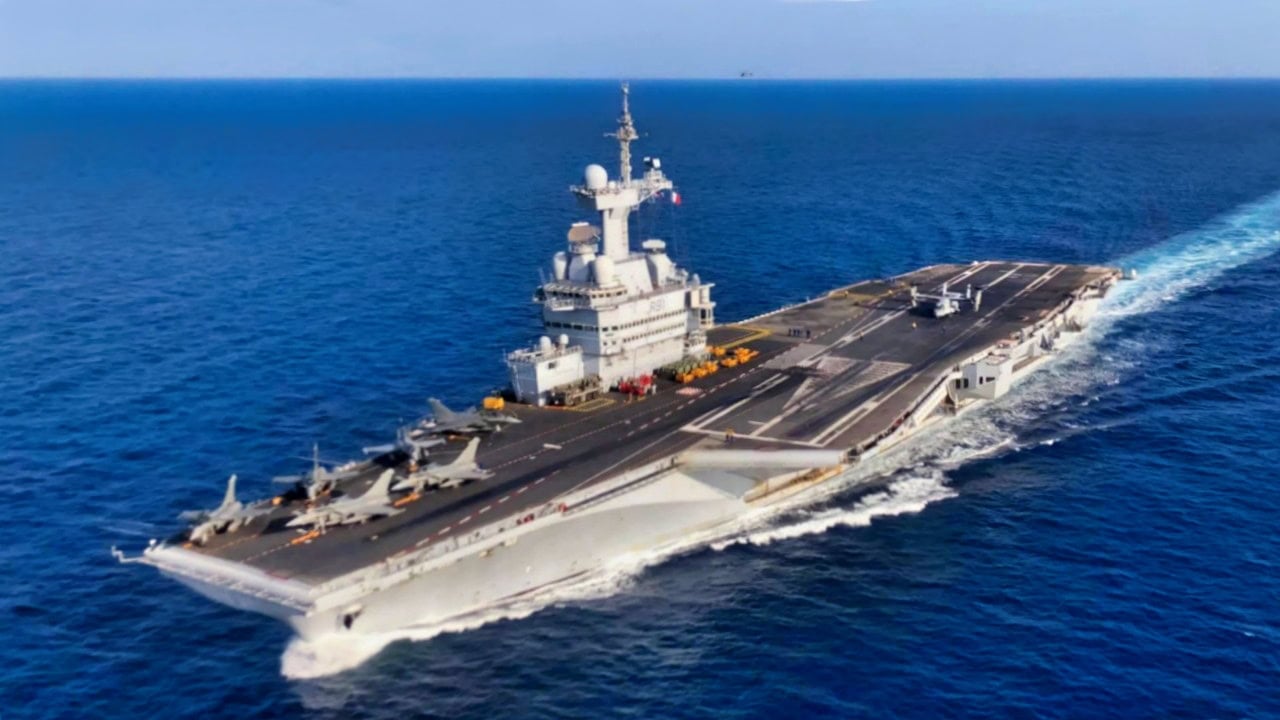
U.S. 5TH FLEET AREA OF OPERATIONS (April 24, 2019) A U.S. Marine MV-22 Osprey assigned to the 22nd Marine Expeditionary Unit sits on the flight deck of France’s Marine Nationale aircraft carrier FS Charles De Gaulle (R 91). This was the second time that Ospreys have landed aboard the French vessel. Marines and Sailors assigned to the 22nd MEU and Kearsarge Amphibious Ready Group are currently deployed to the U.S. 5th Fleet area of operations in support of naval operations to ensure maritime stability and security in the Central region, connecting the Mediterranean and the Pacific through the western Indian Ocean and three strategic choke points. (U.S. Marine Corps photo by Maj. Joshua Smith/Released)
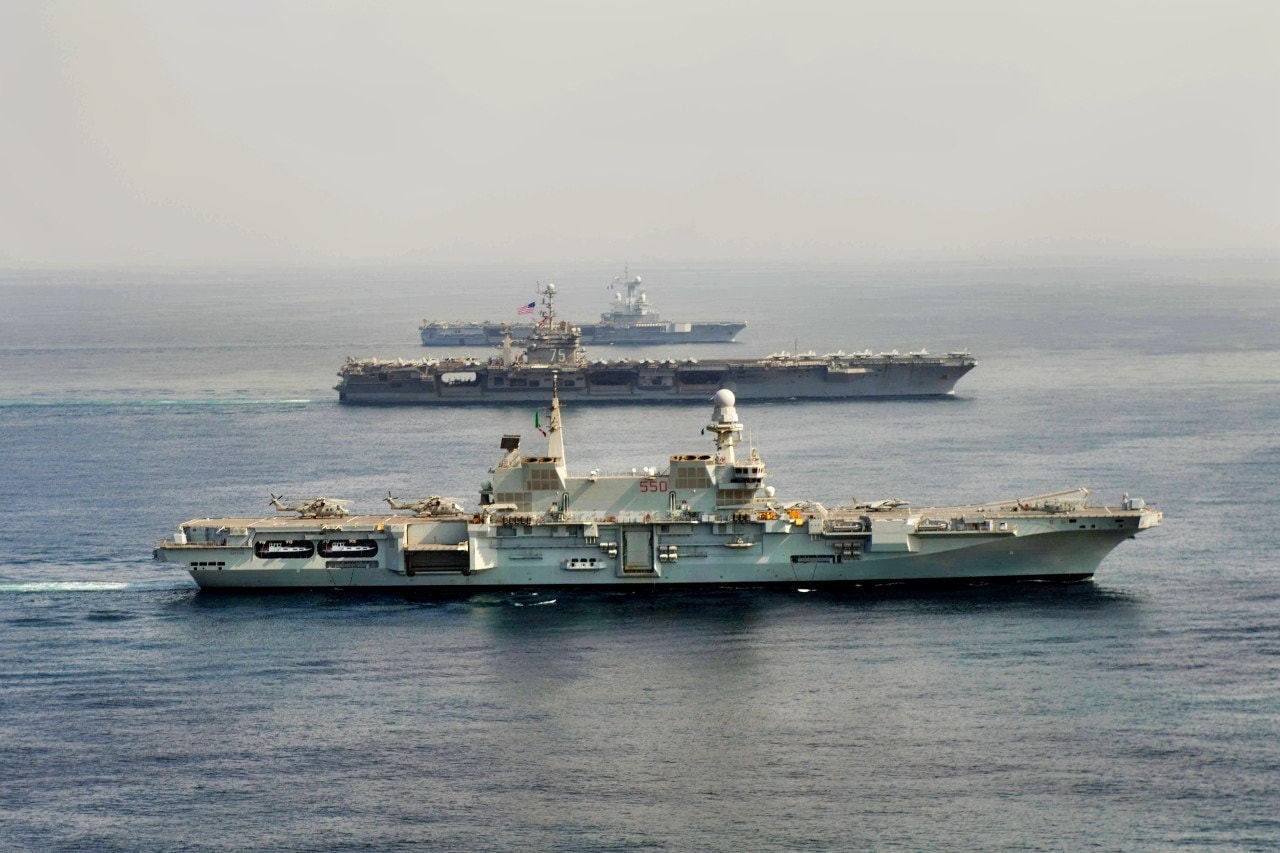
(Jan. 3, 2014) The Italian navy aircraft carrier ITS Cavour (CVH 550), front, the aircraft carrier USS Harry S. Truman (CVN 75) and the French navy aircraft carrier Charles de Gaulle (R 91), conduct operations in the Gulf of Oman. Harry S. Truman, flagship for the Harry S. Truman Carrier Strike Group, is conducting operations with Task Force 473 to enhance levels of cooperation and interoperability, enhance mutual maritime capabilities and promote long-term regional stability in the U.S. 5th Fleet area of responsibility. (U.S. Navy photo by Mass Communication Specialist 3rd Class Ethan M. Schumacher/Released)
Named after General Charles de Gaulle, a symbol of French independence and nuclear deterrence, R91 faced early technical issues. Namely, the flight deck length needed to be modified while propulsion problems and other maintenance issues forced setbacks. Yet despite the rocky start, R91 evolved into a reliable operational platform.
Technical Specifications
R91 displaces 42,000 tons when fully loaded and measures 856 feet. For propulsion, she relies on two K15 nuclear reactors, which grant functionally unlimited range (though operations are limited by food and maintenance requirements).
The ship can reach 27 knots at top speed, operating a US-built steam catapult (C-13 type) with aan ngled flight deck and arresting wires. The ship is smaller than US super carriers, which displace 100,000 tons, but the R91, crewed with 1,200 naval personnel and 600 air wing personnel, is significantly more capable than STOVL carriers.
Air Wing Composition
Typically, R91 embarks with a variety of aircraft. The Rafale M multirole fighter is the primary strike asset, offering air superiority, precision strike, nuclear delivery, and anti-ship capabilities. The E-2C Hawkeye airborne early warning aircraft allows for radar coverage, battle management, and the ability to extend the sensor horizon beyond shipboard radar. R91 also carries rotary-wing platforms, such as the NH90 and the Dauphin.
Operational Use
R91 is frequently deployed in the Mediterranean, Indian Ocean, and Persian Gulf. Historically, she has participated in Afghanistan operations (2001-2002), Libya (2011), and ISIS operations in Iraq and Syria. Use both within NATO frameworks and independently under French command, R91 gives France strategic flexibility.
Strategically, R91 enables independent expeditionary strike capability and reinforces
France’s status as a nuclear power and a permanent UN Security Council member. The ship serves as a broader symbol of strategic autonomy, a cornerstone of French defense doctrine.
This allows France to act without a US carrier presence and lead European operations while generally supporting France’s nuclear deterrence architecture. Obviously, the R91 is not about creating parity with US naval capabilities, but only about sovereignty and influence.
Tactical Value
R91’s nuclear propulsion allows for high endurance and sustained high-speed operations.
The CATOBAR launch allows heavier aircraft to be launched with full fuel and payload, providing far more flexibility than ski-jump carriers. Though the R91 is smaller than US super carriers, meaning less sortie volume and more limited surge capacity.
The R91 is also highly dependent on escort vehicles for air defense and anti-submarine warfare.
The R91 is France’s only carrier, meaning that when she is in maintenance, France has no fixed-wing carrier capability. And because of the nuclear systems, maintenance cycles are long. The air wing size is modest compared to US Navy platforms, and without a strong escort, R91 is vulnerable in A2/AD environments
Still, R91 is Europe’s most capable aircraft carrier. The UK’s Queen Elizabeth-class ships have a larger displacement but are limited to STOVL operations with the F-35B; Italy and Spain are, too. Yet R91 remains Europe’s only CATOBAR carrier and Europe’s only nuclear carrier.
Future Projections
France is developing a next-generation carrier, known as PANG (Porte-Avions Nouvelle Generation).
Expected to enter service around 2038-2040, PANG will be larger at 70,000 tons, use electromagnetic catapults (EMALS), and potentially launch the next-generation FCAS fighter.
R91 is expected to serve until the late 2030s before handing off its flagship role to PANG.
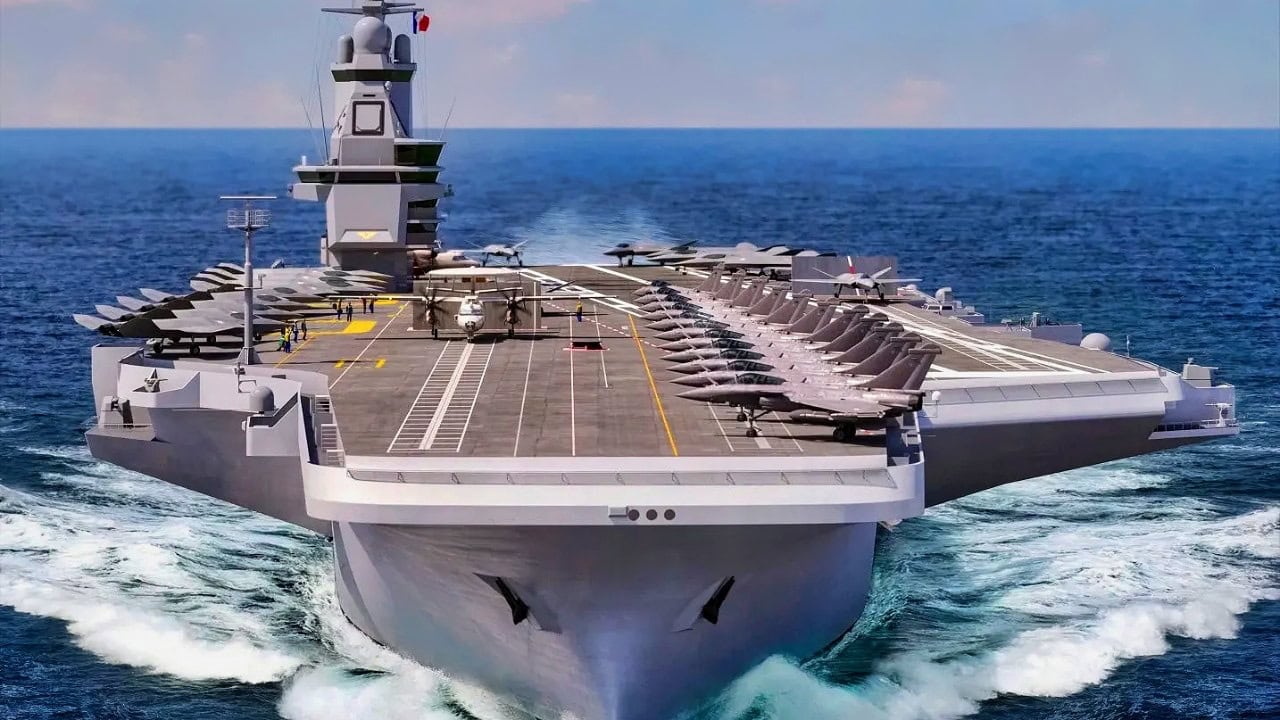
PANG Aircraft Carrier from France. Image Credit: Industry Handout.
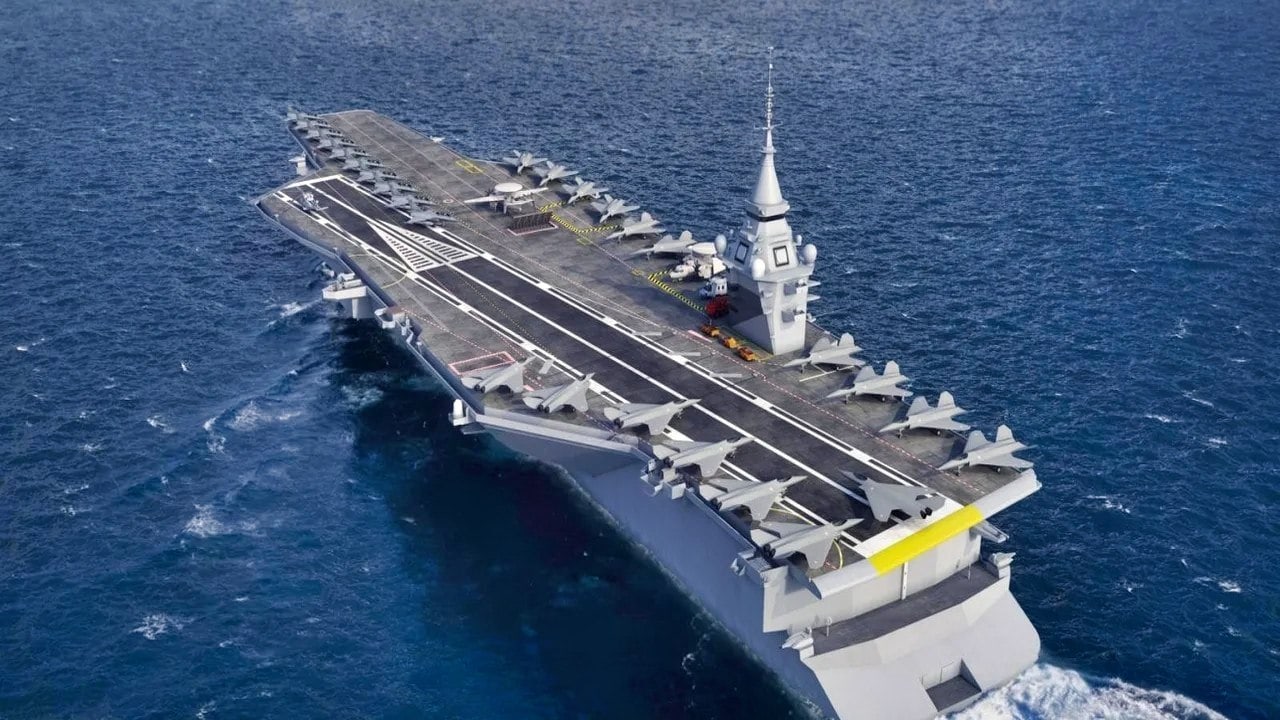
PANG Aircraft Carrier from France. Image Credit: French Navy.
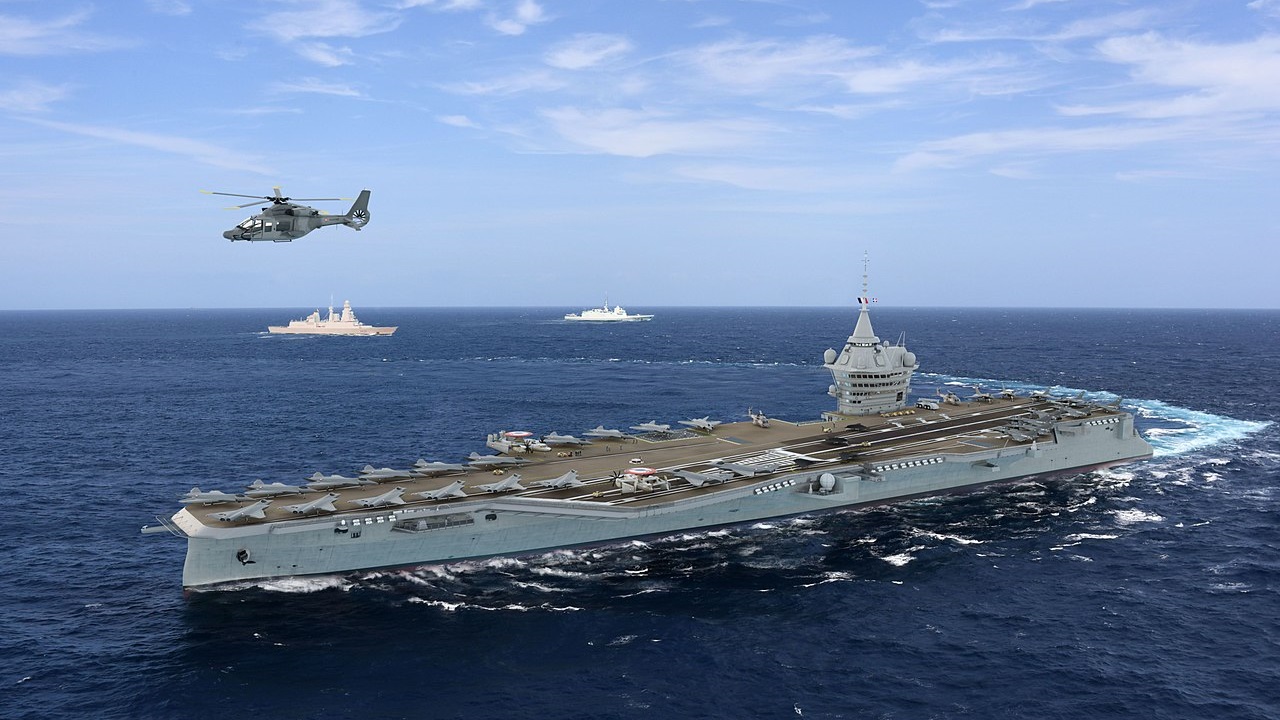
PANG Aircraft Carrier. Image Credit: Creative Commons.
In the meantime, R91 will maintain European naval aviation competence and serve as a hedge if the US naval focus shifts fully to the Indo-Pacific.
If needed, R91 can support France’s Indo-Pacific presence, respecting overseas territories and generally reinforcing deterrence posture towards Russia, North Africa, and the Middle East.
R91 is not a supercarrier competitor. But it is a political and military instrument of independence, whose value lies in flexibility, and which serves as a central tenet of Paris’s power projection.
About the Author: Harrison Kass
Harrison Kass is an attorney and journalist covering national security, technology, and politics. Previously, he was a political staffer and candidate, and a US Air Force pilot selectee. He holds a JD from the University of Oregon and a master’s in global journalism and international relations from NYU.