
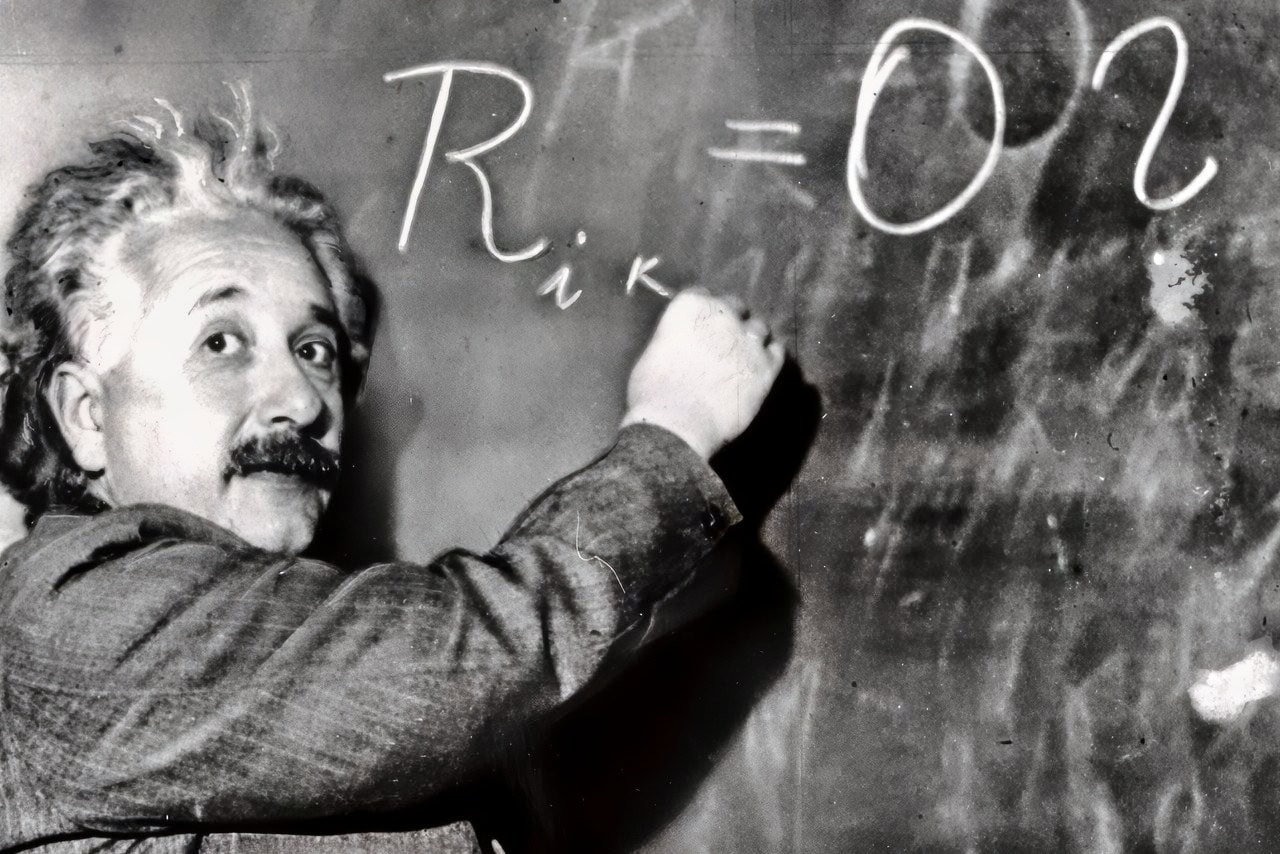
Summary and Key Points: Stephen Silver, a national security journalist and film critic, evaluates the moral evolution of Albert Einstein regarding nuclear weaponry.
-Triggered by the Einstein-Szilard letter of August 2, 1939, the U.S. government initiated the Manhattan Project to preempt German technological advances.
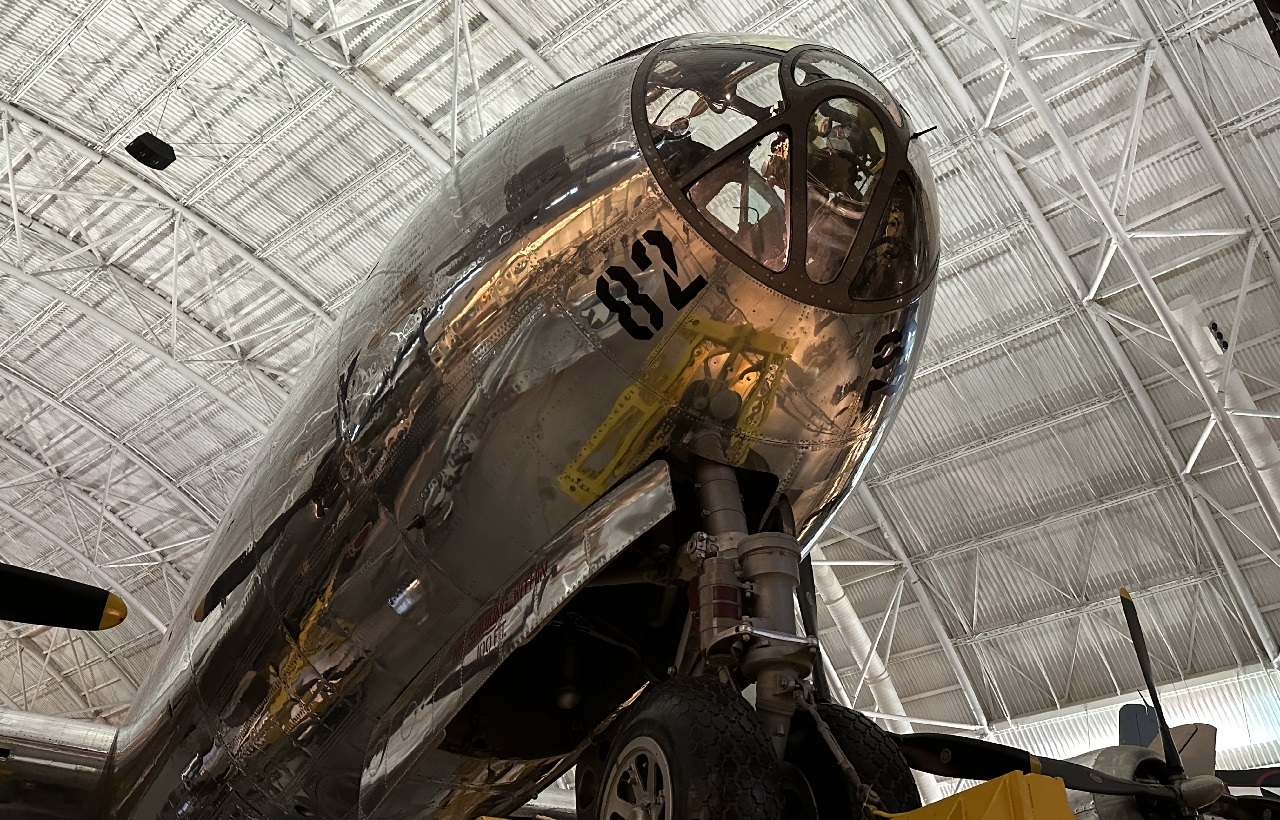
Enola Gay B-29. Image was taken on October 1, 2022. Image Credit: 19FortyFive.com
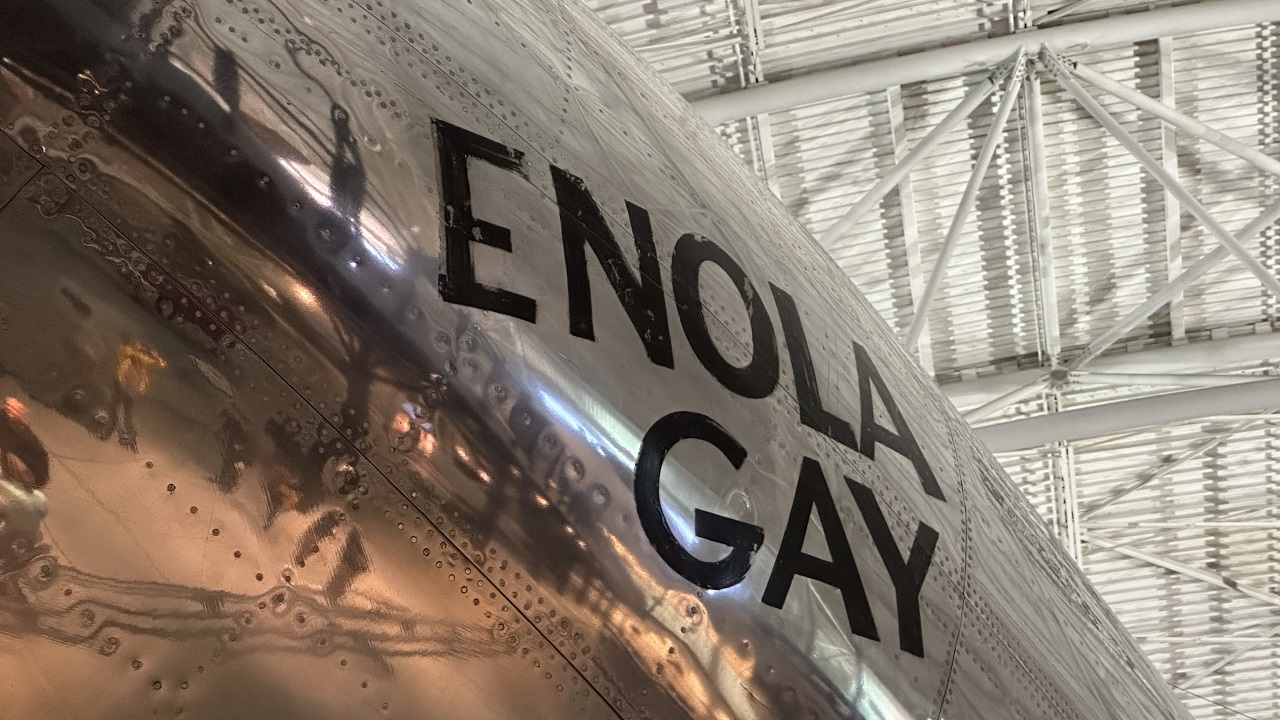
Enola Gay B-29. Image was taken on October 1, 2022. Image Credit: 19FortyFive.com

Enola Gay B-29. Image was taken on October 1, 2022. Image Credit: 19FortyFive.com
-This report analyzes Einstein’s transition from a reluctant advocate for the bomb to a staunch anti-proliferation activist, following the 2024 auction of the letter at Christie’s.
-Silver explores Einstein’s 1946 address at the Institute for Advanced Study, where the physicist argued that the “abolition of war” is the only true defense against biological and atomic destruction.
A Quote the Day That Could Have Changed History from Albert Einstein
“Had I known that the Germans would not succeed in developing an atomic bomb, I would have done nothing for the bomb,” – Albert Einstein told Newsweek in 1947.
Albert Einstein had a complicated relationship with war.
He had strong pacifist inclinations, while at the same time, he once wrote a letter to the president of the United States, urging him to develop an atomic bomb before the Nazis could. Einstein, though, did not play an active role in the Manhattan Project and spent his remaining days arguing against nuclear proliferation.
Writing to Roosevelt
On August 2, 1939, just a few months after Germany invaded Poland to begin World War II, but two years before the United States entered the war, Einstein wrote a letter to President Franklin Delano Roosevelt, informing him of developments in the then-nascent field of atomic weapons technology. Einstein wrote about the possibility that the Germans could obtain the technology and that the U.S. should consider entering the race.
“This new phenomenon would also lead to the construction of bombs, and it is conceivable–though much less certain–that extremely powerful bombs of this type may thus be constructed,” Einstein wrote in the 1939 letter. “A single bomb of this type, carried by boat and exploded in a port, might very well destroy the whole port together with some of the surrounding territory. However, such bombs might very well prove too heavy for transportation by air.”
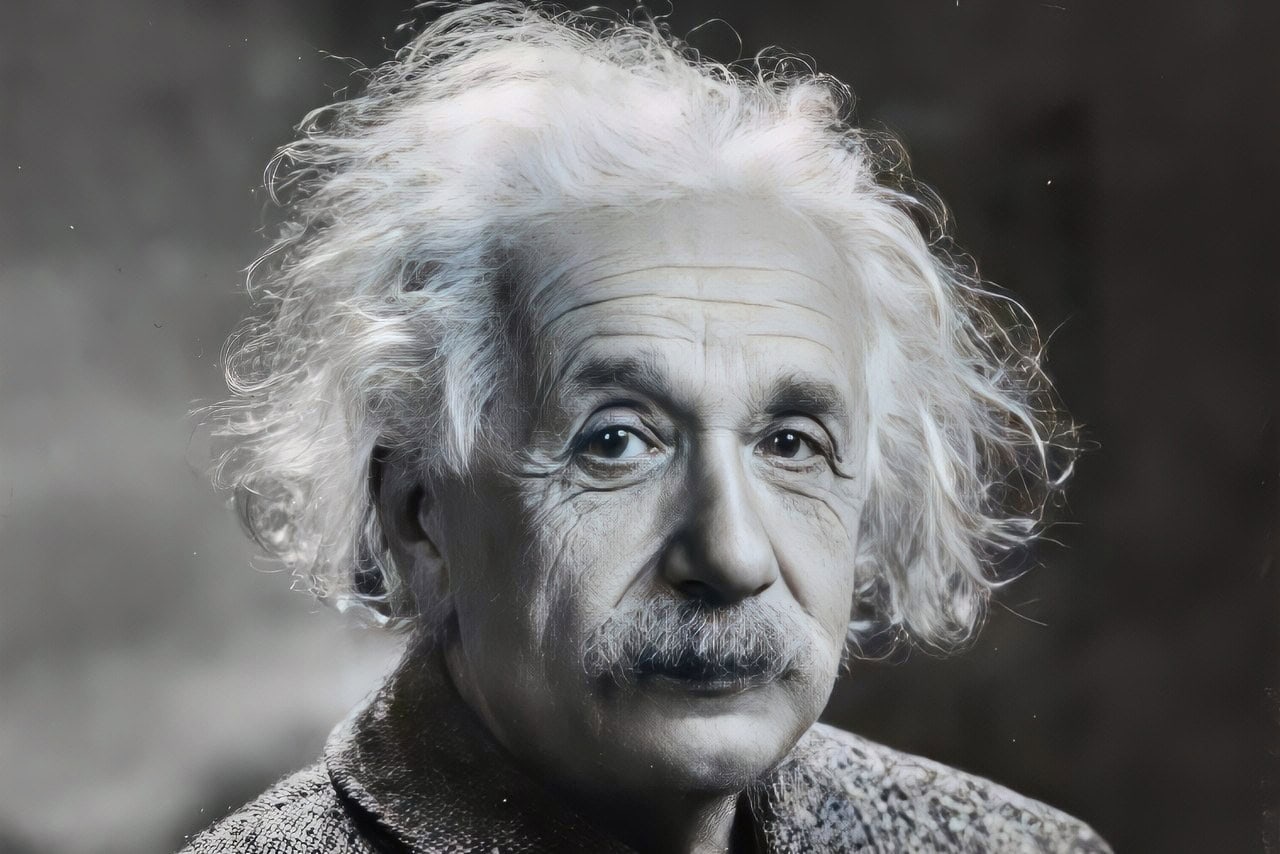
Albert Einstein. Image Credit: Creative Commons.
Einstein, at the time based at the Institute for Advanced Study in Princeton, also made a recommendation:
“In view of this situation, you may think it desirable to have some permanent contact maintained between the Administration and the group of physicists working on chain reactions in America. One possible way of achieving this might be for you to entrust the task to a person who has your confidence and who could perhaps serve in an unofficial capacity.”
He also warned that the Germans had already begun their own program.
“I understand that Germany has actually stopped the sale of uranium from the Czechoslovakian mines which she has taken over,” Einstein wrote. “That she should have taken such early action might perhaps be understood on the ground that the son of the German Under-Secretary of State, von Weizsacker, is attached to the Kaiser-Wilhelm Institute in Berlin, where some of the American work on uranium is now being repeated.”
This led to the establishment of the Manhattan Project under the leadership of Einstein’s friend J. Robert Oppenheimer.
Einstein, however, would live to regret this.
A Physicist’s Regrets
According to a BBC analysis in 2024, the letter’s auction by Christie’s proved historically significant.
“In so many ways, this letter marks a key inflection point in the history of science, technology and humanity,” Peter Klarnet, senior specialist for Americana, books and manuscripts at Christie’s, told the BBC in that 2024 story.

Nuclear Weapons Test.
“This is really the first time that the United States government has become directly financially involved in major scientific research,” Klarnet said. “The letter set the ball rolling to allow the United States to take full advantage of the technological transformations that were taking place.”
Klarnet also told The BBC that the scene at the end of the 2023 film Oppenheimer, in which J. Robert Oppenheimer expressed his regrets to Einstein shortly after the war, was “nonsense.”
Einstein later called that letter to the president the greatest regret of his life.
“Einstein, for his part, bitterly regretted the violence and chaos that his 1939 letter had unleashed,” the BBC report said. “In 1946, he co-founded the Emergency Committee of Atomic Scientists to publicise the dangers of nuclear war and to propose a pathway to world peace.”
“Had I known that the Germans would not succeed in developing an atomic bomb, I would have done nothing for the bomb,” Einstein told Newsweek in 1947.
Germany, to this day, does not possess nuclear weapons, the BBC story added.
Another Quote That Matters
“This is really the cornerstone of our situation. Now, what we should try to bring about is the general conviction that the first thing you have to abolish is war at all costs, and every other point of view must be of secondary importance,” Einstein said in 1946.
The venue for the statement was a symposium titled “The Social Task of the Scientist in the Atomic Era,” held on November 17, 1946, at the Institute for Advanced Study in Princeton. The quote was preceded by the following:
“The position in which we are now is a very strange one which in general political life never happened,” Einstein said. “Namely, the thing that I refer to is this: To have security against atomic bombs and against the other biological weapons, we have to prevent war, for if we cannot prevent war, every nation will use every means that is at their disposal; and despite all promises they make, they will do it. At the same time, so long as war is not prevented, all the governments of the nations have to prepare for war, and if you have to prepare for war, then you are in a state where you cannot abolish war.”
Patricia Rife, Ph.D., of the University of Maryland, University College, gave an address about Einstein’s quote in March 2005.
“Albert Einstein was morally opposed to war throughout his life, and this ethical stance had deep roots in his childhood education. His ethical choices and social responsibility to speak out against war throughout his life form the rubric of my paper, as well as my own endearing life interest in Albert Einstein’s ethical choices concerning war and peace,” Dr. Rife said in the address.
“These words still ring true today, 59 years later. Will a new generation hear them and rise to our own social responsibilities–and become responsible for the fate of our world? World peace is worth the effort, in my opinion–and I continue to work for this ethical stance,” she said of the 1946 speech.
About the Author: Stephen Silver
Stephen Silver is an award-winning journalist, essayist, and film critic, and contributor to the Philadelphia Inquirer, the Jewish Telegraphic Agency, Broad Street Review, and Splice Today. The co-founder of the Philadelphia Film Critics Circle, Stephen lives in suburban Philadelphia with his wife and two sons. For over a decade, Stephen has authored thousands of articles that focus on politics, national security, technology, and the economy. Follow him on X (formerly Twitter) at @StephenSilver, and subscribe to his Substack newsletter.