
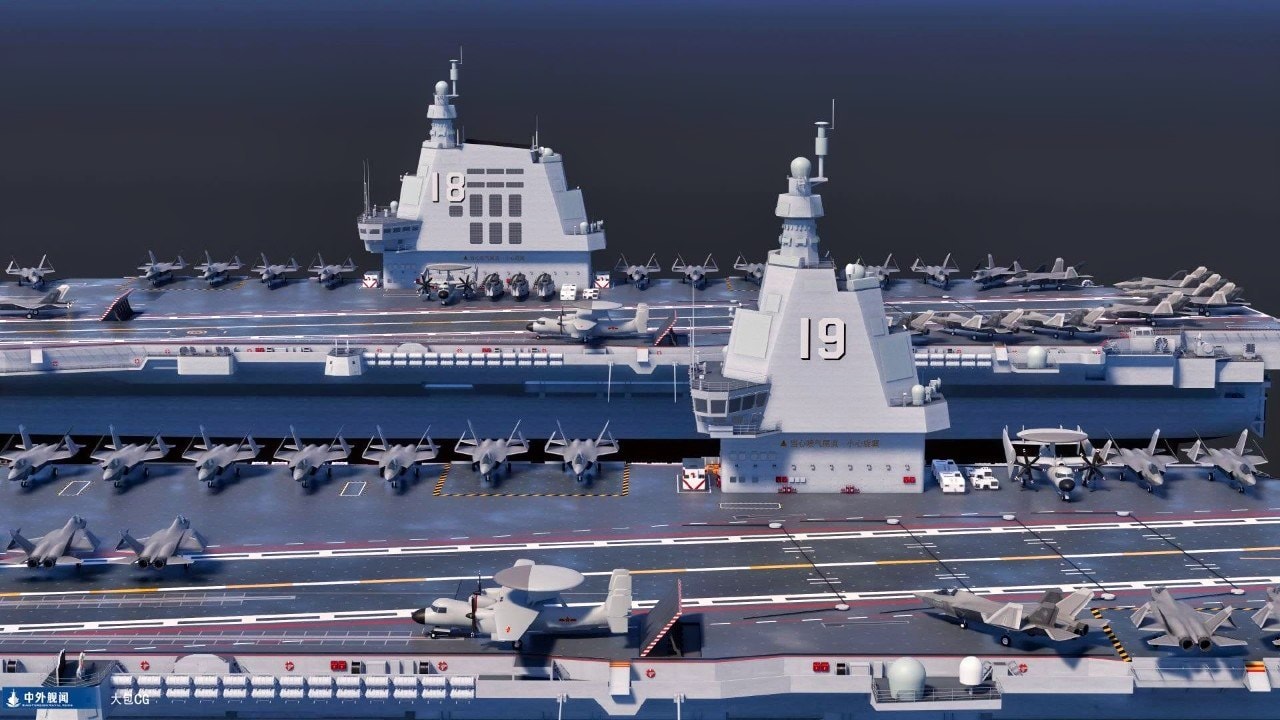
Summary and Key Points: National security columnist Steve Balestrieri evaluates the People’s Liberation Army Navy’s (PLAN) rapid aircraft carrier expansion. The goal: become the best navy on Earth, surpassing even the mighty U.S. Navy.
-As of 2026, the Type 003 Fujian has entered operational testing, featuring EMALS technology to launch the J-35 stealth fighter and KJ-600 early warning aircraft.
-This report analyzes the upcoming Type 004, a projected 120,000-ton nuclear-powered supercarrier intended to match the U.S. Navy’s Ford-class.
-Balestrieri concludes that while China faces challenges in 24-hour all-weather flight operations and sea-based logistics, its transition from refurbished Soviet hulls to indigenous nuclear platforms represents a historic leap in naval lethality.
120,000 Tons of Power: The Massive Scale of China’s Upcoming Type 004 Aircraft Carrier
China continues to build naval vessels at an incredible rate and is well on its way to a fleet of six aircraft carriers by the 2030s.
Despite many analysts believing that aircraft carriers are increasingly vulnerable today due to the proliferation of anti-ship missiles, the Chinese remain firm believers in the aircraft carrier’s power-projection capabilities.
China’s fourth aircraft carrier, widely identified as the Type 004, is currently under construction at the Dalian Shipyard and is anticipated to be China’s first nuclear-powered aircraft carrier, operating twin reactors, according to Janes.
“However, the real challenge lies in designing a high-performance reactor that is suitable for use in the sea, resistant to shocks and swells, suitable for radiation protection and easy to maintain. Approval, certification and operational testing can take years.”
Expected to be a massive supercarrier with a displacement of 110,000-120,000 tons, it will feature electromagnetic catapults (EMALS) to support advanced aircraft like the J-35 and KJ-600, designed to perform a similar role to the E-2C/D Hawkeye launched from U.S. carriers.
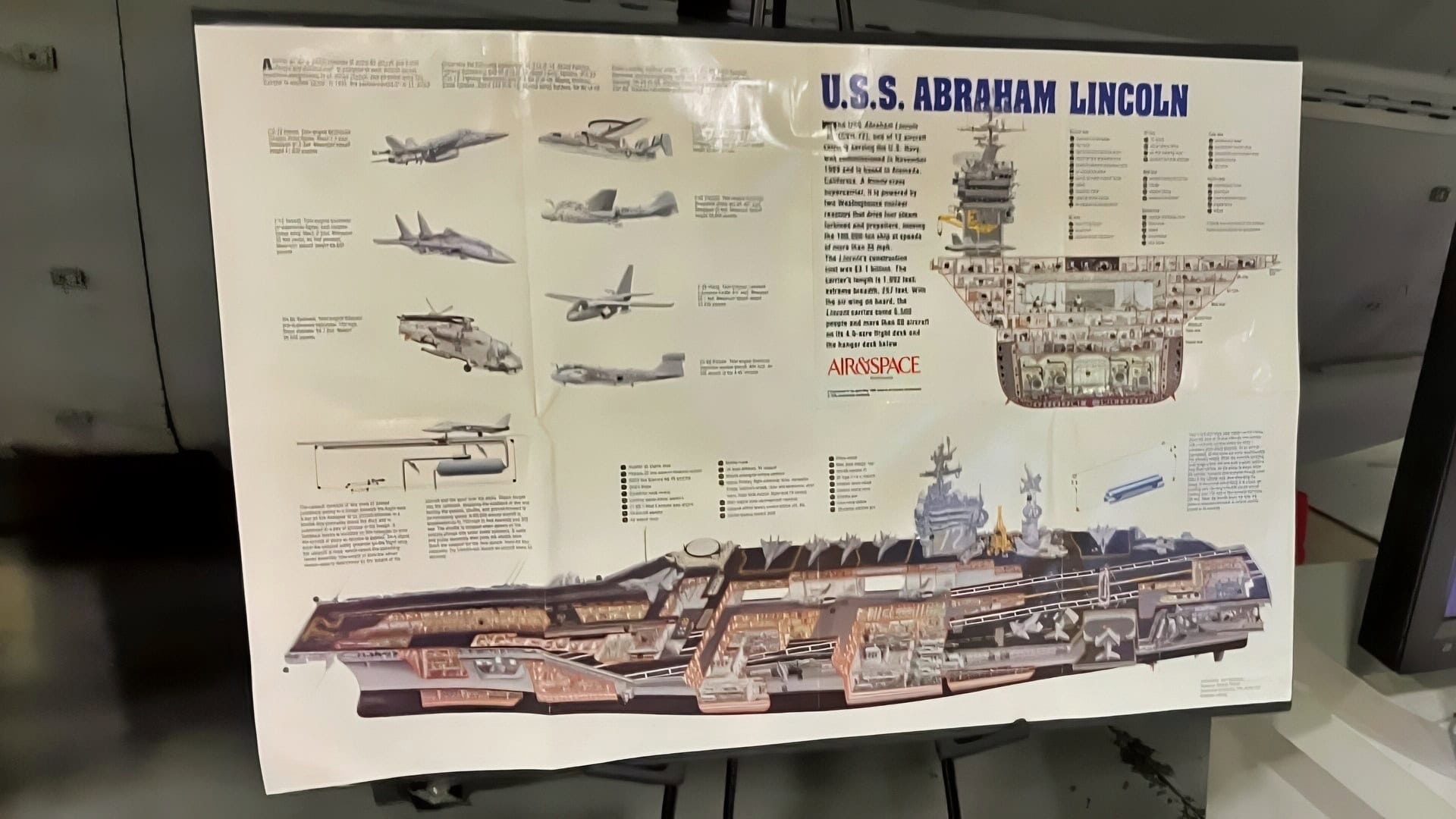
Aviation Museum of Kentucky USS Abraham Lincoln Carrier Photo. 19FortyFive.com Image.
This represents a significant jump in naval capability. For comparison, the Ford operates 90 aircraft, while the Type 004 will operate more than 100 aircraft.
China Currently Has Three Conventionally Powered Carriers
China currently has three carriers, but two are older models. One was the former Soviet-built and retrofitted Liaoning, which carries 24 fighters, and the indigenously built Shandong, another ski-jump-type carrier that is slightly larger and carries eight additional aircraft.
Their third carrier is the much more modern Fujian, which operates with a flat deck and a Ford-class-like electromagnetic catapult. It is the largest non-nuclear warship in the world. It is China’s first carrier to use a CATOBAR (Catapult Assisted Take-Off But Arrested Recovery) system.
The Fujian has issues, however, with its flight deck layout and the location of its island, which bottlenecks aircraft on the flight deck and lowers the sortie rate. It has only about 60 percent of the operational capability of the Nimitz-class. This design flaw means the carrier can’t launch and recover aircraft simultaneously, which is considered a prerequisite for carriers of this size.
The Fujian carries about 40 fighters but is conventionally powered, so its range without refueling is more limited. The People’s Liberation Army Navy’s (PLAN) oiler fleet is limited and would constitute vulnerable targets for U.S. forces.
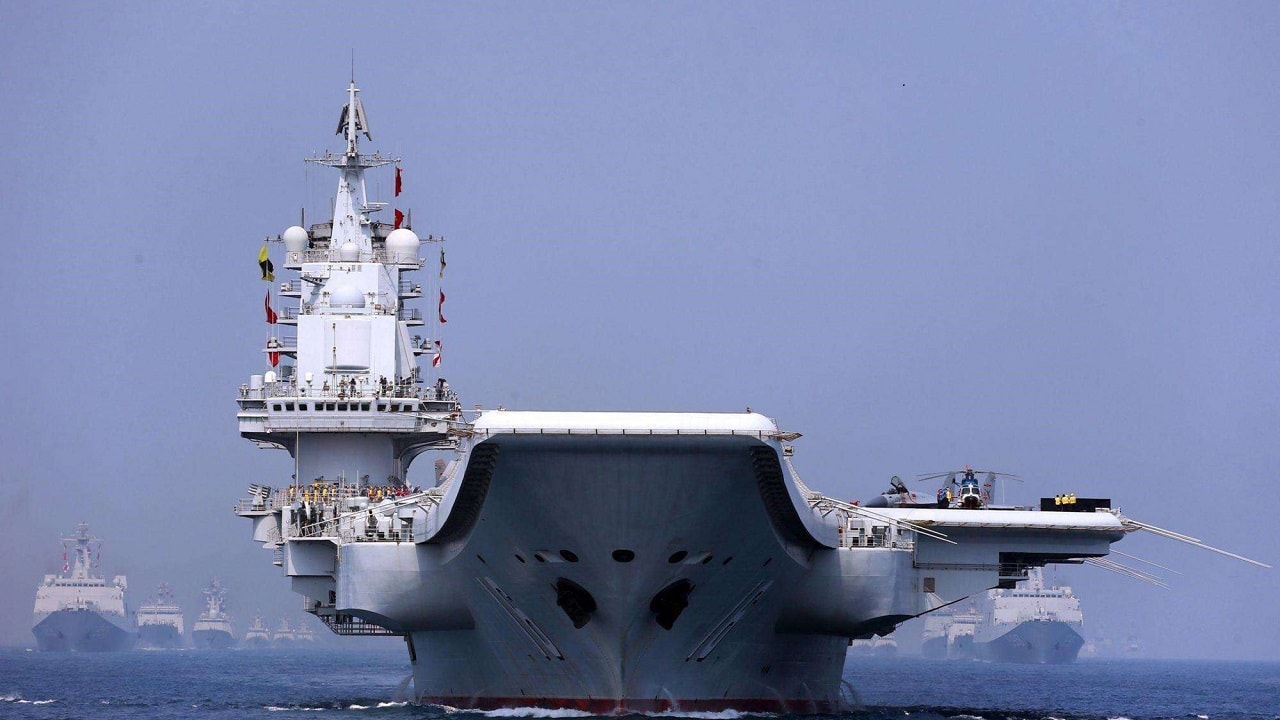
A Chinese Aircraft Carrier on the high-seas. Image Credit: Chinese Internet.
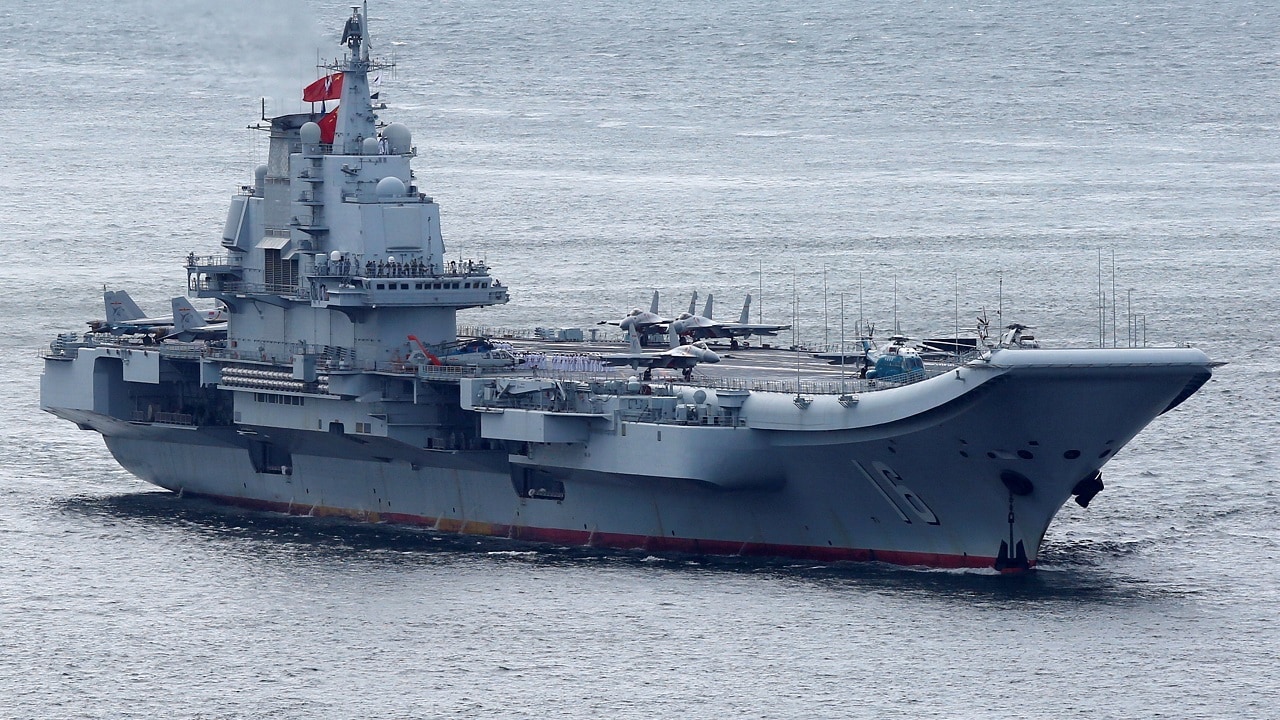
Members of the People’s Liberation Army navy are seen on board China’s aircraft carrier Liaoning as it sails into Hong Kong, China July 7, 2017. REUTERS/Bobby Yip
However, in June of last year, China, for the first time, operated two aircraft carriers together off the First Island Chain, conducting hundreds of carrier launches and landings.
“Only 15 or so countries in the world operate aircraft carriers,” Australian naval analyst Jennifer Parker said.
“Very few of them would be able to operate two with associated escorts concurrently. While the carriers themselves are not the most capable, it demonstrates China’s increasing blue water expeditionary capability that is not constrained to their near seas.”
China’s Carrier Strike Groups Lack Stealth Fighters
Chinese air wings currently don’t have enough fifth-generation fighters for their carrier force. The fifth-generation J-20 stealth fighter is too large and too heavy for carrier operations.
China’s most prevalent carrier fighter is the fourth-generation J-15T. The more modern, fifth-generation J-35 stealth fighter is currently in production, but the PLAN currently has only about 57 of the fighters.
The plan is to produce enough to have 200 to 300 J-35s by 2030. Designed as a carrier-borne strike platform for the Fujian (CV-18), the J-35 provides the PLAN with a fifth-generation, twin-engine capability to challenge the U.S. F-35 Lightning II.
“The J-35A has a different design than China’s first stealth fighter jet, the J-20. The J-20, with a canard wing configuration, is a heavy fighter jet with a focus on air superiority missions comparable with the US’ F-22, while the medium-sized J-35A uses a tailplane wing configuration similar to the US’ F-35 that also has strong surface attack capabilities,” The Global Times said.
China may also incorporate the massive, three-engine prototype J-36 stealth fighter on its carrier wings as well.
China’s Aircraft Carriers Are Still Gaining Operational Experience
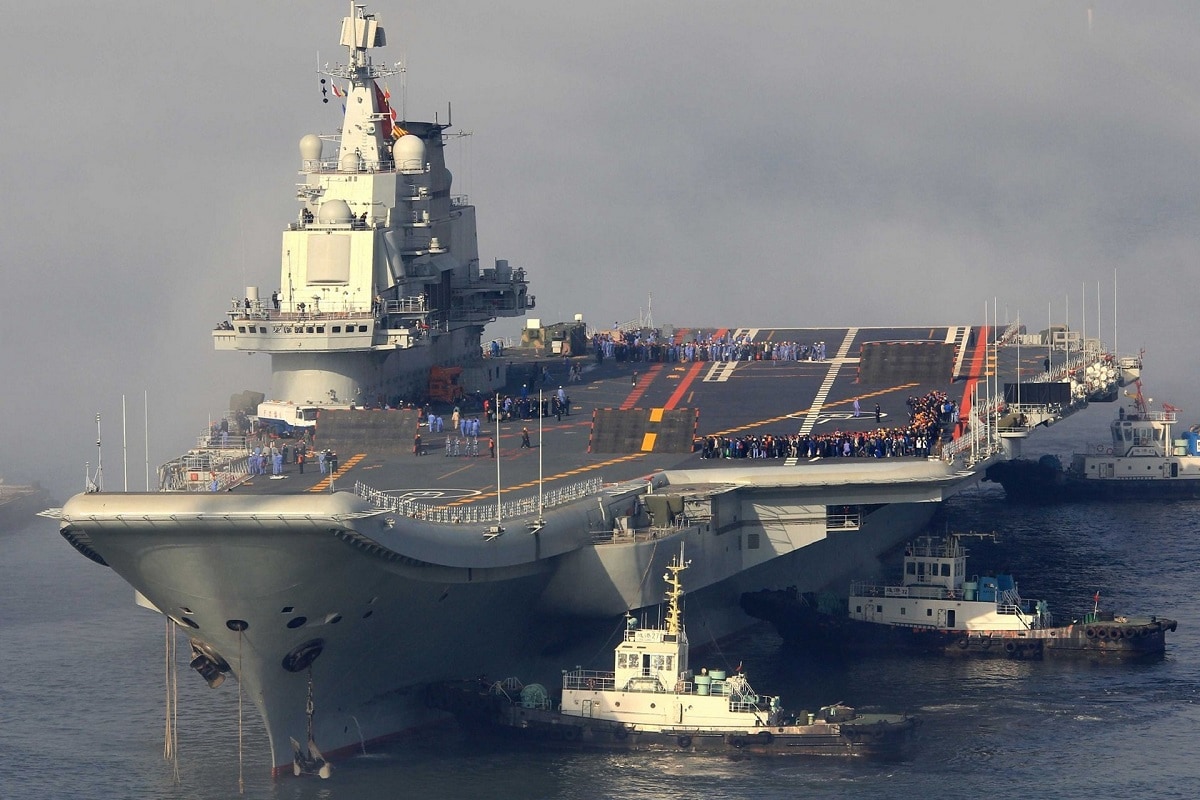
China’s Liaoning Aircraft Carrier. Image Credit: Creative Commons.
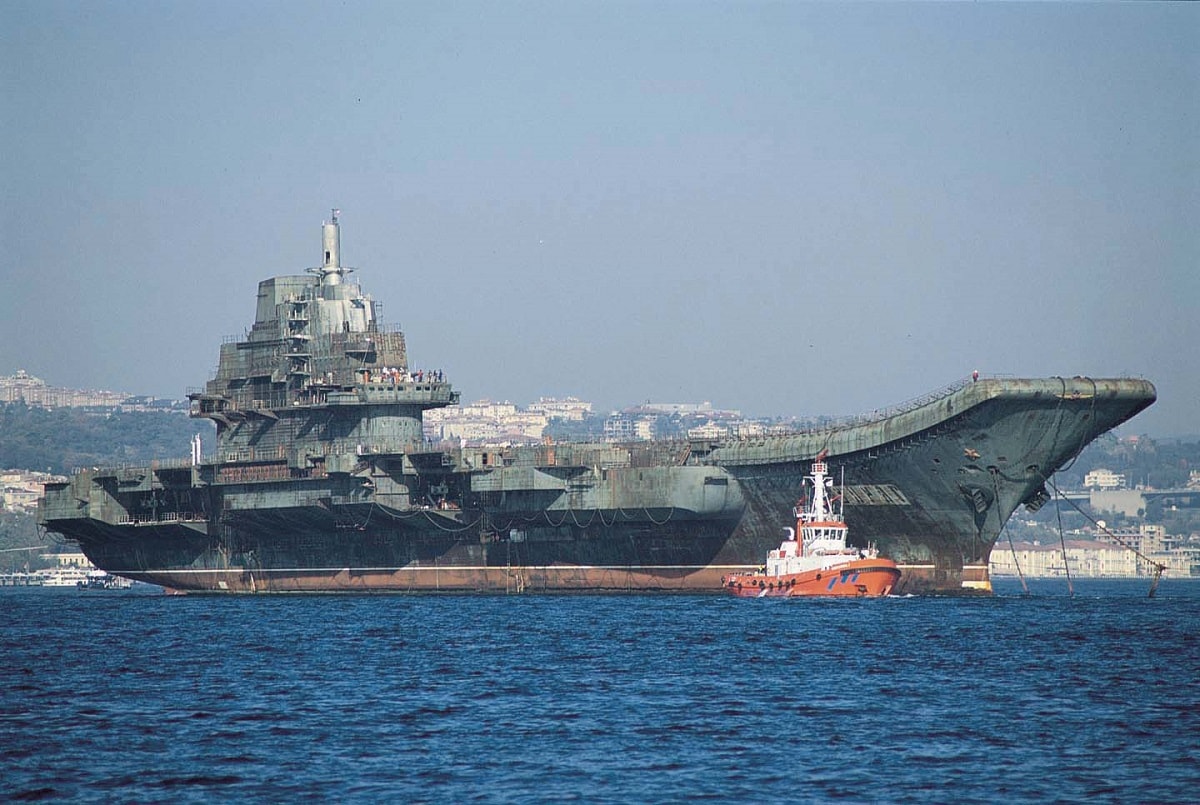
Varyag under tow in Istanbul. Mainland China purchased the former Soviet carrier, Varyag, from the Ukraine in 1998 for about $20 million dollars (US). The Varyag was the newer, sister ship to the Russian Kuznetsov. But the Ukrainian government had never finished the carrier after the fall of the Soviet Union and had tried to sell it to various concerns. As a result, the carrier fell into a state of disrepair. The Chinese bought the carrier and indicated that the holding company that had purchased it planned to tow it to Red China and make it a floating casino.
The Chinese aircraft carriers still have a long way to go to match the U.S. Navy, primarily due to a significant gap in operational experience, crew training, and military doctrine.
While China is rapidly advancing technologically, it faces significant challenges in areas such as sustained 24-hour air operations, anti-submarine warfare, and sea-based logistics that can only be developed over time and with experience.
The PLAN lacks the decades of real-world experience the United States has in conducting complex, sustained carrier operations and projecting power.
China’s aircraft and systems integration is behind that of the United States. While China’s new carriers can launch jets with electromagnetic catapults, the United States has more advanced landing software and battle-tested systems.
Continuous Air Operations in All Weather Is Still a Goal
Last April, I posted that the Chinese carriers were still operating close to their shores and under the protection of their anti-access/aerial denial bubble. In many instances, Chinese pilots took off or landed from Chinese airfields, rather than from the carriers. However, that is beginning to change as China conducts more carrier deployments.
The International Institute for Strategic Studies recently analyzed the joint carrier operation conducted by the Liaoning and Shandong carriers, along with their respective escort groups. It showed a leap in Chinese naval capability, which was typically crowed about in the state-run media. They portrayed the operation in much the same way the U.S. Navy does, as a projection of regional power.
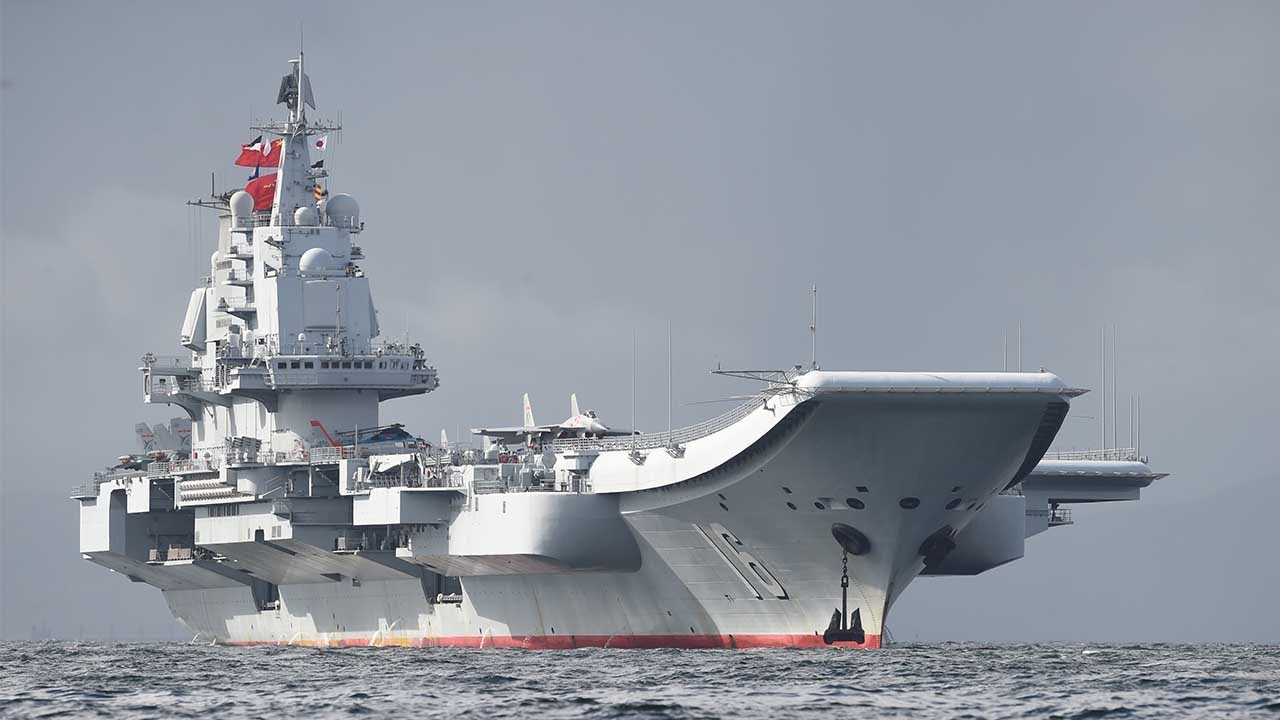
Chinese Aircraft Carrier. Image Credit: Creative Commons.
Does China have an actual capability to conduct complex multi-carrier operations? The U.S. Navy has been doing this for more than 80 years. The Chinese have demonstrated their intention to perform such operations, but mastering this skill requires time.
Night operations and operations in adverse weather conditions are staples of American carrier operations, as are continuous flight operations, which the Chinese have yet to master.
“The continuous operation of its carriers sits at the very core of what makes the U.S. military absolutely preeminent,” said Singapore-based defense analyst Alexander Neill.
China’s Carriers Are Closing the Technology Gap
While their three carriers lack the number of stealth fighter coverage that the 11 U.S. carriers currently have, they have the aircraft developed to produce the needed stealth fighters to challenge U.S. hegemony in the oceans.
Their current aircraft carriers have limited anti-missile defenses because the older carriers were designed to operate under the protection of land-based missile networks, rather than possessing comprehensive, on-board defenses like U.S. carriers.
This strategy relies on land-based missile systems to create an anti-access bubble, a stark contrast to U.S. carriers, which are built to be self-sufficient and operate as “roaming nerve centers” for a wider network.
Because of this, China’s naval strategy places emphasis on asymmetric warfare, using long-range anti-ship missiles to threaten enemy carriers from a distance. In contrast, China’s own carriers remain relatively vulnerable to direct attack.
However, the carrier strike groups that will be built around the Type 004 and the Fujian will be capable of projecting power from anywhere. However, they still have work to do there.
But the massive advancements the PLAN has made in the last decade are very impressive. This is highlighted by the 2025/2026 deployment of the Fujian.
As China’s first independently designed, domestically built carrier, the Chinese have incorporated the Electromagnetic Aircraft Launch Systems (EMALS), skipping steam catapults entirely.
This leapfrog technology will allow for launching heavier aircraft, such as the J-35 stealth fighter and KJ-600 early warning planes, significantly boosting combat capability and operating range.
In just over a decade, China has advanced from buying a refurbished Soviet hull (Liaoning) to building its own conventional carriers and now producing advanced, indigenously designed CATOBAR ships.
About the Author: Steve Balestrieri
Steve Balestrieri is a National Security Columnist. He served as a US Army Special Forces NCO and Warrant Officer. In addition to writing on defense, he covers the NFL for PatsFans.com and is a member of the Pro Football Writers of America (PFWA). His work was regularly featured in many military publications.