
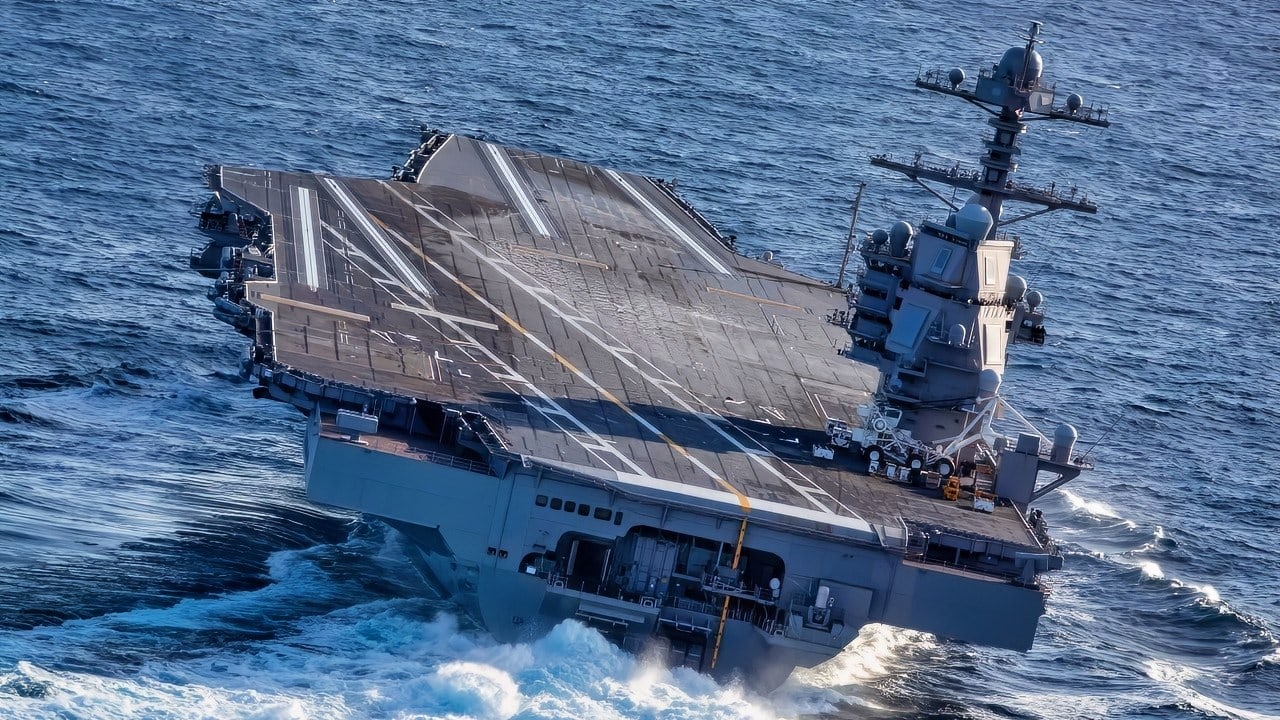
Summary and Key Points: Jack Buckby, a national security researcher, evaluates the survivability of the U.S. Navy’s aircraft carrier fleet in the 2026 strategic landscape.
-While Ford-class carriers provide persistent airpower during Operation Epic Fury, their $13 billion cost makes them high-stakes targets for China’s DF-21D and DF-26 “carrier-killer” missiles.
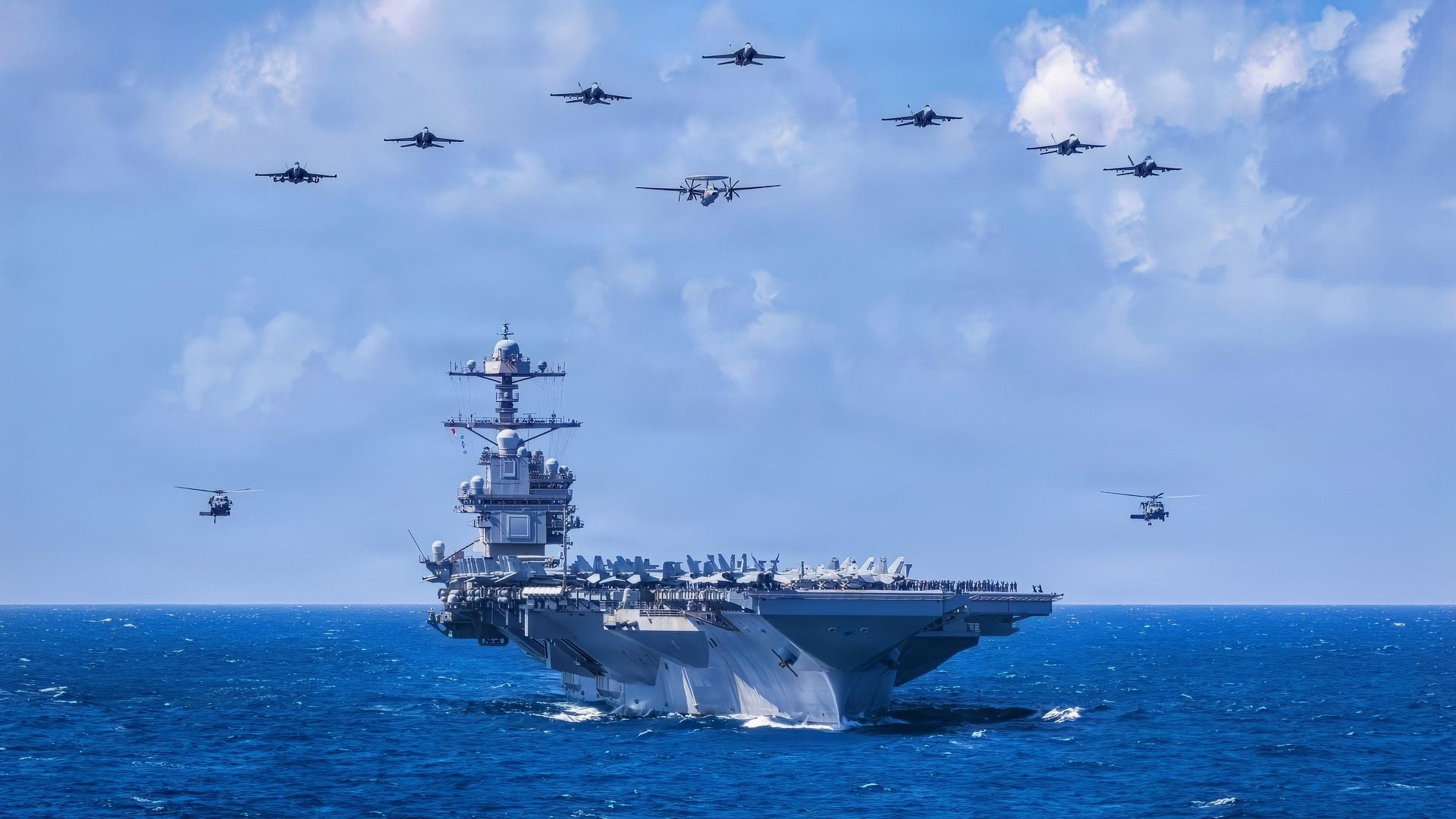
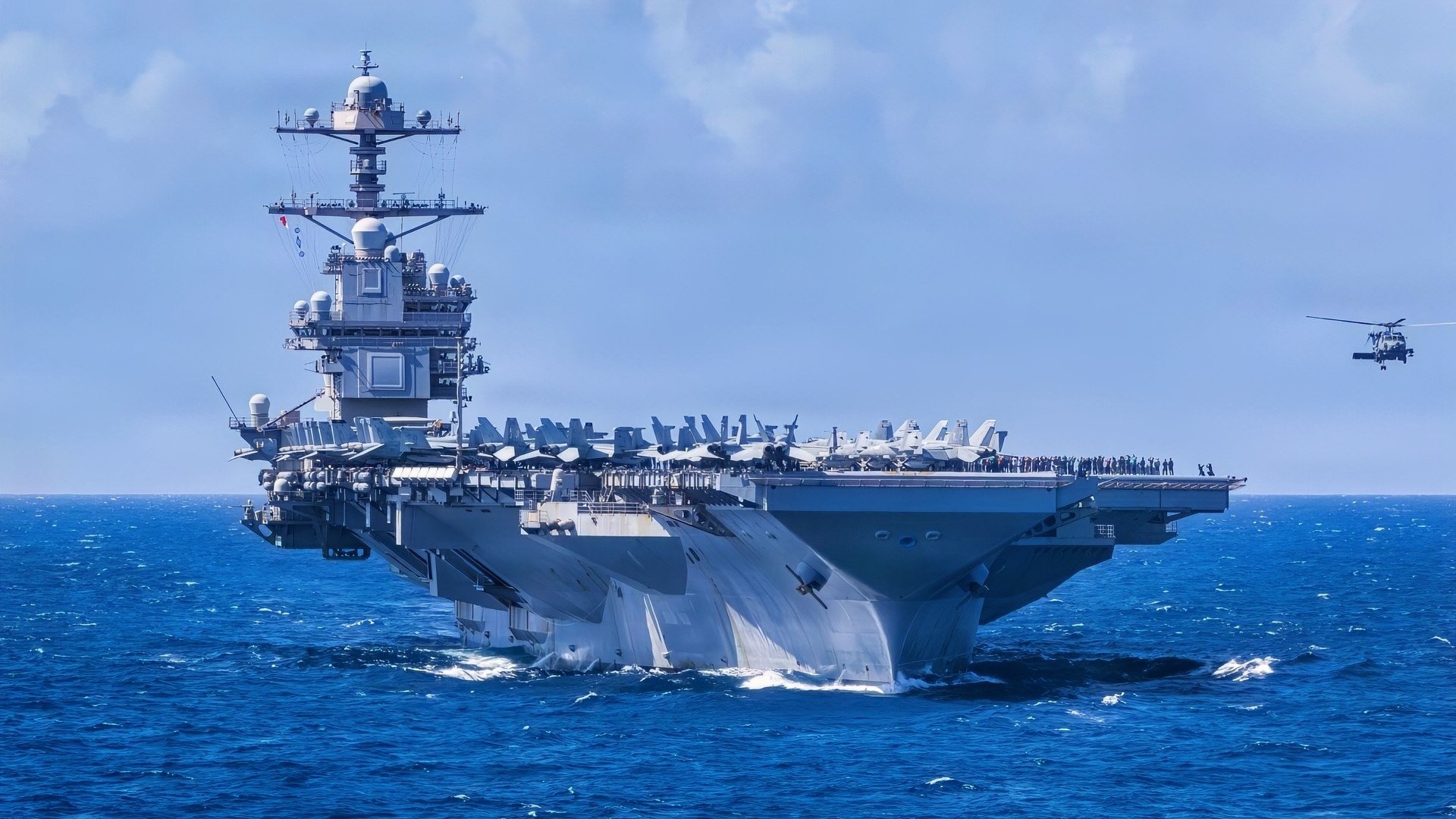
USS Ford Supercarrier U.S. Navy. Image Credit: U.S. Navy.
-This report analyzes the transition toward unmanned integration, specifically the MQ-25 Stingray and the sixth-generation F/A-XX fighter.
-Buckby concludes that while the “uncontested” era of the carrier is over, its evolution into a long-range drone and missile hub ensures its relevance against peer competitors.
Are Aircraft Carriers Obsolete? Not Yet
For decades, the U.S. Navy’s aircraft carriers have been the centerpiece of American military power at sea, capable of launching sustained air operations anywhere in the world without relying on foreign bases. But as the United States pivots toward potential conflicts with peer competitors like China, the survivability of these massive ships is coming into question.
For many analysts, the aircraft carrier is now at risk of following the historical path of the battleship: it was once dominant but was eventually outflanked by new weapons and technologies. China’s ongoing development of advanced technologies like long-range anti-ship missiles, submarines, and surveillance systems is fuelling that debate. And, at the same time, the United States continues to invest heavily in its carrier fleet, including the new Ford-class supercarriers, which cost more than $13 billion each.
The question now facing the Navy is not whether carriers will disappear any time soon. They won’t. It’s a matter of how carriers survive the ongoing changes in maritime combat and dynamics. If they don’t evolve and operate in new ways, these naval powerhouses risk becoming sitting ducks.
The Battleship Problem and the Carrier Debate
The new debate surrounding aircraft carriers and their future relevance often invokes a historical analogy: the battleship. Before World War II, battleships were the dominant naval asset. But once aircraft proved capable of striking ships from long range, the battleship’s role began to change and decline.
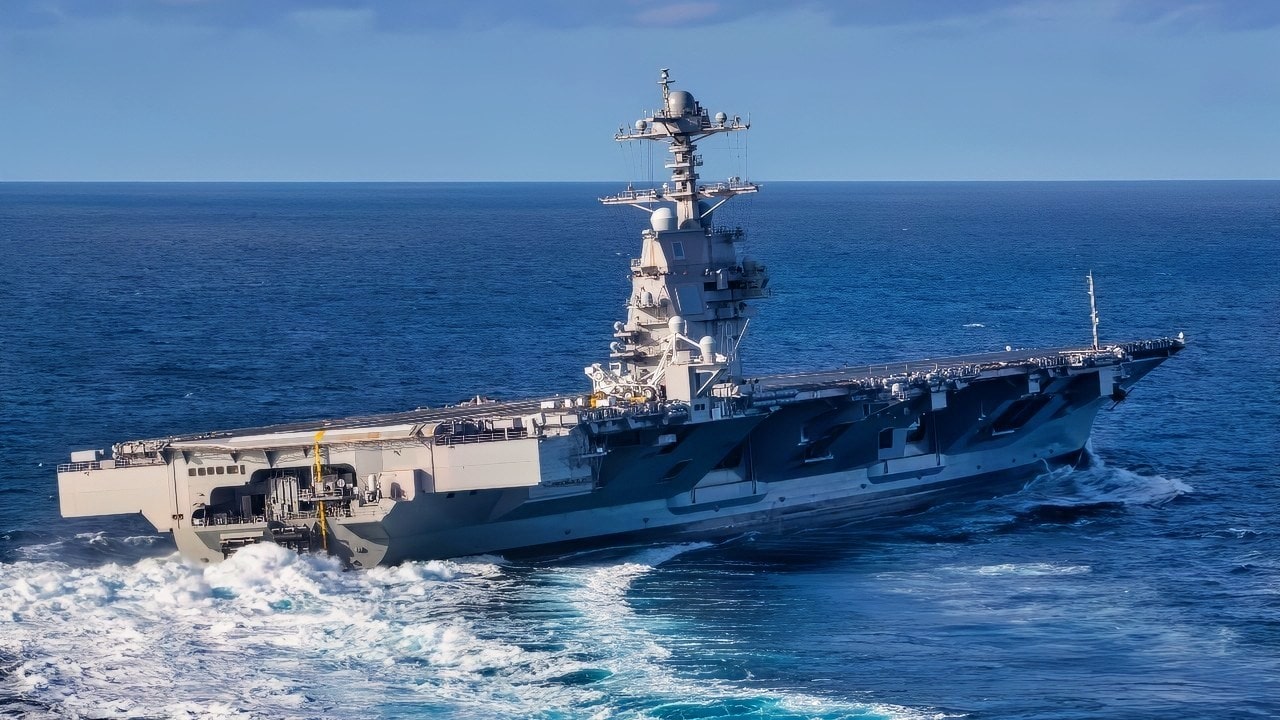
ATLANTIC OCEAN (Oct. 29, 2019) USS Gerald R. Ford (CVN 78) conducts high-speed turns in the Atlantic Ocean. Ford is at sea conducting sea trials following the in port portion of its 15 month post-shakedown availability. (U.S. Navy photo by Mass Communication Specialist 3rd Class Connor Loessin)
Some analysts now argue that modern technologies could create a similar shift for aircraft carriers. A combination of anti-ship ballistic missiles, long-range cruise missiles, submarines, and hypersonic weapons all pose serious threats to large surface ships. Those developments, particularly from China, mean that carriers – among the most expensive military assets ever built – are becoming increasingly vulnerable.
China’s military modernization is powering much of these rising concerns. Beijing has invested heavily in weapons designed to specifically threaten large naval vessels. At the same time, the enormous cost of the U.S. Navy’s newest Ford-class carriers has changed the debate about risk and value. With individual ships costing more than $13 billion, a single successful strike could destroy a platform that took years to build and carries thousands of personnel.
Still, that analogy isn’t perfect. Aircraft carriers have repeatedly adapted to new threats over the past 80 years, and they are proving right now in the Middle East that even quiet submarines and asymmetric tactics can’t take them down, even if prior exercises have indicated it is technically possible.
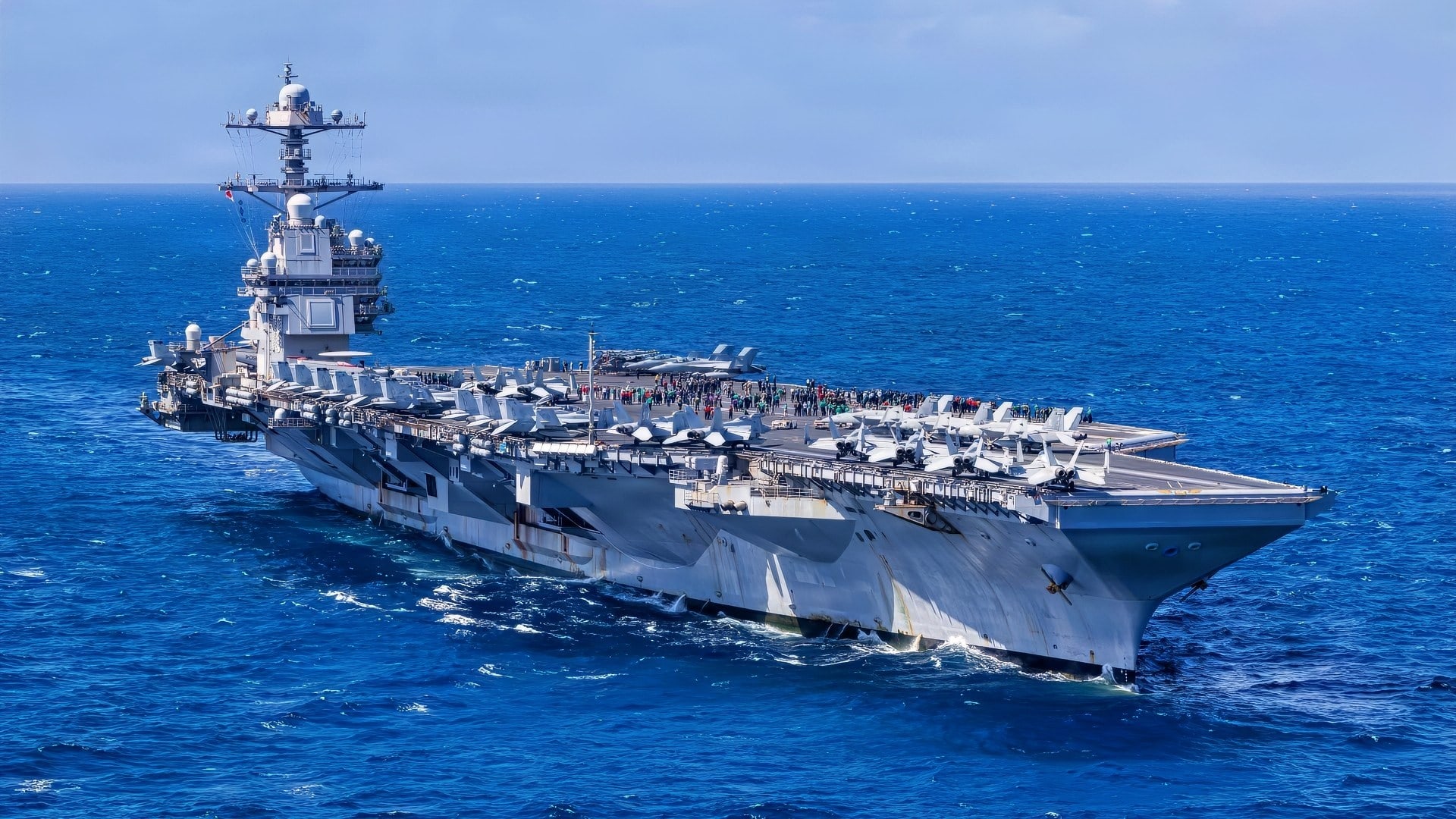
The world’s largest aircraft carrier, Ford-class aircraft carrier USS Gerald R. Ford (CVN 78), transits the Caribbean Sea during Carrier Air Wing 8’s aerial change of command ceremony, Jan. 19, 2026. U.S. military forces are deployed to the Caribbean in support of the U.S. Southern Command mission, Department of War-directed operations, and the president’s priorities to disrupt illicit drug trafficking and protect the homeland. (U.S. Navy photo)
U.S. Navy Carrier Air Wing 8 aircraft fly in formation over the world’s largest aircraft carrier, Ford-class aircraft carrier USS Gerald R. Ford (CVN 78), during Carrier Air Wing 8’s aerial change of command ceremony while underway in the Caribbean Sea, Jan. 19, 2026. U.S. military forces are deployed to the Caribbean in support of the U.S. Southern Command mission, Department of War-directed operations, and the president’s priorities to disrupt illicit drug trafficking and protect the homeland. (U.S. Navy photo)
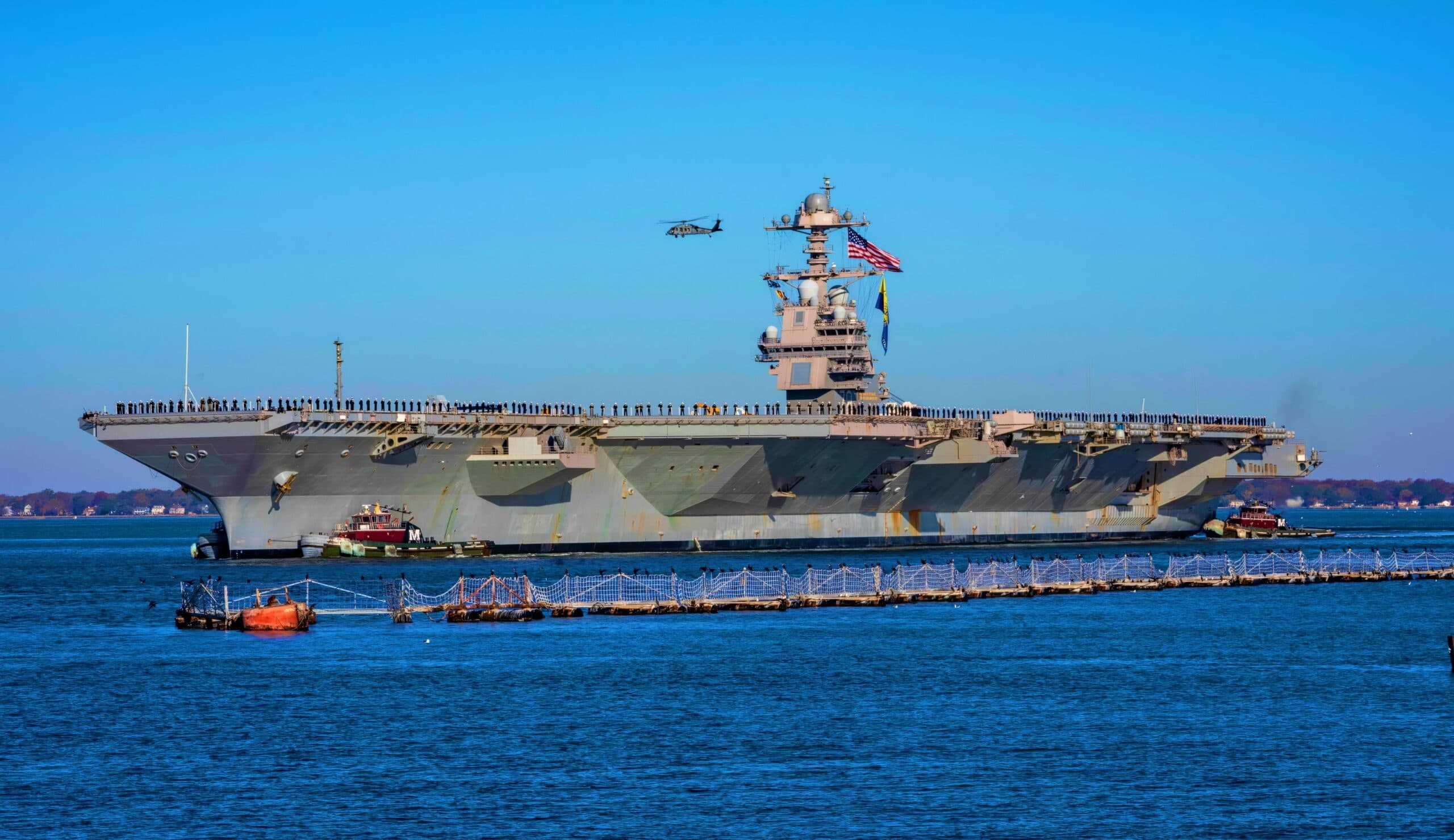
NORFOLK (Nov. 26, 2022) The USS Gerald R. Ford (CVN 78) returns to Naval Station Norfolk after completing their inaugural deployment to the Atlantic Ocean with the Gerald R. Ford Carrier Strike Group (GRFCSG), Nov. 26. The GRFCSG, returned to Naval Station Norfolk following a scheduled deployment with Allies and partners in an effort to build strategic relationships and contribute to a stable and conflict-free Atlantic region, while also showcasing the U.S. Navy’s most advanced class of aircraft carrier. (U.S. Navy Photo/Video by Mass Communication Specialist First Class Nathan T. Beard)
Why Aircraft Carriers Still Matter
Despite the growing threats, aircraft carriers remain central to U.S. military strategy. Their key advantage is mobility, meaning that a carrier strike group can move across thousands of miles of ocean and launch air operations without relying on land bases that may be politically constrained or vulnerable to attack.
Carriers also provide persistent airpower in a way that other systems cannot easily replicate. Land-based bombers must travel very long distances to reach their targets, and missiles are single-use weapons. Carriers, however, are capable of generating sustained sorties for extended periods while serving as command hubs and intelligence platforms.
That capability helps explain why carriers remain a central element of the U.S. fleet structure. Even if they are becoming more vulnerable and costly, U.S. naval planning continues to rely on these carrier strike groups for power projection and deterrence missions because there is no better solution.
China’s Missile and Sensor Challenge
The biggest strategic challenge to U.S. carriers today comes from China’s evolving anti-access and area-denial strategy (A2/AD). The concept simply means that China is working to make it too dangerous for U.S. forces to operate close to China’s coastline during a conflict.
To achieve that, China has invested heavily in long-range missiles and targeting systems. Anti-ship ballistic missiles, sometimes referred to as “carrier-killer” weapons, are designed to strike large vessels at sea. Combined with satellite surveillance, over-the-horizon radar, and maritime patrol aircraft, these systems are designed to locate and track carrier strike groups over long distances.
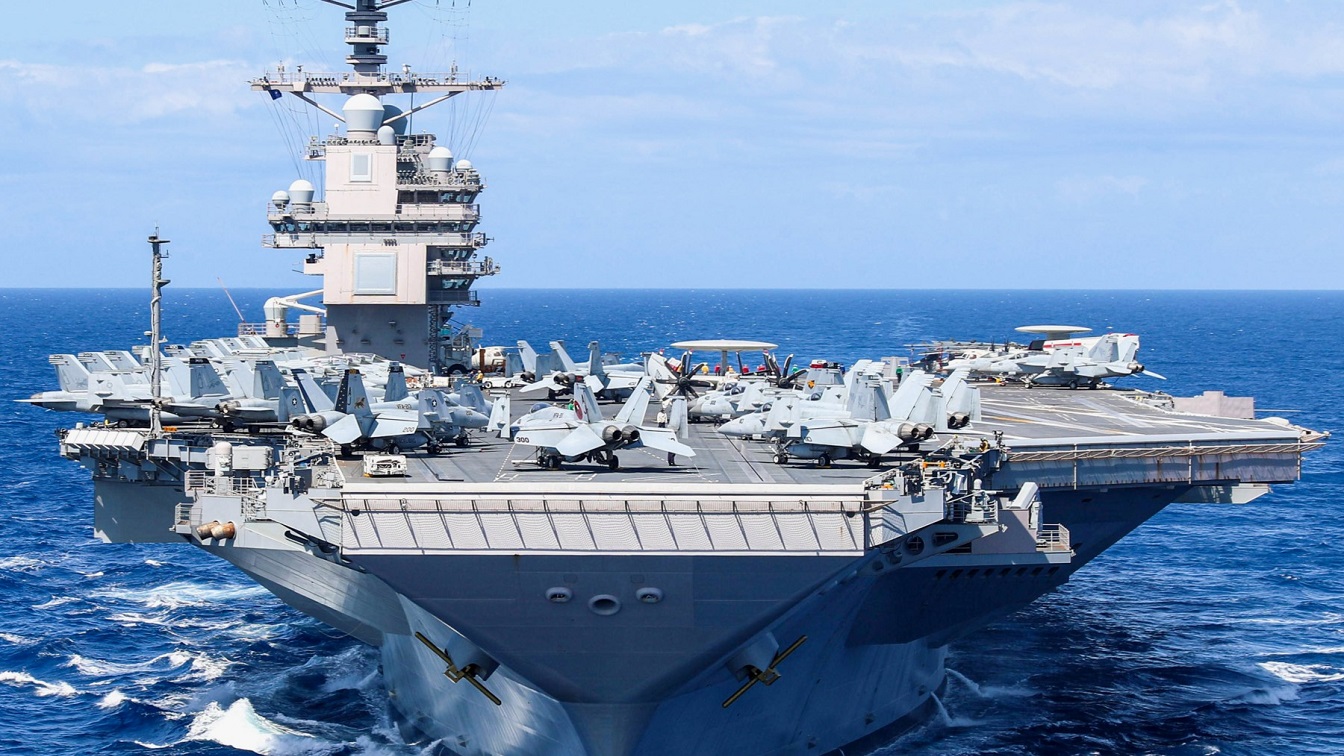
Ford-Class. Ford-Class Aircraft Carrier USS Ford.
The result is a highly complex “kill chain” that sees the weapons detect the carrier, track it continuously, and launch missiles capable of striking it hundreds of even thousands of miles away.
Carriers are not made obsolete by these developments, but planners and commanders will need to change how they operate. Instead of sailing close to enemy coastlines – something they often do in conflicts against weaker adversaries – the Navy may need to launch aircraft from much greater distances.
How the Navy Is Adapting the Carrier
Recognizing these challenges, the U.S. Navy is already adapting its carrier strategy for modern warfare. One of the most significant developments is the integration of unmanned aircraft into carrier air wings.
The MQ-25 Stingray drone, for example, is designed to serve as a carrier-based aerial refueling platform. By refueling other aircraft in flight, the MQ-25 can extend the range of carrier-based fighters, allowing them to strike targets hundreds of miles farther from the carrier itself.
The system is expected to become the Navy’s first operational carrier-based unmanned aircraft and a key component of future carrier air wings.
In addition to drones, the Navy is developing a next-generation carrier-based fighter known as the F/A-XX. The aircraft is expected to feature extended range, advanced stealth, and integration with unmanned systems – capabilities specifically designed for potential conflicts with technologically advanced adversaries.
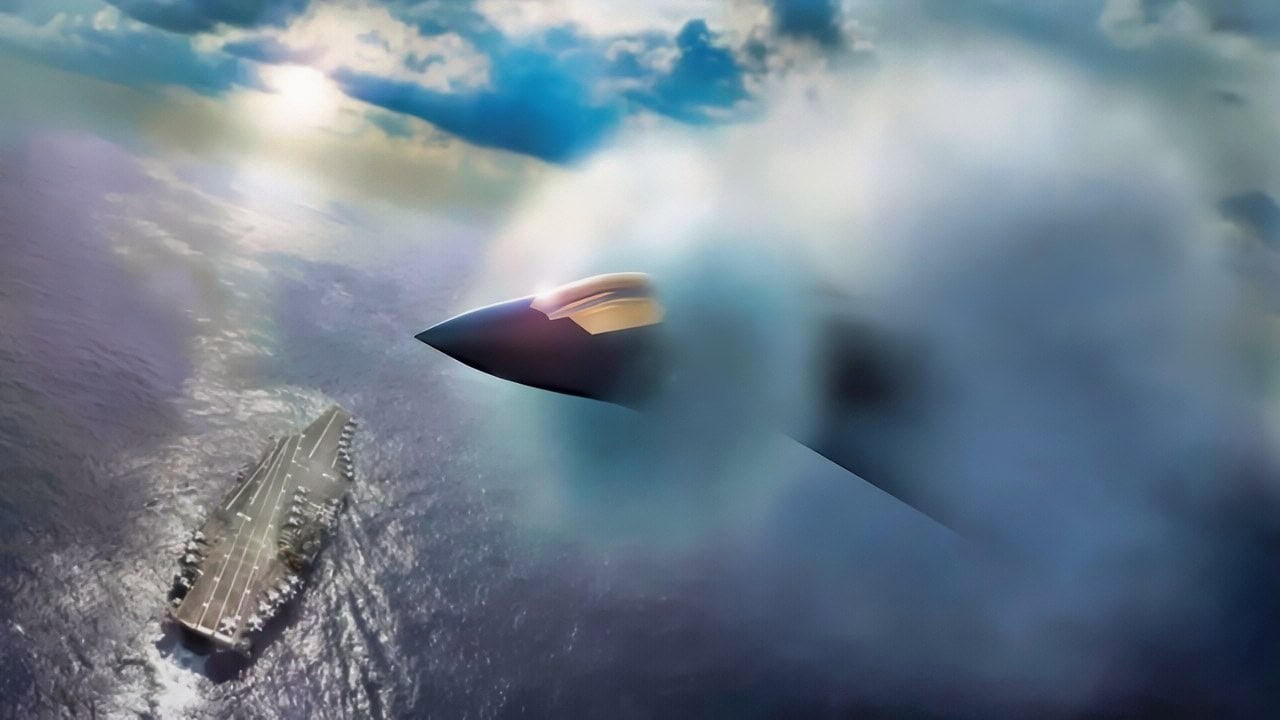
F/A-XX Boeing Image.
The changes are part of an ongoing shift in naval thinking; carriers may increasingly function as mobile bases for long-range aircraft, drones, missiles, and other air assets.
The era of the aircraft carrier as the uncontested dominant naval asset may be over, but the carrier isn’t dead yet.
About the Author: Jack Buckby
Jack Buckby is a British researcher and analyst specialising in defence and national security, based in New York. His work focuses on military capability, procurement, and strategic competition, producing and editing analysis for policy and defence audiences. He brings extensive editorial experience, with a career output spanning over 1,000 articles at 19FortyFive and National Security Journal, and has previously authored books and papers on extremism and deradicalisation.

