Summary and Key Points: Railguns for Trump-Class Battleship Could Happen
-Defense journalist Caleb Larson evaluates the revival of the U.S. Navy’s railgun program, officially confirmed in the NAVSEA 2025 Year-in-Review.
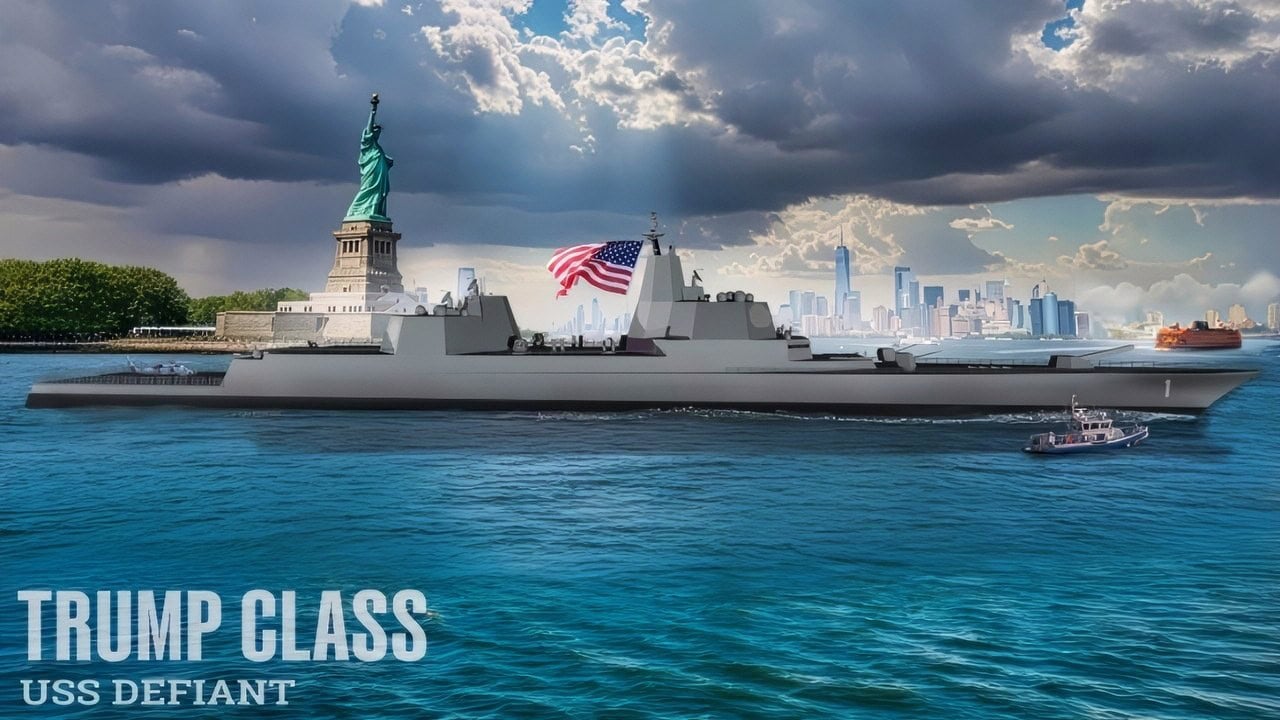
Trump-Class Battleship. Image Credit: Creative Commons/White House.
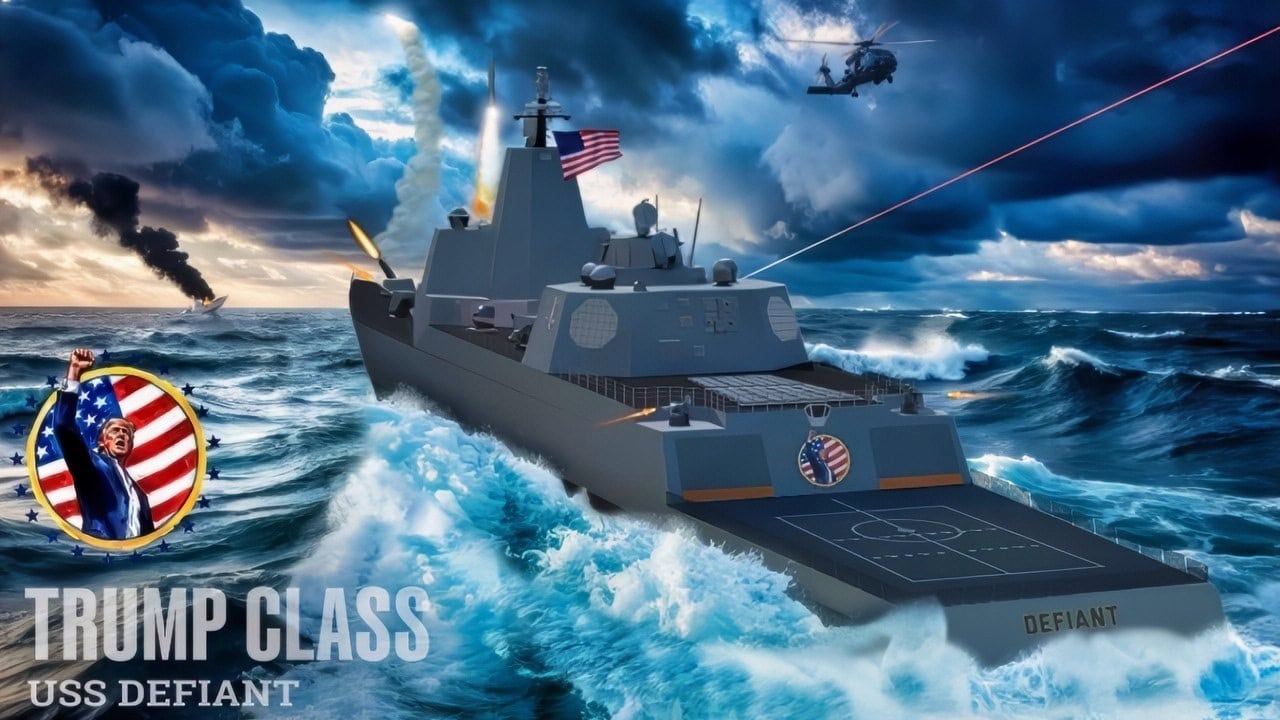
Trump-Class Battleship. Image Credit: Creative Commons/White House Photo.
-Abandoned in 2021, the technology has been repurposed for the Trump-class battleship (BBG(X)), a 35,000-ton “Golden Fleet” centerpiece.
-This report analyzes the February 2025 trials at White Sands, which supported the Joint Hypersonics Transition Office.
Larson explores the parallels with Japan’s ATLA railgun success on the JS Asuka and the potential for General Atomics’ railguns to bolster the Golden Dome air defense system against Iranian and near-peer threats during Operation Epic Fury.
Beyond the Mach 7 Barrier: Evaluating the 2026 Revival of the U.S. Navy’s Electromagnetic Railgun
The U.S. Navy has apparently resumed testing railgun technology in an apparent effort to move forward President Donald Trump’s Trump-class battleship project.
That effort comes some years after the Navy decided to put the kibosh on the railgun project, citing significant technological challenges. It seems the effort has been revived.
The information came to light in the Naval Sea Systems Command’s (NAVSEA’s) annual year in review, which was released in January.
In one small section titled “White Sands Detachment [WSD] Gathers Key Data During Railgun Testing,” the document explained that “the WSD tested a railgun to collect critical information about high-velocity firing during a three-day campaign at White Sands Missile Range (WSMR) in New Mexico. The testing in February was a joint effort between WSD and NSWC Dahlgren Division in Virginia and conducted for NAVSEA’s Joint Hypersonics Transition Office.”
Trump-class Battleship
The Trump-class battleship project, or BBG(X), is planned to arm a dizzying array of weaponry, including supersonic and hypersonic missiles, laser weapons, traditional naval guns—and, it seems, railgun technology.
Though information about the class is rather sparse, it would displace about 35,000 tons. This would make it significantly larger than the Arleigh Burke-class of destroyers, which tips the scales at about 8,300 to 9,700 lbs, depending on the variant.
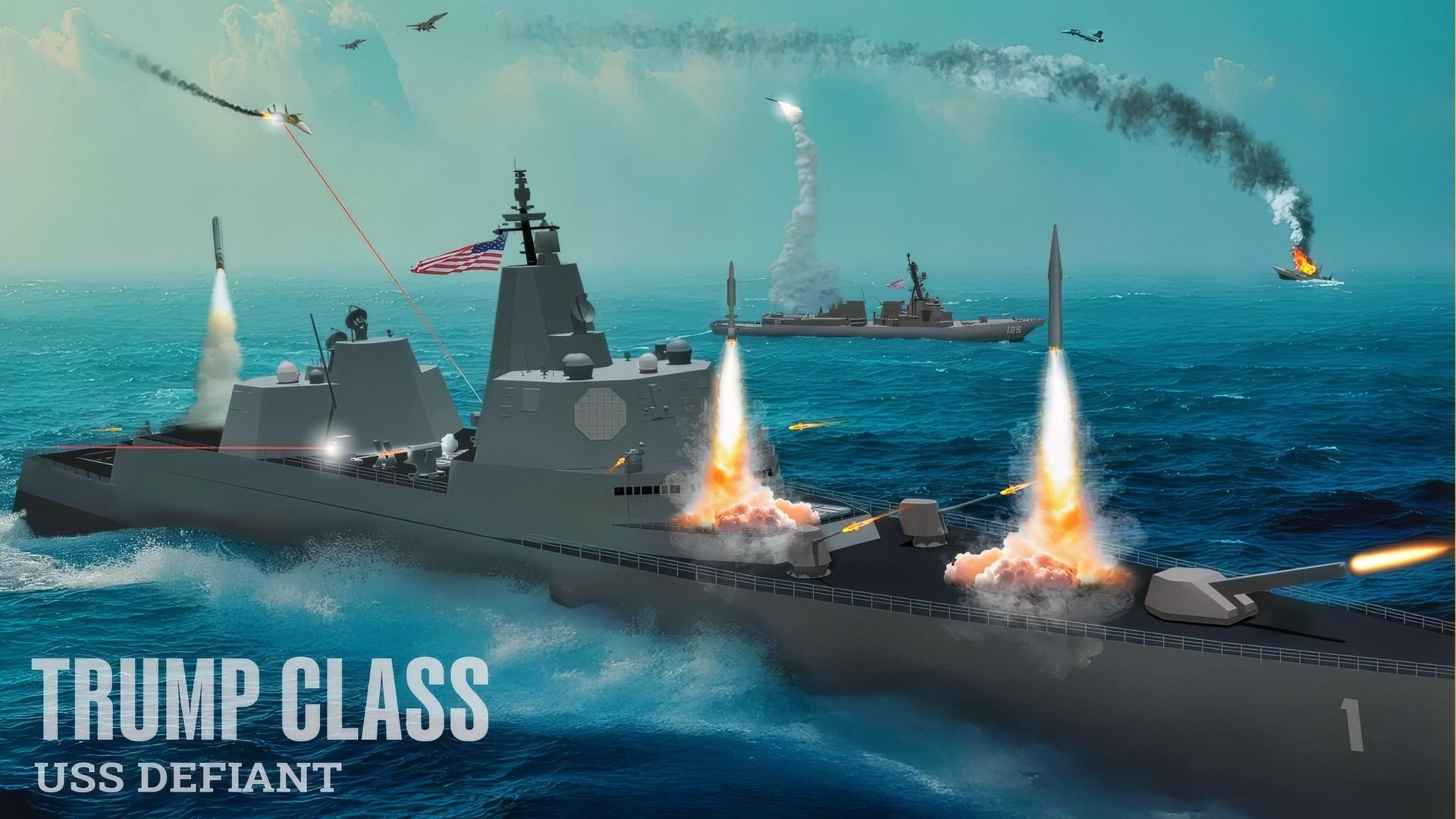
Trump-Class Battleship USS Defiant. Image Credit: Creative Commons.
Analysts have lambasted the ship as both impractical and seemingly at odds with the Navy’s strategy of dispersing naval assets geographically and favoring a larger number of smaller ships over larger legacy platforms. The proposed Trump-class diverges from naval strategy so greatly that plenty of analysts doubt the ship will ever become reality.
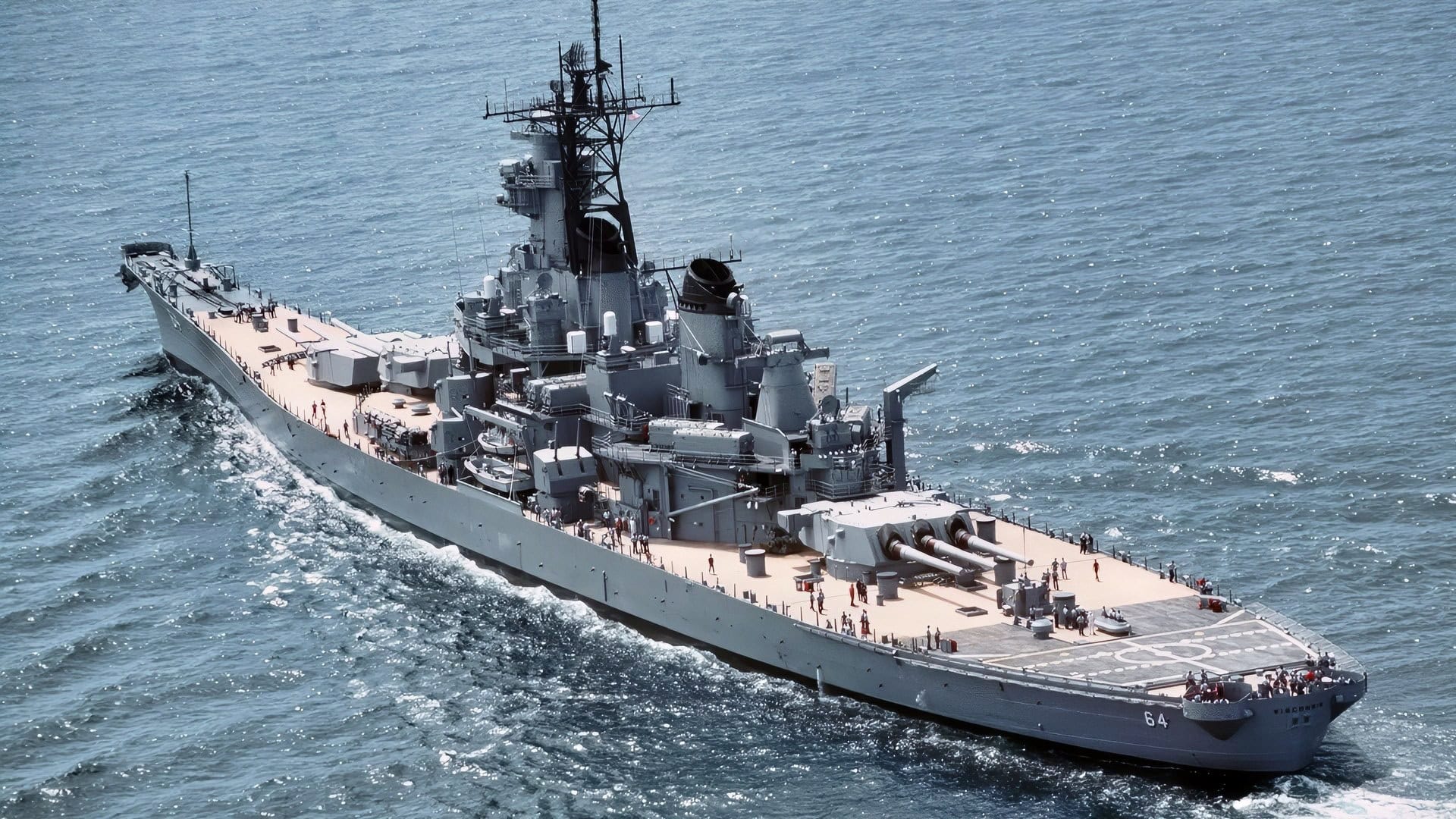
Though the Navy had revived the battleship before, in the 1980s as part of then-President Ronald Regan’s naval expansion push, the revival of those World War II-era ships was costly and short-lived.
Work in Japan Continues
Though the Navy’s railgun effort was at one point terminated, a similar initiative is underway in Japan.
That country’s Acquisition, Technology & Logistics Agency (ATLA), a body similar to the Pentagon’s Office of the Under Secretary of Defense for Acquisition and Sustainment, is moving forward with a rail gun prototype they hope will one day arm Japanese naval vessels.
The Japanese research body took to X to give an update about their initiative, explaining that “#ATLA conducted the Ship-board #Railgun Shooting Test from June to early July this year with the support of the Japan Maritime Self-Defense Force.” The group added that the test was “the first time that a ship-mounted railgun was successfully fired at a real ship.”
Railgun testing by the ATLA began in 2023, but the country has been researching the technology for nearly a decade.
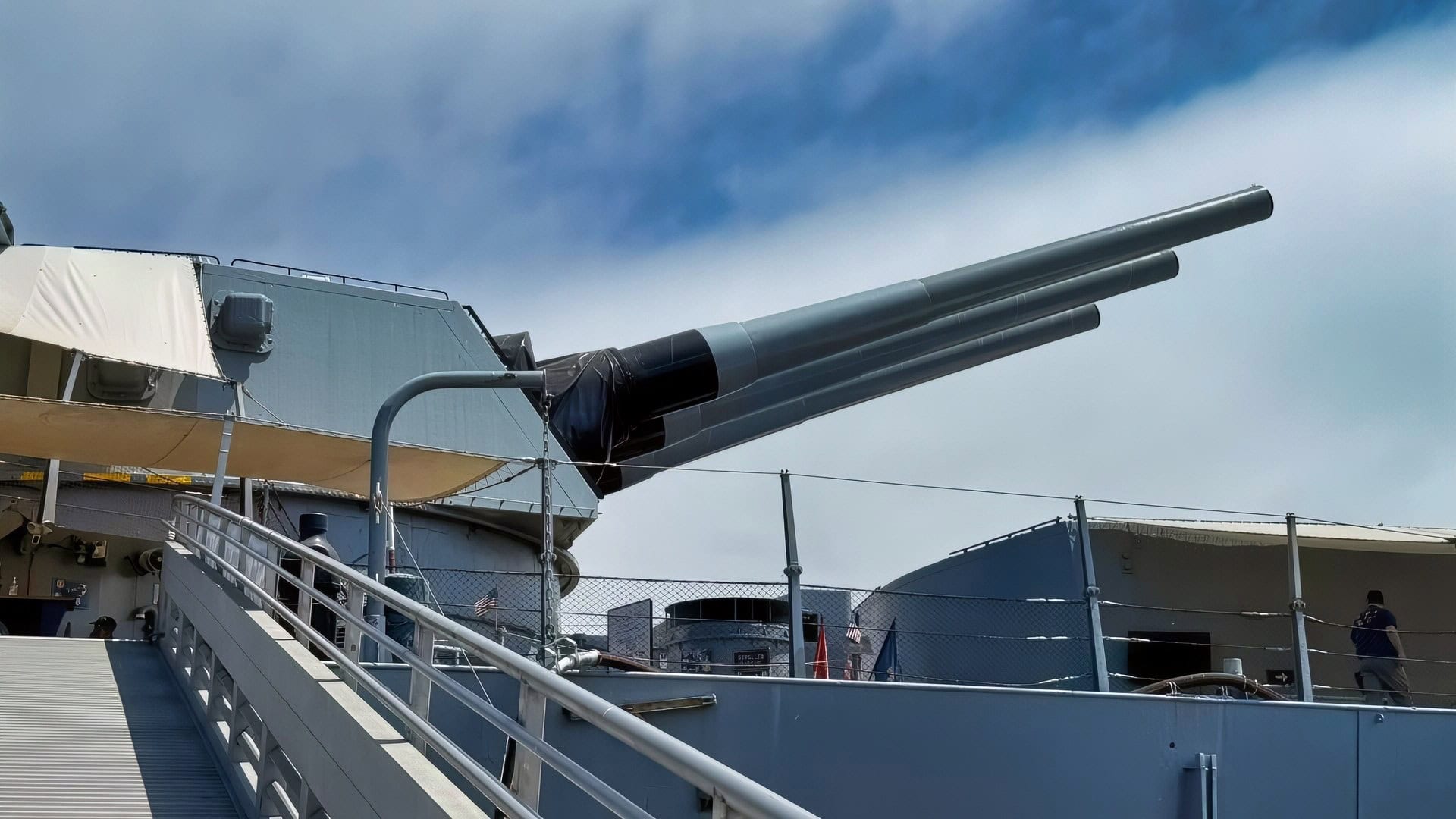
Iowa-Class 16-Inch Gun August 2025 19FortyFive Image. Taken by Harry J. Kazianis.
The long development timetable is indicative of the engineering challenges, including rapid rail degradation caused by intense projectile velocities—an issue that was a contributing factor to the demise of the Navy’s railgun project.
Enduring Appeal
Naval Surface Warfare Center Dahlgren Division, which had conducted the Navy’s railgun research, notched several significant wins. The prototype hit targets more than 100 miles away, proving that the technology was technically viable.
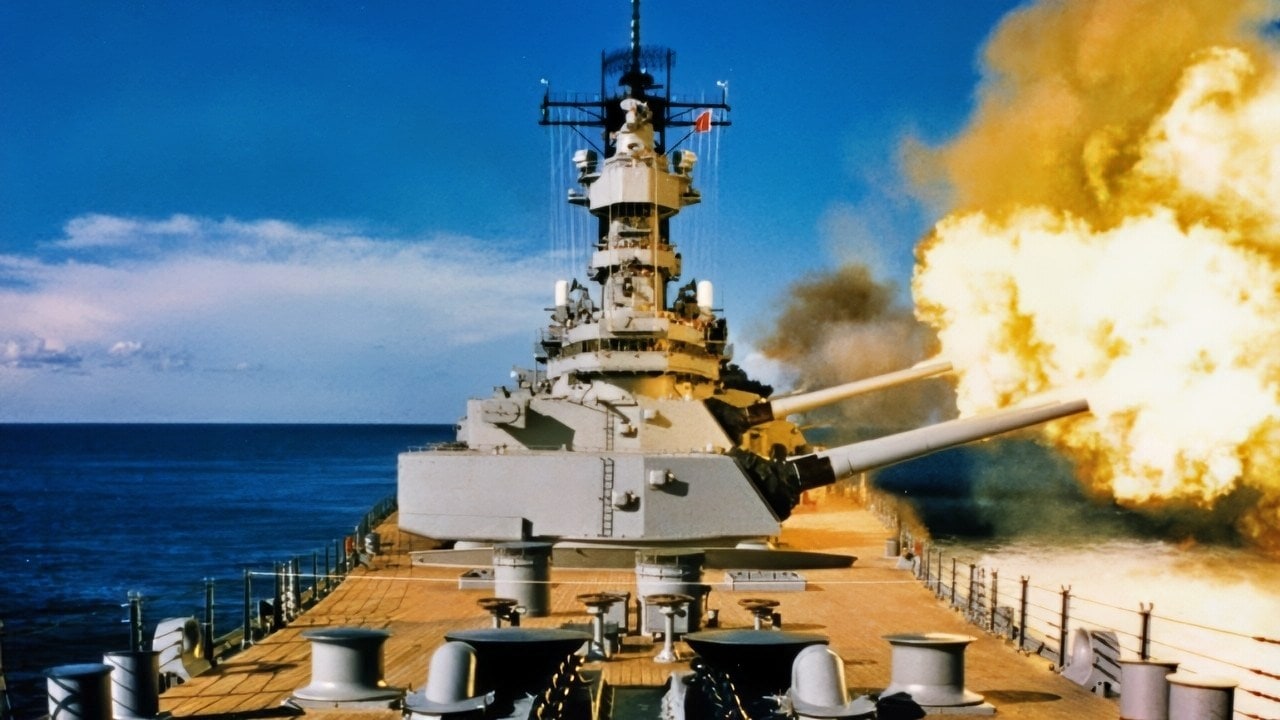
Iowa-Class Battleship Firing 16-inch Guns. Image Credit: Creative Commons.

16-Inch Guns of USS Iowa 19FortyFive Image taken By Harry J. Kazianis on the Deck of the Battleship USS Iowa.

USS Iowa Seal 19FortyFive.com Original Image Taken By Harry J. Kazianis Onboard Battleship USS Iowa in 2025.
At its core, the railgun holds a measure of allure. It is a tantalizing logistical opportunity, should the technology prove surmountable. Railgun projectiles are typically of an all-metal construction and rely on vast amounts of electrical power to accelerate up to speed and off their rail.
Handling railgun ammunition is, therefore, inherently safer than traditional explosive naval gun ammunition. And with adequate electrical power generation, railgun operation offers potential cost benefits compared to naval guns, too.
To Be Continued
General Atomics and BAE Systems have both developed railguns in the past, but it was not immediately clear if the Navy is pursuing one of their projects. General Atomics has previously tried to position its project as a prime candidate for President Trump’s Golden Dome homeland air defense initiative.
“Just the idea of the muzzle velocity and the standoff capability, and particularly from our perspective, from a terminal defense for air [and] missile defense. Just this with the tungsten pellets as the warhead,” Mike Rucker, Head of GA-EMS Weapons, explained to Naval News.

USS Missouri Iowa-Class Battleship Broadside. Image Credit: Creative Commons.
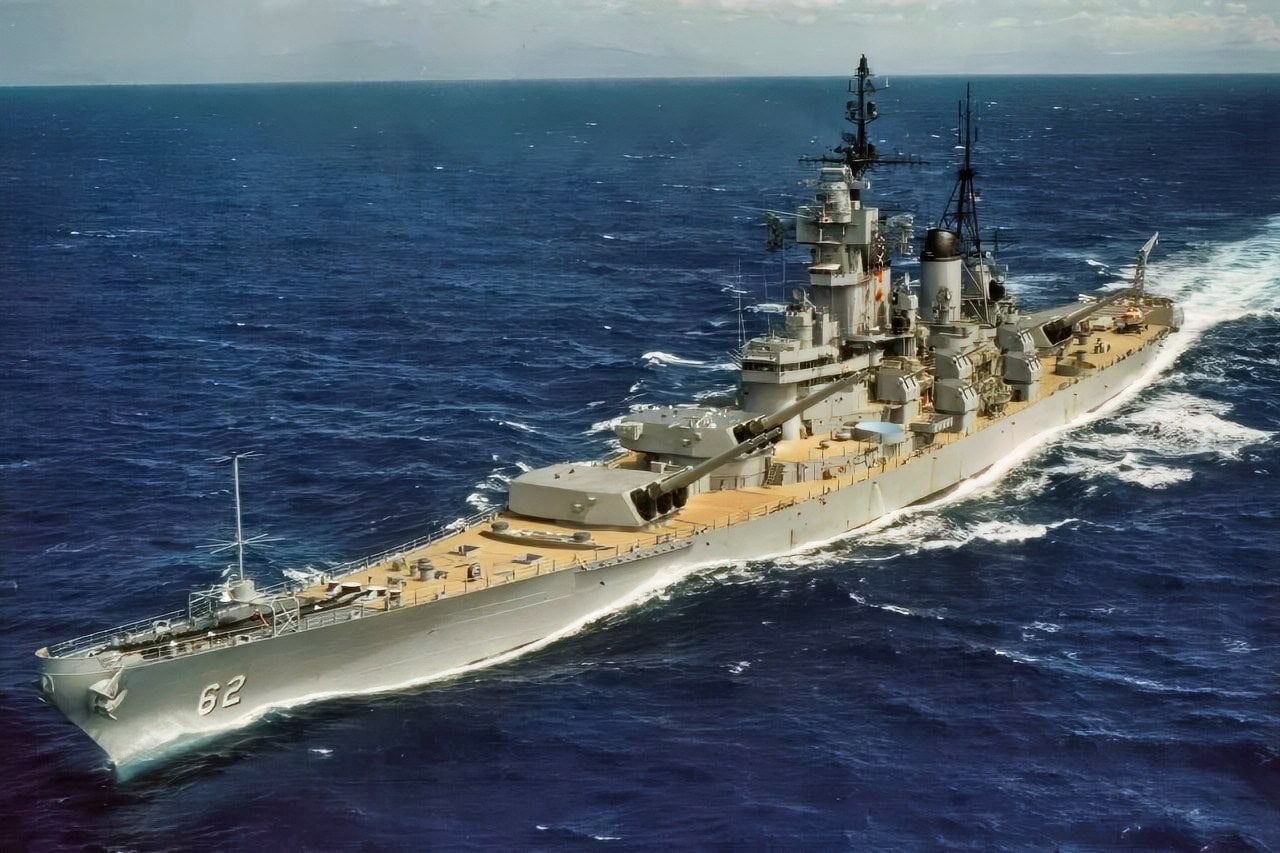
USS New Jersey Battleship. Image Credit: Creative Commons.
Clarity about which initiative the Navy has decided to revive will undoubtedly arrive in the months ahead, as will additional details about the Trump-class battleship design. Until then, astute naval watchers will watch and wait.
About the Author: Caleb Larson
Caleb Larson is an American multiformat journalist based in Berlin, Germany. His work covers the intersection of conflict and society, focusing on American foreign policy and European security. He has reported from Germany, Russia, and the United States. Most recently, he covered the war in Ukraine, reporting extensively on the war’s shifting battle lines from Donbas and writing on the war’s civilian and humanitarian toll. Previously, he worked as a Defense Reporter for POLITICO Europe. You can follow his latest work on X.