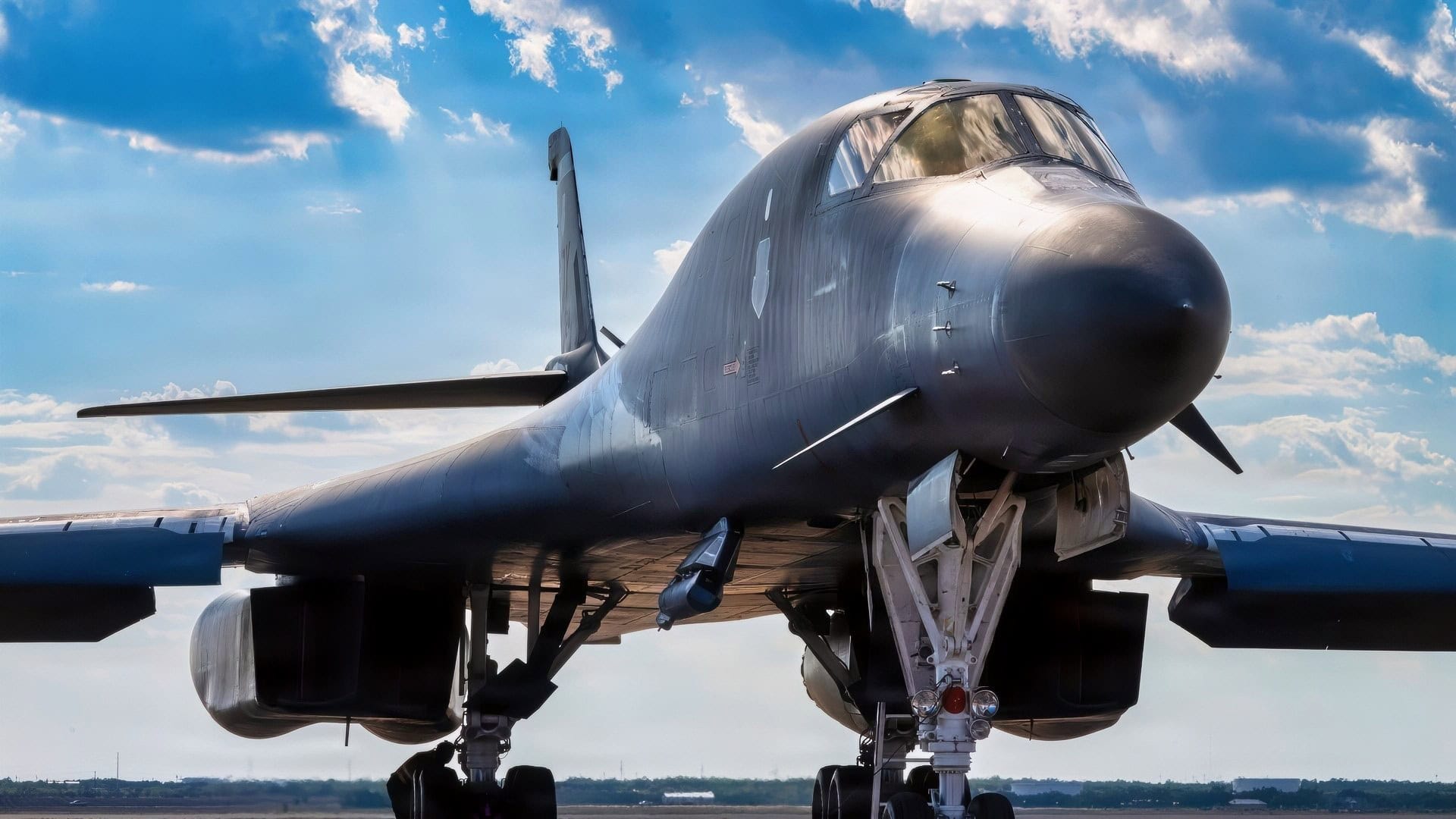
Summary and Key Points: Kris Osborn — President of Warrior Maven, former Pentagon highly qualified expert in the Office of the Assistant Secretary of the Army, Columbia University master’s graduate, and Fox News and MSNBC military analyst — reports on the B-1B Lancer’s decisive combat role during Operation Epic Fury against Iran.
-Operating from RAF Fairford in the United Kingdom with nearly a dozen aircraft staged across Europe, B-1B bombers carrying 75,000 pounds of precision munitions — including GBU-31 JDAMs with BLU-109 concrete-penetrating warheads — have struck Iranian ballistic missile production sites, underground command-and-control networks, and mobile launchers.
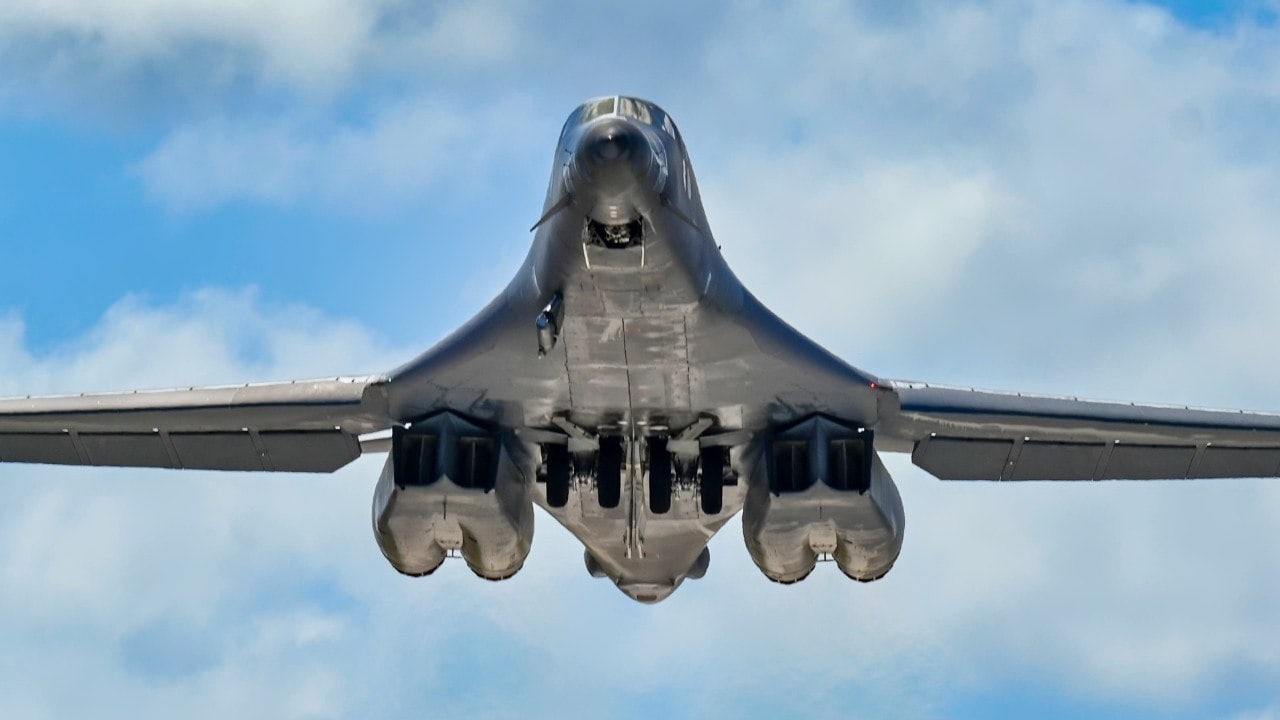
A U.S. Air Force B-1B Lancer assigned to the 34th Expeditionary Bomb Squadron takes off for a mission in support of Bomber Task Force 25-1, at Andersen Air Force Base, Feb. 16, 2025. Bomber Task Force supports national security objectives through the speed, flexibility, and readiness of our strategic bombers. (U.S. Air Force photo by Airman 1st Class Alec Carlberg)
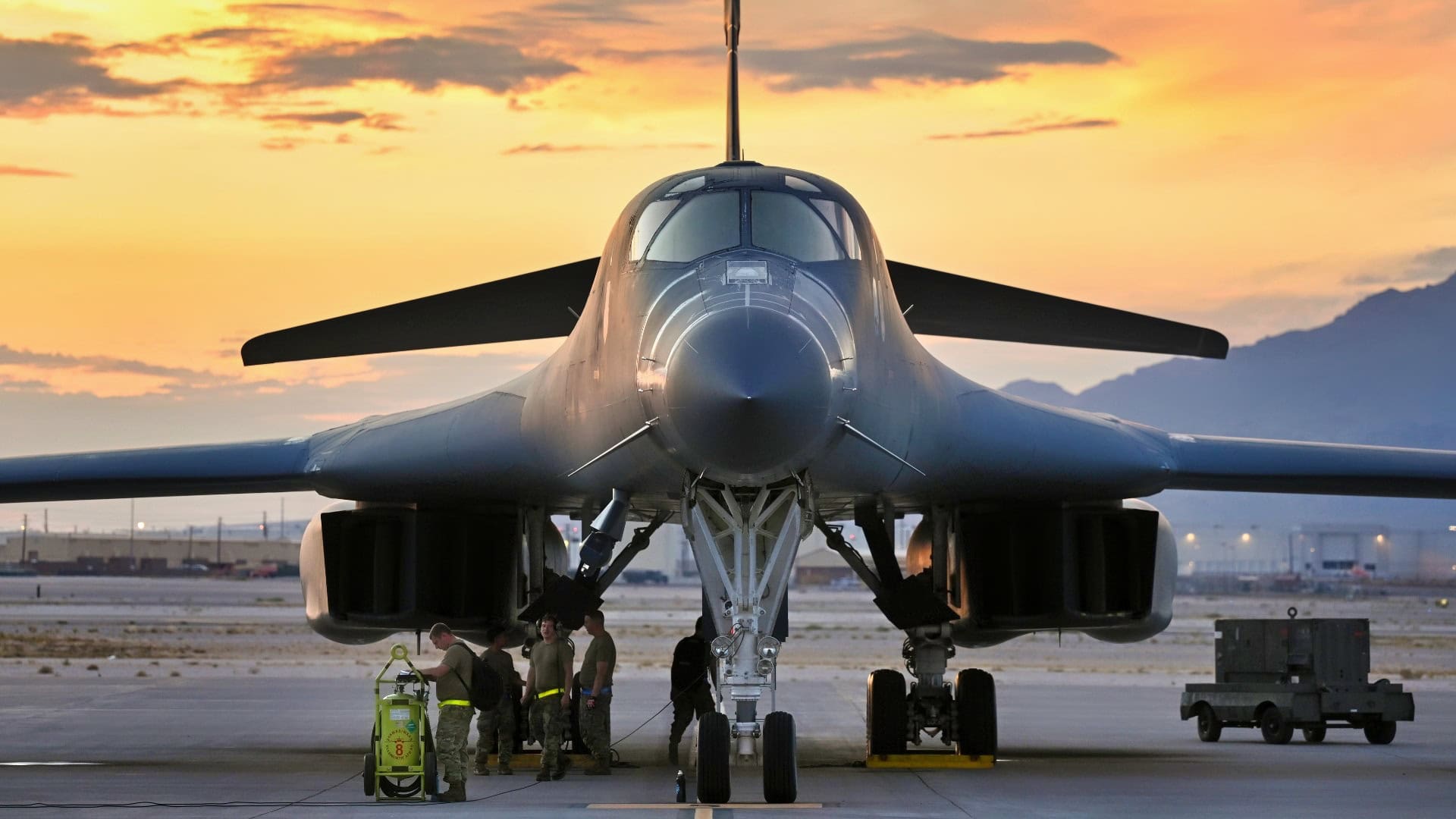
A U.S. Air Force B-1B Lancer assigned to the 34th Bomb Group undergoes maintenance at Nellis Air Force Base, Nev., July 23, 2024. Five B-1Bs flew from Ellsworth AFB, S.D., to participate in Red Flag 24-3, an exercise that provides Airmen and Guardians with the opportunity to work alongside allied air forces in a realistic combat training environment. (U.S. Air Force photo by Airman 1st Class Brittany Kenney)
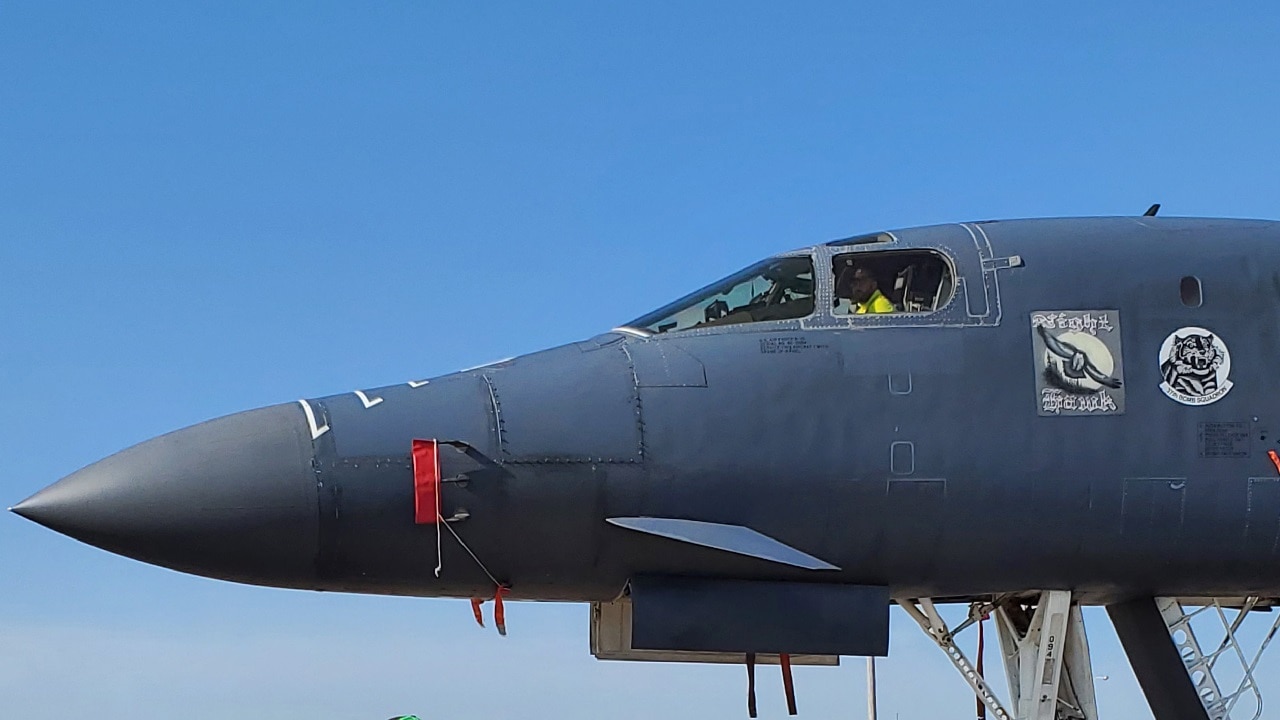
A B-1B Lancer, tail number 86-0094, is moved across Douglas
Blvd. to the Maintenance Repair and Overhaul Technology Center (MROTC) to receive an initial portion of Gate 1 of programmed depot maintenance April 21. 567th AMXS personnel will perform three days of maintenance which include single system checks on 40 individual actuators validating voltage outputs as
well as interrogating each actuator for hydraulic leaks. After single systems are completed, the horizontal stabilizers will be removed from the aircraft. This is the first time that horizontal stabilizers have ever been removed at the MROTC. Once complete, the aircraft and horizontal stabilizers will be brought back across Douglas to the 569th AMXS strip facility for plastic media blasting. Once stripped, the horizontal stabilizers will be routed to the 76th Commodities Maintenance Group for overhaul and repairs. (U.S. Air Force photo/Kelly White)
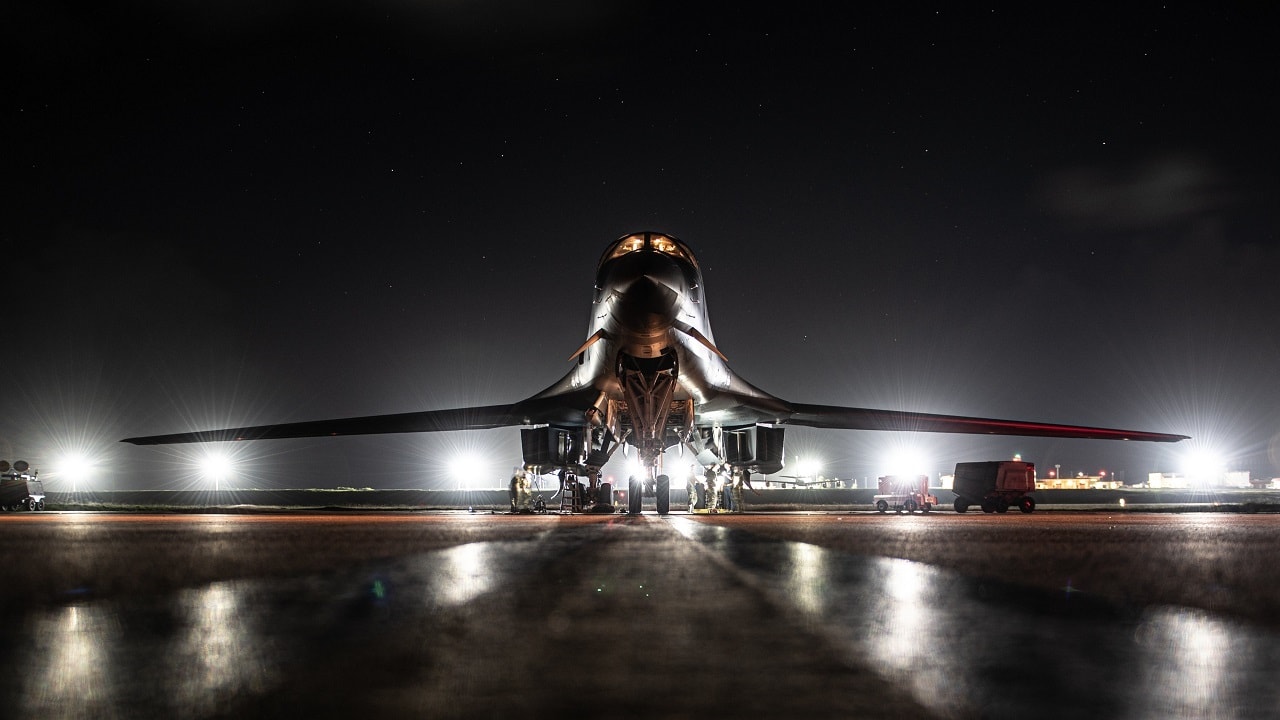
B-1B Lancer Bomber. Image Credit: U.S. Air Force.
-Osborn details how the B-1B’s variable-sweep wings, extended loiter capability, and hypersonic weapons integration make it uniquely effective against Iran’s hardened and dispersed military infrastructure alongside B-2 Spirit stealth bombers and surveillance assets.
U.S. Air Force B-1B Bombers Are Flying From the UK to Strike Deep Inside Iran
The United States Air Force’s B-1B Lancer bomber has become a major weapon in the ongoing U.S. military campaign against Iran.
During the conflict, part of a larger operation often referred to as Operation Epic Fury, the B-1B has been used to strike Iranian missile facilities, military infrastructure, and underground command centers, according to U.S. Central Command.
The B-1B Lancer is a long-range heavy bomber designed for high-speed, low-altitude penetration and precision strikes, which has been substantially upgraded over the years to remain relevant and effective. The B1-B has been integrated with new avionics, computing, and a Bomb Rack Unit for weapons integration.
Today’s B-1B has even been configured to carry hypersonic weapons.
B1-B Attacks Iran’s Ballistic Missiles
Equipped with variable-sweep wings and advanced radar systems, the aircraft can carry up to about 34,000 kilograms (75,000 pounds) of weapons, including precision-guided bombs and cruise missiles. These capabilities make it particularly useful in modern conflicts where destroying hardened military targets is critical.
In the campaign against Iran, the bomber’s ability to carry large numbers of precision weapons allows it to strike multiple targets in a single mission, supported by a larger bomb bay.
In early stages of the conflict, U.S. officials confirmed that B-1B bombers conducted strikes deep inside Iranian territory to degrade Iran’s ballistic-missile capabilities and command-and-control networks. These missions targeted facilities involved in missile production, storage, and launch operations.

A B-1B Lancer assigned to the 28th Bomb Wing at Ellsworth Air Force Base, S.D., takes off on the first day of Red Flag 16-2 Feb. 29, 2016, at Nellis AFB, Nev. (U.S. Air Force photo/Airman First Class Keven Tanenbaum).
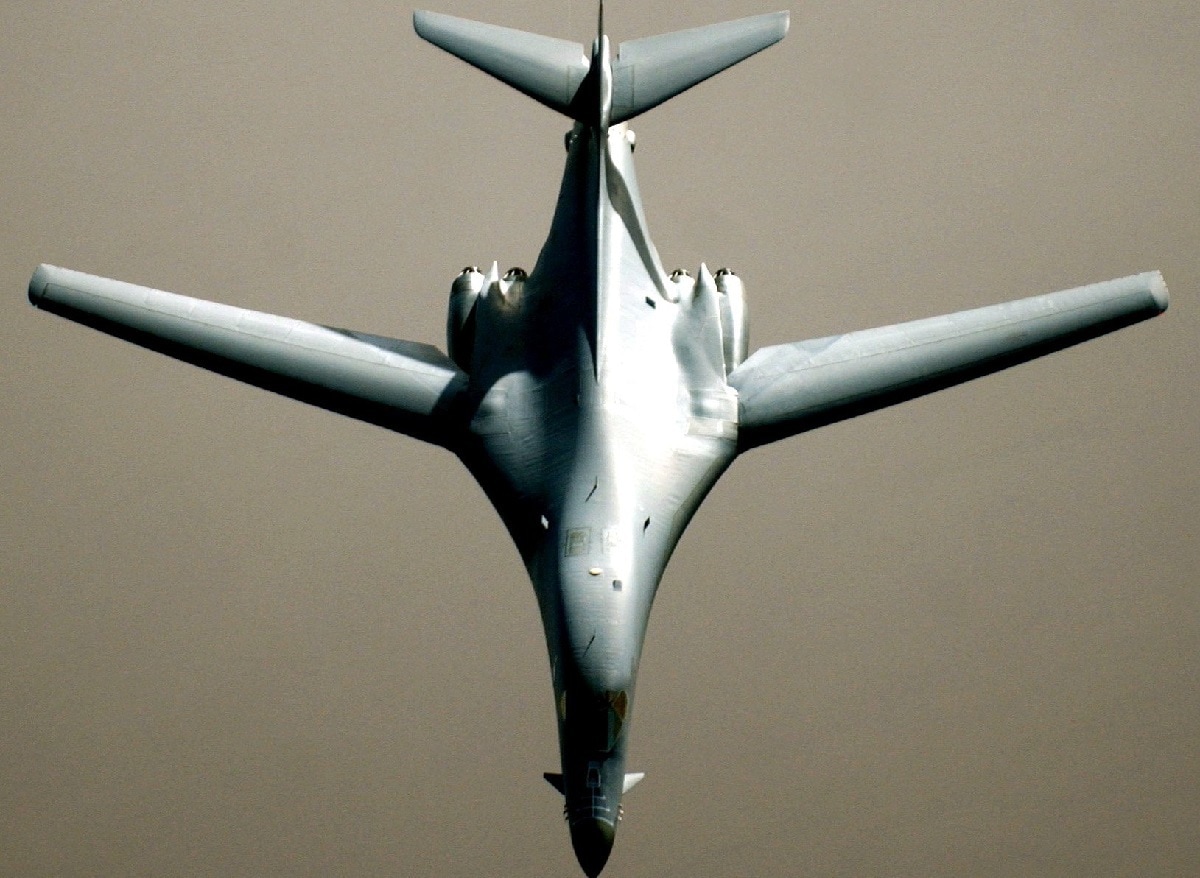
OPERATION IRAQI FREEDOM — A B-1 Lancer continues its mission after refueling in the skies near Iraq March 25. The B-1 crew, assigned to 405 Air Expeditionary Wing, is flying missions from a forward-deployed air base supporting Operation Iraqi Freedom. (U.S. Air Force photo by Staff Sgt. Cherie A. Thurlby).
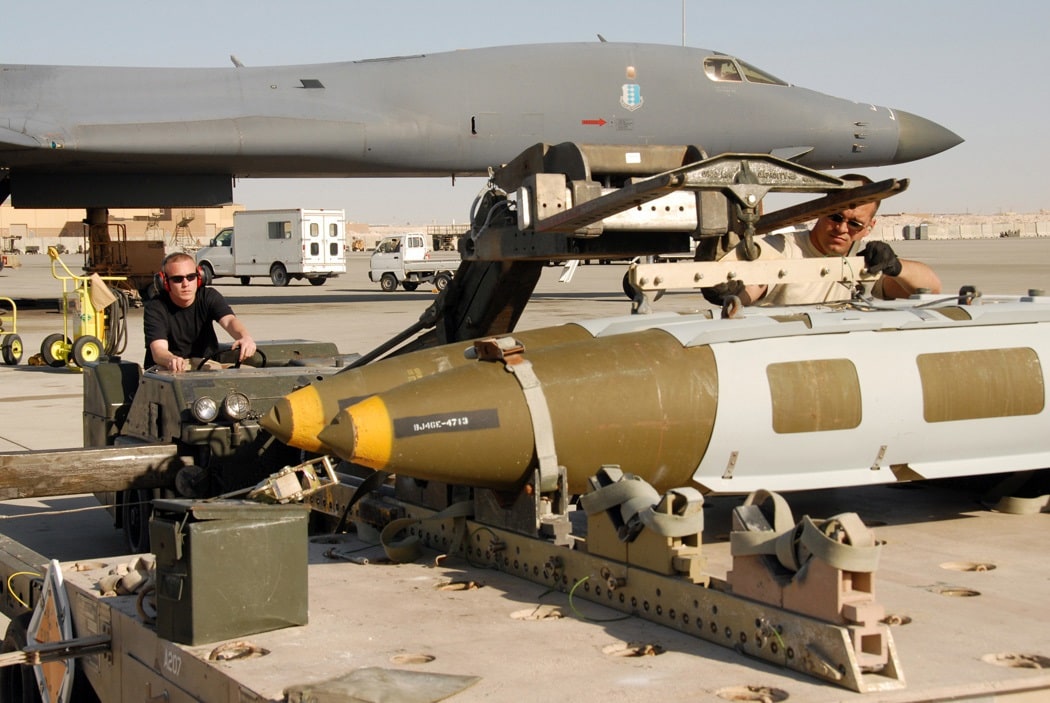
U.S. Air Force Airman 1st Class Kenneth Nealis, right, and Senior Airman Christopher Silas, both weapons load crew members assigned to the 379th Expeditionary Aircraft Maintenance Squadron, transfer a 2,000 pound GBU-31 Joint Direct Attack Munition to a lift truck for loading onto a B-1B Lancer aircraft March 29, 2007, in Southwest Asia. (U.S. Air Force photo by Airman 1st Class Gustavo Gonzalez) (Released)
According to military reports, the goal of these strikes was to weaken Iran’s ability to threaten U.S. forces and regional allies with missile attacks.
Flying from Europe
Many of these missions involve long-range flights spanning more than a day. Some bombers have flown directly from the United States to Iran and back, while others operate from allied bases in Europe, such as RAF Fairford in the United Kingdom.
Deploying bombers to Europe allows the United States to conduct repeated bombing runs and maintain pressure on Iranian military targets.
At times, nearly a dozen B-1B aircraft have been positioned in Europe to support these operations, according to an Air and Space Forces Magazine article.
The B-1B is particularly effective against hardened targets such as underground bunkers and industrial complexes.
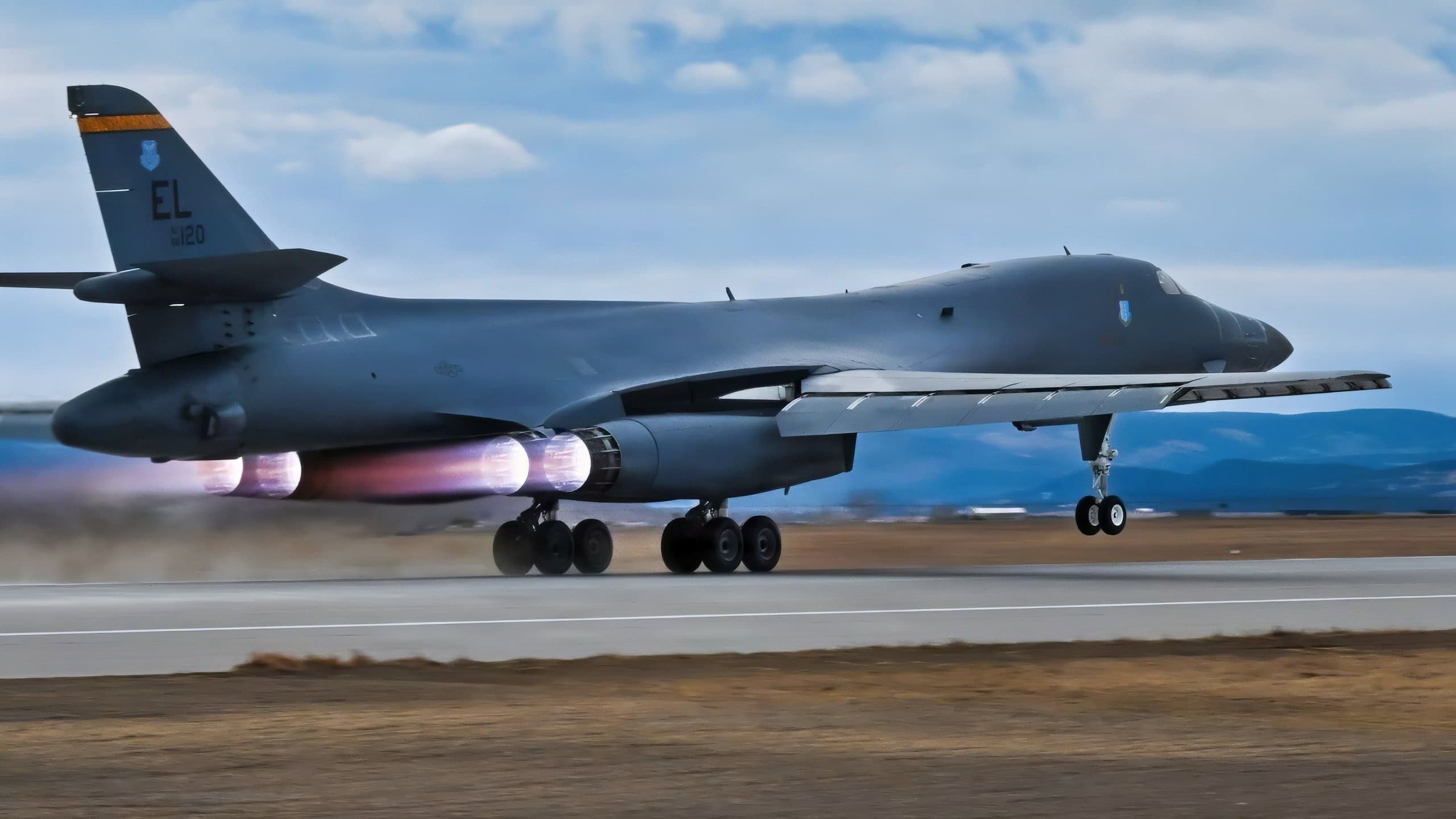
A U.S. Air Force B-1B Lancer assigned to the 34th Bomb Squadron takes off as part of a routine training exercise at Ellsworth Air Force Base, S.D., Feb. 24, 2026. Repeated training ensures mission and combat readiness, helping maintain peaceful world affairs. (U.S. Air Force photo by Airman 1st Class Austin Mooneyham)
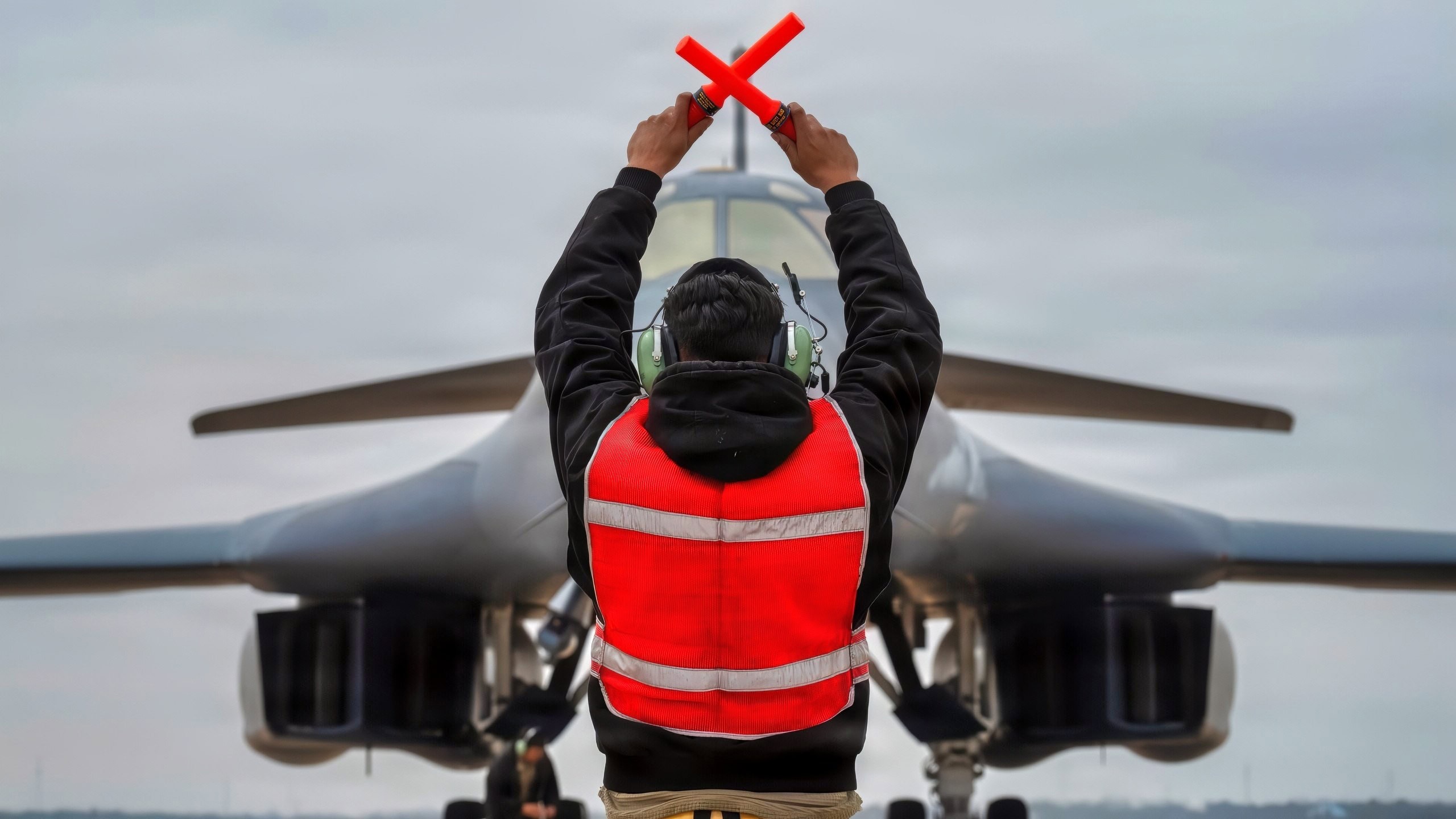
A U.S. Air Force B-1B Lancer crew chief marshals a B-1 after returning from a CONUS-to-CONUS mission in support of Operation Epic Fury, March 4, 2026. The B-1B is a long-range, multi-role bomber that carries the largest payload of precision guided and unguided munitions in the Air Force inventory. (U.S. Air Force photo)
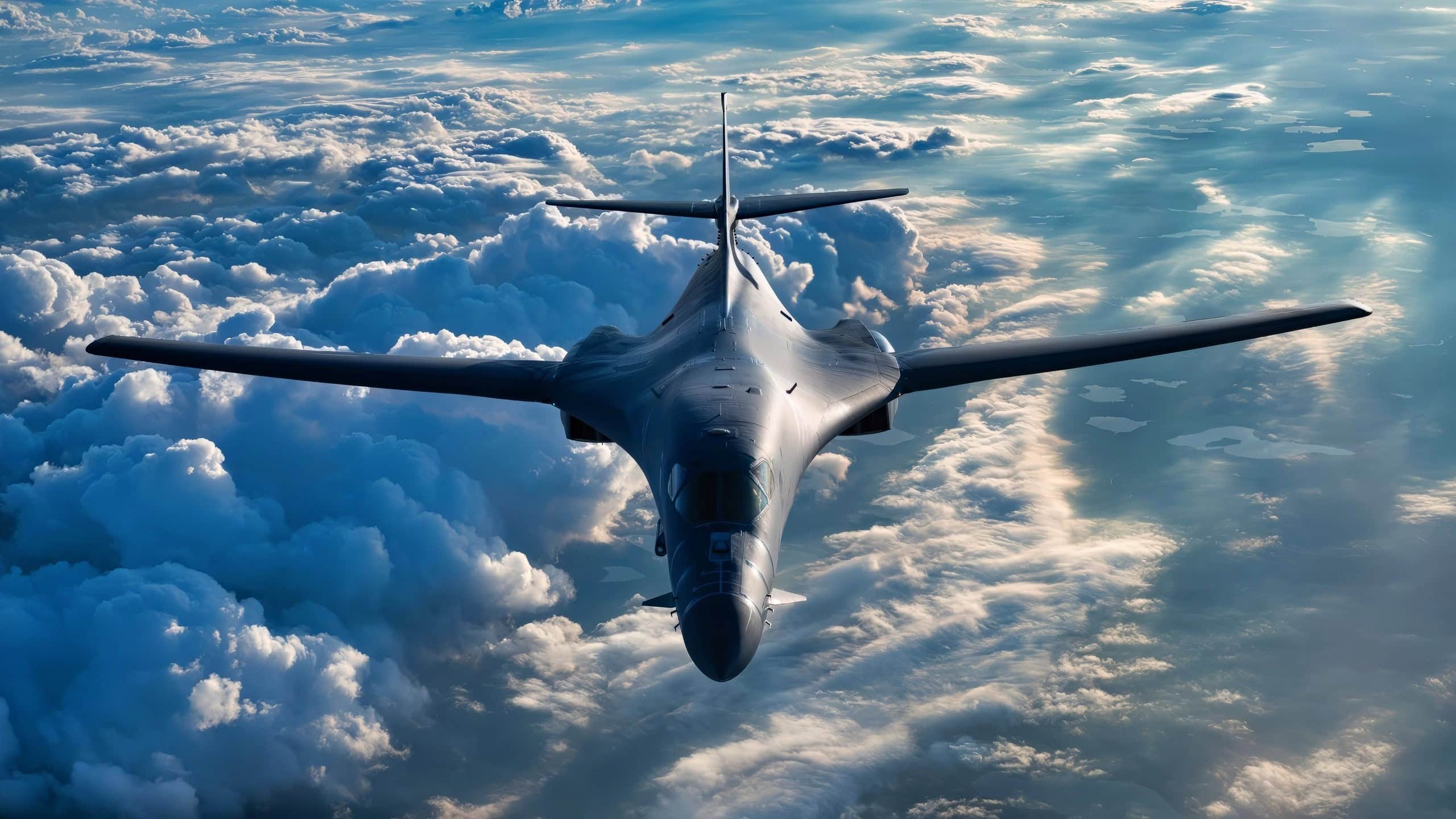
A U.S. Air Force B-1B Lancer assigned to the 34th Expeditionary Bomb Squadron, Ellsworth Air Force Base, South Dakota, flies over the United States, July 2, 2025. The B-1B is a heavy bomber with up to a 75,000 pound payload. (U.S. Air National Guard photo by Airman Spencer Strubbe)
In the Iran campaign, it seems likely that the bombers have used precision-guided bombs like GBU-31 JDAMs with BLU-109 penetrator warheads.
These weapons are designed to penetrate reinforced concrete and destroy underground facilities that standard bombs cannot easily damage.
Long Dwell-Time
Another key advantage of the B-1B is its ability to remain near a target area for extended periods. Unlike many fighter aircraft that must quickly refuel or return to base, the B-1B can loiter over the battlefield and strike emerging targets as intelligence becomes available.
This capability allows commanders to respond quickly to new threats, such as mobile missile launchers or newly identified command centers.
Tracking and destroying Iran’s mobile missile launchers has been a very large part of the ongoing mission.
The B-1 B’s use in the Iran conflict also highlights the role of coordinated airpower.
The bombers operate alongside other U.S. aircraft, including B-2 stealth bombers, fighter jets, drones, and surveillance aircraft.
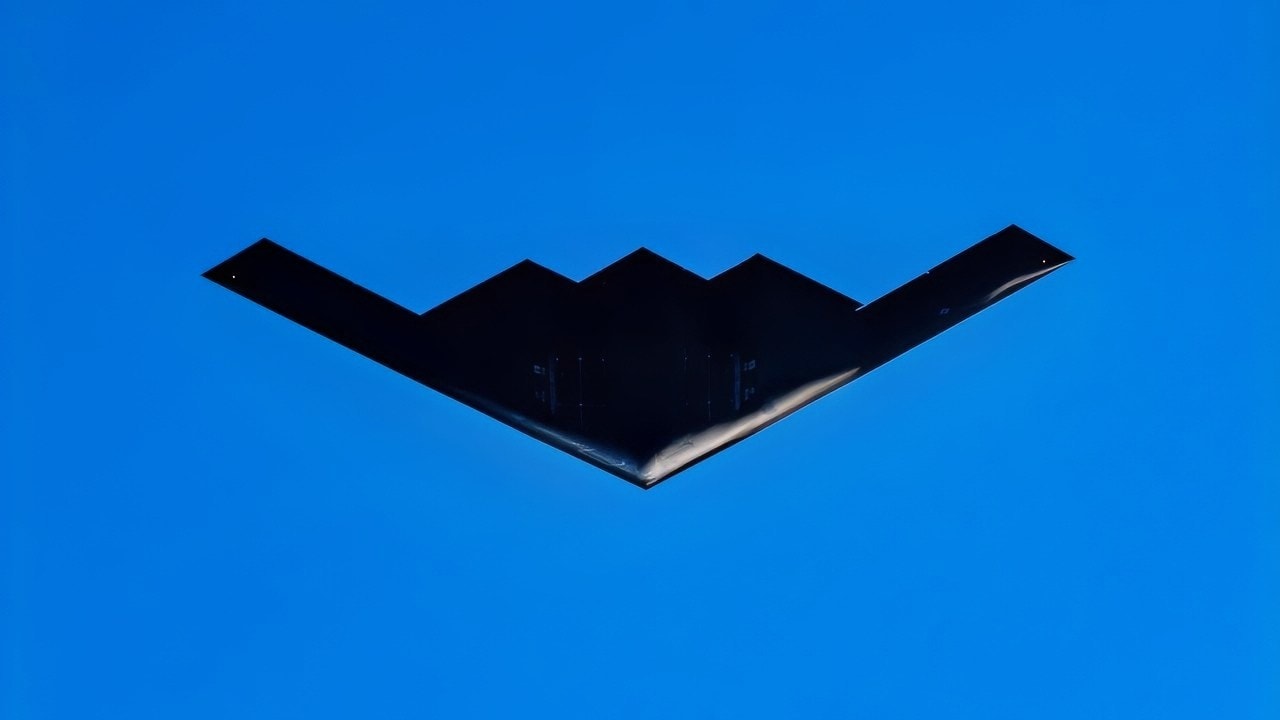
The B-2 Spirit flies over the Rose Parade at Pasadena Ca., Jan. 1, 2024. The Rose Parade is a parade of flower covered floats, marching band, and equestrian units that is produced by the Tournament of Roses. (U.S. Air Force photo by Airman 1st Class Bryce Moore)
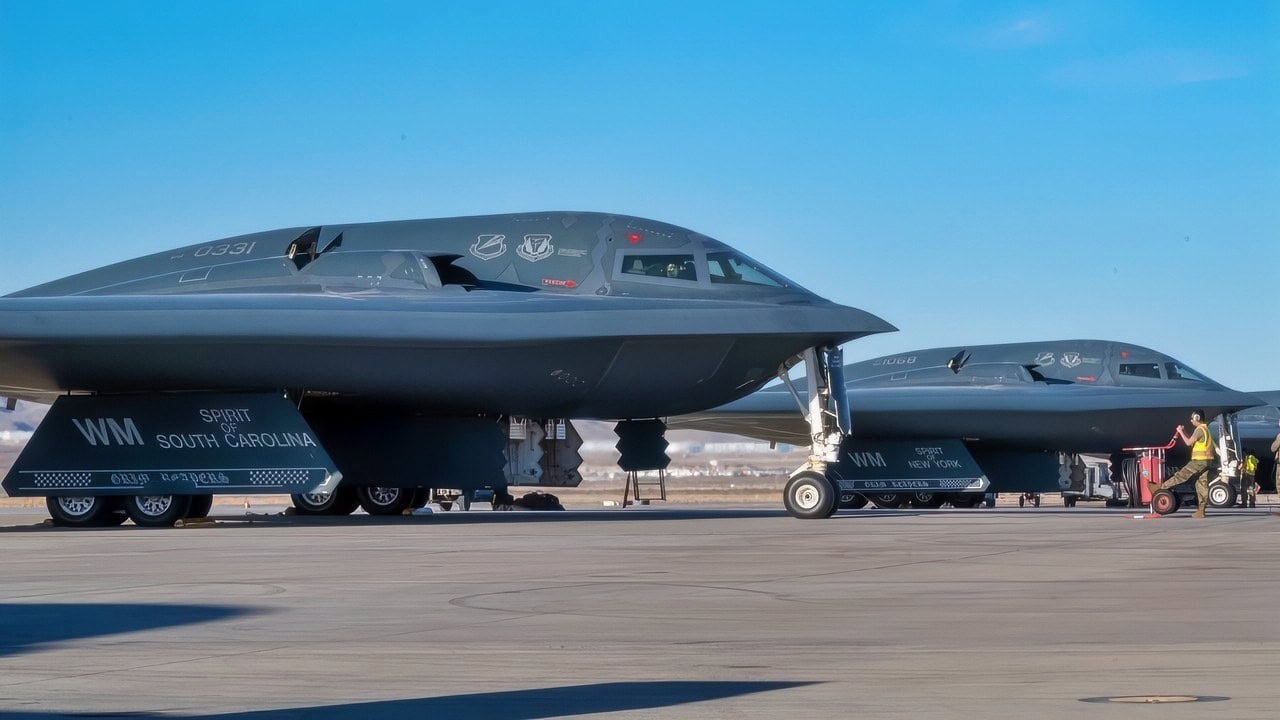
Three B-2 Spirit stealth bombers prepare for departure during Exercise Bamboo Eagle at Nellis Air Force Base, Nevada, Feb. 10, 2025. Bamboo Eagle incorporates multiple mission scenarios, preparing aircrews for complex operational challenges. (U.S. Air Force photo by Senior Airman Bryson Sherard.)
These platforms are likely networked together to share target information and launch new attacks quickly as new intelligence becomes available.
About the Author: Kris Osborn
Kris Osborn is President of Warrior Maven – Center for Military Modernization. Osborn previously served at the Pentagon as a highly qualified expert in the Office of the Assistant Secretary of the Army—Acquisition, Logistics & Technology. Osborn has also worked as an anchor and on-air military specialist at national TV networks. He has appeared as a guest military expert on Fox News, MSNBC, The Military Channel, and The History Channel. He also has a Masters Degree in Comparative Literature from Columbia University.