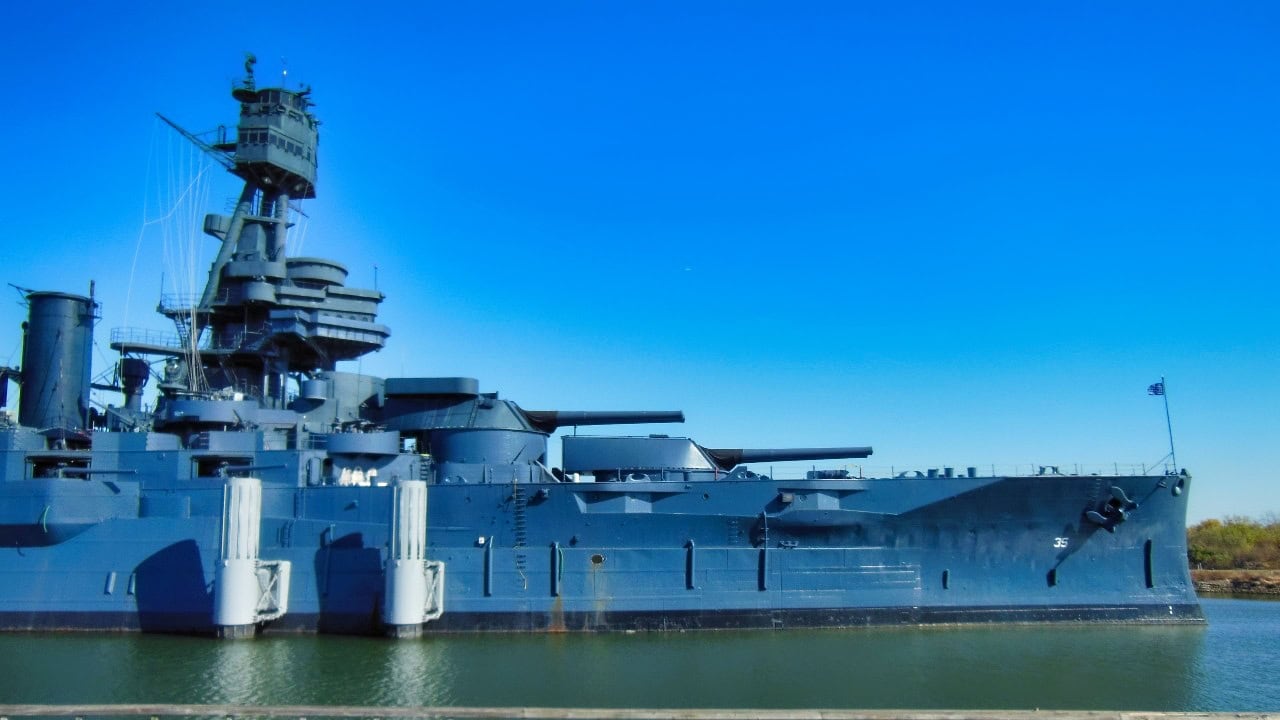
Summary and Key Points: The USS Texas (BB-35), the world’s last surviving dreadnought, is currently entering the final phase of a monumental $75 million restoration in Galveston.
-After decades of structural decay, the Battleship Texas Foundation confirmed in early 2026 that the hull is now “free-floating” and leak-free for the first time in 90 years.
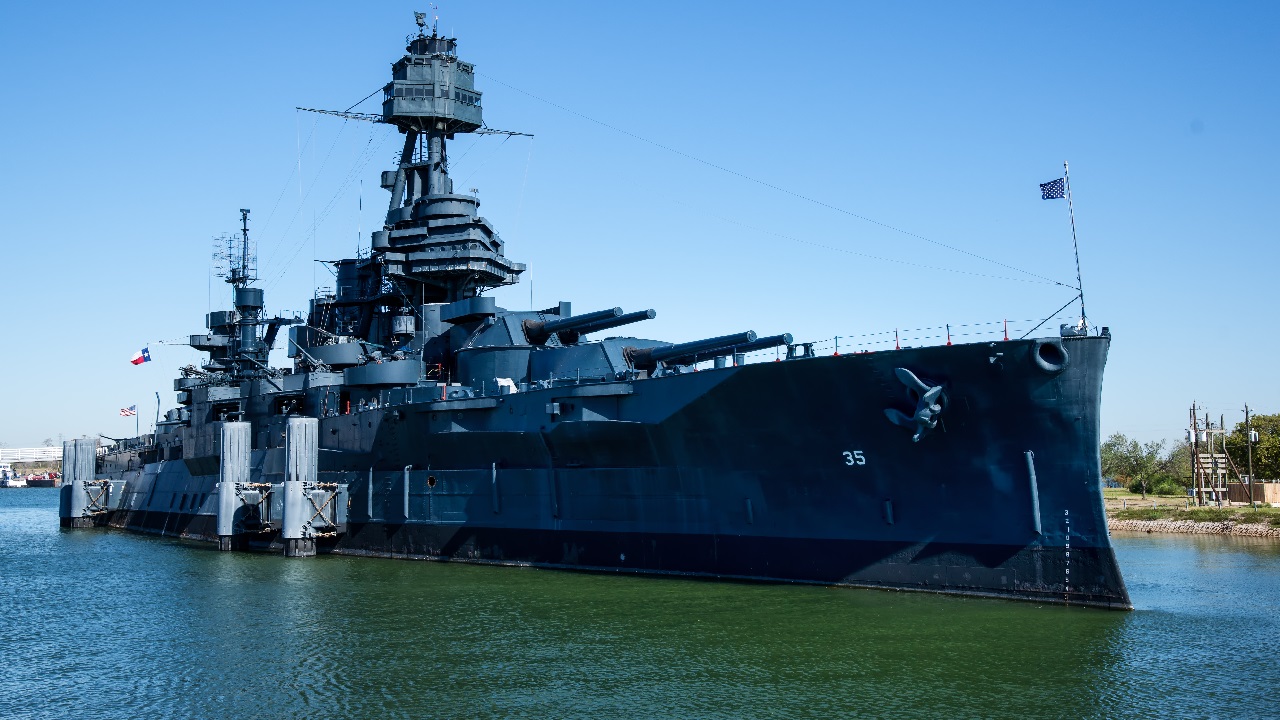
Battleship USS Texas from 2011. Image Credit: Creative Commons.
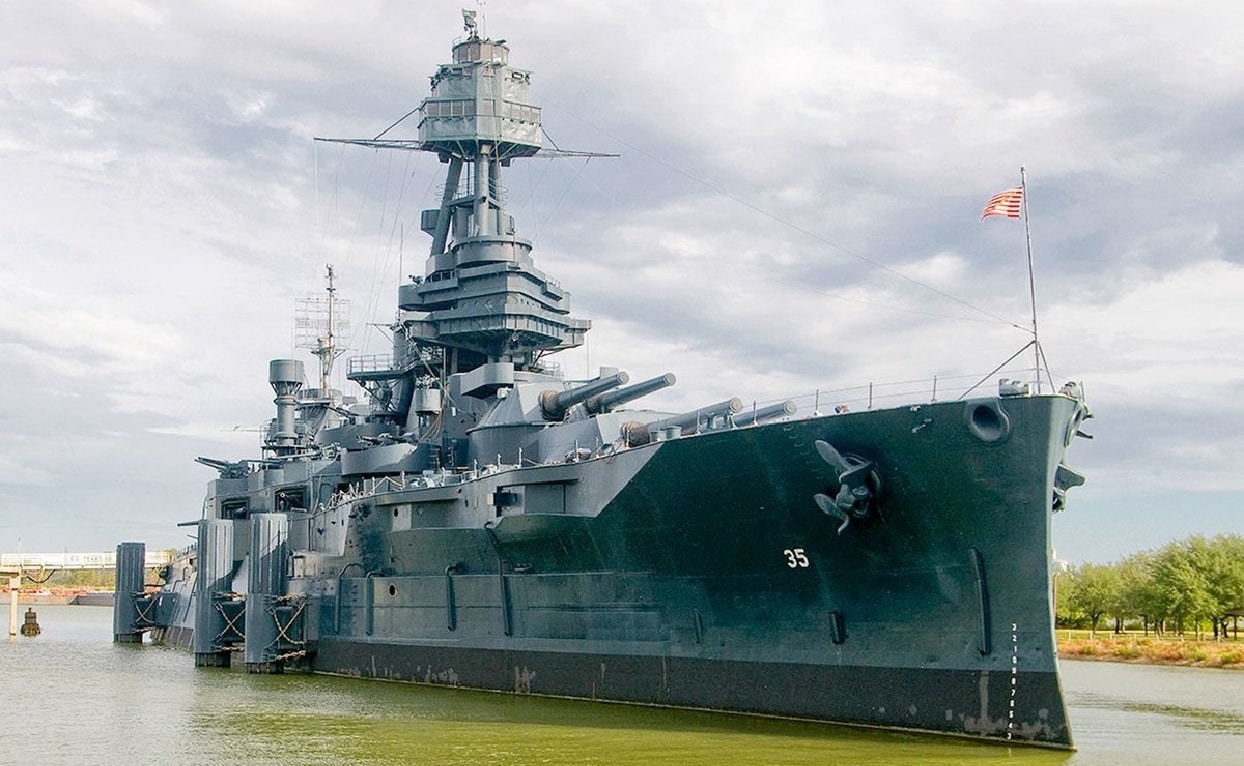
USS Texas battleship. Image: Creative Commons.
-Having served through both World Wars—most notably providing critical shore bombardment at Omaha Beach during D-Day—the ship is being meticulously repainted in its 1945 Measure 21 camouflage.
-Targeted for a grand reopening at Pier 15 in 2027, the Texas remains a singular testament to early 20th-century naval engineering.
The 90-Year Fix: Why the USS Texas is Finally Leak-Free in 2026
Restoration work on the USS Texas is almost finished. The vessel is one of the world’s few extant dreadnought battleships, and either this year or in 2027, it should open as a floating museum.
“For the first time in a very, very long time, the ship does not have any leaks,” the foundation’s COO explained to journalists during a tour of the future museum, the Houston Chronicle reported. “It is free-floating, and it’s the best shape the ship has been in probably 90 years.”
USS Texas
The USS Texas is one of the most historically significant battleships that still exists.
Commissioned in 1914, the ship’s design was rooted in the revolutionary dreadnought era.
The ship was heavily armored and favored an all-big-gun design concept first pioneered by the British Royal Navy’s HMS Dreadnought, the first of its kind.
To that end, the USS Texas was armed with ten 14-inch guns arranged into five twin turrets, affording the ship a formidable amount of firepower.
The USS Texas saw service in both World Wars. During World War I, the Texas sailed primarily with the British Grand Fleet in the North Sea, tasked with hemming in and containing the German High Seas Fleet. Though the Texas did not fight in a major surface engagement, it did participate in the naval blockade that strangled Germany’s economy.
The Flood
During World War II, the USS Texas was used as a shore bombardment platform. During D-Day, on June 6, 1944, the Texas bombarded German defenses at Omaha Beach and fired hundreds of shells in support of troops landing on the French coast.
In at least one instance, the ship flooded compartments on one side of the hull. This caused the ship to list away from shore, but it gained valuable elevation that allowed her guns to hit targets further inland. The ship’s massive 14-inch guns could fire a whopping 1,400-pound high-explosive shell 13 miles.
Later, the USS Texas participated in Operation Dragoon, the Allied invasion of southern France.
In the Pacific theater, it participated in the Battles of Iwo Jima and Okinawa, providing naval gunfire support to Marines and soldiers on land. The battleship also escorted convoys from the United States across the Atlantic.
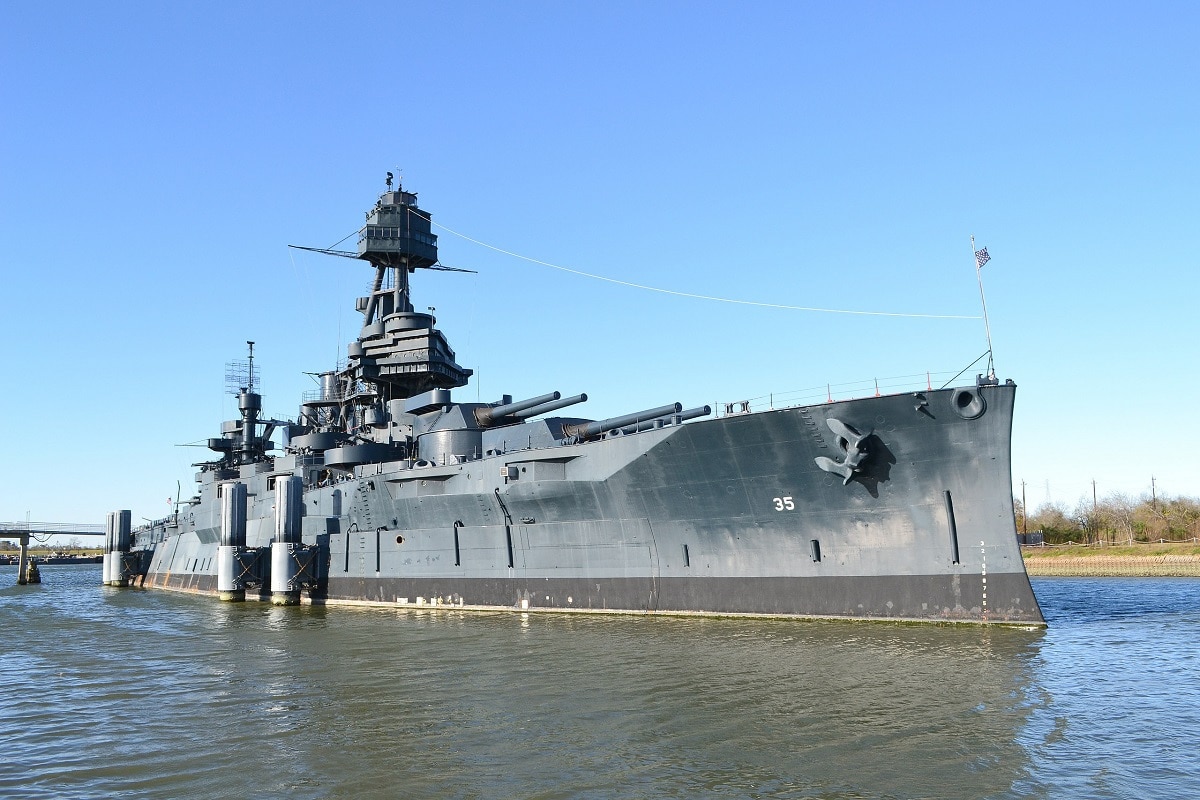
Image: Creative Commons.
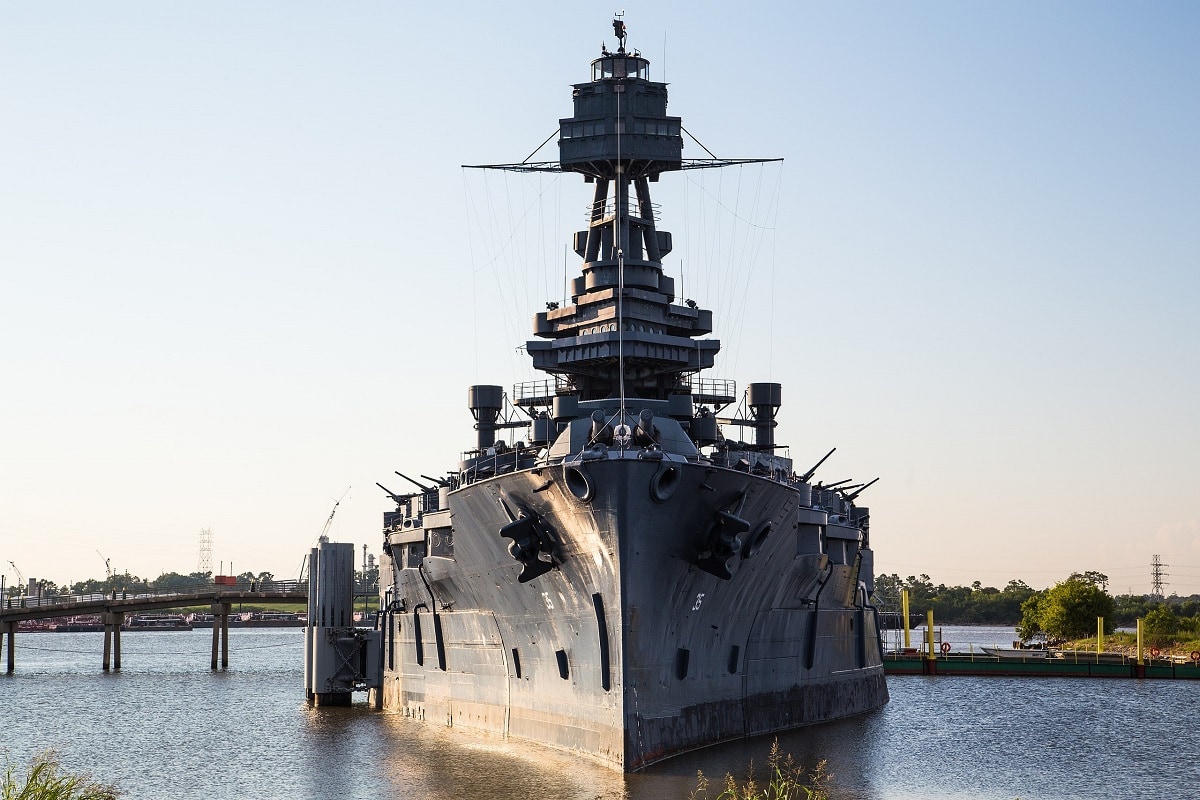
Battleship USS Texas. Image: Creative Commons.
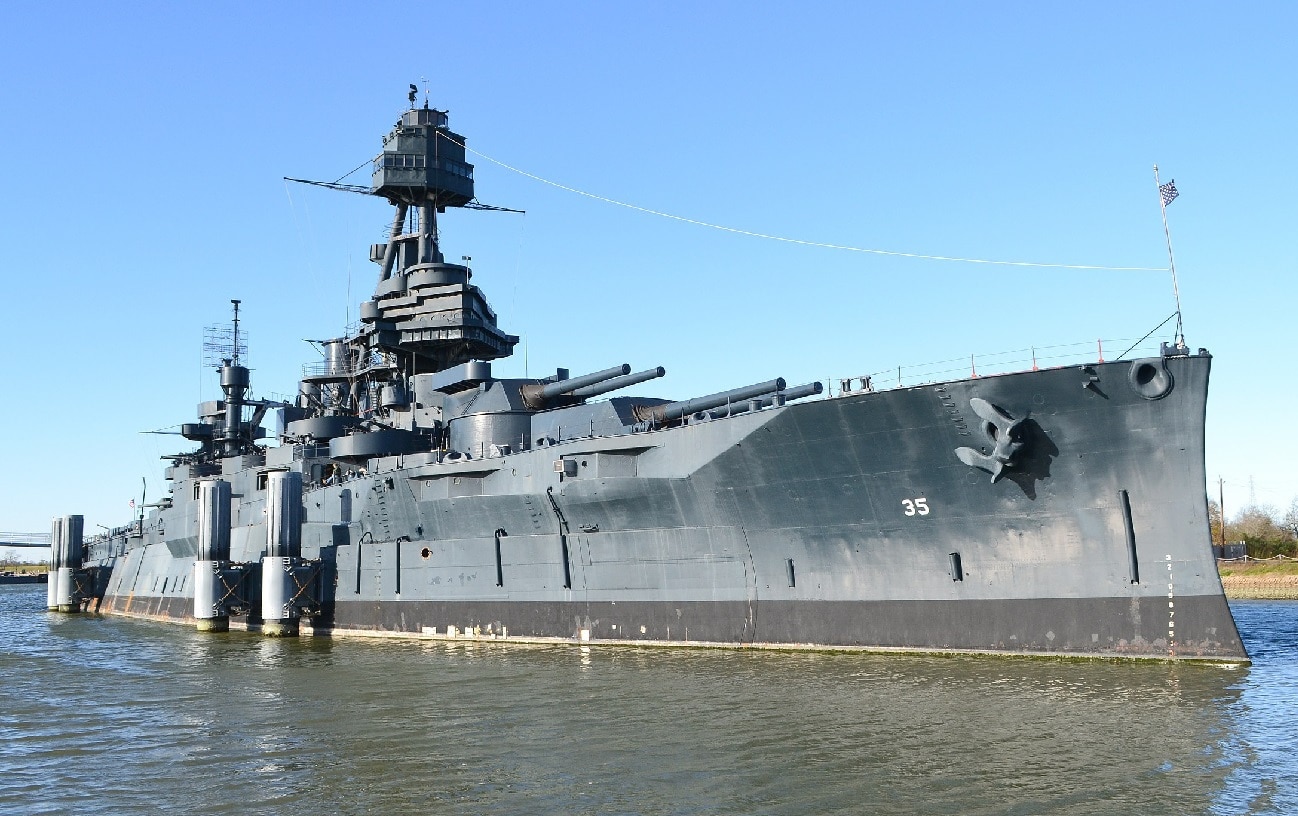
Image: Creative Commons.
The Texas secured a number of firsts for a U.S. Navy warship. She was the first battleship to launch an aircraft, the first battleship to mount anti-aircraft guns, the first U.S. ship to direct naval gunfire with an early fire-control system, and one of the first U.S. warships to make use of radar.
Battle of Cherbourg
One of the Texas’ more remarkable chapters was written during the Battle of Cherbourg, where the ship supported an Allied operation to capture the city.
During that operation, which occurred after the Normandy invasion, the ship was “straddled by dozens of near misses from artillery and was eventually hit at 1316,” one account explains. “A 240 mm German shell struck the top of the conning tower, wrecking much of the navigation bridge above. Eleven people were wounded and only one of them died of his wounds, the helmsman QM3c Christen Christensen. Chris was the only member of the crew to be killed in action through Texas’ entire career.”
“One other shell hit Texas at the Battle of Cherbourg, a 240 mm dud. The shell landed in a warrant officer’s stateroom and failed to explode, possibly due to the way it appeared to have skipped off the water and tumbled into the ship rather than hitting head on.”
The shell was not immediately removed for fear of triggering a detonation, but it was successfully defused after the operation upon the ship’s return to England. The defused German shell later was returned to the ship, where it was held as a war trophy.
Refurbishment and Future
Post-war, the USS Texas was retired from active Navy service and became a museum ship in 1948, earning the distinction of being the first battleship permanently preserved as a memorial.
But after decades of exposure to the elements, the sun, and the corrosive effects of saltwater, the ship needed restoration, which began in 2022 in Galveston, Texas.
When the Texas was towed to a Galveston shipyard for repairs, she was in poor condition.
A number of leaks had appeared in the ship’s hull over the years, forcing it to pump out tens of thousands of gallons of water per minute to stay afloat.
Lawmakers in Texas earmarked more than $3 million dollars toward repairing the ship.
About the Author: Caleb Larson
Caleb Larson is an American multiformat journalist based in Berlin, Germany. His work covers the intersection of conflict and society, focusing on American foreign policy and European security. He has reported from Germany, Russia, and the United States. Most recently, he covered the war in Ukraine, reporting extensively on the war’s shifting battle lines from Donbas and writing on the war’s civilian and humanitarian toll. Previously, he worked as a Defense Reporter for POLITICO Europe. You can follow his latest work on X.