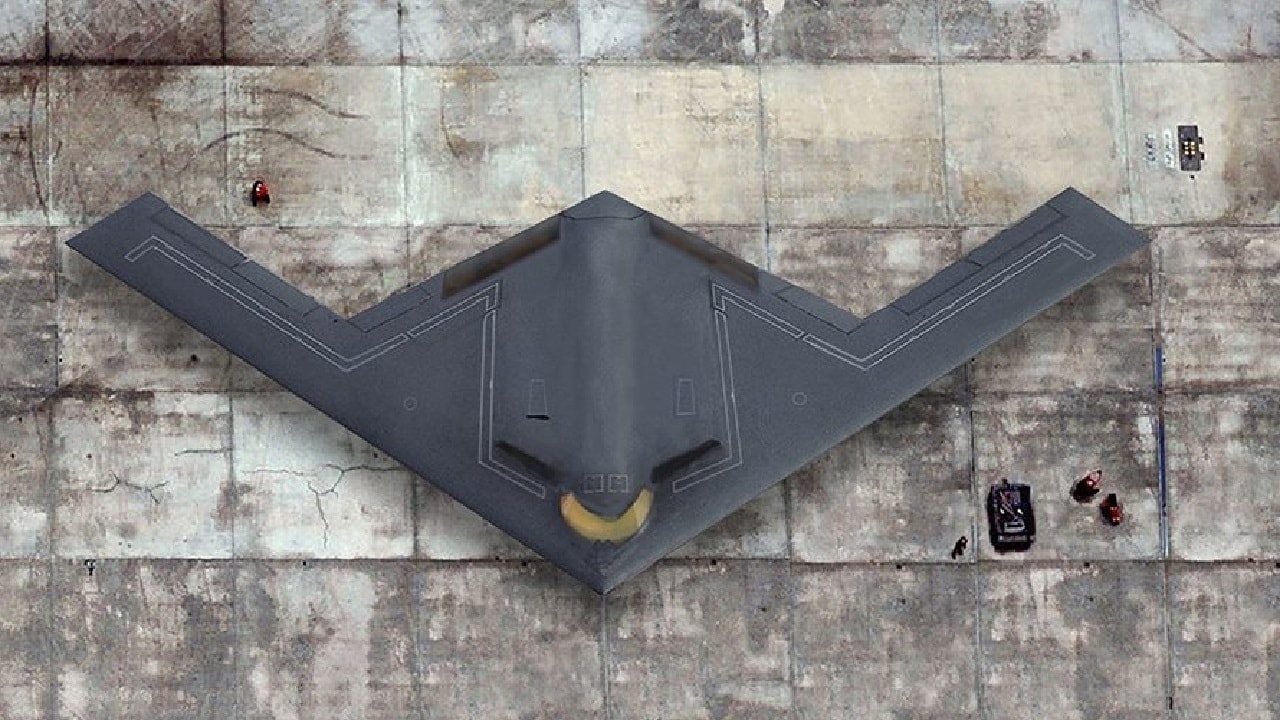
Summary and Key Points: Caleb Larson — former POLITICO Europe Defense Reporter, Berlin-based multiformat journalist, and Ukraine war correspondent — reports that U.S. Strategic Command head Admiral Richard Correll has urged the House Armed Services Committee to open a second Northrop Grumman B-21 Raider production line, arguing the sixth-generation stealth bomber represents critical capability across both conventional and nuclear missions.
-Secretary of the Air Force Troy Meink has already committed $4.5 billion — drawn from the FY2025 One Big Beautiful Bill reconciliation legislation — to accelerate production with a 25% expansion mandate, while the first two Raiders undergo flight testing at Edwards Air Force Base in California, including confirmed air-to-air refueling operations with a KC-135R tanker.
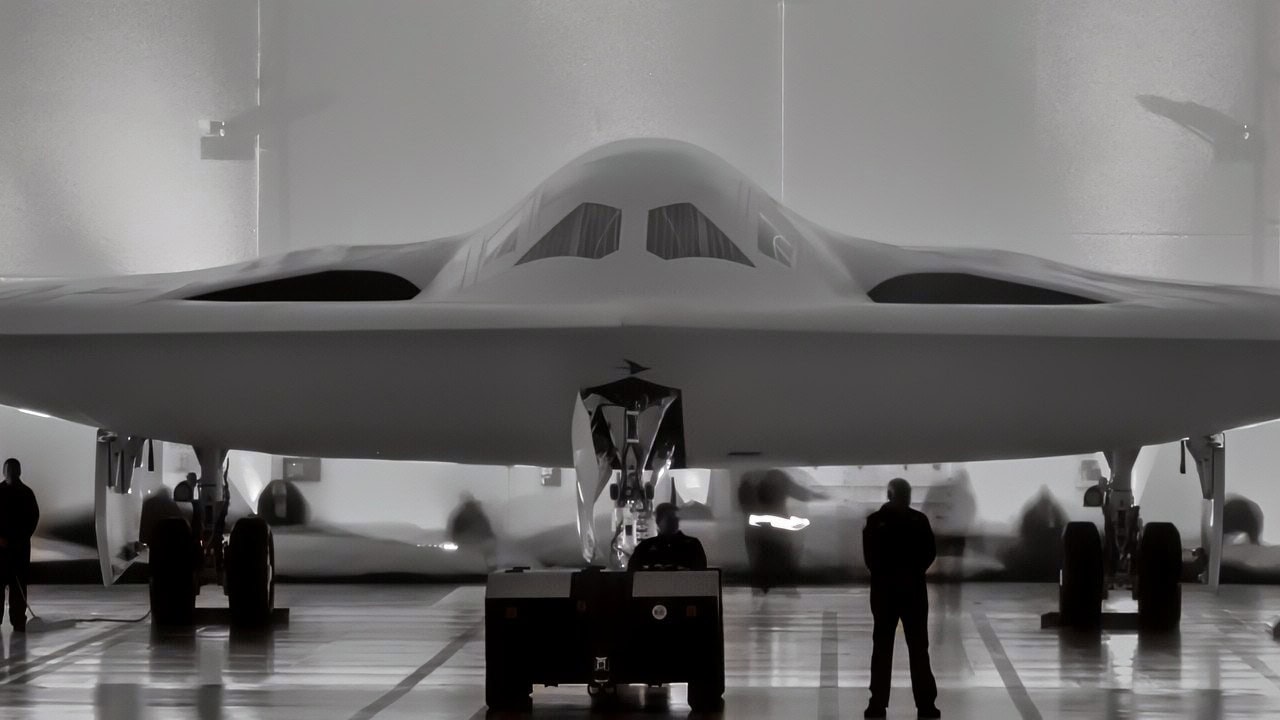
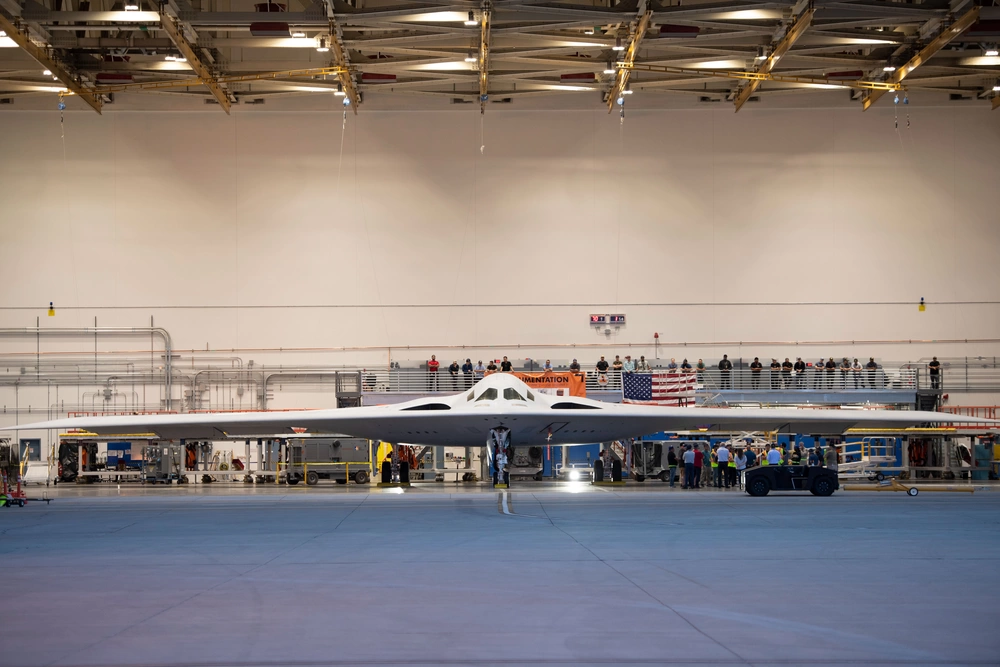
A B-21 Raider is unveiled at Northrop Grumman’s manufacturing facility on Air Force Plant 42 in Palmdale, California, Dec. 2, 2022. The B-21 will be a long-range, highly survivable, penetrating strike stealth bomber capable of delivering both conventional and nuclear munitions. (U.S. Air Force photo by Airman 1st Class Joshua M. Carroll)

U.S. Air Force Airmen with the 912th Aircraft Maintenance Squadron prepare to recover the second B-21 Raider to arrive for test and evaluation at Edwards AFB, Calif., Sept. 11, 2025. The arrival of a second test aircraft provides maintainers valuable hands-on experience with tools, data and processes that will support future operational squadrons. (U.S Air Force photo by Kyle Brasier)
-With the baseline buy set at 100 aircraft and senior Air Force leaders pushing for at least 145, Larson reports Air Force Global Strike Command head General Stephen Davis has confirmed B-21 long-range strike against People’s Liberation Army Navy assets is an active operational plan.
Sixth-Gen Scaling: The $4.5 Billion Push for a Second B-21 Production Line
Eager to introduce the upcoming B-21 Raider bomber, the Pentagon already has inked a deal with Northrop Grumman to speed up production. Now, the Air Force may fund a second B-21 production line to build more Raiders.
Speaking to lawmakers, Admiral Richard Correll, the head of U.S. Strategic Command, advocated increasing the number of B-21s the Air Force buys. He also pushed for opening a second B-21 production line.
“There are, of course, investments that have been made to increase the production rate and to potentially open a second production line,” Admiral Correll told the House Armed Services Committee’s subcommittee on strategic forces. “That decision has yet to be made, but clearly the B-21 represents a really significant capability both from a conventional and a nuclear perspective.”
Currently, the U.S. Air Force plans to buy 100 B-21s, but that figure is seen as a floor rather than a ceiling—it is the number of jets needed to replace the current fleet of B-2 Spirit stealth bombers and B-1B Lancer bombers. Last month, Secretary of the Air Force Troy E. Meink announced that $4.5 billion would be invested to accelerate Raider production, and the 2027 target date for the first B-21 remains. The first two B-21 Raiders are undergoing flight tests at Edwards Air Force Base in California.
The funding came from the fiscal year 2025 One Big Beautiful Bill reconciliation legislation and stipulated a 25 percent expansion in production.
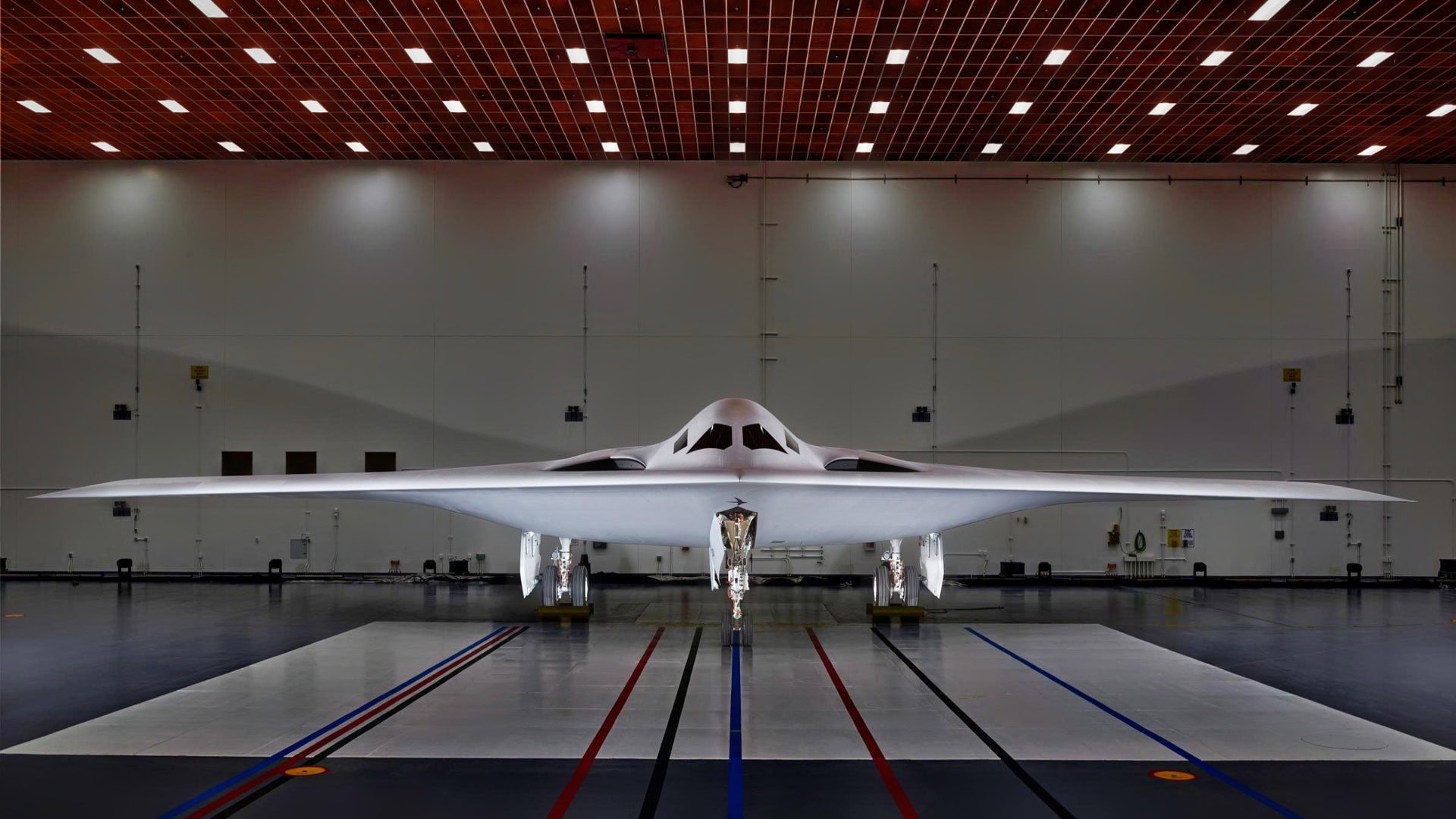
B-21 Raider U.S. Air Force. Image Credit: U.S. Air Force.
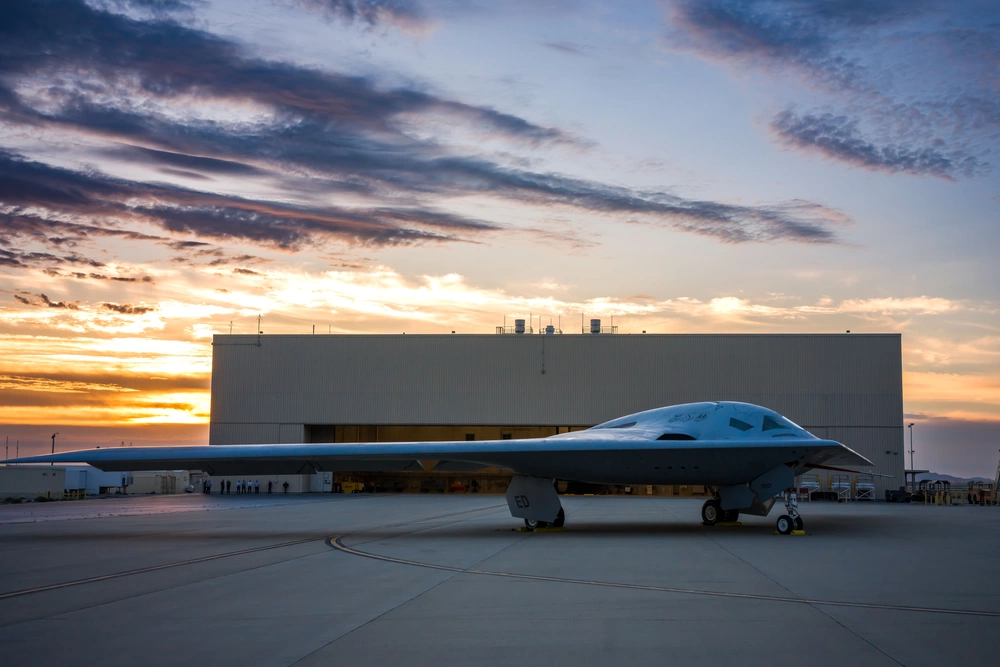
The B-21 Raider is designed with an open systems architecture, enabling rapid insertion of mature technologies and allowing the aircraft to be effective as threats evolve. The bomber was designed up front for supportability and maintainability-based upon decades of lessons learned and best practices from prior aircraft programs-to improve long-term affordability and outcomes in operations and sustainment. The B-21 first flight is anticipated to take place in calendar year 2023. (U.S. Air Force photo)
The B-21 Raider is designed with an open systems architecture, enabling rapid insertion of mature technologies and allowing the aircraft to be effective as threats evolve. The bomber was designed up front for supportability and maintainability-based upon decades of lessons learned and best practices from prior aircraft programs-to improve long-term affordability and outcomes in operations and sustainment. The B-21 first flight is anticipated to take place in calendar year 2023. (U.S. Air Force photo)
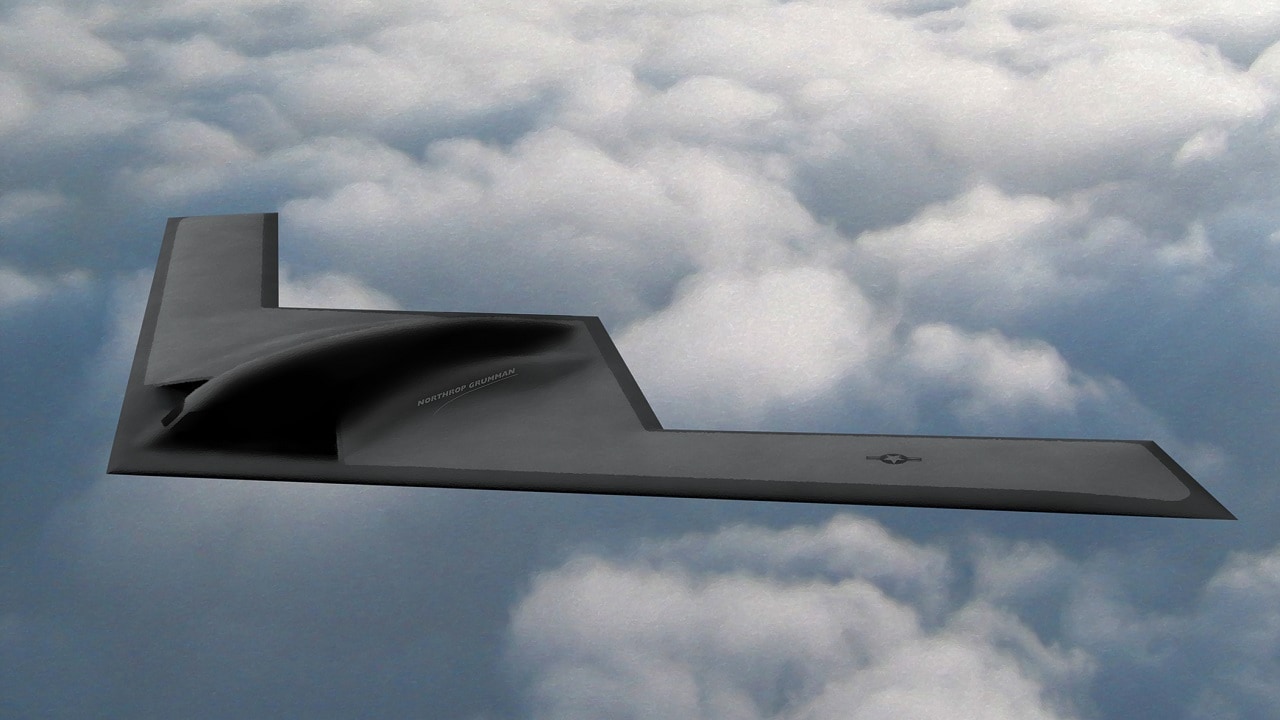
B-21 Raider bomber. Image Credit: Creative Commons.
B-21 Raider
Outwardly, the B-21 Raider and its Cold War-era predecessor, the B-2 Spirit, are similar. Both strategic bombers are flying-wing designs that eschew a traditional tail assembly—a choice that enhances stealth while improving fuel consumption and range. The bombers carry the airborne leg of the U.S. nuclear triad as well.
But Northrop Grumman calls the B-21 the world’s first sixth-generation bomber. It includes technologies “informed by decades of operational experience. Its advanced low-observable design allows it to penetrate the most sophisticated air defenses and operate undetected in contested environments. Modernized, low-observable processes will also make the B-21 easier and less costly to maintain than prior systems, ensuring the fleet’s operational readiness for the nation’s most critical missions.”
The bomber’s open-systems architecture and ability to gather and relay battlespace information set apart the B-21 from its B-2 predecessor.
“For the joint force, it’s a sixth-generation stealth capability with … stand-off precision distance strike, or stand-in precision strike, and the ability to maneuver within a contested electromagnetic spectrum,” Admiral Correll added during his testimony. “The sooner we field that capability and the sooner we ramp up in delivery of that capability, the stronger position that puts the joint force in, to address the strategic environment, from deterrence to any spectrum of conflict that we would contemplate.”
Testing One, Two, Three
Photographs surfaced online this week of the B-21 refueling while in flight. The Raider was taking on fuel from a KC-135R tanker airplane somewhere near Edwards Air Force Base. Although the B-21 Raider’s range is classified, air-to-air refueling affords the jet a global strike capability—a role that could include striking People’s Liberation Army Navy assets in a potential future conflict.
In comments given to The War Zone, General Stephen L. Davis, the head of Air Force Global Strike Command, affirmed that strikes against Chinese naval targets are “an operational plan,” but demurred when asked for specifics. “I really can’t talk much about it,” General Davis said, “other than to say that long-range strike contributes to every important mission set.”
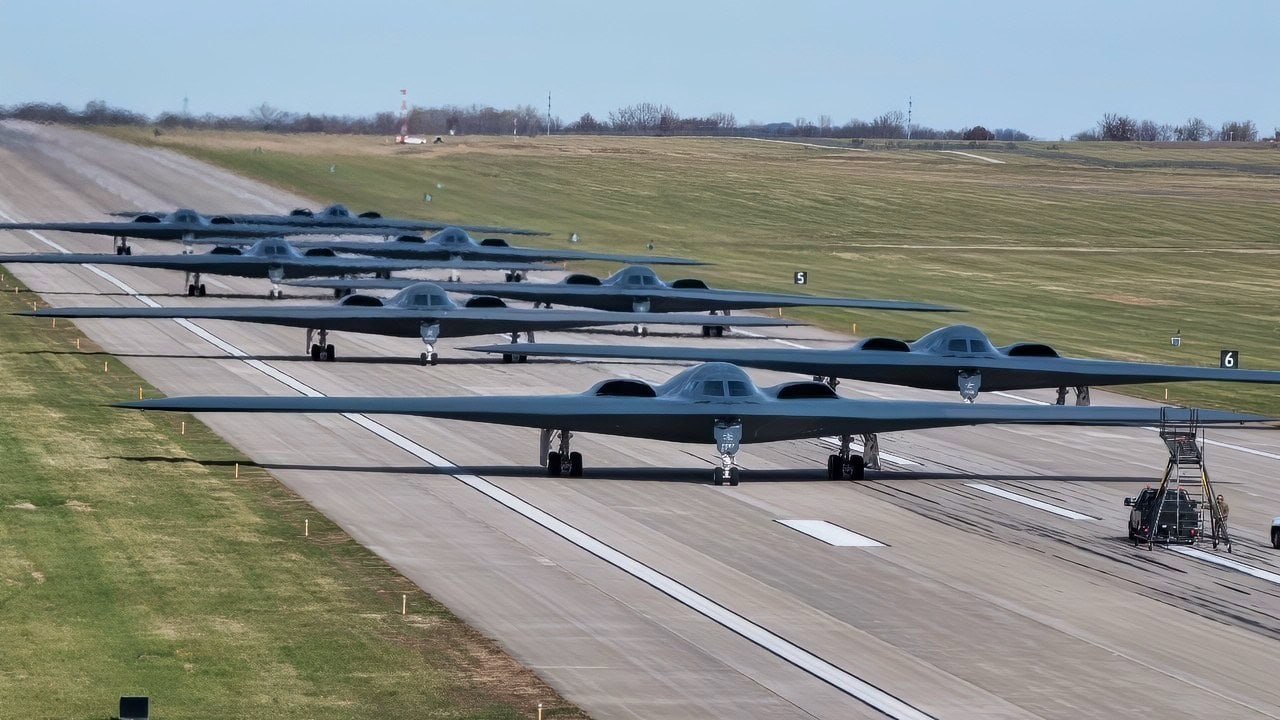
B-2 Spirit stealth bombers assigned to Whiteman Air Force Base taxi and take-off during exercise Spirit Vigilance on Whiteman Air Force Base on November 7th, 2022. Routine exercises like Spirit Vigilance assure our allies and partners that Whiteman Air Force Base is ready to execute nuclear operations and global strike anytime, anywhere. (U.S. Air Force photo by Airman 1st Class Bryson Britt)
A number of aspects of the B-21 Raider program appear to be unsettled, according to General Davis—including whether the bomber will eventually be unmanned; whether the B-21 will fly with two pilots or a pilot and a weapons systems officer; and other operational considerations.
Original estimates of the bomber’s size indicated the Raider would be significantly smaller than the B-2. And while photographs show the B-21 is indeed somewhat smaller, the size difference is not as dramatic as some analysts had supposed.
A Numbers Game
Aside from the B-21’s physical and operational differences from the B-2, perhaps one of the more significant differences between the two bombers will be acquisition numbers.
The unexpected collapse of the Soviet Union and the subsequent drawdown of military spending dramatically reduced the B-2 Spirit fleet; today there are only 19 operational B-2 bombers.
With senior Air Force leaders arguing they need at least a 145 B-21 buy— up from the 100-bomber baseline—the Raider fleet appears set to be at least five times the size of the B-2 fleet.
About the Author: Caleb Larson
Caleb Larson is an American multiformat journalist based in Berlin, Germany. His work covers the intersection of conflict and society, focusing on American foreign policy and European security. He has reported from Germany, Russia, and the United States. Most recently, he covered the war in Ukraine, reporting extensively on the war’s shifting battle lines from Donbas and writing on the war’s civilian and humanitarian toll. Previously, he worked as a Defense Reporter for POLITICO Europe. You can follow his latest work on X.