

The 145-Bomber Mandate: Why STRATCOM Wants a Second B-21 Production Line
The up-and-coming Northrop Grumman B-21 Raider 6th-generation stealth bomber is not a supersonic warplane; ditto for (1) its immediate predecessor, the pre-merger Northrop B-2 Spirit (the original stealth bomber), and (2) the septuagenarian B-52 “Stratosaurus” (unofficially AKA the “Stratosaurus”).
Indeed, the only member of the US Air Force’s strategic bomber triumvirate that flies in excess of Mach 1 is the B-1B Lancer (aka “the Bone“).
However, though the Raider isn’t a “Mach buster,” that’s not stopping its production efforts from proceeding at breakneck speed (well, breakneck speed by Pentagon acquisition standards, anyway).
Just a few days ago, we reported that Northrop Grumman and the USAF were accelerating production capacity of the B-21.
And now there’s talk of literally doubling down on that by establishing a second B-21 production line.
B-21 Raider Buildup Bottom Line Up Front (BLUF): Doubling Down?
Two key sources for this story are (1) a March 18, 2026, staff report by Exchange Monitor and (2) an article by Stephen Losey of Air and Space Forces Magazine published that same day.
Both of these reports center on testimony delivered on March 17 by Adm. Richard Correll, head of US Strategic Command (STRATCOM), to the House Armed Services Committee’s (HASC) strategic forces panel. In those remarks, Adm. Correll told the Congressional panelists that (1) STRATCOM still believes the Air Force needs to increase its planned B-21 fleet to 145 airplanes—a figure that his predecessor, now-retired USAF Gen. Anthony J. Cotton, endorsed last March, and (2) a second production line could be a way to reach that goal.
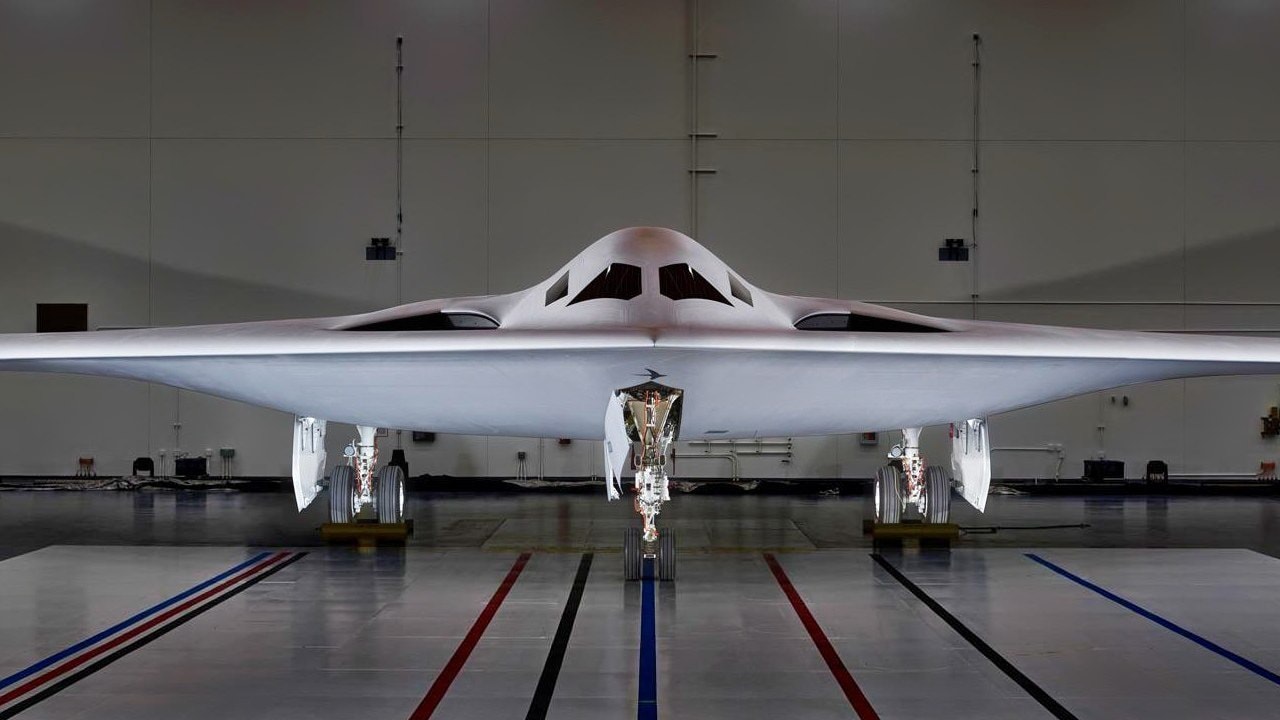
B-21 Raider Bomber U.S. Air Force.
In the Admiral’s Own Words
“There’s ongoing work within the Joint Force to determine what that end point might be, and there are, of course, investments that have been made to increase the production rate and potentially to open a second production line–that decision has yet to be made.”
That particular sentence was uttered in response to a question from Rep. Don “Bits” Bacon (R-Neb.; himself a retired USAF brigadier general), who said “we’re hearing now that maybe 150 B-21 bombers is the target area” by the Defense Department, and whether “we’re building the infrastructure to support that.”
Adm. Correll added that “Clearly, the B-21 represents a really significant capability from a conventional and a nuclear perspective for the Joint Force–a sixth-generation stealth capability with stand-in or stand-off precision strike and the ability to maneuver within a contested electromagnetic spectrum, so what it [the B-21] enables for the Joint Force goes beyond the strike capability associated with it.”
Bombers by the Numbers
Thus far, the USAF (other than Gen. Cotton) has been somewhat minimalistic (for lack of a better word) in its public statements on desired B-21 production numbers, simply stating its Raider production target is “at least 100 aircraft.”
Ergo, 145 airframes would represent a 45 percent increase over that baseline.
According to the World Directory of Modern Military Aircraft (WDMMA), the US Air Force currently has 19 B-2s, 45 B-1s, and 76 B-52s, for a total of 140 bombers.
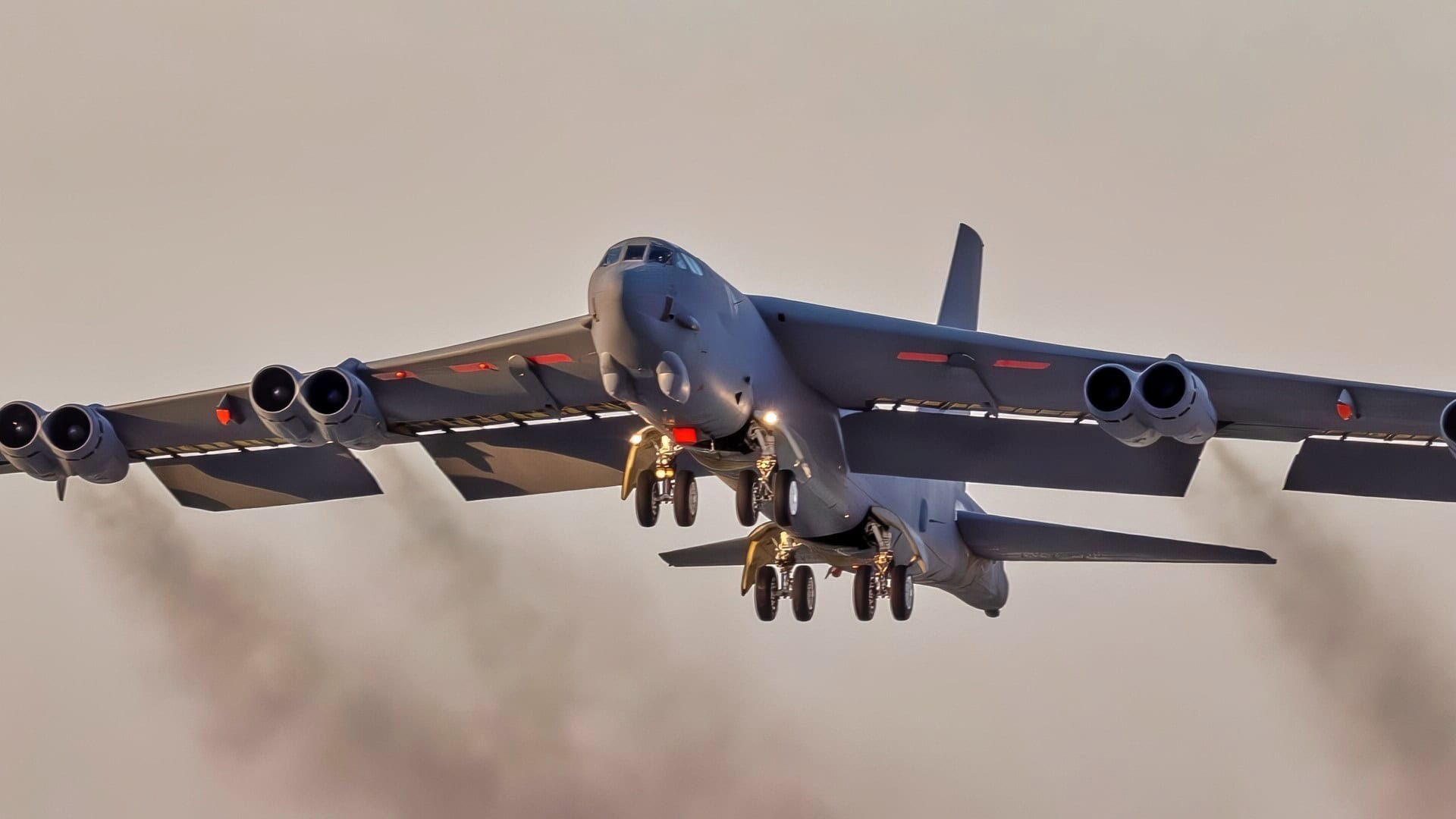
A modified B-52H Stratofortress departs Edwards Air Force Base for an evening training mission on June 25, 2025. The aircraft is assigned to the 419th Flight Test Squadron, Global Power Bombers Combined Test Force, tasked with supporting developmental testing across the B-52, B-1, and B-2 bomber portfolio. Along with most 412th Test Wing aircraft, B-52H bombers at Edwards include special instrumentation to conduct a variety of testing activities. (Air Force photo by Chase Kohler)
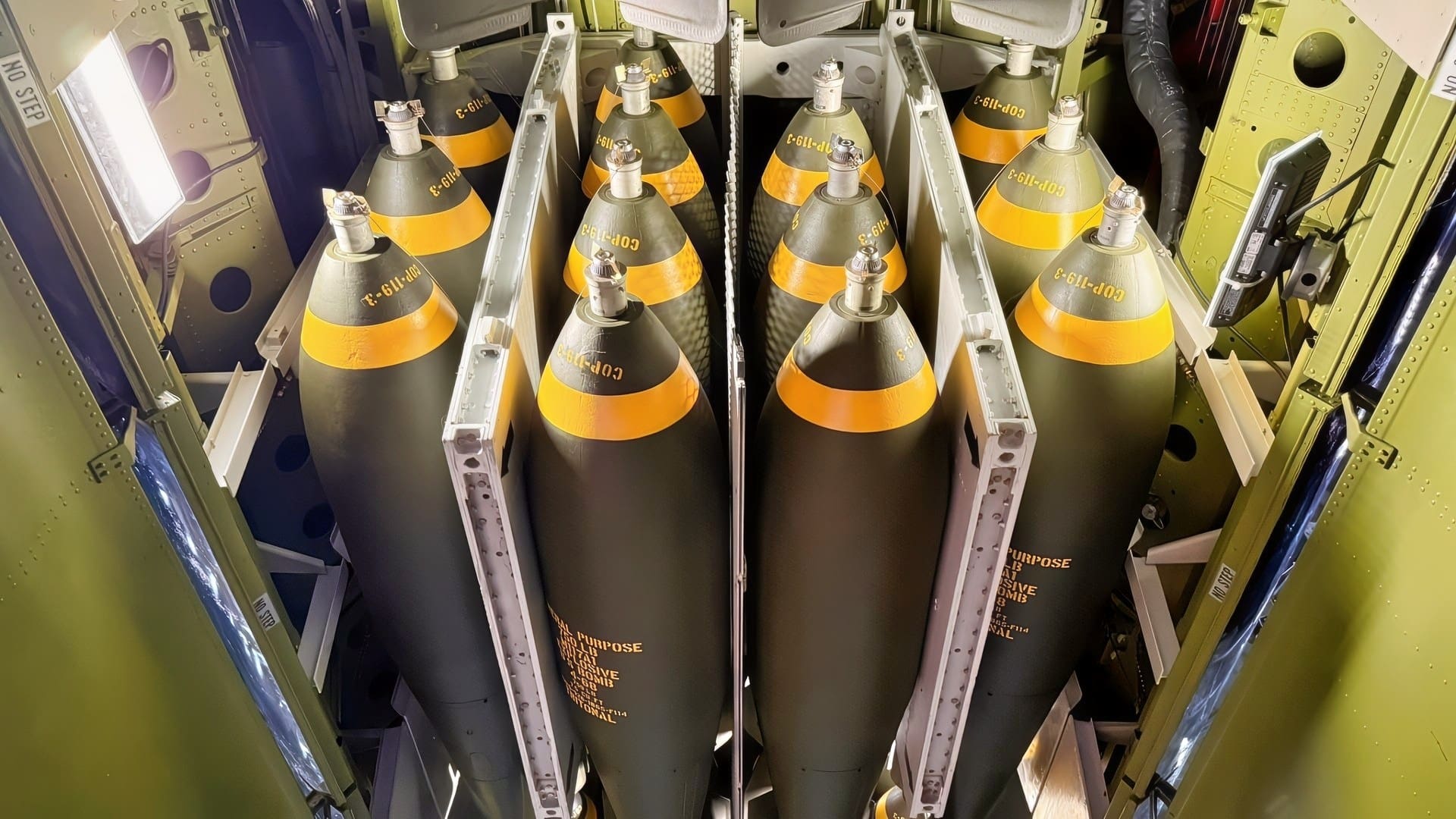
19FortyFive.com B-52 Bomber Bombs. By Harry J. Kazianis in 2025 from the National Museum of the Air Force.
Therefore, 145 B-21s would equate to a 1.03-1.00 matching ratio.
“Teamwork Makes the Dream Work”
The B-21 is strictly an Air Force asset (ditto for the aforementioned trio of currently serving strategic bombers), yet that doesn’t stop a proud Navy man like Adm. Rich Correll from advocating for it.
This stands out as a refreshing contrast to the political turf battles—”parochialism,” as the late, great Senator (R-AZ) and Air Force Reserve Maj. Gen. Barry Goldwater termed it (as cited by Hedrick Smith in his Pulitzer Prize-winning 1987 book “The Power Game: How Washington Works“), an all-too-often afflicting the sister services’ competition for funding (far more acrimonious than the comparatively friendly interservice rivalries played out on the college football gridiron).
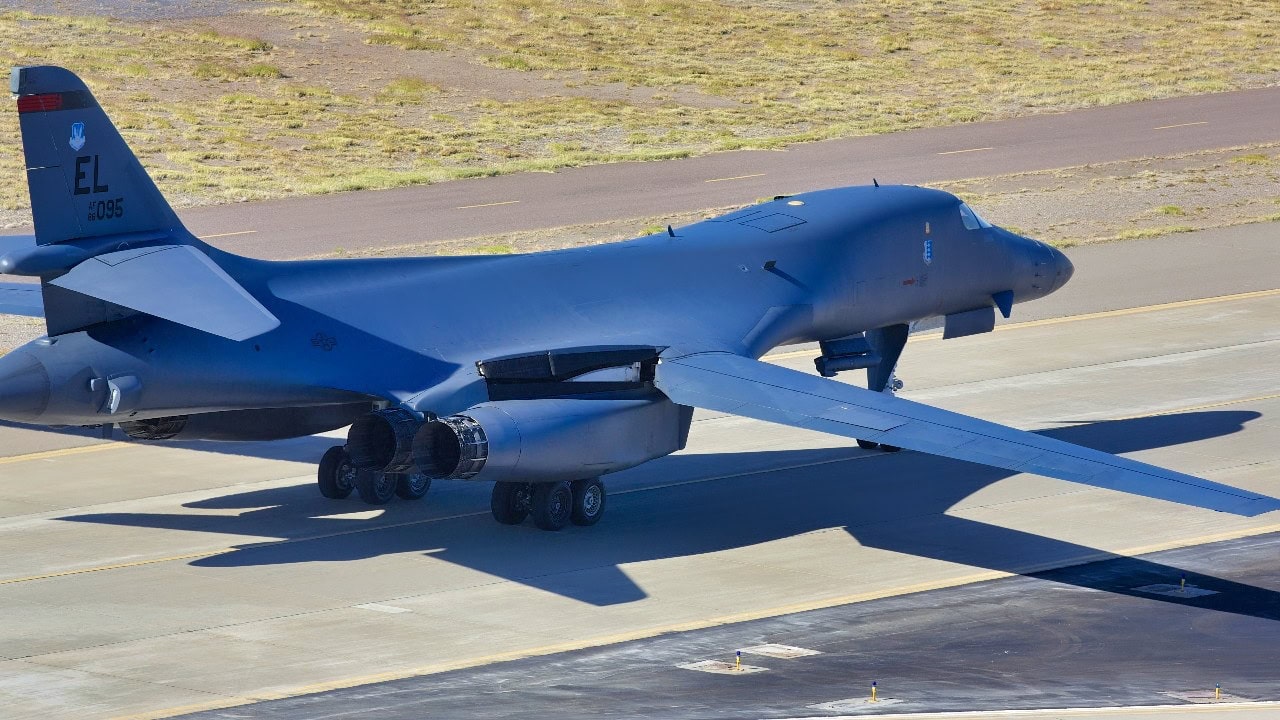
B-1B Lancer Bomber. Image Credit: Creative Commons.
In his position as the multi-service unified combatant command, STRATCOM, Adm. Correll is instead putting aside those rivalries for the sake of “One Team, One Fight.” Bully for you, Admiral!
About the Author: Christian D. Orr
Christian D. Orr is a Senior Defense Editor. He is a former Air Force Security Forces officer, Federal law enforcement officer, and private military contractor (with assignments worked in Iraq, the United Arab Emirates, Kosovo, Japan, Germany, and the Pentagon). Chris holds a B.A. in International Relations from the University of Southern California (USC) and an M.A. in Intelligence Studies (with a concentration in Terrorism Studies) from American Military University (AMU). He is also the author of the newly published book “Five Decades of a Fabulous Firearm: Celebrating the 50th Anniversary of the Beretta 92 Pistol Series.”