
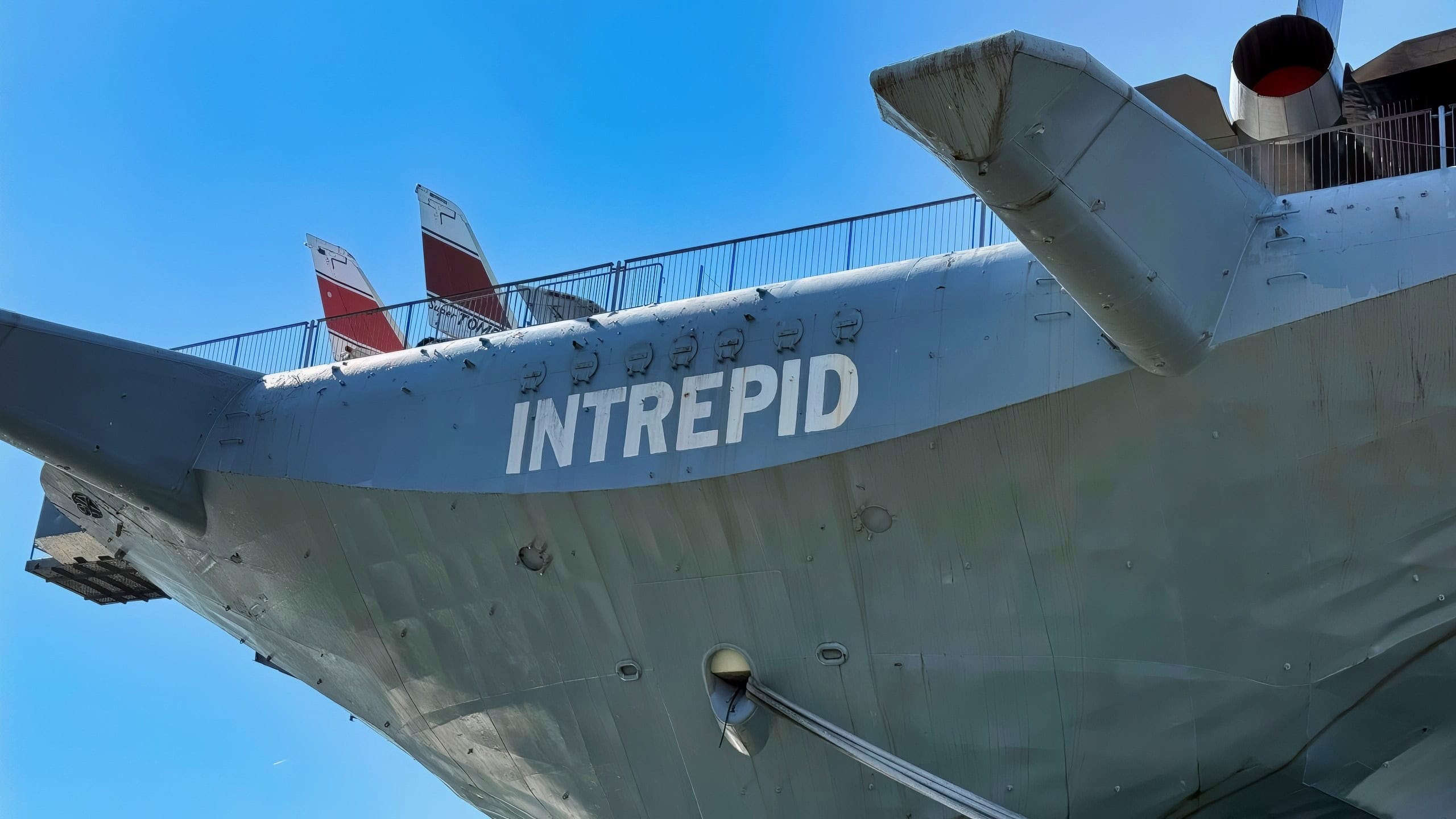
Summary and Key Points: Drawing on his experience as a former Air Force officer and Senior Defense Editor, Christian D. Orr evaluates why the Essex-class aircraft carriers remain the most successful flattops in U.S. Navy history.
-With 24 operational vessels, including the USS Essex (CV-9) and USS Lexington, these “short-hull” and “long-hull” ships defined WWII, Korea, and Vietnam.
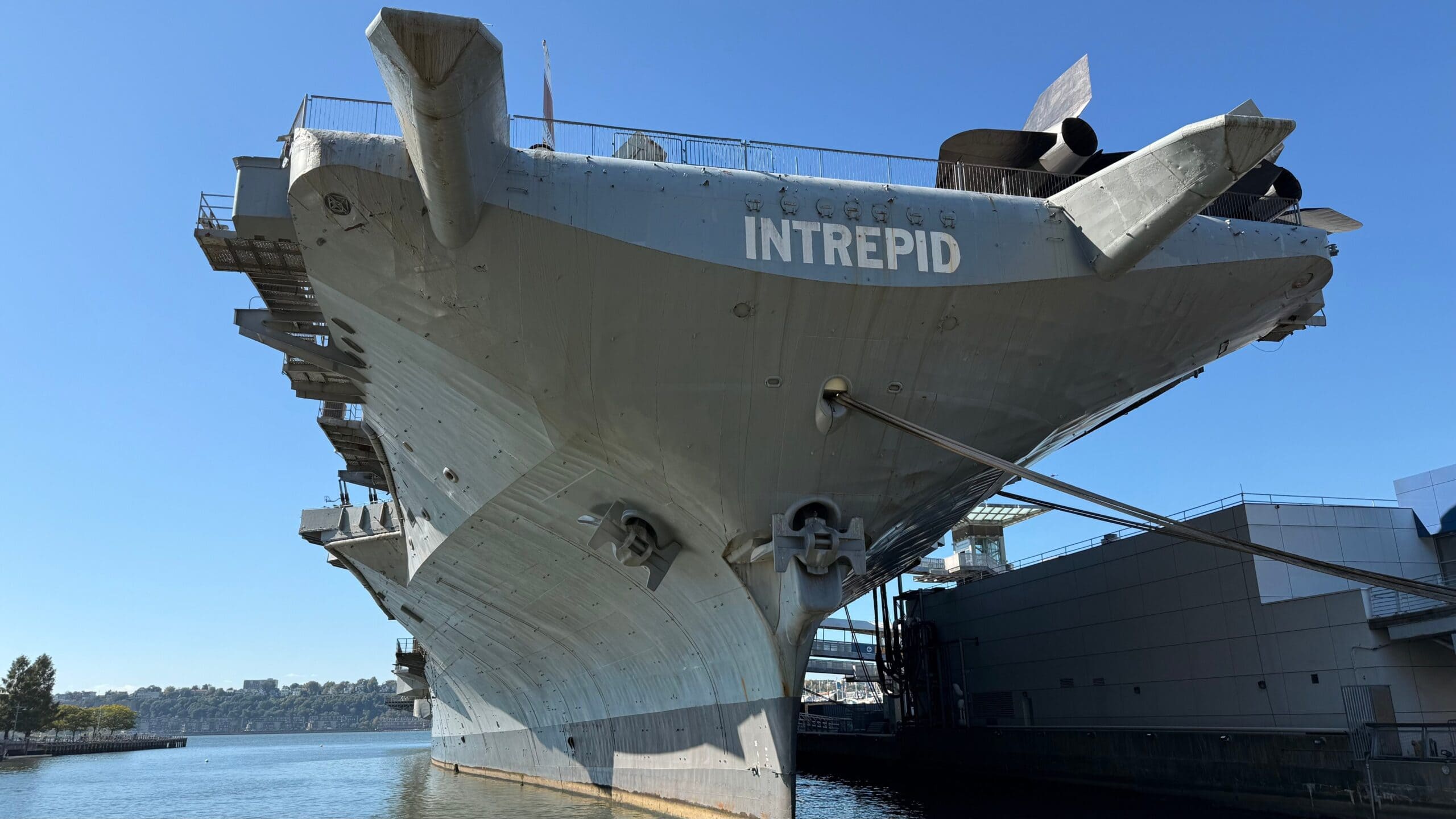
Exterior of Essex-Class USS Intrepid. Image Credit: 19FortyFive.com
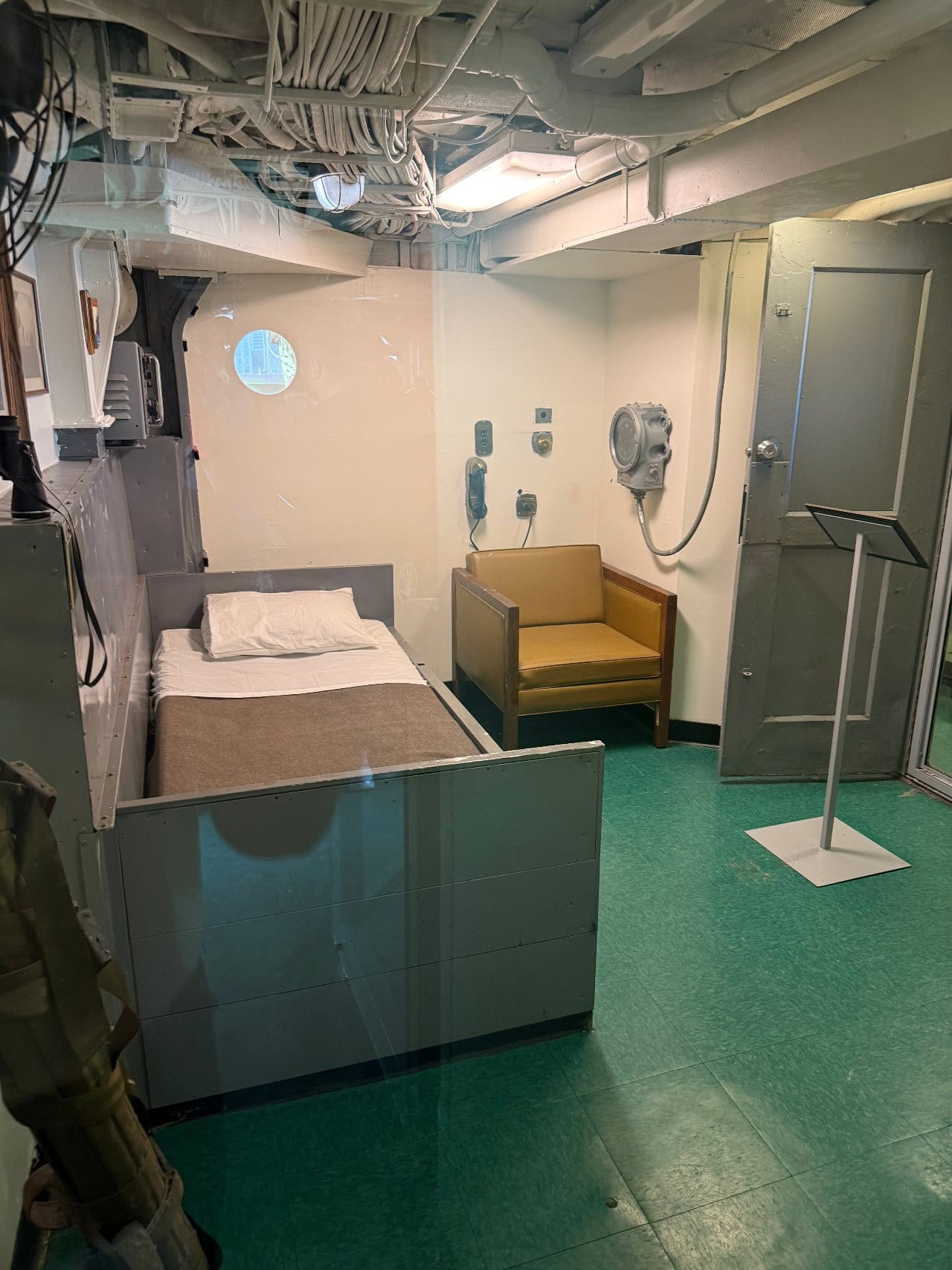
Inside USS Intrepid Essex-class. Image Credit: 19FortyFive.com
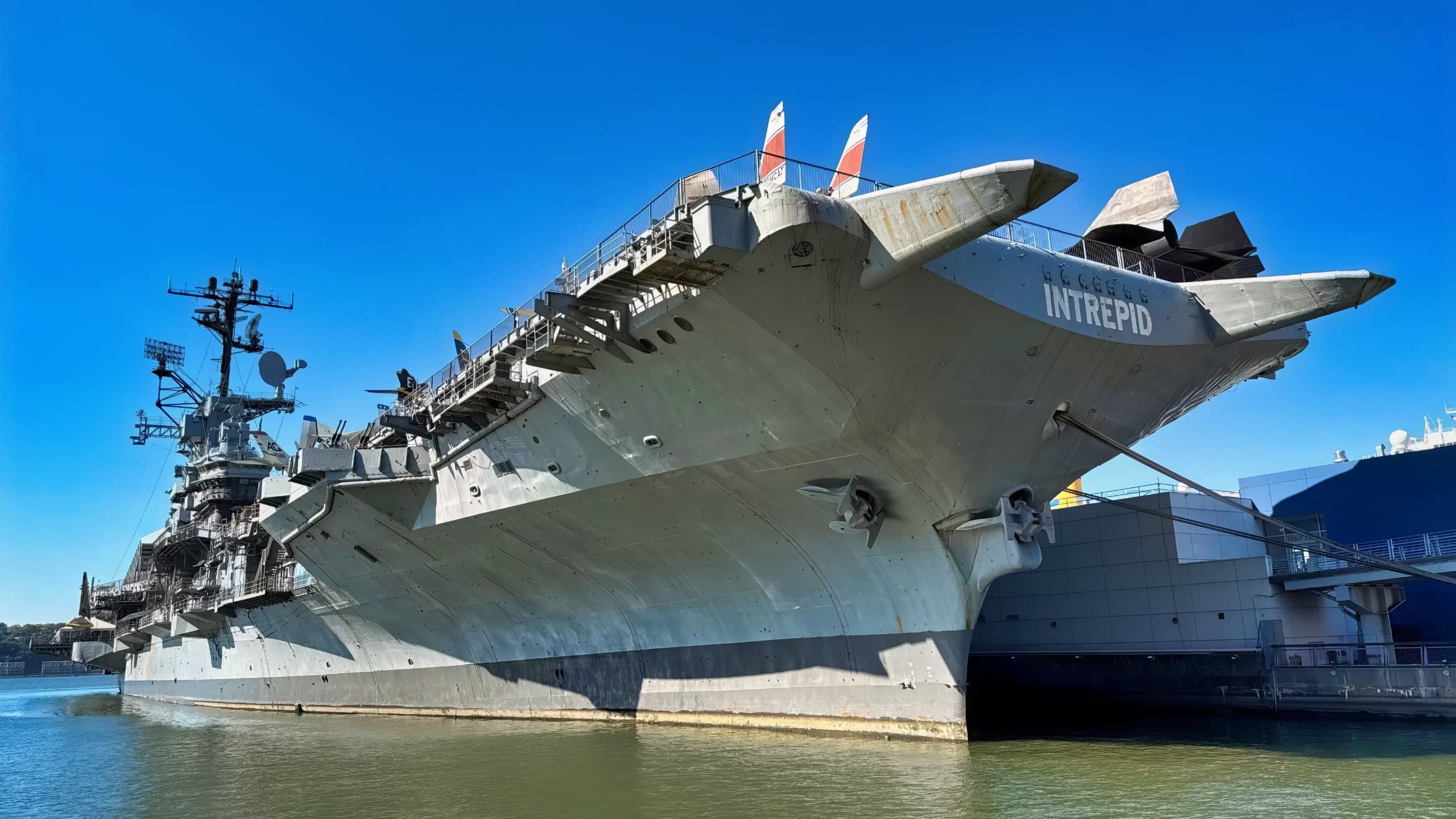
Essex-Class USS Intrepid 19FortyFive.com Photo
Orr highlights their legendary survivability—not a single ship was lost to enemy action—and their role as a strategic backbone until the 1970s.
-These 36,000-ton warships carried up to 100 aircraft, proving that industrial quantity and combat durability are unmatched naval qualities.
The Best U.S. Navy Aircraft Carriers Ever: Analyzing the Legacy of the Essex-Class Carriers
To British military history buffs–particularly those interested in the Napoleonic Wars— the word “Essex” might conjure up South Essex, the fictitious regiment commanded by Richard Sharpe—a British Army officer and the eponymous protagonist of the bestselling novel series by Bernard Cornwell.
Meanwhile, to American military history buffs—particularly those interested in World War II—the word “Essex” signifies a class of U.S. Navy aircraft carriers that some pundits would argue are the best flattops ever made (with all due respect to the Nimitz-class and Ford-class nuclear-powered supercarriers, of course).
We now take a closer look at the Essex-class warships.
Essex-Class Carrier Initial History
If you adhere to the philosophy that “quantity has a quality all of its own,” numbers alone would qualify the Essex class as the best carrier class.
They were the 20th century’s most numerous class of capital ships. Its 24 operational vessels came in both “short-hull” and “long-hull” versions.
Thirty-two of these ships were originally ordered, but as World War II wound down, six were canceled before construction; another two were canceled after construction had already begun. Designated as the successors to the Yorktown-class, they were built to follow five main rules:
They needed to carry four squadrons of 18 planes, plus another squadron in reserve; they needed to launch and recover planes faster than their predecessors; they needed to carry 25% spares for their planes, so that U.S. carriers could stay longer at sea than her counterparts; they needed to be survivable in combat and able to serve a long time; and they needed to be upgradeable.
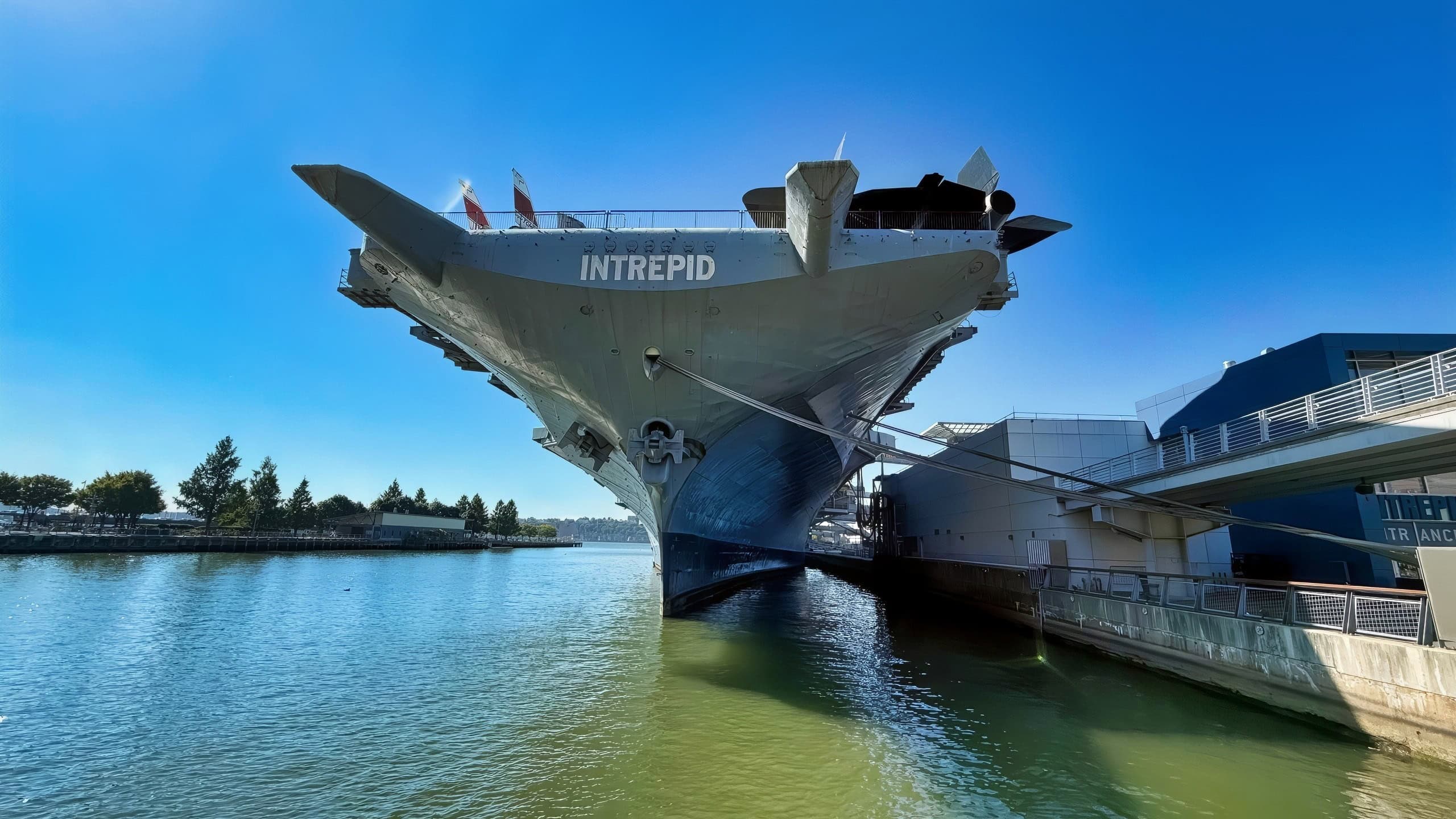
USS Intrepid Essex-Class Aircraft Carrier 19FortyFive.com Photo.
The first ship of the class was the USS Essex (CV-9), presumably named for the 1782 Revolutionary War battle.
CV-9 was laid down in April 1941, launched in July 1942, and commissioned in December 1942.
The last of the Essexes built was the USS Philippine Sea (CV-47), which was laid down in June 1943, launched in September 1945, and commissioned in May 1946.
Fittingly, four of the flattops were named for predecessors that had been sunk earlier in the war, namely the USS Yorktown, Lexington, Hornet, and Wasp.
Essex-Class Tech Specs and Vital Stats
-Displacement: 36,380 long tons fully laden
-Hull Length: 872 feet (short-hull units); 888 feet (long-hull units)
-Beam Width: 147.5 feet
-Draft: 27.5 feet
Installed Power & Propulsion: 8 × Babcock & Wilcox boilers generating 150,000 shp (110,000 kW); Westinghouse geared turbines with 4 × screw propellers
-Max Speed: 33 knots
-Range & Endurance: 20,000 nautical miles
-Crew Complement: 268 commissioned officers, 2,363 enlisted seamen
-Aircraft Capacity: 90–100
-Armament: 12 × 5-inch (127 mm) /38 caliber guns; 32 to 72 × 40 mm Bofors antiaircraft guns; 55 to 76 × 20 mm Oerlikon cannon
Essex-Class Combat History in Brief
Going back to the Rule #4—the one about being survivable in combat and able to serve a long time—seaforces.org describes the class’ success:
“No Essex-class ships were lost to enemy action, despite several vessels sustaining very heavy damage. The Essex-class carriers were the backbone of the U.S. Navy’s combat strength during World War II from mid-1943 on, and, along with the addition of the three Midway class carriers just after the war, continued to be the heart of U.S. Naval strength until the supercarriers began to come into the fleet in numbers during the 1960s and 1970s.”
In exchange for those heavily damaged carriers, planes from the Essex-class carriers were responsible for the decimation of Japanese air units in the Marianas, the Philippines, Formosa, and eventually Japan itself.
Regarding the venerable warships’ post-WWII combat record:
-11 of them participated in the Korean War, with missions including attacks on all types of ground targets, air superiority, and antisubmarine patrols
-13 of the 24 vessels originally built participated in the Vietnam War, including the prelude and follow-up. Perhaps most significantly, warbirds from USS Ticonderoga (CV-14) fired at North Vietnamese torpedo boats that had attacked a U.S. destroyer in the controversial Gulf of Tonkin Incident of 1964
The USS Lexington was the last member of the Essex class to retire from active service, decommissioned as a training carrier in 1991.
Where Are They Now?
A total of four Essex-class flattops survive today, preserved for posterity as floating museums. They are:
-USS Yorktown (CVS-10), at Patriot’s Point, Mount Pleasant, South Carolina
–USS Intrepid (CVS-11), in New York City
–USS Hornet (CVS-12), in Alameda, California
–USS Lexington (AVT-16), in Corpus Christi, Texas
About the Author: Christian D. Orr
Christian D. Orr is a Senior Defense Editor. He is a former Air Force Security Forces officer, Federal law enforcement officer, and private military contractor (with assignments worked in Iraq, the United Arab Emirates, Kosovo, Japan, Germany, and the Pentagon). Chris holds a B.A. in International Relations from the University of Southern California (USC) and an M.A. in Intelligence Studies (with a concentration in Terrorism Studies) from American Military University (AMU). He is also the author of the newly published book “Five Decades of a Fabulous Firearm: Celebrating the 50th Anniversary of the Beretta 92 Pistol Series.”