The Kharg Island Scenario: How the U.S.Marine Coprs Will Fight the Next War
Future amphibious assaults will likely look nothing like the famous World War II attack on Iwo Jima. That operation was largely linear, charged straight ahead, and was led by thousands of committed Marines willing to absorb enemy fire to take the beachhead. Modern amphibious warfare may take a form never before seen, and that may play out if the U.S. Marine Corps launches a ship-to-shore assault to seize Kharg Island from Iran.
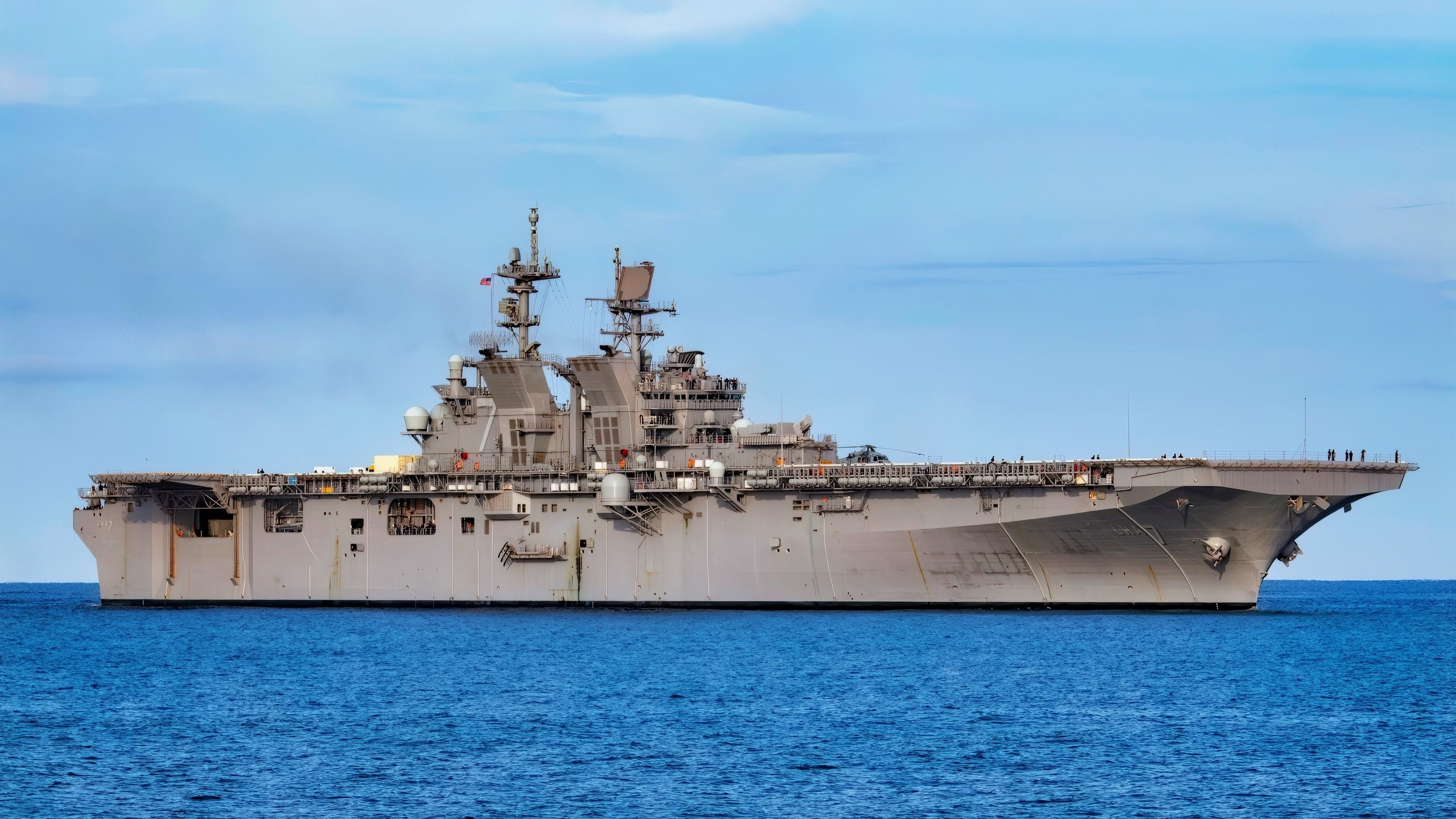
As the USS Tripoli (LHA-7) surges toward the region, the Pentagon considers using 2,000-plus Marines, as well as amphibious assault vehicles, landing craft, helicopters, drones, and F-35s to seize and control Iran’s oil-rich island outpost.
Any effort to surround and take over the island would doubtless require massive countermine operations; air support to destroy underground weapons and mobile launchers; and platforms such as the V22 Osprey that are able to air-drop Marines from ship to shore to hold and secure territory.
An amphibious assault would likely align with concepts of operation outlined in the Marine Corps’ Force Design 2030, which calls for a mixture of drones, high-speed ship-to-shore lethality, and stand-in attack forces.
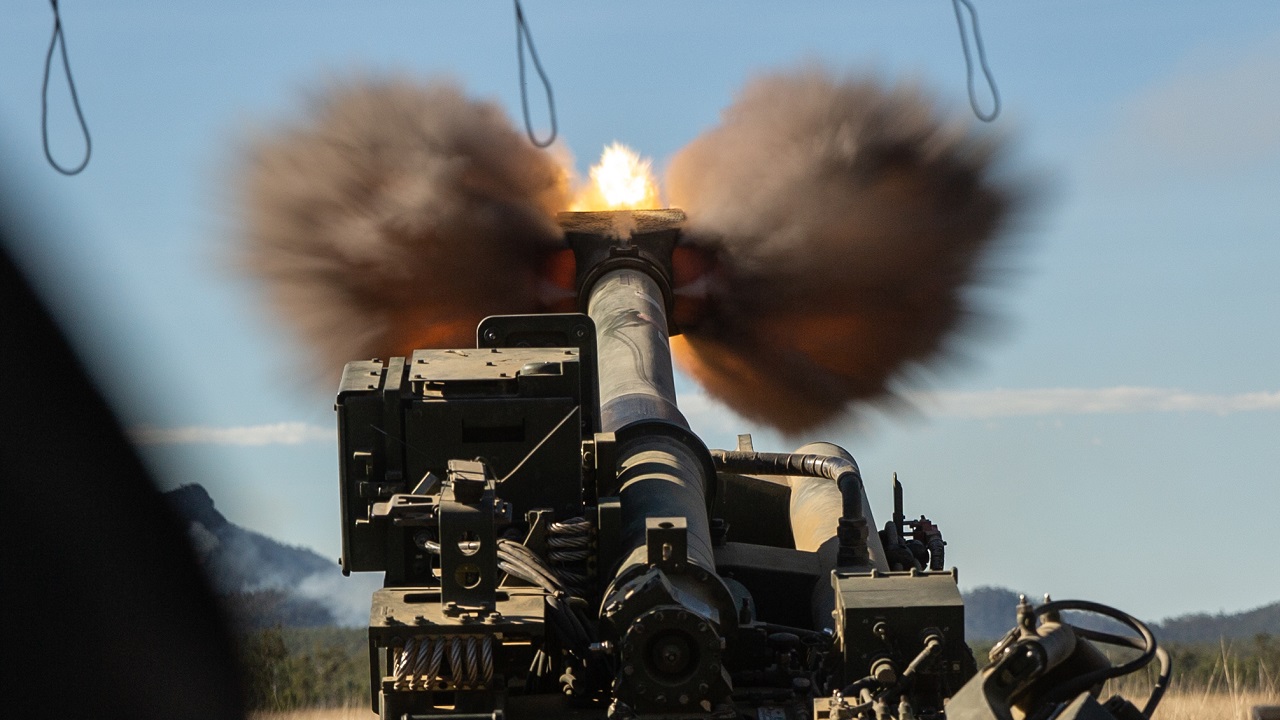
U.S. Marines with Golf Battery, 2d Battalion, 11th Marines, currently attached to the 31st Marine Expeditionary Unit, and Australian Defence Forces with 109th Battery, 4th Regiment, fire an M777 155 mm Howitzer during Exercise Talisman Sabre 21 on Shoalwater Bay Training Area, Queensland, Australia, July 17, 2021. Australian and U.S. Forces combine biennually for Talisman Sabre, a month-long multi-domain exercise that strengthens allied and partner capabilities to respond to the full range of Indo-Pacific security concerts. (U.S. Marine Corps photo by Lance Cpl. Ujian Gosun)
Modern Amphibious Warfare
The advent of autonomy, AI-enabled unmanned systems, long-range sensors, and fifth-generation close air support radically alters the conduct of amphibious warfare.
Dispersed but closely networked fleets would mix platforms, including surface ships with over-the-horizon missiles, ship-to-shore connectors loaded with Abrams tanks, and undersea, aerial, and surface drones.
Those drones would look for weak or less defended points along the enemy coastline, while V-22 Ospreys and even amphibious-launched F-35B fighter jets supported the approach. AI-enabled drones would coordinate operations, share pressing target information, and even conduct high-risk attacks, while Marines and sailors perform command and control from safer standoff distances.
Recognizing the changing nature of the global environment and the growing Chinese threat in the Pacific, the Marine Corps has moved to redefine amphibious warfare operations for the future. The new platforms described above will support expeditionary operations, specialized island-hopping littoral units, and stand-in forces positioned to quickly close with an enemy as needed.
Many of these adaptations were outlined in Force Design 2030, a strategic document that outlines the service’s adaptive approach to future amphibious warfare. The concepts of operation articulated in the text seek to build on the speed and rapid-deployment capabilities of platforms armed with anti-armor weapons and fortified by close-in drone surveillance and targeting.
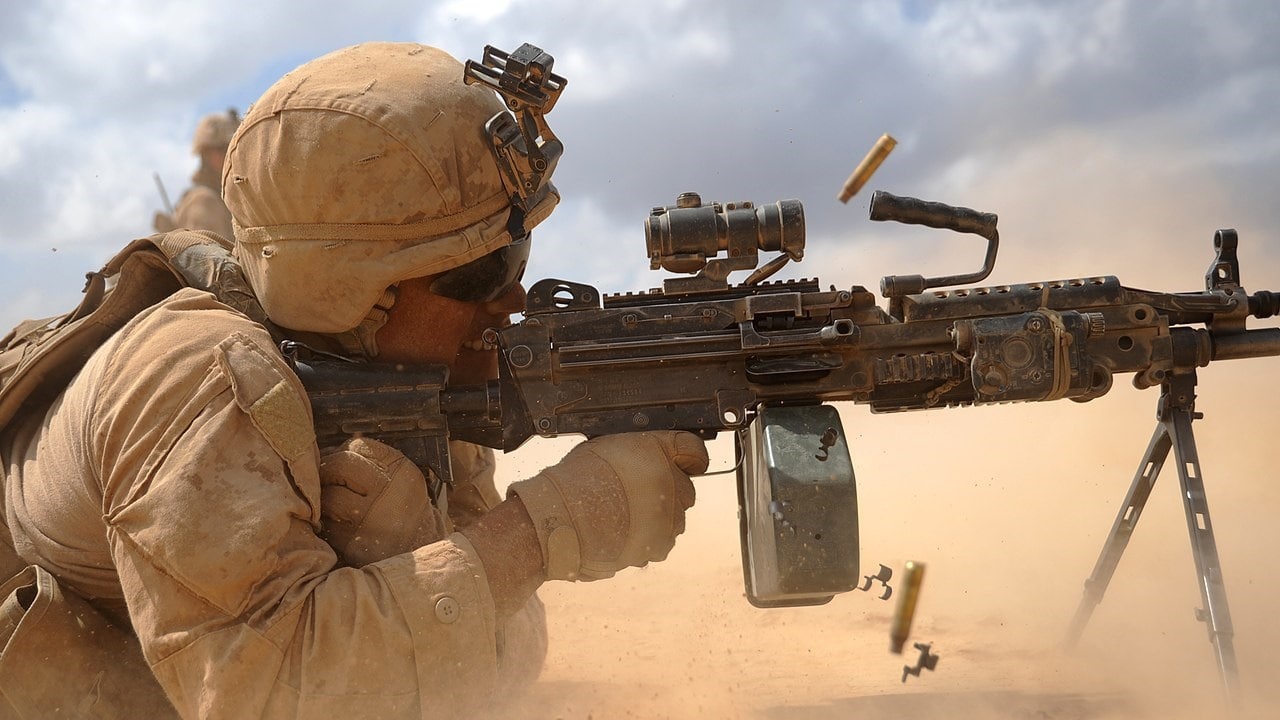
Lance Cpl. Luther Sackett, a rifleman from Rockyford, Co., engages targets during a live-fire and maneuver exercise here Jan. 29. Sackett, and other Marines with Light Armored Reconnaissance Platoon, Weapons Company, Battalion Landing Team 2/4, 11th Marine Expeditionary Unit, conducted live-fire weapons shoots and trained with the French Army Jan. 28-Feb. 5.
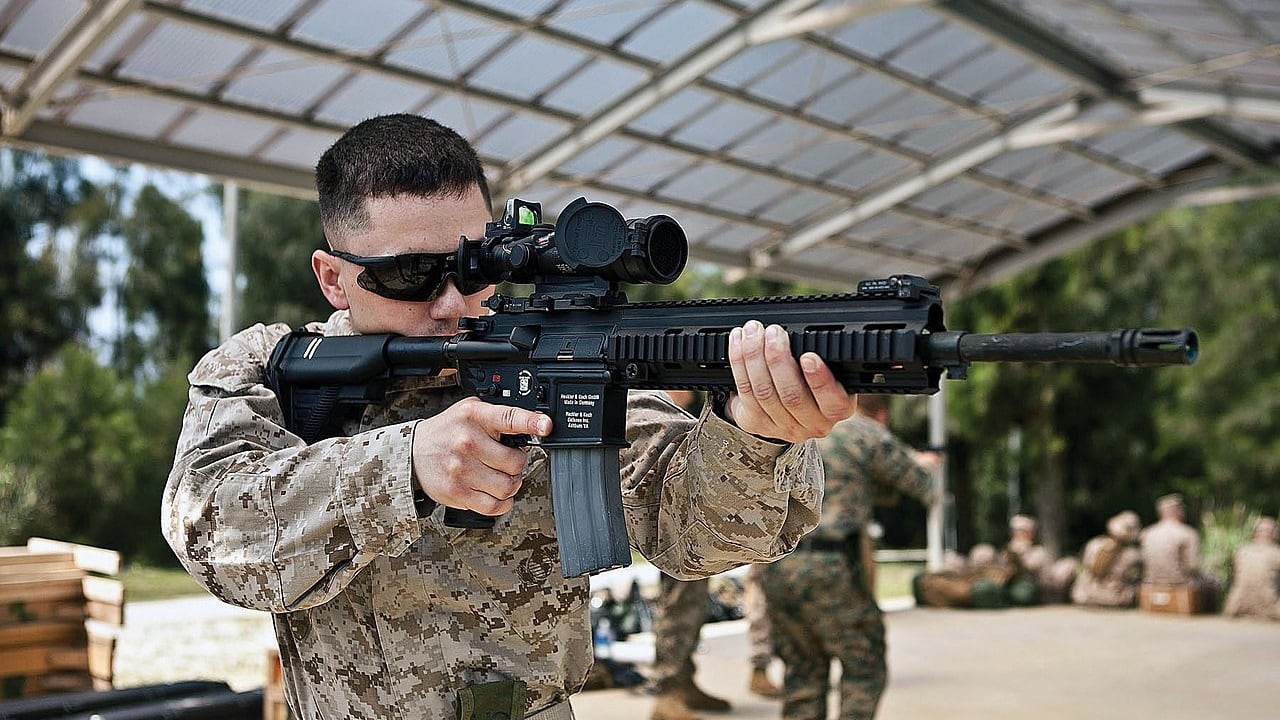
CAMP HANSEN — Lance Cpl. Zachary A. Whitman, a shooter with the III Marine Expeditionary Force detachment, familiarizes himself with the M27 Infantry Automatic Rifle in preparation for the Australian Army Skill at Arms Meeting 2012. AASAM is a multilateral, multinational event allowing Marines to exchange skills tactics, techniques and procedures with members of the Australian Army as well as other international militaries in friendly competition. (U.S. Marine Corps photo by Sgt. Brandon L. Saunders/released)
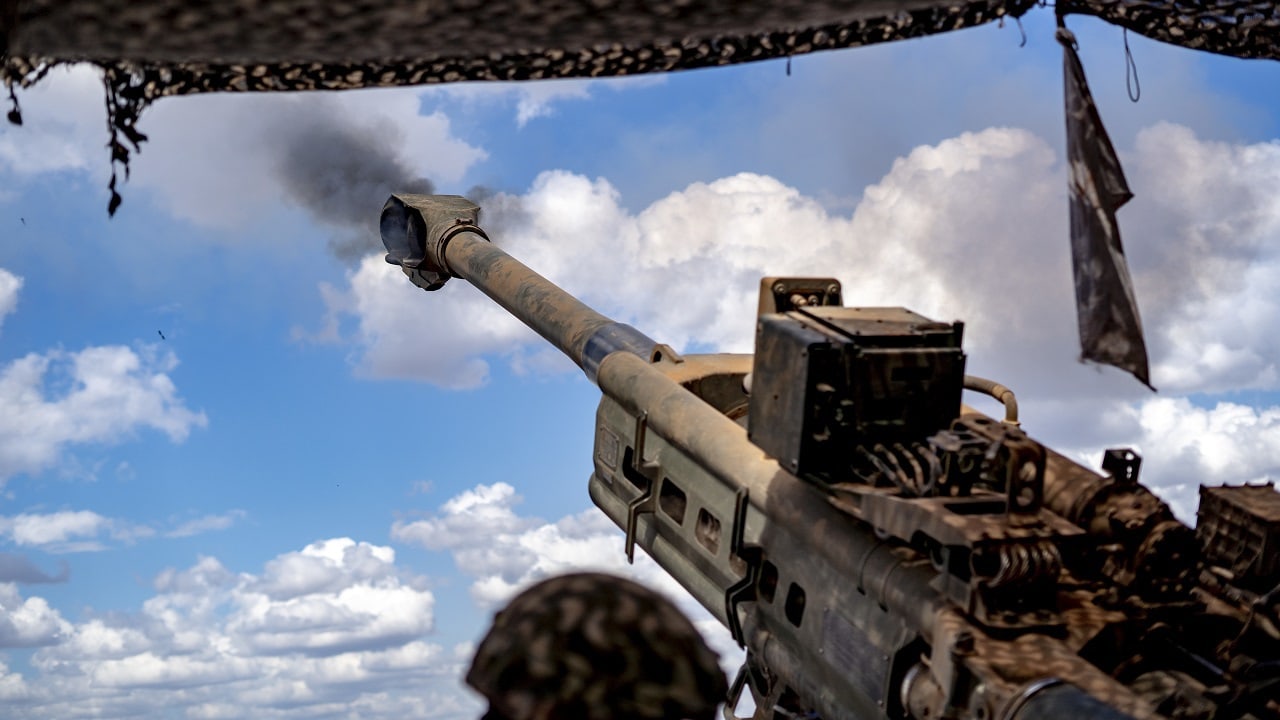
U.S. Marines with Ground Combat Element, Marine Rotational Force – Darwin, fire a M777 during fire missions training at Mount Bundey Training Area, NT, Australia, Aug. 6 2020. The training provided Marines a unique opportunity to develop new techniques and procedures to integrate direct and indirect fire. The ability to rapidly deploy fire support and employ indirect fire weapons provide the Marine Corps an advantage as an expeditionary forward force deployed to austere environments. (U.S. Marine Corps photo by Cpl. Lydia Gordon)
Marine Corps Force Design 2030
The success of anti-armor weapons in Ukraine helps explain why light, expeditionary forces are needed across the air, sea, and land domains. The Corps is reducing its reliance on heavy armor to prioritize speed, anti-armor prowess, island-hopping operations, and the extensive use of unmanned systems for surveillance and close-in attack.
While many applaud the Corps’ vigorous effort to adapt to a new threat environment, some former Marine Corps amphibious assault commanders maintain that tanks and heavy armor should remain a critical element of any amphibious assault force. Larger, heavily armored platforms will still be needed to hold territory.
Big-deck amphibs are expected to serve as critical motherships, operating large groups of unmanned systems, aircraft, and surface attack platforms at stand-off distances. In maritime areas such as the Pacific, where critical areas are separated by significant distances, sea basing, multi-domain networking, and manned-unmanned command and control are indispensable to maritime security and deterrence missions.
USS Tripoli and Kharg Island
As an America-class amphibious assault ship, the USS Tripoli can carry a Marine Expeditionary Unit, heavy armor, V-22 Ospreys, and 20 F-35Bs. The Tripoli is optimized for aviation, but the ship could also launch and control surface, air, and undersea drones while delivering fifth-generation air support with the F-35Bs.
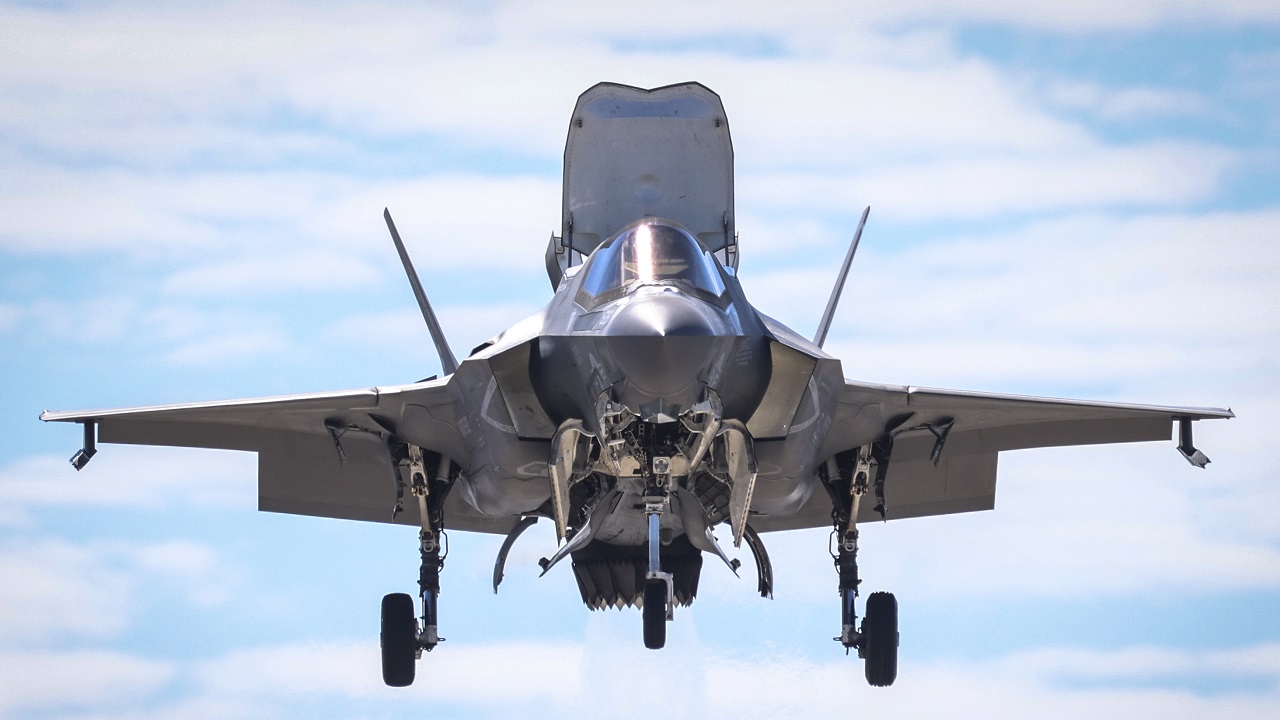
An F-35B Lightning II with 3rd Marine Aircraft Wing, based at Marine Corps Air Station Miramar, San Diego, California, conducts an aerial demonstration during the 2022 MCAS Air Show at MCAS Miramar, Sept. 24, 2022. The F-35B Lightning II, flown by aviators with Marine Fighter Attack Training Squadron 502, is equipped with short takeoff and vertical landing capability that expands its range by allowing it to operate from naval vessels and in austere, expeditionary environments. The theme for the 2022 MCAS Miramar Air Show, “Marines Fight, Evolve and Win,” reflects the Marine Corps’ ongoing modernization efforts to prepare for future conflicts. (U.S. Marine Corps photo by Lance Cpl. Jose S. GuerreroDeLeon)
Often called the “Swiss Army Knives” of maritime warfare, amphibious assault ships—as well as Marine Expeditionary Units and Amphibious Ready Groups—have for decades been foundational to Marine Corps operations. But they are even more vital in today’s fast-evolving threat environment.
Although amphibious warfare in the future is less likely to resemble the linear maritime combat formations that achieved success at Iwo Jima, the need for sea-land-air warfare operations and continued readiness across dispersed formations will persist.
About the Author: Kris Osborn
Kris Osborn is the President of Warrior Maven – Center for Military Modernization. Osborn previously served at the Pentagon as a highly qualified expert in the Office of the Assistant Secretary of the Army—Acquisition, Logistics & Technology. Osborn has also worked as an anchor and on-air military specialist at national TV networks. He has appeared as a guest military expert on Fox News, MSNBC, The Military Channel, and The History Channel. He also has a Master’s Degree in Comparative Literature from Columbia University.